RemovedRisk Factors
The 10-K against last year's
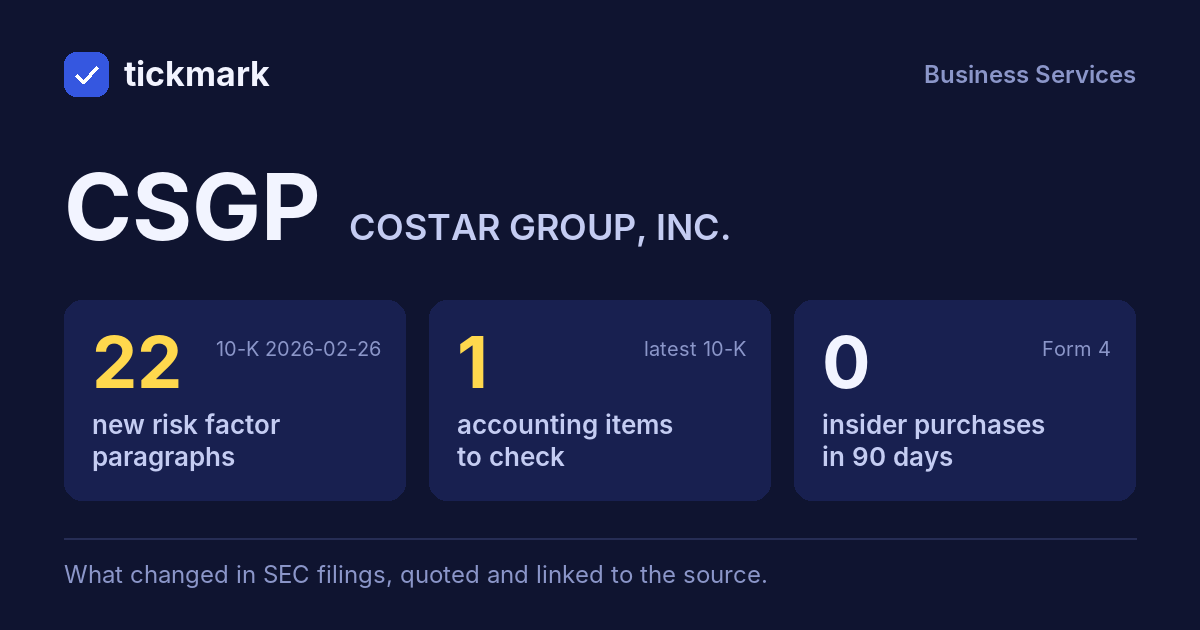
177 changes: 61 added, 28 removed, 87 reworded, 1 quiet changes
10-K 0001057352-26-000020 (2026-02-26) vs 10-K 0001057352-25-000016 (2025-02-20)
The redline
The paragraph that changed most in each section
Marked against last year's 10-K:
cut words struck through, new words highlighted and underlined.
Risk Factors 226 words changed in this paragraph; it is 62% similar to last year's version.
As a result, we are subject to a variety of state, national, and international laws and regulations that apply to the collection, use, retention, protection, disclosure, transfer, and other processing of personal information, including, but not limited to, the EU and UK GDPR (together, the "GDPR") and CCPA. These laws and regulations are evolving, with new or modified laws and regulations proposed and implemented frequently and existing laws and regulations subject to new or different interpretations. For example, in the EEA and the UK, the GDPR creates comprehensively regulates our use of personal data, including cross-border transfers of personal data protection requirements in the EU and UK and imposes substantial fines for breaches out of the EEA and UK, in respect of which we expect the existing legal complexity and uncertainty regarding international personal data protection rules. The GDPR increased our responsibility transfers to continue, and liability international transfers to the United States, China, and to other jurisdictions more generally to continue to be subject to enhanced scrutiny by regulators. As the regulatory guidance and enforcement landscape in relation to personal data that transfers continue to develop, we process. could suffer additional costs, we may have to make operational changes, it could otherwise affect the manner in which we provide our services, and could adversely affect our business, operations and financial condition. Failure to comply with the GDPR could result in penalties for noncompliance. Since we are subject to the supervision of relevant data protection authorities under multiple legal regimes (including under both the EU GDPR and the UK GDPR), we could be fined under those regimes independently in respect of the same breach. In addition to fines, a breach of the GDPR may result in regulatory investigations, reputational damage, orders to cease/change our data processing activities, enforcement notices, assessment notices (for a compulsory audit) or civil claims (including class actions). The CCPA, among other things, provides the rights to California residents related to their personal information, places limitations on data uses, and creates new audit requirements for higher risk data. The CCPA also provides for civil penalties for violations, as well as a private right of action for data breaches that may increase data breach litigation. Other state privacy laws apply to operations, and similar laws have been proposed, and likely will continue to be proposed, in other states and at the federal level, and if passed, may have potentially conflicting requirements that would make compliance challenging.
Source: Item 1A, 10-K 0001057352-26-000020 vs Item 1A, 10-K 0001057352-25-000016
MD&A 174 words changed in this paragraph; it is 56% similar to last year's version.
We view EBITDA, adjusted Adjusted EBITDA, Adjusted EBITDA margin, Adjusted Net Income, and adjusted EBITDA margin Adjusted EPS as operating performance measures. We believe that the most directly comparable GAAP financial measure to EBITDA EBITDA, Adjusted EBITDA, and adjusted EBITDA Adjusted Net Income is net income. We believe the most directly comparable GAAP financial measure to adjusted Adjusted EPS and Adjusted EBITDA margin is are earnings per diluted share and net income (loss) divided by revenue. revenue, respectively. In calculating EBITDA, adjusted Adjusted EBITDA, Adjusted EBITDA margin, Adjusted Net Income, and adjusted EBITDA margin Adjusted EPS, we exclude from net income (loss) the financial items that we believe should be separately identified to provide additional analysis of the financial components of the day-to-day operation of our business. We have outlined below the type and scope of these exclusions and the material limitations on the use of these non-GAAP financial measures as a result of these exclusions. EBITDA, adjusted EBITDA, and adjusted EBITDA margin are not measurements of financial performance under GAAP and should not be considered as a measure of liquidity, as an alternative to net income, or as an indicator of any other measure of performance derived in accordance with GAAP. Investors and potential investors in our securities should not rely on EBITDA, adjusted EBITDA, and adjusted EBITDA margin as a substitute for any GAAP financial measure. In addition, we urge investors and potential investors in our securities to carefully review the GAAP financial information included as part of our Annual Reports on Form 10-K and Quarterly Reports on Form 10-Q that are filed with the SEC, as well as our quarterly earnings releases, and compare the GAAP financial information with our EBITDA, adjusted EBITDA, and adjusted EBITDA margin.
Source: Item 7, 10-K 0001057352-26-000020 vs Item 7, 10-K 0001057352-25-000016
Accounting Policies 170 words changed in this paragraph; it is 66% similar to last year's version.
Source: 10-K text, Note 2 – SUMMARY OF SIGNIFICANT ACCOUNTING POLICIES, 10-K 0001057352-26-000020 vs 10-K text, Note 2 – SUMMARY OF SIGNIFICANT ACCOUNTING POLICIES, 10-K 0001057352-25-000016
Legal Proceedings 11 words changed in this paragraph; it is 95% similar to last year's version.
Currently, and from time to time, the Company is involved in litigation incidental to the conduct of its business. The Company records a provision for a liability when it is both probable that a liability has been incurred and the amount can be reasonably estimated. While it is reasonably possible that an unfavorable outcome may occur as a result of one or more of the Company’s current litigation matters, at this time time, management has concluded that the resolutions of these matters are not expected to have a material effect on the Company's consolidated financial position, future results of operations operations, or liquidity. Legal defense costs are expensed as incurred. incurred, except as set forth below.
Source: Item 3, via Note 12 – COMMITMENTS AND CONTINGENCIES, 10-K 0001057352-26-000020 vs Item 3, via Note 13 – COMMITMENTS AND CONTINGENCIES, 10-K 0001057352-25-000016
Every change, by type
Sentences and paragraphs added, removed or reworded
Sentences and paragraphs of CSGP's Risk Factors and MD&A, 10-K 2026-02-26 against 10-K 2025-02-20. Each links to the text at sec.gov.
RemovedRisk Factors
RemovedRisk Factors
RemovedRisk Factors
RemovedRisk Factors
RemovedMD&A
RemovedMD&A
RemovedMD&A
Show the other 9
RemovedMD&A
RemovedMD&A
RemovedMD&A
RemovedMD&A
RemovedMD&A
RemovedMD&A
RemovedMD&A
RemovedMD&A
RemovedMD&A