Screener / SEC EDGAR /CIK 0001773751 /10-K filed Feb 23, 2026, compared with Feb 24, 2025 /Numbers from the XBRL of the 10-Ks
NYSE Health care · Offices & Clinics of Doctors of Medicine

Hims & Hers Health, Inc. HIMS

Compare with peers Embed
New in the 10-K 53 paragraphs with nothing like them in the 10-K filed Feb 24, 2025 New in the 10-Q 19 paragraphs not in the 10-Q filed Aug 10, 2026 10-Q against the 10-K 111 risk factor paragraphs and sentences added or reworded

New risk paragraphs, branching off last year

Each branch is a paragraph in Risk Factors with nothing like it in the 10-K filed Feb 24, 2025. A box jumps to the paragraph as filed, below.

53 new

Paragraphs with nothing like them in last year's 10-K

Quoted exactly

53 paragraphs in Risk Factors of the 10-K filed Feb 23, 2026 with nothing like them in the 10-K filed Feb 24, 2025. Quoted exactly. Paragraphs that were only edited are under 10-K change.

•We have been, and in the future may be, subject to actions and public statements by U.S. federal and state government officials and agencies, which could materially and adversely affect our business, financial condition, results of operations and reputation.

Read in the 10-K

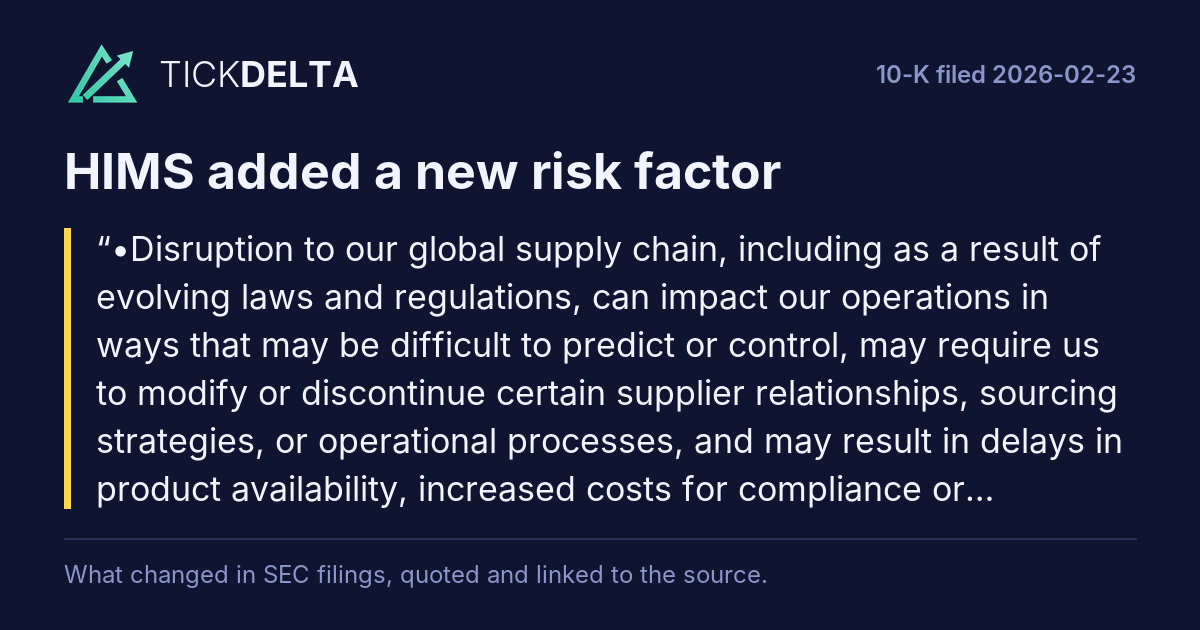
•Disruption to our global supply chain, including as a result of evolving laws and regulations, can impact our operations in ways that may be difficult to predict or control, may require us to modify or discontinue certain supplier relationships, sourcing strategies, or operational processes, and may result in delays in product availability, increased costs for compliance or alternative sourcing, or the need to shift to different third-party partners. The breadth and scale of our operations increase the complexity and extent of our compliance and regulatory obligations.

Read in the 10-K

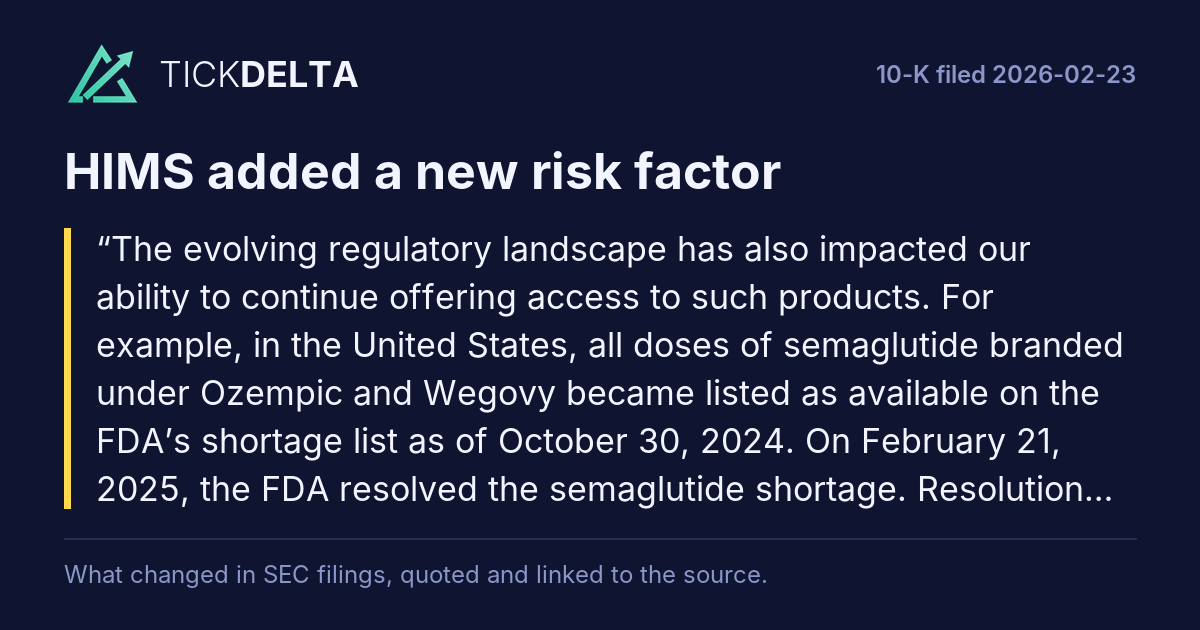
The evolving regulatory landscape has also impacted our ability to continue offering access to such products. For example, in the United States, all doses of semaglutide branded under Ozempic and Wegovy became listed as available on the FDA’s shortage list as of October 30, 2024. On February 21, 2025, the FDA resolved the semaglutide shortage. Resolution of the shortage limits our ability to use 503B outsourcing facilities to provide access to compounded semaglutide on our platform. The regulatory landscape applicable to GLP-1s continues to rapidly evolve. In February 2026, the FDA issued a statement (the “FDA Statement”) indicating that the agency intends to restrict GLP-1 active pharmaceutical ingredients intended for use in non-FDA-approved compounded drugs that are being mass-marketed as similar alternatives to FDA-approved drugs. We were directly named in the FDA Statement. Also in February 2026, the General Counsel of HHS issued a statement on X indicating that HHS had referred the Company to the Department of Justice (the “DOJ”) for investigation for potential violations of the FDCA and applicable Title 18 provisions. At this time, it is unclear what actions the FDA, HHS, or DOJ may take; however, any such actions could require significant resources to address and may result in reputational harm, operational disruptions, or increased costs. Any restrictions on compounding, or marketing of compounded, GLP-1s may adversely impact our financial condition, cash flows and results of operations.

Read in the 10-K

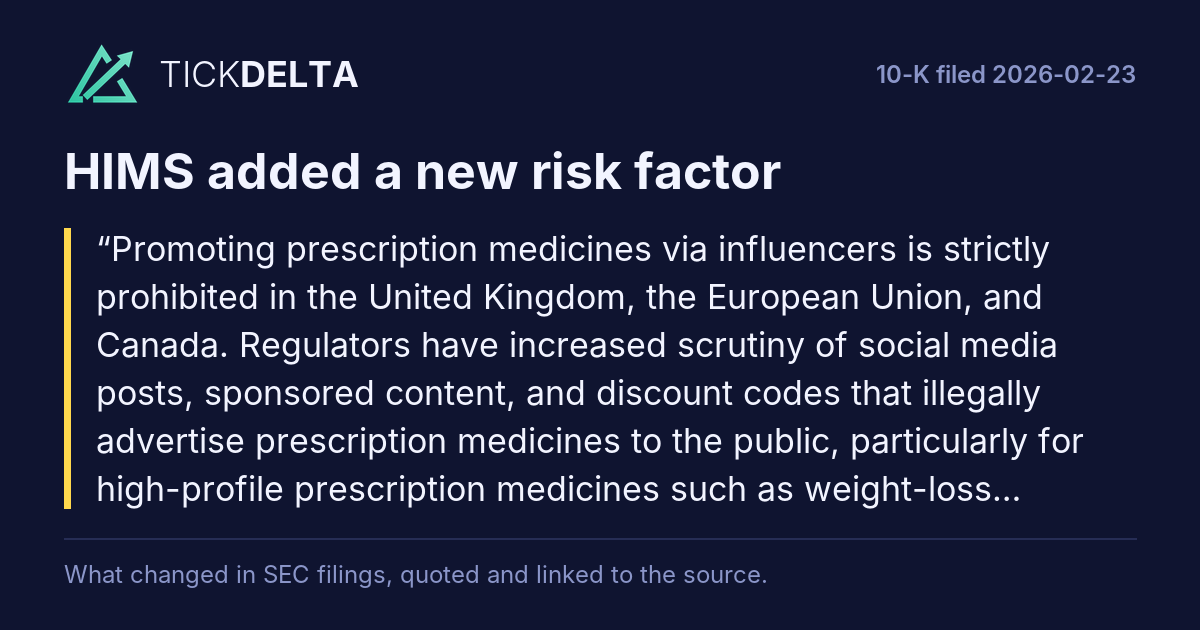
Promoting prescription medicines via influencers is strictly prohibited in the United Kingdom, the European Union, and Canada. Regulators have increased scrutiny of social media posts, sponsored content, and discount codes that illegally advertise prescription medicines to the public, particularly for high-profile prescription medicines such as weight-loss treatments. Influencer endorsements for prescription medicines constitute a breach of advertising law and can lead to investigations, compliance notices, and enforcement actions. While over-the-counter (OTC) medicines and medical devices may be promoted using influencers, this is only permitted under strict advertising and disclosure rules. The promotion of prescription medicines is restricted to communications directed at healthcare professionals, not the general public. Any failure to comply with applicable advertising, promotion, or disclosure laws in these jurisdictions could subject us to regulatory investigations, fines, reputational harm, and restrictions on our marketing activities.

Read in the 10-K

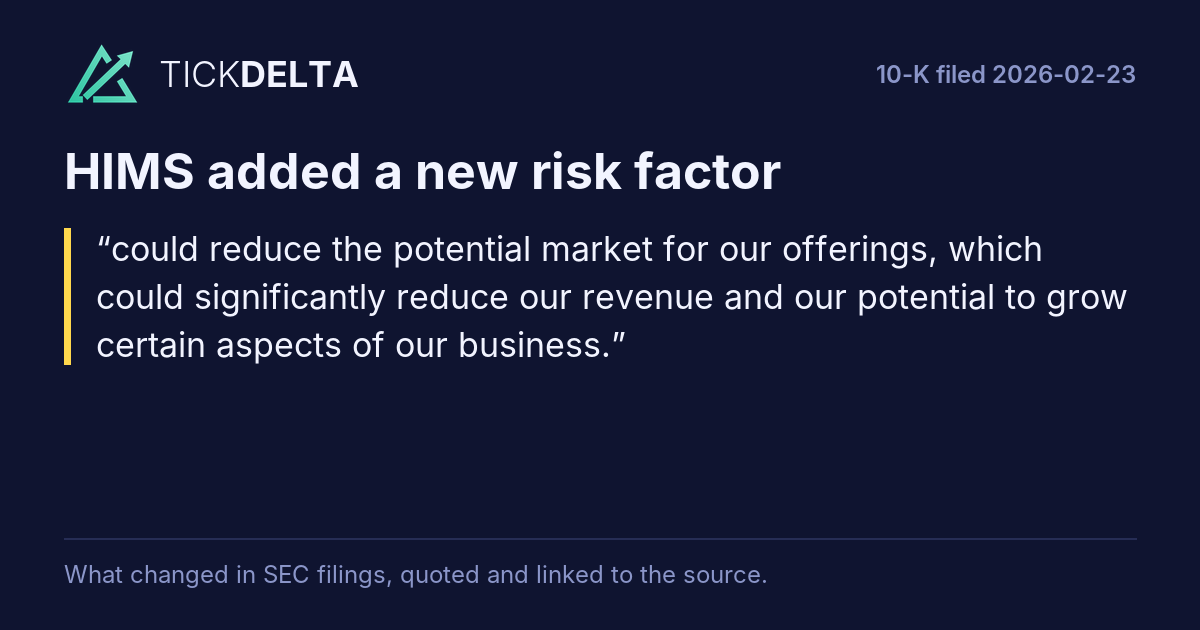
could reduce the potential market for our offerings, which could significantly reduce our revenue and our potential to grow certain aspects of our business.

Read in the 10-K
Show the other 15

•developing and maintaining commercial relationships on favorable terms, or at all;

Read in the 10-K

In the United Kingdom, pharmacies, pharmacists, and pharmacy technicians are regulated by the GPhC, which sets standards for the safe and effective provision of pharmacy services, including those provided at a distance (such as online and mail-order pharmacies). Pharmacies must be registered with the GPhC and are subject to regular inspections to ensure compliance with pharmacy standards, including those relating to the storage, dispensing, labeling, and distribution of medicines, as well as patient counseling and record-keeping. UK pharmacies may promote their pharmacy services, including online services, but are strictly prohibited from promoting prescription-only medicines to the general public. Advertising of pharmacy services must comply with the GPhC’s guidance and the MHRA’s guidance. Any promotion of prescription medicines must be directed only to healthcare professionals.

In Canada, pharmacies, pharmacists, and pharmacy technicians are regulated at the provincial and territorial level by pharmacy regulatory authorities. These authorities set standards for the safe and effective provision of pharmacy services, including services provided at a distance, such as online and mail‑order pharmacies. Pharmacies must be licensed or accredited by their provincial or territorial regulator and are subject to inspection to ensure compliance with applicable standards, including those relating to the storage, preparation, dispensing, labelling, distribution of medicines, patient counseling, and record‑keeping. Canadian pharmacies may promote their pharmacy services, including online services, but are prohibited from advertising prescription drugs to the general public. Any promotion of prescription medicines must be directed only to healthcare professionals and must comply with Health Canada’s advertising requirements and applicable provincial and territorial professional conduct rules.

Failure to successfully expand our capabilities, the loss, suspension or other limitation of any license held by a Pharmacy, or any failure or perceived failure by us or the Pharmacies to comply with any applicable federal, state, or local law or regulation, and equivalent foreign law, could have a material adverse effect on our business, financial condition, and results of operations and may expose us to civil and criminal penalties.

Read in the 10-K

The planned acquisition of Eucalyptus is subject to conditions, some or all of which may not be satisfied or completed on a timely basis, if at all.

Completion of the planned acquisition of Eucalyptus (the “Proposed Acquisition”) is subject to the satisfaction or waiver of customary and other closing conditions, including regulatory approvals. We cannot predict whether or when such approvals will be received or such conditions will be satisfied. The failure to satisfy all of the required conditions could delay the closing of the Proposed Acquisition for a significant period of time or at all. Any delay in completing the Proposed Acquisition could cause us not to realize some or all of the benefits of the Proposed Acquisition, or to realize them on a different timeline than expected. There can be no assurance that the closing conditions will be satisfied or (to the extent permitted) waived or that the Proposed Acquisition will be completed.

If the Proposed Acquisition is not completed, our business may be materially adversely affected, without having realized any of the anticipated benefits of having completed the Proposed Acquisition, and we will be subject to a number of risks, including the following:

•management’s time and focus to matters relating to the Proposed Acquisition, as well as financial resources, could otherwise have been devoted to pursuing other beneficial opportunities;

•we may experience negative reactions from the financial markets or from customers, suppliers, regulators or employees;

•we will be required to pay certain costs relating to the Proposed Acquisition, such as legal and accounting fees, whether or not the Proposed Acquisition is completed; and

•we may experience reputational harm due to the adverse perception of any failure to successfully complete the Proposed Acquisition.

Any of these risks could materially and adversely impact our financial condition and results of operations.

Additionally, we will incur substantial expenses in connection with and as a result of completing the Proposed Acquisition, including legal and other transaction costs, and following the completion of the Proposed Acquisition, we expect to incur additional expenses in connection with integrating Eucalyptus into our operations. A portion of these costs have already been incurred or will be incurred regardless of whether the Proposed Acquisition is completed. Factors beyond our control could affect the total amount or timing of these expenses, many of which, by their nature, are difficult to estimate accurately. Although we expect that the realization of benefits related to the Proposed Acquisition will offset such costs and expenses over time, no assurances can be made that this net benefit will be achieved in the near term, or at all.

Our plans for funding the Proposed Acquisition may be adversely affected to the extent there are lower-than-expected operating results or significant financial market disruptions.

We are obligated to pay up to $1.15 billion of consideration, subject to certain adjustments, in connection with the Proposed Acquisition, which consists of upfront payments payable at closing, deferred payments payable through the eighteen-month anniversary of closing, and potential earn-out consideration payable through early 2029. In addition to funding the Proposed Acquisition with cash on hand, including cash from future operations, we may choose to obtain additional financing by accessing the capital markets, which may include the issuance of equity or convertible debt securities. We also have the ability, at our option, to satisfy some of our deferred and earn-out consideration obligations in equity issuances to certain Eucalyptus equityholders, rather than cash payments. If our operating results are lower than expected or significant market disruptions occur, our cash on hand and available liquidity under our Revolving Credit and Guaranty Agreement may be insufficient to fund the consideration in cash, or may limit our ability to issue debt or equity securities. In that case, we may choose to issue equity to certain Eucalyptus equityholders to satisfy some of our payment obligations, which would be dilutive to our existing shareholders. See the risk factors titled “Risks Related to Our Business—Acquisitions and investments could result in operating difficulties, dilution, and other harmful consequences that may adversely impact our business, financial condition, and results of operations. Additionally, if we are not able to identify and successfully acquire suitable businesses, our results of operations and prospects could be harmed” and “Risks Related to Our Business—We may require additional capital to support business growth, and this capital might not be available on acceptable terms, if at all.”

We may not realize the benefits, including growth opportunities, that are anticipated from the Proposed Acquisition.

The benefits that are expected to result from the Proposed Acquisition will depend, in part, on our ability to realize the anticipated growth opportunities of the acquired business, comply with foreign regulations to which we have not previously been subject, successfully retain Eucalyptus’ historical customers on our platform, and successfully maintain Eucalyptus’ commercial relationships. Any failure to achieve these objectives could adversely affect the performance of the acquired business and reduce the expected returns from the Proposed Acquisition. In addition, realization of these benefits will depend on the successful integration of Eucalyptus with our current operations. There can be no assurance that we will successfully or cost-effectively integrate this business. Accordingly, we may not realize the anticipated benefits from the Proposed Acquisition, and these benefits may be offset by costs incurred to integrate, or delays in integrating, the businesses. These costs could have a material adverse effect on our results of operations, financial condition and cash flows.

Read in the 10-K

In February 2026, the FDA issued a statement indicating that the agency intends to restrict GLP-1 active pharmaceutical ingredients intended for use in non-FDA-approved compounded drugs that are being mass-marketed as similar alternatives to FDA-approved drugs. The Company was directly named in the FDA Statement. Also in February 2026, the General Counsel of HHS issued a statement on X indicating that HHS had referred the Company to the DOJ for investigation for potential violations of the Federal Food, Drug, and Cosmetic Act and applicable Title 18 provisions. At this time, it is unclear what actions the FDA, HHS, or DOJ may take; however, restrictions on compounding, or marketing of compounded, GLP-1 products may adversely impact our financial conditions and business operations. For example, such actions could require significant resources to address and may result in reputational harm, operational disruptions, or increased costs.

Read in the 10-K

In addition, in July 2025, we completed the acquisition of Zava, a digital health platform with operations in the United Kingdom and the European Union. The acquisition expanded our footprint within the United Kingdom and has enabled our entry into Germany, France, the Republic of Ireland, and Spain. In November 2025, we completed the acquisition of Medici, a digital health platform with operations in Canada, which established our entry into Canada. These jurisdictions impose varying legal and regulatory requirements relating to, among other things, the provision of telehealth services and pharmacy services, the advertising of prescription products, compounding, and data protection. Failure to appropriately manage compliance across these jurisdictions could result in consequences such as enforcement actions, reputational harm, or limitations on our ability to operate or expand in these markets, which could adversely affect our business, financial conditions or results of operations.

Read in the 10-K

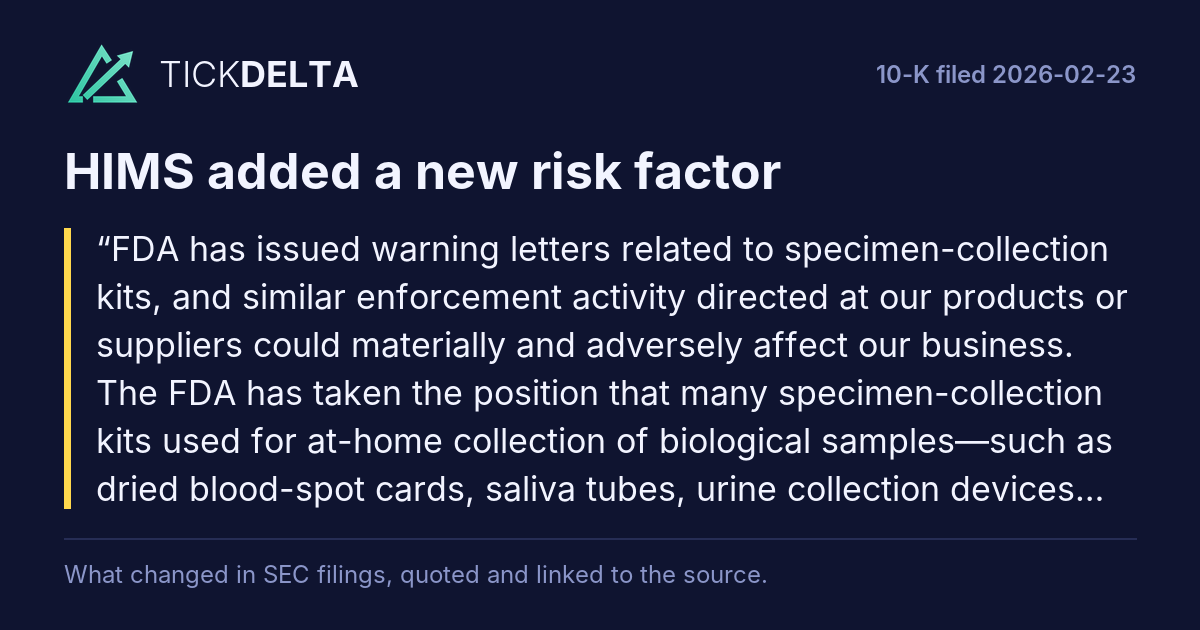
FDA has issued warning letters related to specimen-collection kits, and similar enforcement activity directed at our products or suppliers could materially and adversely affect our business.

The FDA has taken the position that many specimen-collection kits used for at-home collection of biological samples—such as dried blood-spot cards, saliva tubes, urine collection devices, and stool collection tools—are in vitro diagnostic (“IVD”) medical devices that require FDA clearance, approval, authorization, or compliance with other device requirements. FDA has issued warning letters alleging that companies distributed such specimen-collection kits without required marketing authorization. For example, in 2025, FDA issued two warning letters alleging that manufacturers were distributing specimen-collection kits without clearance or approval, including a warning letter to Blackfly Investments, LLC d/b/a Molecular Testing Labs, in which FDA stated that an HIV dried blood-spot self-collection kit was being offered without the necessary premarket authorization and rejected the company’s claims that the product was exempt from premarket review.

Certain workflows offered through our platform rely on at-home sample collection kits, including kits used for the collection of blood specimens. Depending on their design, components, labeling, and intended use, these kits may be considered medical devices subject to FDA regulatory requirements, and in some circumstances may require 510(k) clearance, de novo classification, premarket approval, or other authorization. It may not always be clear whether a particular kit used by us or by third-party suppliers requires such authorization or is being used in a manner consistent with its cleared, exempt, or authorized intended use. If FDA were to determine that any sample-collection kits used in connection with our testing services require premarket review, or that we or our suppliers are distributing or using such kits without required authorization, FDA could issue warning letters, request corrective actions, or require us or our suppliers to seek clearance or approval, discontinue distribution, modify labeling or instructions for use, or undertake additional validation.

Such FDA enforcement directed at any of the collection kits used by us or our suppliers could require us to identify and qualify alternative suppliers, update laboratory workflows, or modify instructions to customers. Suitable alternatives may not be immediately available, may require FDA review, or may be costly or operationally disruptive to implement.

Any enforcement action relating to specimen-collection kits—whether directed at us or at our suppliers—could delay or limit our ability to offer certain diagnostic testing services, increase compliance costs, negatively affect customer experience, disrupt laboratory operations, or otherwise materially and adversely affect our business, financial condition, and results of operations.

FDA regulation of laboratory developed tests (“LDTs”) and regulation by other countries of diagnostic offerings could materially and adversely affect our business.

The operations of our recently launched laboratory business could subject us to additional and evolving regulatory requirements. The FDA has regulatory authority over instruments, test kits, reagents, sample-collection devices, and other articles used by clinical laboratories, and enforces laws governing the development, testing, manufacturing, performance, labeling, advertising, marketing, distribution, and post-market surveillance of diagnostics. The FDA also inspects and reviews the manufacturing processes and performance of such diagnostics.

Historically, high-complexity clinical laboratories have offered LDTs under the CLIA regulatory framework administered by CMS without FDA premarket clearance or approval. On April 29, 2024, the FDA released a final rule seeking to phase out its long-standing enforcement discretion for LDTs over a multi-year period, asserting that LDTs are medical devices subject to the Federal Food, Drug, and Cosmetic Act’s premarket review and quality-system requirements. On March 31, 2025, the U.S.

District Court for the Eastern District of Texas vacated the rule, concluding that LDTs developed and used within a single clinical laboratory fall outside FDA’s statutory authority. FDA did not appeal, and the final rule was rescinded on September 19, 2025. It remains uncertain whether and how FDA may seek to regulate LDTs that are developed across multiple laboratories, used outside traditional clinical settings, or offered through digital-health or direct-to-consumer channels.

Additionally, the legal framework governing LDTs remains in flux. Legislative proposals—such as prior versions of the VALID Act—have sought to expressly grant FDA statutory authority over LDTs. If Congress were to enact legislation providing FDA with clear jurisdiction over LDTs, our laboratory operations could become subject to new premarket review requirements, manufacturing and quality-system obligations, adverse-event reporting rules, or other device-related controls. Such legislation could require us to obtain FDA authorization for tests currently offered as LDTs, modify or discontinue certain testing services, incur significant compliance costs, or adjust our diagnostic service offerings. Failure to comply with applicable or newly imposed requirements, or disruptions associated with required changes to our diagnostic products or laboratory workflows, could have a material adverse effect on our business, financial condition, and results of operations.

Regulation of diagnostic offerings outside the United States may also affect our laboratory operations. For example, the European Union In Vitro Diagnostics Regulation (EU IVDR) establishes a new classification system and imposes enhanced conformity-assessment, quality-system, and post-market obligations for in vitro diagnostic devices. Where applicable to our services, these requirements may increase compliance costs, limit the types of diagnostic services we can provide, or result in administrative or legal actions.

If any of the sample collection kits we use are considered prescription medical devices, we may be required to obtain additional state licenses to distribute such devices, and failure to obtain or maintain these licenses could adversely affect our operations.

Certain sample collection kits used in connection with our laboratory testing services may be classified as prescription medical devices depending on their design, components, intended use, labeling, and claims. Many states regulate the distribution, shipment, or sale of prescription medical devices and require distributors, third-party logistics providers, manufacturers, or repackagers of such devices to obtain and maintain state-issued device distribution licenses, permits, or registrations. State requirements vary widely and may apply regardless of whether devices are dispensed directly to consumers, shipped to laboratories, or distributed through affiliated or third-party facilities.

To the extent any of our sample collection kits are deemed prescription medical devices, we may be required to obtain state device-distribution licenses in multiple jurisdictions in order to lawfully store, ship, or distribute these kits to customers or to our laboratory. In addition, if our third-party manufacturers or suppliers are required to hold state device-distribution licenses, but fail to obtain or maintain them, we may be unable to continue sourcing certain kits from those suppliers without disruption. Licensing requirements may impose obligations relating to facility standards, recordkeeping, reporting, personnel qualifications, inspection preparedness, and ongoing compliance. Some states also require separate licenses for each physical location involved in device distribution activities.

If we fail to obtain or maintain any required state device-distribution licenses, or if regulators determine that our distribution activities fall within licensing categories for which we are not registered, we could be subject to fines, penalties, cease-and-desist orders, or other enforcement actions. We may also be prohibited from distributing certain collection kits in specific states until the appropriate licenses are obtained. Additionally, delays or denials in licensure, or the need to establish new licensed distribution channels, may increase our operational costs, impede our ability to provide certain diagnostic testing services, or require changes to our fulfillment and logistics workflows. Any such developments could adversely affect our business, financial condition, and results of operations.

Read in the 10-K

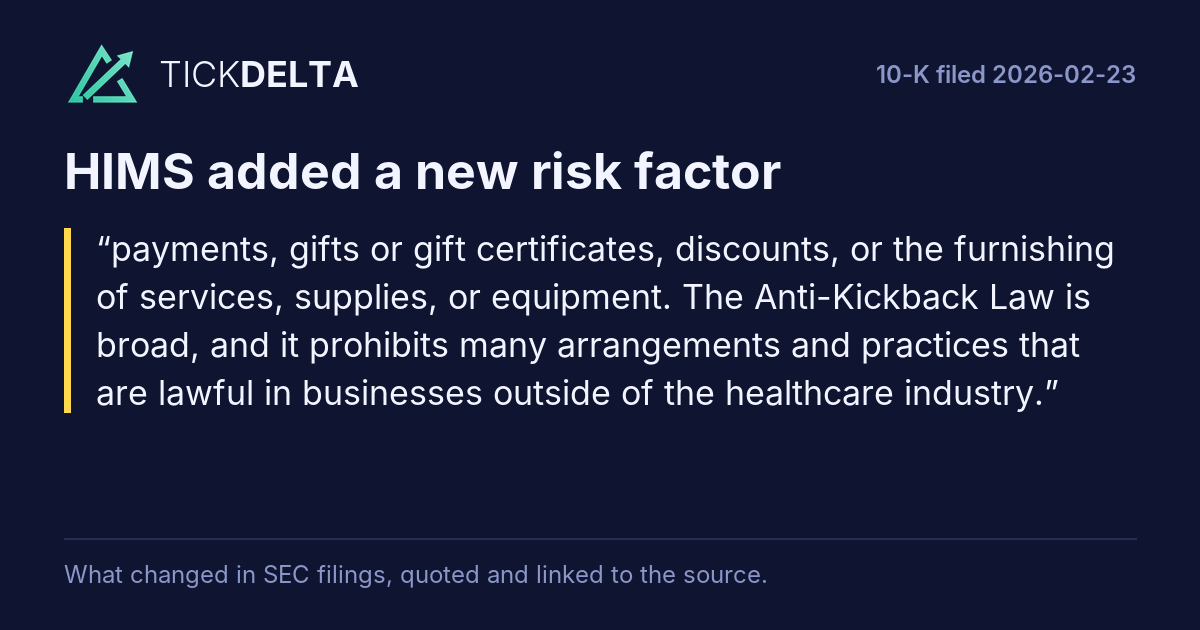
payments, gifts or gift certificates, discounts, or the furnishing of services, supplies, or equipment. The Anti-Kickback Law is broad, and it prohibits many arrangements and practices that are lawful in businesses outside of the healthcare industry.

Read in the 10-K

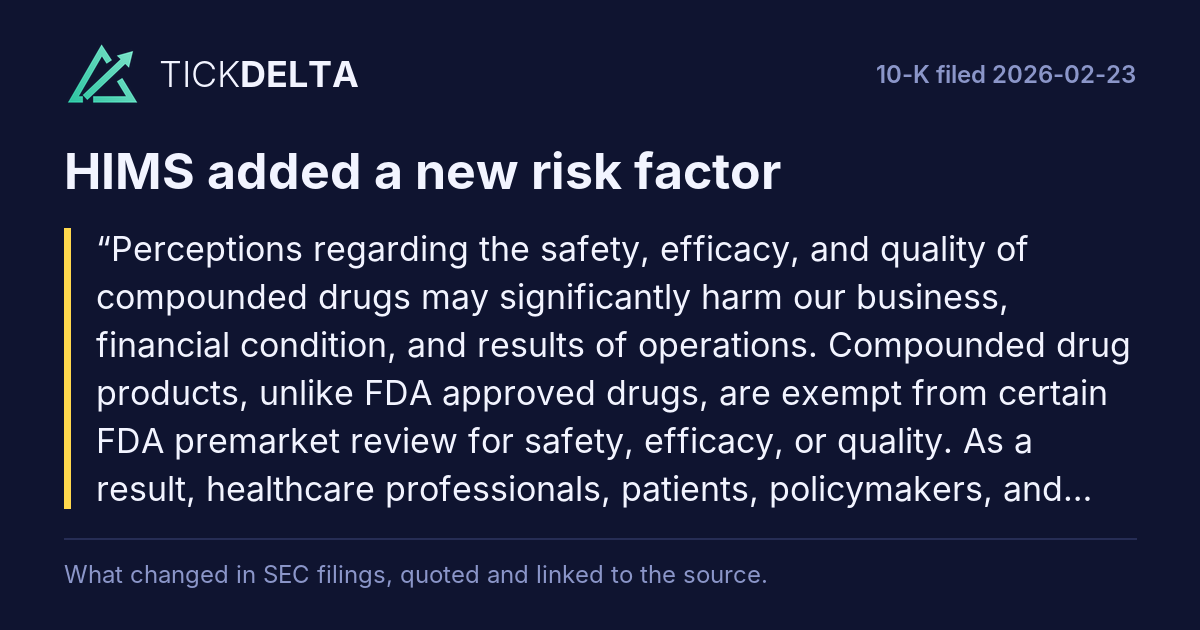
Perceptions regarding the safety, efficacy, and quality of compounded drugs may significantly harm our business, financial condition, and results of operations.

Compounded drug products, unlike FDA approved drugs, are exempt from certain FDA premarket review for safety, efficacy, or quality. As a result, healthcare professionals, patients, policymakers, and the media may perceive compounded drugs, including our products, as presenting greater safety or efficacy risks than FDA‑approved alternatives. These perceptions may arise from the inherent nature of compounding, from adverse events associated with compounded drugs generally, or from safety concerns involving us or other market participants, even if unrelated to our operations. In addition, negative perceptions can arise from other matters related to us or other developments in the industry, including recent communications issued by the FDA and HHS. See the risk factor titled “We may be subject to fines, penalties, and injunctions if we are determined to be promoting the use of products for unapproved uses, unapproved drugs, or in a false or misleading manner, or if the FDA determined that any of our compounded products do not meet the requirements for exemption under Section 503A or Section 503B of the FDCA, as applicable.” Heightened scrutiny of compounded drugs, which could stem from FDA safety alerts, adverse event reports, product recalls, contamination incidents at compounding facilities, or publicized enforcement actions, whether related to us, our products or otherwise, may lead to reduced physician and patient confidence in compounded products. This could decrease demand for our compounded offerings, including our GLP-1 products, or prompt customers to transition to FDA‑approved drugs.

Negative perceptions regarding compounded drugs may also increase the likelihood of regulatory inquiries by the FDA or other federal or state government agencies, inspections, or enforcement actions, as well as civil product liability or consumer litigation. Perceptions regarding these or other matters, including the recent communications issued by the FDA and HHS, have led and may continue to lead to increased scrutiny, inquiries, or adverse action by our business partners or third-party service providers, even where no deficiency exists in our practices or the practices of a Partner Pharmacy, Pharmacy or other Facility, or Manufacturing Supplier. If negative perceptions regarding compounded drugs or the recent FDA and HHS communications persist or intensify, our ability to maintain existing customer relationships, acquire new customers, or expand our compounded drug portfolio could be materially impaired, which would significantly harm our business, financial condition, and results of operations.

Read in the 10-K

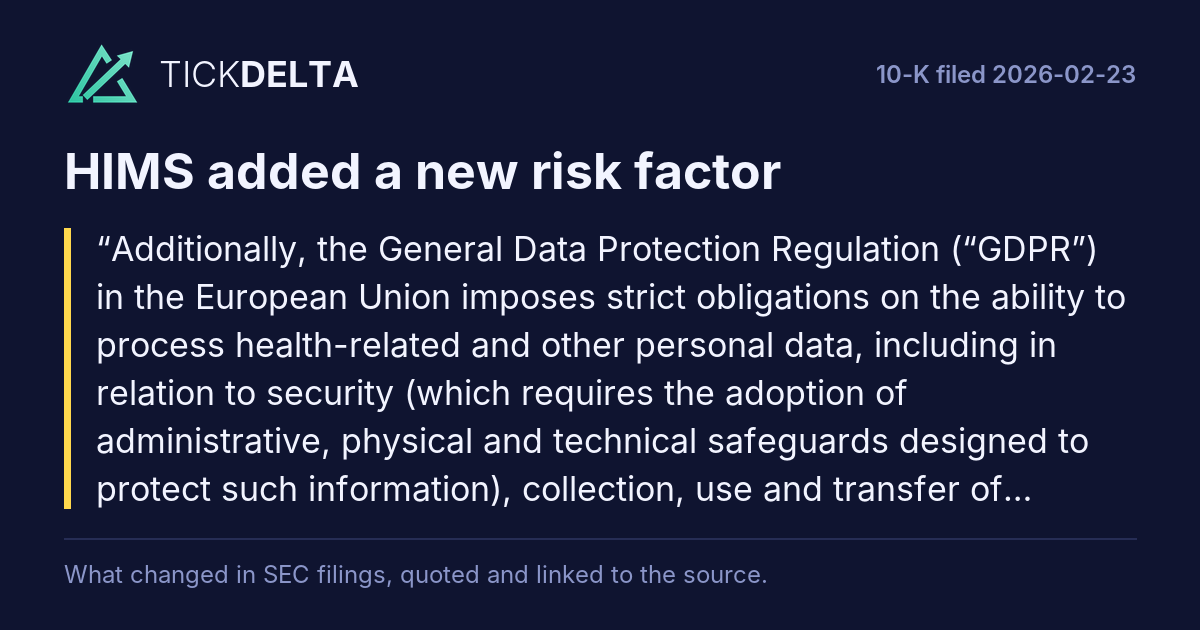
Additionally, the General Data Protection Regulation (“GDPR”) in the European Union imposes strict obligations on the ability to process health-related and other personal data, including in relation to security (which requires the adoption of administrative, physical and technical safeguards designed to protect such information), collection, use and transfer of personal data. These obligations include, without limitation, several transparency requirements relating to communications with data subjects regarding the processing of their personal data, ensuring an appropriate legal basis or condition applies to the processing of personal data, limitations on the retention of personal data, increased requirements pertaining to health data, notification of data processing obligations or security incidents to the competent national data protection authorities and/or data subjects, the security and confidentiality of the personal data, and various rights that data subjects may exercise with respect to their personal data.

Read in the 10-K

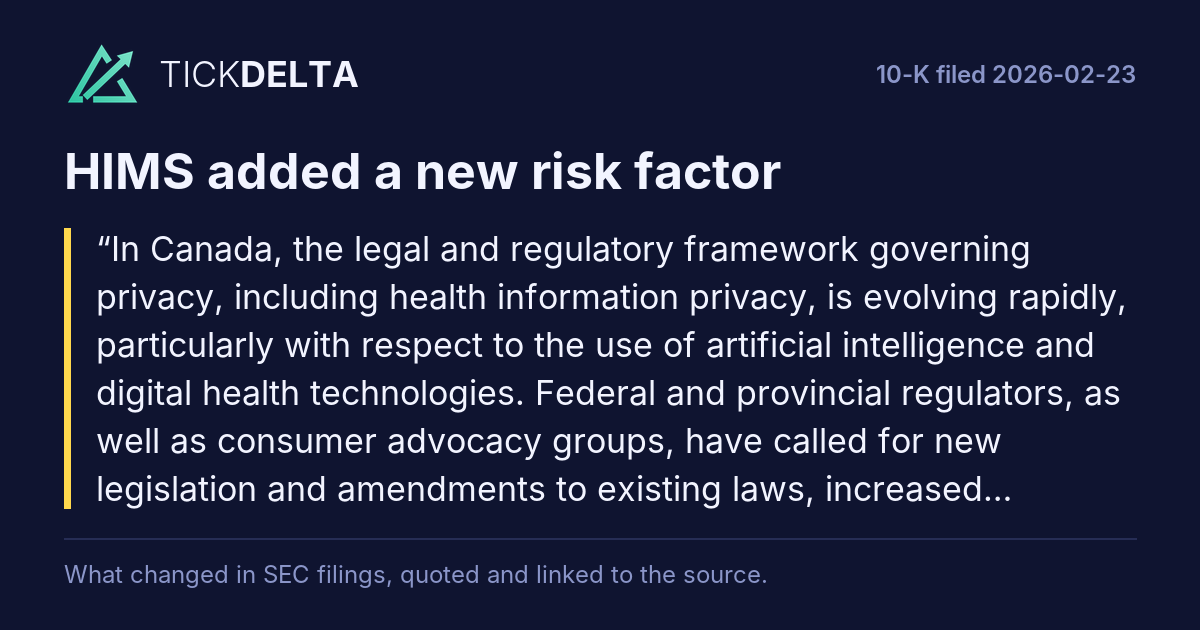
In Canada, the legal and regulatory framework governing privacy, including health information privacy, is evolving rapidly, particularly with respect to the use of artificial intelligence and digital health technologies. Federal and provincial regulators, as well as consumer advocacy groups, have called for new legislation and amendments to existing laws, increased regulatory oversight and enforcement, and have advanced differing interpretations of current requirements. The expanding and increasingly complex patchwork of Canadian privacy and health privacy laws may increase our compliance obligations and expose us to significant fines, penalties, regulatory investigations, and private rights of action in the event of actual or alleged noncompliance, including breaches or improper handling of personal health information. Compliance with these evolving requirements may require us to modify our business practices, systems, and controls, resulting in increased operational costs, potential limitations on our products and services, and adverse effects on demand for our offerings in Canada.

Read in the 10-K

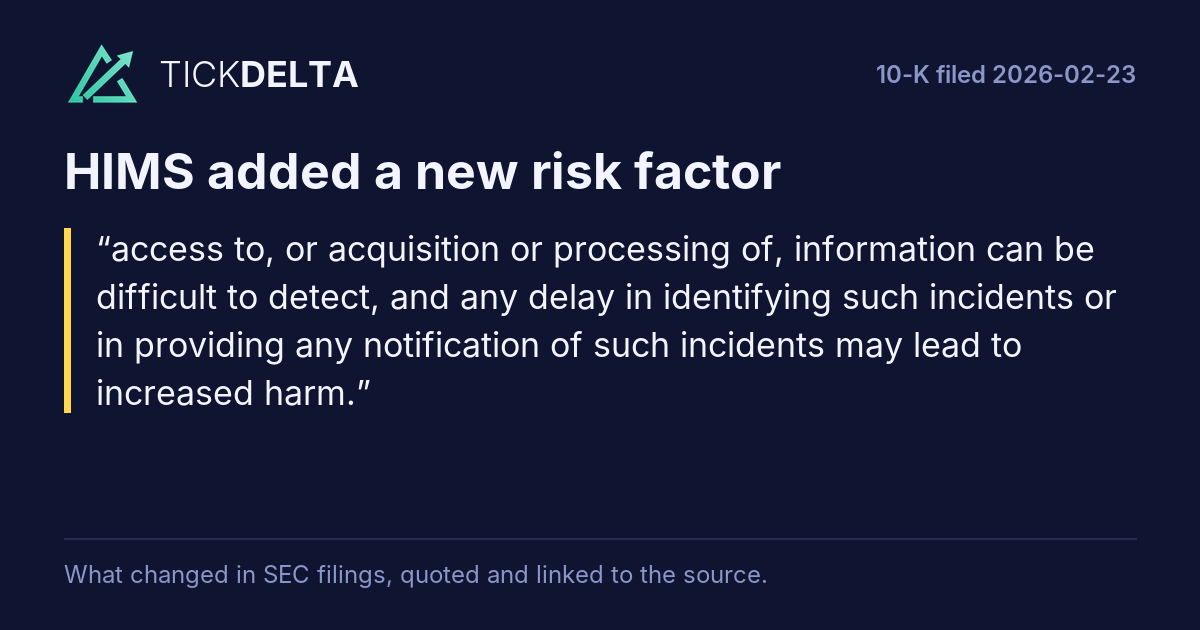
access to, or acquisition or processing of, information can be difficult to detect, and any delay in identifying such incidents or in providing any notification of such incidents may lead to increased harm.

Read in the 10-K

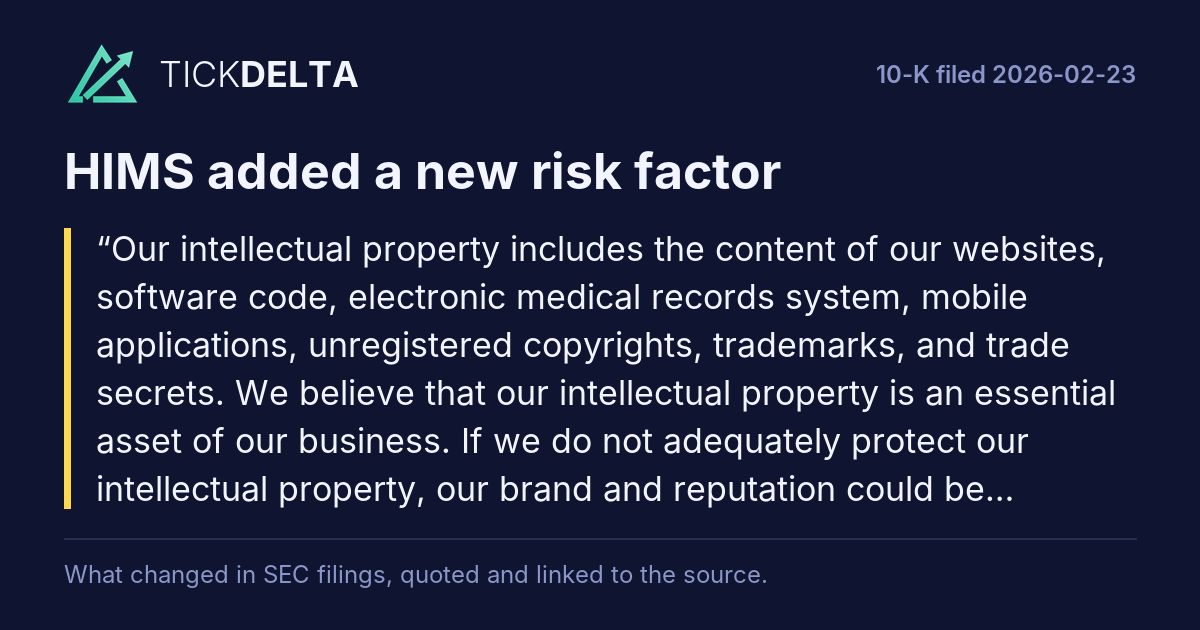
Our intellectual property includes the content of our websites, software code, electronic medical records system, mobile applications, unregistered copyrights, trademarks, and trade secrets. We believe that our intellectual property is an essential asset of our business. If we do not adequately protect our intellectual property, our brand and reputation could be harmed and competitors may be able to use our technologies and erode or negate any competitive advantage we may have, which could

Read in the 10-K

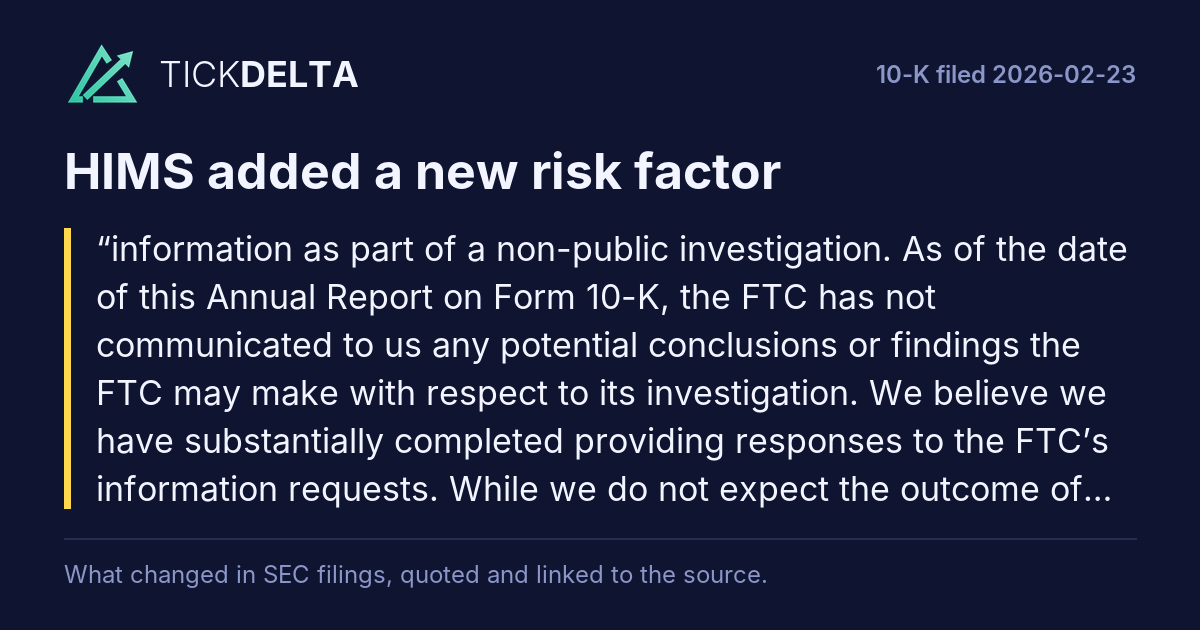
information as part of a non-public investigation. As of the date of this Annual Report on Form 10-K, the FTC has not communicated to us any potential conclusions or findings the FTC may make with respect to its investigation. We believe we have substantially completed providing responses to the FTC’s information requests. While we do not expect the outcome of this investigation to have a material impact on our business or operations, there can be no assurance that our expectations will prove correct.

Read in the 10-K

We have been, and in the future may be, subject to actions and public statements by U.S. federal and state government officials and agencies, which could materially and adversely affect our business, financial condition, results of operations and reputation.

We have recently, and in the future may be, the subject of public statements and actions by U.S. government officials and agencies. For instance, in September 2025 we received warning letters from the U.S. Food and Drug Administration with respect to statements on our websites regarding compounded semaglutide products and the statements’ compliance with the Federal Food, Drug, and Cosmetic Act, in February 2026 the U.S. Department of Health and Human Services ( “HHS”) issued a statement on X indicating that it had referred us to the Department of Justice for investigation for potential violations of the Federal Food, Drug, and Cosmetic Act and applicable Title 18 provisions, and in February 2026 the FDA issued a statement, directly naming our company, that the agency intends to restrict GLP-1 active pharmaceutical ingredients intended for use in non-FDA-approved compounded drugs that are being mass-marketed as similar alternatives to FDA-approved drugs.

We cannot predict whether such public statements and actions may lead to investigations, enforcement actions or other proceedings, nor can we predict the timing, scope or outcomes thereof. Any such investigation, enforcement action or other proceeding would require significant management attention and resources, result in substantial legal fees and other costs, and divert attention from our business operations. In addition, the public nature of statements by U.S. government officials and agencies and the pendency of any investigation, enforcement action or other proceeding related thereto may prompt additional regulatory scrutiny, including investigations, enforcement actions, or other proceedings, by other governmental officials and agencies at the federal or state level. These investigations, enforcement actions, and other proceedings by other state and federal governmental officials and agencies could be broader in scope than public statements and actions currently suggest and impact other parts of our business and operations. Further, such public statements and the pendency of any investigation, enforcement action or other proceeding related thereto may negatively affect our public reputation and relationships with customers, healthcare providers, investors, and business partners. If any investigation, enforcement action, or proceeding results in findings adverse to us, we could be subject to civil or criminal penalties, fines, injunctions, consent decrees, restrictions on our ability to operate our business, exclusion from participation in certain programs, or other sanctions. Any such outcome could have a material adverse effect on our business, financial condition, and results of operations.

Furthermore, the public nature of these government statements may encourage additional regulatory scrutiny of our business, inspire private litigation, or prompt negative media coverage, any of which could harm our reputation and adversely affect our stock price. Even if we are ultimately able to resolve these matters favorably, the uncertainty created by these government actions and statements may continue to have a negative impact on our business and stock price for an extended period.

Read in the 10-K

The preparation of financial statements in conformity with U.S. GAAP and our key metrics require management to make estimates and assumptions that affect the amounts reported in the consolidated financial statements and accompanying notes and amounts reported in our key metrics. We base our estimates on historical experience and on various other assumptions that
Read in the 10-K

Paragraphs in the 10-Q filed Nov 9, 2026 that were not in the one before

New in the latest 10-Q

19 paragraphs in the 10-Q filed Nov 9, 2026 with nothing like them in the 10-Q filed Aug 10, 2026 (at least half the words must differ; new numbers alone do not count). Quoted exactly, grouped by the item heading above them. This is text that changed, not a judgement of how serious it is.

Financial statements and notes

Available-for-sale debt instruments with original maturities at the date of purchase greater than three months and remaining maturities of less than one year are classified as short-term available-for-sale investments on the unaudited condensed consolidated balance sheets. Available-for-sale debt instruments with original maturities at the date of purchase and remaining maturities of greater than one year are classified as long-term available-for-sale investments on the unaudited condensed consolidated balance sheets. The Company initially intends to sell such investments, if any, at or close to maturity. The available-for-sale investments are reported at fair value, with unrealized gains and losses, net of tax, recorded in other comprehensive income (loss) on the unaudited condensed consolidated statements of operations and comprehensive (loss) income, except for credit losses. The Company determines the cost of the investment sold based on specific identification at the individual security level. The Company records the interest income and realized gains and losses on the sale of these instruments within other (expense) income, net on the unaudited condensed consolidated statements of operations and comprehensive (loss) income.

Read in the 10-Q

To fulfill its promise to customers in the United States for certain contracts that include professional medical consultations, the Company maintains relationships with various “Affiliated Medical Groups,” which are professional corporations or other

Read in the 10-Q

of assets acquired and liabilities assumed, inclusive of measurement period adjustments, based on the exchange rate on the closing date (in thousands):

Read in the 10-Q

acquired. The tangible assets acquired are included as part of property, equipment, and software, net as presented on the Company’s unaudited condensed consolidated balance sheets.

Read in the 10-Q

The fair values of cash, accounts receivable, accounts payable, and accrued liabilities approximated their carrying values as of September 30, 2026 and December 31, 2025, due to their short-term nature. The current and noncurrent deferred acquisition payable amounts, a significant majority of which is related to the Eucalyptus business combination, are a fixed monetary

Read in the 10-Q
Show the other 14

of the holder. As of September 30, 2026, the conditions allowing holders of the 2030 Convertible Notes to convert were not met.

Read in the 10-Q

Shares Weighted Average Grant Date Fair Value Unvested at December 31, 2025 13,075 $ 27.50 Granted 14,632 26.68 Vested (5,238) 23.72 Forfeited and expired (3,291) 26.72 Unvested at September 30, 2026 19,178 $ 28.04

Read in the 10-Q

were primarily driven by the continued scaling of our operations, as well as our investments in engineering and artificial intelligence (“AI”) personnel.

Read in the 10-Q

Risk Factors

The markets for healthcare and technology are intensely competitive, subject to rapid change, and significantly affected by new product and technological introductions and other market activities of industry participants. We compete directly not only with other established telehealth providers but also traditional healthcare providers, pharmacies, pharmaceutical companies, clinical

Read in the 10-Q

events have the potential to impact our employees’ and service providers’ abilities to commute to work or to stay connected effectively while working remotely.

Read in the 10-Q

Advertising of pharmacy services must comply with the guidance of the GPhC and the Medicines and Healthcare products Regulatory Agency (the “MHRA”). Any promotion of prescription medicines must be directed only to healthcare professionals.

Read in the 10-Q

In 2026, we began offering testosterone replacement therapy, which is subject to controlled substance laws and regulations. See “ - Our offering of testosterone replacement therapy subjects us to additional regulation, and any failure to comply could adversely affect our business.”

Read in the 10-Q

Our offering of testosterone replacement therapy subjects us to additional regulation, and any failure to comply could adversely affect our business.

Read in the 10-Q

In 2026, we began offering testosterone replacement therapy, including certain branded products. Certain products available through the offering are Schedule III controlled substances under the federal Controlled Substances Act and are also classified as controlled substances under certain state laws. Providers and entities that prescribe, dispense, or distribute controlled substances are subject to additional requirements, including DEA registration, recordkeeping, reporting, labeling, and security requirements designed to prevent diversion, and to state controlled substance laws, which may be more restrictive or limiting than federal requirements and differ by state. This subjects the Affiliated Medical Groups, Providers, the Pharmacies, and Partner Pharmacies to additional requirements, and failure to comply could result in civil or criminal penalties, loss of DEA or state registrations, and reputational harm.

Read in the 10-Q

The ability of Providers to prescribe controlled substances through telehealth currently depends on temporary flexibilities under DEA and HHS waivers scheduled to expire on December 31, 2026, and on anticipated DEA final rulemaking specific to telehealth-based prescribing of controlled substances that may include a new registration framework, the timing, application, implementation, and terms of which are uncertain. Future requirements could require additional or state-by-state registrations for Providers and us or restrict our ability to offer access to these products through telehealth. In addition, carriers or regulators could restrict the shipment of controlled substances, which could increase costs or delay delivery.

Read in the 10-Q

Products containing controlled substances and hormone replacement therapy may also generate public controversy, and federal and state legislatures and agencies may take additional action to address perceived misuse or overuse, which could limit our ability to offer access to these products or harm our reputation.

Read in the 10-Q

integrity agreement and exclusion from participation in federal healthcare programs. Many states have adopted laws similar to the False Claims Act.

Read in the 10-Q

The prescription drug and medical device products available through our platform require approval or authorization by the FDA (and equivalent regulatory authorities in the United Kingdom, the European Union, and Canada) and are subject to the limitations placed by the FDA (or equivalent regulatory authorities in the United Kingdom, the European Union, and Canada)

Read in the 10-Q

Companies in our industry, and other intellectual property rights holders seeking to profit from royalties in connection with grants of licenses, own large numbers of patents, copyrights, trademarks, and trade secrets, and frequently enter into litigation

Read in the 10-Q

The 10-Q's risk factors against the 10-K

Item 1A of the 10-Q filed Nov 9, 2026 against Item 1A of the 10-K filed Feb 23, 2026. A 10-Q repeats only the risks that changed, so a 10-K paragraph that is missing from it is not counted as removed. Added is a paragraph with nothing like it in the 10-K, Reworded a sentence that is in both with several words changed, Quiet changes a sentence in both where one to four words changed and one is a hedge or a modal (cut words struck through, new words highlighted). Text on the page, not a score; each links to the filing at sec.gov.

Added10-Q Nov 9, 2026 vs 10-K Feb 23, 2026
We have encountered and will continue to encounter significant risks and uncertainties frequently experienced by growing companies in rapidly changing and heavily regulated industries, such as attracting new customers and Providers to our platform, retaining our customers and encouraging them to utilize new offerings we make available, increasing the number of conditions

Read it in the 10-Q at sec.gov

Added10-Q Nov 9, 2026 vs 10-K Feb 23, 2026
The regulatory landscape applicable to compounded GLP-1s continues to rapidly evolve, which could result in penalties, changes to our business practices or other adverse consequences. We began offering certain compounded GLP-1 offerings in May 2024 as part of our U.S. weight loss offering. We currently only use 503A compounding pharmacies for the fulfillment and dispensing of compounded GLP-1 products. In February 2026, the FDA issued a statement indicating that the agency intends to restrict GLP-1 active pharmaceutical ingredients intended for use in non-FDA-approved compounded drugs that are

Read it in the 10-Q at sec.gov

Added10-Q Nov 9, 2026 vs 10-K Feb 23, 2026
In March 2026, we announced a strategic shift for our U.S. weight loss offering. As a result, we evolved our United States weight loss offering to match our global approach towards providing access to branded GLP-1 medications, and offering access to compounded GLP-1 products through the platform on a limited scale. In addition, we launched a membership program for our weight loss offerings. In connection with the strategic shift and membership program, we face risks related to customer acquisition, pricing, and retention. Customers who previously accessed compounded alternatives may be unwilling or unable to transition to branded therapies, which could adversely affect demand, conversion rates, and revenue. In addition, our margins may be impacted by the cost of procuring branded medications and limitations on our ability to pass through price increases. We may also experience operational and financial variability during this transition, including changes in customer behavior, increased churn, or reduced engagement. Further, our reliance on third-party manufacturers and supply chains for branded GLP-1 products exposes us to potential supply disruptions, pricing changes, and contractual limitations outside of our control.

Read it in the 10-Q at sec.gov

Added10-Q Nov 9, 2026 vs 10-K Feb 23, 2026
The markets for healthcare and technology are intensely competitive, subject to rapid change, and significantly affected by new product and technological introductions and other market activities of industry participants. We compete directly not only with other established telehealth providers but also traditional healthcare providers, pharmacies, pharmaceutical companies, clinical

Read it in the 10-Q at sec.gov

Added10-Q Nov 9, 2026 vs 10-K Feb 23, 2026
We have made, and expect to continue to make, significant investments in AI-enabled capabilities to enhance the customer experience, improve customer service and operational efficiency, support provider and internal workflows, develop new products and features, and strengthen our technology platform. By leveraging data generated through our integrated platform, we seek to improve the performance and effectiveness of our products, services, and technology platform. These investments have required and will require significant expenditures on technology, infrastructure, and specialized talent, and may take longer than expected to develop, deploy, or achieve meaningful adoption or commercial benefit. If these investments fail to produce the benefits we expect or generate an adequate return on the anticipated timeline, our business, financial condition, and results of operations could be adversely affected.

Read it in the 10-Q at sec.gov

Show the other 27
Added10-Q Nov 9, 2026 vs 10-K Feb 23, 2026
The development and deployment of AI involve significant risks, and there can be no assurance that our AI-enabled capabilities will perform as intended or improve our products, services, operations, or profitability. AI may produce inaccurate, incomplete,

Read it in the 10-Q at sec.gov

Added10-Q Nov 9, 2026 vs 10-K Feb 23, 2026
or misleading outputs, biased results, or other unintended outcomes that adversely affect customer interactions, provider workflows, operational efficiency, or other aspects of our business. Any actual or perceived failure of our AI-enabled capabilities, or concerns regarding the use of AI in healthcare, could result in customer dissatisfaction, regulatory scrutiny, litigation, reputational harm, or increased operating costs. The continuous development, testing, maintenance, and deployment of our AI-enabled capabilities may also increase the cost profile of our offerings and may involve unforeseen difficulties or errors.

Read it in the 10-Q at sec.gov

Added10-Q Nov 9, 2026 vs 10-K Feb 23, 2026
Our AI initiatives also depend on our ability to attract and retain specialized talent and maintain access to third-party technologies and infrastructure, including AI models, cloud computing services, and processing hardware, and we face significant competition from companies developing AI-enabled healthcare and digital health technologies. If our AI strategy, investments, or AI-enabled capabilities fail to perform as expected, are delayed, do not compete effectively with our competitors’ offerings, fail to gain customer or provider acceptance, or otherwise do not achieve the benefits we expect, our business, reputation, financial condition, and results of operations could be adversely affected.

Read it in the 10-Q at sec.gov

Added10-Q Nov 9, 2026 vs 10-K Feb 23, 2026
Groups and us. These laws and regulations are subject to change and enforcement based upon political, regulatory, and other influences, and have been the subject of a recent increase in focus and action by a number of state legislatures. More restrictive treatment of healthcare professionals’ relationships with non-professionals such as our company in the healthcare services delivery context could have a material adverse effect on our business, financial condition, and results of operations.

Read it in the 10-Q at sec.gov

Added10-Q Nov 9, 2026 vs 10-K Feb 23, 2026
events have the potential to impact our employees’ and service providers’ abilities to commute to work or to stay connected effectively while working remotely.

Read it in the 10-Q at sec.gov

Added10-Q Nov 9, 2026 vs 10-K Feb 23, 2026
Litigation, regulatory inquiries, and regulatory proceedings, particularly those involving healthcare, pharmaceuticals, consumer protection, data privacy, securities, or class actions, could be protracted and expensive, and their outcomes are inherently difficult to predict. For example, in October 2023, the FTC issued to us a Civil Investigative Demand requesting information regarding our privacy, advertising, subscription, and cancellation practices as part of a non-public investigation related to the FTC Act and ROSCA. In July 2026, the FTC, along with the Utah Division of Consumer Protection and Los Angeles County on behalf of the People of the State of California, filed a complaint in the United States District Court for the Northern District of California against us alleging violations of Section 5 of the FTC Act and certain provisions of ROSCA and analogous state statutes seeking a permanent injunction, monetary relief for an unspecified amount, civil penalties, and other relief as determined by the court. As of September 30, 2026, we had recorded an accrual of approximately $60 million for estimated probable losses in connection with this matter. The amount of the accrual may decrease or increase materially in future periods as the litigation progresses and additional information becomes available. There can be no assurance that we will prevail in the

Read it in the 10-Q at sec.gov

Added10-Q Nov 9, 2026 vs 10-K Feb 23, 2026
litigation or otherwise achieve a favorable outcome, and the defense or resolution of this matter could involve significant monetary costs or penalties and could materially adversely affect our financial condition or results of operations, or business. In addition, any non-monetary remedies or compliance obligations imposed in connection with the resolution of this matter could adversely affect our business operations. Additionally, in February 2026, we received a letter from the staff of the Securities and Exchange Commission, Division of Enforcement, notifying us that it had opened an investigation and requesting that we preserve certain documents and information concerning our public statements and disclosures regarding compounded semaglutide and related business relationships (the “SEC Investigation”). We are cooperating with the SEC Investigation but are unable to predict when or how this matter will be concluded, including any financial impact.

Read it in the 10-Q at sec.gov

Reworded10-Q Nov 9, 2026 vs 10-K Feb 23, 2026
If our operations or those of the Pharmacies or Affiliated Medical Groups are found to be in violation of any of the federal, state, and foreign laws described above or any other current or future fraud and abuse or other healthcare laws and regulations that apply to us, we may be subject to penalties, including significant criminal, civil and administrative penalties, damages and fines, disgorgement, additional reporting requirements and oversight, imprisonment for individuals, and exclusion from the ability to participate in government healthcare programs, such as Medicare and Medicaid, as well as contractual damages and reputational harm.

Read it in the 10-Q at sec.govThe 10-K sentence

Reworded10-Q Nov 9, 2026 vs 10-K Feb 23, 2026
Department of Health and Human Services ( “HHS”) (“HHS”) issued a statement on X indicating that it had referred us to the Department of Justice for investigation for potential violations of the Federal Food, Drug, and Cosmetic Act and applicable Title 18 provisions, and in February 2026 the FDA issued a statement, directly naming our company, that the agency intends to restrict GLP-1 active pharmaceutical ingredients intended for use in non-FDA-approved compounded drugs that are being mass-marketed as similar alternatives to FDA-approved drugs.

Read it in the 10-Q at sec.govThe 10-K sentence

Reworded10-Q Nov 9, 2026 vs 10-K Feb 23, 2026
We believe that, because of our operating processes, in relation to our customers, we are not a covered entity or a business associate under the Health Insurance Portability and Accountability Act (“HIPAA”), which establishes a set of national privacy and security standards for the protection of protected health information by health plans, healthcare clearinghouses, and certain healthcare providers, referred to as covered entities, and the business associates with whom such covered entities contract for services. HIPAA.

Read it in the 10-Q at sec.govThe 10-K sentence

Reworded10-Q Nov 9, 2026 vs 10-K Feb 23, 2026
While we have not experienced material supply chain issues to date, the The loss or disruption of such supply arrangements for any reason, including as a result of ongoing conflict arising out of the Russian invasion of Ukraine and the hostilities and conflict in the Middle East, other geopolitical conflicts or instability, civil unrest, acts of war or terrorism, trade sanctions, tariffs, inflation, health epidemics or pandemics, labor disputes, loss or impairment of key manufacturing sites, inability to procure sufficient raw materials, quality control issues, ethical sourcing issues, a supplier’s suppliers’ regulatory or compliance failures, suppliers’ financial distress, natural disasters, looting theft or other external factors over which we have no control, could interrupt product supply and, if not effectively managed and remedied, have a material adverse impact on our business, results of operations and financial condition.

Read it in the 10-Q at sec.govThe 10-K sentence

Reworded10-Q Nov 9, 2026 vs 10-K Feb 23, 2026
Department of Health and Human Services ( “HHS”) issued a statement on X indicating that it had referred us to the Department of Justice for investigation for potential violations of the Federal Food, Drug, and Cosmetic Act and applicable Title 18 provisions, and in February 2026 the FDA issued a statement, directly naming our company, that the agency intends to restrict GLP-1 active pharmaceutical ingredients intended for use in non-FDA-approved compounded drugs that are being mass-marketed as similar alternatives to FDA-approved drugs.

Read it in the 10-Q at sec.govThe 10-K sentence

Reworded10-Q Nov 9, 2026 vs 10-K Feb 23, 2026
If there is a change in laws or regulations related to our business, or the interpretation or enforcement thereof, that adversely affects our structure or operations, including greater restrictions on the use of asynchronous telehealth or remote supervision of nurse practitioners or physician assistants, new or changed requirements for prescribing controlled substances through telehealth, or limitations on the ability to develop or distribute compounded pharmaceutical products, it could have a material adverse effect on our business, financial condition, and results of operations.

Read it in the 10-Q at sec.govThe 10-K sentence

Reworded10-Q Nov 9, 2026 vs 10-K Feb 23, 2026
While these failures From time to time, our Facilities have not caused a material interruption to our supply arrangements to date, a future also experienced batch failures, and any material interruption could cause reputational damage and have a material adverse impact on our business, results of operations and financial condition.

Read it in the 10-Q at sec.govThe 10-K sentence

Reworded10-Q Nov 9, 2026 vs 10-K Feb 23, 2026
We believe that, because of our operating processes, in relation to our customers, we are not a covered entity or a business associate under In the United States, the Health Insurance Portability and Accountability Act (“HIPAA”), which establishes a set of national privacy and security standards for the protection of protected health information by health plans, healthcare clearinghouses, and certain healthcare providers, referred to as covered entities, and the business associates with whom such covered entities contract for services.

Read it in the 10-Q at sec.govThe 10-K sentence

Reworded10-Q Nov 9, 2026 vs 10-K Feb 23, 2026
Any technological breakthroughs in monitoring, treatment, or prevention of medical conditions, including through disruptive technologies such as artificial intelligence, AI, that we are unable to similarly leverage could reduce the potential market for our offerings, which could significantly reduce our revenue and our potential to grow certain aspects of our business.

Read it in the 10-Q at sec.govThe 10-K sentence

Reworded10-Q Nov 9, 2026 vs 10-K Feb 23, 2026
While we believe the compounded drug products available through our platform meet the requirements for exemption under Section 503A of the FDCA, if the FDA determines that such products do not meet the requirements for exemption, the FDA could subject us, our Facilities, Partner Pharmacies, Affiliated Medical Groups. Groups, Providers, or Manufacturing Suppliers to regulatory and/or legal enforcement actions, such as the issuance of a warning letter, injunction, seizure, civil fine, and criminal penalties.

Read it in the 10-Q at sec.govThe 10-K sentence

Reworded10-Q Nov 9, 2026 vs 10-K Feb 23, 2026
If we do not adequately protect our intellectual property, our brand and reputation could be harmed and competitors may be able to use our technologies and erode or negate any competitive advantage we may have, which could materially harm our business, negatively affect our position in the marketplace, limit our ability to commercialize our technology, and delay or render impossible our achievement of profitability.

Read it in the 10-Q at sec.govThe 10-K sentence

Reworded10-Q Nov 9, 2026 vs 10-K Feb 23, 2026
From time to time, we are subject to legal and regulatory proceedings and inquiries in the ordinary course of business, which can include intellectual property disputes or claims related to our marketing or sale of products, inquiries, any of which may be time-consuming and costly to defend and could materially harm our business and results of operations.

Read it in the 10-Q at sec.govThe 10-K sentence

Quiet changes10-Q Nov 9, 2026 vs 10-K Feb 23, 2026
If this any such supplier stops fulfilling purchase orders, it could significantly slow our ability to fulfill these orders until new suppliers are identified and fully onboarded and/or our internal manufacturing capabilities are expanded, which could adversely impact our results of operations and business.

Read it in the 10-Q at sec.govThe 10-K sentence

Quiet changes10-Q Nov 9, 2026 vs 10-K Feb 23, 2026
Any such investigation, enforcement action or other proceeding would could require significant management attention and resources, result in substantial legal fees and other costs, and divert attention from our business operations.

Read it in the 10-Q at sec.govThe 10-K sentence

Quiet changes10-Q Nov 9, 2026 vs 10-K Feb 23, 2026
See the risk factor titled “—If “ - If we are unable to expand or maintain the scope of our offerings, including the number and type of products and services that we offer, the number and quality of Providers serving our customers, and the number and types of conditions capable of being

Read it in the 10-Q at sec.govThe 10-K sentence

Quiet changes10-Q Nov 9, 2026 vs 10-K Feb 23, 2026
For example, the California Consumer Privacy Act and the California Privacy Rights Act require, among other things, covered companies to provide new certain disclosures to California consumers and afford such consumers new abilities to opt-out of certain sales of personal information.

Read it in the 10-Q at sec.govThe 10-K sentence

Quiet changes10-Q Nov 9, 2026 vs 10-K Feb 23, 2026
To date, the vast significant majority of our revenue in the United States has been, and we expect it to continue to be, derived from customers who purchase subscription-based prescription products and services through our platform.

Read it in the 10-Q at sec.govThe 10-K sentence

The first 32 of 111 are shown (at most 12 of each type).

Phrases used for the first time

Two-word phrases in Risk Factors of the 10-K filed Feb 23, 2026 that are in none of the 1 earlier 10-Ks stored, back to Feb 24, 2025

proposed acquisition ×22foreign federal ×11prescription medicines ×8collection kits ×8public statements ×7issued statement ×6digital health ×6sample collection ×6specimen-collection kits ×5fda issued ×4general public ×4health platform ×4federal food ×4perceptions regarding ×4investigation enforcement ×4state government ×3
Where each one is used
  • proposed acquisition: Completion of the planned acquisition of Eucalyptus (the “Proposed Acquisition”) is subject to the satisfaction or waiver of customary and other closing conditions, including regulatory approvals. We cannot predict whether or when such approvals will be received or such conditions will be satisfied. The failure to...
  • foreign federal: For example, in May 2024, we began providing access to compounded injectable semaglutide, a GLP-1, on our platform as part of our weight loss specialty. GLP-1s are subject to elevated consumer demand, foreign, federal and state-specific regulatory limitations, limited manufacturing capacity and potential supply...
  • prescription medicines: Promoting prescription medicines via influencers is strictly prohibited in the United Kingdom, the European Union, and Canada. Regulators have increased scrutiny of social media posts, sponsored content, and discount codes that illegally advertise prescription medicines to the public, particularly for high-profile...
  • collection kits: Furthermore, we may also become subject to certain FDA premarket review requirements relating to laboratory testing products, including sample collection kits and related components, that are used in the laboratory testing services, including but not limited to 510(k) clearance, de novo classification, premarket...
  • public statements: •We have been, and in the future may be, subject to actions and public statements by U.S. federal and state government officials and agencies, which could materially and adversely affect our business, financial condition, results of operations and reputation.
  • issued statement: The evolving regulatory landscape has also impacted our ability to continue offering access to such products. For example, in the United States, all doses of semaglutide branded under Ozempic and Wegovy became listed as available on the FDA’s shortage list as of October 30, 2024. On February 21, 2025, the FDA...
  • digital health: Expanding our business to attract customers, Providers, and suppliers in countries other than the United States is a core pillar of our long-term growth strategy. For instance, in July 2025, we completed the acquisition of Zava, a digital health platform with operations in the United Kingdom, Germany, Republic of...
  • sample collection: Furthermore, we may also become subject to certain FDA premarket review requirements relating to laboratory testing products, including sample collection kits and related components, that are used in the laboratory testing services, including but not limited to 510(k) clearance, de novo classification, premarket...

The 10-K at sec.gov

Used at least twice, small words left out. Counted, not picked: a phrase can be new because the company renamed something.

What was taken out

8 paragraphs of last year's Risk Factors with nothing like them now. The longest are quoted.

Across all companies
A majority of the fulfillment and distribution of products available through our platform is done by the Pharmacies. While the Pharmacies operate exclusively in support of our business, we do not directly own XeCare or Apostrophe Pharmacy. We are in the process of transitioning both Pharmacies to wholly owned subsidiaries, which we expect to complete this year. Many states require advance notice and approval by the state’s board of pharmacy with respect to changes in ownership. These requirements could result in delays to a Pharmacy obtaining licensure in a given jurisdiction or...
In the 10-K filed Feb 24, 2025
Although we believe our products meet the requirements for the statutory exemptions in 503A and 503B, changes to the regulatory requirements for compounding GLP-1 products may adversely impact our financial conditions and business operations, and we cannot predict such changes.
In the 10-K filed Feb 24, 2025
The federal False Claims Act (the “False Claims Act”) generally prohibits anyone from knowingly and willingly presenting, or causing to be presented, any claims for payment for goods or services to third-party payors that are false or fraudulent and
In the 10-K filed Feb 24, 2025
licensure requirements applicable to entities engaging in the distribution of prescription medical devices and products depending on how we integrate the laboratory services into our current customer offerings.
In the 10-K filed Feb 24, 2025

Sources

Item 1A of each 10-K and 10-Q on EDGAR, quoted exactly. Each paragraph links to the filing at sec.gov.

Also

10-K change: what was reworded or cut, section by section.

Work with it

Excel workbook · CSV. Google Sheet that stays up to date: paste =IMPORTDATA("https://tickdelta.com/company/HIMS/export.csv") into a cell.

Next:10-K change
Esc

Type a ticker such as AAPL, a name, an investor such as Buffett, or a topic such as tariffs. ↑ ↓ to move, Enter to open.