Added10-Q Nov 3, 2026 vs 10-K Feb 25, 2026
• reimbursement decisions and price negotiations with foreign government payors;
Each branch is a paragraph in Risk Factors with nothing like it in the 10-K filed Feb 26, 2025. A box jumps to the paragraph as filed, below.
41 paragraphs in Risk Factors of the 10-K filed Feb 25, 2026 with nothing like them in the 10-K filed Feb 26, 2025. Quoted exactly. Paragraphs that were only edited are under 10-K change.
•our ability to successfully internalize operation of our patient services hub from our third-party vendor;
In clinical studies of brelovitug, the most common treatment-related AEs were injection-related events that resolved within 1-2 days, and cases of flu-like illness that were mild-moderate in severity.
We participate in, or are subject to, the Medicaid Drug Rebate Program, as administered by Centers for Medicare & Medicaid Services (“CMS”), and other federal and state government pricing programs in the U.S., and we may participate, or be asked to participate, in additional government pricing programs or supplemental rebates in the future. These programs generally require us to pay rebates or otherwise provide discounts to government payors in connection
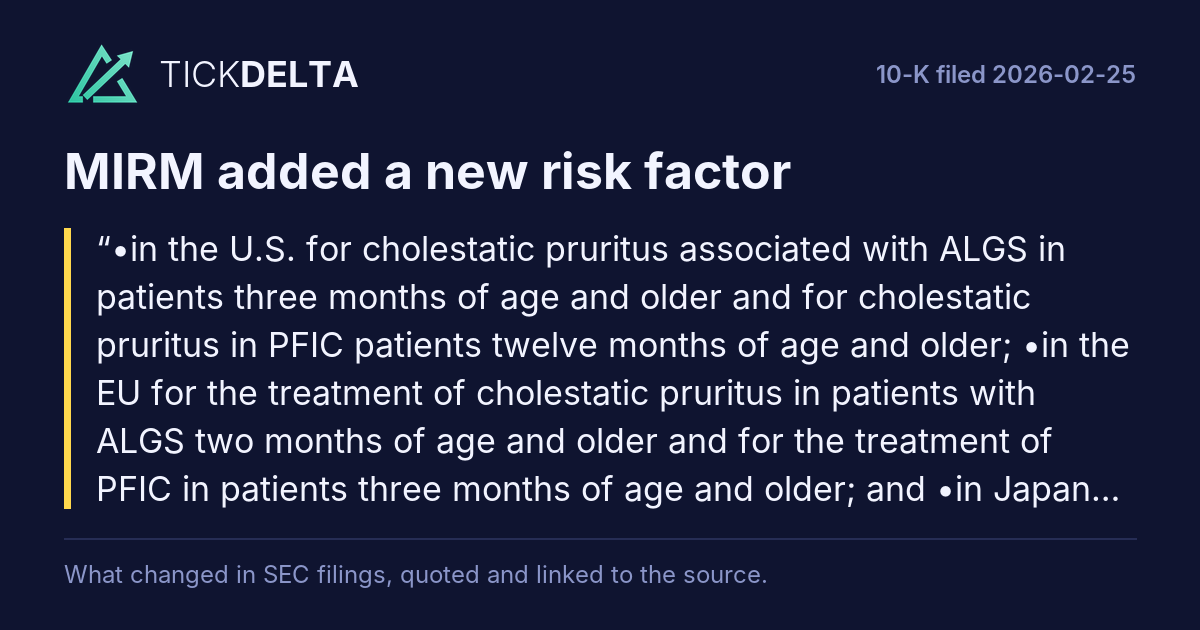
•in the U.S. for cholestatic pruritus associated with ALGS in patients three months of age and older and for cholestatic pruritus in PFIC patients twelve months of age and older;
•in the EU for the treatment of cholestatic pruritus in patients with ALGS two months of age and older and for the treatment of PFIC in patients three months of age and older; and
•in Japan for the treatment of cholestatic pruritus in patients with ALGS and PFIC.
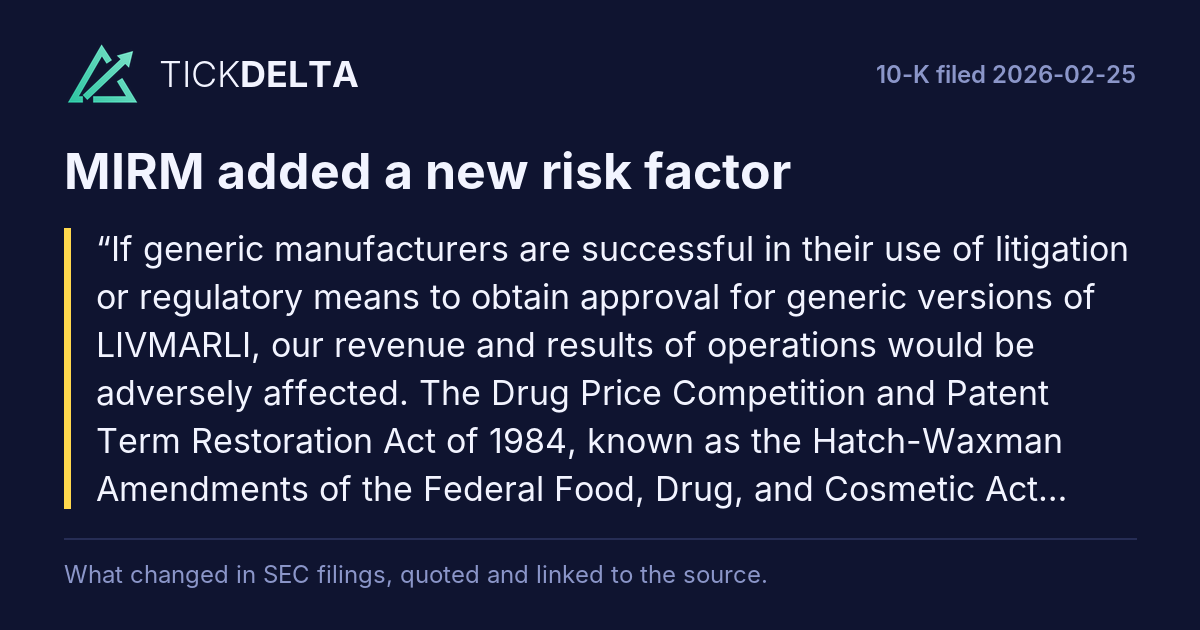
If generic manufacturers are successful in their use of litigation or regulatory means to obtain approval for generic versions of LIVMARLI, our revenue and results of operations would be adversely affected.
The Drug Price Competition and Patent Term Restoration Act of 1984, known as the Hatch-Waxman Amendments of the Federal Food, Drug, and Cosmetic Act (the “Hatch-Waxman Act”), permits the FDA to approve abbreviated new drug applications (“ANDAs”) for generic versions of branded drugs. We refer to this process as the ANDA process. The ANDA process permits competitor companies to obtain marketing approval for a drug with the same active ingredient as a branded drug, but does not generally require the conduct and submission of clinical efficacy studies for the generic product. In place of such clinical studies, an ANDA applicant usually needs only to submit data demonstrating that its product is bioequivalent to the branded product.
Pursuant to the Hatch-Waxman Act, companies were permitted to file ANDA applications for proposed generic versions of LIVMARLI on or after September 29, 2025. We own, license or have acquired several patents that cover
LIVMARLI, and we have listed those patents in conjunction with that product in the FDA’s Approved Drug Products with Therapeutic Equivalence Evaluations (the “Orange Book”). The Hatch-Waxman Act requires an ANDA applicant seeking FDA approval of its proposed generic product prior to the expiration of our Orange Book-listed patents to certify to the FDA, for all patents listed in the Orange Book for LIVMARLI, that (a) the applicant is not seeking approval until after the expiration date of the patent, or (b) the applicant believes the patent is invalid or will not be infringed by the manufacture, use or sale of the drug for which the application has been submitted (a paragraph IV certification) and notify us of such certification (a paragraph IV notice). For a method-of-treatment patent listed in the Orange Book, the applicant may also choose to submit a section viii statement certifying that its proposed product label does not contain any language regarding the patented method-of-use instead of certifying to the patent. Upon receipt of a paragraph IV notice, the Hatch-Waxman Act allows us, with proper basis, to bring an action for patent infringement against the ANDA filer, asking that the proposed generic product not be approved until after our patents expire. If we commence a lawsuit within 45 days from receipt of the paragraph IV notice, the FDA cannot finally approve the generic’s ANDA until the earlier of 30 months (known as the “30-month stay”), the expiration of the patent, settlement of the lawsuit, or a decision in the litigation resolving it in favor of the ANDA applicant. The discovery, trial and appeals process in such a lawsuit is costly, time consuming, and may result in generic competition if the ANDA applicant prevails.
On December 19, 2025, we, along with Satiogen Pharmaceuticals, Inc. and Shire Human Genetic Therapies, Inc. as co-plaintiffs, filed four complaints against Sandoz Inc. (“Sandoz”); Annora Pharma Private Limited, Hetero Labs Limited, and Hetero USA Inc. (together, “Hetero”); Zenara Pharma Private Limited and Biophore India Pharmaceuticals Private Limited (together, “Biophore”); and Zydus Lifesciences Global FZE, Zydus Lifesciences Limited, and Zydus Pharmaceuticals (USA) Inc. (together, “Zydus”) (all collectively, “Defendants”) in the U.S. District Court for the District of Delaware (the “LIVMARLI Patent Litigations”), alleging infringement of certain Orange Book listed patents covering LIVMARLI (the “LIVMARLI Patents”). The LIVMARLI Patent Litigations were initiated, in accordance with the procedures set out in the Hatch-Waxman Act, following the submission by Defendants of ANDAs directed to generic versions of LIVMARLI. Defendants’ ANDAs seek approval to market generic versions of LIVMARLI prior to the expiration of one or more of the LIVMARLI Patents and allege that one or more of the LIVMARLI Patents are invalid, unenforceable, and/or not infringed. We are seeking, among other relief, an order that the effective date of any FDA approval of Defendants’ ANDAs be no earlier than the expiration of the asserted patents, and such further and other relief as the court may deem appropriate. Based on our initiating the litigation, a 30-month stay is in place through March 29, 2029, preventing Defendants from marketing generic versions of LIVMARLI® during that time, subject to the exceptions noted above. On February 20, 2026, Sandoz asserted counterclaims against us and our co-plaintiffs seeking declaratory judgments of non-infringement and invalidity with respect to certain LIVMARLI Patents. Trial in the LIVMARLI Patent Litigations has not yet been scheduled. We cannot make any predictions about the final outcome of these matters or the timing thereof.
Any approved ANDA or related legal proceeding could have an adverse impact on our stock price. Litigation both by us to enforce our patents and by others to invalidate our patents has, and is likely to continue to, cost a substantial amount and require significant management attention. If the validity and/or enforceability of our patents covering LIVMARLI are not upheld in litigation, or if any ANDA filer we bring suit against is found to not infringe our asserted patents, the resulting generic competition following the expiration of regulatory exclusivity would have a material adverse effect on our revenue and results of operations.
We may also face generic competition for LIVMARLI in certain non-U.S. countries, and there is a process somewhat similar to the ANDA process under Article 10 of Directive 2001/83/EC in the EU. Our ability to successfully market and sell LIVMARLI in many countries in which we operate is based upon patent rights or certain regulatory forms of exclusivity, or both. The scope of our patent rights and regulatory exclusivity for LIVMARLI vary from country to country and are dependent on the availability of meaningful legal remedies in each country. If our patent rights and regulatory exclusivity for LIVMARLI are successfully challenged, expire, or otherwise terminate in a particular country, the resulting generic competition could have a material adverse effect on our revenue and results of operations.
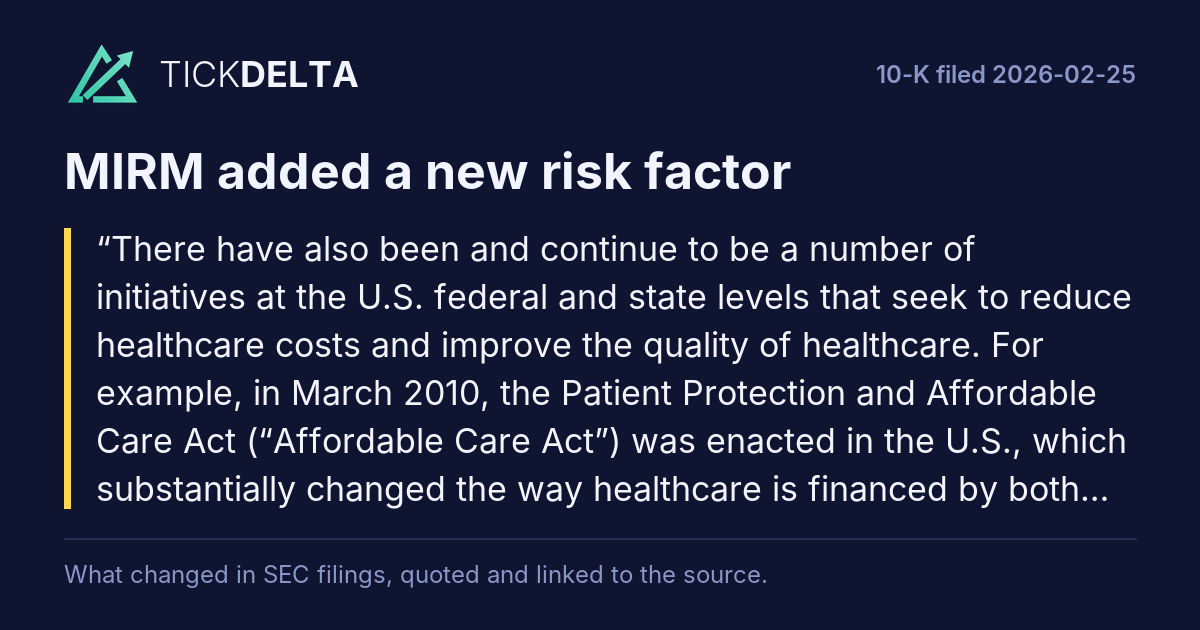
There have also been and continue to be a number of initiatives at the U.S. federal and state levels that seek to reduce healthcare costs and improve the quality of healthcare. For example, in March 2010, the Patient Protection and Affordable Care Act (“Affordable Care Act”) was enacted in the U.S., which substantially changed the way healthcare is financed by both governmental and private insurers.
There have been amendments and executive, judicial and Congressional challenges to certain aspects of the Affordable Care Act. For example, on July 4, 2025, the One Big Beautiful Bill Act (the “OBBBA”) was signed into law, which narrowed access to Affordable Care Act marketplace exchange enrollment and declined to extend the Affordable Care Act enhanced advanced premium tax credits that expired at the end of 2025, which, among other provisions in the law, are anticipated to reduce the number of Americans with health insurance. The OBBBA also is expected to reduce Medicaid spending and enrollment by implementing work requirements for some beneficiaries, capping state-directed payments, reducing federal funding, and limiting provider taxes used to fund the program. Congress is considering proposed legislation intended to further reduce healthcare costs with alternatives to replace the expired Affordable Care Act subsidies. Any of these measures could reduce the number of insured individuals in the U.S. and thereby reduce access to reimbursement for our commercial medicines.
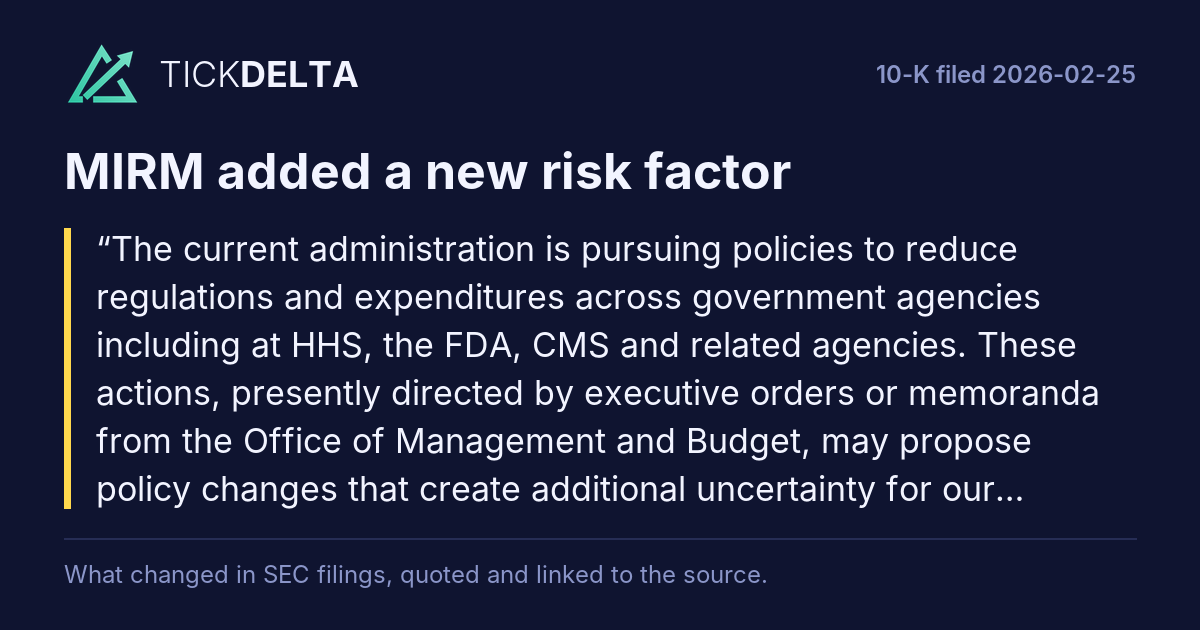
The current administration is pursuing policies to reduce regulations and expenditures across government agencies including at HHS, the FDA, CMS and related agencies. These actions, presently directed by executive orders or memoranda from the Office of Management and Budget, may propose policy changes that create additional uncertainty for our business. For example, the current administration has announced agreements with pharmaceutical companies that require the drug manufacturers to offer, through a direct to consumer platform, U.S. patients and Medicaid programs prescription drug Most-Favored Nation pricing equal to or lower than those paid in other developed nations, with additional mandates for direct-to-patient discounts and repatriation of foreign revenues. Other recent actions, for example, include (1) directing agencies to reduce agency workforce and cut programs; (2) directing HHS and other agencies to lower prescription drug costs through a variety of initiatives, including by improving upon the Medicare Drug Price Negotiation Program and establishing Most-Favored-Nation pricing for pharmaceutical products; (3) imposing tariffs on imported pharmaceutical products; and (4) as part of the Make America Healthy Again Commission’s Strategy Report released in September 2025, working across government agencies to increase enforcement on direct-to-consumer pharmaceutical advertising. Additionally, the current administration recently called on Congress to enact “The Great Healthcare Plan,”to codify and expand Most-Favored Nation pricing, lower government subsidies to private insurance companies, increase healthcare price transparency, expand pharmaceutical drugs available for over-the-counter purchase, and enact restrictions on pharmacy benefit manager payment methodologies, among other things. These actions and policies may significantly reduce U.S. drug prices, potentially impacting manufacturers’ global pricing strategies and profitability, while increasing their operational costs and compliance risks. Congress may introduce and ultimately pass health care related legislation that could impact the drug approval process and make changes to the Medicare Drug Price Negotiation Program created under the IRA. Additionally, in its June 2024 decision in Loper Bright Enterprises v. Raimondo (“Loper Bright”), the U.S. Supreme Court greatly reduced judicial deference to regulatory agencies, which could increase successful legal challenges to federal regulations affecting our operations. We expect that additional U.S. federal healthcare reform measures will be adopted in the future, any of which could limit the amounts that the U.S. federal government will pay for healthcare products and services, which could result in reduced demand for our product candidates or additional pricing pressures. It is unclear how any such additional health care reform measures will impact our business.
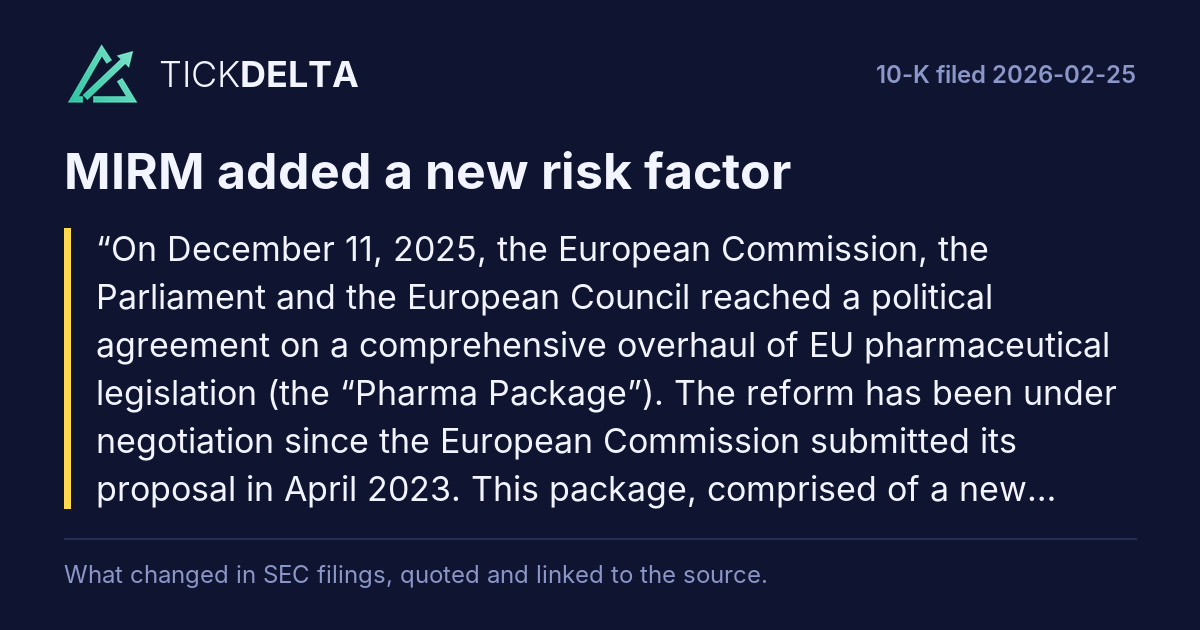
On December 11, 2025, the European Commission, the Parliament and the European Council reached a political agreement on a comprehensive overhaul of EU pharmaceutical legislation (the “Pharma Package”). The reform has been under negotiation since the European Commission submitted its proposal in April 2023. This package, comprised of a new directive and regulation to replace existing legislation, aims to modernize the EU framework. The political agreement is still subject to formal approval by the European Parliament and Council. If approved in the form proposed, the Pharma Package will, among other changes, reduce the baseline market protection period by one year, with limited opportunities for extensions, capped at a maximum of eleven years; reshape the incentives regime for orphan medicinal products, by introducing “breakthrough” orphan medicinal products (those addressing diseases with no available medicinal treatment) which will benefit from 11 years of market exclusivity; and expand the “Bolar” exemption to permit generic and biosimilar manufacturers to conduct preparatory activities for regulatory submissions, including pricing and reimbursement, and participate in procurement tenders while patent protection remains in force. A decrease in market exclusivity opportunities for our product candidates in the EU, combined with the expanded Bolar exemption, could open them to generic or biosimilar competition earlier than under the current regime, potentially impacting reimbursement status and the commercial prospects of our product candidates.
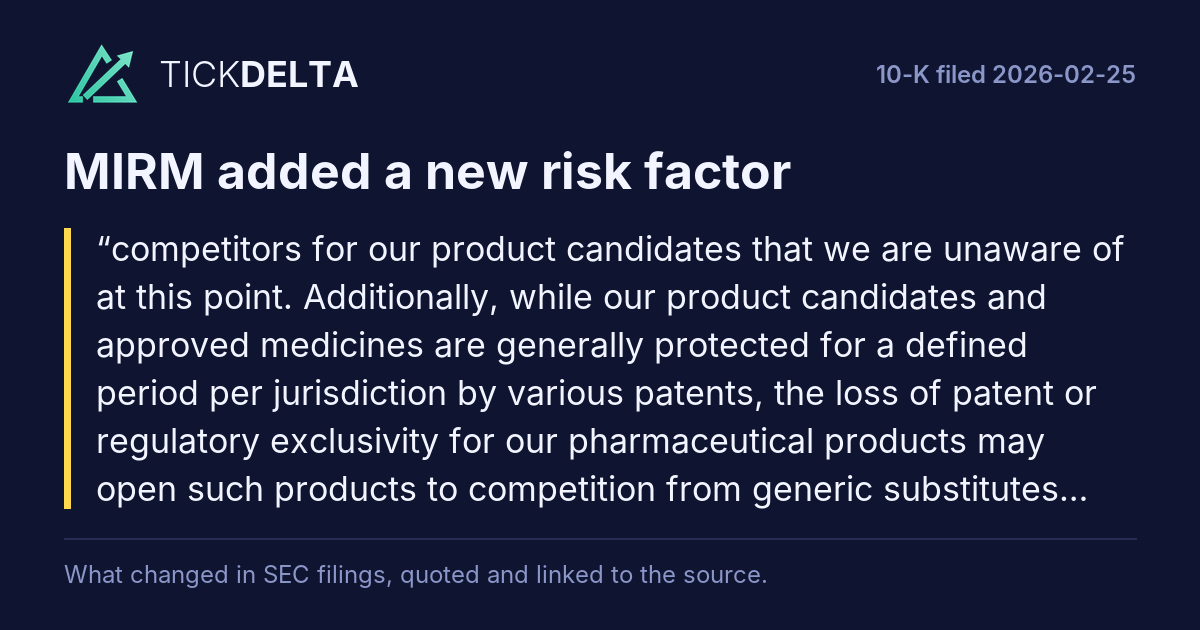
competitors for our product candidates that we are unaware of at this point. Additionally, while our product candidates and approved medicines are generally protected for a defined period per jurisdiction by various patents, the loss of patent or regulatory exclusivity for our pharmaceutical products may open such products to competition from generic substitutes that are typically priced significantly lower than the original products. The introduction of generic versions of a pharmaceutical product frequently leads to a swift and substantial decline in the sales of the original product. Our continued innovation efforts cannot fully mitigate the impact of competition from generics.
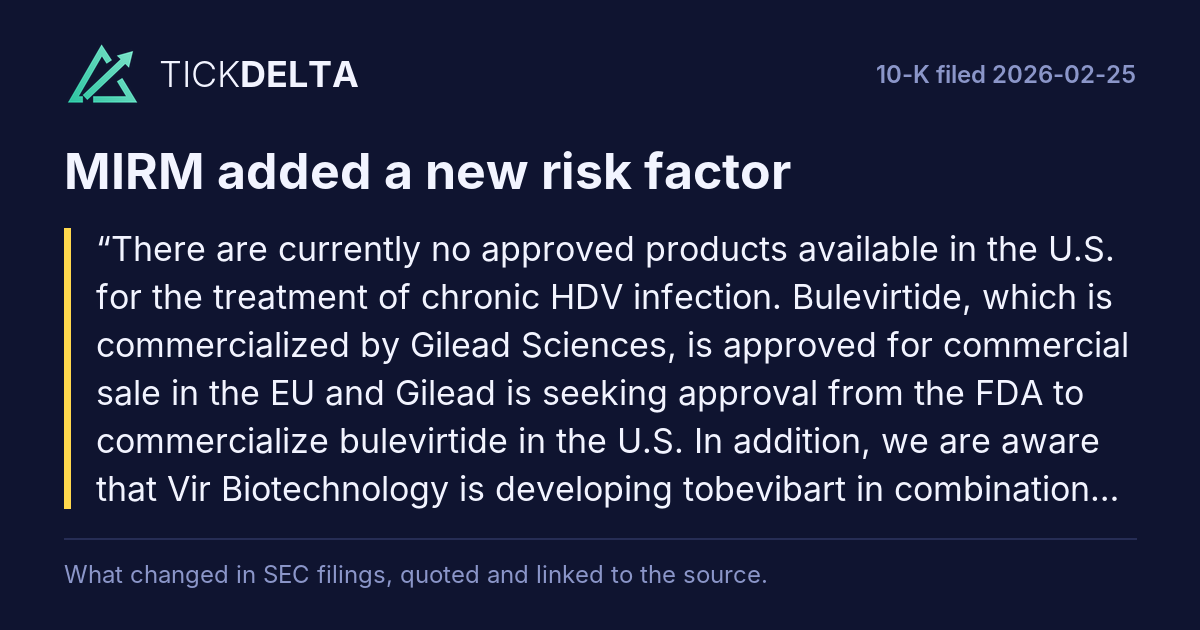
There are currently no approved products available in the U.S. for the treatment of chronic HDV infection. Bulevirtide, which is commercialized by Gilead Sciences, is approved for commercial sale in the EU and Gilead is seeking approval from the FDA to commercialize bulevirtide in the U.S. In addition, we are aware that Vir Biotechnology is developing tobevibart in combination with elebsiran for the treatment of chronic HDV. We are aware of several other agents in clinical development for the treatment of chronic HDV including Gilead Science’s GS-4321, Shanghai HEP Pharmaceutical Co., Ltd.’s Hepalatide, Suzhou Ribo Life Science Co., Ltd.'s RBD1016, Assembly Biosciences’s ABI-6250, Huahui Health Ltd.’s Libevitug and HH-1270, Replicor Inc.’s REP 2139-Mg and REP 2139-Ca, and EIT Pharma’s Jitixib® (Lonafarnib).
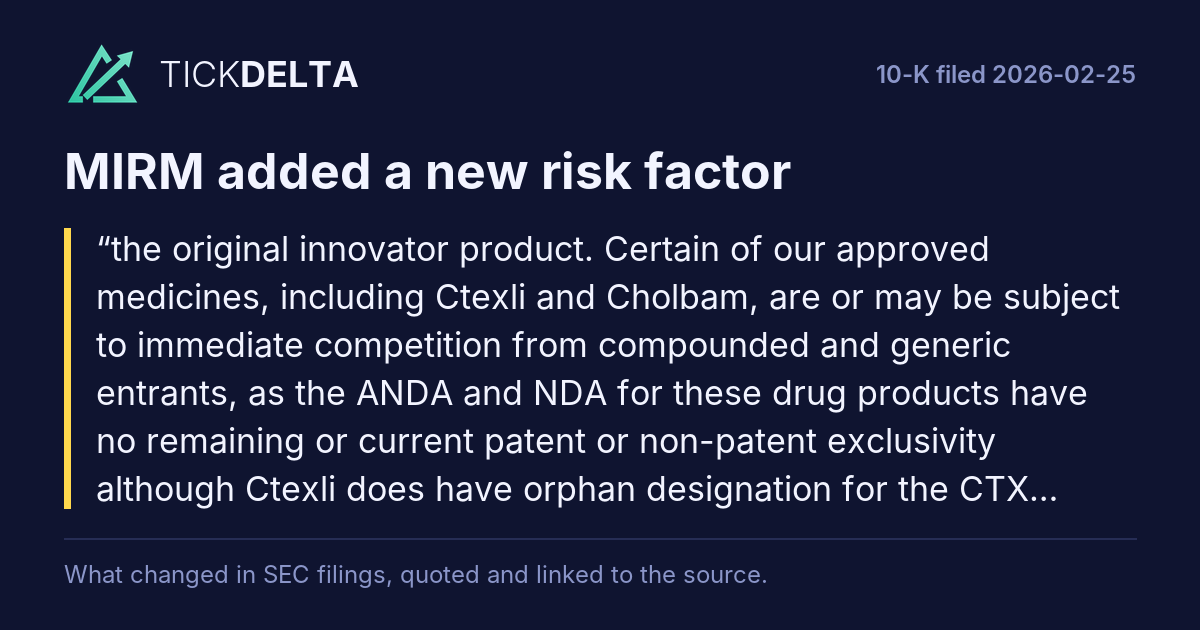
the original innovator product. Certain of our approved medicines, including Ctexli and Cholbam, are or may be subject to immediate competition from compounded and generic entrants, as the ANDA and NDA for these drug products have no remaining or current patent or non-patent exclusivity although Ctexli does have orphan designation for the CTX indication. Further, as described in more detail in this Part I, Item 1A and Note 15 in the notes to our consolidated financial statements appearing elsewhere in this Annual Report, we have initiated litigation against certain parties alleging infringement of certain “Orange Book” listed patents covering LIVMARLI in accordance with the procedures set out in the Hatch-Waxman Act following the submission by such parties of ANDAs directed to generic versions of LIVMARLI. We cannot make any predictions about the final outcome of these matters or the timing thereof.
receives marketing approval for an indication broader than or different from what is designated, such product may not be entitled to orphan exclusivity. Even though the FDA has granted orphan drug designation to Livmarli for the treatment of PFIC and ALGS, and for volixibat for the treatment of PBC, our current orphan drug designations may not provide exclusivity for approval for Livmarli or volixibat for modified or different indications.
FADP applies to the collection and processing of personal data, including health-related information, by companies located in Switzerland, or in certain circumstances, by companies located outside of Switzerland.
Additionally, the U.S. Department of Justice issued a rule entitled the Preventing Access to U.S. Sensitive Personal Data and Government-Related Data by Countries of Concern or Covered Persons, which places additional restriction on certain data transactions involving countries of concern (e.g., China, Russia, Iran) and covered persons (i.e., individuals or entities who are designated as such by the U.S. Attorney General or considered “foreign persons” and are majority owned by, organized under the laws of, a primary resident in, or a contract or, a covered person or country of concern, as applicable) that may impact certain business activities such as vendor engagements, sale or sharing of data, employment of certain individuals, and investor agreements. Violations of the rule could lead to significant civil and criminal fines and penalties. The rule applies regardless of whether data is anonymized, key-coded, pseudonymized, de-identified or encrypted, which presents particular challenges for companies like ours and may our ability to transfer data in connection with certain transactions or agreements.
The manufacturing of biologics involves complex, multi-step processes, including the use of living cells and biological materials that are inherently variable and difficult to control. Small changes in raw materials, equipment, process parameters, environmental conditions, or operator performance can result in material differences in product quality, yield, stability, or potency, including the risk of contamination or batch failure. As a result, biologic manufacturing processes may be more susceptible to interruptions, delays, and quality issues than the manufacture of small-molecule drugs. Moreover, scaling up biologic manufacturing from clinical to commercial quantities involves additional risks, including unanticipated process challenges, reduced yields, or the need for process changes that may require regulatory review or approval. Any such changes could delay commercialization, increase costs, or adversely impact product comparability or regulatory acceptance.
International trade policies, including tariffs, sanctions and trade barriers may adversely affect our business, financial condition, results of operations and prospects.
We operate in a global economy, and our business depends on a global supply chain for the development, manufacturing, and distribution of our pharmaceutical products, and for the advancement of our preclinical and clinical development programs. There is inherent risk, based on the complex relationships among the U.S. and the countries in
which we conduct our business, that political, diplomatic, and national security factors can lead to global trade restrictions and changes in trade policies and export regulations that may adversely affect our business and operations. The current international trade and regulatory environment is subject to significant ongoing uncertainty.
Tariff policies, particularly those affecting China and pharmaceutical products, could increase our costs and reduce our profitability, including as a result of our inability to adjust pricing in formulary-based markets. Recent and potential future changes in international trade policies, particularly regarding U.S.-China trade relations and pharmaceutical-specific tariffs, present risks to our operations and financial performance.
The ongoing trade tensions between the U.S. and other jurisdictions have resulted in multiple rounds of tariffs and anticipated tariffs affecting pharmaceuticals and pharmaceutical ingredients, including finished products, manufacturing equipment, and related supplies. Tariffs on these inputs may increase our manufacturing costs for certain products. Moreover, the dynamic and unpredictable tariff and trade landscape creates uncertainty and planning challenges for our operations. Changes in tariff classifications, country-of-origin requirements, or customs procedures can occur with limited notice. Further, the Bureau of Industry and Security, U.S. Department of Commerce, has initiated an investigation to determine whether pharmaceutical ingredients, including finished drug product, manufactured outside the U.S. pose a national security risk and should be subject to additional tariffs. Unlike consumer goods, pharmaceuticals face unique regulatory constraints that make rapid supply chain adjustments particularly difficult and costly. This uncertainty complicates our long-term investment decisions regarding manufacturing facilities, supply chain optimization, and research and development locations.
Unlike many industries, our ability to pass increased costs to customers is limited by the structure of pharmaceutical pricing and reimbursement systems. Many of our products are included in formularies with pricing established through annual or multi-year contracts with commercial, third-party payors and pharmacy benefit managers, and reimbursement methodologies established by government programs, such as Medicare. These arrangements typically include fixed pricing terms that were negotiated prior to the implementation of the recently announced tariffs. As a result, and depending on the timing and scope of the implementation of these tariffs, cost increases due to tariffs may be difficult or impossible to pass through to customers until the next negotiation cycle, which could be several months or years away.
Current or future tariffs may also result in increased research and development expenses, including with respect to increased costs associated with APIs and raw materials. Trade restrictions affecting the import of materials necessary for clinical trials could result in delays to our development timelines. Increased development costs and extended development timelines could place us at a competitive disadvantage compared to companies operating in regions with more favorable trade relationships and could reduce investor confidence and negatively impact our business, results of operations, financial condition and growth prospects.
The complexity of announced or future tariffs may also increase the risk that we or our customers or suppliers may be subject to civil or criminal enforcement actions in the U.S. or foreign jurisdictions related to compliance with trade regulations. Foreign governments may also adopt non-tariff measures, such as procurement preferences or informal disincentives to engage with, purchase from or invest in U.S. entities, which may limit our ability to compete internationally and attract non-U.S. investment, employees, customers and suppliers. Foreign governments may also take other retaliatory actions against U.S. entities, such as decreased intellectual property protection, increased enforcement actions, or delays in regulatory approvals, which may result in heightened international legal and operational risks. In addition, the U.S. and other governments have imposed and may continue to impose additional sanctions, such as trade restrictions or trade barriers, which could restrict us from doing business directly or indirectly in or with certain countries or parties and may impose additional costs and complexity to our business.
Trade disputes, tariffs, restrictions and other political tensions between the U.S. and other countries may also exacerbate unfavorable macroeconomic conditions including inflationary pressures, foreign exchange volatility, financial market instability, and economic recessions or downturns. The ultimate impact of current or future tariffs and trade restrictions remains uncertain and could materially and adversely affect our business, financial condition, and prospects. While we actively monitor these risks, any prolonged economic downturn, escalation in trade tensions, or deterioration in international perception of U.S.-based companies could materially and adversely affect our business, ability to access the capital markets or other financing sources, results of operations, financial condition and prospects. In addition, tariffs and other trade developments have and may continue to heighten the risks related to the other risk factors described elsewhere in this Annual Report.
Changes in tax laws or regulations that are applied adversely to us or our customers could have a material adverse effect on our business, cash flow, financial condition or results of operations.
New income, sales, use, excise or other tax laws, statutes, rules, regulations or ordinances could be enacted at any time, which could affect the tax treatment of our (and our subsidiaries’) domestic and foreign financial results. Any new taxes could adversely affect our domestic and international business operations, and our business and financial performance. Further, existing tax laws, statutes, rules, regulations or ordinances could be interpreted, changed, modified or applied adversely to us. Future guidance from the U.S. Internal Revenue Service and other tax authorities with respect to such legislation may adversely affect us, and certain aspects of such legislation could be repealed or modified in the future, which could have an adverse effect on us. For example, the OBBBA made a number of changes to U.S. federal income tax law, including 100% bonus depreciation, domestic research cost expensing, and modifications to the international tax framework. We are currently evaluating the impact of the OBBBA upon our future tax liabilities and continuing to monitor changes in tax laws and regulations.
may restrict our ability to take advantage of certain future opportunities, such as engaging in future debt or equity financing activities.
subsequent sales. Such sales may also result in material dilution to our existing stockholders, including noteholders who have received shares of our common stock upon conversion of their notes, and new investors could gain rights, preferences and privileges senior to the holders of our common stock.
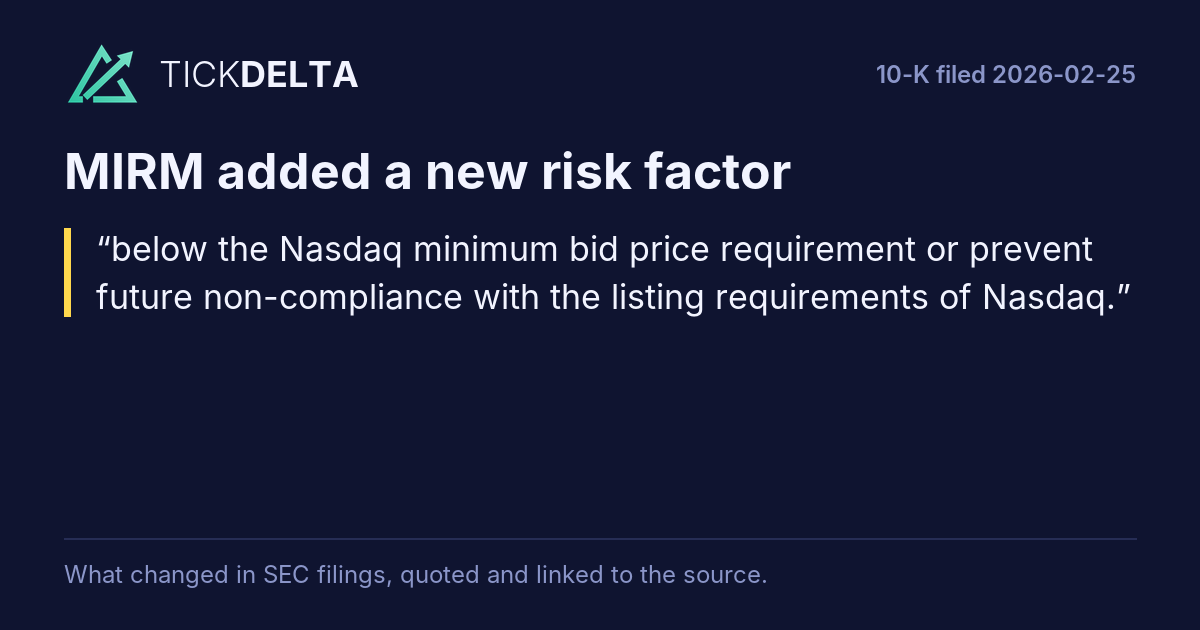
below the Nasdaq minimum bid price requirement or prevent future non-compliance with the listing requirements of Nasdaq.
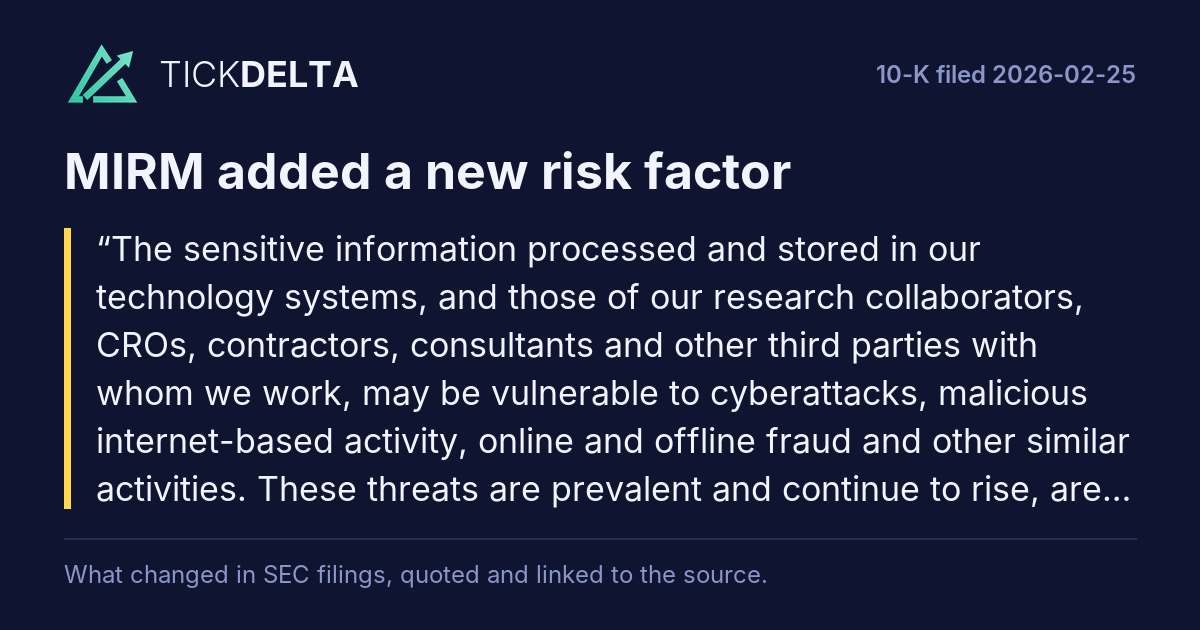
The sensitive information processed and stored in our technology systems, and those of our research collaborators, CROs, contractors, consultants and other third parties with whom we work, may be vulnerable to cyberattacks, malicious internet-based activity, online and offline fraud and other similar activities. These threats are prevalent and continue to rise, are increasingly difficult to detect, and come from a variety of sources, including traditional
We have incurred and will continue to incur significant increased costs to comply with changing laws, rules, regulations and standards relating to various aspects of our business, including corporate governance, workforce initiatives and public disclosure, and failure to comply with such laws, rules, regulations and standards could adversely affect our business.
We have incurred and will continue to incur significant legal, accounting and other expenses to comply with changing laws, rules, regulations and standards relating to various aspects of our business, including corporate governance, workforce initiatives and public disclosure. Sources of these changing laws, rules, regulations and standards include new
New in the latest 10-Q
32 paragraphs in the 10-Q filed Nov 3, 2026 with nothing like them in the 10-Q filed Aug 5, 2026 (at least half the words must differ; new numbers alone do not count). Quoted exactly, grouped by the item heading above them. This is text that changed, not a judgement of how serious it is.
In September 2026, the FDA approved zilurgisertib, an oral small molecule ALK2 inhibitor, to reduce the volume of total new heterotopic ossification in adult and pediatric patients aged 12 years and older with fibrodysplasia ossificans progressiva (“FOP”). Zilurgisertib is commercialized in the U.S. under the brand name Atebrioz.
Read in the 10-Q
effective. As of September 30, 2026, the Company had not issued any securities pursuant to the automatic shelf registration statement.
Read in the 10-Q
generally vest over a three-year service period. The number of shares earned is adjusted based on the specified sales-based criteria achievement.
Read in the 10-Q
On October 30, 2026, the Court ordered that the LIVMARLI Patent Litigations and the LIVMARLI Tablet Litigation be consolidated for pretrial purposes (together, the “Consolidated LIVMARLI Litigations”). A Markman hearing is set in the Consolidated LIVMARLI Litigations for July 20, 2027. Trial in the Consolidated LIVMARLI Litigations is set for September 18, 2028.
Read in the 10-Q
The Company cannot make any predictions about the final outcome of these matters or the timing thereof.
Read in the 10-Q
We are a biopharmaceutical company dedicated to transforming the treatment of rare diseases. Our strategy is to acquire, develop and commercialize medicines for rare diseases, with a focus on driving commercial growth and building a diversified portfolio with meaningful value creation potential. We pursue this strategy through the growth of our marketed medicines, advancement of our development-stage portfolio, and business development, including acquisitions and in-licensing.
Read in the 10-Q
Our commercial organization is focused on two areas, rare liver diseases and rare genetic diseases, with dedicated field teams serving each business. Our rare liver disease business is currently our larger commercial business and is led by LIVMARLI® (maralixibat) (“Livmarli”). Our rare genetic disease business includes ATEBRIOZ® (zilurgisertib) (“Atebrioz”), CHOLBAM® (cholic acid) capsules (“Cholbam”) and CTEXLI® (chenodiol) tablets (“Ctexli”).
Read in the 10-Q
In addition, we are developing maralixibat for certain rare cholestatic conditions through the Phase 3 EXPAND study. We announced topline results from EXPAND in October 2026 demonstrating a statistically significant improvement in pruritus compared with placebo in the primary analysis population of pediatric patients as well as in the pre-specified subgroup of biliary atresia (“BA”) patients with native livers. We plan to submit a supplemental New Drug Application (“sNDA”) for Livmarli based on the EXPAND study in the first half of 2027.
Read in the 10-Q
leveraging our breakthrough therapy designation. We expect to submit a potential NDA to the FDA in the first half of 2027. We expect topline data from our PBC study of volixibat in the first quarter of 2027.
Read in the 10-Q
We plan to continue to expand our rare disease pipeline through business development. For example, in September 2026, we entered into a license agreement with a third party whereby we obtained the right to develop and commercialize a small molecule.
Read in the 10-Q
one or more of our product candidates or future commercialization efforts or grant rights to develop and market our product candidates even if we would otherwise prefer to develop and market such product candidates ourselves.
Read in the 10-Q
• for other, an increase of $6.9 million primarily for additional consulting services and expenses associated with other less significant development programs as well as increased overhead costs.
Read in the 10-Q
• for other, an increase of $12.9 million primarily for additional consulting services and expenses associated with other less significant development programs as well as increased overhead costs.
Read in the 10-Q
In September 2026, we used approximately $62.0 million in cash to repurchase a $20.0 million aggregate principal amount (approximately 25%) of the remaining 2029 Notes outstanding.
Read in the 10-Q
We may settle conversions of the Notes by paying or delivering, as applicable, cash, shares of our common stock or a combination of cash and shares of our common stock, at our election.
Read in the 10-Q
percentage range, additional regulatory milestones of up to $23.0 million, and commercial milestones of up to $15.0 million.
Read in the 10-Q
In clinical studies of Atebrioz, the most common adverse reactions were headache, arthralgia, upper respiratory tract infection, epistaxis and nausea. Most AEs were mild or moderate in severity, and no AEs led to treatment discontinuation or dose reduction.
Read in the 10-Q
design to address these considerations, the FDA, European Commission or comparable foreign regulatory authorities may not approve our product candidates.
Read in the 10-Q
Prior to obtaining approval to commercialize a product candidate in the U.S. or internationally, we must demonstrate with substantial evidence from adequate and well-controlled clinical trials, and to the satisfaction of the FDA,
Read in the 10-Q
In December 2025, the European Parliament and European Council reached a political agreement on the Pharma Package, which includes proposed changes to the EU orphan medicinal product framework that may, in the future, modify the length of orphan market exclusivity, change the way in which market exclusivity is awarded to drugs with more than one approved orphan indication, remove the possibility to obtain a two-year extension orphan market exclusivity for PIP
Read in the 10-Q
completion and make orphan medicinal products eligible for a six-month supplementary protection certificate extension instead.
Read in the 10-Q
Furthermore, the EU GDPR provides that EEA Member States may introduce specific requirements related to the processing of “special categories of personal data”, including the personal data related to health and genetic
Read in the 10-Q
complete development of, obtain regulatory approval for or successfully commercialize our product candidates. As a result, our financial results and the commercial prospects for our product candidates would be harmed, our costs could increase and our ability to generate revenue could be delayed.
Read in the 10-Q
with third parties, we may have to relinquish valuable rights to our technologies or product candidates, or grant licenses on terms unfavorable to us.
Read in the 10-Q
an interference proceeding may fail and, even if successful, may result in substantial costs and distract our management and other employees.
Read in the 10-Q
commercially meaningful. Accordingly, our efforts to enforce our intellectual property rights around the world may be inadequate to obtain a significant commercial advantage from the intellectual property that we develop or license.
Read in the 10-Q
enforceability of the exclusive forum provisions of our amended and restated certificate of incorporation and amended and restated bylaws. This may require significant additional costs associated with resolving such action in other jurisdictions and there can be no assurance that the provisions will be enforced by a court in those other jurisdictions.
Read in the 10-Q
income, reputational harm, and diversion of funds. Extortion payments may alleviate the negative impact of a ransomware attack, but we may be unwilling or unable to make such payments due to, for example, applicable laws or regulations prohibiting such payments. Remote work has increased risks to our information technology systems and data, as our employees utilize network connections, computers and devices outside our premises or network, including working at home, while in transit and in public locations.
Read in the 10-Q
incidents and any unauthorized access or disclosure of our sensitive information could also compromise our intellectual property and patent portfolio, expose sensitive business information, expose the personal data of our employees, require us to incur significant remediation costs, disrupt key business operations and divert attention of management and key information technology resources.
Read in the 10-Q
During our last fiscal quarter, our directors and officers (as defined in Rule 16a-1(f) under the Exchange Act) adopted or terminated the contracts, instructions or written plans for the purchase or sale of our securities set forth in the table below.
Read in the 10-Q
(a) This number includes shares of our common stock issuable pursuant to awards of unvested restricted stock units (“RSUs”) and unvested performance stock units (“PSUs”). The PSUs are subject to the achievement of certain performance conditions as set forth in the applicable PSU agreement. The actual number of PSUs that vest following the end of an applicable performance period, if any, varies and therefore the resulting shares of our common stock available for sale under the plan will depend on the attainment of the performance metrics. The maximum number of shares to be sold will be reduced by net shares withheld to satisfy tax withholding obligations that arise in connection with the vesting and settlement. For purposes of this disclosure, we have reported the maximum aggregate number of shares to be sold without subtracting any shares to be withheld upon future vesting events and assumed the maximum payout of the PSUs.
Read in the 10-Q
10.1 Transition and Separation Agreement, dated September 28, 2026, by and between the Company and Joanne Quan, M.D.
Read in the 10-Q
Item 1A of the 10-Q filed Nov 3, 2026 against Item 1A of the 10-K filed Feb 25, 2026.
A 10-Q repeats only the risks that changed, so a 10-K paragraph that is missing from it is not counted as removed.
Added is a paragraph with nothing like it in the 10-K, Reworded a sentence that is in both with several words changed,
Quiet changes a sentence in both where one to four words changed and one is a hedge or a modal
(cut words struck through, new words highlighted).
Text on the page, not a score; each links to the filing at sec.gov.
The first 26 of 89 are shown (at most 12 of each type).
Two-word phrases in Risk Factors of the 10-K filed Feb 25, 2026 that are in none of the 1 earlier 10-Ks stored, back to Feb 26, 2025
Used at least twice, small words left out. Counted, not picked: a phrase can be new because the company renamed something.
21 paragraphs of last year's Risk Factors with nothing like them now. The longest are quoted.
Item 1A of each 10-K and 10-Q on EDGAR, quoted exactly. Each paragraph links to the filing at sec.gov.
10-K change: what was reworded or cut, section by section.
Excel workbook · CSV. Google Sheet that stays up to date: paste =IMPORTDATA("https://tickdelta.com/company/MIRM/export.csv") into a cell.