Reworded10-Q Nov 4, 2026 vs 10-K Feb 27, 2026
The risks contained described in this report, in our Form 10-K or our other SEC filings are not the only risks facing the our Company.
Each branch is a paragraph in Risk Factors with nothing like it in the 10-K filed Feb 25, 2025. A box jumps to the paragraph as filed, below.
18 paragraphs in Risk Factors of the 10-K filed Feb 27, 2026 with nothing like them in the 10-K filed Feb 25, 2025. Quoted exactly. Paragraphs that were only edited are under 10-K change.
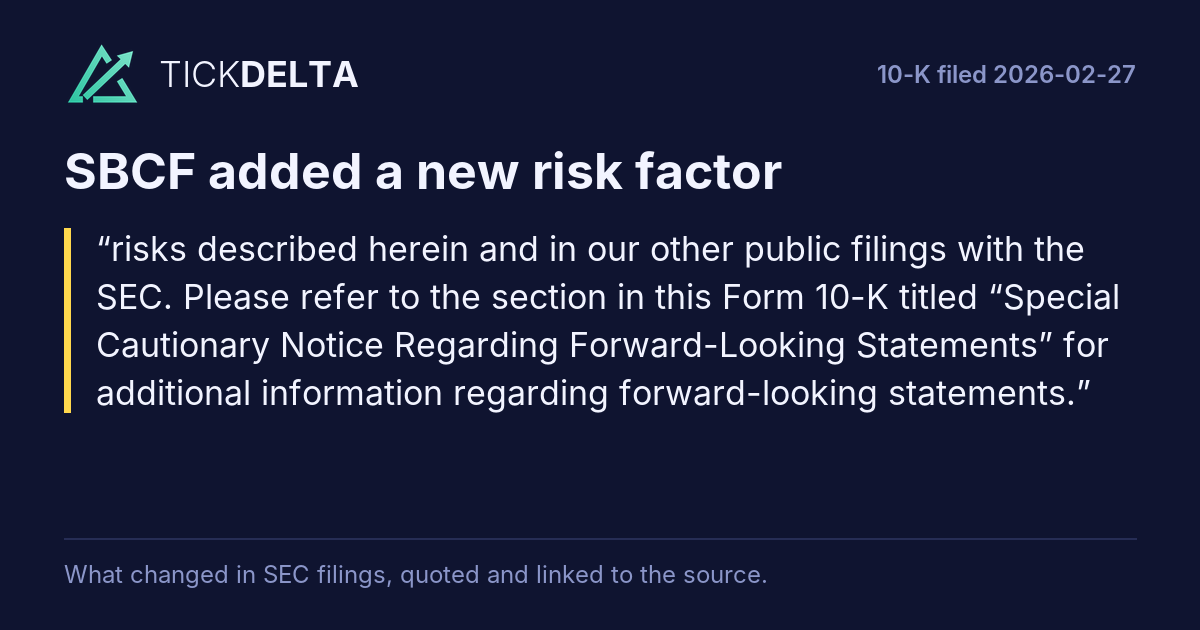
risks described herein and in our other public filings with the SEC. Please refer to the section in this Form 10-K titled “Special Cautionary Notice Regarding Forward-Looking Statements” for additional information regarding forward-looking statements.
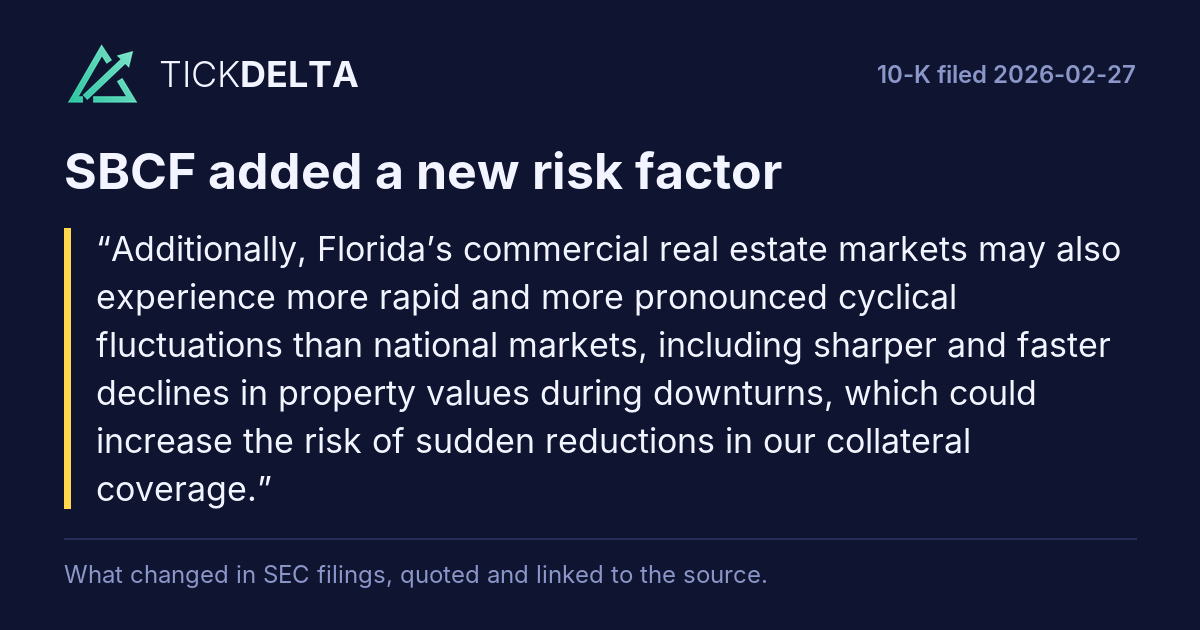
Additionally, Florida’s commercial real estate markets may also experience more rapid and more pronounced cyclical fluctuations than national markets, including sharper and faster declines in property values during downturns, which could increase the risk of sudden reductions in our collateral coverage.
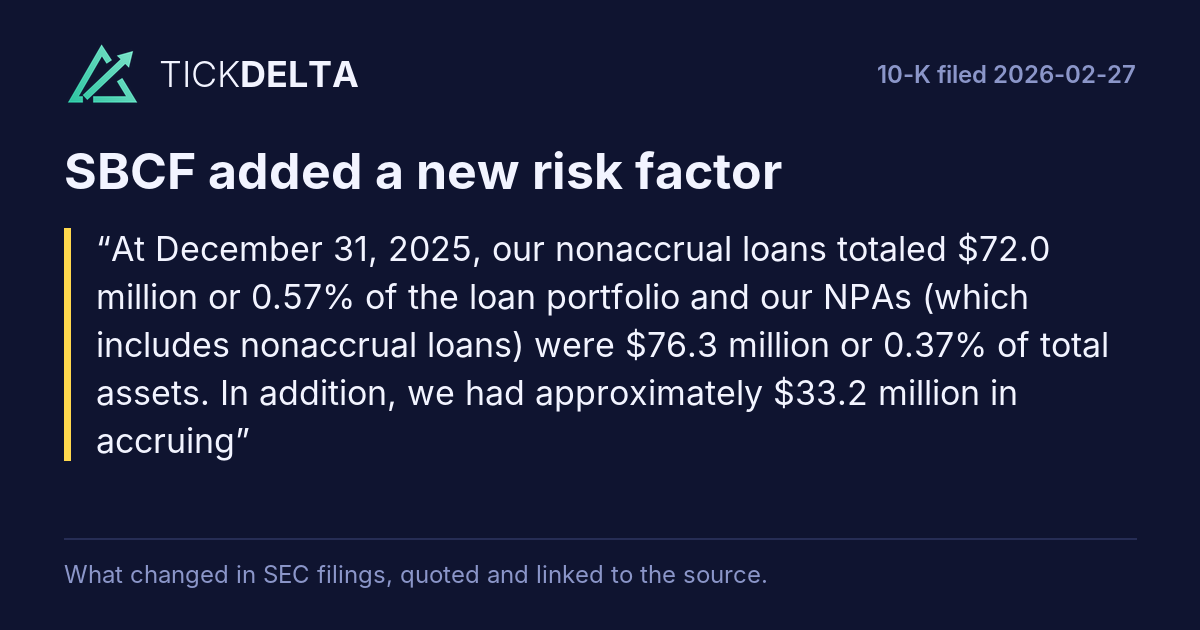
At December 31, 2025, our nonaccrual loans totaled $72.0 million or 0.57% of the loan portfolio and our NPAs (which includes nonaccrual loans) were $76.3 million or 0.37% of total assets. In addition, we had approximately $33.2 million in accruing
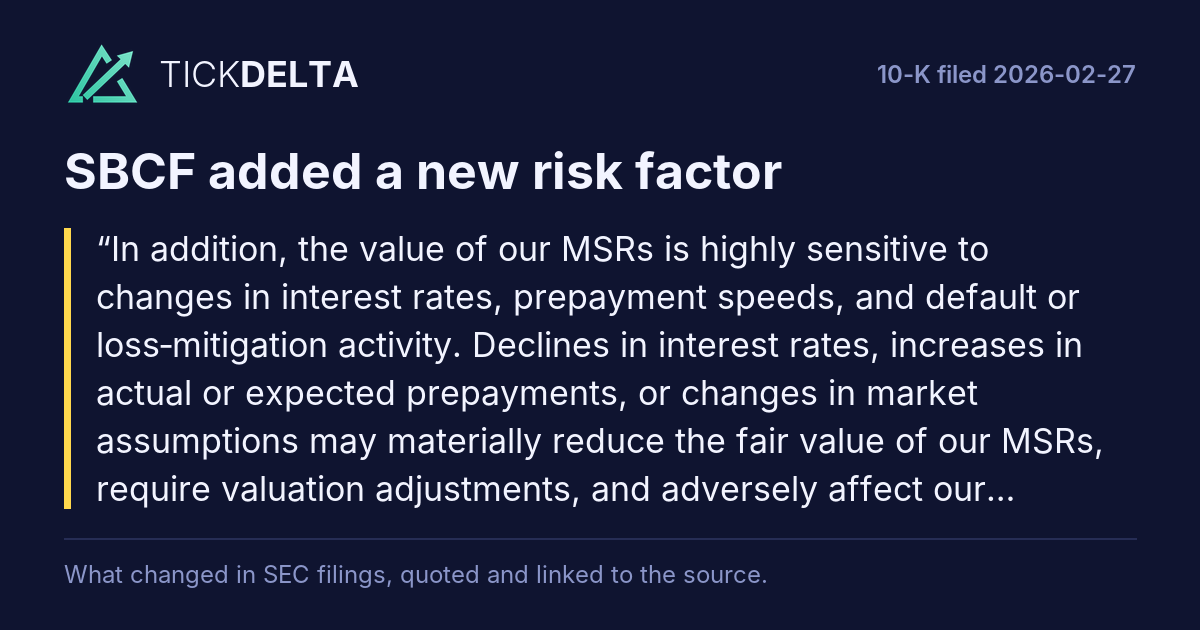
In addition, the value of our MSRs is highly sensitive to changes in interest rates, prepayment speeds, and default or loss‑mitigation activity. Declines in interest rates, increases in actual or expected prepayments, or changes in market assumptions may materially reduce the fair value of our MSRs, require valuation adjustments, and adversely affect our results of operations. MSR valuations also rely on complex modeling and inputs, and inaccuracies in these assumptions, or changes in the secondary‑market environment for MSRs, could increase earnings volatility or impair our ability to sell or hedge MSRs on acceptable terms.
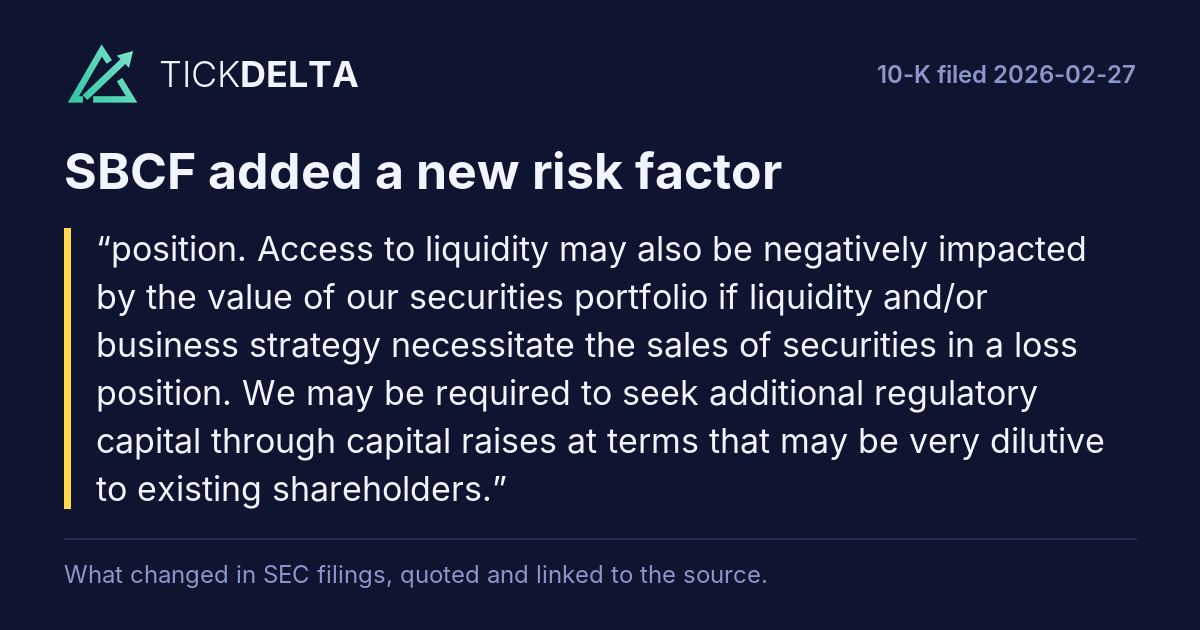
position. Access to liquidity may also be negatively impacted by the value of our securities portfolio if liquidity and/or business strategy necessitate the sales of securities in a loss position. We may be required to seek additional regulatory capital through capital raises at terms that may be very dilutive to existing shareholders.
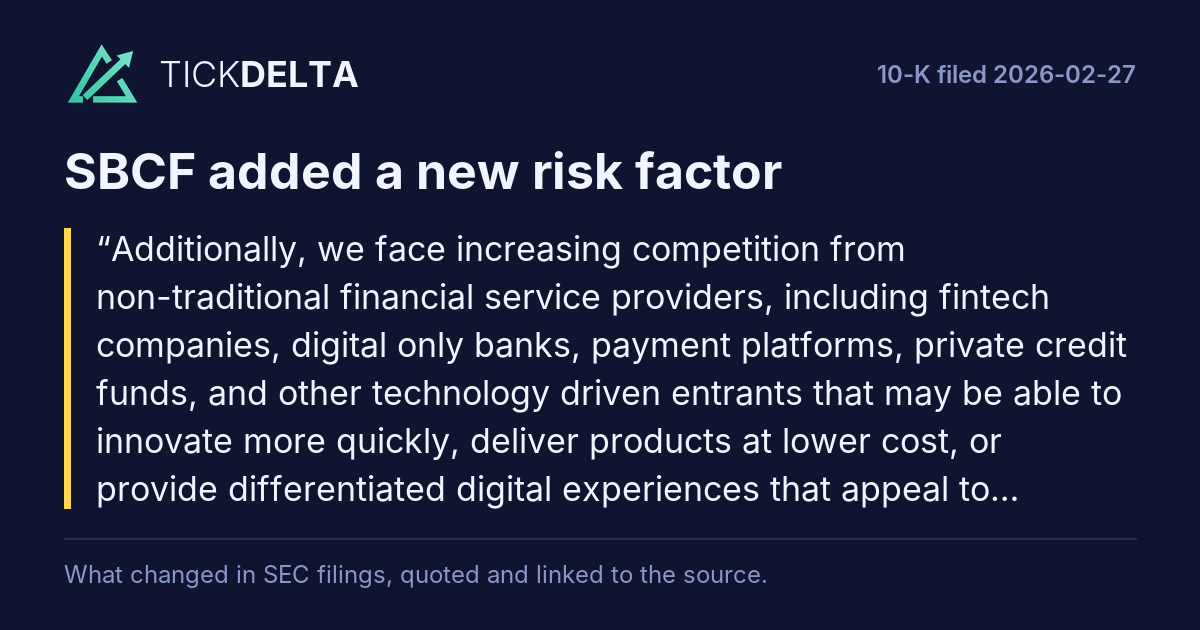
Additionally, we face increasing competition from non-traditional financial service providers, including fintech companies, digital only banks, payment platforms, private credit funds, and other technology driven entrants that may be able to innovate more quickly, deliver products at lower cost, or provide differentiated digital experiences that appeal to certain customer segments. Further, as a result of the GENIUS Act, passed in 2025 to provide a regulatory framework for stablecoins in the U.S., increased competition may emerge from issuers of stablecoins and providers of related technology.
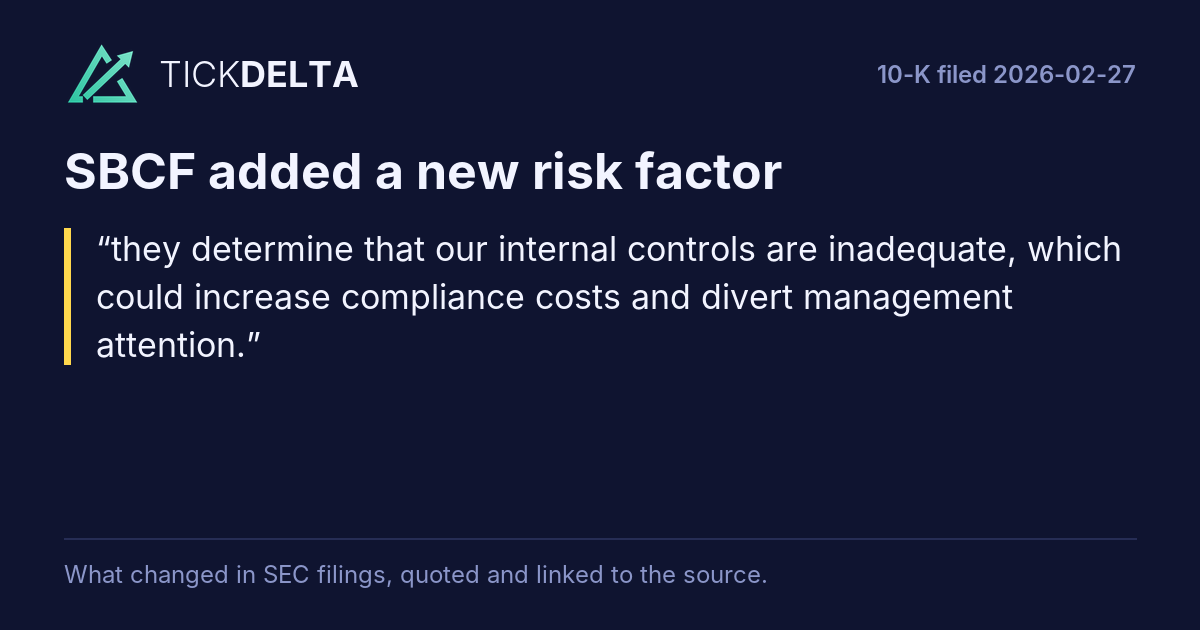
they determine that our internal controls are inadequate, which could increase compliance costs and divert management attention.
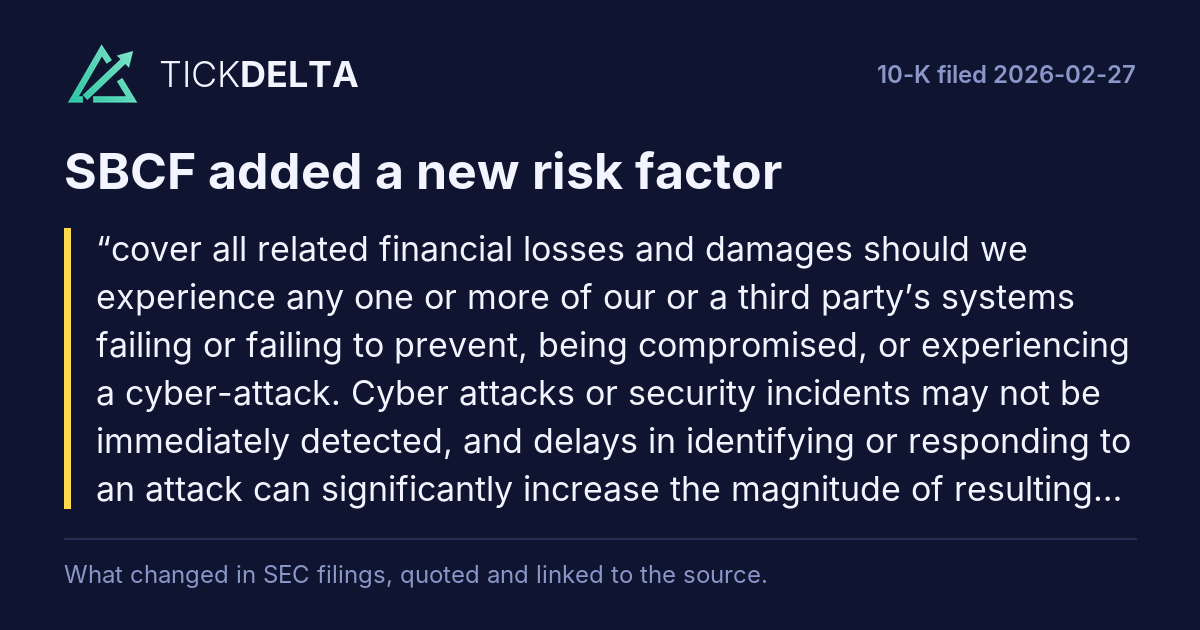
cover all related financial losses and damages should we experience any one or more of our or a third party’s systems failing or failing to prevent, being compromised, or experiencing a cyber-attack.
Cyber attacks or security incidents may not be immediately detected, and delays in identifying or responding to an attack can significantly increase the magnitude of resulting harm, including extended system outages, greater data loss or compromise, and higher remediation costs. Our increasing reliance on cloud services, digital connectivity and integration with third party systems heightens the risk that disruptions or compromises in those external environments could affect our operations.
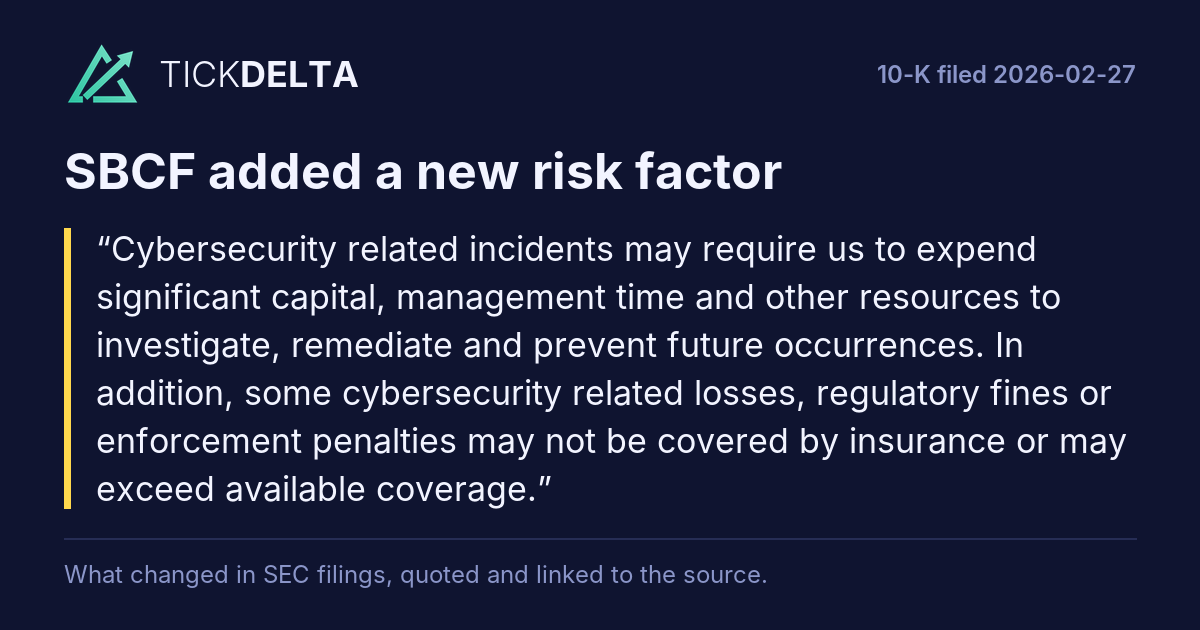
Cybersecurity related incidents may require us to expend significant capital, management time and other resources to investigate, remediate and prevent future occurrences. In addition, some cybersecurity related losses, regulatory fines or enforcement penalties may not be covered by insurance or may exceed available coverage.
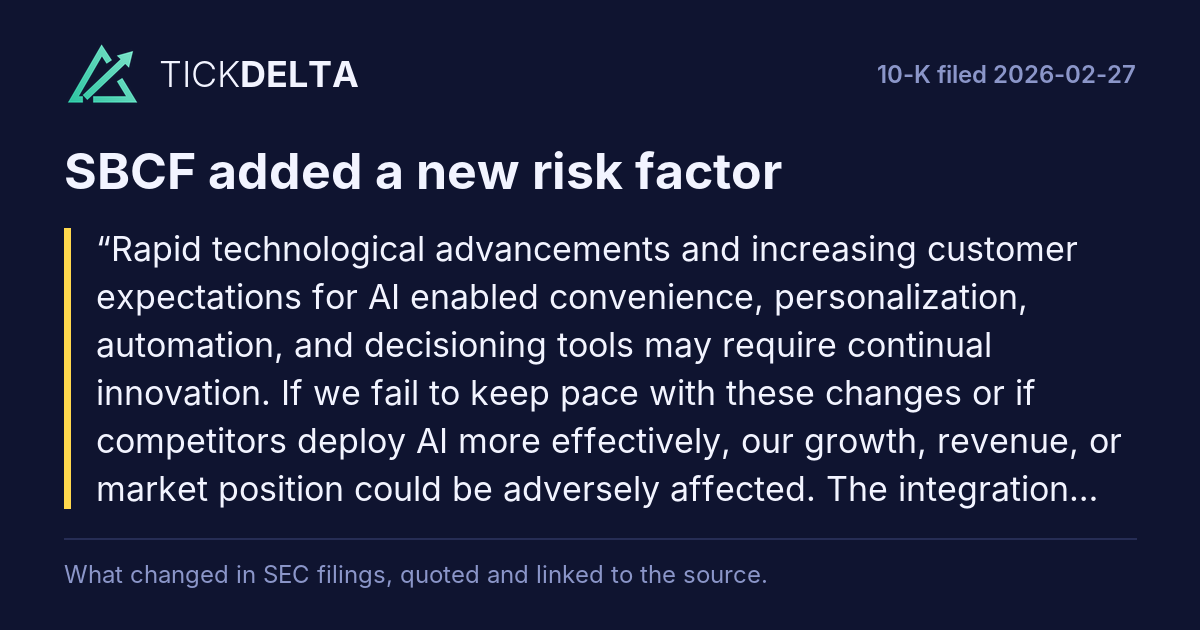
Rapid technological advancements and increasing customer expectations for AI enabled convenience, personalization, automation, and decisioning tools may require continual innovation. If we fail to keep pace with these changes or if competitors deploy AI more effectively, our growth, revenue, or market position could be adversely affected. The integration of AI into existing systems may also introduce operational risks, including service interruptions, transaction processing errors, data quality issues, and system conversion delays, which may contribute to compliance failures in areas such as lending, fraud detection, customer communications, or regulatory reporting.
AI used by customers or counterparties may introduce additional risks, such as inaccurate or AI generated misinformation submitted to the Company, automated activity that strains systems, or counterparties’ reliance on AI based decisions that affect the accuracy or timeliness of information we receive. Internally, we may depend on AI systems designed to improve efficiency; however, failures, inaccurate outputs, or model drift could impair risk management processes, underwriting quality, fraud detection, customer service, or other critical functions. Any of these risks could adversely affect our business, financial condition, or results of operations and could harm our reputation and the public perception of our business or security practices.
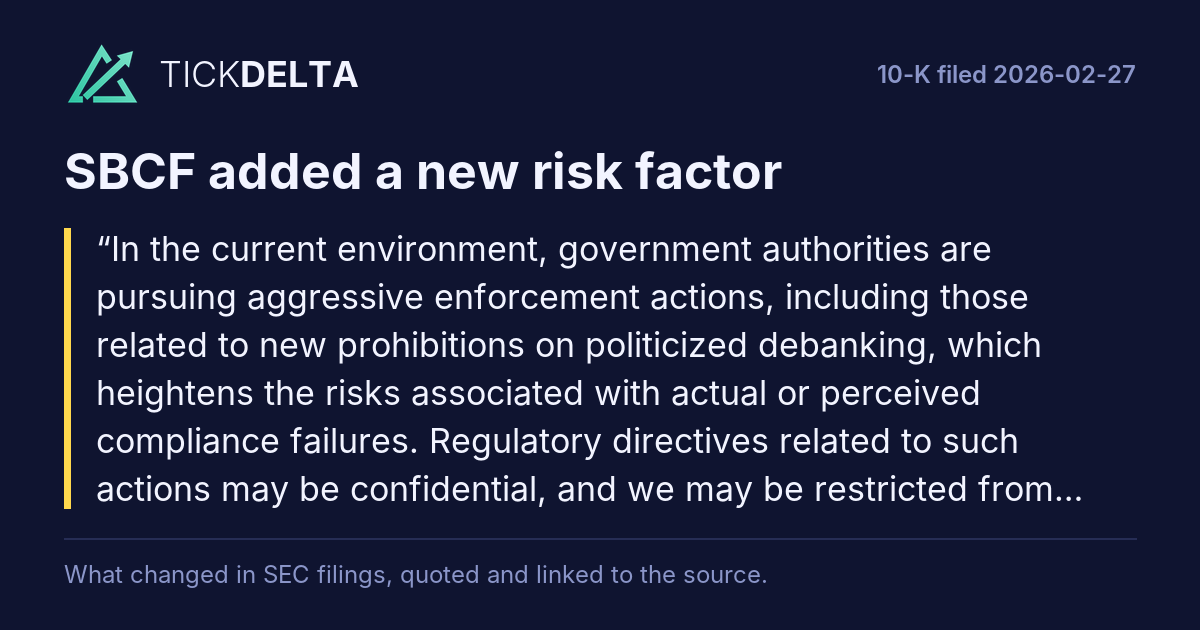
In the current environment, government authorities are pursuing aggressive enforcement actions, including those related to new prohibitions on politicized debanking, which heightens the risks associated with actual or perceived compliance failures. Regulatory directives related to such actions may be confidential, and we may be restricted from publicly disclosing them. Ongoing litigation challenging regulatory actions at the federal or state level may also change or destabilize the regulatory framework governing our operations.
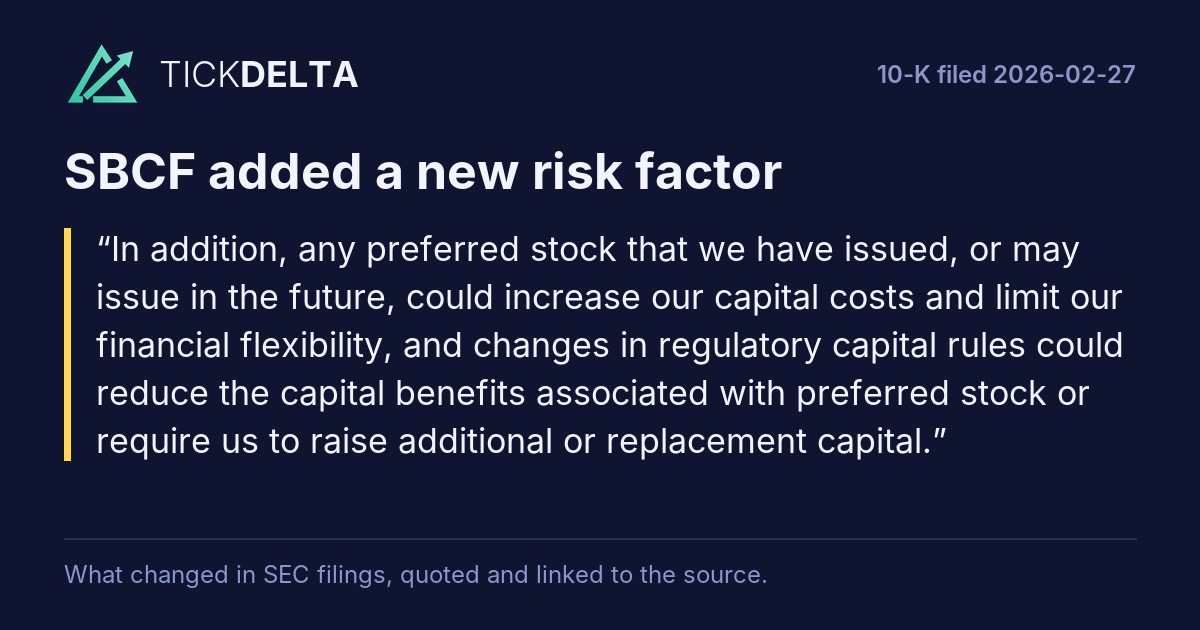
In addition, any preferred stock that we have issued, or may issue in the future, could increase our capital costs and limit our financial flexibility, and changes in regulatory capital rules could reduce the capital benefits associated with preferred stock or require us to raise additional or replacement capital.
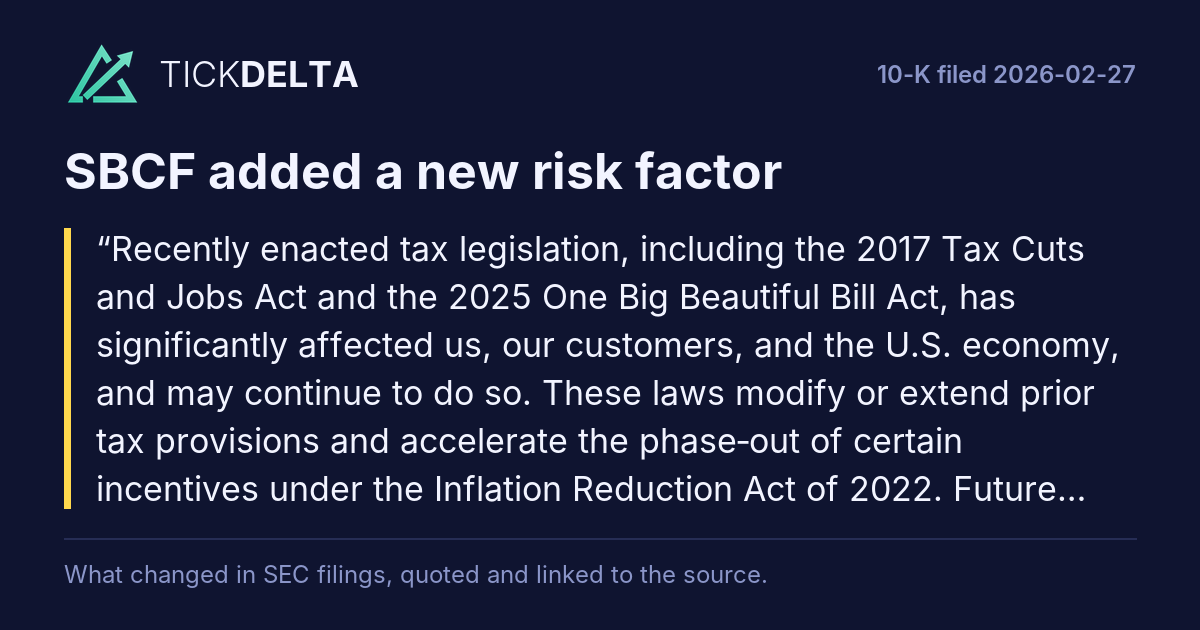
Recently enacted tax legislation, including the 2017 Tax Cuts and Jobs Act and the 2025 One Big Beautiful Bill Act, has significantly affected us, our customers, and the U.S. economy, and may continue to do so. These laws modify or extend prior tax provisions and accelerate the phase‑out of certain incentives under the Inflation Reduction Act of 2022. Future legislative, administrative, or judicial tax changes could also alter the tax treatment of corporations in ways that negatively impact us directly or indirectly through effects on our customers. Although lower tax rates may provide some benefit, the extent of any advantage will depend on competitive and market factors. In addition, tax authorities have become more aggressive in challenging tax positions taken by financial institutions. If tax authorities disagree with our interpretations or tax planning strategies, we could face additional taxes, interest, penalties, or be required to modify our business practices, any of which could materially adversely affect our business, financial condition, or results of operations.
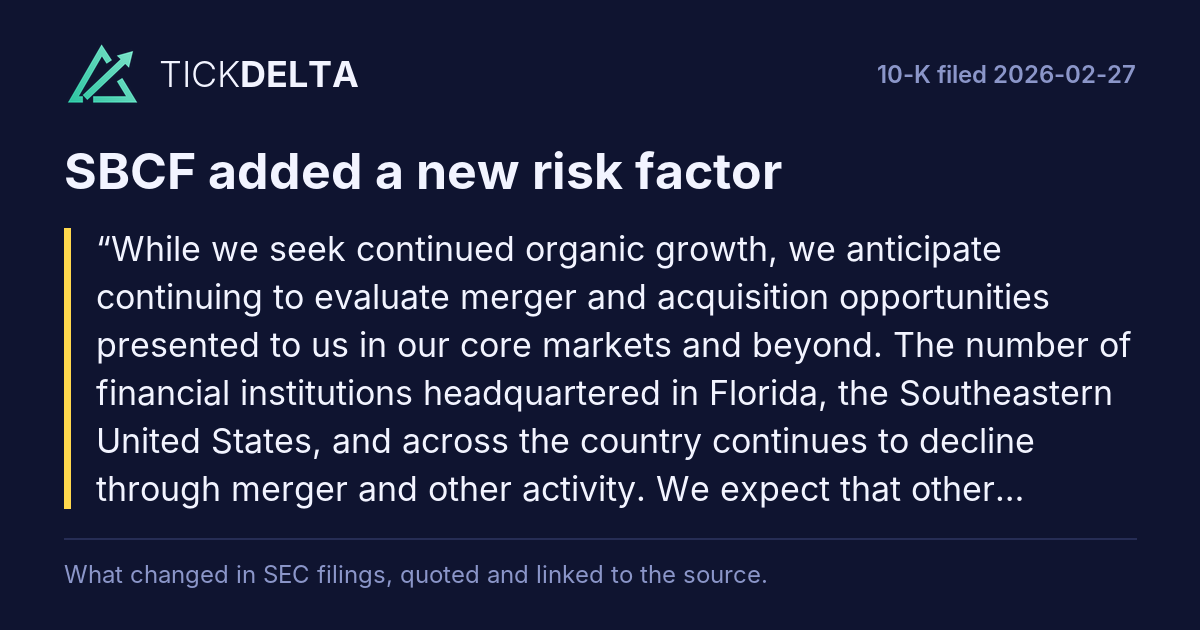
While we seek continued organic growth, we anticipate continuing to evaluate merger and acquisition opportunities presented to us in our core markets and beyond. The number of financial institutions headquartered in Florida, the Southeastern United States, and across the country continues to decline through merger and other activity. We expect that other banking and
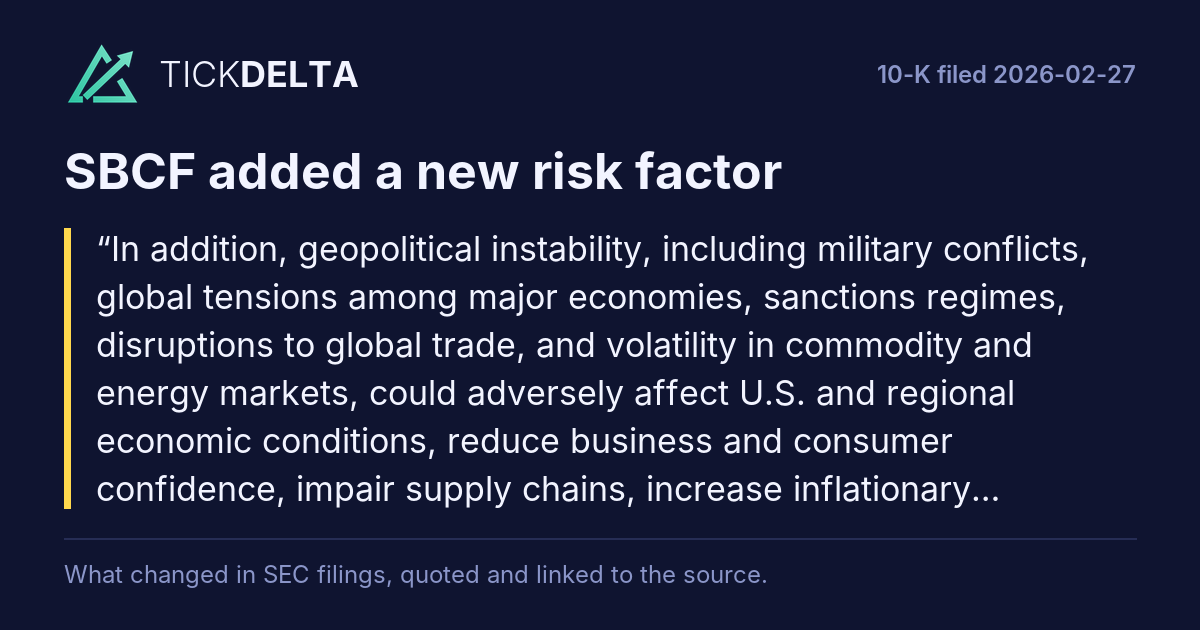
In addition, geopolitical instability, including military conflicts, global tensions among major economies, sanctions regimes, disruptions to global trade, and volatility in commodity and energy markets, could adversely affect U.S. and regional economic conditions, reduce business and consumer confidence, impair supply chains, increase inflationary pressures and negatively affect our borrowers’ cash flows and repayment capacity.
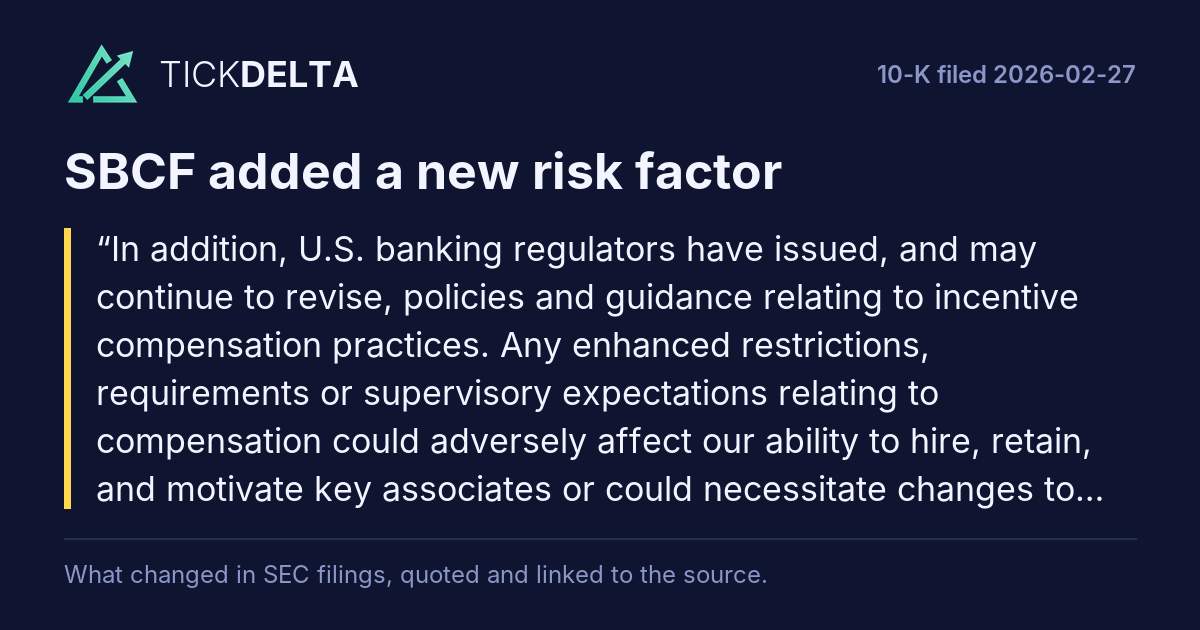
In addition, U.S. banking regulators have issued, and may continue to revise, policies and guidance relating to incentive compensation practices. Any enhanced restrictions, requirements or supervisory expectations relating to compensation could adversely affect our ability to hire, retain, and motivate key associates or could necessitate changes to our compensation structures that reduce our competitiveness in the labor market.
New in the latest 10-Q
9 paragraphs in the 10-Q filed Nov 4, 2026 with nothing like them in the 10-Q filed Aug 4, 2026 (at least half the words must differ; new numbers alone do not count). Quoted exactly, grouped by the item heading above them. This is text that changed, not a judgement of how serious it is.
During the third quarter of 2026, the Company recorded an $ 8.4 million measurement period adjustment related to an acquired loan that was determined to meet the definition of PCD as of the acquisition date. The measurement period adjustment increased the ACL on acquired PCD loans by $ 8.4 million based on facts and circumstances that existed at the acquisition date.
Read in the 10-Q
During the third quarter of 2026, the Company entered into a $ 200.0 million receive-fixed interest rate swap with an embedded interest rate cap and designated the instrument as a cash flow hedge of forecasted interest receipts on variable-rate assets indexed to one-month SOFR. The hedge, which matures in August 2029, is intended to reduce the impact of declining interest rates on future earnings.
Read in the 10-Q
On July 1, 2026, the Company, through its wholly-owned Nature Coast Insurance subsidiary, completed its acquisition of the W.L. Hunter Insurance Agency, LLC for total consideration of $ 5.8 million. The acquisition was accounted for under the acquisition method of accounting in accordance with ASC Topic 805, Business Combinations. The Company recognized goodwill and a customer relationship intangible asset of $ 2.9 million each. The goodwill is not deductible for tax purposes. The customer relationship intangible asset is being amortized on a straight-line basis over 10 years.
Read in the 10-Q
• Successfully completed the integration of VBI, solidifying a long-term growth partnership.
Read in the 10-Q
The following tables detail the Company’s average balance sheets, interest income and expenses, and yields and rates
Read in the 10-Q
and ability to hold these investments to maturity if necessary. Therefore, at September 30, 2026, no allowance has been recorded.
Read in the 10-Q
or permanent financing of the property. The increase reflects a combination of new originations, largely associated with commercial retail and industrial projects, and additional fundings on existing commercial projects.
Read in the 10-Q
During the third quarter of 2026, the Company recorded an $8.4 million measurement period adjustment related to an acquired loan that was determined to meet the definition of PCD as of the acquisition date. The measurement period adjustment increased the ACL on acquired PCD loans by $8.4 million based on facts and circumstances that existed at the acquisition date.
Read in the 10-Q
The ratio of ACL to total loans was 1.41% at September 30, 2026, 1.42% at December 31, 2025, and 1.34% at September 30, 2025.
Read in the 10-Q
Item 1A of the 10-Q filed Nov 4, 2026 against Item 1A of the 10-K filed Feb 27, 2026.
A 10-Q repeats only the risks that changed, so a 10-K paragraph that is missing from it is not counted as removed.
Added is a paragraph with nothing like it in the 10-K, Reworded a sentence that is in both with several words changed,
Quiet changes a sentence in both where one to four words changed and one is a hedge or a modal
(cut words struck through, new words highlighted).
Text on the page, not a score; each links to the filing at sec.gov.
What the 10-Q itself says about its risk factors:In addition to the other information set forth in this report, you should consider the factors discussed in “Part I, Item 1A. Risk Factors” in our report on Form 10-K for the year ended December 31, 2025, which could materially affect our business,
Read in the 10-Q
Two-word phrases in Risk Factors of the 10-K filed Feb 27, 2026 that are in none of the 1 earlier 10-Ks stored, back to Feb 25, 2025
Used at least twice, small words left out. Counted, not picked: a phrase can be new because the company renamed something.
6 paragraphs of last year's Risk Factors with nothing like them now. The longest are quoted.
Item 1A of each 10-K and 10-Q on EDGAR, quoted exactly. Each paragraph links to the filing at sec.gov.
10-K change: what was reworded or cut, section by section.
Excel workbook · CSV. Google Sheet that stays up to date: paste =IMPORTDATA("https://tickdelta.com/company/SBCF/export.csv") into a cell.