Screener / SEC EDGAR /CIK 0001575515 /10-K filed Feb 19, 2026, compared with Feb 20, 2025 /Numbers from the XBRL of the 10-Ks
Nasdaq Consumer staples · Grocery Stores

Sprouts Farmers Market, Inc. SFM

Compare with peers Embed
New in the 10-K 9 paragraphs with nothing like them in the 10-K filed Feb 20, 2025 New in the 10-Q 7 paragraphs not in the 10-Q filed Jul 29, 2026 10-Q against the 10-K 3 risk factor paragraphs and sentences added or reworded

New risk paragraphs, branching off last year

Each branch is a paragraph in Risk Factors with nothing like it in the 10-K filed Feb 20, 2025. A box jumps to the paragraph as filed, below.

9 new

Paragraphs with nothing like them in last year's 10-K

Quoted exactly

9 paragraphs in Risk Factors of the 10-K filed Feb 19, 2026 with nothing like them in the 10-K filed Feb 20, 2025. Quoted exactly. Paragraphs that were only edited are under 10-K change.

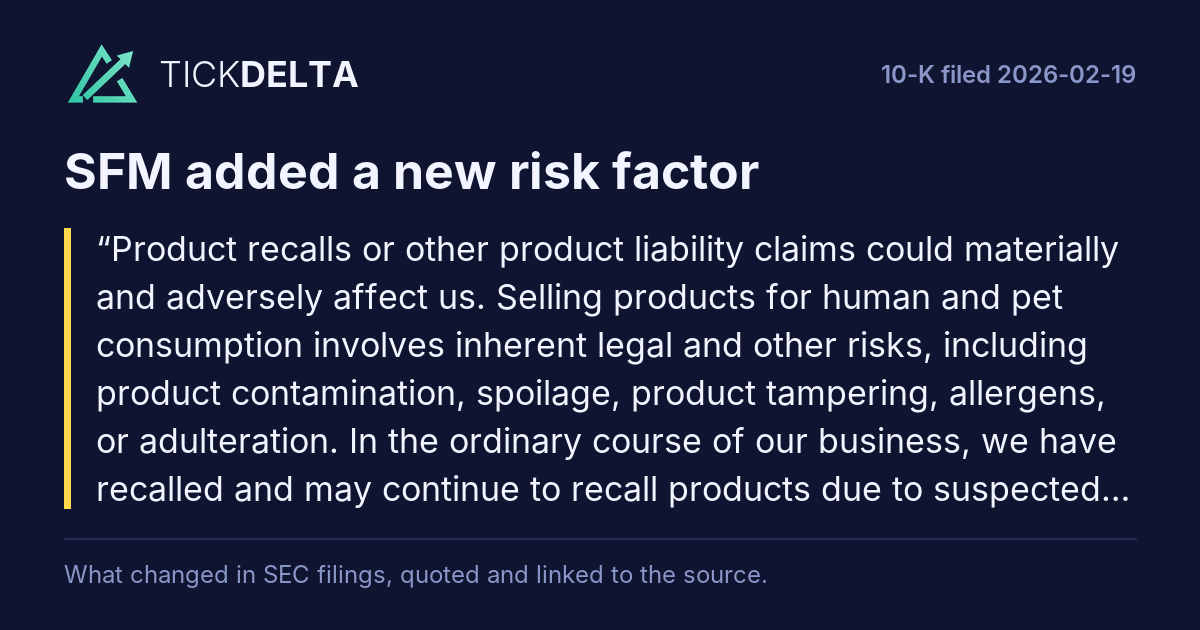
Product recalls or other product liability claims could materially and adversely affect us.

Selling products for human and pet consumption involves inherent legal and other risks, including product contamination, spoilage, product tampering, allergens, or adulteration. In the ordinary course of our business, we have recalled and may continue to recall products due to suspected or confirmed product adulteration, misbranding, tampering or other quality deficiencies. Product recalls or market withdrawals could result in significant losses due to their costs, destruction of product, and lost sales. Recalls can also negatively

affect consumer confidence in the safety and quality of the products we sell and could damage our reputation and disrupt our supply chain and the relations with our suppliers.

Read in the 10-K

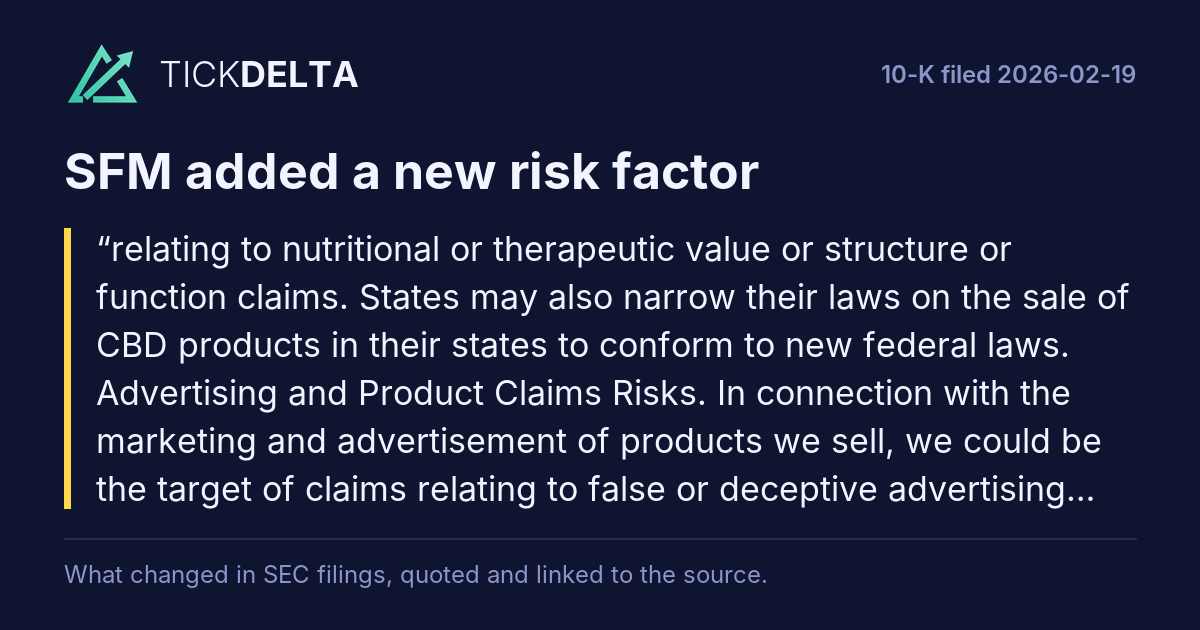
relating to nutritional or therapeutic value or structure or function claims. States may also narrow their laws on the sale of CBD products in their states to conform to new federal laws.

Advertising and Product Claims Risks. In connection with the marketing and advertisement of products we sell, we could be the target of claims relating to false or deceptive advertising, including under the oversight of the FTC and pursuant to the FTC Act and consumer protection statutes of some states. Further, state governments and private plaintiffs target food, drug, and cosmetic retailers and manufacturers for false and misleading advertising and product compliance, including but not limited to natural, organic and GMO claims and statements, which could materially and adversely affect our reputation and profitability and cause consumers to lose confidence in the quality and safety of our products. The cost of defending against any such claims could be significant.

Read in the 10-K

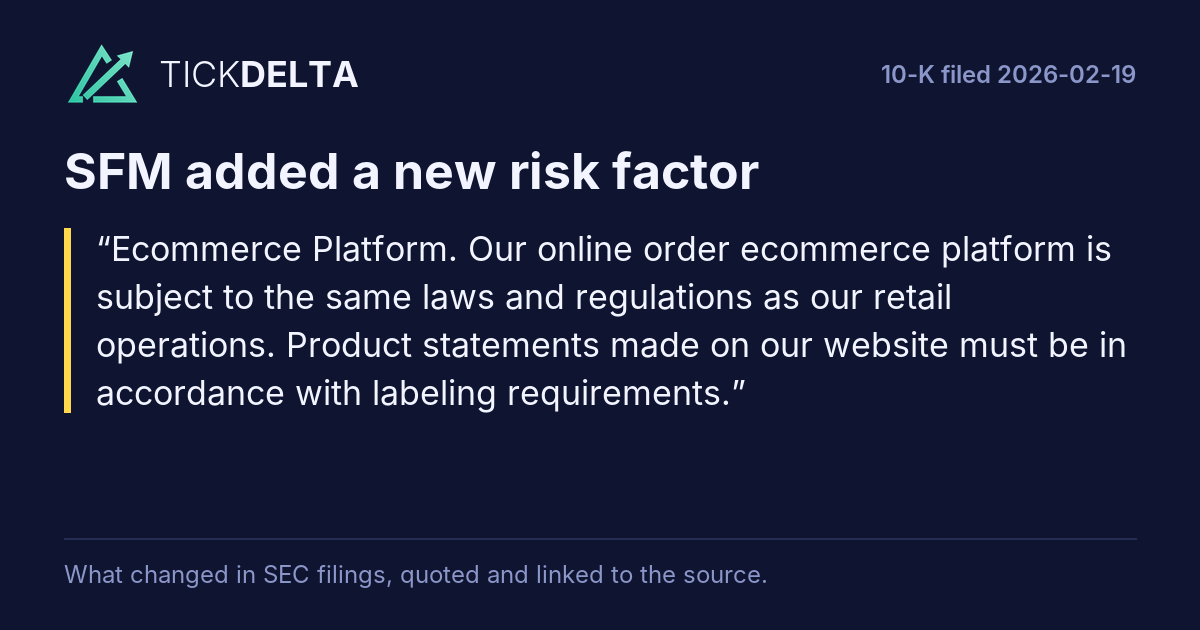
Ecommerce Platform. Our online order ecommerce platform is subject to the same laws and regulations as our retail operations. Product statements made on our website must be in accordance with labeling requirements.

Read in the 10-K

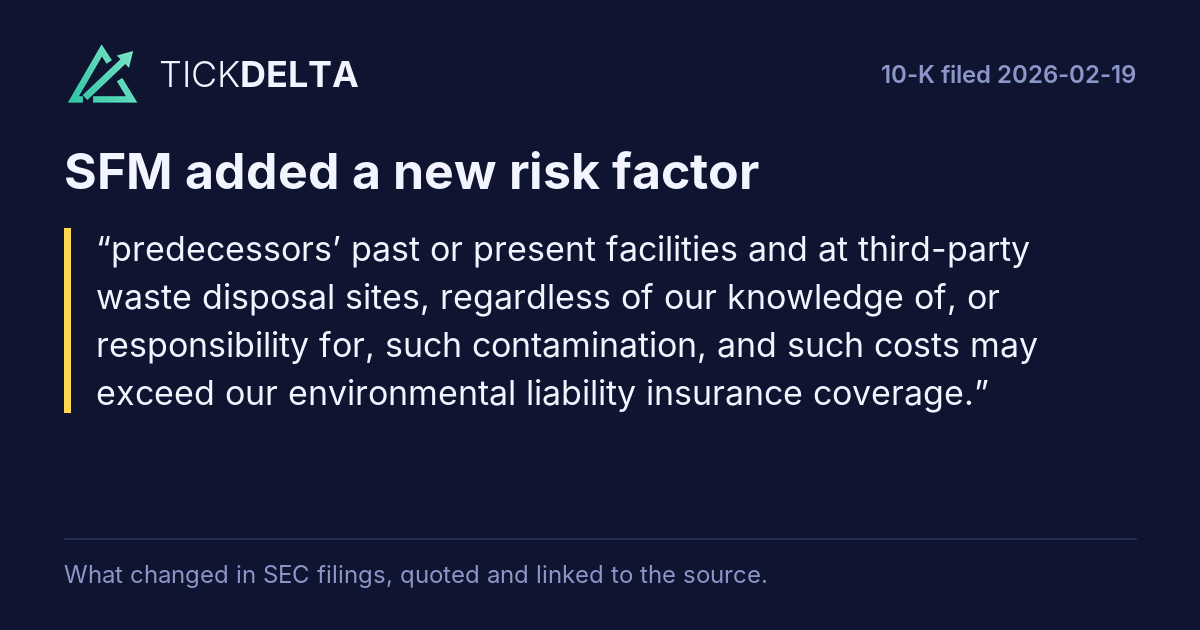
predecessors’ past or present facilities and at third-party waste disposal sites, regardless of our knowledge of, or responsibility for, such contamination, and such costs may exceed our environmental liability insurance coverage.

Read in the 10-K

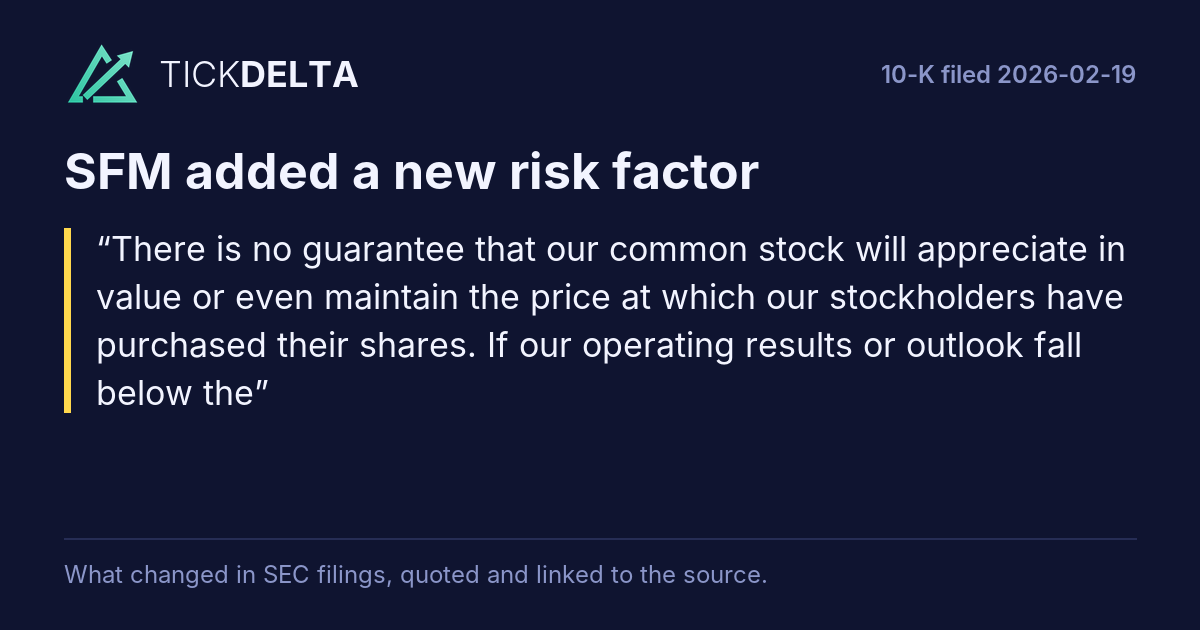
There is no guarantee that our common stock will appreciate in value or even maintain the price at which our stockholders have purchased their shares. If our operating results or outlook fall below the

Read in the 10-K
Show the other 1

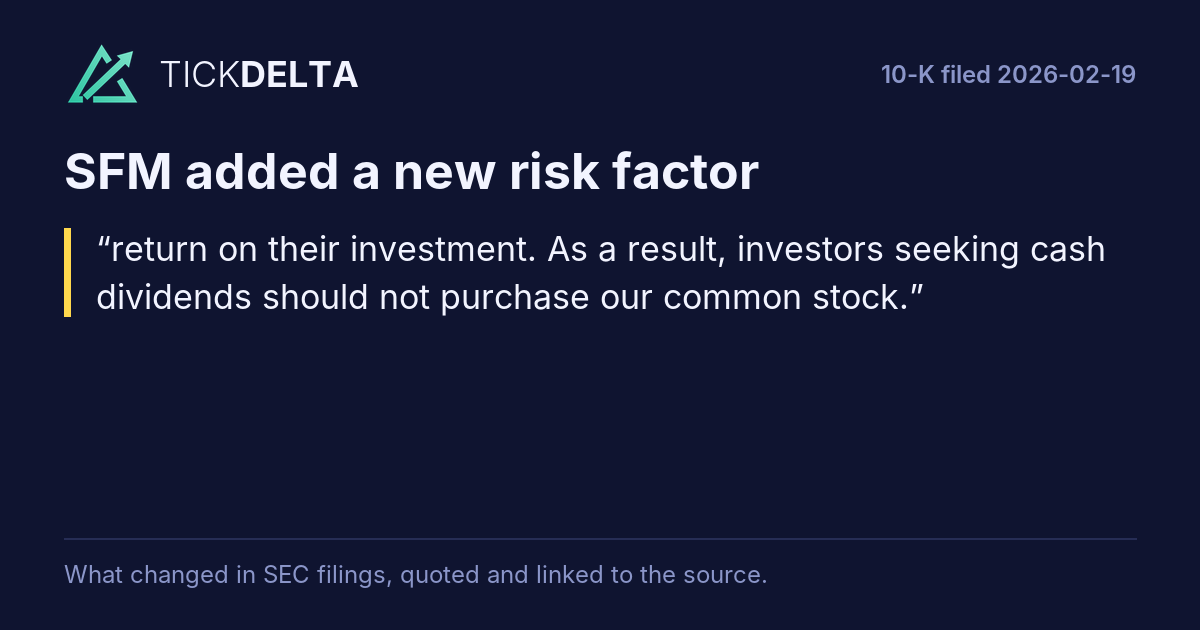
return on their investment. As a result, investors seeking cash dividends should not purchase our common stock.

Read in the 10-K

Paragraphs in the 10-Q filed Oct 28, 2026 that were not in the one before

New in the latest 10-Q

7 paragraphs in the 10-Q filed Oct 28, 2026 with nothing like them in the 10-Q filed Jul 29, 2026 (at least half the words must differ; new numbers alone do not count). Quoted exactly, grouped by the item heading above them. This is text that changed, not a judgement of how serious it is.

10-Q

(Former name, former address and former fiscal year, if changed since last report)

Read in the 10-Q

Financial statements and notes

(2) Increase primarily attributable to the Company's 2025 loyalty program implementation and program growth

Read in the 10-Q

satisfied prior to the end of the reporting period or would be satisfied if the end of the reporting period were the end of the related performance period, and if the effect would be dilutive.

Read in the 10-Q

Our PSAs are awarded subject to the Company achieving certain earnings before interest and taxes (“EBIT”) performance targets for the fiscal year two years subsequent to the year of issuance. In accordance with ASC 718 Compensation-Stock Compensation, the Company evaluates the probability of achieving the EBIT performance targets (and increments of the range thereof) at issuance and at each subsequent reporting period, based on the Company’s then-current forecast of EBIT for the relevant performance year, and the

Read in the 10-Q

cumulative expense is recorded over the three-year service period according to the amount expected to be realized.

Read in the 10-Q
Show the other 2

As of September 27, 2026 September 28, 2025 (in thousands) Options Vested 532 544 Unvested 194 213 RSUs 518 430 PSAs 260 306

Read in the 10-Q

The thirteen weeks ended September 27, 2026 were characterized by headwinds from the disruption caused by the cyclospora outbreak, which negatively impacted a number of our produce categories, as well as an uneven macroeconomic backdrop, resulting in lower traffic and more measured spending among our customers. We are addressing these challenges through our initiatives in affordability, innovation, personalization, marketing, and supply chain as we continue executing our long-term growth strategy. In the fourth quarter of fiscal 2026 and into fiscal 2027, we expect to increase and accelerate investments in affordability, including broader and deeper price investments, as well as investments in technology and supply chain. We will continue to assess customer response and may adjust the scale and pace of these investments accordingly. We expect these investments, together with lower comparable store sales, to pressure our margins in the near term.

Read in the 10-Q

The 10-Q's risk factors against the 10-K

Item 1A of the 10-Q filed Oct 28, 2026 against Item 1A of the 10-K filed Feb 19, 2026. A 10-Q repeats only the risks that changed, so a 10-K paragraph that is missing from it is not counted as removed. Added is a paragraph with nothing like it in the 10-K, Reworded a sentence that is in both with several words changed, Quiet changes a sentence in both where one to four words changed and one is a hedge or a modal (cut words struck through, new words highlighted). Text on the page, not a score; each links to the filing at sec.gov.

What the 10-Q itself says about its risk factors:There have been no material changes to the Risk Factors described under “Part I - Item 1A. Risk Factors” in our 2025 Form 10-K.

Read in the 10-Q
Reworded10-Q Oct 28, 2026 vs 10-K Feb 19, 2026
Any of the following those risks could materially and adversely affect our business, results of operations, cash flows, operating results, financial condition, or prospects and cause the value of our common stock to decline. decline, which could cause you to lose all or part of your investment.

Read it in the 10-Q at sec.govThe 10-K sentence

Reworded10-Q Oct 28, 2026 vs 10-K Feb 19, 2026
You should carefully consider the risks and uncertainties described referenced below, together with all of the other information in this Annual Quarterly Report on Form 10-K, 10-Q, including our consolidated financial statements and related notes.

Read it in the 10-Q at sec.govThe 10-K sentence

Phrases used for the first time

Two-word phrases in Risk Factors of the 10-K filed Feb 19, 2026 that are in none of the 1 earlier 10-Ks stored, back to Feb 20, 2025

wellness product ×2animal disease ×2disease outbreaks ×2avian flu ×2workforce availability ×2artificial intelligence ×2machine learning ×2see note ×2note commitments ×2statements contained ×2information regarding ×2state governments ×2sustainability matters ×2annual meeting ×2
Where each one is used
  • wellness product: We operate in the competitive retail food industry. Our competitors include specialty grocers, conventional supermarkets, natural food stores, mass or discount retailers, warehouse membership clubs, online retailers and specialty stores, as well as restaurants and home delivery and home meal solution providers....
  • animal disease: respectively. We have generally not experienced significant difficulty to date in maintaining the supply of our produce and fresh, natural and organic products that meet our quality standards. However, there is no assurance that these products will be available to meet our needs in the future. The availability of...
  • disease outbreaks: respectively. We have generally not experienced significant difficulty to date in maintaining the supply of our produce and fresh, natural and organic products that meet our quality standards. However, there is no assurance that these products will be available to meet our needs in the future. The availability of...
  • avian flu: respectively. We have generally not experienced significant difficulty to date in maintaining the supply of our produce and fresh, natural and organic products that meet our quality standards. However, there is no assurance that these products will be available to meet our needs in the future. The availability of...
  • workforce availability: respectively. We have generally not experienced significant difficulty to date in maintaining the supply of our produce and fresh, natural and organic products that meet our quality standards. However, there is no assurance that these products will be available to meet our needs in the future. The availability of...
  • artificial intelligence: We rely extensively on information technology systems for point-of-sale processing in our stores, supply chain, financial reporting, human resources, store operations, ecommerce and various other processes and transactions. Our information technology systems are subject to damage or interruption from power outages,...
  • machine learning: We rely extensively on information technology systems for point-of-sale processing in our stores, supply chain, financial reporting, human resources, store operations, ecommerce and various other processes and transactions. Our information technology systems are subject to damage or interruption from power outages,...
  • see note: We have been and will continue to be subject to litigation and other legal proceedings that may adversely affect our business, including claims brought by team members, customers, government agencies, suppliers, distributors, stockholders, job applicants or others. Our operations, which are characterized by a high...

The 10-K at sec.gov

Used at least twice, small words left out. Counted, not picked: a phrase can be new because the company renamed something.

What was taken out

8 paragraphs of last year's Risk Factors with nothing like them now. The longest are quoted.

Across all companies
Advertising and Product Claims Risks. In connection with the marketing and advertisement of products we sell, we could be the target of claims relating to false or deceptive advertising, including under the oversight of the FTC and pursuant to the FTC Act and consumer protection statutes of some states. Furthermore, in recent years, the FDA has been aggressive in enforcing its regulations with respect to nutrient content claims (e.g., “low fat,” “good source of,” “calorie free,” etc.), unauthorized “health claims” (claims that characterize the relationship between a food or food ingredient...
In the 10-K filed Feb 20, 2025
market “natural” or similarly labeled products, asserting false, misleading and deceptive advertising and labeling claims, including claims related to genetically modified ingredients. Should we become subject to similar claims, consumers may avoid purchasing products from us or seek alternatives, even if the basis for the claim is unfounded. Adverse publicity about these matters may discourage consumers from buying our products. The cost of defending against any such claims could be significant. Any loss of confidence on the part of consumers in the truthfulness of our labeling or...
In the 10-K filed Feb 20, 2025
FSMA directed an historic shift at FDA from the agency reacting to and solving problems in the food supply chain to preventing contamination of food before it occurs. FSMA accomplished this goal by overhauling FDA’s current food safety program to require all actors in the food supply chain to expand their safety programs and record keeping processes. FSMA’s continued implementation, such as the rule on Additional Traceability Records for Certain Foods, and FDA’s own development in understanding effective ways to enforce FSMA provisions could delay the supply of certain products, result in...
In the 10-K filed Feb 20, 2025
Organic and GMO Claims. We are also subject to the USDA’s Organic Rule, which facilitates interstate commerce and the marketing of organically produced food, and provides assurance to our customers that such products meet consistent, uniform standards. Compliance with the USDA’s Organic Rule also places a significant burden on some of our suppliers, which may cause a disruption in some of our product offerings. Additionally, the USDA has promulgated regulations that require disclosure of whether food offered for sale contains bioengineered (GMO) ingredients or detectable genetic material...
In the 10-K filed Feb 20, 2025

Sources

Item 1A of each 10-K and 10-Q on EDGAR, quoted exactly. Each paragraph links to the filing at sec.gov.

Also

10-K change: what was reworded or cut, section by section.

Work with it

Excel workbook · CSV. Google Sheet that stays up to date: paste =IMPORTDATA("https://tickdelta.com/company/SFM/export.csv") into a cell.

Next:10-K change
Esc

Type a ticker such as AAPL, a name, an investor such as Buffett, or a topic such as tariffs. ↑ ↓ to move, Enter to open.