Added10-Q Nov 5, 2026 vs 10-K Feb 24, 2026
ITEM 2. Unregistered Sales of Equity Securities, Use of Proceeds and Issuer Purchases of Equity Securities
Each branch is a paragraph in Risk Factors with nothing like it in the 10-K filed Feb 21, 2025. A box jumps to the paragraph as filed, below.
34 paragraphs in Risk Factors of the 10-K filed Feb 24, 2026 with nothing like them in the 10-K filed Feb 21, 2025. Quoted exactly. Paragraphs that were only edited are under 10-K change.
•Insurance Underwriting Risks. Insurance underwriting risks include the adequacy, accuracy and development of pricing or loss and loss adjustment reserves, the lack of available capital, periods characterized by excess underwriting capacity and unfavorable premium rates, and our ability to maintain or improve underwriting discipline, risk selection, and portfolio diversification across lines and geographies.
•Operational Risks. Operational risks include risks related to our ability to attract, develop and retain key personnel, distribution partners and underwriting talent, fluctuations in our results of operations, the performance of strategic partnerships, joint ventures, delegated underwriting authorities, and other third party relationships, including risks associated with delegating authority to third party managing general agents (“MGAs”).
A significant amount of communication between our employees and our business banking and investment partners depends on information technology and electronic data exchange. We also license certain systems, platforms, datasets and, increasingly AI-driven tools and models from third parties and rely on cloud-based infrastructure and externally hosted systems. We cannot be certain that we will maintain continued access to these systems, platforms, datasets or models, or that they will operate as intended. AI models may produce inaccurate, biased, or unpredictable outputs, may degrade over time, or may require retraining based on data we do not control. We also cannot guarantee that we could replace these tools without degrading operational performance or slowing our underwriting or claims response time. In addition, if we adopt an overly cautious approach in evaluating, updating, or integrating new technology or AI‑enabled systems, we may delay necessary improvements, prolong exposure to outdated or less secure systems, or impede operational efficiency, which could increase our vulnerability to cybersecurity incidents or other technology‑related failures.
Like all companies, our information technology systems are susceptible to interruptions or failures related to events beyond our control, including natural disasters, terrorist attacks, third party service outages, and general technology failures. As AI technologies become more integrated into our operations, failures, errors or unexpected behavior in these systems could also
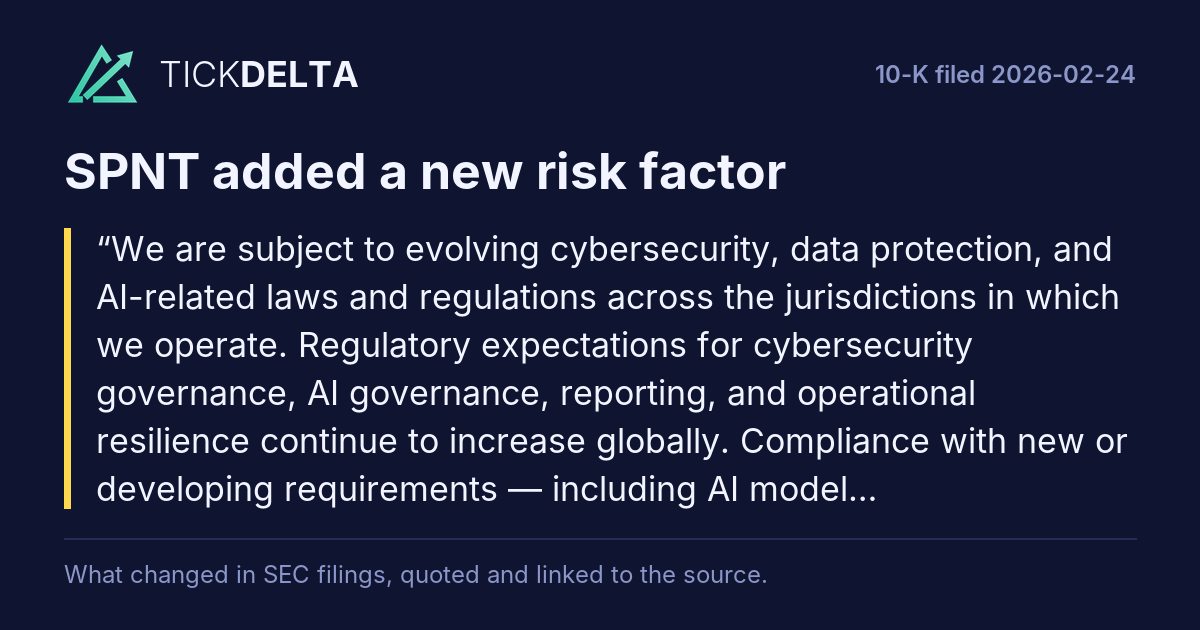
We are subject to evolving cybersecurity, data protection, and AI-related laws and regulations across the jurisdictions in which we operate. Regulatory expectations for cybersecurity governance, AI governance, reporting, and operational resilience continue to increase globally. Compliance with new or developing requirements — including AI model documentation, data governance controls, risk assessments, testing, third‑party oversight, breach notification, and incident response protocols — may increase our compliance costs and operational burdens. As our operations expand into additional jurisdictions and as the regulatory landscape for AI and automated decision-making evolves, we expect that our cybersecurity, data privacy, and AI compliance costs will continue to rise.
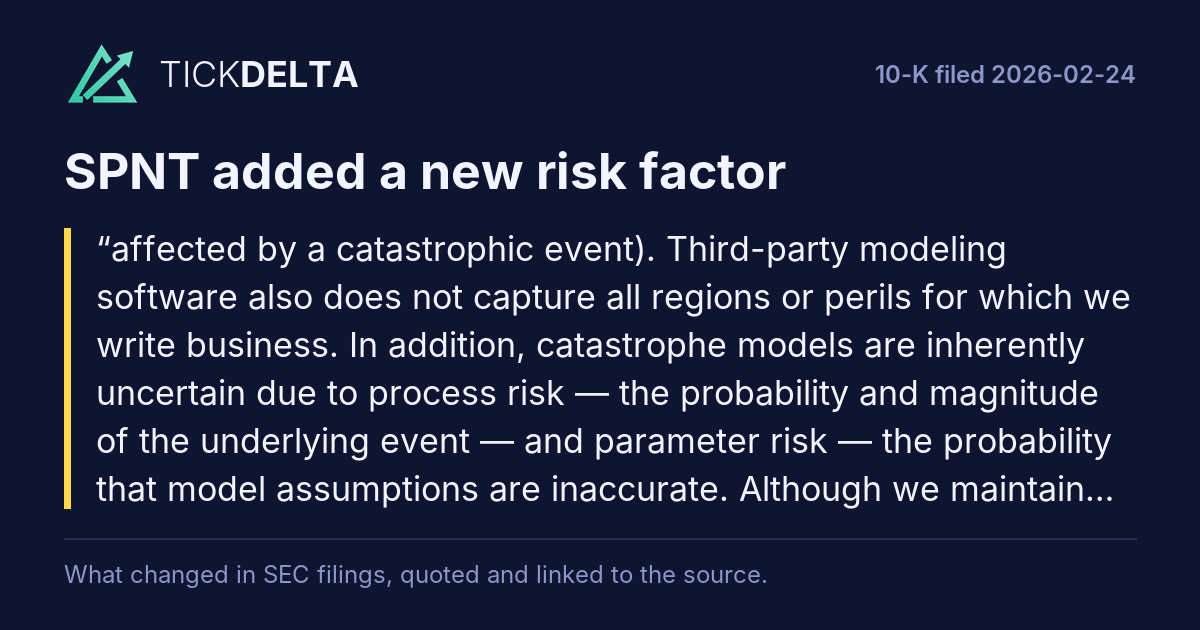
affected by a catastrophic event). Third-party modeling software also does not capture all regions or perils for which we write business. In addition, catastrophe models are inherently uncertain due to process risk — the probability and magnitude of the underlying event — and parameter risk — the probability that model assumptions are inaccurate. Although we maintain model‑governance and validation processes intended to reduce these risks, such controls cannot eliminate the inherent uncertainty of models or prevent significant variances between modeled outcomes and actual results.
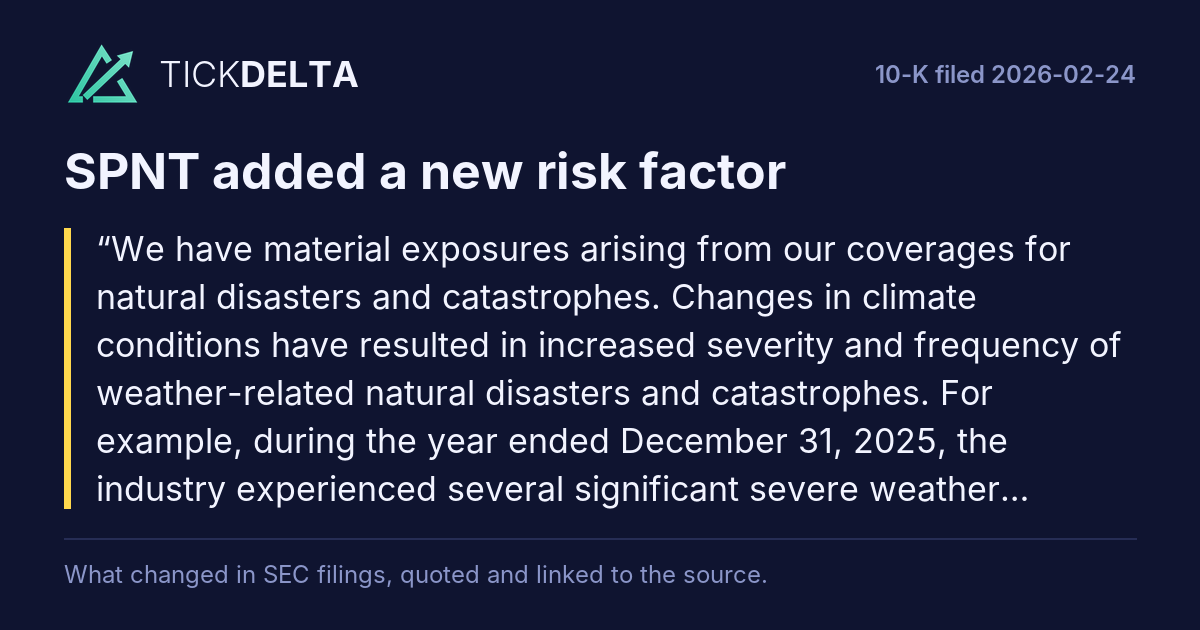
We have material exposures arising from our coverages for natural disasters and catastrophes. Changes in climate conditions have resulted in increased severity and frequency of weather-related natural disasters and catastrophes. For example, during the year ended December 31, 2025, the industry experienced several significant severe weather events. In addition, rising sea
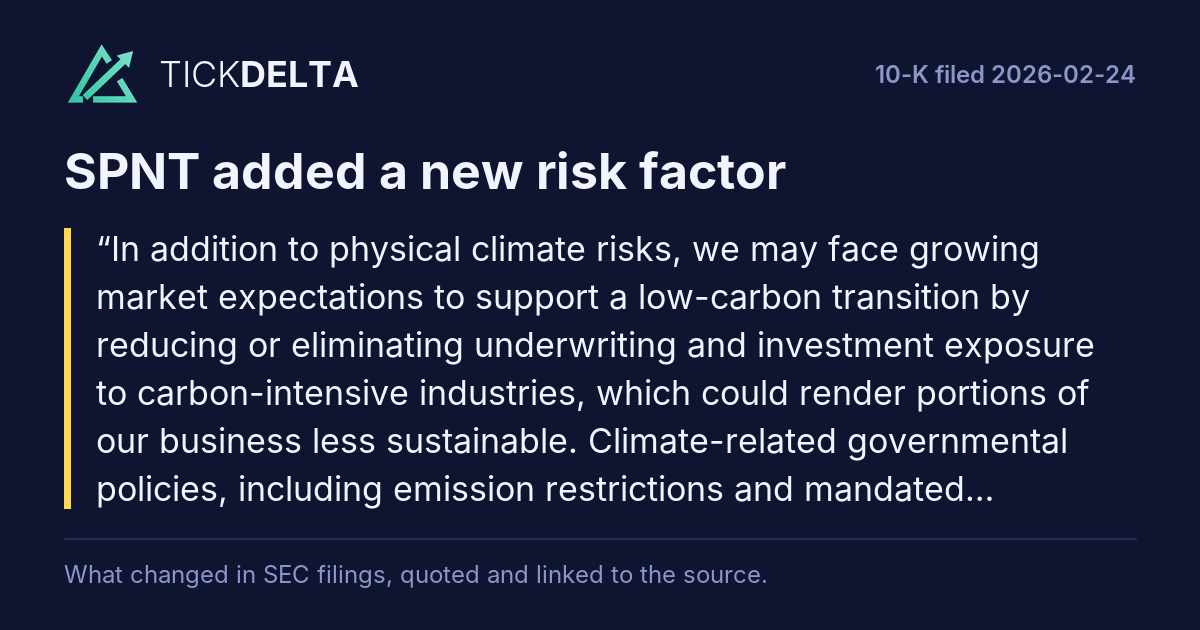
In addition to physical climate risks, we may face growing market expectations to support a low-carbon transition by reducing or eliminating underwriting and investment exposure to carbon-intensive industries, which could render portions of our business less sustainable. Climate-related governmental policies, including emission restrictions and mandated technologies, may further reduce demand for our products and affect the performance of related investments. We are also subject to complex and rapidly changing climate-related laws and policy initiatives, the implications of which are uncertain and may adversely impact on our business.
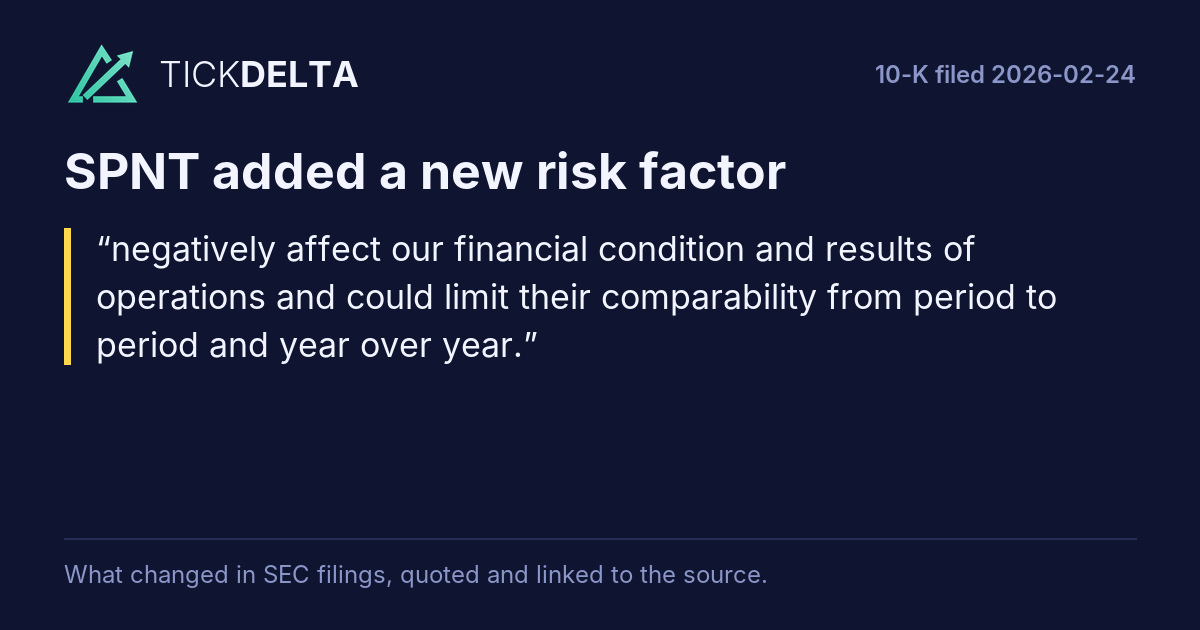
negatively affect our financial condition and results of operations and could limit their comparability from period to period and year over year.
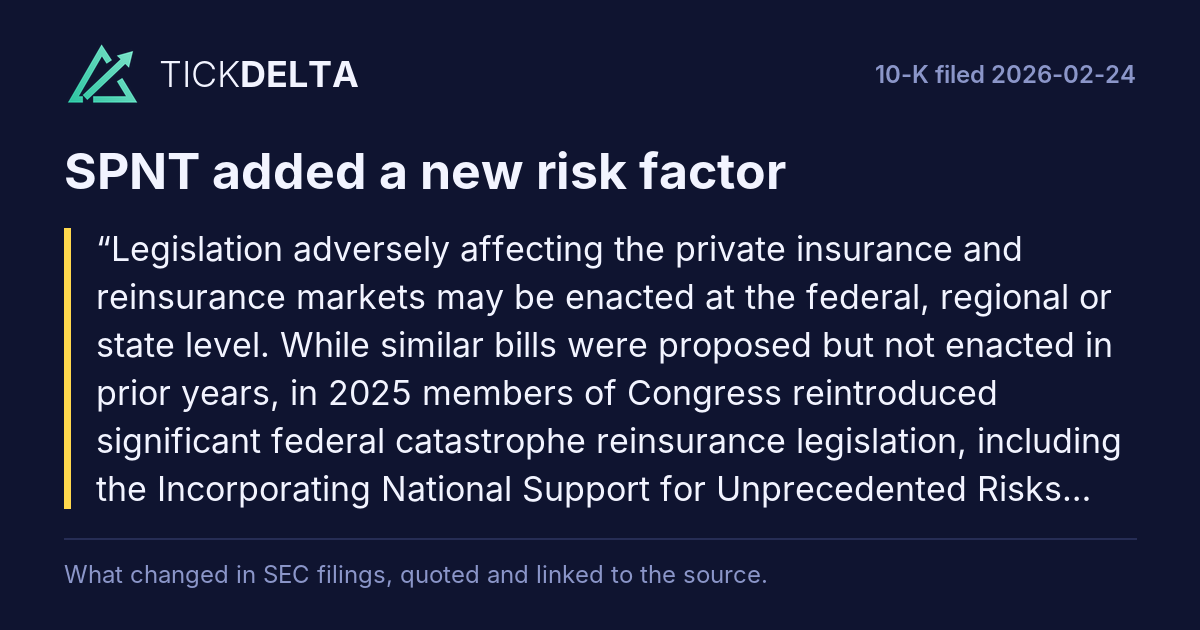
Legislation adversely affecting the private insurance and reinsurance markets may be enacted at the federal, regional or state level. While similar bills were proposed but not enacted in prior years, in 2025 members of Congress reintroduced significant federal catastrophe reinsurance legislation, including the Incorporating National Support for Unprecedented Risks and Emergencies (INSURE) Act, which would create a federally backed catastrophic property loss reinsurance program capitalized with federal funds. If enacted, this program would provide reinsurance above certain loss thresholds for a wide range of perils and could serve as a subsidized public‑sector alternative to private catastrophe reinsurers, potentially reducing the role of the private market and limiting demand for our products. Industry groups have expressed concern that such legislation could shift catastrophic risk to federal taxpayers, distort market pricing, and reduce the need for private reinsurance capacity. Even if not enacted in its current form, continued reintroduction and growing political attention to catastrophe‑insurance availability may increase the likelihood of federal intervention in the future.
In addition, worsening insurance‑market conditions—such as insurer withdrawals from high‑risk states and rising reinsurance costs—have contributed to renewed legislative momentum. These conditions, particularly in catastrophe‑exposed states such as California, Florida, Texas, and Louisiana, have prompted policymakers to consider federal or expanded state‑level mechanisms to stabilize property‑insurance markets. In California specifically, heightened wildfire risk, regulatory rate‑approval constraints, and increased insurer non‑renewals have led to extensive legislative and administrative activity aimed at maintaining residential‑property‑insurance availability. For example, the California Department of Insurance has advanced proposals that would expand the use of catastrophe‑modeling in rate filings while also conditioning such changes on insurers’ participation in writing coverage in designated wildfire‑exposed ZIP codes. California lawmakers and regulators have also considered or implemented revisions to the FAIR Plan’s structure, coverage obligations, and permissible rate levels. Any expansion of the FAIR Plan or imposition of mandatory‑writing or market‑stabilization requirements on private insurers could reduce demand for private reinsurance or alter the mix, pricing, or risk profile of the exposures we reinsure. Legislative or regulatory initiatives that constrain insurers’ ability to obtain actuarially adequate rates in California could also reduce private‑market capacity and further encourage public‑sector or quasi‑public alternatives, thereby limiting demand for our catastrophe‑exposed products in the state. Any such measures, if adopted, could reduce market share available to private insurers and reinsurers and adversely affect our ability to price or offer catastrophe‑exposed coverage profitably.
State legislation also continues to evolve. Florida, for example, has in the past enacted laws altering the size, operations, or competitive position of Citizens Property Insurance Corporation (“Citizens”) and the Florida Hurricane Catastrophe Fund (“FHCF”) in ways that expanded their role relative to the private market. Additional legislative action in Florida or other catastrophe‑prone states could further diminish aggregate private‑market demand for our products. Because we are a significant provider of catastrophe‑exposed coverage globally and in these regions, any reduction in private‑market participation or shift toward public‑sector mechanisms could disproportionately and adversely affect our business, financial condition, and results of operations.
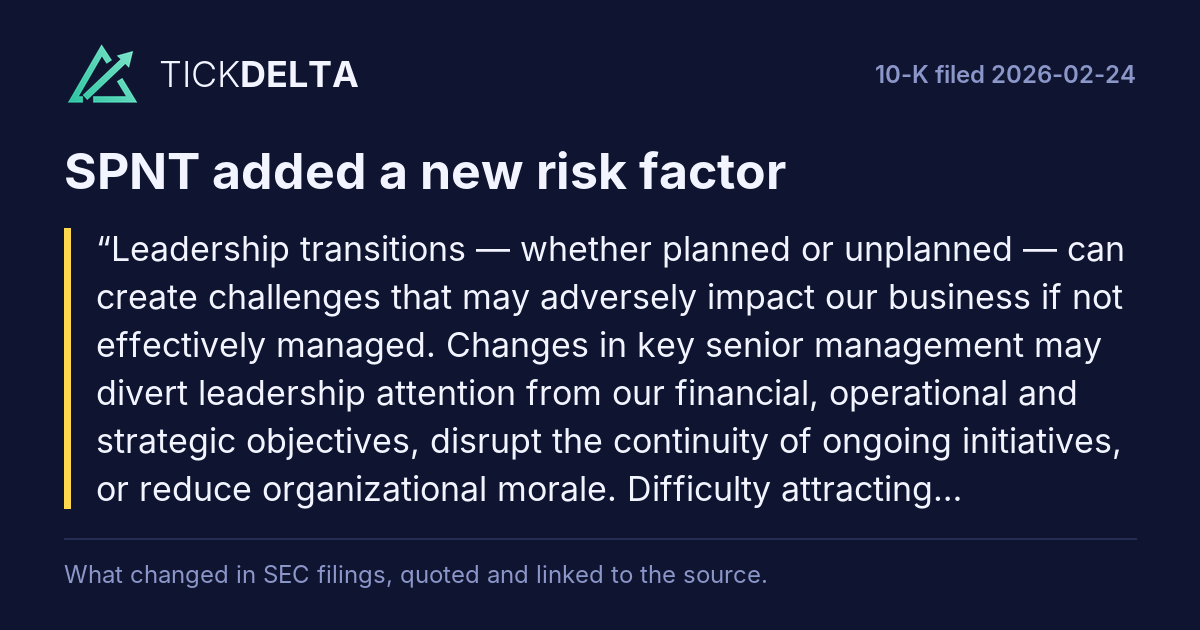
Leadership transitions — whether planned or unplanned — can create challenges that may adversely impact our business if not effectively managed. Changes in key senior management may divert leadership attention from our financial, operational and strategic objectives, disrupt the continuity of ongoing initiatives, or reduce organizational morale. Difficulty attracting, integrating, or retaining qualified senior leaders could negatively affect our ability to execute our strategic plans, maintain strong governance practices, and preserve important relationships with clients, MGAs, regulators and other business partners. Any such disruption, or the perception that we are not effectively managing leadership transitions, may be viewed negatively by rating agencies and shareholders, which could adversely affect our ratings, financial performance, and long‑term strategic positioning.
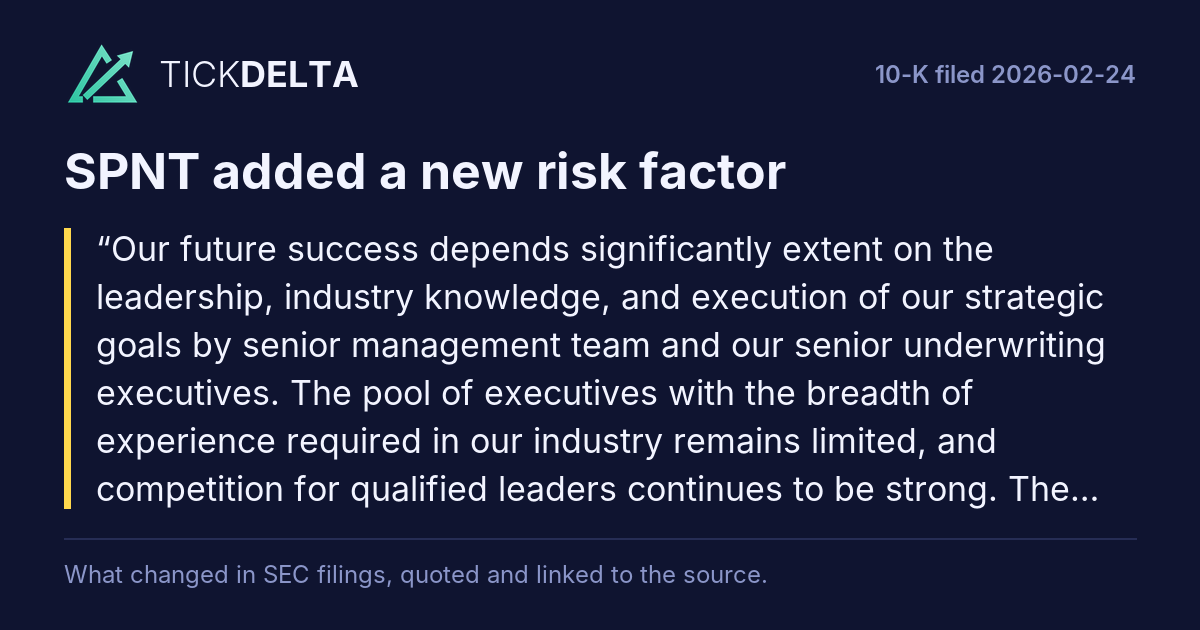
Our future success depends significantly extent on the leadership, industry knowledge, and execution of our strategic goals by senior management team and our senior underwriting executives. The pool of executives with the breadth of experience required in our industry remains limited, and competition for qualified leaders continues to be strong. The departure of one or more members of senior management or other key personnel could delay, disrupt or prevent the effective implementation of our business strategy and could materially and negatively impact our operations and performance.
We also maintain offices across multiple jurisdictions — including the U.S., Canada, Bermuda, the U.K., Sweden and Switzerland — some of which impose residency, licensing, or work‑authorization requirements that may affect our ability to recruit or retain personnel. For example, Bermuda law restricts non‑Bermudians from working in Bermuda without an approved work permit issued by the Bermuda Department of Immigration. If the Bermuda Department of Immigration, or any similar governing authority in jurisdictions where we operate, were to modify its policies in a way that prevents existing employees from continuing in their roles or limits our ability to hire qualified personnel, our operations could be disrupted and our financial performance could be adversely affected. We do not currently maintain key person life insurance on any member of our senior management. If a member of senior management were to die, become incapacitated, or leave the Company to pursue other opportunities, we would be solely responsible for identifying and recruiting a suitable replacement. Any delay or inability to fill such a critical role could materially and negatively impact our business and hinder the achievement of our strategic goals.
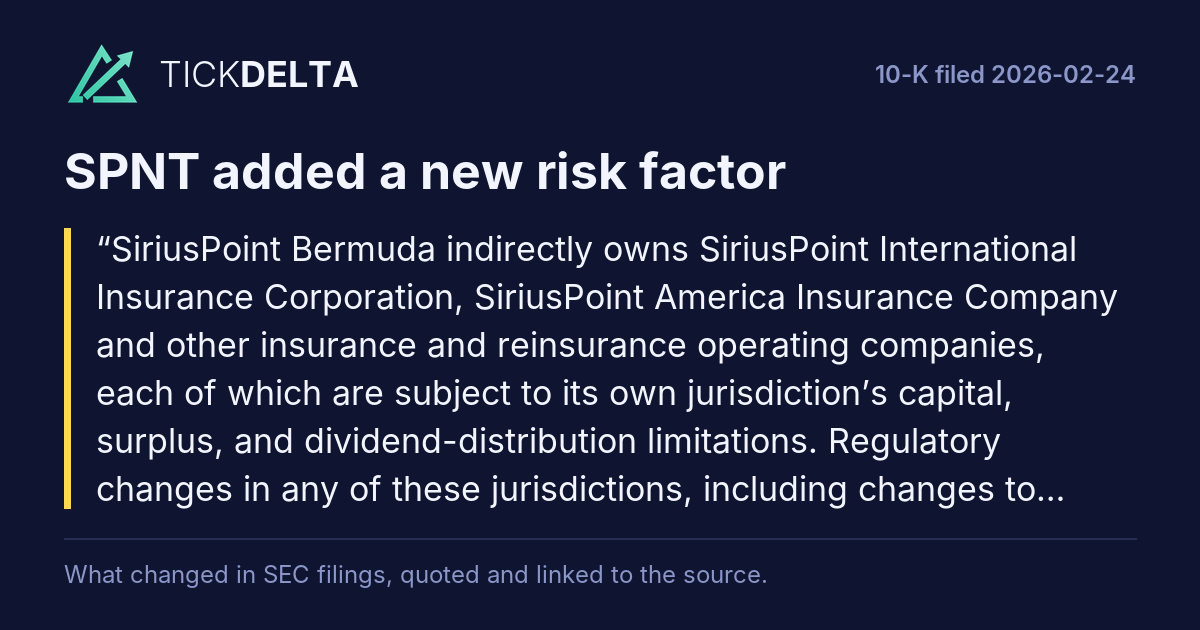
SiriusPoint Bermuda indirectly owns SiriusPoint International Insurance Corporation, SiriusPoint America Insurance Company and other insurance and reinsurance operating companies, each of which are subject to its own jurisdiction’s capital, surplus, and dividend-distribution limitations. Regulatory changes in any of these jurisdictions, including changes to risk‑based capital requirements or minimum solvency standards, could further restrict the ability of our subsidiaries to pay dividends. As reflected in recent BMA supervisory updates, changes to Bermuda’s solvency regime have increased the statutory capital and surplus requirements for Bermuda‑based insurers, and future amendments could result in additional constraints on dividend capacity.
In addition, our ability to upstream dividends or other distributions may also be limited by factors beyond explicit regulatory constraints, including adverse financial performance at our operating subsidiaries, increased capital needs driven by business growth, volatility in underwriting or investment results, or strategic decisions to retain capital to support current or future regulatory, ratings‑agency, or business requirements. These operational or financial pressures could reduce the amount of distributable capital available to us, further constraining our ability to pay dividends or service our obligations at the holding‑company level.
Because we depend on dividends and other permissible payments from our operating subsidiaries, any regulatory or financial restriction on their ability to distribute funds to us could materially and adversely affect our liquidity, financial condition, ability to pay dividends to shareholders, and our ability to meet obligations under our outstanding indebtedness.
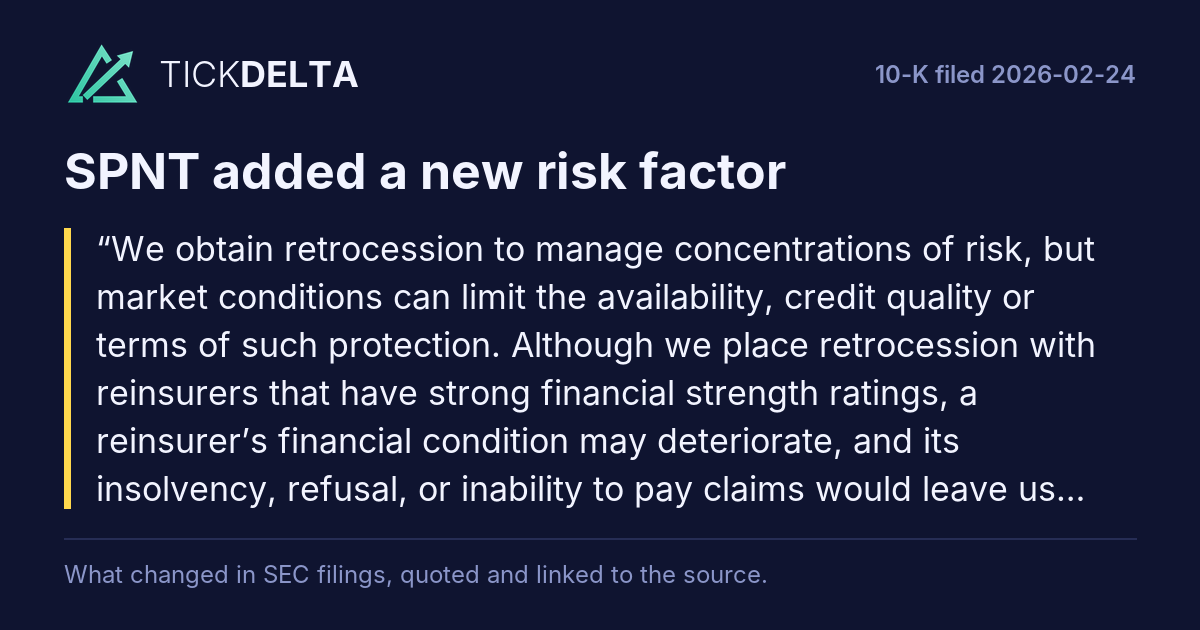
We obtain retrocession to manage concentrations of risk, but market conditions can limit the availability, credit quality or terms of such protection. Although we place retrocession with reinsurers that have strong financial strength ratings, a reinsurer’s financial condition may deteriorate, and its insolvency, refusal, or inability to pay claims would leave us fully responsible for the underlying liabilities.
At times, pricing or capacity constraints may lead us to retain more risk by purchasing less, or no, retrocession for certain exposures or regions. This increases our potential losses in the event of significant insured events and may materially affect our financial results.
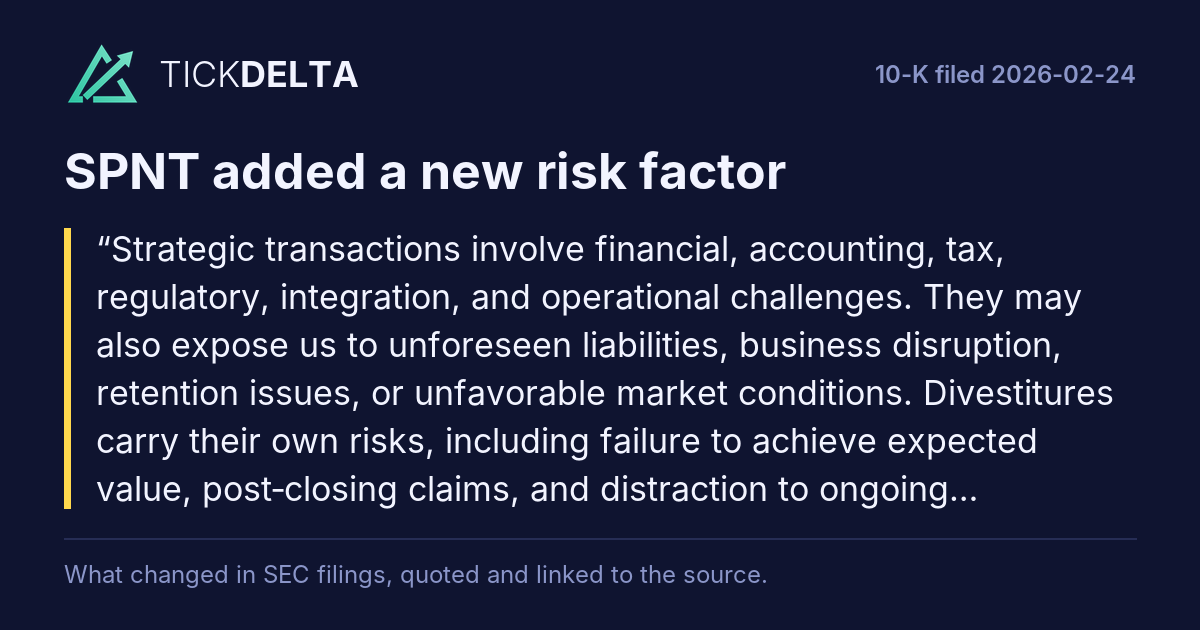
Strategic transactions involve financial, accounting, tax, regulatory, integration, and operational challenges. They may also expose us to unforeseen liabilities, business disruption, retention issues, or unfavorable market conditions. Divestitures carry their own risks, including failure to achieve expected value, post‑closing claims, and distraction to ongoing operations. Acquisitions or strategic investments may underperform relative to the price paid, fail to deliver expected synergies, or result in unexpected charges.
Through these transactions, we may assume unknown or undisclosed business, operational, tax, regulatory, or compliance liabilities. Due‑diligence and indemnification protections may not fully mitigate these risks. In addition, our strategic investments are generally illiquid and subject to transfer restrictions, meaning we may be unable to sell them when desired, secure an acceptable price, or avoid substantial or total losses.
We are required to maintain effective disclosure controls and procedures and internal control over financial reporting. While these controls are designed to provide reasonable assurance, no control system can prevent all errors or fraud. All systems have inherent limitations—including the risk of human error, faulty judgment, breakdowns in operation, or circumvention through collusion or individual misconduct. Controls may also become inadequate over time due to changes in conditions or deterioration in compliance.
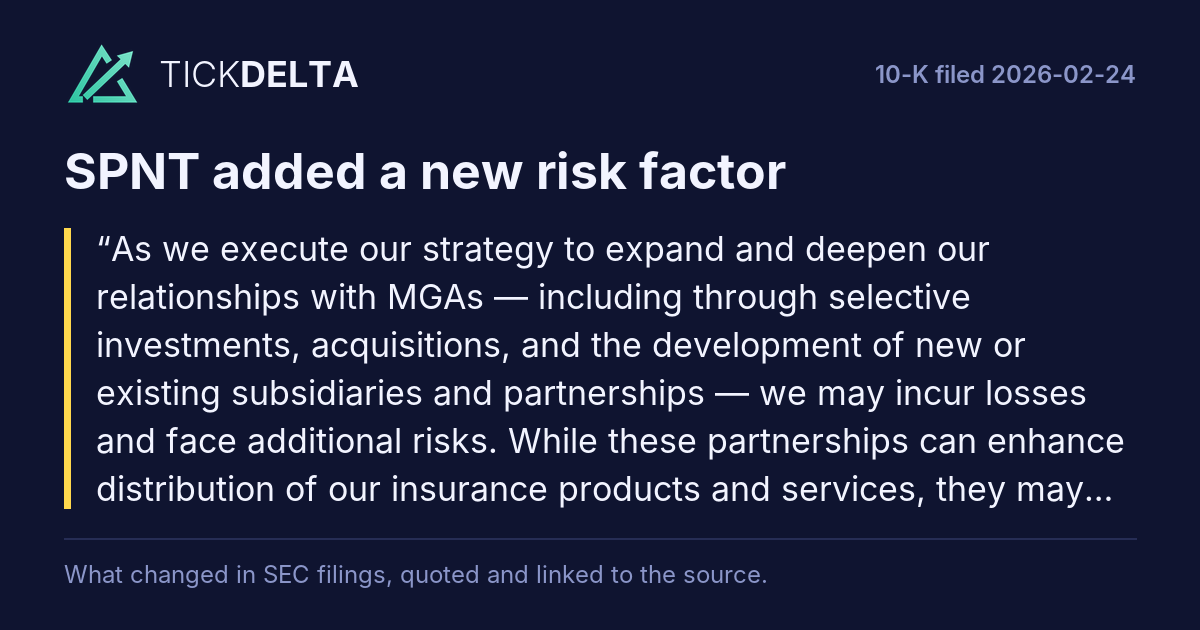
As we execute our strategy to expand and deepen our relationships with MGAs — including through selective investments, acquisitions, and the development of new or existing subsidiaries and partnerships — we may incur losses and face additional risks. While these partnerships can enhance distribution of our insurance products and services, they may also expose us to heightened cyber, technology, and emerging-asset risks (such as cryptocurrency risk), as well as increased equity exposure to early-stage MGAs that carry significant uncertainty of success.
Many MGAs in which we invest are early-stage businesses with higher operating costs, evolving business models, and greater execution risk. Our MGA investments are generally illiquid and are subject to transfer restrictions, which may prevent us from selling our interests when desired or from securing an acceptable price. As a result, we face the possibility of highly variable returns on investments, including substantial or total loss of our invested capital.
In some cases, we also provide reinsurance to our MGA partners, increasing our potential exposure to underwriting and operational performance risk. There is no assurance that we will be able to successfully incubate, scale, or generate earnings from these partnerships.
Although we conduct business, financial, and legal due diligence before pursuing MGA investments and other strategic opportunities, such diligence may not identify all material issues. Some opportunities may not be successfully executed or may require significant financial, managerial and operational resources. These factors could have a negative impact on our operating results, financial condition, and ability to achieve expected strategic benefits.
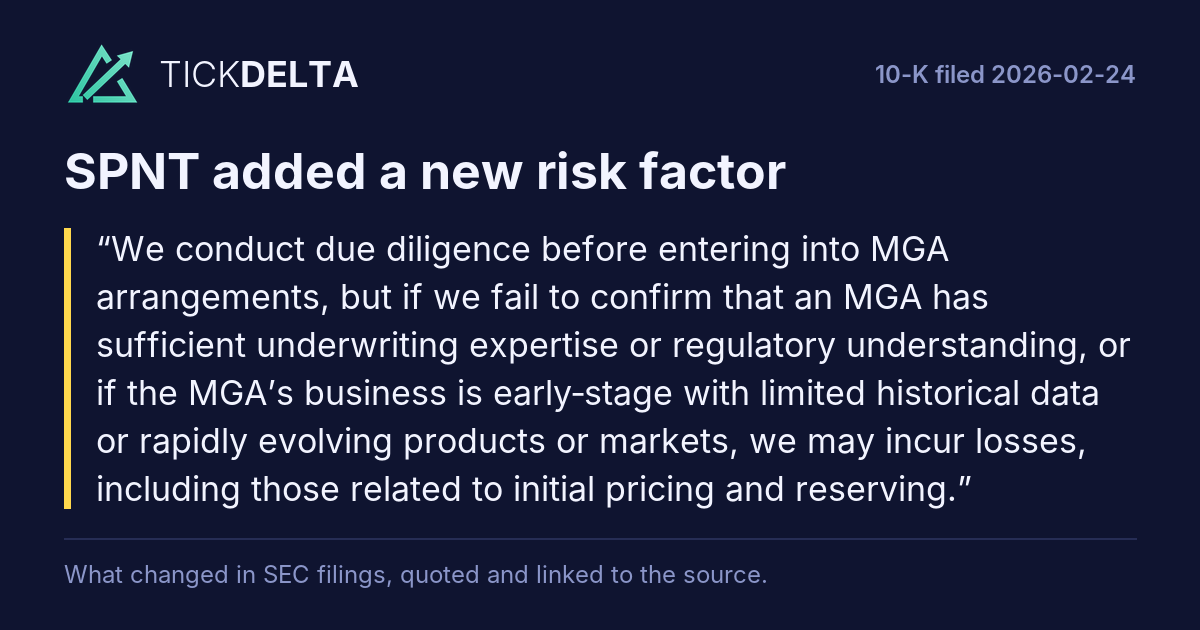
We conduct due diligence before entering into MGA arrangements, but if we fail to confirm that an MGA has sufficient underwriting expertise or regulatory understanding, or if the MGA’s business is early‑stage with limited historical data or rapidly evolving products or markets, we may incur losses, including those related to initial pricing and reserving.
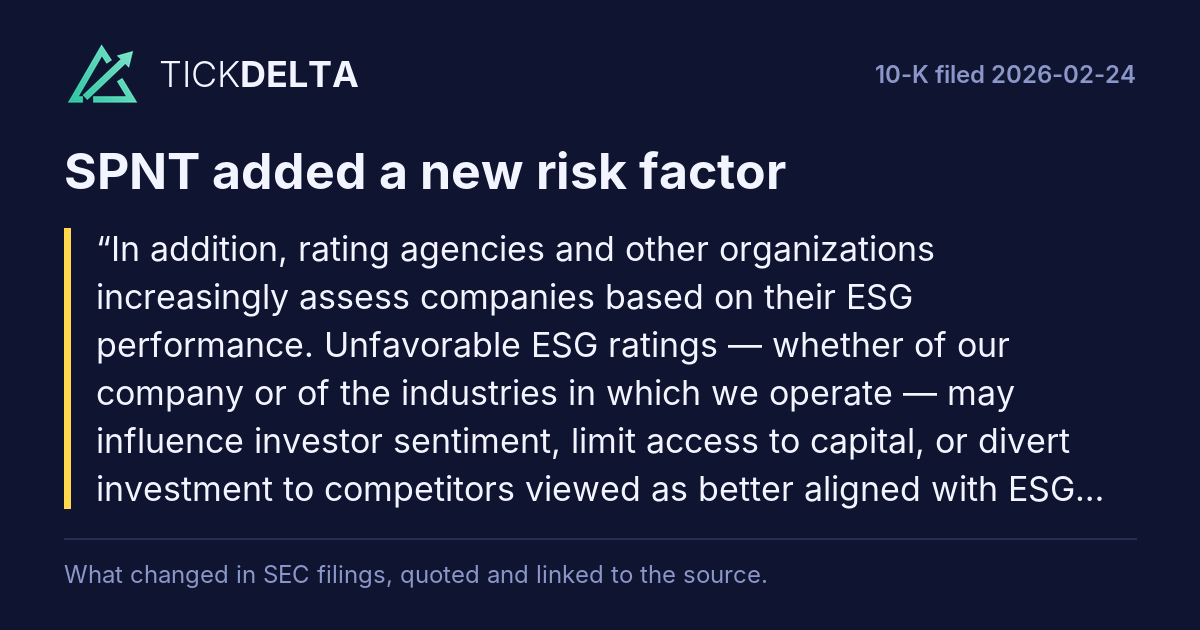
In addition, rating agencies and other organizations increasingly assess companies based on their ESG performance. Unfavorable ESG ratings — whether of our company or of the industries in which we operate — may influence investor sentiment, limit access to capital, or divert investment to competitors viewed as better aligned with ESG expectations.
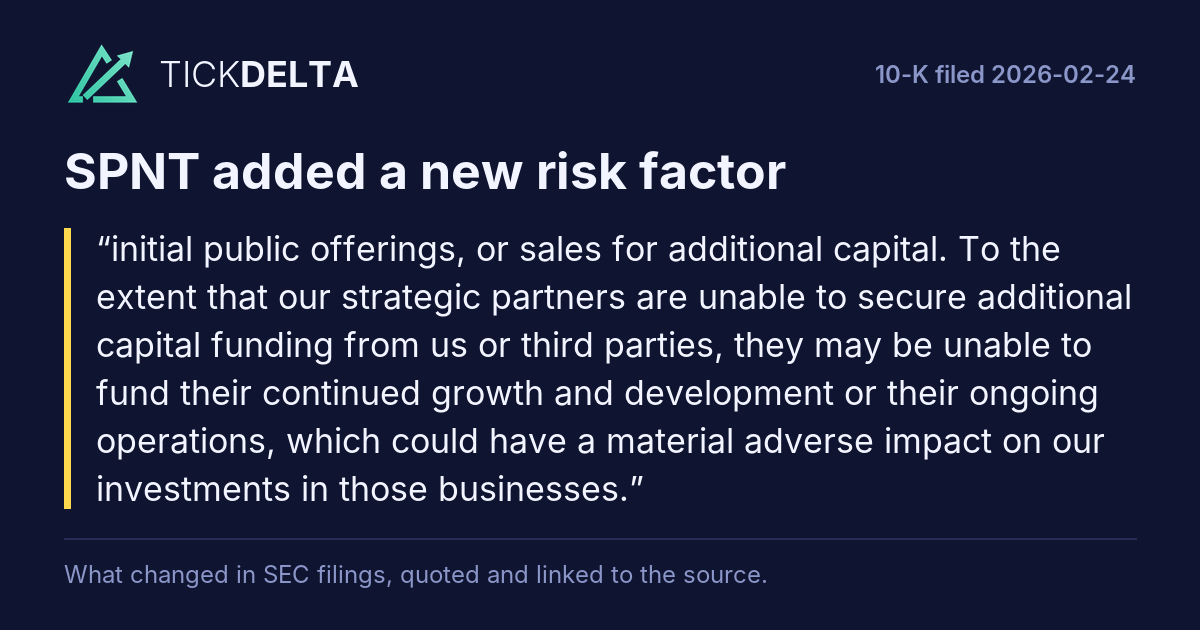
initial public offerings, or sales for additional capital. To the extent that our strategic partners are unable to secure additional capital funding from us or third parties, they may be unable to fund their continued growth and development or their ongoing operations, which could have a material adverse impact on our investments in those businesses.
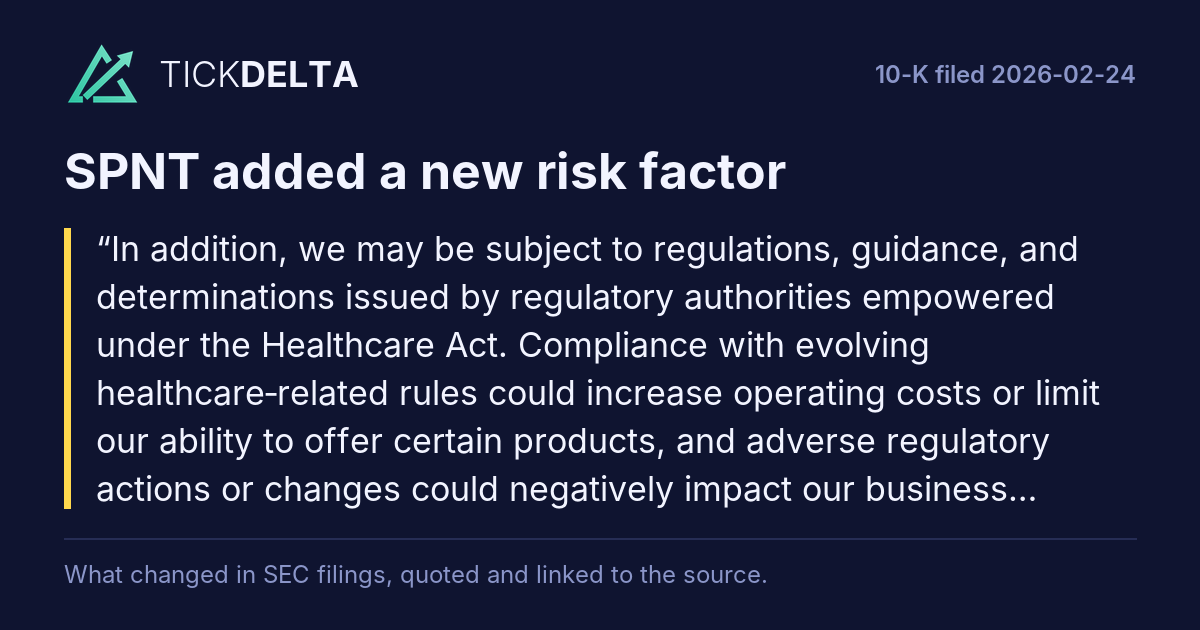
In addition, we may be subject to regulations, guidance, and determinations issued by regulatory authorities empowered under the Healthcare Act. Compliance with evolving healthcare‑related rules could increase operating costs or limit our ability to offer certain products, and adverse regulatory actions or changes could negatively impact our business, financial condition, and results of operations.
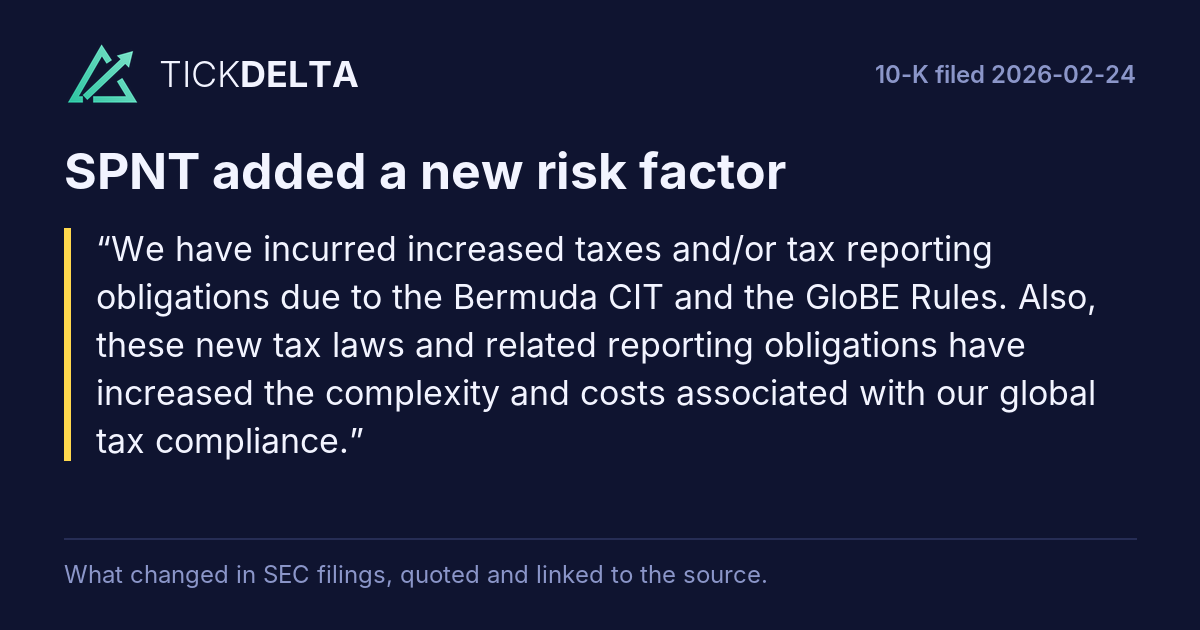
We have incurred increased taxes and/or tax reporting obligations due to the Bermuda CIT and the GloBE Rules. Also, these new tax laws and related reporting obligations have increased the complexity and costs associated with our global tax compliance.
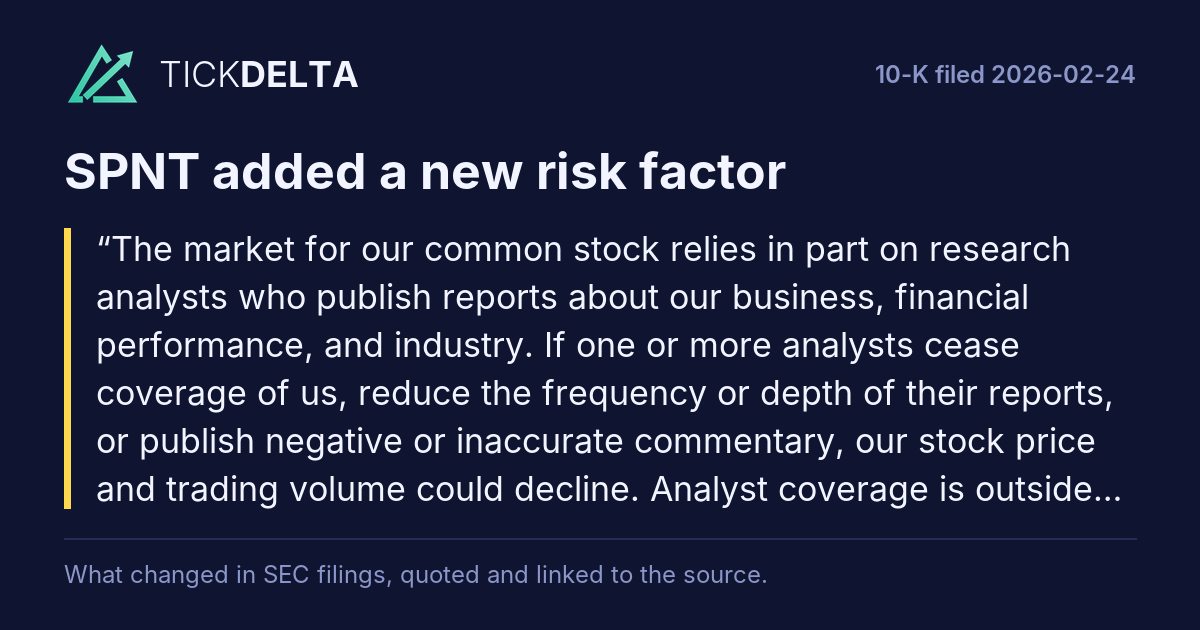
The market for our common stock relies in part on research analysts who publish reports about our business, financial performance, and industry. If one or more analysts cease coverage of us, reduce the frequency or depth of their reports, or publish negative or inaccurate commentary, our stock price and trading volume could decline. Analyst coverage is outside our control. Reduced visibility in the investment community may limit investor awareness of our company, decrease demand for our shares, and contribute to increased volatility. In addition, if analyst estimates differ from our actual results, or if we fail to meet published expectations, our stock price could be adversely affected even if our underlying business performance remains consistent.
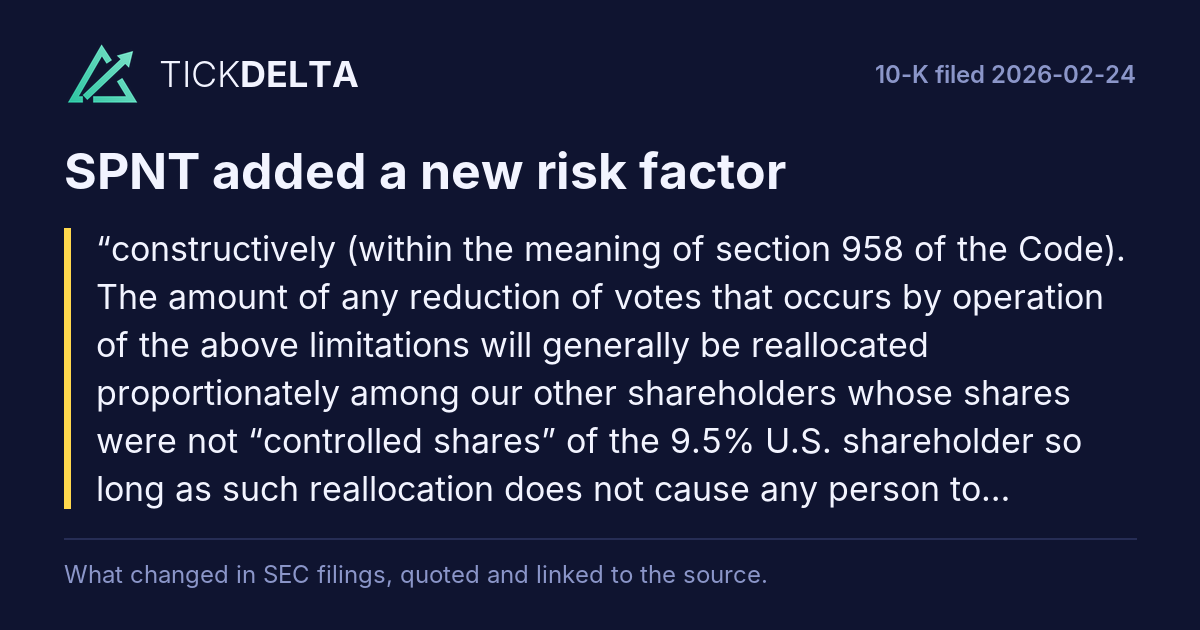
constructively (within the meaning of section 958 of the Code). The amount of any reduction of votes that occurs by operation of the above limitations will generally be reallocated proportionately among our other shareholders whose shares were not “controlled shares” of the 9.5% U.S. shareholder so long as such reallocation does not cause any person to become a 9.5% U.S. shareholder.
New in the latest 10-Q
18 paragraphs in the 10-Q filed Nov 5, 2026 with nothing like them in the 10-Q filed Jul 29, 2026 (at least half the words must differ; new numbers alone do not count). Quoted exactly, grouped by the item heading above them. This is text that changed, not a judgement of how serious it is.
If goodwill is impaired, such assets are written down to their fair values with the related expense recorded in the Company’s results of operations.
Read in the 10-Q
The Company measures its investments in limited partnerships, including its investments in hedge funds and private equity funds, at fair value using the net asset value ("NAV") per share, or its equivalent, as a practical expedient. NAV represents the Company's proportionate interest in the partners' or members' equity of each fund, as reported by the fund's administrator or investment manager.
Read in the 10-Q
Since final fund valuations are generally not available as of the Company's reporting date, the Company records these investments on a lag of generally one to three months, using the most recent NAV or capital statement available. The reported NAV is adjusted for capital contributions and distributions during the lag period and for significant known events that
Read in the 10-Q
indicate a material change in value. Other changes in NAV are recognized in the period in which the capital statement is received.
Read in the 10-Q
Investment in Third Point Structured Credit Opportunities Offshore Fund LP (“TP SCOF”)
Read in the 10-Q
On October 2, 2026, SiriusPoint, through its wholly owned subsidiaries, acquired National Motor Club and Specialized Association Services for $ 15.4 million.
Read in the 10-Q
On October 30, 2026, SiriusPoint America Insurance Company ("SiriusPoint America") and SiriusPoint Bermuda Insurance Company Ltd. ("SiriusPoint Bermuda" and, together with SiriusPoint America, the "Cedents"), each a subsidiary of SiriusPoint Ltd., entered into a Master Agreement (the "Master Agreement"). The Master Agreement is made by and between the Cedents and RiverStone International Bermuda Limited ("RiverStone Bermuda"), an insurer domiciled in Bermuda, and Riverstone International Limited.
Read in the 10-Q
Pursuant to the Master Agreement, at the closing of the transactions contemplated therein: (a) the Cedents and RiverStone Bermuda will enter into a Loss Portfolio Transfer Reinsurance and Retrocession Agreement (the "LPT Agreement"), under which the Cedents will cede and RiverStone Bermuda will assume up to 100% of the net reserves with respect to certain legacy reinsurance and retrocession exposures of the Cedents (the "Subject Business"), subject to the terms and conditions of the LPT Agreement, including an aggregate limit; (b) RiverStone International Insurance, Inc., an affiliate of RiverStone Bermuda (the "Administrator"), will assume authority and responsibility for certain administrative services related to the Subject Business, pursuant to the terms of the LPT Agreement; and (c) each of the Cedents, RiverStone Bermuda, and a trustee will enter into trust agreements under which RiverStone Bermuda will provide collateral securing its reinsurance obligations with respect to the Subject Business. The Subject Business includes substantially all of the Company’s remaining run-off reserves.
Read in the 10-Q
This transaction covers approximately $ 400.0 million of SiriusPoint net loss and loss adjustment expense reserves, valued as of June 30, 2026. The aggregate limit under the LPT Agreement is $ 700.0 million.
Read in the 10-Q
The Master Agreement and the LPT Agreement include customary representations and warranties, indemnification obligations, covenants and termination rights of the parties. The transaction is subject to regulatory approvals and customary closing conditions.
Read in the 10-Q
On September 30, 2026, the Company, through its wholly owned subsidiaries, completed the acquisition of equity interests and assets comprising the World Nomads travel insurance business operated by nib Travel Pty Ltd. (collectively, “World Nomads”) for $48.0 million in cash. World Nomads became a consolidated subsidiary of the Company as of acquisition date. The Company recognized goodwill of $27.5 million within the Insurance & Services segment, primarily attributable to the Company's travel insurance distribution capabilities and expected synergies resulting from the acquisition of World Nomads.
Read in the 10-Q
The decreases were primarily due to the accumulated other comprehensive loss from unrealized losses from AFS debt securities during the three and nine months ended September 30, 2026.
Read in the 10-Q
2026 2025 ─────────────────────────────────────────────────────────────────────────────────────────────────────────────────────────────────────────────────── ($ in millions) Net cash provided by operating activities $ 306.7 $ 128.8 Net cash provided by (used in) investing activities (333.0) 234.9 Net cash used in financing activities (314.4) (517.0) Net decrease in cash, cash equivalents and restricted cash (340.7) (153.3) Cash, cash equivalents and restricted cash at beginning of period 902.4 894.6 Change in cash, cash equivalents and restricted cash classified as assets held for sale — (23.6) Cash, cash equivalents and restricted cash at end of period $ 561.7 $ 717.7
Read in the 10-Q
On October 30, 2026, SiriusPoint America Insurance Company ("SiriusPoint America") and SiriusPoint Bermuda Insurance Company Ltd. ("SiriusPoint Bermuda" and, together with SiriusPoint America, the "Cedents"), each a subsidiary of SiriusPoint Ltd., entered into a Master Agreement (the "Master Agreement"). The Master Agreement is made by and between the Cedents and RiverStone International Bermuda Limited ("RiverStone Bermuda"), an insurer domiciled in Bermuda, and Riverstone International Limited.
Read in the 10-Q
Pursuant to the Master Agreement, at the closing of the transactions contemplated therein: (a) the Cedents and RiverStone Bermuda will enter into a Loss Portfolio Transfer Reinsurance and Retrocession Agreement (the "LPT Agreement"), under which the Cedents will cede and RiverStone Bermuda will assume up to 100% of the net reserves with respect to certain legacy reinsurance and retrocession exposures of the Cedents (the "Subject Business"), subject to the terms and conditions of the LPT Agreement, including an aggregate limit; (b) RiverStone International Insurance, Inc., an affiliate of RiverStone Bermuda (the "Administrator"), will assume authority and responsibility for certain administrative services related to the Subject Business, pursuant to the terms of the LPT Agreement; and (c) each of the Cedents, RiverStone Bermuda, and a trustee will enter into trust agreements under which RiverStone Bermuda will provide collateral securing its reinsurance obligations with respect to the Subject Business. The Subject Business includes substantially all of the Company’s remaining run-off reserves.
Read in the 10-Q
This transaction covers approximately $400.0 million of SiriusPoint net loss and loss adjustment expense reserves, valued as of June 30, 2026. The aggregate limit under the LPT Agreement is $700.0 million.
Read in the 10-Q
The Master Agreement and the LPT Agreement include customary representations and warranties, indemnification obligations, covenants and termination rights of the parties. The transaction is subject to regulatory approvals and customary closing conditions.
Read in the 10-Q
† The Registrant has omitted portions of the referenced exhibit pursuant to Regulation S-K Item 601(b)(10)(iv).
Read in the 10-Q
Item 1A of the 10-Q filed Nov 5, 2026 against Item 1A of the 10-K filed Feb 24, 2026.
A 10-Q repeats only the risks that changed, so a 10-K paragraph that is missing from it is not counted as removed.
Added is a paragraph with nothing like it in the 10-K, Reworded a sentence that is in both with several words changed,
Quiet changes a sentence in both where one to four words changed and one is a hedge or a modal
(cut words struck through, new words highlighted).
Text on the page, not a score; each links to the filing at sec.gov.
Two-word phrases in Risk Factors of the 10-K filed Feb 24, 2026 that are in none of the 1 earlier 10-Ks stored, back to Feb 21, 2025
Used at least twice, small words left out. Counted, not picked: a phrase can be new because the company renamed something.
45 paragraphs of last year's Risk Factors with nothing like them now. The longest are quoted.
Item 1A of each 10-K and 10-Q on EDGAR, quoted exactly. Each paragraph links to the filing at sec.gov.
10-K change: what was reworded or cut, section by section.
Excel workbook · CSV. Google Sheet that stays up to date: paste =IMPORTDATA("https://tickdelta.com/company/SPNT/export.csv") into a cell.