8 paragraphs in Risk Factors of the 10-K filed Feb 24, 2026
with nothing like them in the 10-K filed Feb 18, 2025. Quoted exactly.
Paragraphs that were only edited are under 10-K change.
Compared with the Risk Factors in the latest 10-K of the other 81 Industrials companies:
a paragraph with at least half its words the same at another company is called similar, and the companies are listed under it.
A paragraph most of them have is marked boilerplate. No line means no other company has one like it.
This counts text; it does not say how serious a risk is.
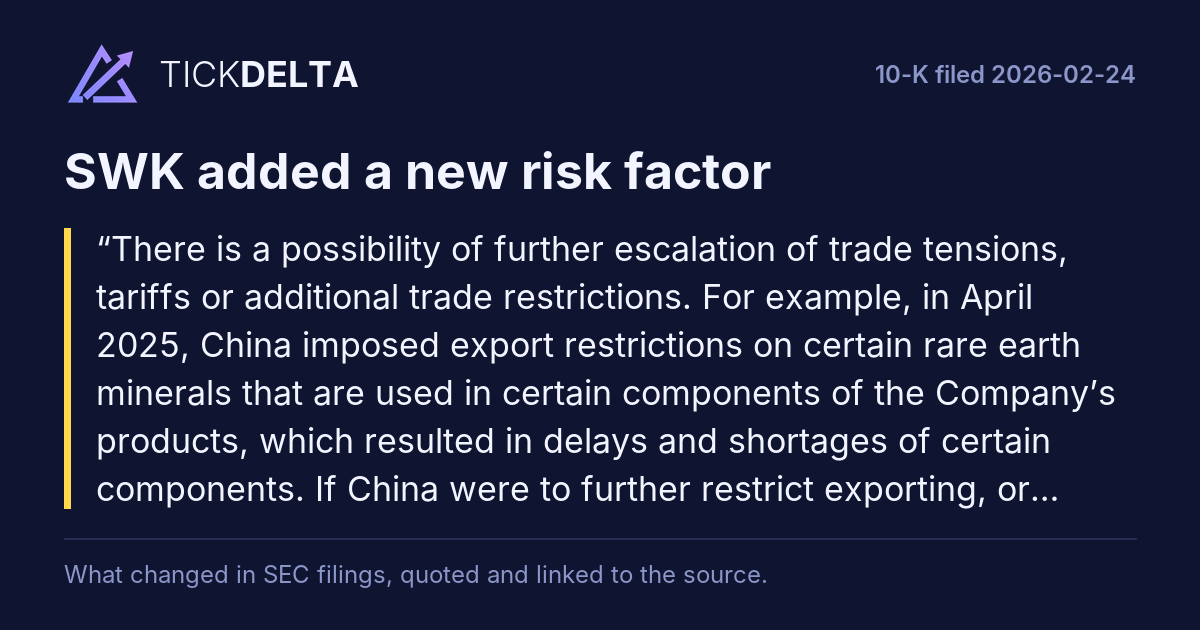
There is a possibility of further escalation of trade tensions, tariffs or additional trade restrictions. For example, in April 2025, China imposed export restrictions on certain rare earth minerals that are used in certain components of the Company’s products, which resulted in delays and shortages of certain components. If China were to further restrict exporting, or implement burdensome and lengthy licensing processes for the export of, these materials or components, or pressure other countries to do so, the Company’s and its suppliers' ability to obtain such materials or components may be disrupted and the Company may not be able to obtain sufficient quantities, or obtain supply in a timely manner, or at a commercially reasonable cost.
Read in the 10-K ↗
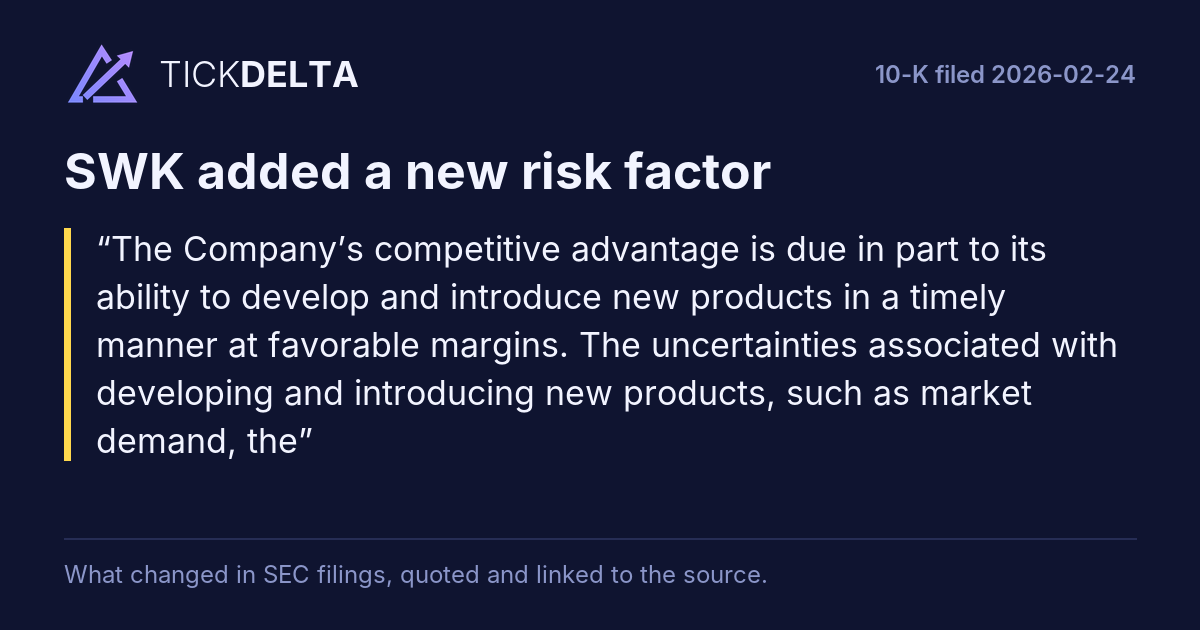
The Company’s competitive advantage is due in part to its ability to develop and introduce new products in a timely manner at favorable margins. The uncertainties associated with developing and introducing new products, such as market demand, the
Read in the 10-K ↗
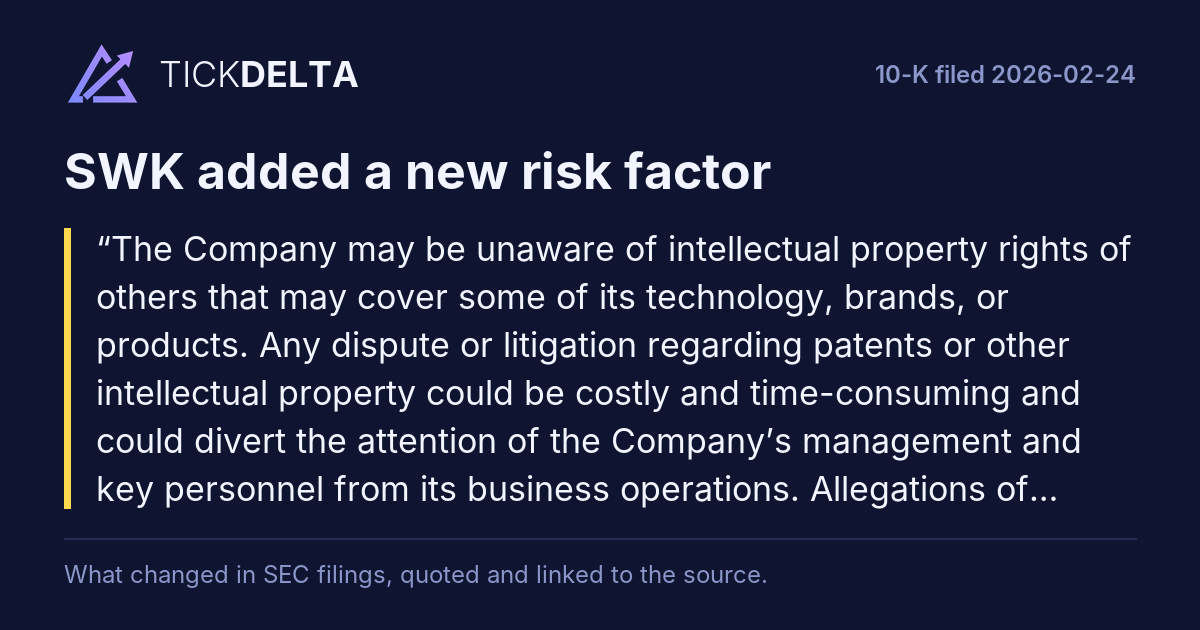
The Company may be unaware of intellectual property rights of others that may cover some of its technology, brands, or products. Any dispute or litigation regarding patents or other intellectual property could be costly and time-consuming and could divert the attention of the Company’s management and key personnel from its business operations. Allegations of intellectual property infringement may also require the Company to enter into costly license agreements or necessitate redesigns of its products at substantial cost. The Company also may be subject to significant damages or injunctions against development and sale of certain products.
Read in the 10-K ↗
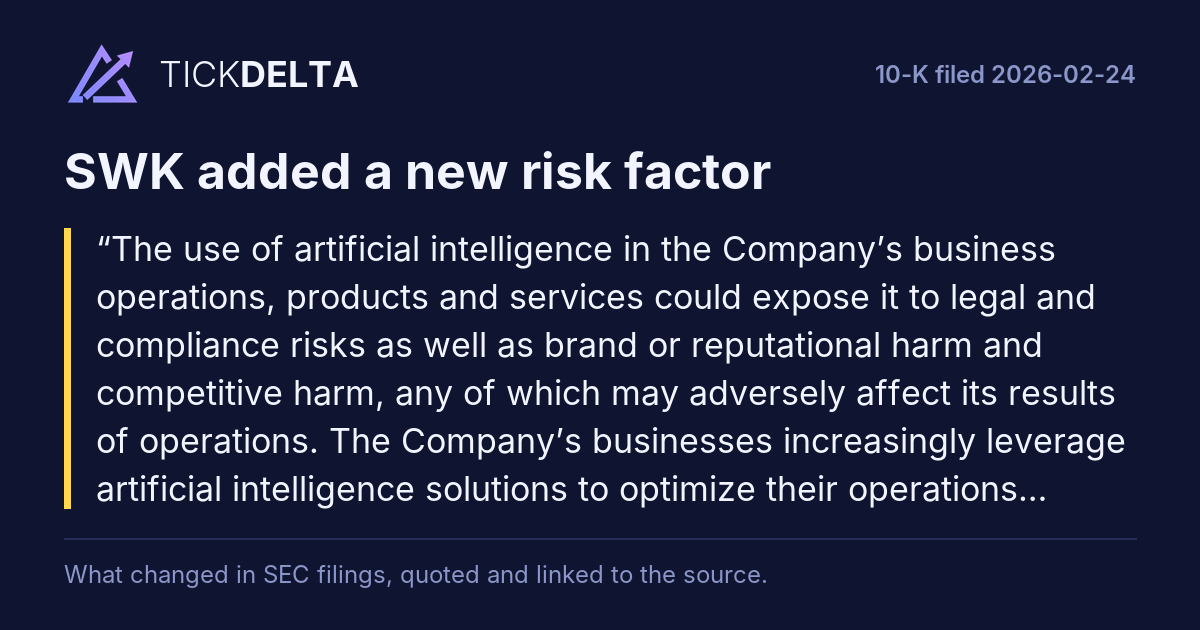
The use of artificial intelligence in the Company’s business operations, products and services could expose it to legal and compliance risks as well as brand or reputational harm and competitive harm, any of which may adversely affect its results of operations.
Similar paragraph at 5 of 81 other Industrials companies:
CMI,
EMR,
FTV,
PNR,
URIThe Company’s businesses increasingly leverage artificial intelligence solutions to optimize their operations, improve customer experiences, and enhance their products and services. While the Company believes the use of artificial intelligence can offer significant benefits and opportunities, it also introduces a range of risks and challenges and there can be no assurances that the use of such technology will result in improved operational efficiencies, cost reductions or other anticipated benefits.
Similar paragraph at 1 of 81 other Industrials companies:
EMRThe regulatory landscape surrounding artificial intelligence is rapidly evolving and the Company’s use of artificial intelligence may be subject to new legal or regulatory requirements, which may impose prohibitions or additional compliance burdens on the Company. For example, the Company’s artificial intelligence efforts may subject it to heightened compliance and legal as well as other risks related to technology integration, accuracy, program bias, data sourcing, intellectual property infringement or misappropriation, data privacy, and cybersecurity, among others. Moreover, the Company may experience brand or reputational harm if it fails to appropriately manage its use of artificial intelligence in compliance with applicable laws and regulations or successfully execute on strategies leveraging artificial intelligence.
Similar paragraph at 1 of 81 other Industrials companies:
EMRAdditionally, the Company’s competitors or other third parties may incorporate artificial intelligence into their products, services or operations more quickly, cost-effectively or successfully than the Company, or develop superior products and services with the aid of artificial intelligence, which could impair the Company’s ability to compete effectively and adversely affect its results of operations.
Similar paragraph at 3 of 81 other Industrials companies:
EFX,
EMR,
FTV
accruals. Changes in tax laws, regulations, or interpretations and applications of such laws and regulations, including the implementation of global minimum tax rules by the various taxing jurisdictions applicable to multi-national corporations, could have a material impact on the Company’s worldwide income tax provision, cash tax liability, and effective tax rate.
Read in the 10-K ↗
New in the latest 10-Q
9 paragraphs in the 10-Q filed Nov 4, 2026 with nothing like
them in the 10-Q filed Jul 29, 2026 (at least half the words must differ; new numbers alone do not count).
Quoted exactly, grouped by the item heading above them. This is text that changed, not a judgement of how serious it is.
Financial statements and notes
As previously discussed, in September 2026, the Company entered into an agreement to sell its Excel business. As a result, $ 53.7 million of goodwill was reclassified to assets held for sale as of October 3, 2026, and was included in the determination of the impairment charge recorded in the third quarter of 2026 to adjust the carrying amount of Excel’s long-lived assets to its estimated fair value less costs to sell.
Read in the 10-Q ↗
the following: exchange or market price quotations of similar instruments, time value and volatility factors, the Company’s own credit rating and the credit rating of the counterparty.
Read in the 10-Q ↗
During the third quarter of 2025, the Company recognized pre-tax, non-cash impairment charges of $ 108.4 million related to the Lenox, Troy-Bilt and Irwin trade names and $ 43.9 million related to certain minority investments that are mainly associated with legacy corporate ventures. Refer to the Company's Annual Report on Form 10-K for the year ended January 3, 2026 for additional information.
Read in the 10-Q ↗
GUARANTEES - The Company’s financial guarantees at October 3, 2026 are as follows:
Read in the 10-Q ↗
In addition, the Company recognized a pre-tax asset impairment charge of $ 19.7 million in the third quarter of 2026 to adjust the carrying amount of the long-lived assets of the Excel business to its estimated fair value less costs to sell.
Read in the 10-Q ↗
In September 2026, the Company announced that it had entered into a definitive agreement to sell its Excel Industries ("Excel") business, which is primarily made up of the professional-grade, gas-powered, ride-on and zero-turn mowers under the Hustler® brand, for $225.0 million in cash. The sale is subject to regulatory approvals and other customary closing conditions and is expected to close in the fourth quarter of 2026.
Read in the 10-Q ↗
The pending Excel sale and CAM divestiture are part of the Company's ongoing strategic commitment to refine its portfolio to focus on its core Tools & Outdoor and Engineered Fastening businesses. Refer to Note Q, Divestitures, for further discussion.
Read in the 10-Q ↗
During the third quarter of 2025, in conjunction with its annual long-term strategic planning, the Company recorded pre-tax, non-cash asset impairment charges of $169.1 million primarily driven by updates to the Company’s brand prioritization strategy impacting the Lenox, Troy-Bilt, and Irwin trade names, as well as its ongoing portfolio assessment and the strategic decision to exit most of its minority investments that are mainly associated with legacy corporate ventures.
Read in the 10-Q ↗
Refer to Note K, Fair Value Measurements, for additional information on the 2026 and 2025 impairment charges. Refer to Note Q, Divestitures, for additional information on the pending divestiture of the Excel business.
Read in the 10-Q ↗
The 10-Q's risk factors against the 10-K
Item 1A of the 10-Q filed Nov 4, 2026 against Item 1A of the 10-K filed Feb 24, 2026.
A 10-Q repeats only the risks that changed, so a 10-K paragraph that is missing from it is not counted as removed.
Added is a paragraph with nothing like it in the 10-K, Reworded a sentence that is in both with several words changed,
Quiet changes a sentence in both where one to four words changed and one is a hedge or a modal
(cut words struck through, new words highlighted and underlined).
Text on the page, not a score; each links to the filing at sec.gov.
What the 10-Q itself says about its risk factors:
The risk factors disclosed in the Company’s Annual Report on Form 10-K for the year ended January 3, 2026 filed with the Securities and Exchange Commission on February 24, 2026 (the "Form 10-K") should be considered together with information included in this Form 10-Q for the quarter ended October 3, 2026, and should not be considered the only risks to which the Company is exposed. Except as set forth below, there have been no material changes to the risk factors as disclosed in the Company’s Form 10-K.
Read in the 10-Q ↗
Added10-Q 2026-11-04 vs 10-K 2026-02-24
The Company’s share repurchase authorization may not be fully utilized and could impact the price of the Company’s common stock and anticipated enhancements to long-term shareholder value may not be realized.
Read it in the 10-Q at sec.gov ↗
Added10-Q 2026-11-04 vs 10-K 2026-02-24
Although the Company has an approved share repurchase authorization, it is not obligated to repurchase a specified number or dollar value of shares under this share repurchase authorization or at all, and repurchases may be suspended or terminated at any time at the Company’s discretion and without prior notice. The timing and amount of repurchases, if any, will depend on factors such as the Company’s historical and expected business performance, its cash and liquidity positions and priorities, the price of its common stock, economic and market conditions, and corporate and regulatory requirements. The Company’s share repurchase authorization could also affect the price of its common stock and increase trading volatility. There is no guarantee that the share repurchase authorization, even if fully utilized, will enhance shareholder value. Any failure to fully utilize the share repurchase authorization may negatively impact the Company’s reputation, investor confidence, and the price of the Company’s common stock.
Read it in the 10-Q at sec.gov ↗
Reworded10-Q 2026-11-04 vs 10-K 2026-02-24
Adverse Existing restrictions, adverse changes in the Company’s import costs and restrictions, or failure by the Company’s Company or its suppliers to comply with customs regulations or similar laws, could harm limit the Company’s business. ability to capitalize on current and future growth opportunities in international markets, impair its ability to expand the business by offering new products, and could adversely impact its production costs, customer demand and relationships with customers and suppliers.
Read it in the 10-Q at sec.gov ↗ · The 10-K sentence ↗
Reworded10-Q 2026-11-04 vs 10-K 2026-02-24
In addition, the countries in which the Company’s products and materials are manufactured or imported from (including importation into the U.S. of the Company's products manufactured overseas) may from time to time impose additional quotas, duties, tariffs or other restrictions on its imports (including restrictions on manufacturing operations) or adversely modify existing restrictions. restrictions or international trade agreements the impact of which the Company may be unable to correctly assess or effectively mitigate on a timely basis.
Read it in the 10-Q at sec.gov ↗ · The 10-K sentence ↗
Reworded10-Q 2026-11-04 vs 10-K 2026-02-24
However, The Company continues to monitor the current tariff landscape, however, there is no assurance that the Company will be able to mitigate the full impact of all such tariffs, retaliatory actions or other changes in trade policies that have or may develop.
Read it in the 10-Q at sec.gov ↗ · The 10-K sentence ↗