Added10-Q Nov 9, 2026 vs 10-K Feb 27, 2026
• changes in regulatory requirements by government authorities for our products;
Each branch is a paragraph in Risk Factors with nothing like it in the 10-K filed Mar 3, 2025. A box jumps to the paragraph as filed, below.
20 paragraphs in Risk Factors of the 10-K filed Feb 27, 2026 with nothing like them in the 10-K filed Mar 3, 2025. Quoted exactly. Paragraphs that were only edited are under 10-K change.
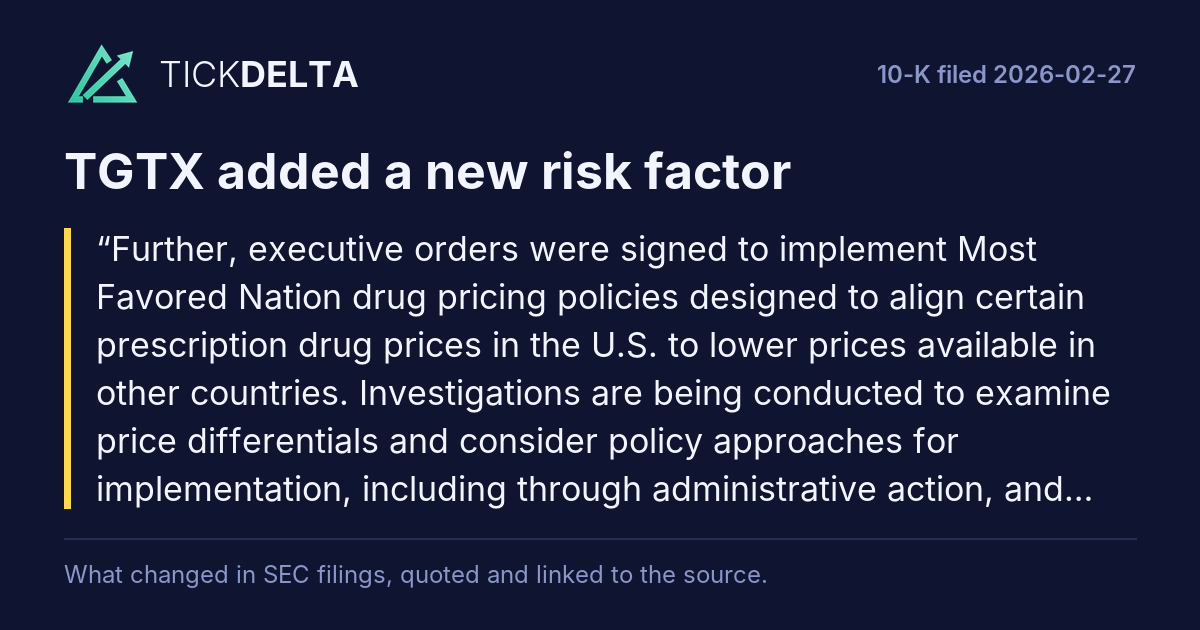
In addition, recent legislative and regulatory proposals in the United States have included “most favored nation” (“MFN”) or international reference pricing models that would tie reimbursement or net prices for certain drugs to the lowest price available in other countries. Adoption or expansion of MFN or similar reference pricing policies could result in downward pressure on U.S. pricing if BRIUMVI or any of our future products are sold at lower net prices in ex-U.S. markets. Because we have partnered the rights to commercialize BRIUMVI in territories outside of the U.S. and do not control pricing, reimbursement negotiations or commercial strategy in those territories, we may have limited ability to influence ex-U.S. pricing decisions that could be used as reference points under MFN or similar frameworks. As a result, pricing determinations made by our collaboration partner in Europe, including in response to local market access dynamics or governmental requirements, could adversely affect the reimbursement or net price realized for BRIUMVI in the U.S. or other markets, which could have a material adverse effect on our revenues and results of operations.
We may submit additional information to the FDA which the FDA determines constitutes a major amendment to the application and thereby extends the goal date for determination of approvability of the application;
We may be unable to successfully develop, obtain regulatory approval for, or commercialize a subcutaneous formulation of our approved intravenous product, which could limit our ability to expand our market opportunity and patient reach.
We are conducting a Phase 3 trial evaluating a subcutaneous (SubQ) formulation of ublituximab, which is approved in its intravenous (IV) form for the treatment of RMS. While IV BRIUMVI has demonstrated clinical benefit and gained commercial traction, development and commercialization of a SubQ version of ublituximab presents unique scientific, formulation, clinical, pharmacologic, manufacturing, regulatory, and operational challenges.
In order to rely on the benefit and risk profile established for IV BRIUMVI in previously conducted pivotal clinical trials, the SubQ form of ublituximab requires optimization of pharmacokinetics to attain equivalent exposure to ensure that efficacy and safety are maintained at levels comparable to the approved IV formulation. Pharmacokinetic (PK) and pharmacodynamic (PD) effects may be reduced or altered when administered SubQ, which could create significant challenges in the development of a SubQ formulation of ublituximab. There is also a risk that systemic exposure, tissue distribution or tissue reactions differ in ways that lead to unforeseen efficacy issues, such as reduced clinical benefit or safety or tolerability issues, including injection site reactions or immunogenicity. Clinical development of a new formulation often takes place alongside process and formulation development, such that the form of the product evaluated in early-stage testing may not be the final form of the product evaluated in late-stage testing or intended to be commercialized, as is the case for SubQ ublituximab development. Furthermore, while early phase clinical trials can provide a general understanding of the bioavailability and tolerability of a SubQ product, they are limited in patient number and duration of follow-up, with the pivotal regimen determined through PK/PD modeling and projections. Such differences in safety, efficacy or PK/PD may not be observed until later stage clinical studies with the final formulation of SubQ ublituximab.
Furthermore, the development of a SubQ formulation, including SubQ ublituximab, typically requires additional clinical studies, including bridging studies and the use of delivery devices (e.g., auto-injectors or prefilled syringes), which may introduce new technical, supply chain, or regulatory challenges. Regulatory agencies may not consider bioequivalence sufficient for approval or may require additional data to demonstrate comparable effectiveness or safety, especially if the SubQ formulations have analytical differences. While the primary outcome of the pivotal clinical trial is to establish equivalent exposure, differences in other clinical properties including but not limited to PD effect, safety, tolerability, and immunogenicity may occur. In such cases, while the primary outcome of the clinical study may be met, regulatory agencies may still consider such a product not pharmaceutically equivalent.
SubQ formulation may involve higher concentration of the existing IV product, as in the case of SubQ ublituximab, which presents technical and analytical challenges. Concentrated products will have increased viscosity, which will result in decreased yield in the manufacturing process and may increase the cost of goods compared to that of IV BRIUMVI. The high concentration formulations currently under evaluation may not prove to be as stable as the IV BRIUMVI product. If the SubQ formulation is determined to have a shorter shelf life, we may require more inventory or reassess the commercial feasibility for distribution. and if a shorter shelf life is determined that may require either more inventory or even worse, may not be commercially feasible for distribution. Additionally, new supply chains have been and will continue to need to be developed, which adds complexity and magnifies the concerns around reliance on third parties, including establishing new vendors, their timeliness and quality of performance and potential for future supply constraints, and other limitations. Furthermore, the altered physical properties of the subcutaneous material have resulted in certain analytical differences from IV BRIUMVI that may require the development of new analytical methods for product characterization and release, if the current analytical methods used for IV BRIUMVI prove to be inadequate to characterize SubQ ublituximab. Analytical method development is a complex task that has both technical and regulatory implications, and there can be no assurances given that such development will be successful or be completed in a timely manner.
Even if approved, we cannot guarantee that the SubQ formulation of ublituximab will be successfully commercialized or achieve the same level of adoption as the IV formulation. Development, approval, and commercialization of the SubQ formulation of ublituximab will take considerable time and will be subject to completion with existing therapies and new therapies that may become available in the future. Failure to develop or obtain regulatory approval for a SubQ formulation, or to successfully commercialize it if approved, could materially limit our growth in markets that favor self-administration and reduce our competitive positioning relative to other self-administered therapies.
In the United States, federal and state legislatures, health agencies and third-party payors continue to focus on containing the cost of healthcare and addressing public concern over access and affordability of prescription drugs. The Affordable Care Act (ACA) made significant changes to the U.S. healthcare system, which included expanding healthcare coverage through Medicaid and implementation of the individual health insurance mandate; changing coverage and reimbursement of drug products under Medicare, Medicaid and 340B government programs; imposing an annual fee on manufacturers of branded drugs; and expanding government enforcement authority. Since its enactment, there have been judicial, executive and Congressional challenges to certain aspects of the ACA. The One Big Beautiful Bill Act (OBBBA) has enacted, among others, changes to eligibility requirements for premium tax credits, which is expected to result in less coverage in the ACA’s health insurance marketplace (Marketplace) over the next few years. The ACA premium tax credits expired at the end of 2025, which resulted in an additional loss of coverage for an estimated 24 million people that were previously enrolled in insurance plans obtained through the Marketplace. In addition, the OBBBA has made other changes to the enrollment and eligibility requirements for Medicaid, which is expected to result in the loss of coverage for certain individuals currently enrolled in Medicaid programs. Further, The Centers for Medicare & Medicaid Services (CMS) recently proposed two mandatory payment model pilots, the Guarding U.S. Medicare Against Rising Drug Costs (GUARD) Model, focused on Part D drugs, and Global Benchmark for Efficient Drug Pricing (GLOBE), focused on Part B drugs, which will require pharmaceutical companies to pay additional rebates on certain medicines, including central nervous system agents for the treatment of multiple sclerosis, whose U.S. net-of-discount prices exceed those in certain other countries.
Further, executive orders were signed to implement Most Favored Nation drug pricing policies designed to align certain prescription drug prices in the U.S. to lower prices available in other countries. Investigations are being conducted to examine price differentials and consider policy approaches for implementation, including through administrative action, and letters have been sent to pharmaceutical companies demanding further reduced prices more in line with Most Favored Nation pricing. If such Most Favored Nation policies are implemented, changes to drug pricing are expected to affect the profitability of pharmaceutical and biotech companies in the U.S. as well as in other countries, as a price referencing policy to the U.S. market could make it commercially unviable to commercialize a drug product in a price constrained market. The details of the proposed policies are unclear and the final terms and impact remain uncertain, and may pose long-term risks to our business and our future commercialization plans of our products and product candidates. In addition, the Fair Prescription Drug Prices for Americans Act was re-introduced in May 2025 and proposes to cap the retail list price of prescription drugs and biological products in the United States at the average retail list price for such product among certain countries. Although it is uncertain if these pricing proposals will take effect, reducing drug prices remains a bipartisan effort and, if made effective, could significantly impact coverage, pricing, and reimbursement for any approved product. These and other similar developments could significantly limit the degree of market acceptance of our products or any of our other product candidates that receive marketing authorization. We expect that healthcare reform measures that may be adopted in the future may result in increased manufactured financial liability and additional downward pressure on the price that we may receive for any of our product candidates, if approved. Any reduction in reimbursement from Medicare or other government health care programs may result in a similar reduction in payments from private payors.
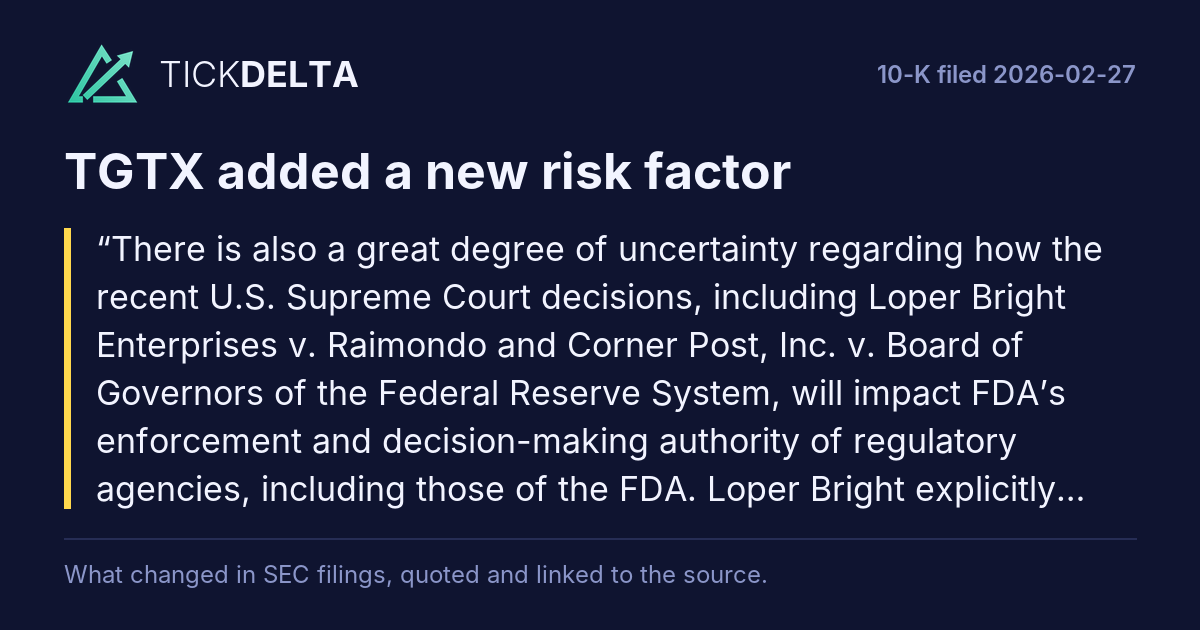
There is also a great degree of uncertainty regarding how the recent U.S. Supreme Court decisions, including Loper Bright Enterprises v. Raimondo and Corner Post, Inc. v. Board of Governors of the Federal Reserve System, will impact FDA’s enforcement and decision-making authority of regulatory agencies, including those of the FDA. Loper Bright explicitly overturned Chevron deference, which previously gave judicial deference to administrative action by agencies in the executive branch. Further, the Supreme Court’s decision in Corner Post may result in challenges to FDA decisions by new litigants long into the future, resulting in greater uncertainty about our continued operations. In February 2025, an executive order was signed asserting greater authority over all federal agencies, including those established by Congress as independent from direct presidential control. The executive order may lead to continued delays, if not cancellations, of pending and proposed regulations at federal agencies and introduces uncertainty as it subjects all significant regulatory actions by the agencies to the President’s supervision and control. We cannot predict the impact that such executive order, any future executive orders or legislation implementing executive orders may have on our business or our results of operations.
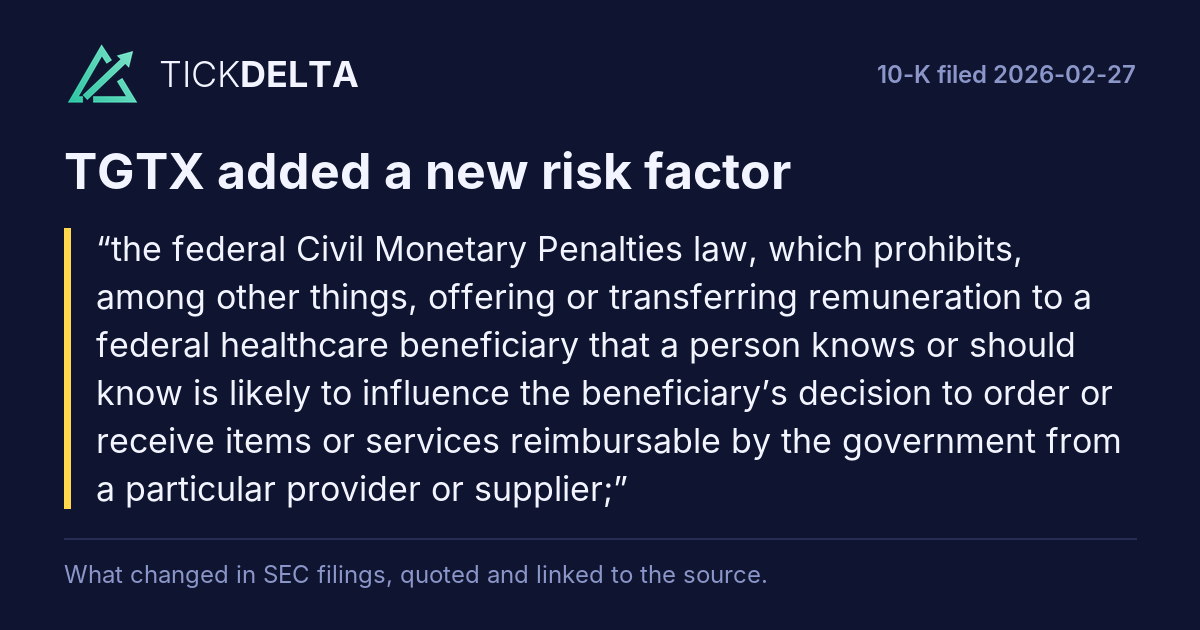
the federal Civil Monetary Penalties law, which prohibits, among other things, offering or transferring remuneration to a federal healthcare beneficiary that a person knows or should know is likely to influence the beneficiary’s decision to order or receive items or services reimbursable by the government from a particular provider or supplier;
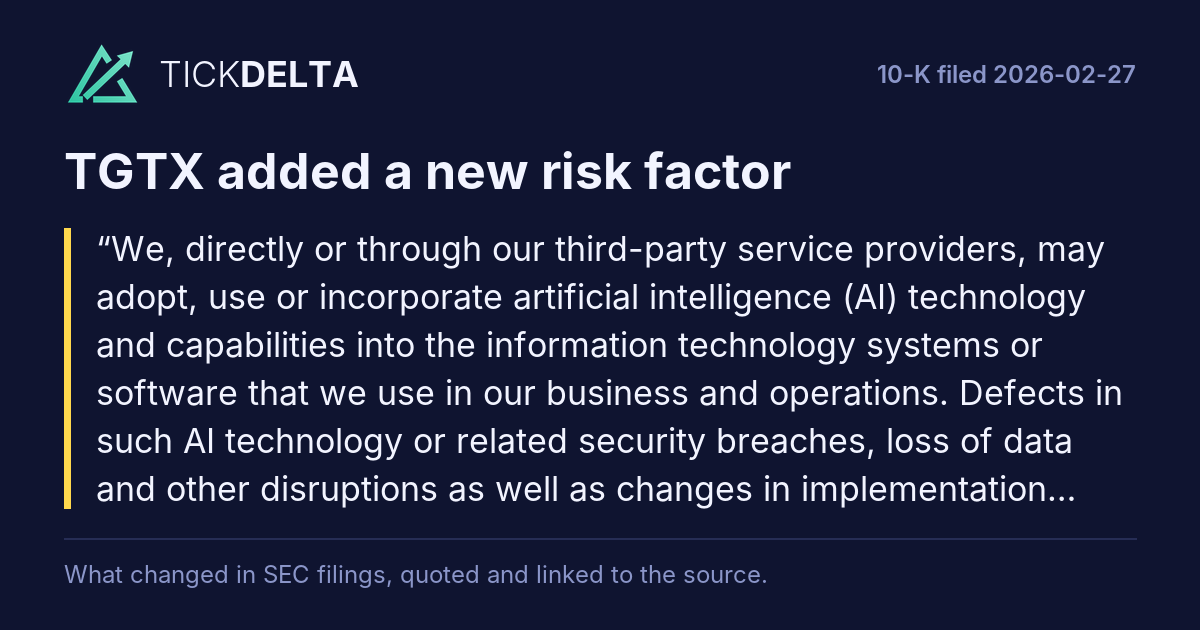
We, directly or through our third-party service providers, may adopt, use or incorporate artificial intelligence (AI) technology and capabilities into the information technology systems or software that we use in our business and operations. Defects in such AI technology or related security breaches, loss of data and other disruptions as well as changes in implementation standards and enforcement practices under a rapidly evolving regulatory framework for AI technology may adversely affect our business and operations and potentially expose us to increasing liability.
We, directly or through our third-party service providers, may adopt, use or incorporate AI technology and capabilities into information technology systems or software to help us operate our business more efficiently than existing industry tools. The regulatory framework for AI technologies is rapidly evolving as many federal, state and foreign government bodies and agencies have introduced or are currently considering additional laws and regulations. In addition, existing laws and regulations may be interpreted in ways that would affect the use of AI in our business. As a result, implementation standards and enforcement practices are likely to remain uncertain for the foreseeable future, and we cannot yet determine the impact future laws, regulations, standards, or market perception of such requirements may have on our business and may not always be able to anticipate how to respond to these laws or regulations.
While there is currently no comprehensive federal legislation in the U.S. that regulates the development or use of AI, several governmental agencies in the U.S. and non-U.S. jurisdictions have proposed or enacted laws regulating AI technologies by setting out principles intended to guide AI design and deployment for the public and private sectors and signaling the increase in government involvement and regulation over AI technologies. The significant increase in companies that have incorporated the use of AI in their businesses has also increased the SEC’s focus on AI-washing as a key enforcement priority. In May 2024, the European Union legislators approved the EU Artificial Intelligence Act (EU AI Act), which establishes a comprehensive, risk-based governance framework for AI in the EU market. The majority of the substantive requirements of the EU AI Act are not enforceable yet and are expected to apply from August 2, 2026. In July 2025, the EU published a voluntary AI Code of Practice, which is intended to guide developers of AI systems in complying with the EU AI Act and avoid potential penalties. The EU AI Act, and developing interpretation and application of the GDPR in respect of automated decision making, together with developing guidance and/or decisions in the impact of AI technology on data privacy, may affect our use of AI technologies and our ability to provide, improve or commercialize our business, require additional compliance measures and changes to our operations and processes, and result in increased compliance costs and potential increases in civil claims against us, and could adversely affect our business, operations and financial condition.
Further, interpretation and implementation of intellectual property protection in the field of AI are rapidly evolving and there is uncertainty and ongoing litigation in different jurisdictions as to the degree and extent of protection warranted for AI and relevant system inputs and outputs. If we fail to obtain protection for intellectual property rights for any of our intellectual property that may incorporate or be developed using AI technologies, or later have our intellectual property rights invalidated or otherwise diminished, our competitors may be able to take advantage of our research and development efforts to develop competing products that could adversely affect our business, reputation and financial condition. Further, other parties may have, or in the future may obtain, patents or other proprietary rights that would prevent, limit or interfere with our ability to use any AI technologies that we may develop or use in our business.
It is possible that further new laws and regulations will be adopted in the United States and in other non-U.S. jurisdictions, or that existing laws and regulations, including competition and antitrust laws, may be interpreted in ways that would limit our ability to use AI technologies for our business, or require us to change the way we use AI technologies in a manner that negatively affects the performance of our system and business and the way in which we use AI technologies. We may need to expend resources to adjust our system in certain jurisdictions if the laws, regulations, or decisions are not consistent across jurisdictions. Further, the cost to comply with such laws, regulations or decisions and/or guidance interpreting existing laws, could be significant and would increase our operating expenses. Such an increase in operating expenses, as well as any actual or perceived failure to comply with such laws and regulations, could materially and adversely affect our business, financial condition, results of operations, and prospects.
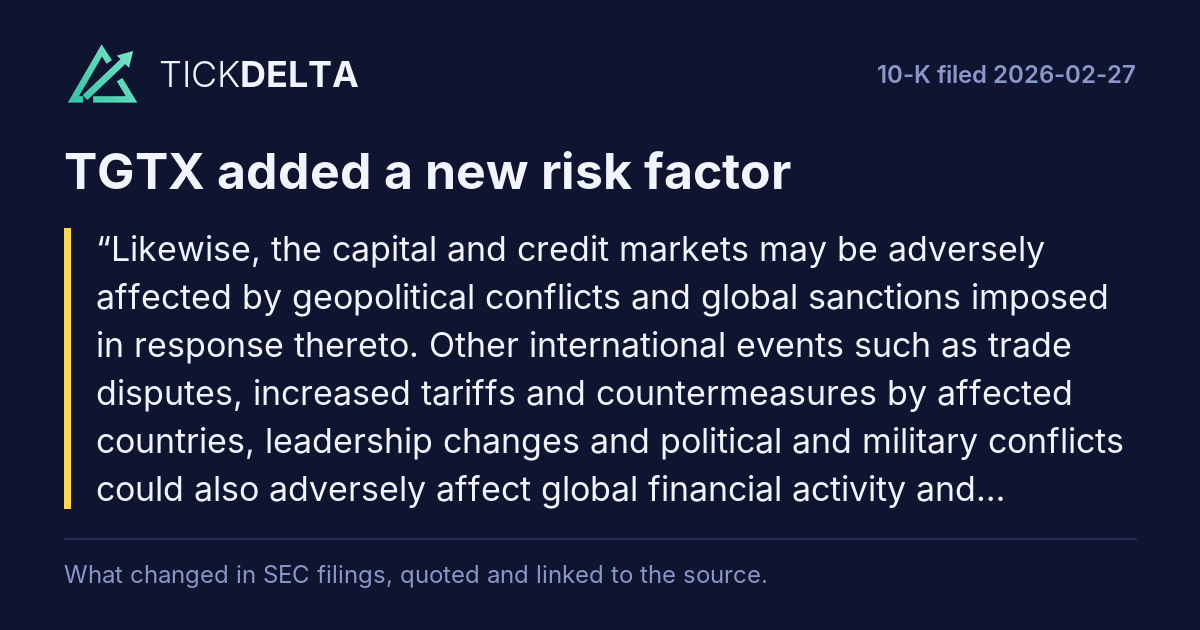
Likewise, the capital and credit markets may be adversely affected by geopolitical conflicts and global sanctions imposed in response thereto. Other international events such as trade disputes, increased tariffs and countermeasures by affected countries, leadership changes and political and military conflicts could also adversely affect global financial activity and markets and could negatively affect the U.S. economy. The U.S. has imposed increased tariffs on certain countries, focusing on those with which it has the largest trade deficits. Other countries have responded, and may continue to respond, by announcing retaliatory tariffs on U.S. imports. In addition, the U.S. Department of Commerce initiated national security investigations into the importation of pharmaceuticals and pharmaceutical ingredients pursuant to Section 232 of the Trade Expansion Act of 1962, which could result in the imposition of new tariffs on imports within the pharmaceutical industry. Further, the U.S. announced a 100% tariff on any branded or patented pharmaceuticals imported into the U.S. from drug manufacturers that do not have, or is not in the process of building, a manufacturing facility in the U.S., which has been delayed as negotiations with large drug manufacturers continue. The terms and effects of such tariffs, if and as they are implemented, and other policy changes are uncertain and could have adverse implications on drug pricing, drug production levels and patient access, and may result in supply chain or other operational disruptions. Further, if we are required to change our current manufacturing partners or suppliers now or in the future in order to avoid such tariffs, the terms of new agreements that we may enter into may not be favorable to us and related operational disruptions may heighten manufacturing and compliance risks and derail commercialization plans. The tariffs have disrupted, and may continue to disrupt, the global markets and escalate tensions between the U.S. and other countries. The extent of the impact of geopolitical conflicts, sanctions and increased tariffs on our business specifically, or on the U.S. market and global economy generally, are uncertain and unpredictable, and could adversely affect our business, financial condition and results of operations as well as impact our ability to raise capital.
The United States may also enact other regulations or policies that affect trade or otherwise impact the pharmaceutical industry by restricting U.S. pharmaceutical companies from contracting with certain countries for the development, research or manufacturing of pharmaceutical products. In December 2025, the BIOSECURE Act was signed into law as part of the Fiscal Year 2026 National Defense Authorization Act, which restricts U.S. government agencies from purchasing or obtaining certain biotechnology equipment or services from “biotechnology companies of concern” (BCC); entering, extending or renewing a contract with any entity using biotechnology equipment or services provided by a BCC to perform a government contract; or granting government funds or loans for such biotechnology equipment or services provided by a BCC. While we do not currently anticipate any material impact from the BIOSECURE Act, it may have significant implications for U.S. companies with government contracts that obtain biotechnology equipment or services from a BCC, including contracts with the Department of Veterans Affairs, and any related impact on reimbursement under Medicaid and Medicare Part B.
reception and success of BRIUMVI in any jurisdiction outside of the U.S. in which it is currently approved, or in any other jurisdiction in which it might be approved or launched;
New in the latest 10-Q
23 paragraphs in the 10-Q filed Nov 9, 2026 with nothing like them in the 10-Q filed Aug 5, 2026 (at least half the words must differ; new numbers alone do not count). Quoted exactly, grouped by the item heading above them. This is text that changed, not a judgement of how serious it is.
Delaware 36-3898269 (State or other jurisdiction of incorporation or organization) (I.R.S. Employer Identification No.)
Read in the 10-Q
2026 2025 (Unaudited) (Note 1) Assets Current assets: Cash and cash equivalents $ 429,376 $ 79,148 Short-term investment securities 75,295 62,822 Accounts receivable, net 416,821 305,628 Inventories 194,319 125,586 Other current assets 55,636 57,580 Total current assets 1,171,447 630,764 Restricted cash 1,375 1,342 Long-term investment securities 56,035 59,136 Right of use assets 6,830 6,278 Deferred tax assets 333,383 348,000 Non-current inventories 20,806 15,689 Other noncurrent assets 2,376 2,044 Total assets $ 1,592,252 $ 1,063,253 Liabilities and stockholders’ equity Current liabilities: Accounts payable and accrued expenses $ 176,859 $ 107,508 Other current liabilities 1,222 2,124 Lease liability – current portion 1,844 1,044 Deferred revenue - current portion 26,102 21,234 Accrued compensation 54,499 21,850 Total current liabilities 260,526 153,760 Deferred revenue, non-current portion 7,070 8,807 Loan payable – non-current 745,634 245,645 Lease liability – non-current 6,895 7,021 Total liabilities $ 1,020,125 $ 415,233 Commitments and contingencies Stockholders’ equity: Common stock, $0.001 par value per share (190,000,000 and 190,000,000 shares authorized, 160,054,603 and 158,849,596 shares issued, 151,159,605 and 155,305,953 shares outstanding at September 30, 2026 and December 31, 2025, respectively) 160 159 Additional paid-in capital 1,871,185 1,830,110 Treasury stock, at cost, 8,894,998 and 3,543,643 shares at September 30, 2026 and December 31, 2025, respectively (300,224) (100,234) Accumulated deficit (998,994) (1,082,015) Total stockholders’ equity 572,127 648,020 Total liabilities and stockholders’ equity $ 1,592,252 $ 1,063,253
Read in the 10-Q
• Level 1 - quoted prices in active markets for identical assets and liabilities;
Read in the 10-Q
In July 2026, the Company entered into an agreement to purchase ordinary shares of Imugene Limited (Imugene). In August 2026, the Company paid $ 1.0 million to purchase 15,789,474 ordinary shares of Imugene at AUD$ 0.095 per share (the Imugene Shares). The Company is party to a supply agreement with Imugene pursuant to which Imugene provides the Company with certain materials used in the manufacture of azer-cel and shares manufacturing and certain other data pertaining to the development of azer-cel. The Imugene Shares are accounted for under ASC 321, Investments - Equity Securities and are measured at fair value with changes recognized in net income. They are classified as an equity investment and included within long-term investments on the condensed consolidated balance sheet as of September 30, 2026.
Read in the 10-Q
The Commercialization Agreement also grants Neuraxpharm the right to certain development, innovation, or modifications considered a product improvement (each, a Product Improvement). To license a Product Improvement, Neuraxpharm must reimburse the Company for 25 % of costs actually incurred through the opt-in date, and 25 % of eligible costs incurred by or on behalf of the Company after that date for the related development activities.
Read in the 10-Q
During the three months ended September 30, 2026, Neuraxpharm opted in to a Product Improvement for a new BRIUMVI dosing regimen that consolidates the initial 150 mg Day 1 dose and the 450 mg Day 15 dose into a single 600 mg dose on Day 1 (the 600 mg Product Improvement). Neuraxpharm’s share of development costs through the opt-in date was $ 5.0 million, which was recorded in license, milestone, royalty and other revenue.
Read in the 10-Q
In October 2026, we presented several data sets at MSToronto2026, the 10th Joint ACTRIMS-ECTRIMS Meeting including:
Read in the 10-Q
Azer-cel in Primary Progressive Multiple Sclerosis: We presented results from our Phase 1 study evaluating azer-cel in patients with primary progressive multiple sclerosis (PPMS). Initial data demonstrated an encouraging safety profile in 26 participants, with no dose-limiting or high-grade CAR T-associated toxicities observed. Despite prior disease progression, 89% of evaluable participants had stable or improved disability scores at Day 90 and 88% at Day 180, with longer-term follow-up ongoing.
Read in the 10-Q
Seven-Year BRIUMVI Data: We presented seven year follow-up data from the ULTIMATE I & II Phase 3 trials which supported the approval of BRIUMVI in relapsing MS. BRIUMVI demonstrated sustained efficacy with an annualized relapse rate (ARR) of 0.018 in the seventh year of treatment and 88.3% of continuously treated patients remaining free from 24-week confirmed disability progression. Patients receiving continuous BRIUMVI treatment experienced lower rates of disability progression than those who switched from teriflunomide, with a consistent long-term safety profile.
Read in the 10-Q
Phase 4 ENABLE Real-World Study: We presented updated data from 1,076 participants, 30% of whom switched from prior CD20 therapy, showed that 99.2% remained relapse-free during BRIUMVI treatment, with an ARR of 0.014. First-dose infusion-related reactions occurred in 18.8% of participants, and median subsequent infusion times of 63 minutes supported the one-hour infusion experience in clinical practice.
Read in the 10-Q
• In October 2026, results from a five-year matching-adjusted indirect comparison (MAIC) evaluating long-term relapse activity and disability progression outcomes with BRIUMVI® (ublituximab-xiiy) compared with ocrelizumab and ofatumumab in patients with relapsing multiple sclerosis (RMS) were published online in Multiple Sclerosis and Related Disorders.
Read in the 10-Q
• In October 2026, we presented the full results from the Phase 3 ENHANCE trial as well as seven year follow up data from the ULTIMATE I & II Phase 3 trials and an update from the Phase 4 ENABLE real world study at the 2026 joint ACTRIMS-ECTRIMS meeting.
Read in the 10-Q
In October 2026, the full results from the Phase 1 clinical trial evaluating a high-concentration (400 mg/2 mL) subcutaneous ublituximab as compared to IV BRIUMVI in participants with RMS were presented at the 2026 joint ACTRIMS-ECTRIMS meeting.
Read in the 10-Q
In October 2026, we presented the initial results from our Phase 1 study evaluating azer-cel in patients with PPMS at the 2026 joint ACTRIMS-ECTRIMS meeting. Initial data demonstrated an encouraging safety profile in 26 participants, with no dose-limiting or high-grade CAR T-associated toxicities observed. Despite prior disease progression, 89% of evaluable participants had stable or improved disability scores at Day 90 and 88% at Day 180, with longer-term follow-up ongoing.
Read in the 10-Q
• changes in regulatory requirements by government authorities for our products;
Read in the 10-Q
• expand on our commercialization infrastructure to commercialize BRIUMVI, and/or entering into collaborations with third parties;
Read in the 10-Q
• obtain, develop, maintain, protect, and defend our intellectual property portfolio; and
Read in the 10-Q
• limiting our flexibility to plan for, or react to, changes in our business; and
Read in the 10-Q
• the patent applications that we or our licensors file may not issue as patent;
Read in the 10-Q
Our officers, directors, employees and consultants and certain other persons are also subject to insider trading rules prohibiting the use of material nonpublic information to purchase, sell or otherwise trade in our securities or those of other companies. In August 2026, the SEC and the FDA announced a memorandum of understanding to establish a formal framework for interagency information sharing, coordination and protocols for exchange of nonpublic information regarding FDA-regulated products and activities, including results of clinical trial results, status of FDA review, product approvals, facility inspection observations, and other matters within the FDA’s regulatory authority. Such developments may increase the risk that our directors, officers, employees, principal investigators, CROs, CMOs, consultants, or other insiders with access to material nonpublic information related to FDA regulatory matters could become the subject of SEC enforcement actions for insider trading or related violations. Although such persons are required to comply with our Insider Trading Policy, there can be no assurance that these measures will be effective in preventing or detecting all instances of insider trading, misuse of material nonpublic information, or other misconduct.
Read in the 10-Q
• period-to-period fluctuations in our revenues and other results of operations;
Read in the 10-Q
ISSUER PURCHASES OF EQUITY SECURITIES Period (a) (b) (c) (d) Total Number of Shares (or Units) Purchased Average Price Paid per Share (or Unit) Total Number of Shares (or Units) Purchased as Maximum Number (or Approximate Dollar Value) of Shares (or Units) that May Yet Be Purchased Under the Plans or Programs(1)(2)
Read in the 10-Q
(2) We repurchased approximately $100 million of the Company’s shares of common stock under the program during the third quarter of fiscal year 2026.
Read in the 10-Q
Item 1A of the 10-Q filed Nov 9, 2026 against Item 1A of the 10-K filed Feb 27, 2026.
A 10-Q repeats only the risks that changed, so a 10-K paragraph that is missing from it is not counted as removed.
Added is a paragraph with nothing like it in the 10-K, Reworded a sentence that is in both with several words changed,
Quiet changes a sentence in both where one to four words changed and one is a hedge or a modal
(cut words struck through, new words highlighted).
Text on the page, not a score; each links to the filing at sec.gov.
The first 30 of 58 are shown (at most 12 of each type).
Two-word phrases in Risk Factors of the 10-K filed Feb 27, 2026 that are in none of the 1 earlier 10-Ks stored, back to Mar 3, 2025
Used at least twice, small words left out. Counted, not picked: a phrase can be new because the company renamed something.
12 paragraphs of last year's Risk Factors with nothing like them now. The longest are quoted.
Item 1A of each 10-K and 10-Q on EDGAR, quoted exactly. Each paragraph links to the filing at sec.gov.
10-K change: what was reworded or cut, section by section.
Excel workbook · CSV. Google Sheet that stays up to date: paste =IMPORTDATA("https://tickdelta.com/company/TGTX/export.csv") into a cell.