Screener / SEC EDGAR /CIK 0001836981 /10-K filed Mar 2, 2026, compared with Mar 25, 2025 /Numbers from the XBRL of the 10-Ks
NYSE Technology · Software

BigBear.ai Holdings, Inc. BBAI

Compare with peers Embed
New in the 10-K 30 paragraphs with nothing like them in the 10-K filed Mar 25, 2025 New in the 10-Q 11 paragraphs not in the 10-Q filed Jul 30, 2026 10-Q against the 10-K 1 risk factor paragraphs and sentences added or reworded

New risk paragraphs, branching off last year

Each branch is a paragraph in Risk Factors with nothing like it in the 10-K filed Mar 25, 2025. A box jumps to the paragraph as filed, below.

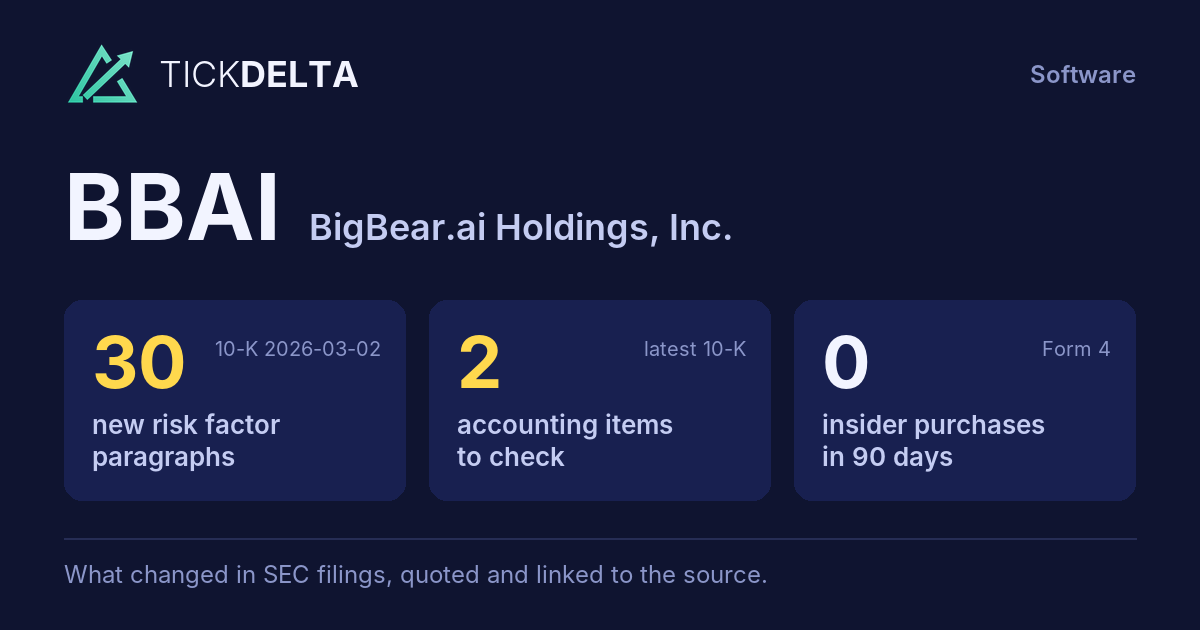
30 new

Paragraphs with nothing like them in last year's 10-K

Quoted exactly

30 paragraphs in Risk Factors of the 10-K filed Mar 2, 2026 with nothing like them in the 10-K filed Mar 25, 2025. Quoted exactly. Paragraphs that were only edited are under 10-K change.

•a significant commercial market for biometrics technology may not develop, and even if it does, there can be no assurance our biometrics technology will be successful;

Read in the 10-K

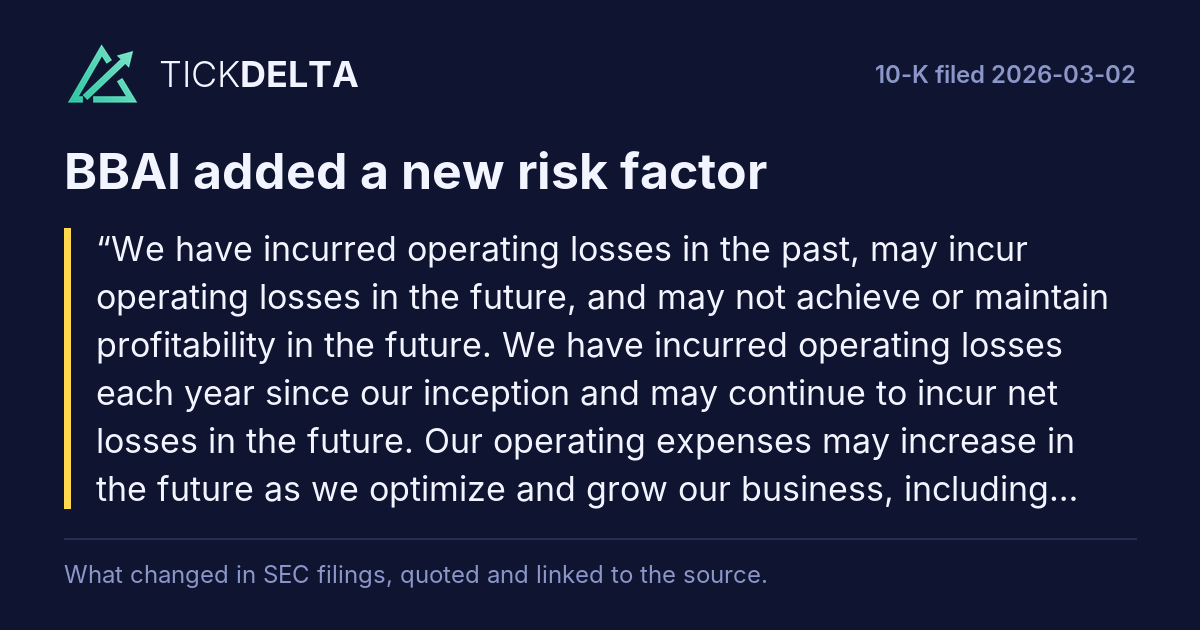
We have incurred operating losses in the past, may incur operating losses in the future, and may not achieve or maintain profitability in the future.

We have incurred operating losses each year since our inception and may continue to incur net losses in the future. Our operating expenses may increase in the future as we optimize and grow our business, including, for example, via our sales and marketing efforts, continuing to invest in research and development, adding content and software features to our platform, expanding into new geographies and developing new products and features. These potential efforts and additional expenses may be more costly

than we expect, and we cannot guarantee that we will be able to increase our revenue to offset our operating expenses. Our revenue may decline for a number of other reasons, including reduced demand for our products and services, increased competition, a decrease in the growth or reduction in size of our overall market, or if we cannot capitalize on strategic opportunities. If our revenue does not grow at a greater rate than our operating expenses, we will not be able to achieve and maintain profitability.

Read in the 10-K

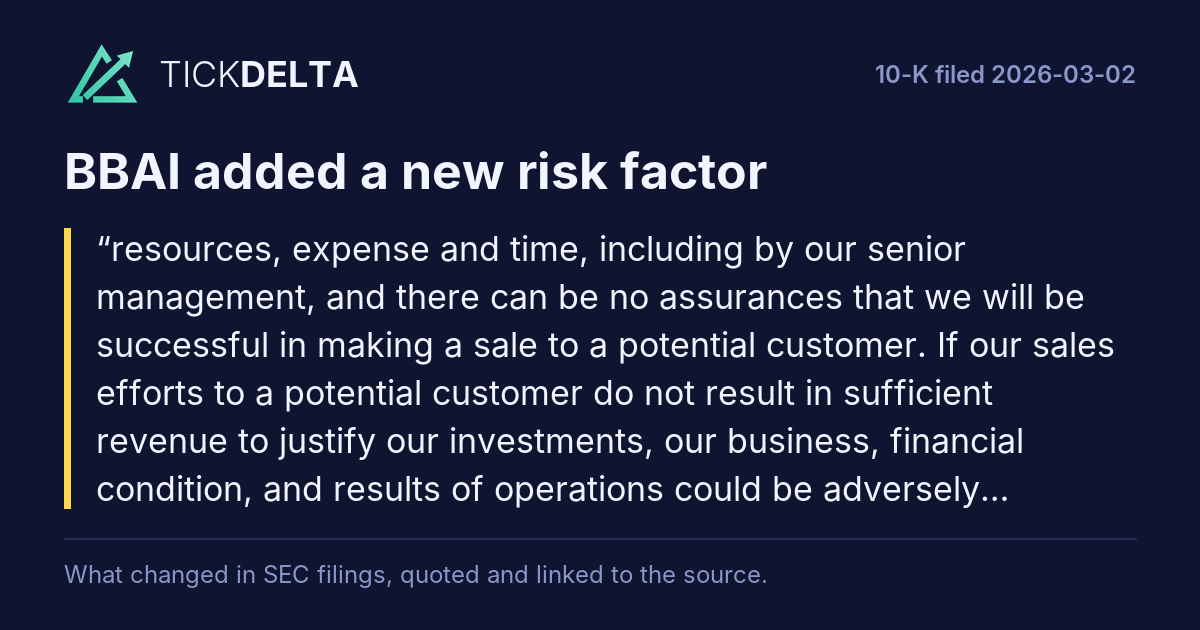
resources, expense and time, including by our senior management, and there can be no assurances that we will be successful in making a sale to a potential customer. If our sales efforts to a potential customer do not result in sufficient revenue to justify our investments, our business, financial condition, and results of operations could be adversely affected.

Read in the 10-K

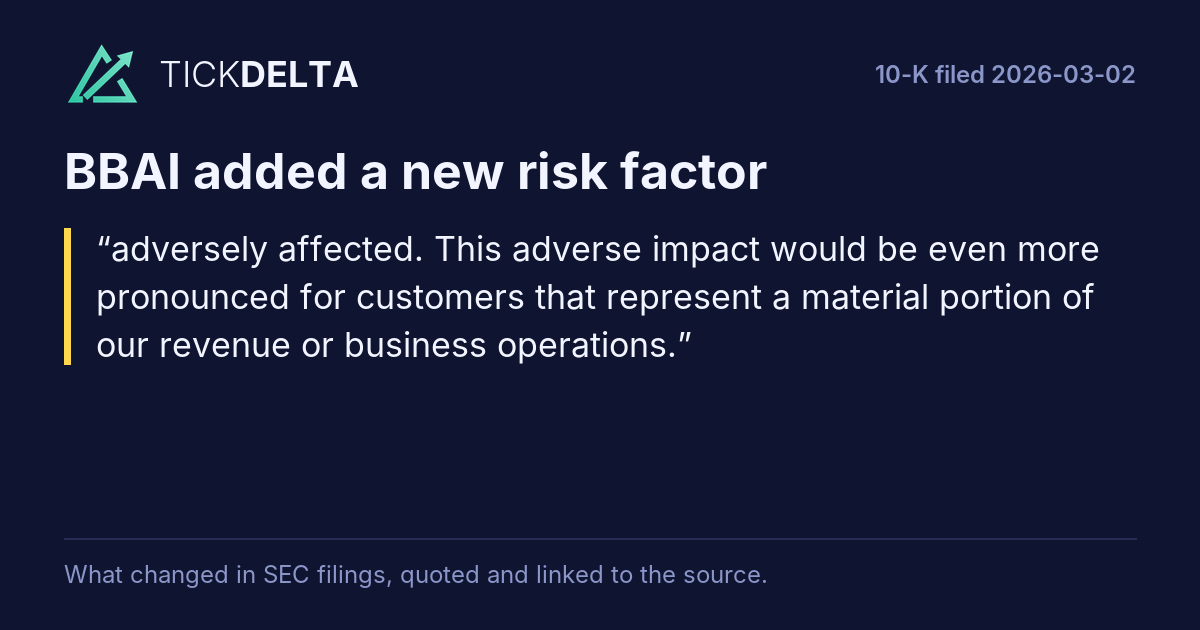
adversely affected. This adverse impact would be even more pronounced for customers that represent a material portion of our revenue or business operations.

Read in the 10-K

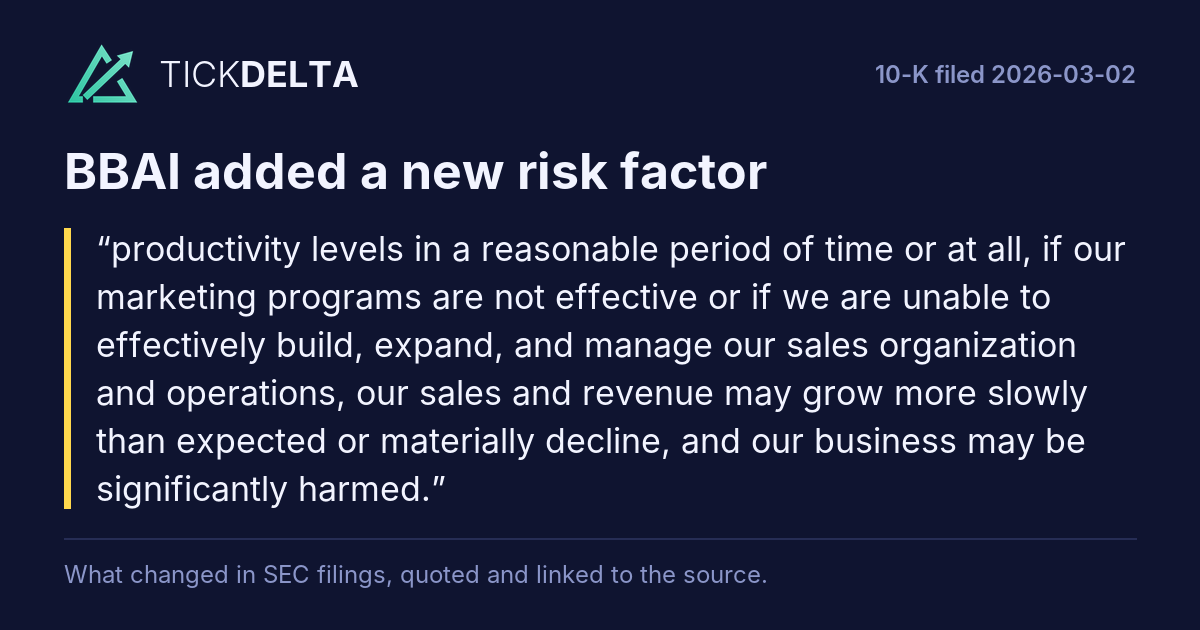
productivity levels in a reasonable period of time or at all, if our marketing programs are not effective or if we are unable to effectively build, expand, and manage our sales organization and operations, our sales and revenue may grow more slowly than expected or materially decline, and our business may be significantly harmed.

Read in the 10-K
Show the other 13

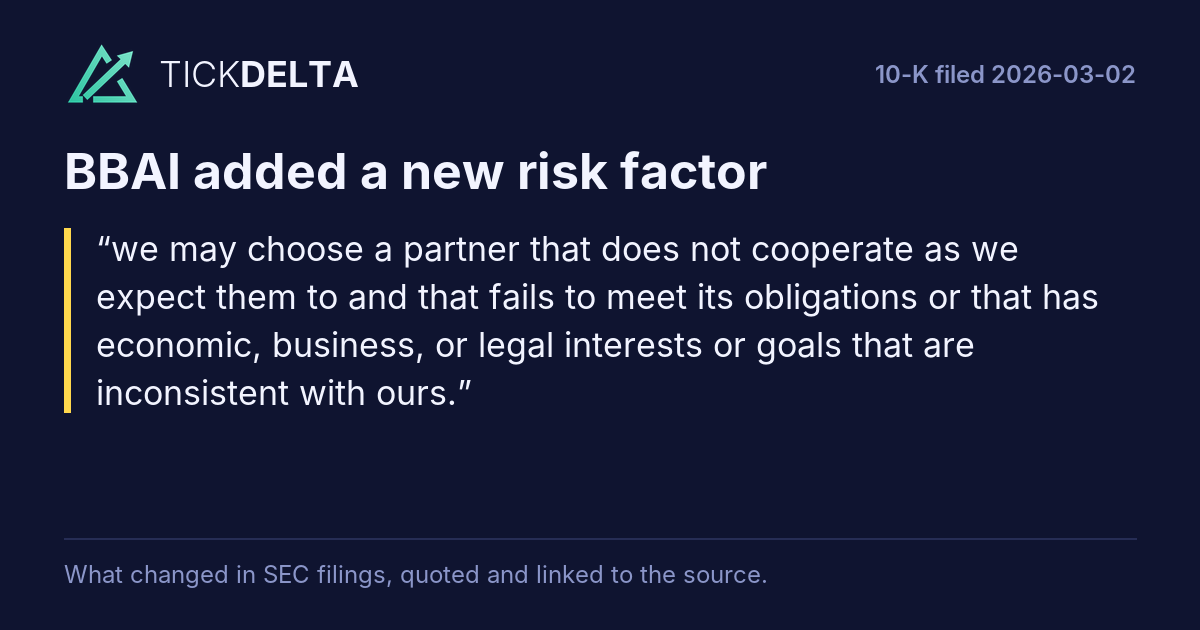
we may choose a partner that does not cooperate as we expect them to and that fails to meet its obligations or that has economic, business, or legal interests or goals that are inconsistent with ours.

Read in the 10-K

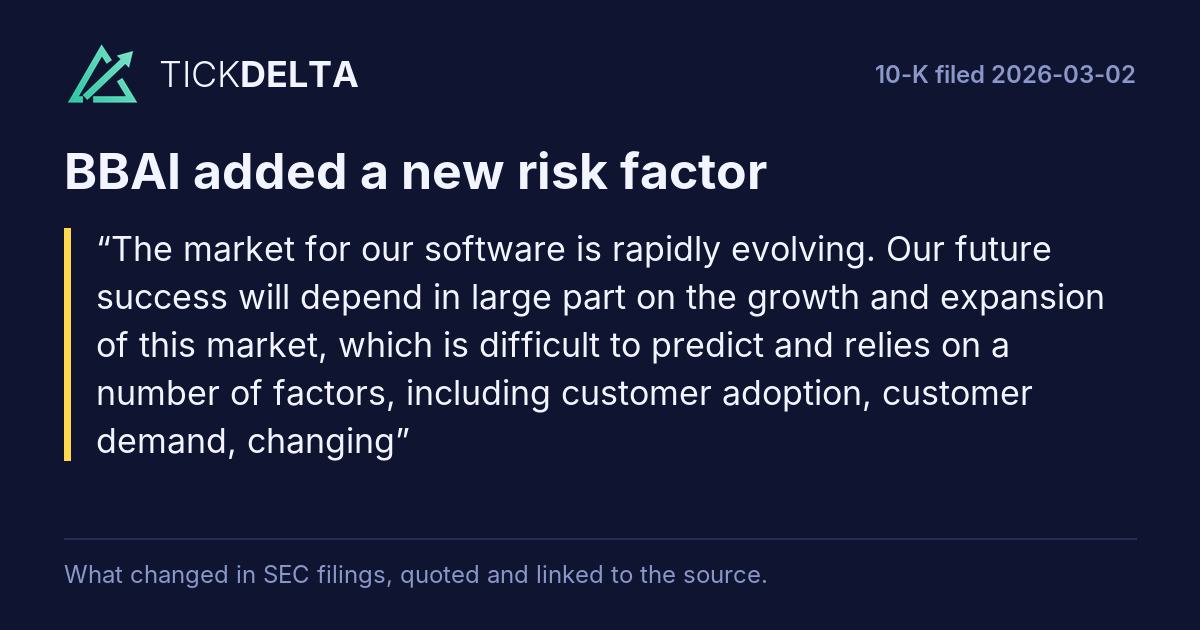
The market for our software is rapidly evolving. Our future success will depend in large part on the growth and expansion of this market, which is difficult to predict and relies on a number of factors, including customer adoption, customer demand, changing

Read in the 10-K

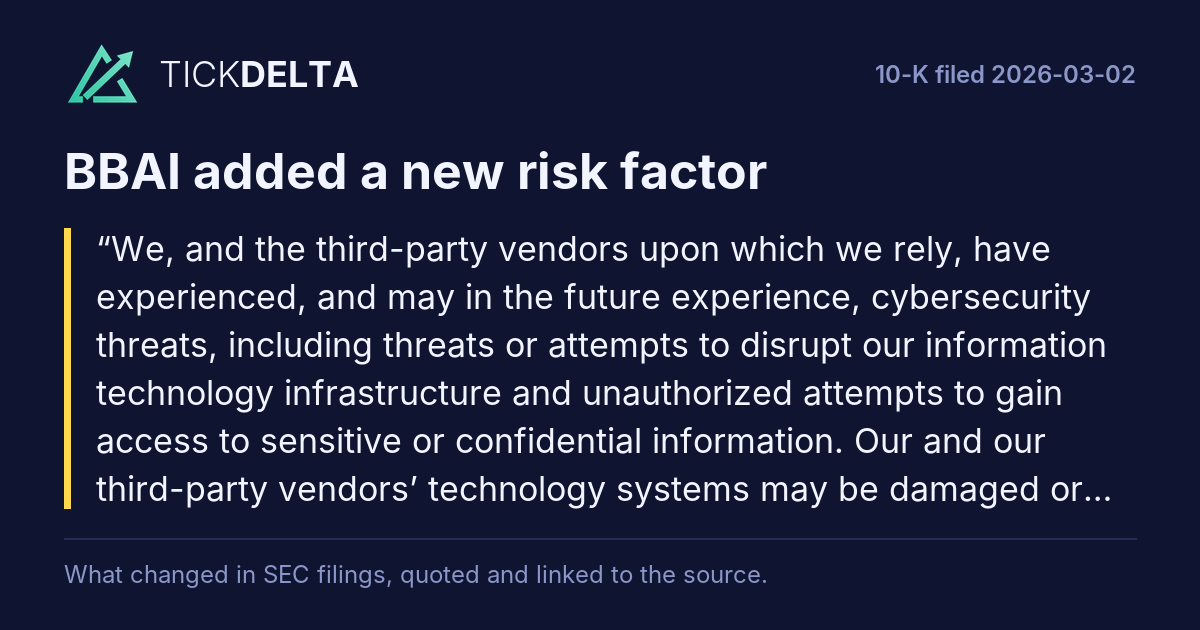
We, and the third-party vendors upon which we rely, have experienced, and may in the future experience, cybersecurity threats, including threats or attempts to disrupt our information technology infrastructure and unauthorized attempts to gain access to sensitive or confidential information. Our and our third-party vendors’ technology systems may be damaged or compromised by

Read in the 10-K

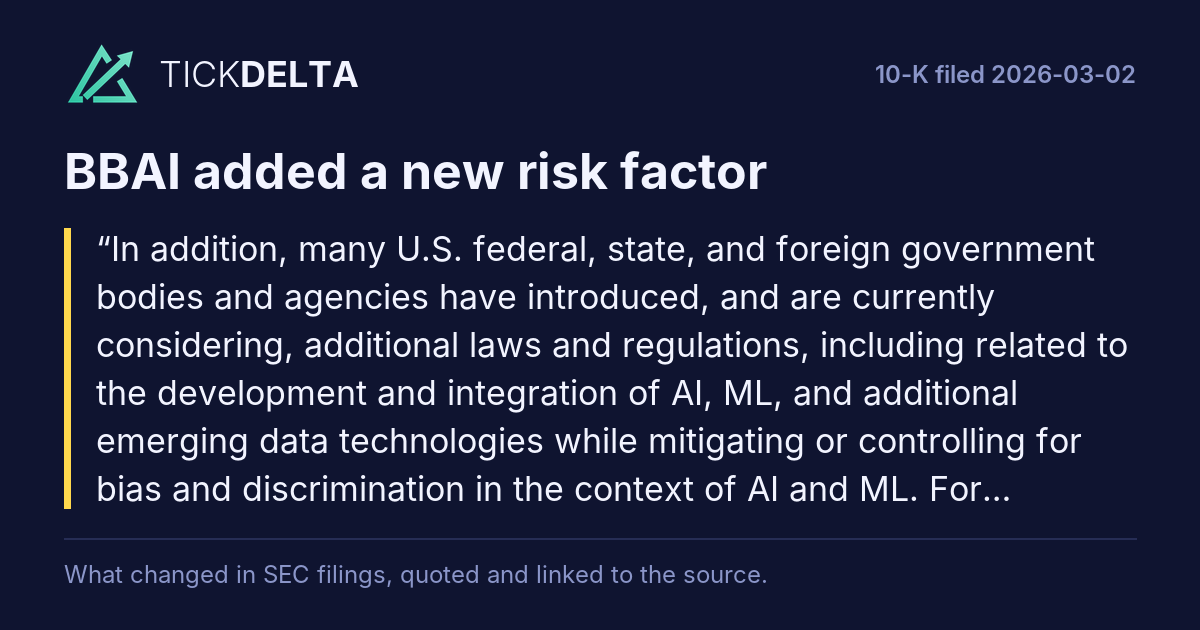
In addition, many U.S. federal, state, and foreign government bodies and agencies have introduced, and are currently considering, additional laws and regulations, including related to the development and integration of AI, ML, and additional emerging data technologies while mitigating or controlling for bias and discrimination in the context of AI and ML. For example, the California Privacy Protection Agency is currently in the process of finalizing regulations under the California Consumer Privacy Act (as amended by the California Privacy Rights Act) (“CCPA”), regarding the use of automated decision-making, and both California and Colorado have recently passed legislation (with similar legislation pending in Virginia) imposing transparency and disclosure requirements with respect to certain AI systems. Furthermore, in Europe, the Artificial Intelligence Act (“EU AI Act”), which became effective on August 1, 2024, categorizes AI systems based on risk, prohibits certain uses of AI effective February 2, 2025, and introduces strict requirements for high-risk AI applications beginning August 2, 2027. These frameworks, together with existing privacy and data protection requirements, including the GDPR’s restrictions on automated decision-making, continue to evolve. The privacy, data protection, and technology-related legal regimes that apply to our business, including those that govern AI and automated decision-making, are more fully described under the risk factor contained herein entitled “Our business is subject to complex and evolving U.S. and non-U.S. laws and regulations regarding privacy, data protection and security, technology protection, and other matters.” While we strive to minimize any physical bias in our product’s identification of threats because our product’s AI does not process or analyze an individual’s physical characteristics, we may not be able to identify such issues in advance, or if identified, we may not be able to identify mechanisms for effectively mitigating such issues.

With the acquisition of Pangiam, a portion of our growth strategy is the market for biometrics activity. A significant commercial market for biometrics technology may not develop, and, even if it does, there can be no assurance our biometrics technology will be successful.

A component of our strategy to grow our revenue includes expansion into commercial markets. To date, biometrics technology has received only limited acceptance and slow adoption in these markets. Although the recent appearance of biometric readers on popular consumer products, such as smartphones, has increased interest in biometrics as a means of authenticating and/or identifying individuals, commercial markets for biometrics technology are still developing and evolving. Biometrics-based solutions compete with more traditional security methods including keys, cards, personal identification numbers, passwords and security personnel. Acceptance of biometrics as an alternative to such traditional methods depends upon a number of factors including: i) the performance and reliability of biometric solutions; ii) costs involved in adopting and integrating biometric solutions; iii) public concerns regarding privacy; and iv) potential privacy legislation.

A significant number of established companies have developed or are developing and marketing software and hardware for biometrics products and applications that currently compete with or will compete directly with our offerings. We believe that additional competitors will enter the biometrics market and become significant long-term competitors, and that, as a result, competition will increase. Companies competing with us may introduce solutions that are competitively priced, have increased performance or functionality or incorporate technological advances we have not yet developed or implemented.

For these reasons, we are uncertain whether there will be significant demand for biometrics technology from commercial markets. Moreover, even if there is significant demand, there can be no assurance that our biometrics products will achieve market acceptance.

Read in the 10-K

required to transfer to other cloud providers or invest in a private cloud, we could incur significant costs and experience possible service interruption in connection with doing so, or risk loss of customer contracts if they are unwilling to accept such a change.

Read in the 10-K

Corruption issues pose a risk in every country and jurisdiction, but in many countries, particularly in countries with developing economies, it may be more common for businesses to engage in practices that are prohibited by the FCPA or other applicable laws and regulations, and our activities in these countries pose a heightened risk of unauthorized payments or offers of payments

Read in the 10-K

authorities change applicable tax laws, our overall taxes could increase, and our financial condition or results of operations may be adversely impacted.

Read in the 10-K

performance of contracts, which provide public sector customers rights, many of which are not typically found in commercial contracts.

Read in the 10-K

The covenants in the Indentures that govern the Convertible Notes are subject to important exceptions and qualifications, which are described under Exhibit 4.5 “Description of the Registrant’s Securities Registered pursuant to Section 12 of the Securities Exchange Act of 1934.”

Read in the 10-K

Since early 2025, the current presidential administration has signed a series of executive orders imposing sweeping tariffs on almost all imports into the United States, with certain tariffs already in effect and some which have been delayed. The administration has also stated plans to impose additional new tariffs or further increase or expand existing tariffs. In addition to the impacts to our business stemming from the tariffs imposed by the administration, we may also be materially impacted by retaliatory tariffs and other penalties or trade restrictions that may be imposed against the United States.

There continues to be significant uncertainty regarding these recent changes and potential future developments. Increased trade restrictions, tariffs or taxes on imports or exports relating to countries where we manufacture, source, or sell materials or products, could have a material adverse effect on our business and financial results. If we cannot find ways to mitigate the potential impacts from tariffs or trade restrictions successfully or in a timely manner, these additional tariffs and policies could have a significant impact on our business and results of operations. The exact magnitude of any potential impact remains uncertain, as there may be further changes to tariffs and policies and, consequently, potential increased tension between the U.S. and targeted countries. For example, our risk exposure may increase further if any countries levy additional retaliatory tariffs, taxes, or other trade restrictions or penalties against the United States or U.S. companies.

Read in the 10-K

The Company is subject to risks relating to evaluations of internal control over financial reporting required by Section 404 of the Sarbanes-Oxley Act of 2002.

The Company has incurred, and expects to continue to incur, a substantial amount of management time and resources to comply with the requirements of Section 404 of the Sarbanes-Oxley Act of 2002. In this Report, the Company’s management has provided an assessment to the effectiveness of the Company’s internal control over financial reporting. In addition, pursuant to Section 404(b) of the Sarbanes-Oxley Act of 2022, management’s assessment of the effectiveness of the Company’s internal control over financial reporting is subject to attestation by the Company’s independent registered public accounting firm. This Report includes such attestation. However, there is no assurance that the Company will continue to timely comply with such requirements nor can there be assurance that significant deficiencies and/or material weaknesses will not be identified by

management or the Company’s independent registered public accounting firm (or, if identified, remediated in a timely fashion or at all), any of which may adversely affect the market price of the Company’s common stock. In addition, the Company’s compliance efforts will continue to require significant expenditures and devotion of management time, and may divert management’s attention from the Company’s operations.

In addition, while businesses acquired during the fiscal year covered by the applicable Annual Report on Form 10-K are permitted to be excluded from the scope of management’s report on internal control over financial reporting and the related auditor attestation for such Annual Report on Form 10-K (as is the case with the exclusion of the businesses acquired by the Company in fiscal 2025 from the scope of management’s report on internal control over financial reporting and the related auditor attestation for this Report), the Company will face challenges and be required to incur expenses in connection with, and devote significant management time to, the internal control over financial reporting of acquired businesses. There is no assurance that any issues, deficiencies, significant deficiencies or material weaknesses in internal controls identified at acquired businesses will be remedied in a timely or cost-efficient manner or at all.

Internal control over financial reporting may not prevent or detect misstatements due to inherent limitations in internal control systems. An internal control system, no matter how well designed and operated, can provide only reasonable, not absolute, assurance that the objectives of the control system are met, and the design of a control system must reflect the fact that there are resource constraints, and the benefits of controls must be considered relative to their costs. See Item 9A (“Controls and Procedures”) of this Report for related discussion.

Read in the 10-K

We are no longer subject to certain reporting exemptions for “emerging growth companies” and will incur additional costs of reporting compliance

We ceased to be an “emerging growth company” as defined in the Jumpstart our Business Startups Act of 2012 as of December 31, 2025. As a result, we have experienced, and expect to continue to experience, additional costs associated with being a public company, including costs associated with compliance with the auditor attestation requirement of Section 404 of the Sarbanes-Oxley Act, the adoption of certain ASUs upon losing such status, and additional disclosure requirements, including expanded executive compensation disclosures related to CEO pay ratio, pay versus performance, say on pay and say on frequency of pay which require increase audit, legal and compliance costs.

Read in the 10-K

public company under Section 404 of the Sarbanes-Oxley Act are significantly more stringent than those required of BigBear.ai as a privately held company.
Read in the 10-K

Paragraphs in the 10-Q filed Oct 28, 2026 that were not in the one before

New in the latest 10-Q

11 paragraphs in the 10-Q filed Oct 28, 2026 with nothing like them in the 10-Q filed Jul 30, 2026 (at least half the words must differ; new numbers alone do not count). Quoted exactly, grouped by the item heading above them. This is text that changed, not a judgement of how serious it is.

Financial statements and notes

presented as a financing activity in the condensed consolidated statements of cash flows.

Read in the 10-Q

(1) As of September 30, 2026, in accordance with ASC 350-20, goodwill with a carrying amount $ 238.4 million was written down to its fair value of $ 161.7 million, resulting in an impairment charge of $ 76.7 million, which was included in earnings during the third quarter of 2026.

Read in the 10-Q

The Company’s investments in debt securities comprise U.S. Treasury securities and corporate bonds. As of September 30, 2025, these investments were classified as held-to-maturity (“HTM”) and recorded at amortized cost, net of any allowance for credit losses. The Company purchased these debt securities with the positive intent and ability to hold to contractual maturity.

Read in the 10-Q

The following table discloses investments in debt securities that have been in a continuous unrealized loss position for less than 12 months and those that have been in a continuous unrealized loss position for 12 months or longer:

Read in the 10-Q

As of September 30, 2026 and December 31, 2025, no allowance for credit loss has been recognized as the issuers of these securities have not established a cause for default and various rating agencies have reaffirmed each security’s investment grade status. The fair value of these securities have fluctuated since the purchase date as market interest rates fluctuate. The Company does not intend to sell these securities and it is more likely than not that the Company will not be required to sell before the

Read in the 10-Q
Show the other 6

During the third quarter of fiscal 2026, we performed a triggering event analysis to determine if it was more likely than not that

Read in the 10-Q

In July 2026, the Company entered into an Open Market Sale AgreementSM (the “Sales Agreement”) with Jefferies LLC (“Jefferies”), pursuant to which the Company may, from time to time, sell up to an aggregate of 100 million shares of its common stock through under an “at the market” offering program (the “2026 ATM Program”, together with the 2024 ATM Program, the “ATM Programs”).

Read in the 10-Q

As of September 30, 2026, 100 million shares remained available under the 2026 ATM Program and no capacity remained available under the 2024 ATM Program.

Read in the 10-Q

On July 31 2026, the Company entered into an Open Market Sale AgreementTM (the “Sales Agreement”) with Jefferies LLC

Read in the 10-Q

(“Jefferies”), pursuant to which the Company may, from time to time, sell up to an aggregate of 100 million shares of its common stock under an “at the market” offering program (the “2026 ATM Program”, together with the 2024 ATM Program, the “ATM Programs”).

Read in the 10-Q

As of September 30, 2026, 100 million shares remained available under the 2026 ATM program and no capacity remained available under the 2024 ATM Program.

Read in the 10-Q

The 10-Q's risk factors against the 10-K

Item 1A of the 10-Q filed Oct 28, 2026 against Item 1A of the 10-K filed Mar 2, 2026. A 10-Q repeats only the risks that changed, so a 10-K paragraph that is missing from it is not counted as removed. Added is a paragraph with nothing like it in the 10-K, Reworded a sentence that is in both with several words changed, Quiet changes a sentence in both where one to four words changed and one is a hedge or a modal (cut words struck through, new words highlighted). Text on the page, not a score; each links to the filing at sec.gov.

Added10-Q Oct 28, 2026 vs 10-K Mar 2, 2026
For a discussion of the material factors that make an investment in the Company risky, please see the risk factors disclosed in “Item 1A, Risk Factors” of our Annual Report on Form 10-K for the year ended December 31, 2025. These risks and uncertainties have the potential to materially affect our business, results of operations, financial condition, cash flows, projected results and future prospects. These risks are not exclusive and additional risks to which we are subject include the factors mentioned under “Forward-Looking Statements” and the risks described in “Management’s Discussion and Analysis of Financial Condition and Results of Operations” in this Quarterly Report on Form 10-Q.

Read it in the 10-Q at sec.gov

Phrases used for the first time

Two-word phrases in Risk Factors of the 10-K filed Mar 2, 2026 that are in none of the 1 earlier 10-Ks stored, back to Mar 25, 2025

ask sage ×14sage acquisition ×12biometrics technology ×7exhibit description ×4registrant’s securities ×4securities registered ×4registered pursuant ×4trade restrictions ×4automated decision-making ×3see exhibit ×3ask sage’s ×3control system ×3commercial market ×2act ccpa ×2disclosure requirements ×2biometric solutions ×2
Where each one is used
  • ask sage: BigBear.ai stockholders may not realize a benefit from the Ask Sage Acquisition commensurate with the ownership dilution they will experience in connection with the Ask Sage Acquisition.
  • sage acquisition: BigBear.ai stockholders may not realize a benefit from the Ask Sage Acquisition commensurate with the ownership dilution they will experience in connection with the Ask Sage Acquisition.
  • biometrics technology: •a significant commercial market for biometrics technology may not develop, and even if it does, there can be no assurance our biometrics technology will be successful;
  • exhibit description: The term “fundamental change” in our Indentures is limited to certain specified transactions and may not include other events that might adversely affect our financial condition or the market value of the notes or our common stock. See Exhibit 4.5 “Description of the Registrant’s Securities Registered pursuant to...
  • registrant’s securities: The term “fundamental change” in our Indentures is limited to certain specified transactions and may not include other events that might adversely affect our financial condition or the market value of the notes or our common stock. See Exhibit 4.5 “Description of the Registrant’s Securities Registered pursuant to...
  • securities registered: The term “fundamental change” in our Indentures is limited to certain specified transactions and may not include other events that might adversely affect our financial condition or the market value of the notes or our common stock. See Exhibit 4.5 “Description of the Registrant’s Securities Registered pursuant to...
  • registered pursuant: The term “fundamental change” in our Indentures is limited to certain specified transactions and may not include other events that might adversely affect our financial condition or the market value of the notes or our common stock. See Exhibit 4.5 “Description of the Registrant’s Securities Registered pursuant to...
  • trade restrictions: Since early 2025, the current presidential administration has signed a series of executive orders imposing sweeping tariffs on almost all imports into the United States, with certain tariffs already in effect and some which have been delayed. The administration has also stated plans to impose additional new tariffs...

The 10-K at sec.gov

Used at least twice, small words left out. Counted, not picked: a phrase can be new because the company renamed something.

What was taken out

32 paragraphs of last year's Risk Factors with nothing like them now. The longest are quoted.

Across all companies
Although our revenue has increased in recent periods, there can be no assurances that revenue will continue to grow or do so at current rates, and you should not rely on the revenue of any prior quarterly or annual period as an indication of our future performance. Our revenue growth rate may decline in future periods. We may not achieve or maintain profitability in future periods or, if we are profitable, we may not fully achieve our profitability targets. In addition, while we remain focused on operating efficiently, we anticipate that our operating expenses will continue to increase in...
In the 10-K filed Mar 25, 2025
We currently qualify as an “emerging growth company” as defined in Section 2(a)(19) of the Securities Act, as modified by the JOBS Act. As such, we take advantage of certain exemptions from various reporting requirements applicable to other public companies that are not emerging growth companies for as long as we continue to be an emerging growth company, including: (i) the exemption from the auditor attestation requirements with respect to internal control over financial reporting under Section 404 of the Sarbanes-Oxley Act; (ii) the exemptions from say-on-pay, say-on-frequency and...
In the 10-K filed Mar 25, 2025
Some of our customers and other business partners are affiliated with certain of our directors or hold shares of our capital stock, or both. For example, in July 2021, we entered into a Memorandum of Understanding (“MOU”) with Edge Autonomy (formerly UAV Factory), a company owned by AE Industrial Partners, whereby BigBear.ai will develop AI/ML capabilities for Edge Autonomy’s unmanned systems and components used in autonomous operations within the commercial and defense markets. We believe that the transactions and agreements that we have entered into with related parties are on terms that...
In the 10-K filed Mar 25, 2025
In addition, Section 107 of the JOBS Act also provides that an emerging growth company can take advantage of the exemption from complying with new or revised accounting standards provided in Section 7(a)(2)(B) of the Securities Act as long as we are an emerging growth company. An emerging growth company can therefore delay the adoption of certain accounting standards until those standards would otherwise apply to private companies. The JOBS Act provides that a company can elect to opt out of the extended transition period and comply with the requirements that apply to non-emerging growth...
In the 10-K filed Mar 25, 2025

Sources

Item 1A of each 10-K and 10-Q on EDGAR, quoted exactly. Each paragraph links to the filing at sec.gov.

Also

10-K change: what was reworded or cut, section by section.

Work with it

Excel workbook · CSV. Google Sheet that stays up to date: paste =IMPORTDATA("https://tickdelta.com/company/BBAI/export.csv") into a cell.

Next:10-K change
Esc

Type a ticker such as AAPL, a name, an investor such as Buffett, or a topic such as tariffs. ↑ ↓ to move, Enter to open.