Screener / SEC EDGAR /CIK 0001169561 /10-K filed May 11, 2026, compared with May 5, 2025 /Numbers from the XBRL of the 10-Ks
Nasdaq Technology · Software

Commvault Systems Inc CVLT

Compare with peers Embed
New in the 10-K 62 paragraphs with nothing like them in the 10-K filed May 5, 2025 New in the 10-Q 5 paragraphs not in the 10-Q filed Jul 29, 2026 10-Q against the 10-K 3 risk factor paragraphs and sentences added or reworded

New risk paragraphs, branching off last year

Each branch is a paragraph in Risk Factors with nothing like it in the 10-K filed May 5, 2025. A box jumps to the paragraph as filed, below.

62 new

Paragraphs with nothing like them in last year's 10-K

Quoted exactly

62 paragraphs in Risk Factors of the 10-K filed May 11, 2026 with nothing like them in the 10-K filed May 5, 2025. Quoted exactly. Paragraphs that were only edited are under 10-K change.

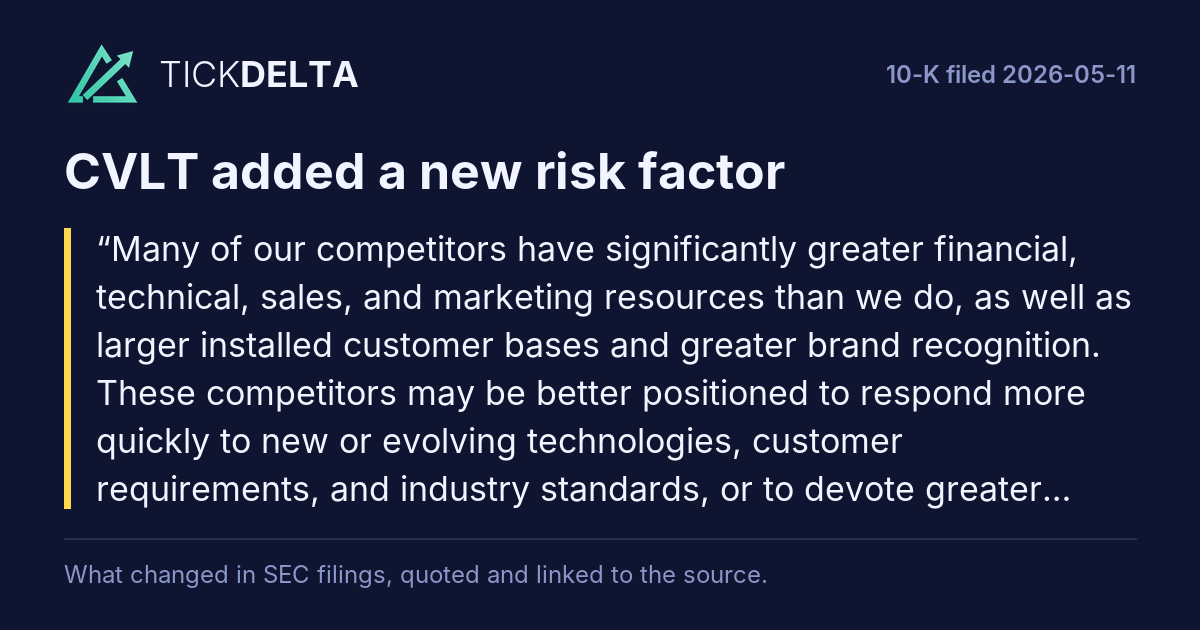
Many of our competitors have significantly greater financial, technical, sales, and marketing resources than we do, as well as larger installed customer bases and greater brand recognition. These competitors may be better positioned to respond more quickly to new or evolving technologies, customer requirements, and industry standards, or to devote greater resources to the development, promotion, sale, and support of their products. Competition in our industry is influenced by a number of factors, including product functionality, performance, and integration; breadth of platform and workload coverage; ability to invest and scale; pricing and total cost of ownership; global sales infrastructure; quality of technical support; brand recognition and reputation; and the ability to address customers’ evolving cyber resilience requirements. If we are unable to compete effectively across these factors, our competitive position could weaken, and we could experience reduced revenue, margin pressure, or loss of market share, which could adversely affect our business, results of operations, and financial condition.

In addition, it is often costly and time-consuming for customers to replace existing cyber resilience systems. Most of our prospective and newly adopted customers have previously implemented competing solutions, which may provide incumbent vendors with advantages in retaining those customers due to existing familiarity with customer environments, data architectures, and operational requirements. Some customers may be reluctant to incur the cost, complexity, or operational risk associated with switching vendors, which could limit our ability to win new customers or expand within existing customer environments.

We also face competitive risks related to the ongoing transition within the industry from traditional on‑premises solutions to cloud‑based and SaaS delivery models. While we have substantially completed our transition from a perpetual licensing model to a subscription‑based model delivered through term‑based licenses or SaaS, certain competitors have operated under cloud‑native models for longer periods. Differences in deployment models, customer adoption rates, infrastructure requirements, and pricing expectations may adversely affect our ability to compete in certain segments or use cases.

Competition may further intensify as we expand into new markets, as existing competitors broaden their product offerings, and as new competitors enter the market. We also expect increased competition as a result of industry consolidation, including from OEMs, systems and network management companies, and other market participants that may leverage acquisitions, bundled offerings, or established customer relationships to compete with our solutions. Increased competition could result in pricing pressure, reduced margins, loss of market share, or reduced demand for our products, any of which could adversely affect our business, results of operations, and financial condition.

In addition, the highly competitive nature of the cyber resilience industry makes it challenging to attract and retain skilled employees. Our ability to compete successfully depends, in part, on our ability to hire and retain qualified personnel, and increased competition for talent could increase our costs or adversely affect our ability to execute our business strategy.

Read in the 10-K

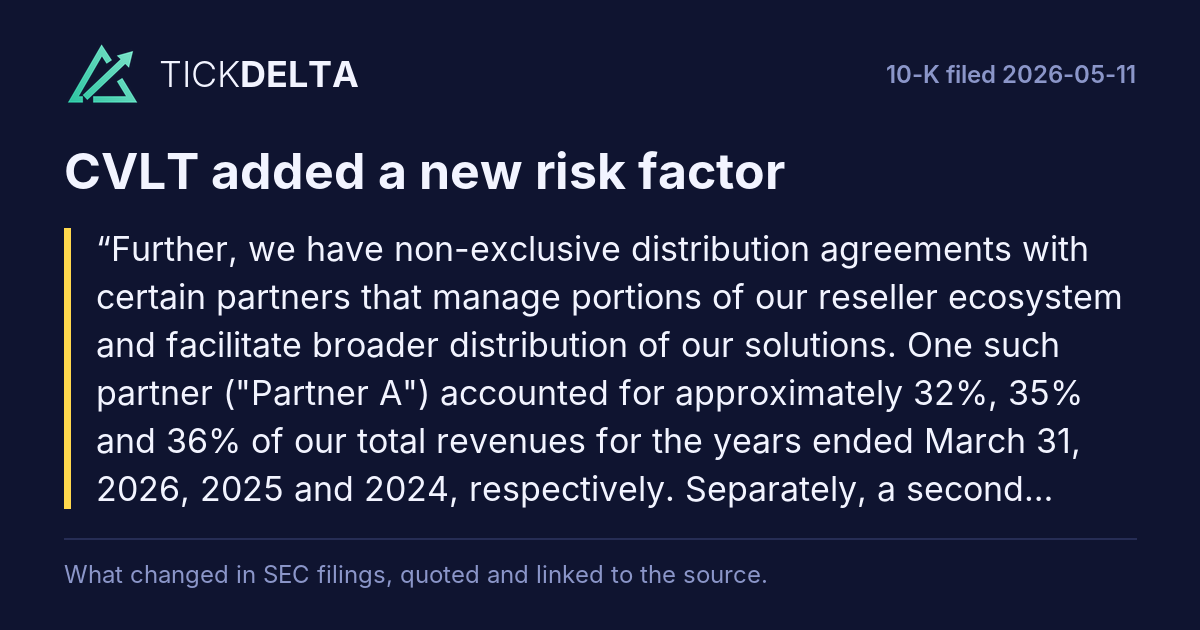
Further, we have non-exclusive distribution agreements with certain partners that manage portions of our reseller ecosystem and facilitate broader distribution of our solutions. One such partner ("Partner A") accounted for approximately 32%, 35% and 36% of our total revenues for the years ended March 31, 2026, 2025 and 2024, respectively. Separately, a second partner ("Partner B") accounted for approximately 11% of our total revenues for the year ended March 31, 2026. Total revenues for the years ended March 31, 2025 and 2024 for Partner B were less than 10%. If any of these partners were to discontinue or materially reduce their sales of our solutions, terminate their agreements with us, or experience operational or financial difficulties, and if we were unable to effectively replace them or assume management of the affected distribution activities, our business, results of operations, and financial condition could be materially adversely affected.

Read in the 10-K

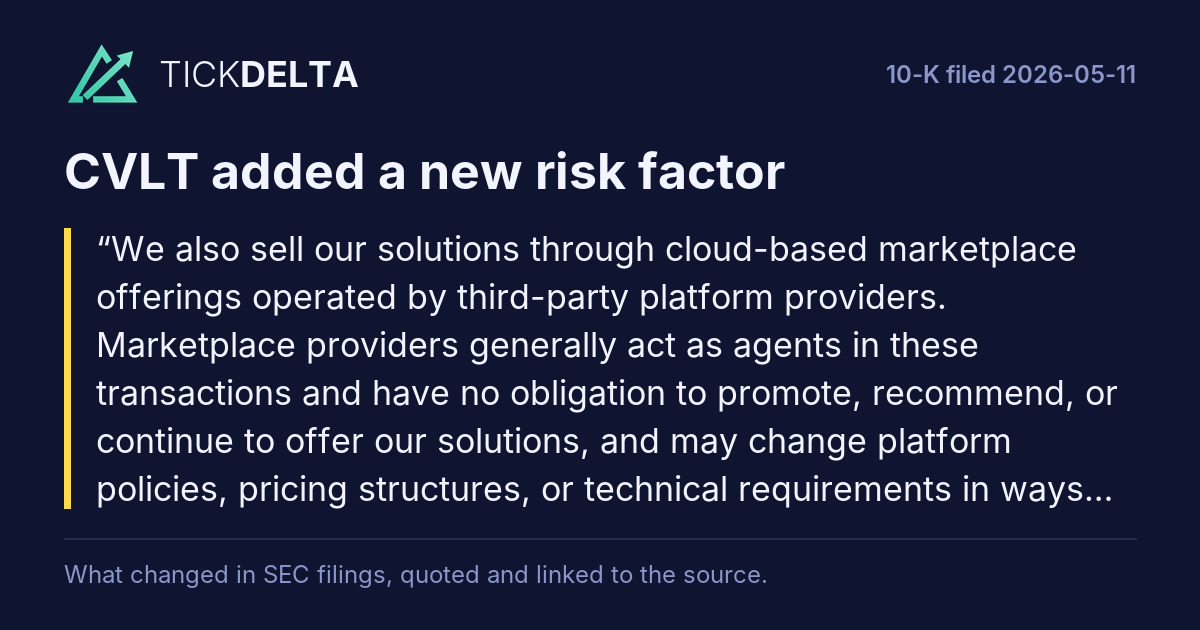
We also sell our solutions through cloud-based marketplace offerings operated by third-party platform providers. Marketplace providers generally act as agents in these transactions and have no obligation to promote, recommend, or continue to offer our solutions, and may change platform policies, pricing structures, or technical requirements in ways that are unfavorable to us. These transactions include sales to both new and existing customers and may include new purchases, software renewals, expansions by existing customers, and subscriptions for both on‑premise and SaaS offerings. Our inability to effectively compete or maintain visibility within marketplace channels could adversely affect our sales and operating results.

If we are unable to price our solutions competitively, manage costs associated with delivering our offerings, or maintain the scope and duration of customer subscriptions and support agreements, our business, results of operations, and financial condition could be adversely affected.

A significant portion of our revenues is derived from subscription arrangements, including term‑based software licenses, associated term‑based support for those licenses, and SaaS arrangements. These arrangements are generally priced in a competitive market and are subject to ongoing pricing pressure from competitors, customer budget constraints, and evolving customer expectations, particularly as customers transition from traditional on‑premises deployments to cloud‑based and SaaS delivery models.

At the end of an initial or renewal term, customers may elect not to renew, renew for shorter contract durations, reduce the number of workloads, users, or other subscription units, migrate to lower‑cost configurations,

or seek concessions related to pricing or contract terms. These outcomes may be driven by competitive offerings, customer cost‑optimization initiatives, broader economic conditions, or changes in customers’ technology strategies. Any such changes could adversely affect our revenues, margins, and long‑term growth prospects.

Our ability to compete effectively on pricing and contract terms may be further affected by our cost structure, including costs associated with delivering SaaS offerings. As we continue to support hybrid, multi‑cloud, and SaaS deployment models, we incur ongoing infrastructure, hosting, security, and operational costs that may increase over time due to changes in usage patterns, cloud service pricing, or other factors beyond our control. If we are unable to manage these costs effectively or offset them through pricing, operational efficiencies, or volume growth, our margins and profitability could be adversely affected.

Our reliance on interoperability with third‑party platforms, operating systems, cloud environments, and hardware products, as well as ongoing supply chain constraints, could adversely affect our product development, customer satisfaction, and results of operations.

Our solutions are designed to interoperate with certain third-party operating systems, cloud platforms, applications, and hardware products that are developed, controlled or distributed by others. These include widely used operating systems such as Windows, UNIX, Linux and other platforms, as well as database technologies, cloud infrastructure services, and hardware products offered by numerous manufacturers. Our ability to deliver and support our solutions depends in part on the continued interoperability of our products with these third‑party technologies.

When new or updated versions of operating systems, cloud platforms, applications, or hardware products are introduced, or when existing third‑party technologies are modified, we may be required to devote significant time, engineering effort, and financial resources for continued compatibility. We may not be able to complete these development efforts in a timely or cost‑effective manner, or at all. In addition, third parties may make changes to their products, platforms, or commercial terms that degrade the functionality of our solutions, limit our ability to support certain configurations, or require us to make unplanned investments to maintain interoperability.

Our reliance on third‑party hardware products, particularly for our on-premise license solutions, also exposes us to risks associated with global supply chain disruptions, including increased hardware costs, limited product availability and extended lead times. We provide demand forecasts to our supply chain partners, and if those forecasts prove inaccurate, we could incur or experience delays in fulfilling customer orders. Industry‑wide supply constraints, inflationary pressures, logistics disruptions, or changes in supplier priorities could result in delays in hardware availability or increased costs that are passed on to customers. These conditions may impact our ability to deliver integrated solutions, support certain customer deployments, or meet customer expectations for implementation timelines, which could adversely affect customer satisfaction, demand for our solutions, or our competitive position.

In addition, uncertainties in the availability, pricing, or performance characteristics of third‑party hardware and infrastructure components may complicate customer purchasing decisions or delay customers’ adoption or expansion of cyber resilience solutions. These risks may be heightened during periods of elevated demand, geopolitical instability, trade restrictions, or other factors beyond our control that affect the global technology supply chain. If we are unable to maintain effective interoperability with third‑party platforms and hardware products, respond adequately to supply chain disruptions, or absorb or pass through increased costs associated with these dependencies, our product development efforts, sales, results of operations, and overall business could be materially adversely affected.

Read in the 10-K

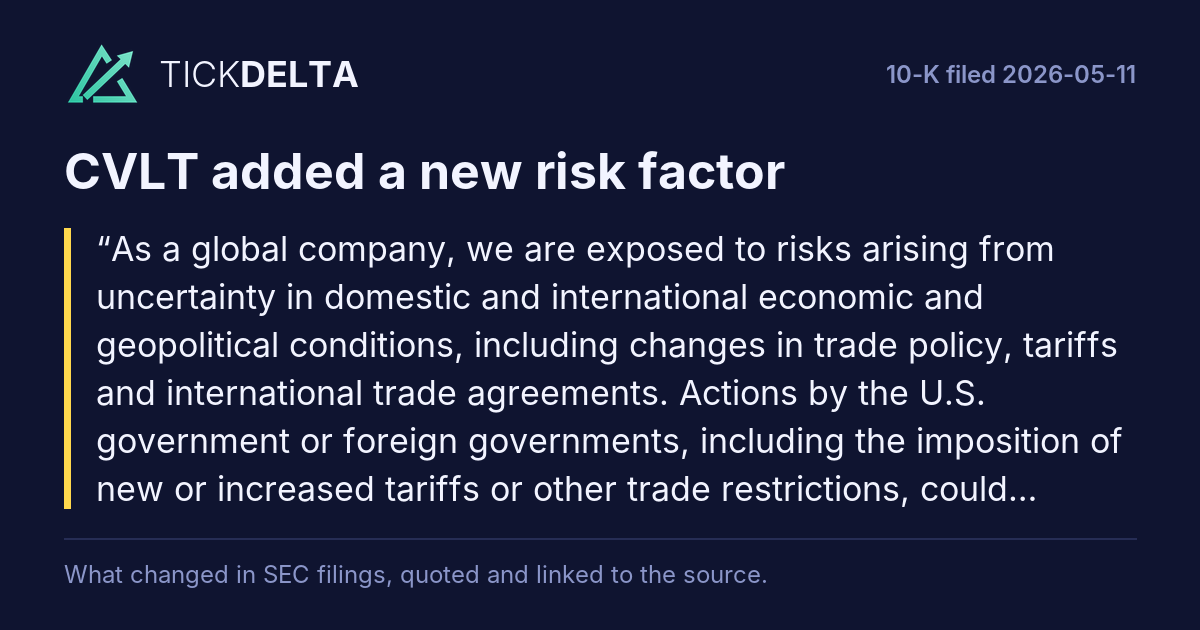
As a global company, we are exposed to risks arising from uncertainty in domestic and international economic and geopolitical conditions, including changes in trade policy, tariffs and international trade agreements. Actions by the U.S. government or foreign governments, including the imposition of new or increased tariffs or other trade restrictions, could disrupt global supply chains, increase costs, or negatively affect economic conditions in the United States or other markets in which we operate. The scope, timing and impact of such actions remain uncertain and could adversely affect our international operations and financial performance.

Broader macroeconomic volatility, including inflationary pressures, foreign exchange fluctuations, reduced capital spending, and tightening credit conditions, may cause customers to delay, reduce, or cancel technology investments. These conditions may lengthen sales cycles, increase pricing and negotiation pressure, and make it

more difficult for customers, partners, and us to plan and forecast business activity. Increased volatility in foreign currency markets may also adversely affect our results of operations.

Deterioration in economic conditions in regions where we operate could also result in delayed or reduced customer orders, cancellations, or slower collections on accounts receivable. Our accounts receivables are generally unsecured, and our customers and partners are typically permitted to pay within a specified period following delivery of our solutions. Adverse economic or geopolitical conditions, whether domestic or international, including economic downturns, financial market instability or geopolitical conflicts such as those in the Middle East, and Russia-Ukraine, may impair the liquidity or financial condition of our customers or partners. As a result, customers or partners may delay payments, fail to meet payment obligations, or seek to renegotiate payment terms, which could increase bad debt expense or reduce operating cash flows.

A significant portion of our revenues is derived from subscription-based and term-based arrangements under which customers may pay over extended periods. A portion of our receivables also consists of unbilled receivables related to revenue recognized in advance of invoicing. These amounts may be subject to extended collection periods and increase our exposure to credit risk, particularly during periods of economic volatility. If customers experience financial difficulty or delay payments, we may experience increased collection risk, higher write-offs, or reduced operating cash flows.

If global economic conditions worsen or recover more slowly or unevenly than expected, we may not be able to sustain historical growth rates, our business, results of operations and financial condition could be adversely affected, and we may not meet the expectations of analysts or investors, which could cause the market price of our common stock to decline.

Read in the 10-K

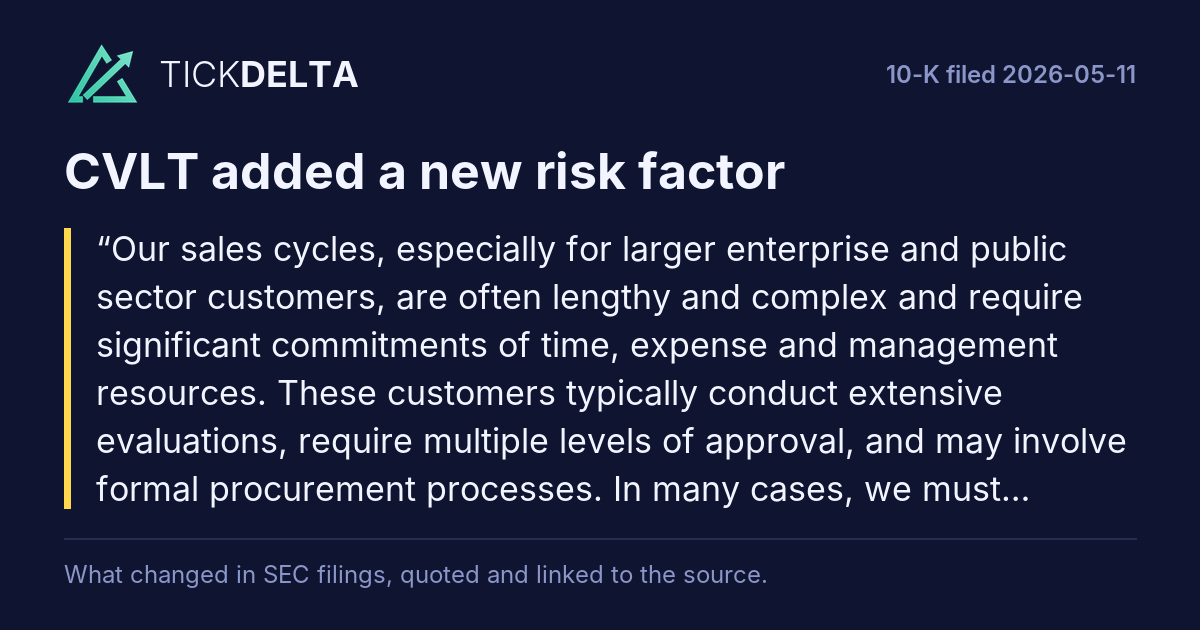
Our sales cycles, especially for larger enterprise and public sector customers, are often lengthy and complex and require significant commitments of time, expense and management resources. These customers typically conduct extensive evaluations, require multiple levels of approval, and may involve formal procurement processes. In many cases, we must invest significant time and resources before a purchasing decision is made, and there is no assurance that these efforts will result in a sale.

Our sales cycles are subject to risks and delays largely outside of our control, including customers’ budgetary constraints and cycles, internal approval processes, customers’ willingness or ability to replace existing solutions, and the expiration timing of customers’ current contracts. As a result, sales opportunities may be delayed, reduced in scope, or not consummated, even after we have incurred significant sales and marketing expenses.

Read in the 10-K
Show the other 19

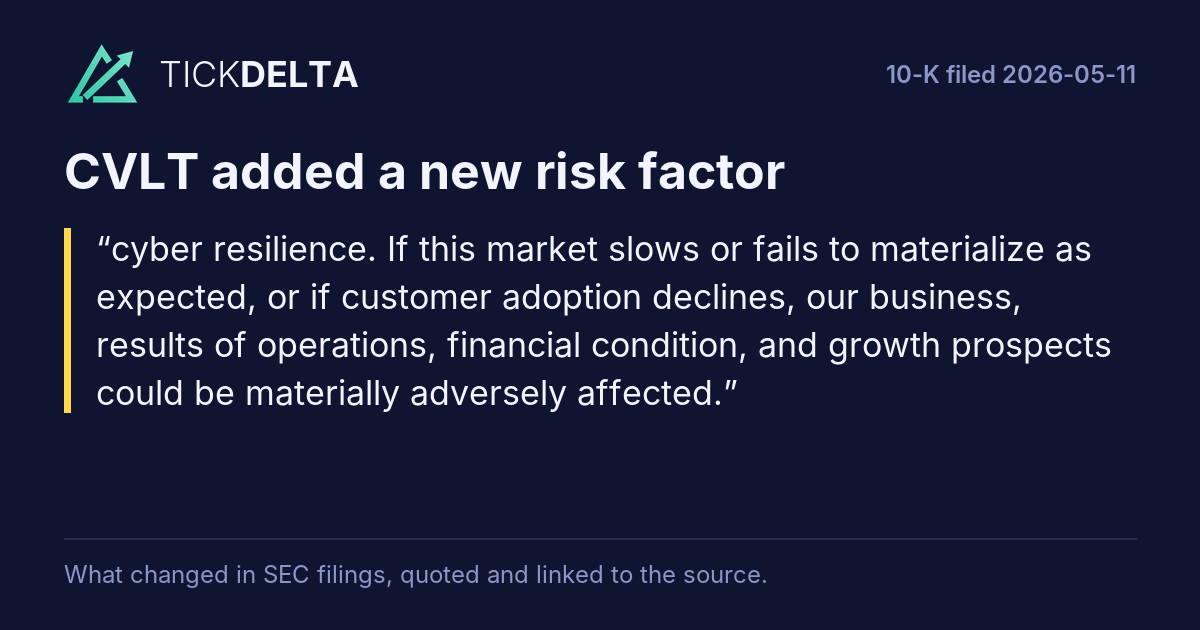
cyber resilience. If this market slows or fails to materialize as expected, or if customer adoption declines, our business, results of operations, financial condition, and growth prospects could be materially adversely affected.

Read in the 10-K

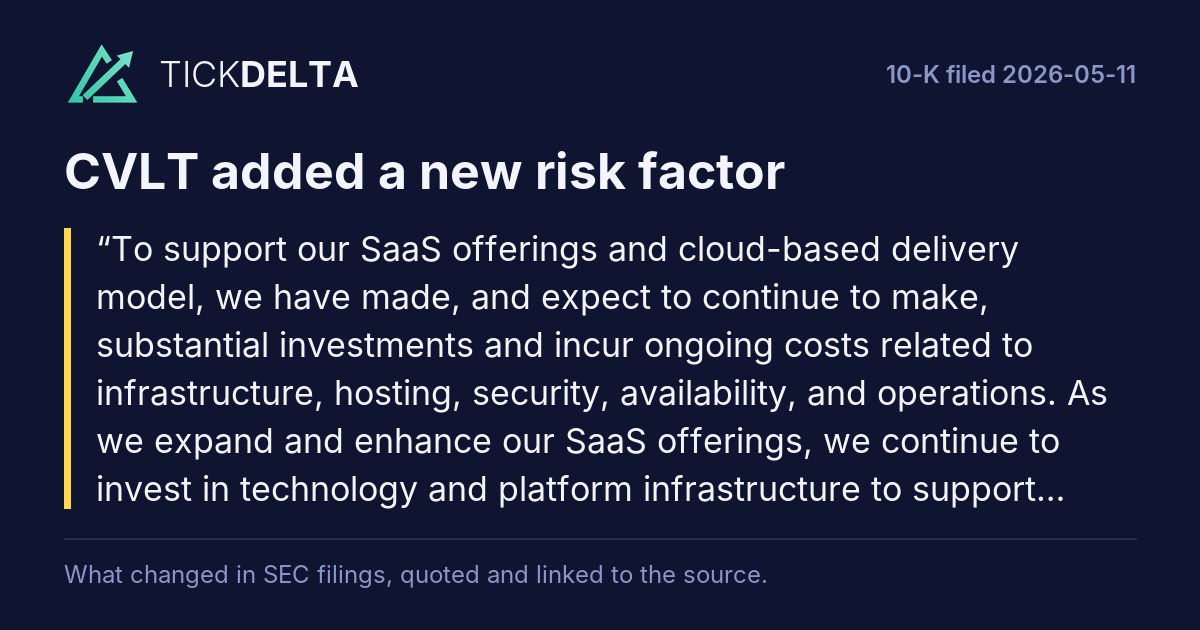
To support our SaaS offerings and cloud-based delivery model, we have made, and expect to continue to make, substantial investments and incur ongoing costs related to infrastructure, hosting, security, availability, and operations. As we expand and enhance our SaaS offerings, we continue to invest in technology and platform infrastructure to support customer demand and deliver competitive products. A portion of these costs is associated with long‑term or minimum‑commitment arrangements with third‑party cloud service providers, which may limit our ability to reduce expenses in response to changes in demand.

Demand for our SaaS offerings may be affected by factors such as customer acceptance, pricing sensitivity, competition, economic conditions, data security and privacy, technological challenges, or changes in customer spending priorities. If demand for our SaaS offerings declines, grows more slowly than expected, or shifts toward lower‑cost usage models, we may not be able to fully realize the anticipated benefits of our infrastructure investments. In addition, if the costs of operating our SaaS offerings increase due to changes in usage patterns, storage requirements, network bandwidth, or third-party cloud pricing, and we are unable to offset those increases through pricing, operational efficiencies, or scale, our business, results of operations, and financial condition, including gross margins, could be adversely affected.

Read in the 10-K

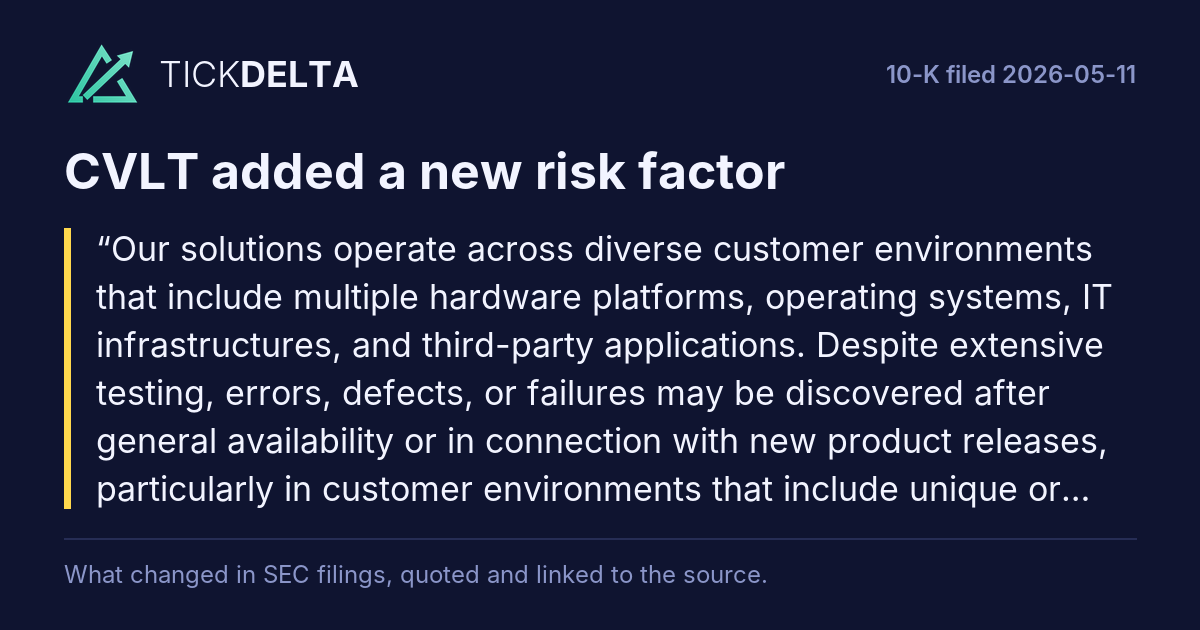
Our solutions operate across diverse customer environments that include multiple hardware platforms, operating systems, IT infrastructures, and third-party applications. Despite extensive testing, errors, defects, or failures may be discovered after general availability or in connection with new product releases, particularly in customer environments that include unique or non-standard configurations difficult to replicate during testing. Material errors, defects, or vulnerabilities within our solutions could result in delayed deployments, service disruptions, increased remediation or support costs, customer dissatisfaction, loss of revenue, or reduced adoption of our solutions. Defects or vulnerabilities could also expose our solutions to exploitation by malicious actors, further increasing risks . Any failure to promptly detect or remediate these issues could materially adversely affect our business, results of operations, financial condition, and reputation.

Successful use of our solutions also depends on proper configuration, implementation, training, and ongoing management. Implementations may be technically complex, and it may not be easy to maximize the value of our products without proper implementation, training, and support. Some customers or partners have experienced, or may experience in the future, difficulties implementing or operating our solutions effectively. Failure to properly implement or use our solutions could reduce their effectiveness, expose customers to increased operational or data security risk, including exploitation by malicious actors, and impair customers' ability to achieve intended cyber resilience outcomes. Such failures could result in customer dissatisfaction, reduced renewal or expansion opportunities, or reputational harm, which could adversely affect our business, results of operations, and financial condition.

Read in the 10-K

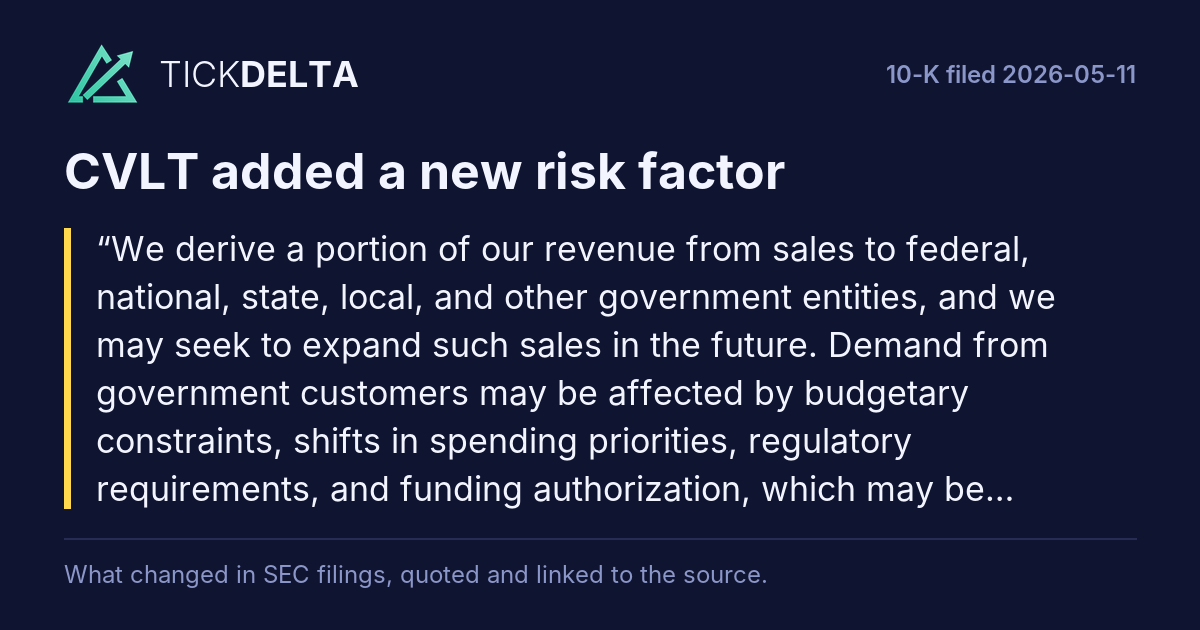
We derive a portion of our revenue from sales to federal, national, state, local, and other government entities, and we may seek to expand such sales in the future. Demand from government customers may be affected by budgetary constraints, shifts in spending priorities, regulatory requirements, and funding authorization, which may be unpredictable and subject to delay. Selling to government entities is often highly competitive, time‑consuming, costly, and may require significant upfront investment without assurance of success. Government customers may also require contract terms that differ from our standard commercial terms, including termination and audit rights, security clearance requirements, and certification or authorization obligations, such as FedRAMP requirements. Compliance with these requirements may increase costs, limit operational flexibility, or delay or restrict our ability to compete for or deliver our solutions to certain government customers.

Government demand for our solutions may be more volatile and less predictable than commercial demand. Changes in government procurement practices, funding levels, workforce priorities, or administrative initiatives could reduce, delay, or cancel purchases of our solutions, which could adversely affect our business, results of operations, and financial condition.

Read in the 10-K

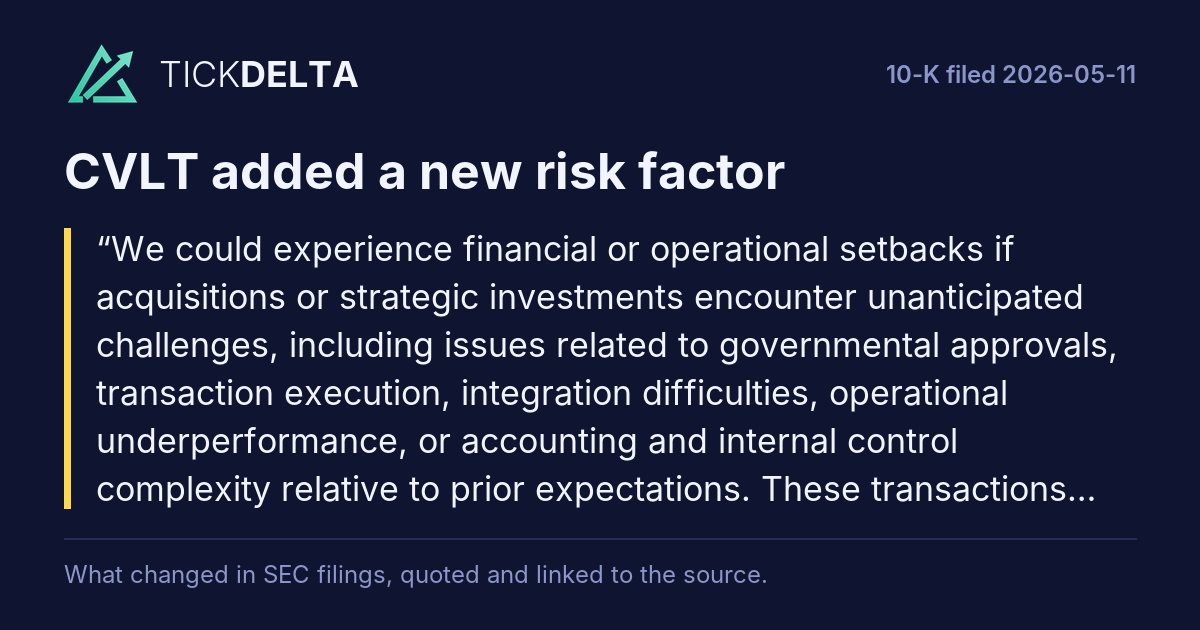
We could experience financial or operational setbacks if acquisitions or strategic investments encounter unanticipated challenges, including issues related to governmental approvals, transaction execution, integration difficulties, operational underperformance, or accounting and internal control complexity relative to prior expectations. These transactions may not result in long‑term strategic or financial benefits, and we may be unable to successfully integrate, scale, or otherwise realize the anticipated value of acquired businesses or invested entities. These risks may be heightened for minority investments or early‑stage businesses where we have limited control over management decisions or strategic direction.

Read in the 10-K

Our existing and future indebtedness, including our senior convertible notes and revolving credit facility, could adversely affect our business, results of operations, and financial condition.

We have incurred, and may incur in the future, indebtedness to support our operations and strategic objectives, including borrowings under our revolving credit facility and obligations under our $900 million aggregate principal amount of 0% Convertible Senior Notes due 2030. Although we had no borrowings outstanding under our revolving credit facility as of March 31, 2026, our indebtedness could have adverse consequences, including requiring us to use a portion of our cash flows from operations to satisfy debt repayment, redemption, or settlement obligations, thereby reducing cash available for working capital, capital expenditures, strategic investments or acquisitions, share repurchases, or other corporate purposes.

The convertible senior notes are senior unsecured obligations and include features that may require us, upon conversion, redemption, or the occurrence of certain fundamental events, to settle all or a portion of the obligation in cash, shares of our common stock, or a combination thereof, at our election. Any such cash settlement or repurchase obligations could materially impact our liquidity, particularly if they coincide with other capital needs or adverse market conditions. While we entered into capped call transactions intended to reduce potential dilution upon conversion, such arrangements do not eliminate the potential cash or equity impacts associated with the notes.

Read in the 10-K

For additional information regarding our debt arrangements, including the terms of our senior convertible notes and revolving credit facility, see Note 17 to the Notes to Consolidated Financial Statements included in Part II, Item 8 of this Annual Report on Form 10‑K.

Our significant operations in India expose us to operational, economic, and labor‑related risks that could adversely affect our business.

Read in the 10-K

we may be unable to cost‑effectively retain existing employees or attract and hire qualified new talent, which could increase operating costs, disrupt execution, or reduce margins.

India has also experienced periods of elevated inflation, adverse economic conditions, shortages of foreign exchange, civil unrest, and regional conflict. The occurrence of any of these events could disrupt our India operations, including through workforce availability, infrastructure limitations, or operational inefficiencies. If such disruptions are prolonged or severe, they could have a material adverse effect on our business, results of operations, and financial condition.
Read in the 10-K

We derive a substantial portion of our revenues from international markets. Our international sales are generally denominated in currencies other than the U.S. dollar, and we incur expenses and maintain assets and liabilities in various foreign currencies. As a result, we are exposed to both translation risk, arising from the conversion of foreign‑currency‑denominated results into U.S. dollars for financial reporting purposes, and transaction risk, arising from foreign‑currency‑denominated receivables, payables, cash balances, and intercompany transactions.

Read in the 10-K

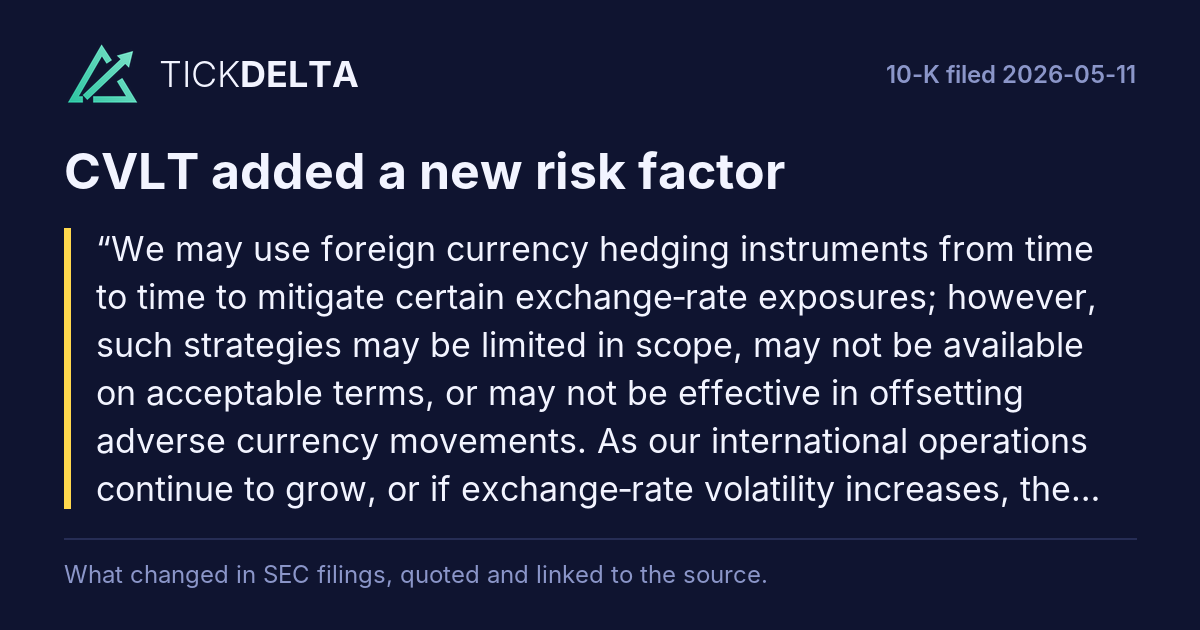
We may use foreign currency hedging instruments from time to time to mitigate certain exchange‑rate exposures; however, such strategies may be limited in scope, may not be available on acceptable terms, or may not be effective in offsetting adverse currency movements. As our international operations continue to grow, or if exchange‑rate volatility increases, the effect of foreign currency fluctuations on our results of operations and financial condition could become more material.

Read in the 10-K

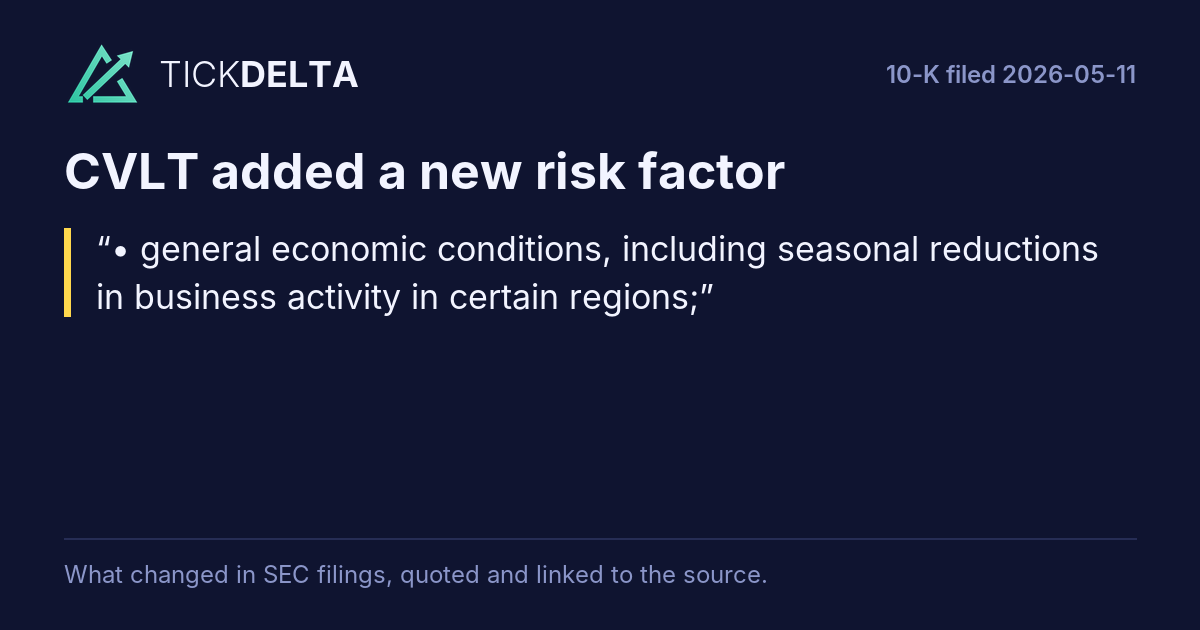
• general economic conditions, including seasonal reductions in business activity in certain regions;

Read in the 10-K

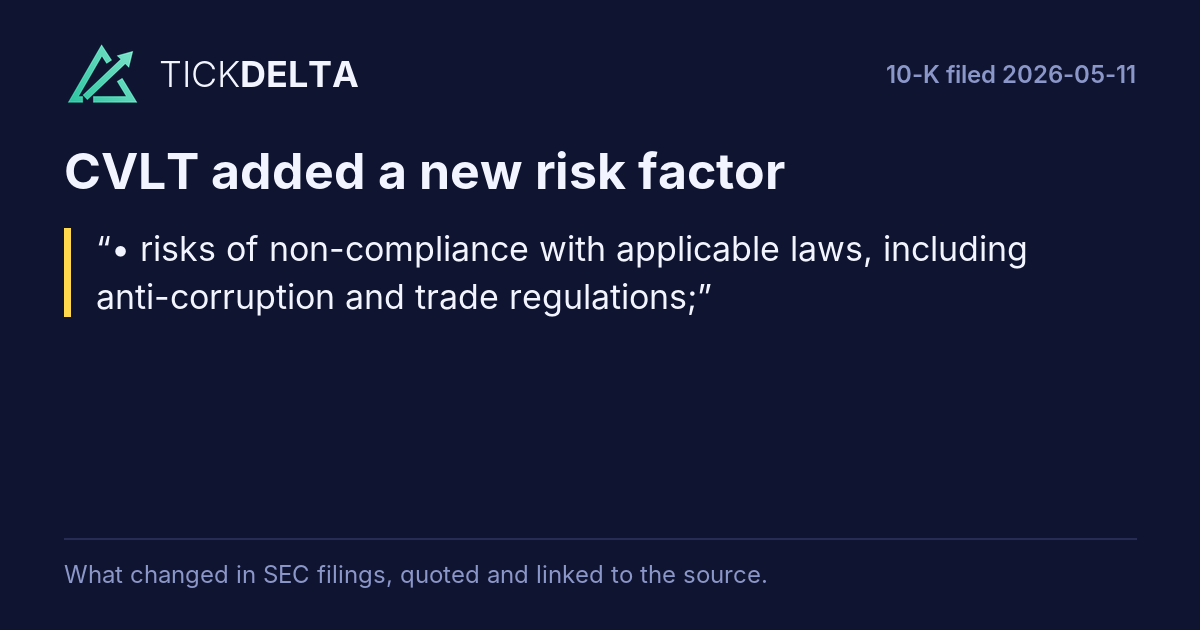
• risks of non-compliance with applicable laws, including anti-corruption and trade regulations;

Read in the 10-K

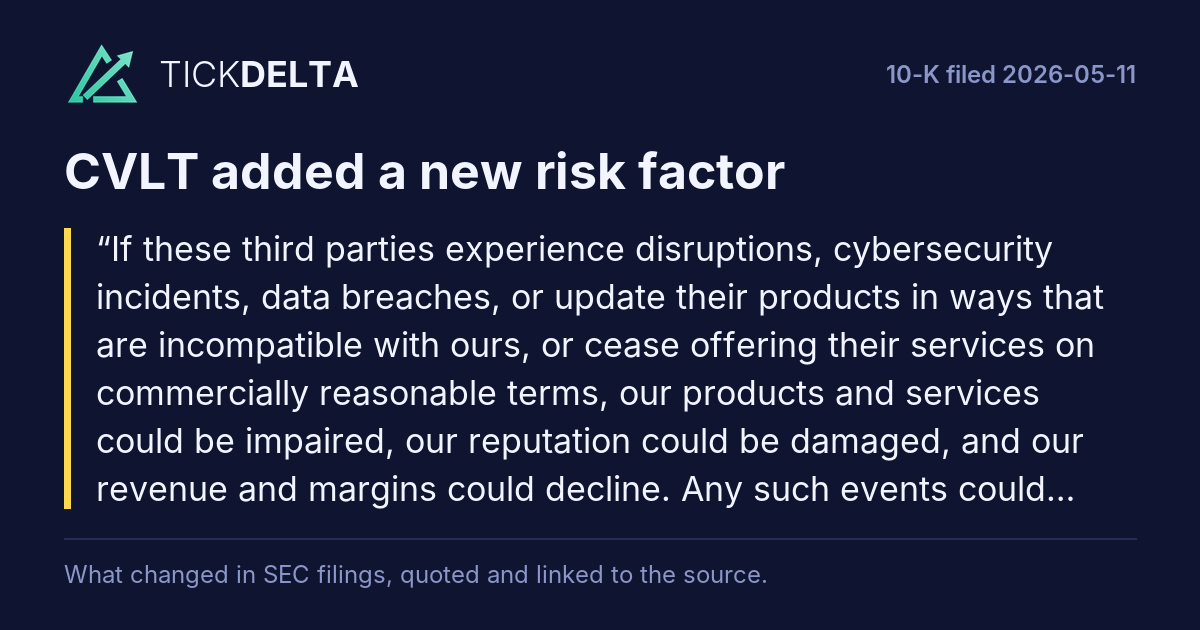
If these third parties experience disruptions, cybersecurity incidents, data breaches, or update their products in ways that are incompatible with ours, or cease offering their services on commercially reasonable terms, our products and services could be impaired, our reputation could be damaged, and our revenue and margins could decline. Any such events could expose us to legal or contractual liability, increase our expenses, and adversely affect our business, results of operations, and financial condition.

Read in the 10-K

The tax laws and regulations in the jurisdictions in which we operate, including the United States and various foreign jurisdictions, are complex and subject to ongoing change. Changes in tax laws, regulations, administrative guidance, or interpretations, whether through new legislation, regulatory action, court decisions, or international initiatives, could materially affect our effective tax rate, tax liabilities, cash taxes paid, financial position, and results of operations.

In the United States, recently enacted and proposed tax legislation, including the One Big Beautiful Bill Act, as well as future legislative or regulatory changes, could impact the taxation of our income, research and development expenditures, executive compensation, and international operations. In particular, expanded limitations on the deductibility of executive compensation under Section 162(m), along with related compliance requirements expected to apply beginning in fiscal years starting after 2027, may increase our tax expense and volatility in our effective tax rate. In addition, ongoing global initiatives such as the OECD's Base Erosion and Profit Shifting ("BEPS") project, including BEPS 2.0, and related foreign tax law changes could increase our worldwide tax burden and compliance costs. State and local tax regimes add further complexity, as states differ in how and when they conform to federal tax law changes, which could result in increased compliance costs and variability in our state effective tax rate and cash tax payments. Our tax position may also be affected by business decisions such as acquisitions, divestitures, and strategic or equity investments, which can increase tax complexity, require the application of significant judgment, and affect the timing and amount of tax payments, reserves, deferred tax assets and liabilities, and valuation allowances. Changes in facts, assumptions, or interpretations related to these transactions, or adverse outcomes from tax audits or inquiries, could result in adjustments to our tax positions, increased tax liabilities, penalties, or interest, any of which could adversely affect our financial results and cash flows. We continue to monitor developments in U.S. federal, state, and international tax laws; however, we cannot predict the timing, scope, or ultimate impact of future tax changes.

We are a U.S.-based multinational company subject to income taxation in multiple U.S. federal, state, and foreign jurisdictions. Our effective tax rate is difficult to project and may be adversely affected by changes in the geographic mix of our income and expenses, changes in our entity and operating structures, variations in pre-tax profitability, and the outcomes of tax examinations. The determination of our tax liabilities involves complex calculations and significant judgment, including assumptions about transfer pricing, tax credits, uncertain tax positions, and the expected outcomes of audits and examinations. We are subject to examination by tax authorities in the United States and abroad, and the resolution of examinations or related litigation could take extended periods of time and could result in outcomes that are materially different from the amounts previously recorded in our financial statements. Any adjustments arising from such examinations could increase our tax liabilities, require additional cash payments, or result in penalties or interest, which could adversely affect our business, results of operations, financial condition, and cash flows.

Our tax position may also be affected by business decisions such as acquisitions, divestitures, and strategic or equity investments, which can increase tax complexity, affect the timing and measurement of tax attributes, and require the reassessment of estimates, deferred tax balances, and valuation allowances. Changes in facts, assumptions, or interpretations related to these activities could result in material adjustments to our tax expense or cash tax obligations. For additional information regarding income taxes, see Note 12 to the Notes to Consolidated Financial Statements included in Part II, Item 8 of this Annual Report on Form 10-K.

Read in the 10-K

As of March 31, 2026, our goodwill had a carrying value of $209.3 million, which represented approximately 11% of our total assets. We test goodwill for impairment at least annually at the reporting unit level, or more often if

Read in the 10-K

The market price of our common stock may experience significant volatility and may decline as a result of factors beyond our control, regardless of our actual operating performance or financial condition. The trading price of our common stock could be affected by a number of factors, including:

Read in the 10-K

The stock prices of companies in the software and technology sectors have been, and may continue to be, particularly volatile. In recent periods, we believe market valuations for software companies have been disproportionately influenced by investor sentiment regarding artificial intelligence capabilities, adoption timelines, and long‑term market narratives, which may cause stock prices to fluctuate significantly based on perceptions or expectations rather than underlying operating performance. As a result, the market price of our common stock may experience rapid and substantial changes, even if our business fundamentals remain stable.

Read in the 10-K

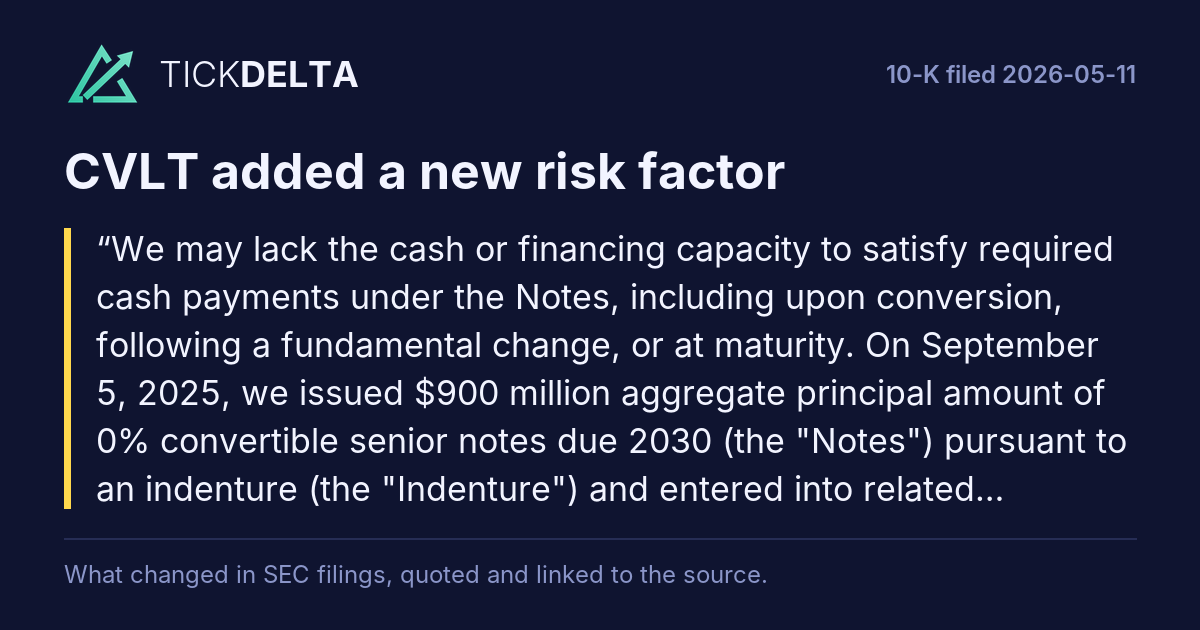
We may lack the cash or financing capacity to satisfy required cash payments under the Notes, including upon conversion, following a fundamental change, or at maturity.

On September 5, 2025, we issued $900 million aggregate principal amount of 0% convertible senior notes due 2030 (the "Notes") pursuant to an indenture (the "Indenture") and entered into related capped call transactions (the "Capped Calls"). If a Fundamental Change occurs (as defined in the Indenture), holders may require us to

repurchase the Notes in cash at 100% of principal plus any special or additional interest (together capped at 0.50% per annum). If holders convert, we may elect to settle in cash, shares, or a combination. We must also repay any Notes that remain outstanding at maturity in cash, which could require refinancing. Our ability to fund required cash amounts will depend on cash on hand, cash flows, and access to capital markets and credit facilities, and may be limited by law, regulation, or agreements governing our indebtedness. We may not redeem the Notes before September 22, 2028, and any optional redemption thereafter requires our common stock to trade at or above 130% of the conversion price for a specified period, which may affect the timing and magnitude of cash outflows. Failure to make a required cash payment would constitute a default under the Indenture and could result in cross-defaults or accelerations under other indebtedness.

Conversion of the Notes may adversely affect our liquidity, dilute existing stockholders, and depress the price of our common stock, and the Capped Calls provide only partial offset.

If the conditional conversion feature of the Notes is triggered, holders may convert their Notes during specified periods. Unless we elect to satisfy our conversion obligation solely by delivering shares of our common stock (other than cash in lieu of any fractional share), we would be required to settle a portion or all of our conversion obligation in cash, which could adversely affect liquidity. Even if no conversions occur, applicable accounting rules could require us to reclassify all or a portion of the Notes as current liabilities, reducing our reported working capital.

The Notes are initially convertible at 4.2215 shares per $1,000 principal amount, equivalent to an initial conversion price of approximately $236.88 per share. If we elect to settle conversions in shares, existing stockholders will be diluted. The conversion rate is subject to adjustment upon certain events and may be increased for a limited period in connection with specified corporate events, which could amplify dilution. The Capped Calls offset dilution only up to an initial cap of approximately $357.56 per share, and above that level dilution will not be mitigated. In addition, the existence of the Notes may encourage short selling by market participants, because conversions can be used to satisfy short positions, and expectations of potential conversion could depress our common stock price.

The Notes and related Capped Call transactions may affect the trading price of our common stock and introduce volatility in our reported financial results.

Banks party to the Capped Calls (or their affiliates) may establish, adjust, or unwind hedges in our common stock or related derivatives, including during any conversion observation period and around redemption or unwind events, which could increase or decrease the trading price of our common stock and, during an observation period, affect the amount of conversion consideration and the value of the Notes. In addition, the Notes and Capped Calls are subject to complex accounting requirements. Although the Capped Calls are accounted for in stockholders' equity and therefore not remeasured each period, conversions and changes in our share count may affect diluted earnings per share, and application of the relevant accounting standards may introduce period-to-period volatility in our reported results.

Read in the 10-K

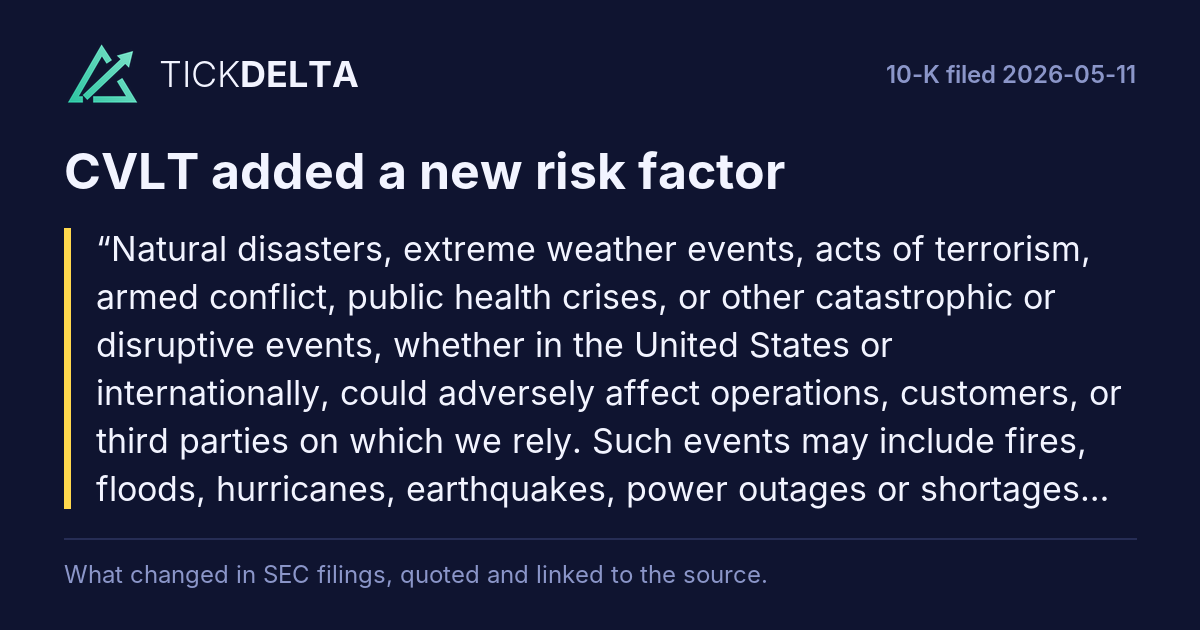
Natural disasters, extreme weather events, acts of terrorism, armed conflict, public health crises, or other catastrophic or disruptive events, whether in the United States or internationally, could adversely affect operations, customers, or third parties on which we rely. Such events may include fires, floods, hurricanes, earthquakes, power outages or shortages, environmental incidents, telecommunications failures, or disruptions to business information systems. In addition, longer-term shifts in climate patterns, such as extreme heat, rising sea levels, or prolonged drought, could disrupt operations or those of our customers or third-party service providers, through infrastructure damage or supply chain disruption. If these events impair our ability to operate, disrupt customer operations, reduce overall economic activity, or decrease corporate spending on information technology, our business, results of operations, and financial condition could be materially adversely affected.

Geopolitical instability, including conflicts in the Middle East and Russia‑Ukraine, or similar events elsewhere, could further disrupt global economic conditions, financial markets, energy supplies, or international trade. Such instability may cause customers to defer or reduce spending, disrupt our ability to deliver services, or adversely affect our ability to collect receivables. If any of these events persist or escalate, they could have a material adverse effect on our business, results of operations, and financial condition.
Read in the 10-K

Paragraphs in the 10-Q filed Oct 28, 2026 that were not in the one before

New in the latest 10-Q

5 paragraphs in the 10-Q filed Oct 28, 2026 with nothing like them in the 10-Q filed Jul 29, 2026 (at least half the words must differ; new numbers alone do not count). Quoted exactly, grouped by the item heading above them. This is text that changed, not a judgement of how serious it is.

10-Q

Employee purchases under the ESPP were as follows: 88 shares in exchange for $ 6,585 of proceeds in the six months ended September 30, 2026, and 45 shares in exchange for $ 6,974 of proceeds in the six months ended September 30, 2025.

Read in the 10-Q

long-term growth strategy and operational focus. Beginning in fiscal 2027, Subscription ARR has been reclassified to include enterprise support, further aligning Subscription ARR with Subscription revenue. Enterprise support consists of recurring customer success services that provide our customers with enhanced support, strategic guidance and dedicated technical expertise. Prior to fiscal 2027, enterprise support was included only in Total ARR.

Read in the 10-Q

Three months ended September 30, 2026 compared to three months ended September 30, 2025

Read in the 10-Q

Six months ended September 30, 2026 compared to six months ended September 30, 2025

Read in the 10-Q

Six Months Ended September 30, 2026 2025 Cost of Revenues Gross Cost of Revenues Gross

Read in the 10-Q

The 10-Q's risk factors against the 10-K

Item 1A of the 10-Q filed Oct 28, 2026 against Item 1A of the 10-K filed May 11, 2026. A 10-Q repeats only the risks that changed, so a 10-K paragraph that is missing from it is not counted as removed. Added is a paragraph with nothing like it in the 10-K, Reworded a sentence that is in both with several words changed, Quiet changes a sentence in both where one to four words changed and one is a hedge or a modal (cut words struck through, new words highlighted). Text on the page, not a score; each links to the filing at sec.gov.

Reworded10-Q Oct 28, 2026 vs 10-K May 11, 2026
Additional risks and uncertainties not presently currently known to us or that we currently consider deem to be immaterial also may also impair materially adversely affect our business operations. business, financial condition and/or operating results.

Read it in the 10-Q at sec.govThe 10-K sentence

Phrases used for the first time

Two-word phrases in Risk Factors of the 10-K filed May 11, 2026 that are in none of the 1 earlier 10-Ks stored, back to May 5, 2025

third party ×7hardware products ×6capped calls ×6customer environments ×4long term ×4restructuring plans ×4strategic investments ×4greater resources ×3market participants ×3costs associated ×3factors beyond ×3systems cloud ×3geopolitical instability ×3errors defects ×3equity investments ×3principal amount ×3
Where each one is used
  • third party: Our reliance on interoperability with third‑party platforms, operating systems, cloud environments, and hardware products, as well as ongoing supply chain constraints, could adversely affect our product development, customer satisfaction, and results of operations.
  • hardware products: Our reliance on interoperability with third‑party platforms, operating systems, cloud environments, and hardware products, as well as ongoing supply chain constraints, could adversely affect our product development, customer satisfaction, and results of operations.
  • capped calls: On September 5, 2025, we issued $900 million aggregate principal amount of 0% convertible senior notes due 2030 (the "Notes") pursuant to an indenture (the "Indenture") and entered into related capped call transactions (the "Capped Calls"). If a Fundamental Change occurs (as defined in the Indenture), holders may...
  • customer environments: In addition, it is often costly and time-consuming for customers to replace existing cyber resilience systems. Most of our prospective and newly adopted customers have previously implemented competing solutions, which may provide incumbent vendors with advantages in retaining those customers due to existing...
  • long term: or seek concessions related to pricing or contract terms. These outcomes may be driven by competitive offerings, customer cost‑optimization initiatives, broader economic conditions, or changes in customers’ technology strategies. Any such changes could adversely affect our revenues, margins, and long‑term growth prospects.
  • restructuring plans: We implemented new restructuring plans in fiscal 2026, which we cannot guarantee will achieve their intended results.
  • strategic investments: Strategic acquisitions and investments involve a number of risks, including diversion of management’s attention, the ability to finance transactions on attractive terms, failure to retain key personnel or customers, exposure to legal or regulatory liabilities, intellectual property ownership and infringement risks,...
  • greater resources: Our industry is intensely competitive, and many of our competitors have greater resources and larger, established customer bases, which could enable them to compete more effectively than we do.

The 10-K at sec.gov

Used at least twice, small words left out. Counted, not picked: a phrase can be new because the company renamed something.

What was taken out

54 paragraphs of last year's Risk Factors with nothing like them now. The longest are quoted.

Across all companies
In order to deliver our SaaS offerings via a cloud-based deployment, we have made and will continue to make capital investments and incur substantial costs to implement and maintain this business model. In addition, as we look to deliver new or different cloud-based services, we are making significant technology investments to deliver new capabilities and advance our software to deliver cloud-native customer experiences. Our revenues related to SaaS offerings have increased in recent years. If there is a reduction in demand for these services caused by a lack of customer acceptance,...
In the 10-K filed May 5, 2025
As a global company, we have become increasingly subject to the risks arising from adverse changes in domestic and global economic and political conditions. Uncertainty in the macroeconomic environment and associated global economic conditions have in the past resulted in and may continue to result in volatility in credit, equity, debt and foreign currency markets. The U.S. government has and continues to make significant additional changes in U.S. trade policy and may continue to take future actions that could negatively impact U.S. trade. In addition, the U.S. government and certain...
In the 10-K filed May 5, 2025
The process of determining our anticipated tax liabilities involves many calculations and estimates that are inherently complex and make the ultimate tax obligation determination uncertain. As part of the process of preparing our consolidated financial statements, we are required to estimate our income taxes in each of the jurisdictions in which we operate prior to the completion and filing of tax returns for such periods. These estimates involve complex issues, require extended periods of time to resolve, and require us to make judgments, such as anticipating the outcomes of audits with...
In the 10-K filed May 5, 2025
Sales to global federal, state, and local governmental agencies account for a portion of our revenue, and we may in the future increase sales to government entities. This customer base experiences budgetary constraints or shifts in spending priorities regularly which may adversely affect sales of our solutions to government entities. Selling to government entities can be highly competitive, expensive and time consuming, often requiring significant upfront time and expense without any assurance that we will successfully sell our solutions. Government entities may require contract terms that...
In the 10-K filed May 5, 2025

Sources

Item 1A of each 10-K and 10-Q on EDGAR, quoted exactly. Each paragraph links to the filing at sec.gov.

Also

10-K change: what was reworded or cut, section by section.

Work with it

Excel workbook · CSV. Google Sheet that stays up to date: paste =IMPORTDATA("https://tickdelta.com/company/CVLT/export.csv") into a cell.

Next:10-K change
Esc

Type a ticker such as AAPL, a name, an investor such as Buffett, or a topic such as tariffs. ↑ ↓ to move, Enter to open.