Added10-Q Nov 2, 2026 vs 10-K Feb 11, 2026
• We may not successfully integrate Soleno Therapeutics, Inc. (Soleno) or realize the anticipated benefits of the acquisition, which could adversely affect our business and financial condition.
Each branch is a paragraph in Risk Factors with nothing like it in the 10-K filed Feb 10, 2025. A box jumps to the paragraph as filed, below.
31 paragraphs in Risk Factors of the 10-K filed Feb 11, 2026 with nothing like them in the 10-K filed Feb 10, 2025. Quoted exactly. Paragraphs that were only edited are under 10-K change.
•research and development capabilities and capacity, including personnel and technology;
Legislators, policymakers, and payors may continue to propose and implement cost-containing measures to keep healthcare costs down. For example, in April 2025, the President issued an executive order that, among other things, directed specified agency heads to develop a Center for Medicare and Medicaid Innovation (CMMI) model that enables the Medicare program to obtain better value for high-cost prescription drugs and biological products. In May 2025, the President issued another executive order directing the administration to take immediate steps to end global freeloading and take additional aggressive action should drug manufacturers fail to offer American consumers the Most-Favored Nation (MFN) price. In December 2025, CMS issued proposed regulations that, if finalized, would create CMMI demonstrations that would institute MFN-level pricing in the Medicare Part D and Part B markets. At present, given that the demonstrations are proposed rules that may or may not be finalized or implemented, there is uncertainty as to how these and other potential legal and regulatory changes may impact our business. However, if implemented, these policies could reduce or limit the prices we are able to charge for our products and product candidates that we may successfully develop and for which we may obtain regulatory approval or the level of reimbursement available for our products from governmental authorities or third-party payors. Further, in January 2026, the President released The Great Healthcare Plan, a proposal which calls on Congress to codify the administration’s 16 MFN drug-pricing agreements with manufacturers and potentially extend MFN pricing to additional manufacturers. In addition, the OBBBA is expected to reduce Medicaid spending and enrollment by implementing work requirements for some beneficiaries, capping state-directed payments, reducing federal funding and limiting provider taxes used to fund the program. The OBBBA also narrows access to the Patient Protection and Affordable Care Act (ACA) marketplace exchange enrollment and declines to extend the ACA enhanced advanced premium tax credits, which expired at the end of 2025. These changes, along with other provisions of the OBBBA, are anticipated to reduce the number of Americans with health insurance. Further, an increasing number of countries use prices for medicinal products established in other countries as “reference prices” to help determine the price of
the product in their own territory. Consequently, a downward trend in prices of medicinal products in some countries could contribute to similar downward trends elsewhere, including in the U.S.
If any of our product candidates encounters any of these potential problems, we may never successfully market that product candidate. Because we believe our continued growth and success depend in part on our ability to identify (by internal development, in-license or acquisition), develop and ultimately commercialize a steady number of additional product candidates, our failure or perceived failure to achieve that plan could adversely affect our business, results of operations and future growth prospects, and could cause the market price of our common stock to decline.
•clinical trial results may not replicate or improve upon the results of previous trials;
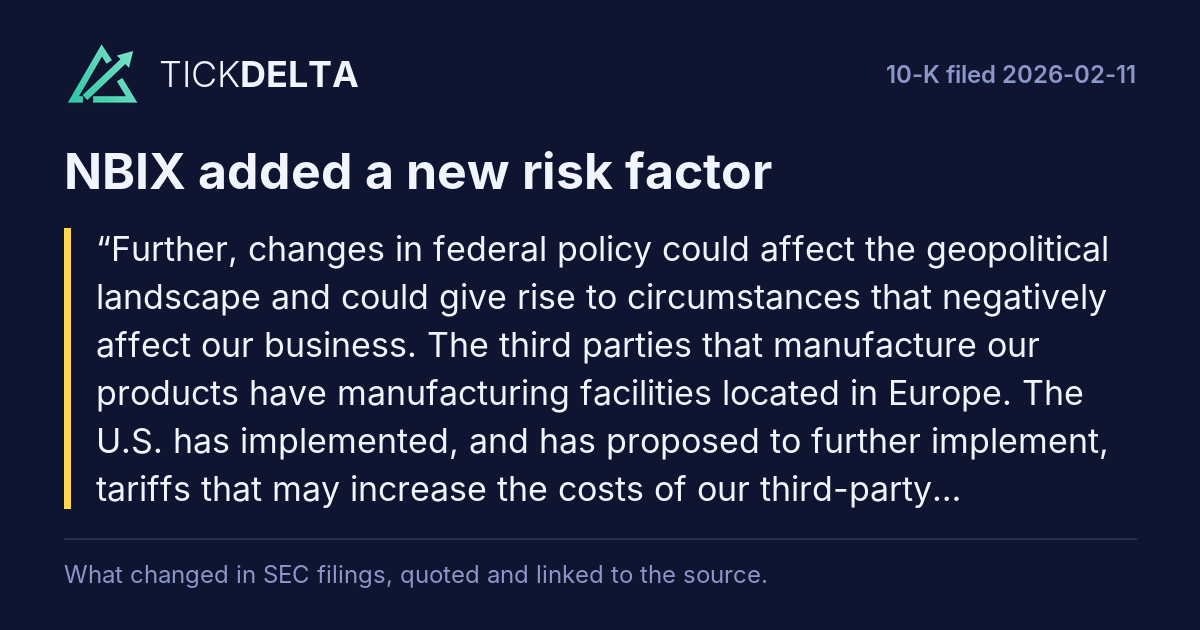
Further, changes in federal policy could affect the geopolitical landscape and could give rise to circumstances that negatively affect our business. The third parties that manufacture our products have manufacturing facilities located in Europe. The U.S. has implemented, and has proposed to further implement, tariffs that may increase the costs of our third-party manufacturers and the expense to us to produce the drug compounds we use in our clinical trials and for the commercialization of our products. If such actions were to materially affect us or our third-party manufacturers, we may not be able to successfully develop our product candidates or commercialize our products.
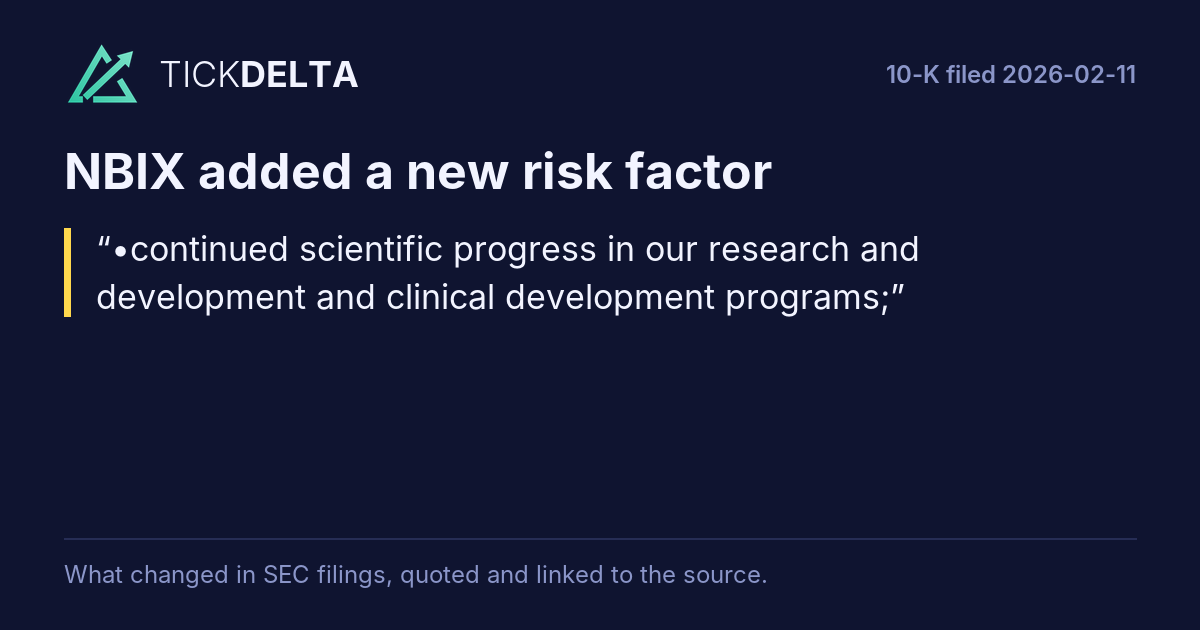
•continued scientific progress in our research and development and clinical development programs;
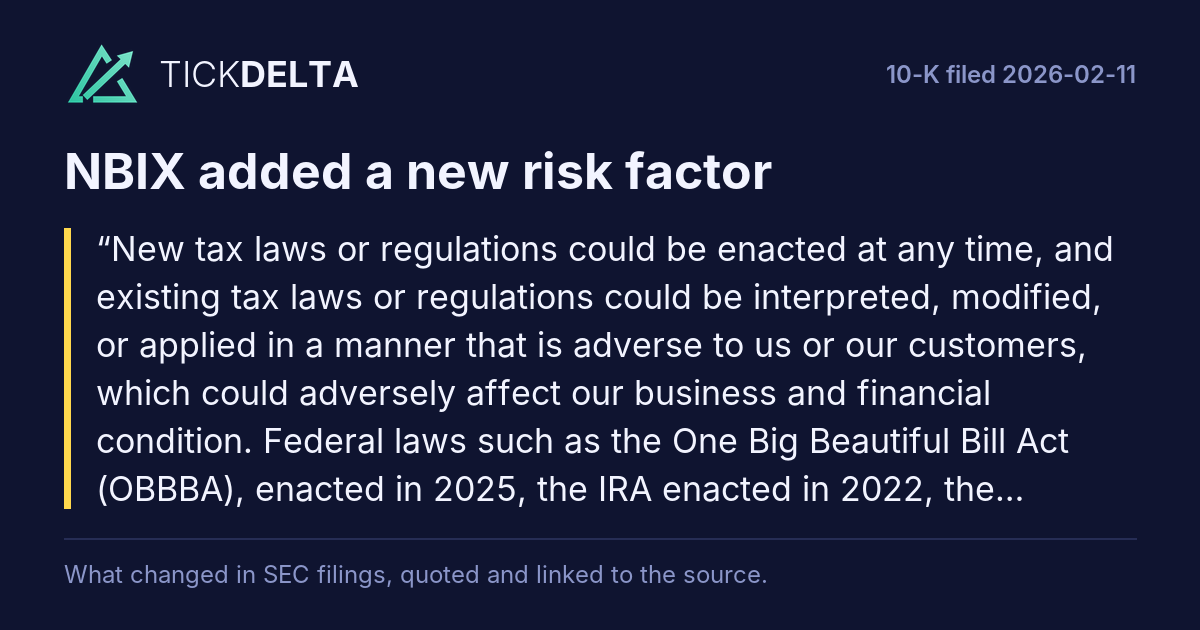
New tax laws or regulations could be enacted at any time, and existing tax laws or regulations could be interpreted, modified, or applied in a manner that is adverse to us or our customers, which could adversely affect our business and financial condition. Federal laws such as the One Big Beautiful Bill Act (OBBBA), enacted in 2025, the IRA enacted in 2022, the Coronavirus Aid, Relief, and Economic Security Act enacted in 2020, and the Tax Cuts and Jobs Act enacted in 2017, made significant changes to the U.S. tax laws. For example, the Tax Cuts and Jobs Act required taxpayers to capitalize and amortize U.S.-based and non-U.S. based research and experimental (R&E) expenditures over five and fifteen years, respectively. The OBBBA restored the deductibility of domestic R&E expenditures in the year incurred for tax years beginning after December 31, 2024, but retained the capitalization and amortization requirement for foreign R&E expenditures. Future guidance from the Internal Revenue Service and other tax authorities with respect to any laws may affect us, and certain aspects of such laws could be repealed or modified or sunset in future years. In addition, it is uncertain if and to what extent various states will conform to federal tax laws.
Furthermore, our tax obligations (including the cost of compliance) and effective tax rate in the jurisdictions in which we conduct business could increase as a result of international tax developments, including the implementation of the Organization for Economic Co-operation and Development’s (OECD) Base Erosion and Profit Shifting “Two-Pillar” framework, which involves, among other measures, the imposition of a minimum effective corporate tax rate (referred to as Pillar Two). Certain countries in which we conduct business have enacted, or are in the process of enacting, core provisions of the Pillar Two rules (with further provisions expected to be enacted in the future). Based on our current understanding of the minimum revenue thresholds contained in the Pillar Two proposal, we currently expect to fall within the scope of its rules. The OECD has issued (and is expected to
continue to issue further) administrative guidance providing transition and safe harbor rules in relation to the implementation of the Pillar Two proposal. For example, on January 5, 2026, the OECD published details of a proposed “side-by-side” arrangement providing for, among other things, additional safe harbors for multinational groups headquartered in certain qualifying jurisdictions. We continue to evaluate and assess the potential impact of these new rules, including on our effective tax rate, and our eligibility to qualify for any transition relief or safe harbor (including under the proposed “side-by-side” arrangement). Any changes in tax laws, including any new tax laws or initiatives, could not only significantly increase our tax provision, cash tax liabilities, and effective tax rate, but could also have a material impact on the value of our deferred tax assets, result in significant one-time charges and ongoing compliance costs, and increase our future tax expense.
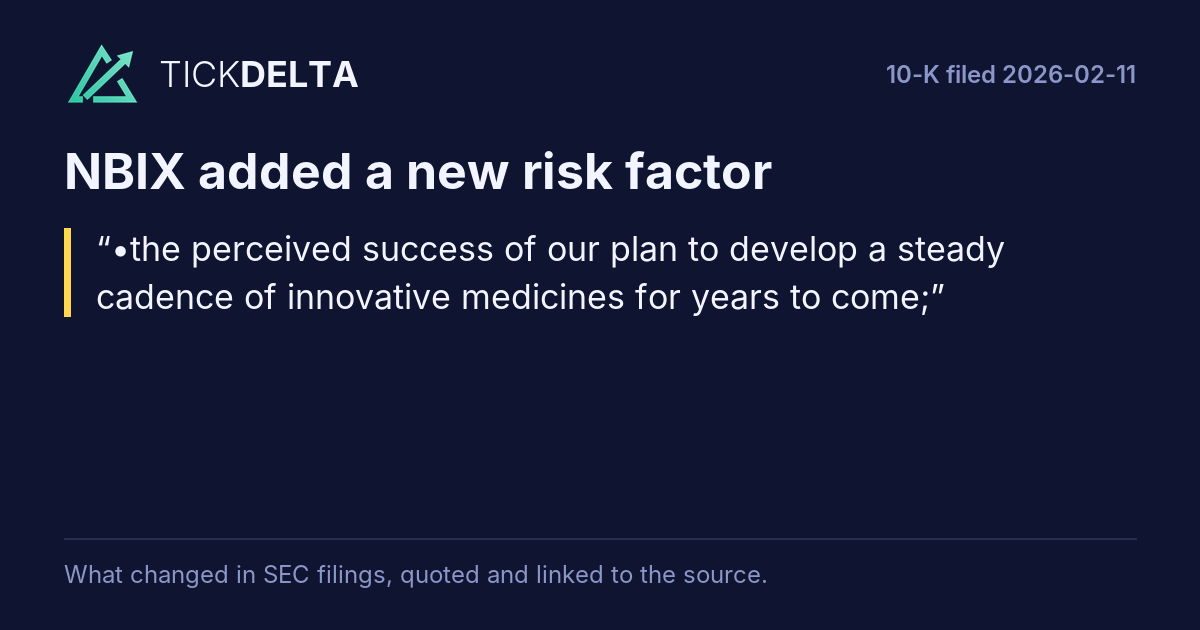
•the perceived success of our plan to develop a steady cadence of innovative medicines for years to come;
•developments related to the FDA, the Centers for Medicare & Medicaid Services (CMS) and foreign regulatory agencies;
Compliance with changing laws, regulations and standards relating to various aspects of our business, including corporate governance, workforce initiatives and public disclosure, may result in additional expenses and failure to comply with such laws, regulations and standards could adversely affect our business.
We were notified in January 2025 that INGREZZA qualifies for the small biotech exception, which provides an exemption from selection until 2027 (for initial price applicability year 2029, pursuant to which negotiated pricing would go into effect, if selected). If negotiated for initial price applicability year 2029, we expect that the negotiated price for INGREZZA would be constrained by the "short monopoly" price ceiling and temporary price floor for small biotech drugs.
We expect that these health reform measures may result in more rigorous coverage criteria and lower reimbursement for prescription drugs, as well as result in additional downward pressure on any price that we receive for any approved product. Any reduction in reimbursement from Medicare or other government-funded programs may result in a similar reduction in payments from private third-party payors.
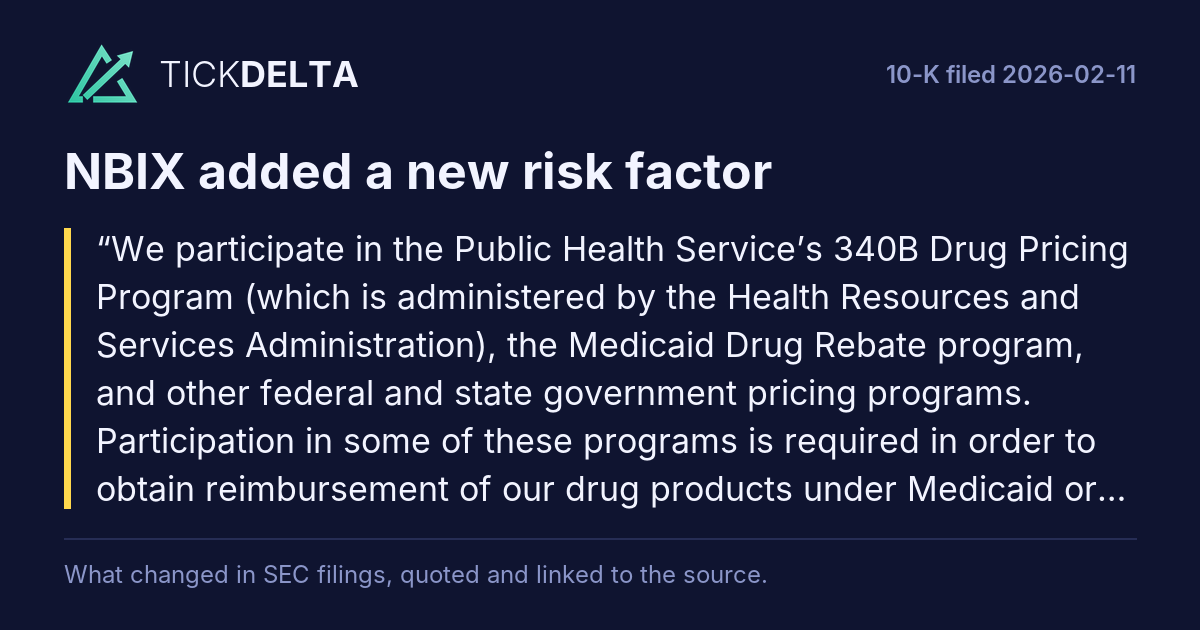
We participate in the Public Health Service’s 340B Drug Pricing Program (which is administered by the Health Resources and Services Administration), the Medicaid Drug Rebate program, and other federal and state government pricing programs. Participation in some of these programs is required in order to obtain reimbursement of our drug products under Medicaid or Medicare Part B. These programs generally require that we provide discounts or pay rebates to certain payers when our products are dispensed to beneficiaries of these programs. Pricing and rebate calculations are complex and are often subject to interpretation by us, governmental or regulatory agencies, and the courts, which can change and evolve over time. Furthermore, regulatory and legislative changes, and judicial rulings relating to these programs and policies could introduce additional uncertainty for our business and impact our product prices and rebate liability. These could include expansion of the 340B Drug Pricing Program
and growth of entities claiming entitlement under this program, changes to the calculation of rebates under the programs, or other regulatory changes impacting reimbursement. Continued expansion of the 340B Drug Pricing Program and growth of entities claiming entitlement to 340B pricing, including in ways that may be inconsistent with the statutory scheme, could impact our revenue.
The current administration is pursuing policies to reduce regulations and expenditures across the government including at HHS, the FDA, CMS and related agencies. These actions, presently directed by executive orders or memoranda from the Office of Management and Budget, may propose policy changes that create additional uncertainty for our business. For example, the current administration has announced agreements with several pharmaceutical companies that require the drug manufacturers to offer, through a direct-to-consumer platform, U.S. patients and Medicaid programs prescription drug Most-Favored Nation pricing equal to or lower than those paid in other developed nations, with additional mandates for direct-to-patient discounts and repatriation of foreign revenues.
Other recent actions, for example, include (1) directives to reduce agency workforces and cut programs; (2) directing HHS and other agencies to lower prescription drug costs through a variety of initiatives, including by improving upon the Medicare Drug Price Negotiation Program and establishing MFN pricing for pharmaceutical products; (3) imposing tariffs on imported pharmaceutical products; and (4) as part of the MAHA Commission’s recent Strategy Report, working across government agencies to increase enforcement of direct-to-consumer pharmaceutical advertising, each of which creates uncertainty for us and could negatively impact our business.
•obtain, maintain, and enforce trademark, trade name, and service mark protection;
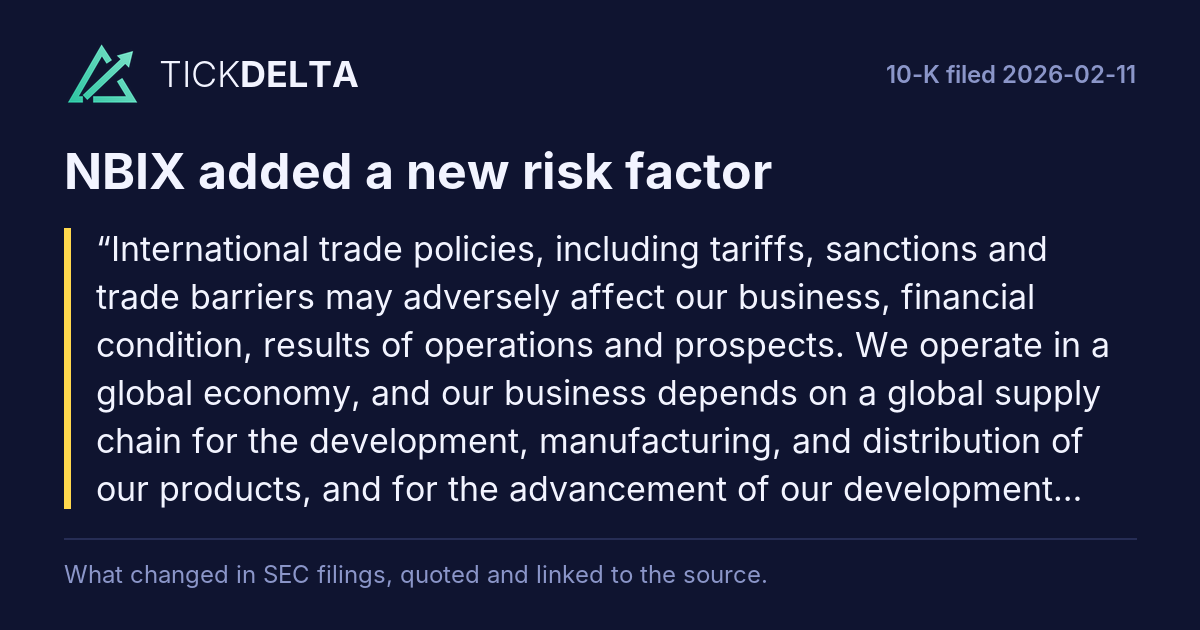
International trade policies, including tariffs, sanctions and trade barriers may adversely affect our business, financial condition, results of operations and prospects.
We operate in a global economy, and our business depends on a global supply chain for the development, manufacturing, and distribution of our products, and for the advancement of our development programs. There is inherent risk, based on the complex relationships among the U.S. and the countries in which we conduct our business, that political, diplomatic, and national security factors can lead to global trade restrictions and changes in trade policies and export regulations that may adversely affect our business and operations.
We source and procure APIs, precursor chemicals, and specialized equipment from international suppliers, with substantial reliance on foreign contract manufacturers in Europe. Tariff policies, particularly those affecting pharmaceutical products, could increase our costs and reduce our profitability. Additionally, recent policy discussions have included potential targeted tariffs or other trade measures specifically aimed at pharmaceutical products and ingredients as part of broader healthcare cost control or national security initiatives. In April 2025, the U.S. Department of Commerce initiated an investigation on imports of pharmaceuticals and pharmaceutical ingredients, which may result in the current U.S. presidential administration taking actions to impose tariffs on the pharmaceutical industry. The U.S. presidential administration also indicated that it may impose a 100% tariff on any branded or patented pharmaceutical product, unless a company is building a pharmaceutical manufacturing plant in the U.S. The specific impact of the investigation and announcements to enact substantial tariffs on patented pharmaceutical products remain uncertain at this time but could negatively impact our business and operations. Unlike consumer goods, pharmaceuticals face unique regulatory constraints that make rapid supply chain adjustments particularly difficult and costly. Should tariffs be imposed specifically targeting pharmaceutical imports, our production costs could rise, and it would be difficult and costly to qualify alternative sources within another country with a lower tariff rate or within the U.S., as developing and qualifying alternative sources typically requires substantial time, investment, and regulatory approvals.
Unlike many industries, our ability to pass increased costs to customers is limited by the structure of pharmaceutical pricing and reimbursement systems. As a result, cost increases due to tariffs may be difficult or impossible to pass through to customers.
Current or future tariffs will also result in increased research and development expenses, including with respect to increased costs associated with APIs, raw materials, laboratory equipment and research materials and components. Trade restrictions affecting the import of materials necessary for clinical trials could result in delays to our development timelines. Increased development costs and extended development timelines could place us at a competitive disadvantage compared to companies operating in regions with more favorable trade relationships and could reduce investor confidence and negatively impact our business, results of operations, financial condition and growth prospects.
Trade disputes, tariffs, restrictions and other political tensions between the U.S. and other countries may also exacerbate unfavorable macroeconomic conditions including inflationary pressures, foreign exchange volatility, financial market instability, and economic recessions or downturns. The ultimate impact of current or future tariffs and trade restrictions remains uncertain and could materially and adversely affect our business, financial condition, and prospects. While we actively monitor these risks, any prolonged economic downturn, escalation in trade tensions, or deterioration in international perception of U.S.-based companies could materially and adversely affect our business, ability to access the capital markets or other financing sources, results of operations, financial condition and prospects. In addition, tariffs and other trade developments have and may continue to heighten the risks related to the other risk factors described elsewhere in this report.
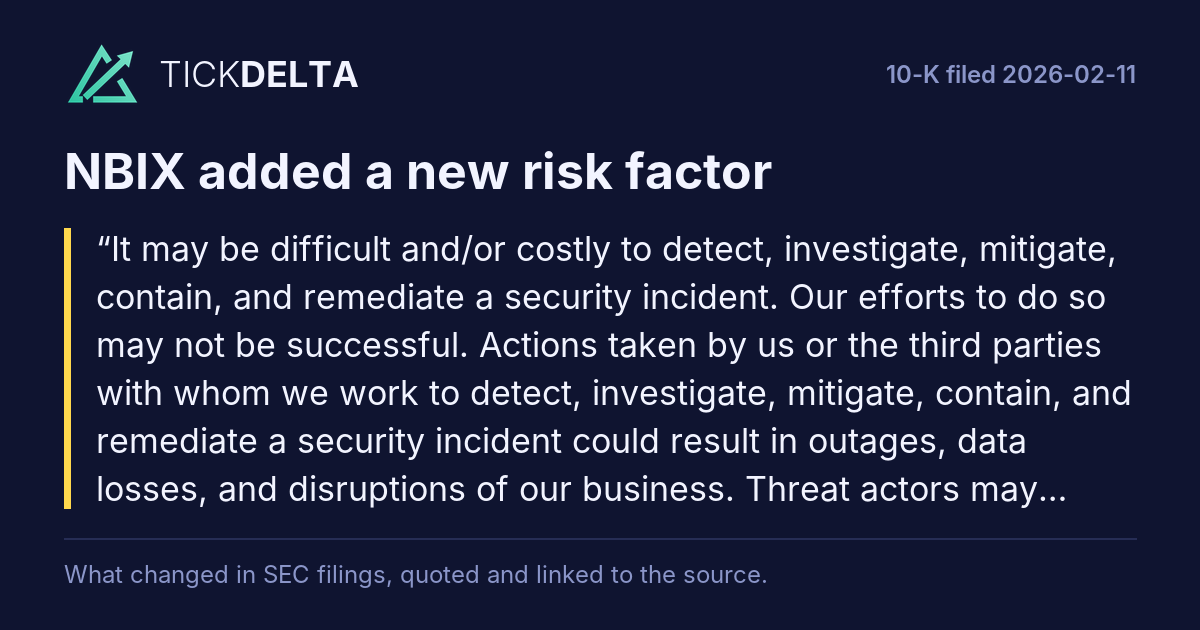
It may be difficult and/or costly to detect, investigate, mitigate, contain, and remediate a security incident. Our efforts to do so may not be successful. Actions taken by us or the third parties with whom we work to detect, investigate, mitigate, contain, and remediate a security incident could result in outages, data losses, and disruptions of our business. Threat actors may also gain access to other networks and systems after a compromise of our networks and systems. For example, threat actors may use an initial compromise of one part of our environment to gain access to other parts of our environment, or leverage a compromise of our networks or systems to gain access to the networks or systems of third parties with whom we work, such as through phishing or supply chain attacks.
Any of the previously identified or similar threats may in the future cause a security incident or other interruption that may result in unauthorized, unlawful, or accidental acquisition, modification, destruction, loss, alteration, encryption, disclosure of, or access to our sensitive information or our information technology systems, or those of the third parties upon who we rely.
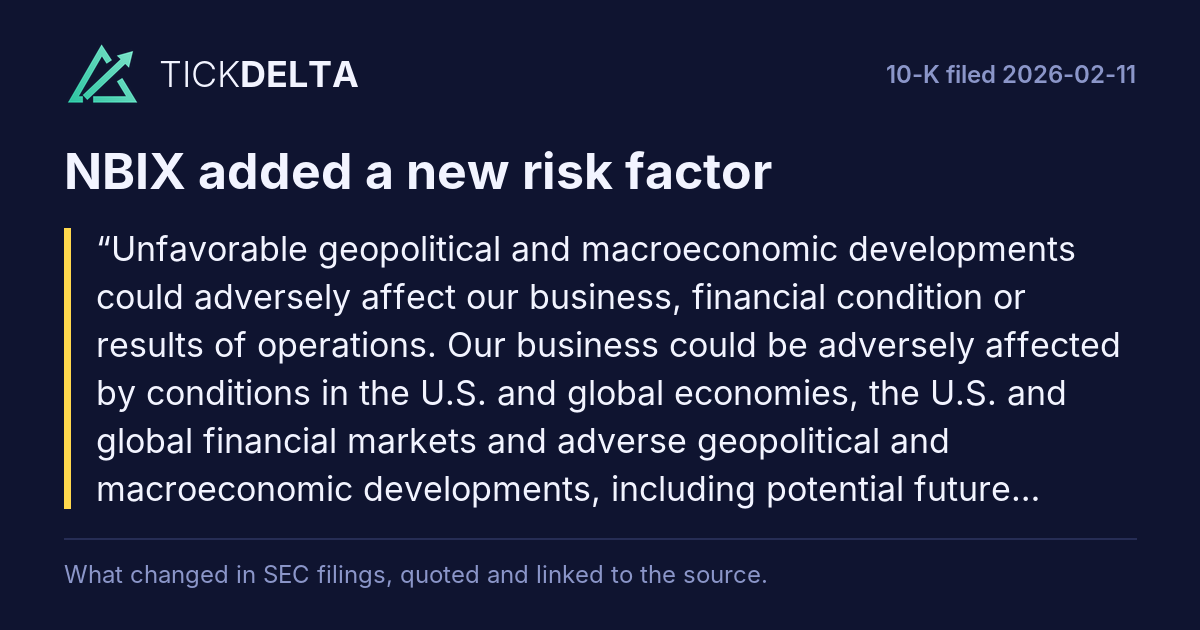
Unfavorable geopolitical and macroeconomic developments could adversely affect our business, financial condition or results of operations.
Our business could be adversely affected by conditions in the U.S. and global economies, the U.S. and global financial markets and adverse geopolitical and macroeconomic developments, including potential future disruptions in access to bank deposits due to bank failures, tariffs and trade barriers, the recent shutdown of the U.S. federal government and the resulting effects on its regulatory agencies, geopolitical tensions, and military conflicts. General business and economic conditions that could affect our business, financial condition or results of operations include fluctuations in economic growth, inflation and interest rates, debt and equity capital markets, liquidity of the global financial markets, the availability and cost of credit, investor and consumer confidence, and the strength of the economies in which we, our manufacturers and suppliers, and our collaborators operate. A weak or declining global economy due to geopolitical tensions or tariffs and trade barriers could also strain our suppliers and manufacturers, possibly resulting in supply disruption. Any of the foregoing could harm our business and we cannot anticipate all of the ways in which the current economic climate and financial market conditions could adversely impact our business.
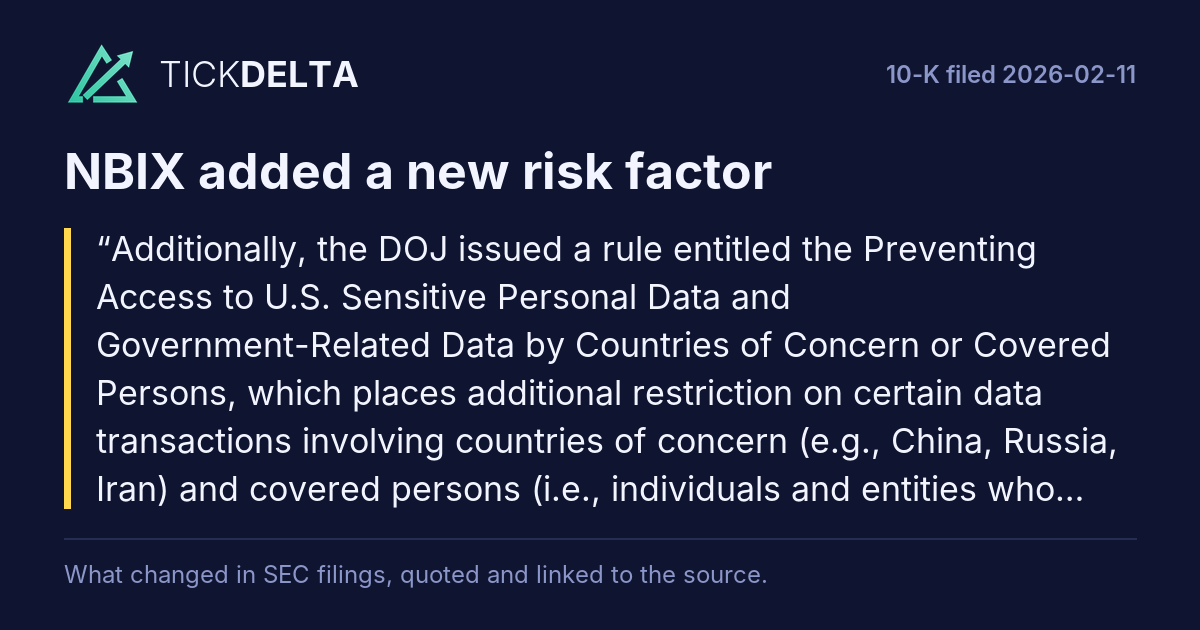
Additionally, the DOJ issued a rule entitled the Preventing Access to U.S. Sensitive Personal Data and Government-Related Data by Countries of Concern or Covered Persons, which places additional restriction on certain data transactions involving countries of concern (e.g., China, Russia, Iran) and covered persons (i.e., individuals and entities who are designated as such by the U.S. Attorney General or considered “foreign persons” and are majority owned by, organized under the laws of, a primary resident in, or a contractor of, a covered person or country of concern, as applicable) that may impact certain business activities such as vendor engagements, sale or sharing of data, employment of certain individuals, and investor agreements. Violations of the rule could lead to significant civil and criminal fines and penalties. The rule applies regardless of whether data is anonymized, key-coded, pseudonymized, de-identified or encrypted, which presents particular challenges for companies like ours and may impact our ability to engage in certain transactions or agreements.
New in the latest 10-Q
8 paragraphs in the 10-Q filed Nov 2, 2026 with nothing like them in the 10-Q filed Jul 31, 2026 (at least half the words must differ; new numbers alone do not count). Quoted exactly, grouped by the item heading above them. This is text that changed, not a judgement of how serious it is.
• Announced that Eiry W. Roberts, M.D., who previously served as Neurocrine's Chief Medical Officer (CMO) and most recently as a Strategic Advisor, has rejoined the Company's executive management team as CMO.
Read in the 10-Q
• Announced publication of the KINECT-PRO™ Phase 4 open-label study results demonstrating that treatment with once-daily INGREZZA capsules resulted in substantial and sustained improvements in patient-reported quality of life and functionality, alongside improvements in clinician-rated TD movement severity. Improvements were observed regardless of underlying psychiatric diagnosis or baseline TD movement severity, including among participants with clinician-rated mild TD movements. The manuscript appears in CNS Spectrums.
Read in the 10-Q
• Presented research advancing the understanding of Prader-Willi syndrome and real-world experience with VYKAT XR at the Foundation for Prader-Willi Research Symposium & Family Conference.
Read in the 10-Q
Results of Operations for the Three and Nine Months Ended September 30, 2026 and 2025
Read in the 10-Q
Borrowings under the 2026 Credit Facility bear interest at variable rates, and changes in interest rates would affect interest expense on any outstanding borrowings. As of September 30, 2026, no borrowings were outstanding under the 2026 Credit Facility. Refer to Note 5 to the condensed consolidated financial statements for additional information regarding the 2026 Credit Facility.
Read in the 10-Q
• public perception regarding these products, including publicity regarding reported adverse events or other safety concerns;
Read in the 10-Q
or communications by patient advocacy organization, clinicians or others concerning the safety, efficacy or appropriate use of our products may influence perceptions and treatment decisions within these communities, including where such statements or communications relate to adverse event reports for which a causal relationship to the applicable product has not been established.
Read in the 10-Q
Exhibit 2.1* Description: Agreement and Plan of Merger, dated April 5, 2026, by and among Neurocrine Biosciences, Inc., Sigma Merger Sub, Inc. and Soleno Therapeutics, Inc. Reference: Incorporated by reference to Exhibit 2.1 of the Company's Current Report on Form 8-K filed on April 6, 2026 3.1 Description: Certificate of Incorporation, as amended Reference: Incorporated by reference to Exhibit 3.1 of the Company’s Quarterly Report on Form 10-Q filed on November 5, 2018 3.2 Description: Bylaws, as amended Reference: Incorporated by reference to Exhibit 3.2 of the Company's Quarterly Report on Form 10-Q filed on October 30, 2024 4.1 Description: Form of Common Stock Certificate Reference: Incorporated by reference to the Company’s Registration Statement on Form S-1 (Registration No. 333-03172) 10.1+ Description: Neurocrine Biosciences, Inc. 2018 Employee Stock Purchase Plan, as amended and restated 10.2+ Description: Amended and Restated Employment Agreement dated November 2, 2026 between the Company and Eiry W. Roberts, M.D. 31.1 Description: Certification of Chief Executive Officer pursuant to Rules 13a-14 and 15d-14 promulgated under the Securities Exchange Act of 1934 31.2 Description: Certification of Chief Financial Officer pursuant to Rules 13a-14 and 15d-14 promulgated under the Securities Exchange Act of 1934 32** Description: Certifications of Chief Executive Officer and Chief Financial Officer pursuant to 18 U.S.C. Section 1350, as adopted pursuant to Section 906 of the Sarbanes-Oxley Act of 2002 101. INS Description: Inline XBRL Instance Document. – the instance document does not appear in the Interactive Data File because its XBRL tags are embedded within the Inline XBRL document. 101. SCH Description: Inline XBRL Taxonomy Extension Schema Document. 101. CAL Description: Inline XBRL Taxonomy Extension Calculation Linkbase Document. 101. DEF Description: Inline XBRL Taxonomy Extension Definition Linkbase Document. 101. LAB Description: Inline XBRL Taxonomy Extension Label Linkbase Document. 101. PRE Description: Inline XBRL Taxonomy Extension Presentation Linkbase Document. 104 Description: Cover Page Interactive Data File (formatted as Inline XBRL with applicable taxonomy extension information contained in Exhibit 101)
Read in the 10-Q
Item 1A of the 10-Q filed Nov 2, 2026 against Item 1A of the 10-K filed Feb 11, 2026.
A 10-Q repeats only the risks that changed, so a 10-K paragraph that is missing from it is not counted as removed.
Added is a paragraph with nothing like it in the 10-K, Reworded a sentence that is in both with several words changed,
Quiet changes a sentence in both where one to four words changed and one is a hedge or a modal
(cut words struck through, new words highlighted).
Text on the page, not a score; each links to the filing at sec.gov.
The first 27 of 116 are shown (at most 12 of each type).
Two-word phrases in Risk Factors of the 10-K filed Feb 11, 2026 that are in none of the 1 earlier 10-Ks stored, back to Feb 10, 2025
Used at least twice, small words left out. Counted, not picked: a phrase can be new because the company renamed something.
9 paragraphs of last year's Risk Factors with nothing like them now. The longest are quoted.
Item 1A of each 10-K and 10-Q on EDGAR, quoted exactly. Each paragraph links to the filing at sec.gov.
10-K change: what was reworded or cut, section by section.
Excel workbook · CSV. Google Sheet that stays up to date: paste =IMPORTDATA("https://tickdelta.com/company/NBIX/export.csv") into a cell.