If we fail to anticipate and respond to rapidly evolving technologies, customer requirements and spending priorities, including developments in public cloud, cloud-native and AI technologies, demand for our solutions and our competitive position could be adversely affected.
Our focus on larger enterprise customers and transactions may result in longer and less predictable sales cycles, greater costs and pricing pressure, and increased variability in our operating results.
If we do not effectively manage our operations, resources and investments as our business and product portfolio evolve, we may not achieve our strategic objectives.
We have expanded our overall business and operations significantly in prior periods. As our product portfolio, markets and operations evolve, we must appropriately allocate resources, manage organizational and operational changes, and align our personnel, systems and processes with our strategic priorities. The failure to manage these changes could significantly delay the achievement of our strategic objectives. We must continue to improve our IT and financial infrastructure, management systems and product management and sales processes. We may make investments or otherwise incur costs that may not result in anticipated benefits within the expected timeframe or at all.
We have made, and expect to continue making, investments in our AI technologies and capabilities across our business, products, and services, including efforts to position the Nutanix Cloud Platform as a preferred platform for running enterprise AI workloads. AI technologies are complex, rapidly evolving, and subject to significant uncertainty, including with respect to technical performance, reliability, customer adoption, competitive differentiation, and the legal and regulatory frameworks that may apply to their development, deployment, and use. Our development, integration, offering or use of AI technologies, including with or in new or existing products and services, may result in new or enhanced governmental or regulatory scrutiny, litigation, privacy, data protection, confidentiality, intellectual property or cybersecurity risks, ethical concerns, legal liability, or other complications that could adversely affect our business, reputation, or financial results. As we integrate more agentic AI workflows into our platform, actions taken or suggested by AI-powered agents acting without human oversight could be incorrect, unintended, unauthorized, or harmful, which could expose us to contractual disputes, indemnity obligations, litigation, regulatory investigations, and reputational harm.
The use of generative AI by our workforce in our operations and code development processes poses ownership and security risks with respect to our codebase, given legal uncertainties surrounding AI-generated works and the potential for security flaws in output code, and may lead to errors in our decision-making and solution development. Furthermore, our internal adoption of AI tools to optimize our own business processes may cause unforeseen operational disruptions, fail to deliver anticipated cost efficiencies, or introduce new vulnerabilities into our internal workflows.
Key components of the server hardware on which our software is validated to run, including those sourced from limited or single-source suppliers, have in the past been, and may in the future be, affected by supply shortages or delivery delays. We generally acquire components only as needed and do not enter into long-term supply contracts for these components. Consequently, if we or our suppliers inaccurately forecast demand for our solutions, our suppliers may have inadequate inventory, which could increase the prices we must pay for substitute components. Our reliance on these suppliers exposes us to risks regarding production and component costs, timely delivery, and capacity constraints. Furthermore, qualifying a new component or changing key suppliers can be expensive and time-consuming, and could cause disruptions. In addition, increases in hardware platform prices, whether due to component shortages or other cost pressures, could reduce customer demand for our software if customers delay or scale back purchases of the hardware platforms that are validated to run our solutions. Customers may also respond to rising hardware costs by reevaluating their overall IT budgets or seeking to reduce total solution costs, which could adversely affect demand for our software and put pressure on pricing and margins. For example, beginning in the second quarter of fiscal 2026, we have faced constraints affecting the availability of certain hardware components at manufacturers. These constraints have resulted in higher hardware pricing in the market and extended hardware lead times, which vary across hardware vendors. Higher hardware pricing, together with extended hardware lead times, have impacted, and may continue to impact, customers' ability to deploy and consume our software, which may affect the timing of revenue recognition and cash flows from period to period and, in certain instances, may result in some customers delaying projects or otherwise seeking greater flexibility with licensing. Our business and results of operations will be significantly affected by our success in leveraging our relationships with our channel and OEM partners and expanding our network of cloud and ecosystem partners.
Any of these factors could cause government customers to delay, reduce or cancel purchases of our solutions, impair our ability to compete for or perform government contracts, and adversely affect our business, operating results and prospects.
•changes in global trade policies, tariffs, sanctions, import and export restrictions, localization requirements and other regulatory requirements that may affect cross-border commerce, supply chains or our ability to sell and support our products internationally;
•requirements and costs associated with complying with foreign sustainability, ESG-related reporting and due diligence obligations, including requirements adopted in the European Union;
•difficulties and costs associated with establishing and maintaining international operations, including managing geographically dispersed personnel, attracting and retaining talent, complying with local employment requirements, and coordinating operations across multiple jurisdictions; and
•international tax laws, tax audits and changes in tax rules applicable to multinational businesses.
Additionally, AI and machine learning may increase the cybersecurity risks we face, including through unauthorized or misuse of public-facing AI features. Threat actors may use generative AI and other AI capabilities to increase the prevalence, frequency, severity, and volume of cyber attacks, including by creating more sophisticated phishing and social engineering attacks (including through the use of impersonation technology), accelerating or automating vulnerability exploitation, and developing more sophisticated malware that can evade conventional detection tools or otherwise overwhelm protection systems faster than we can effectively respond. As AI technologies evolve, we may not be able to recognize, anticipate, prevent, or timely respond to these emerging techniques, which could increase the likelihood and magnitude of harm from a cyber attack or other cybersecurity incident.
Moreover, to the extent we acquire or integrate companies, products, services, and technologies, we may be exposed to additional security vulnerabilities, compliance issues or other cybersecurity risks associated with such businesses or technologies. Although we devote resources to identifying and addressing such risks, we may not discover or remediate all issues prior to or following integration, which could adversely affect our business.
Although we have a channel sales model, our sales representatives typically engage in direct interaction with our prospective end customers. Therefore, we continue to be substantially dependent on our sales force to obtain new end customers and sell additional solutions to our existing end customers. Our growth depends in large part on our ability to structure our sales force and compensation plans in a way that aligns with our strategic priorities, particularly our focus on driving large orders from major enterprise accounts. We have made, and may continue to make, changes to our sales processes, segmentation, and leadership structures to drive this alignment, but these changes may take longer than anticipated to implement successfully or fail to yield the expected benefits.
In addition to comprehensive data protection and privacy laws, we are subject, or may become subject, to a growing number of cybersecurity, digital resilience, and product security regulations globally, including the European Union's Network and Information Security Directive ("NIS2"), Cyber Resilience Act ("CRA"), and, indirectly through our customers and business partners, the Digital Operational Resilience Act ("DORA"). Compliance with these requirements may require significant operational, technical, and administrative efforts and could increase our costs and legal obligations. These regulatory frameworks continue to evolve, and their interpretation, implementation, and enforcement remain uncertain, which may create additional compliance risks and challenges.
The application of tax laws to services provided electronically is evolving. New sales and use, value added or similar tax laws, statutes, rules, regulations, or ordinances could be enacted at any time. For example, California has recently amended its tax laws to subject certain retail sales of digital prewritten software, cloud-based applications, and software services to sales tax in California, effective January 1, 2027, which may increase the cost to our California-based customers of purchasing our products, and similarly may increase the costs to us of purchasing software products we use in our business.
The Organisation for Economic Cooperation and Development ("OECD") reached agreement among various countries to implement a global minimum tax framework, commonly referred to as Pillar Two, which imposes a minimum effective tax rate of 15% on certain multinational enterprises. On January 5, 2026, the OECD announced a side-by-side elective safe harbor that would exempt electing U.S.-parented multinationals from certain provisions of Pillar Two for fiscal years beginning on or after January 1, 2026, but does not provide an exemption from the "qualified domestic minimum top-up taxes" that many countries have enacted or begun the process of enacting laws based on Pillar Two proposals. The safe harbor must be adopted into the domestic laws of the relevant jurisdictions and the timing and the degree of adoption may vary by jurisdiction.
•price and volume fluctuations in the overall stock market or volatility in the market prices and trading volumes of technology companies;
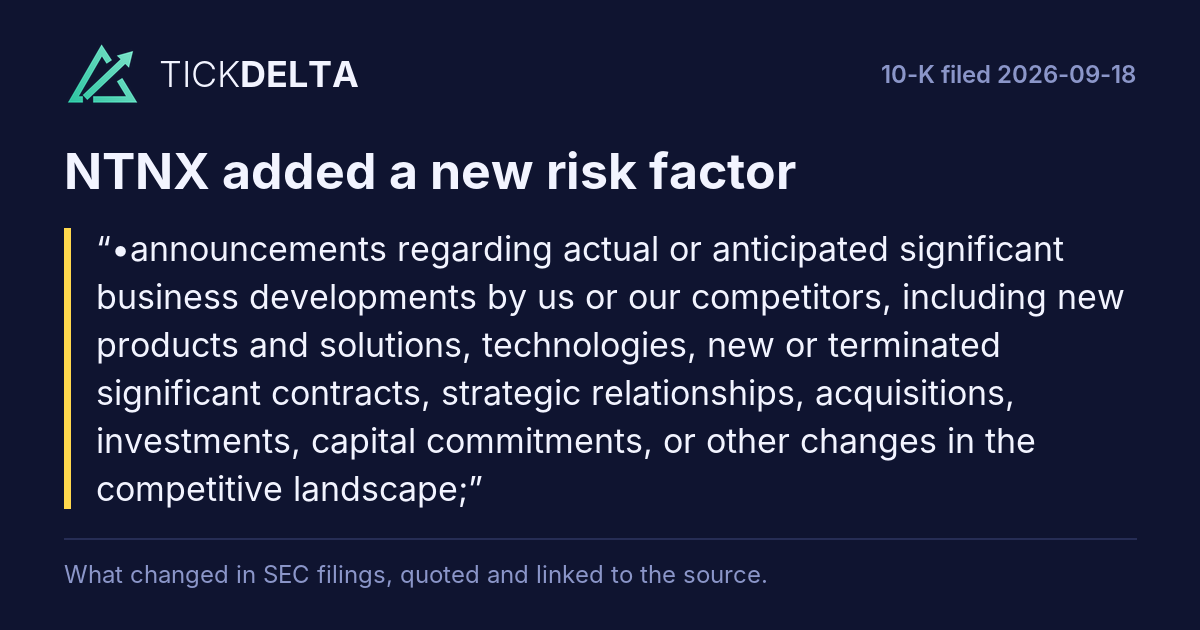
•announcements regarding actual or anticipated significant business developments by us or our competitors, including new products and solutions, technologies, new or terminated significant contracts, strategic relationships, acquisitions, investments, capital commitments, or other changes in the competitive landscape;
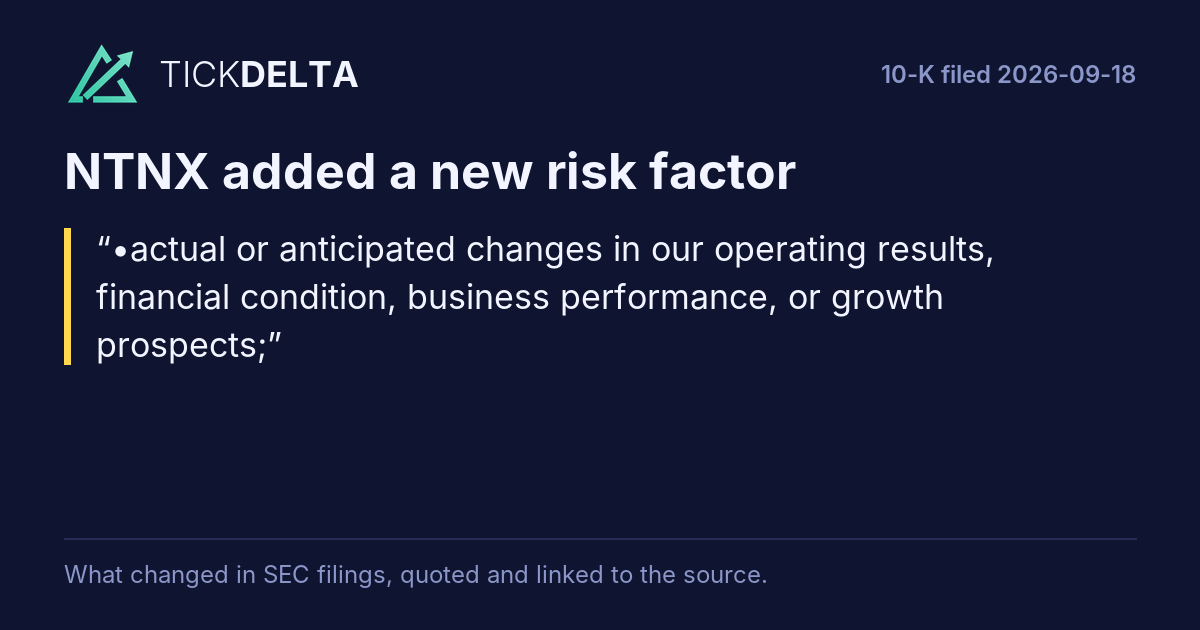
•actual or anticipated changes in our operating results, financial condition, business performance, or growth prospects;
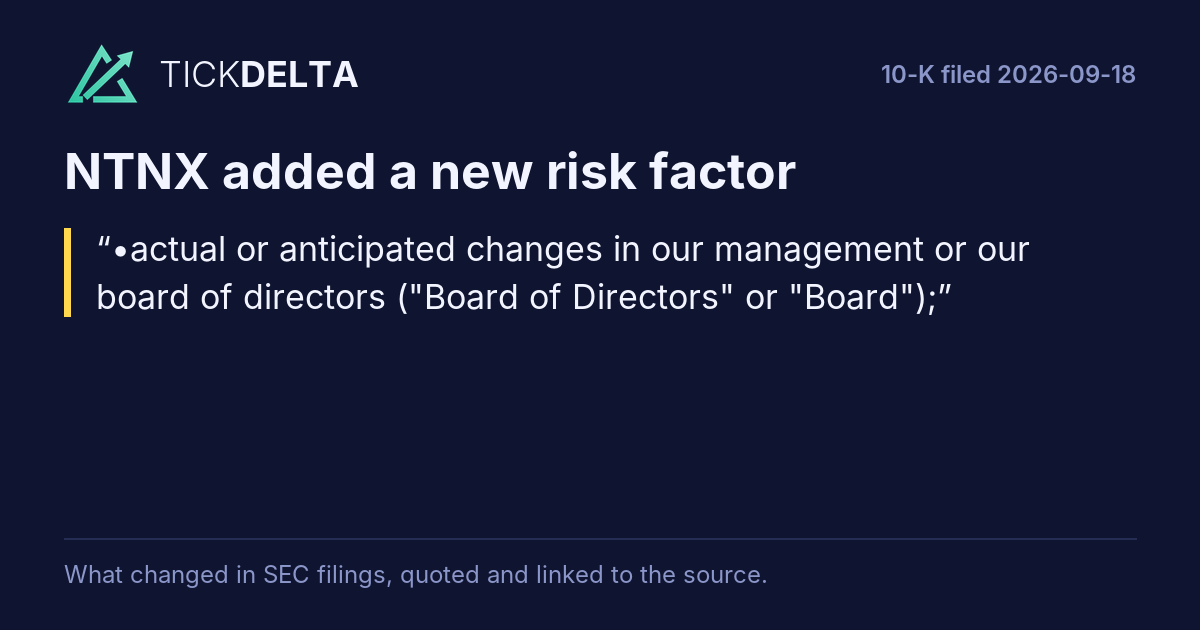
•actual or anticipated changes in our management or our board of directors ("Board of Directors" or "Board");