Added10-Q Nov 4, 2026 vs 10-K Feb 18, 2026
Purchases of Otter Tail Corporation common shares were made on the open market during the three months ended September 30, 2026 as follows:
Each branch is a paragraph in Risk Factors with nothing like it in the 10-K filed Feb 19, 2025. A box jumps to the paragraph as filed, below.
8 paragraphs in Risk Factors of the 10-K filed Feb 18, 2026 with nothing like them in the 10-K filed Feb 19, 2025. Quoted exactly. Paragraphs that were only edited are under 10-K change.
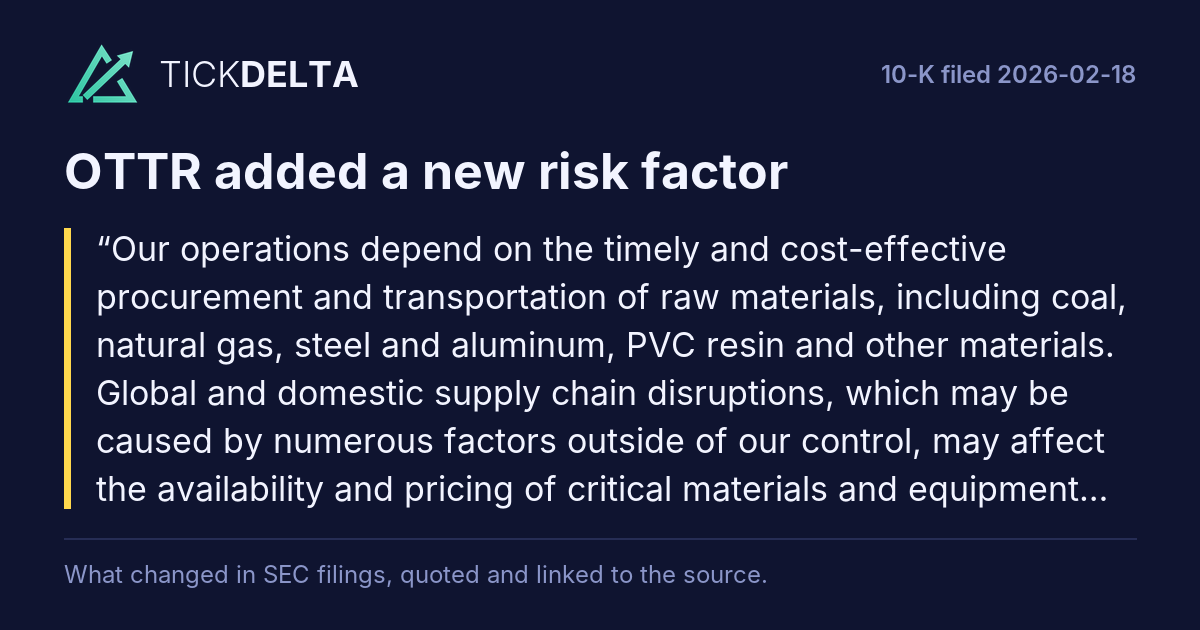
Our operations depend on the timely and cost-effective procurement and transportation of raw materials, including coal, natural gas, steel and aluminum, PVC resin and other materials. Global and domestic supply chain disruptions, which may be caused by numerous factors outside of our control, may affect the availability and pricing of critical materials and equipment.
Changes in trade policies, including tariffs and anti-dumping and countervailing duties, could increase the cost of certain materials used in constructing and maintaining our utility assets and impact the cost of raw materials used in our manufacturing processes. Specifically, tariffs arising from recent or ongoing anti-dumping and countervailing duty investigations could impact the cost of components necessary in constructing certain renewable generation assets. The imposition of such tariffs could increase the cost of our capital investments for which we are not guaranteed recovery. Alternatively, modifications to our material sourcing may delay our project plans and lead to increased costs.
Recent federal legislation restricting the use of "foreign entities of concern" in the supply chain for energy-related projects may limit our ability to source certain components, particularly for renewable generation projects. Compliance with these requirements could result in higher project costs, longer lead times, the need to identify alternative suppliers and project delays.
We face risks related to transportation logistics, including rail availability for coal and PVC resin, pipeline capacity and availability for natural gas and trucking capacity for steel and aluminum and other materials. Disruptions in these transportation systems, which can be caused by many factors outside of our control, could increase our costs or disrupt our operations.
If we are unable to effectively manage our supply chain and trade-related risks, our operations could be adversely impacted, which may have a material impact on our operating results, financial position and liquidity.
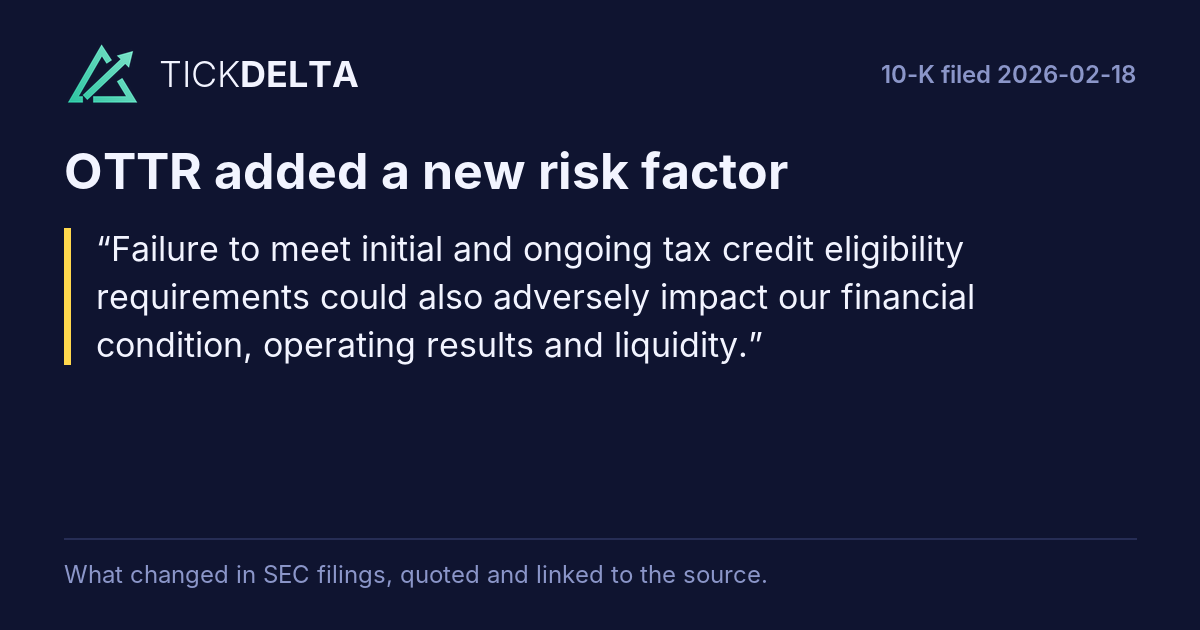
Failure to meet initial and ongoing tax credit eligibility requirements could also adversely impact our financial condition, operating results and liquidity.
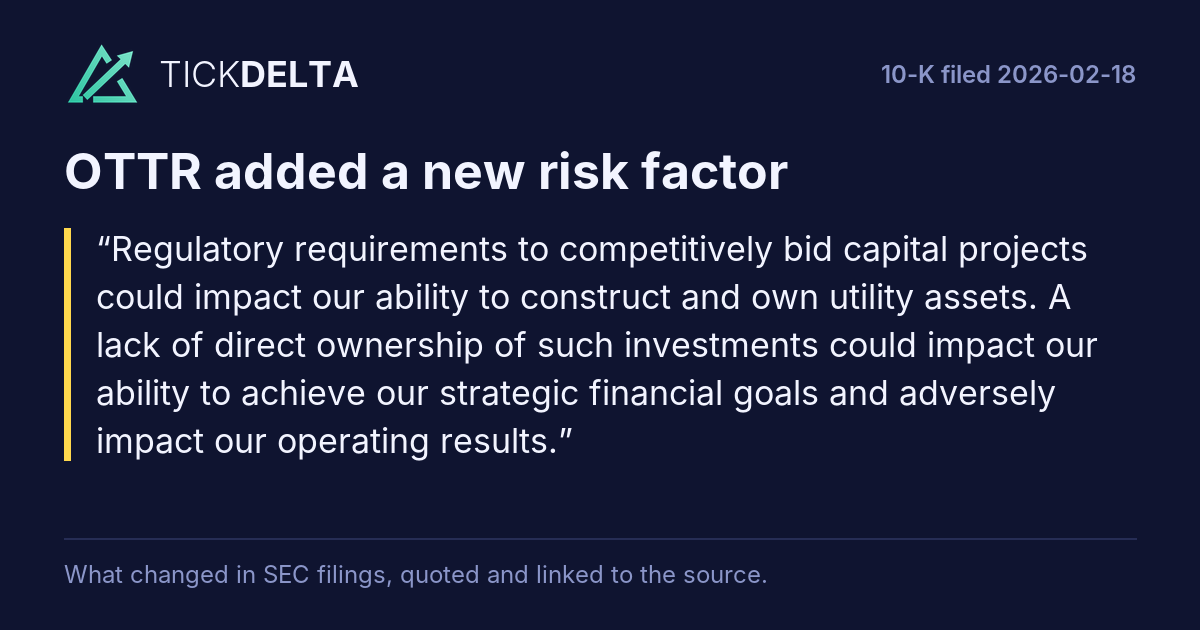
Regulatory requirements to competitively bid capital projects could impact our ability to construct and own utility assets. A lack of direct ownership of such investments could impact our ability to achieve our strategic financial goals and adversely impact our operating results.
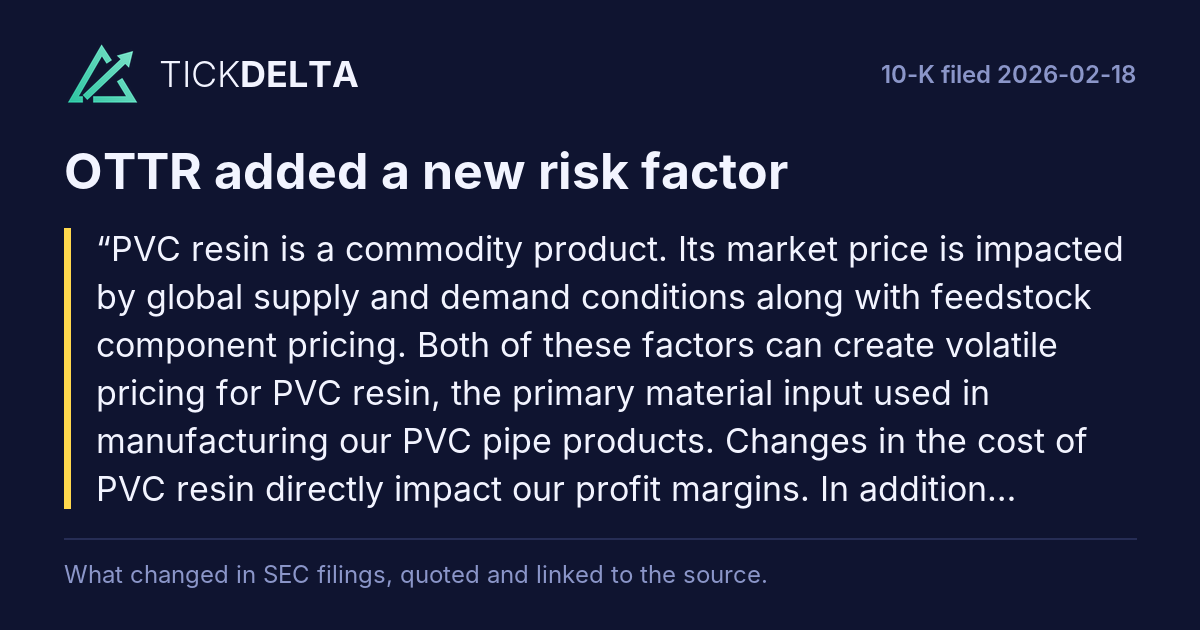
PVC resin is a commodity product. Its market price is impacted by global supply and demand conditions along with feedstock component pricing. Both of these factors can create volatile pricing for PVC resin, the primary material input used in manufacturing our PVC pipe products. Changes in the cost of PVC resin directly impact our profit margins. In addition, changes in PVC resin cost can impact the pricing of PVC pipe price. We may be unable to fully, or in a timely manner, adjust the pricing of PVC pipe in response to changing PVC resin costs. Accordingly, our operating results and liquidity could be materially impacted.
New in the latest 10-Q
28 paragraphs in the 10-Q filed Nov 4, 2026 with nothing like them in the 10-Q filed Aug 5, 2026 (at least half the words must differ; new numbers alone do not count). Quoted exactly, grouped by the item heading above them. This is text that changed, not a judgement of how serious it is.
Adjustments to Reconcile Net Income to Net Cash Provided by Operating Activities:
Read in the 10-Q
Cash, Cash Equivalents and Restricted Cash at Beginning of Period 386,193 294,651
Read in the 10-Q
The NCSP settlement agreement received final court approval on September 15, 2026, and the DPP and EUP settlement agreements received final court approval on October 1, 2026. Following final approval, each agreement was subject to 30 -day appeal period. As of the date of this filing, the appeal periods for all three settlement agreements have expired and no appeals have been filed. Upon the expiration of the applicable appeal periods, the $ 103.5 million of settlement funds were no longer subject to restriction, and the related settlement obligations were satisfied.
Read in the 10-Q
Three Months Ended September 30, 2026 2025 (in thousands) Pension and Other Postretirement Benefits Net Unrealized Gains (Losses) on Available-for-Sale Securities Total Pension and Other Postretirement Benefits Net Unrealized Gains (Losses) on Available-for-Sale Securities Total ─────────────────────────────────────────────────────────────────────────────────────────────────────────────────────────────────────────────────────────────────────────────────────────────────────────────────────────────────────────────────────────────────────────────────────────────────────────────────────────────────────────────────────────────────────────────────────────────────────────────────────────────────────────────────────────────── Balance, Beginning of Period $ 70 $ 73 $ 143 $ 350 $ 384 $ 734 Other Comprehensive Income (Loss) Before Reclassifications, net of tax — (279) (279) — 37 37 Amounts Reclassified from Accumulated Other Comprehensive Income (Loss) — — — (12) (1) (17) (2) (29) Total Other Comprehensive Income (Loss) — (279) (279) (12) 20 8 Balance, End of Period $ 70 $ (206) $ (136) $ 338 $ 404 $ 742 Nine Months Ended September 30, 2026 2025 (in thousands) Pension and Other Postretirement Benefits Net Unrealized Gains (Losses) on Available-for-Sale Securities Total Pension and Other Postretirement Benefits Net Unrealized Gains (Losses) on Available-for-Sale Securities Total Balance, Beginning of Period $ 70 $ 400 $ 470 $ 373 $ 159 $ 532 Other Comprehensive Income (Loss) Before Reclassifications, net of tax — (611) (611) — 272 272 Amounts Reclassified from Accumulated Other Comprehensive Income (Loss) — 5 (2) 5 (35) (1) (27) (2) (62) Total Other Comprehensive Income (Loss) — (606) (606) (35) 245 210 Balance, End of Period $ 70 $ (206) $ (136) $ 338 $ 404 $ 742 (1) Included in the computation of net periodic pension and other postretirement benefit costs. See Note 8. (2) Included in other income (expense), net on the accompanying consolidated statements of income.
Read in the 10-Q
OTP holds financial transmission rights (FTRs) associated with its firm transmission rights in the MISO market. FTRs are financial instruments that entitle the holder to receive or pay amounts based on differences in hourly day-ahead energy prices between two specified points on the transmission grid and are used to mitigate transmission congestion costs. These instruments are not designated as qualifying hedging transactions but provide for an economic hedge against variability in transmission congestion costs.
Read in the 10-Q
2026 2025 ───────────────────────────────────────────────────────────────────────────────────────────────────────────────────────────────────────────────────────────────────────────────────────── Derivative Assets: FTRs $ 25,451 $ — Electric Commodity 960 124 Total Current(1) 26,411 124 Electric Commodity 332 — Total Noncurrent(2) 332 — Total Derivative Assets $ 26,743 $ 124 Derivative Liabilities: FTRs $ 10 $ — Electric Commodity 1,338 2,717 Total Current(1) 1,348 2,717 Electric Commodity 107 — Total Noncurrent(2) 107 — Total Derivative Liabilities $ 1,455 $ 2,717 (1) Included in other current assets and other current liabilities on the accompanying consolidated balance sheets. (2) Included in other noncurrent assets and other noncurrent liabilities on the accompanying consolidated balance sheets.
Read in the 10-Q
The level 3 fair value measurements for FTR derivative instruments are determined through a market approach that incorporates pricing from MISO-administered FTR auctions, incorporating inputs such as pricing differences between specified points on the transmission grid, megawatt quantity, time-of-use, and delivery period. As directly observable pricing for an FTR position is not available, significant unobservable inputs are necessary to estimate fair value.
Read in the 10-Q
Income Tax Expense decreased $8.3 million primarily due to higher PTCs at OTP resulting from increased wind generation eligible for such credits. PTCs reduce both operating revenues and income tax expense.
Read in the 10-Q
• A decrease in certain rider revenues and lower commercial and industrial sales volumes.
Read in the 10-Q
emergency event. This designation resulted in a reduction of overall generation from Coyote Station compared to the same period last year.
Read in the 10-Q
Cost of Products Sold increased $13.2 million primarily due to higher steel costs, increased sales volumes, and higher labor and other operating costs, including freight, supplies, and equipment repairs. Labor costs increased as staffing levels were expanded to support customer demand. In addition, productivity was negatively impacted by the time required for newly hired employees to reach targeted productivity levels.
Read in the 10-Q
• A decrease in rider revenues associated with our wind facilities, driven by lower operating costs at those facilities.
Read in the 10-Q
Cost of Products Sold increased $23.1 million primarily due to higher steel costs, increased sales volumes, and higher labor and other operating costs, including freight, supplies, and equipment repairs. Labor costs increased as staffing levels were expanded to support customer demand. In addition, productivity was impacted by the time required for newly hired employees to reach targeted productivity levels.
Read in the 10-Q
Depreciation and Amortization decreased $2.0 million, as certain assets previously placed into service have become fully depreciated.
Read in the 10-Q
The Environmental Protection Agency (EPA) adopted the RHR in an effort to improve visibility in national parks and wilderness areas. The RHR requires states, in coordination with the EPA and other governmental agencies, to develop and implement state implementation plans (SIPs) that work towards achieving natural visibility conditions by the year 2064; to set goals to ensure reasonable progress is being made; and to periodically evaluate whether those goals and progress are on track or whether additional emission reductions are necessary. RHR compliance is to be monitored through several implementation periods, the second of which covers the years 2018-2028.
Read in the 10-Q
Coyote Station is subject to assessment in this implementation period. The ND Department of Environmental Quality submitted the ND State Implementation Plan (SIP) in August 2022. In December 2024, the EPA published its ruling on the ND SIP, partially approving and partially disapproving of the plan. Specific to Coyote, the EPA ruled that the ND SIP relied on non-statutory methods to reject the implementation of emission controls. The EPA has two years from the date of publication of its partial disapproval to publish a Federal Implementation Plan, which could include additional emission controls at Coyote Station.
Read in the 10-Q
On April 30, 2025, the EPA granted the Coyote Station co-owners’ request to reconsider the partial disapproval of the ND SIP.
Read in the 10-Q
On September 9, 2026, the EPA published a proposed rule repealing its December 2024 partial disapproval of the ND SIP. Based on its reconsideration, the EPA is proposing to agree with North Dakota’s conclusion that no additional emission control measures are necessary.
Read in the 10-Q
At this time, the final resolution of regional haze compliance in North Dakota, and specifically the impact, if any, on the operations of Coyote Station, is uncertain.
Read in the 10-Q
In May 2024, the EPA finalized new regulations under Section 111 of the Clean Air Act to regulate greenhouse gas (GHG) emissions from existing and new fossil fuel-based power plants. The rule establishes CO2 emission reduction requirements of existing coal-fired power plants based on the date the plant will cease operations. Coyote Station and Big Stone Plant are within the scope of the regulation.
Read in the 10-Q
On June 17, 2025, the EPA published a proposed rule that would repeal all GHG emission standards for fossil fuel-fired power plants. As an alternative, the EPA also proposed to repeal only the emission guidelines applicable to existing fossil fuel-fired steam generating units.
Read in the 10-Q
On September 17, 2026, the EPA published a final rule repealing most provisions of the 2024 GHG rule, thereby eliminating the emission guidelines for existing fossil fuel-fired power plants. However, following the issuance of the new regulations, several industry groups filed lawsuits challenging the regulation. At this time, whether the final rule will be upheld, and the ultimate impact on the operations of Coyote Station and Big Stone Plant is uncertain.
Read in the 10-Q
Also on September 17, 2026, the EPA released a supplemental proposal to repeal all remaining GHG emission requirements for power plants promulgated under Section 111 of the Clean Air Act. As a basis for a full repeal, EPA proposes to find that Section 111 of the Clean Air Act does not authorize it to regulate emissions from power plants in response to global climate change. The proposed rule has not yet been finalized.
Read in the 10-Q
Each of the three settlement agreements received final court approval and following approval was subject to 30-day appeal period. As of the date of this filing, the appeal periods for all three settlement agreements have expired and no appeals were filed. Upon the expiration of the applicable appeal periods, the $103.5 million of settlement funds were no longer subject to restriction, and the related settlement obligations were satisfied.
Read in the 10-Q
All settlement agreements have received final court approval and following approval were subject to a 30-day appeal period. As of the date of this filing, the appeal periods for all settlement agreements have expired and no appeals were filed. Upon the expiration of the applicable appeal periods, the previously deposited settlement funds were no longer subject to restriction and the related settlement obligations were satisfied.
Read in the 10-Q
See Note 10, Commitments and Contingencies, to the consolidated financial statements, which are incorporated herein by reference, for further discussion of this matter and other related matters.
Read in the 10-Q
Purchases of Otter Tail Corporation common shares were made on the open market during the three months ended September 30, 2026 as follows:
Read in the 10-Q
Period Total Number Average Price Paid per Share Total Number of Shares Purchased as Part of Publicly Announced Plans or Programs(2) Maximum Number (or Approximate Dollar Value) of Shares that May Yet Be Purchased Under the Plans or Programs(2)
Read in the 10-Q
Item 1A of the 10-Q filed Nov 4, 2026 against Item 1A of the 10-K filed Feb 18, 2026.
A 10-Q repeats only the risks that changed, so a 10-K paragraph that is missing from it is not counted as removed.
Added is a paragraph with nothing like it in the 10-K, Reworded a sentence that is in both with several words changed,
Quiet changes a sentence in both where one to four words changed and one is a hedge or a modal
(cut words struck through, new words highlighted).
Text on the page, not a score; each links to the filing at sec.gov.
What the 10-Q itself says about its risk factors:There have been no material changes from the risk factors disclosed in Item 1A, Risk Factors, of our Annual Report on Form 10-K for the year ended December 31, 2025.
Read in the 10-Q
Two-word phrases in Risk Factors of the 10-K filed Feb 18, 2026 that are in none of the 1 earlier 10-Ks stored, back to Feb 19, 2025
Used at least twice, small words left out. Counted, not picked: a phrase can be new because the company renamed something.
12 paragraphs of last year's Risk Factors with nothing like them now. The longest are quoted.
Item 1A of each 10-K and 10-Q on EDGAR, quoted exactly. Each paragraph links to the filing at sec.gov.
10-K change: what was reworded or cut, section by section.
Excel workbook · CSV. Google Sheet that stays up to date: paste =IMPORTDATA("https://tickdelta.com/company/OTTR/export.csv") into a cell.