Added10-Q Nov 5, 2026 vs 10-K Feb 27, 2026
• increase awareness of our brand and successfully compete with other companies.
Each branch is a paragraph in Risk Factors with nothing like it in the 10-K filed Mar 3, 2025. A box jumps to the paragraph as filed, below.
4 paragraphs in Risk Factors of the 10-K filed Feb 27, 2026 with nothing like them in the 10-K filed Mar 3, 2025. Quoted exactly. Paragraphs that were only edited are under 10-K change.
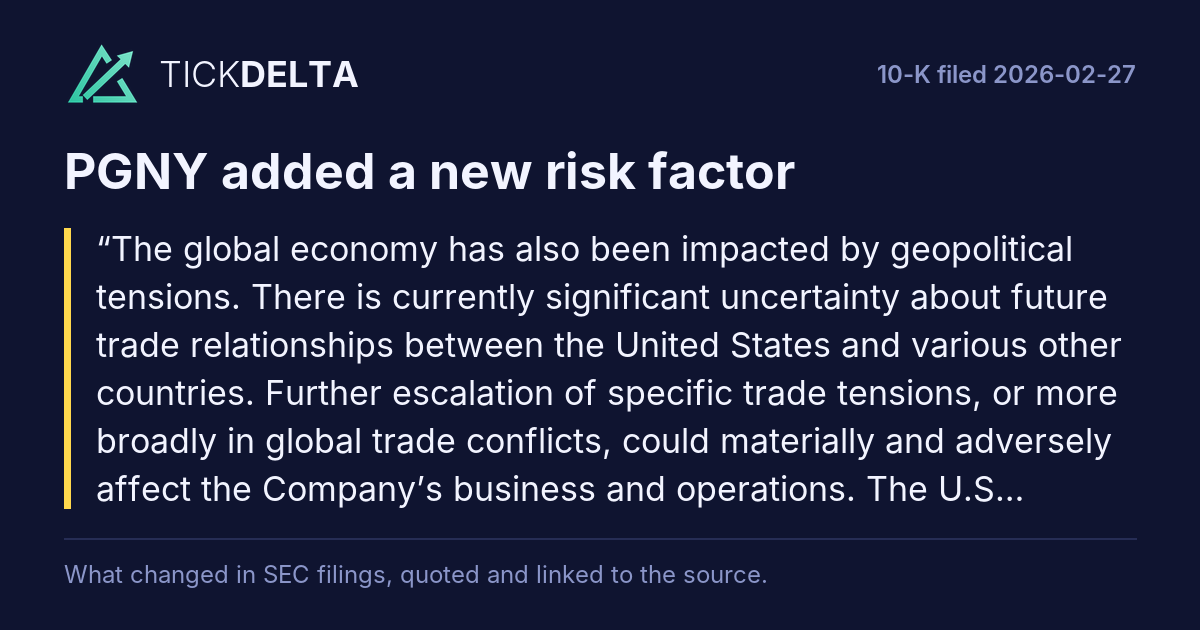
The global economy has also been impacted by geopolitical tensions. There is currently significant uncertainty about future trade relationships between the United States and various other countries. Further escalation of specific trade tensions, or more broadly in global trade conflicts, could materially and adversely affect the Company’s business and operations. The U.S. government and other governments may impose tariffs on certain pharmaceutical drugs and their components that may impact pharmaceutical imports into the United States, and we, our customers, suppliers, and our pharmacy program partners may then become subject to additional tariffs and adverse business impacts. If we are not successful in mitigating the impact of tariffs, trade barriers, and other geopolitical disruptions, our business, financial condition and results of operations may be adversely affected.
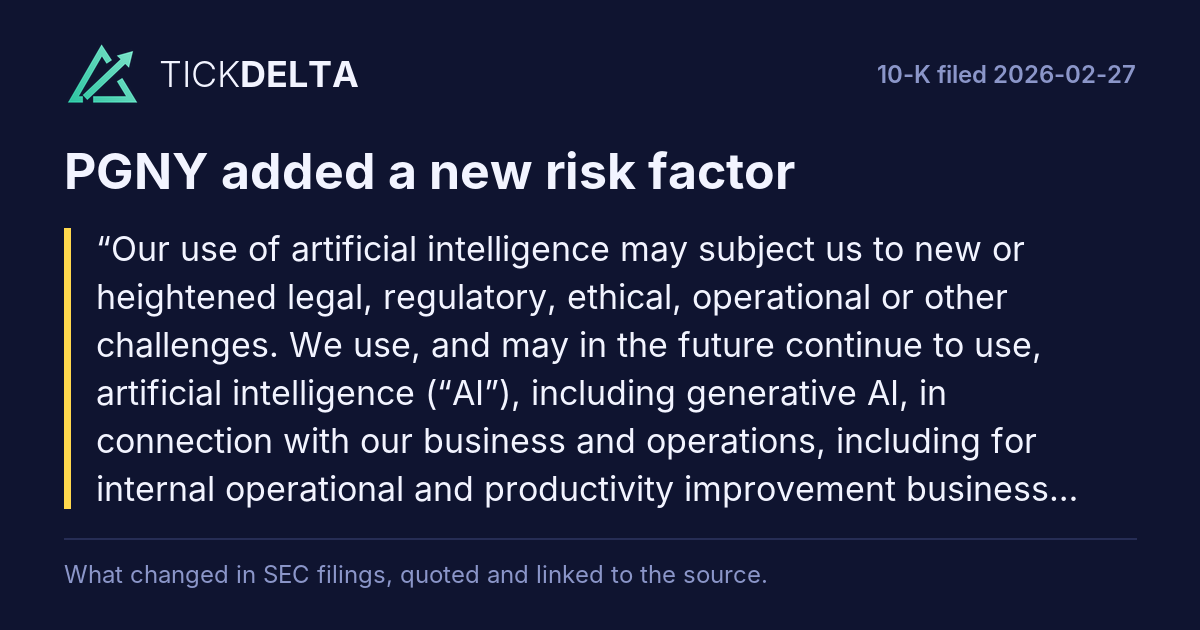
Our use of artificial intelligence may subject us to new or heightened legal, regulatory, ethical, operational or other challenges.
We use, and may in the future continue to use, artificial intelligence (“AI”), including generative AI, in connection with our business and operations, including for internal operational and productivity improvement business purposes. There are significant risks involved in utilizing AI, the development and use of which is still in its early stages, and no assurance can be provided that such use will enhance our business or operations or result in our business or operations being more efficient or profitable. AI models and algorithms, and the data, prompts and other material or content on which it relies, as well as the output thereof, could be flawed, insufficient, of poor quality, reflect unwanted forms of bias, or contain other errors or inadequacies, any of which may not be easily detectable. AI has also been known to produce false or “hallucinatory” inferences or outputs, and AI can subject users to new or heightened legal, regulatory, ethical, operational, reputational or other challenges. Inappropriate or controversial data practices by developers and end-users, or other factors adversely affecting public opinion of AI, could impair the acceptance of AI solutions. If the AI solutions that we use are or are perceived to be deficient, inaccurate or controversial, we could suffer operational inefficiencies, competitive harm, legal liability, brand or reputational harm, or other adverse impacts on our business, operations and financial results. The use of AI solutions by companies has also resulted in, and may in the future result in, failures, interruptions and security breaches of their information technology systems and data privacy violations that implicate the personal data or confidential information of users of such AI solutions. If any of our employees, contractors, vendors or service providers use any third-party AI solutions in connection with the services they provide to us, it may lead to the inadvertent disclosure of our confidential information, including personal information of our clients and members, which may impact our ability to secure such information, or adequately protect and enforce our intellectual property rights, harming our competitive position and business. Further, any content created by us using generative AI may not be subject to copyright protection which may adversely affect our intellectual property rights in, or ability to commercialize or use, any such content.
Regulation of AI is rapidly evolving worldwide and may change the competitive landscape of our and many other industries. AI is also an area of increased focus for legislators and regulators as this emerging technology develops. The technologies underlying AI and its uses are already subject to a variety of laws and regulations, including intellectual property, data privacy and security, consumer protection, competition, and equal opportunity laws and regulations, and are expected to be subject to increased regulation and new laws or new applications of existing laws and regulations. It is possible that we will not be able to anticipate how to respond to these rapidly evolving frameworks, and we could be required to expend resources to adjust our offerings in certain jurisdictions if the legal frameworks are inconsistent across jurisdictions. If we do not have sufficient rights to use the models, algorithms, data, prompts or other material or content on which our AI solutions rely, or the output thereof, we could also incur liability through the violation of applicable laws and regulations, third-party intellectual property, privacy or other rights, or contracts to which we are a party. Furthermore, because AI technology itself is highly complex, costly, and rapidly developing, it is not possible to predict all of the legal, operational or technological risks that may arise relating to the use of AI.
New in the latest 10-Q
0 paragraphs in the 10-Q filed Nov 5, 2026 with nothing like them in the 10-Q filed Aug 7, 2026 (at least half the words must differ; new numbers alone do not count). Quoted exactly, grouped by the item heading above them. This is text that changed, not a judgement of how serious it is.
Nothing in the latest 10-Q is new compared with the one before it.
Item 1A of the 10-Q filed Nov 5, 2026 against Item 1A of the 10-K filed Feb 27, 2026.
A 10-Q repeats only the risks that changed, so a 10-K paragraph that is missing from it is not counted as removed.
Added is a paragraph with nothing like it in the 10-K, Reworded a sentence that is in both with several words changed,
Quiet changes a sentence in both where one to four words changed and one is a hedge or a modal
(cut words struck through, new words highlighted).
Text on the page, not a score; each links to the filing at sec.gov.
The first 15 of 24 are shown (at most 12 of each type).
Two-word phrases in Risk Factors of the 10-K filed Feb 27, 2026 that are in none of the 1 earlier 10-Ks stored, back to Mar 3, 2025
Used at least twice, small words left out. Counted, not picked: a phrase can be new because the company renamed something.
5 paragraphs of last year's Risk Factors with nothing like them now. The longest are quoted.
Item 1A of each 10-K and 10-Q on EDGAR, quoted exactly. Each paragraph links to the filing at sec.gov.
10-K change: what was reworded or cut, section by section.
Excel workbook · CSV. Google Sheet that stays up to date: paste =IMPORTDATA("https://tickdelta.com/company/PGNY/export.csv") into a cell.