challenges in establishing and maintaining a pricing model that balances profitability with customer acquisition and retention;
difficulties in attracting, training, and retaining qualified software engineers, cloud infrastructure specialists, and sales and customer support personnel;
risks associated with maintaining and enhancing platform stability, scalability, and performance, particularly during periods of high usage;
potential service outages or disruptions that could harm customer trust, damage our reputation, and result in financial losses;
misestimating data center capacity requirements or related capital expenditures for servers, storage, and networking infrastructure;
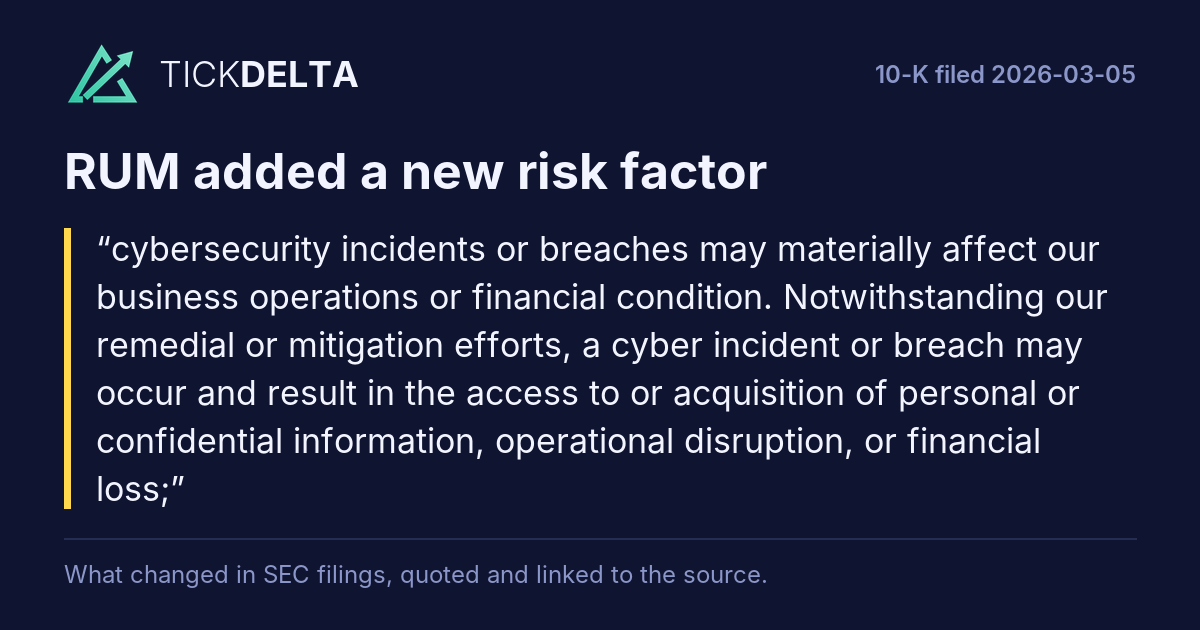
exposure to liability and reputational damage in the event of a data breach or any other cybersecurity incident involving customer or personal information;
risks that customers may use our platform to host illegal or infringing content, which could lead to regulatory actions, monetary penalties, or enforced service suspensions;
challenges in maintaining compatibility with third-party applications and integrations critical to our customers’ operations; and
inability to keep pace with rapid technological changes and evolving customer demands through timely innovation.
If we fail to manage these risks effectively or mitigate their consequences, our reputation, customer relationships, and competitive position could suffer, resulting in a material adverse impact on our business, financial condition, and results of operations.
On July 18, 2025, the Guiding and Establishing National Innovation for U.S. Stablecoins Act (the “GENIUS Act”) was passed and signed into law of the United States, which directs for a federal regulatory framework for the issuance of “payment stablecoins” that are designed to be used as a means of payment and settlement. While the GENIUS Act has been signed into law, it will not become effective until the earlier of January 18, 2027 or 120 days after the primary federal payment stablecoin regulators issue any final regulations implementing the GENIUS Act. The impact of these legal and regulatory changes associated with the GEINUS Act will depend in part on how such act is implemented through rulemaking by U.S. regulators. Therefore, while a consistent federal framework could increase institutional and consumer confidence in stablecoins over time, the scope, timing, and substance of implementing the associated regulations and supervisory practices remain uncertain.
The operation of the Rumble Wallet, our recently launched non-custodial crypto wallet, which enables users to hold multiple cryptocurrencies, engage in tipping on our video platform, and utilize on- and off-ramps through partnership with a third-party crypto exchange, exposes us to significant regulatory, operational, security, and market risks that could adversely affect our business, financial condition, results of operations, and reputation.
The cryptocurrency industry is subject to extensive and evolving regulatory scrutiny in the United States and internationally, including from federal agencies and state financial regulators. Our crypto wallet and associated features, even though non-custodial in nature (meaning we do not hold or control users’ private keys or assets), may be deemed to involve money transmission, securities activities, or other regulated financial services, particularly in connection with tipping functionality and integrations with third-party exchanges for fiat-to-crypto conversions. Changes in laws, regulations, or interpretations, such as classifications of certain cryptocurrencies as securities, enhanced know-your-customer or anti-money laundering requirements, or restrictions on non-custodial wallets, could require us to obtain licenses, modify our offerings, or cease operations in certain jurisdictions. Noncompliance, whether actual or alleged, could result in investigations, enforcement actions, fines, penalties, or litigation, which may be costly and time-consuming to defend. For example, if regulators view our tipping feature as facilitating unregistered securities transactions or unlicensed money services, we could face significant liabilities.
Our reliance on a partnership with an existing crypto exchange for on- and off-ramp services introduces dependency risks. The exchange may experience operational disruptions, security breaches, regulatory issues, or insolvency, which could interrupt our users’ ability to deposit or withdraw funds, leading to user dissatisfaction, loss of trust, and potential claims against us. We have limited control over the exchange’s compliance, performance, or risk management practices, and any failures on the exchange’s part could be attributed to us by users or regulators, harming our brand and exposing us to liability.
Security vulnerabilities remain a critical concern, despite the non-custodial design. Our video platform’s integration with the wallet could be targeted by cyberattacks, phishing schemes, or exploits aimed at users’ devices or our software interfaces, potentially resulting in unauthorized access, theft of user assets, or data breaches. User errors, such as loss of private keys or exposure to scams, could also lead to financial losses for which users might seek to hold us responsible through lawsuits or negative publicity.
Competition in the crypto wallet space is significant, with established players offering similar non-custodial solutions. If our wallet fails to achieve sufficient user adoption due to usability issues, lack of supported cryptocurrencies, or superior alternatives, we may incur substantial development and marketing costs without corresponding benefits. Moreover, broader market events, such as crypto market crashes, exchange failures (such as the FTX bankruptcy), or increased regulatory crackdowns, could reduce overall interest in cryptocurrencies, diminishing the value of our wallet features and potentially leading to impairment of related investments or assets. Any of these risks could result in increased operating expenses, loss of users, damage to our reputation, or material adverse effects on our financial performance.
Our business increasingly relies on artificial intelligence (“AI”) technologies, including generative AI and emerging agentic systems, to support operational efficiency, product development, data analysis, and innovation. While these technologies present important opportunities, their development, integration, and use involve substantial risks that could adversely affect our business, financial condition, results of operations, reputation, and the market price of our securities.
The regulatory environment surrounding AI is evolving rapidly and inconsistently across jurisdictions, creating compliance challenges, increased costs, and uncertainty. In the United States, regulators, including the SEC, have intensified scrutiny of AI-related disclosures and the risk of “AI-washing,” while emerging state and federal rules increasingly address automated decision-making, transparency, bias, and consumer protection. Internationally, comprehensive regimes, such as the EU AI Act, apply extraterritorially and may require us to classify and manage AI systems based on risk, conduct assessments or audits, implement additional safeguards, or limit certain uses. We may not always be able to anticipate how courts and regulators will apply existing laws to AI, predict how new legal frameworks will develop to address AI, or otherwise respond to these frameworks as they are still rapidly evolving. Failure to anticipate or comply with applicable requirements could result in fines, enforcement actions, operational restrictions, or reputational harm. Divergent and changing rules may require us to tailor AI deployments by jurisdiction, and we may also have to expend resources to adapt to new legal frameworks and adjust our offerings in certain jurisdictions if the legal frameworks on AI are not consistent across jurisdictions.
Our use of AI also exposes us to legal, intellectual property, and liability risks. AI-generated outputs, including content, code, analytics, or decision recommendations, may be inaccurate, fabricated, biased, or derived from third-party materials without appropriate rights, potentially leading to claims of copyright or patent infringement, defamation, privacy violations, or discrimination under applicable laws. We could face litigation, regulatory investigations, indemnity claims from customers, or direct liability if AI-driven outputs cause harm, contribute to flawed business decisions, or produce discriminatory or misleading results, and evolving interpretations of intermediary liability, fair use, and product liability add further uncertainty.
Our reliance on third-party AI providers and infrastructure creates vendor and concentration risk. Disruptions at key vendors, such as outages, performance issues, abrupt policy or pricing changes, feature deprecations, or terminations, could impair critical functions, delay product development, degrade user experiences, or increase our costs. We have limited visibility into vendors’ models, training data, update practices, and internal controls, and may inherit issues such as inaccuracies, bias, data retention concerns, or intellectual property infringement, notwithstanding contractual protections that may be insufficient or difficult to enforce. New or evolving regulations addressing AI supply chains and third-party risk may impose additional obligations on us as a user of these services.
Our reliance on third-party AI providers and infrastructure creates vendor and concentration risk. Disruptions at key vendors, such as outages, performance issues, abrupt policy or pricing changes, feature deprecations, or terminations, could impair critical functions, delay product development, degrade user experiences, or increase our costs. We have limited visibility into vendors’ models, training data, update practices, and internal controls, and may inherit issues such as inaccuracies, bias, data retention concerns, or intellectual property infringement, notwithstanding contractual protections that may be insufficient or difficult to enforce. New or evolving regulations addressing AI supply chains and third-party risk may impose additional obligations on us as a user of these services.
Operational, cybersecurity, and data privacy risks are amplified by AI adoption. AI systems can exhibit errors, hallucinations, model drift, degraded performance, adversarial vulnerabilities, or unexpected behaviors that, without adequate human oversight and safeguards, could disrupt operations, diminish product quality, impact financial reporting, adversely affect individuals, or undermine trust in our offerings. AI systems often process large volumes of data and expand the attack surface, while techniques such as AI-enabled malware, deepfakes, model inversion extraction, or prompt-injection attacks may increase the sophistication of threats. Breaches, unauthorized access to or acquisition of, or misuse of data, including personal information, used in or produced by AI systems could lead to financial losses, regulatory penalties, and litigation, and AI systems may inadvertently expose proprietary or personal information.
Reputational and ethical risks are significant, as AI raises concerns about bias, misinformation, job displacement, and environmental or other societal impacts. Public scrutiny, negative media coverage, stakeholder backlash, or association with controversial AI practices could damage our brand, customer relationships, ability to attract and retain talent, or investor confidence, particularly as expectations for robust AI governance, transparency, and board oversight continue to increase. Mitigating these risks requires ongoing investment in governance frameworks, policies, training, audits, ethical guidelines, insurance, and technical safeguards, which may increase expenses and affect profitability.
The pace of AI evolution and uncertainty in applicable laws and stakeholder expectations make it difficult to predict or fully mitigate all risks, and any of these factors could have a material adverse effect on our business. In addition, AI may not develop in accordance with market acceptance of features, products, or services. We regularly evaluate our product roadmaps and make significant changes as our understanding of the technological challenges and market landscape of AI, as well as our product ideas and designs, continue to evolve. As a result of these or other factors, our AI strategy and investments may not be successful in the foreseeable future, or at all, which could adversely affect our business, reputation, or financial results.
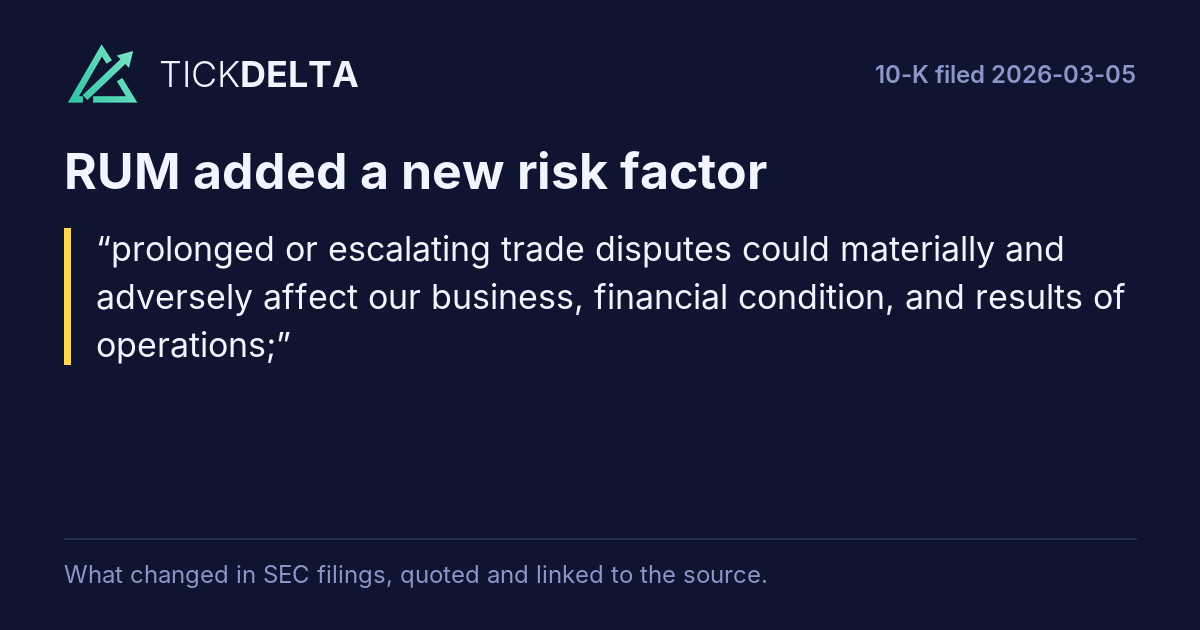
Prolonged or escalating trade disputes could materially and adversely affect our business, financial condition, and results of operations.
Our business, operations, and financial condition may be adversely affected by ongoing trade disputes, including tariffs, trade restrictions, and other protectionist measures imposed by governments globally. While we do not directly engage in the importation or exportation of goods, we operate within a complex global ecosystem that is highly sensitive to disruptions caused by trade conflicts. These disputes could lead to increased costs, supply chain disruptions, and reduced demand for our products and services, even though our operations are primarily service-based. Trade disputes may result in higher costs for hardware, components, or software services provided by our suppliers, who may face tariffs or other trade barriers and are likely to pass these costs on to us. Additionally, trade disputes may disrupt the global supply chains on which our partners or customers rely, potentially reducing advertising spend and delaying the development, deployment, or adoption of our cloud technology solutions. Trade disputes may also contribute to broader economic uncertainty, including inflationary pressures, currency fluctuations, or reduced global investment in advertising and technology, leading to decreased demand for our advertising and cloud offerings, as customers seek to reduce costs. Geopolitical tensions arising from trade conflicts could also result in regulatory changes, such as export controls or data localization requirements, which may increase our compliance costs or restrict our ability to operate in certain markets.
The unpredictable nature, duration, and severity of trade disputes make it difficult for us to fully mitigate their impact. Prolonged or escalating trade disputes could materially and adversely affect our business, financial condition, and results of operations.
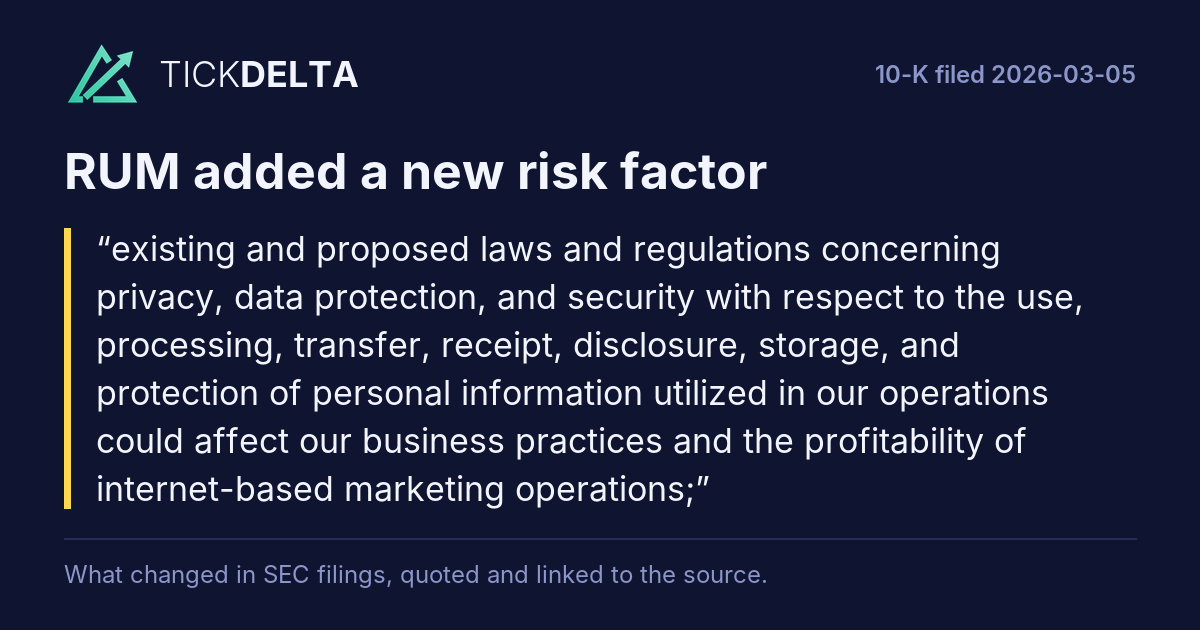
In the United States, the patchwork of state comprehensive consumer privacy laws continues to expand, with new laws taking effect in Indiana, Kentucky, and Rhode Island on January 1, 2026, bringing the total to approximately 20 states with such frameworks. Recent developments include California’s finalized regulations (effective in phases starting January 1, 2026) on automated decision-making technology, risk assessments, and cybersecurity audits under the CCPA, as well as heightened focus on sensitive data (such as precise geolocation, health information, biometrics, and neural data) in various states, such as Maryland (effective 2025), Oregon, Colorado, Connecticut (with amendments lowering thresholds and expanding protections effective mid-2026), and Utah (with amendments to allow the right of correction, effective mid-2026). Enforcement by U.S. state attorneys general and the FTC has intensified in 2025, targeting issues such as dark patterns, universal opt-out mechanisms, data broker practices, children’s privacy, and sensitive data handling, with expectations of continued aggressive activity in 2026.
These regulations impose strict obligations on the collection, storage, processing, and transfer of personal information, with substantial penalties for noncompliance, which include but are not limited to litigation costs and reputational harm in the event of a breach of personal information on our information security systems.
Emerging regulations add further complexity to the regulatory landscape of privacy laws. The EU AI Act, now in phased enforcement (with prohibitions effective since 2025, core high-risk system obligations largely applying from August 2026, and remaining provisions by 2027), categorizes AI systems by risk and may require significant changes to our technology, operations, transparency measures, or governance if our cloud services involve or support AI deployments. Potential U.S. federal cybersecurity mandates, including ongoing developments in incident response, enhanced focus on cloud security configurations, and sector-specific rules, introduce additional uncertainty and compliance burdens.
We are exposed to significant regulatory, operational, compliance, privacy, and legal risks related to age verification and child online safety laws implemented in various U.S. states and foreign jurisdictions.
The implementation and enforcement of age verification and child online safety laws in various U.S. states and foreign jurisdictions present significant regulatory, operational, compliance, privacy, and legal risks to our business as a video services provider, which could adversely affect our MAUs, revenue, reputation, and financial condition. Numerous laws, regulations, and legally-binding codes, such as the U.S. federal Children’s Online Privacy Protection Act, California’s Age Appropriate Design Code, the UK’s Online Safety Act and Age Appropriate Design Code, the CCPA and other U.S. state comprehensive privacy laws, the GDPR, and the DSA, impose various obligations on companies that process minors’ data and/or provide online services, or other interactive platforms used by children, including prohibiting showing minors advertising, requiring age verification, limiting the use of minors’ personal information, requiring certain consents to process such personal information and extending certain rights to children and their parents with respect to that personal information. These laws may result in restrictions on the use of certain of our products or services by teens, may prohibit us from offering certain of our products or services to teens, and may decrease daily active users or user engagement in various jurisdictions. These laws may be, and in some cases already have been, subject to legal challenges and changing interpretations which may further complicate our efforts to comply with laws applicable to us. Some of these obligations have wide-ranging application, including for services that do not intentionally target child users (defined in some circumstances as a user under the age of 18 years old). The resulting patchwork of regulations is rapidly evolving, with potential for additional jurisdictions to adopt similar measures, creating inconsistent and overlapping obligations.
We have already implemented a minimum age of 17 for registered users on our video platform and require users to provide their date of birth. However, compliance with these new laws may require us to implement additional measures and complex age verification technologies, such as biometric data checks, third-party ID verification, or parental consent mechanisms, which could involve substantial development, integration, and ongoing maintenance costs. This may decrease our advertising and subscription revenue, and increase legal risk and compliance costs for us and our third-party partners, which may harm the profitability of our business. These systems may generally deter users from using our platform and create risks of inaccurate age determinations, user circumvention, or over-blocking of legitimate adult users, potentially resulting in reduced user acquisition, engagement, and retention, particularly among younger demographics that represent a significant portion of our growth. Noncompliance, whether due to technical failures, conflicting jurisdictional interpretations, or delays in implementation, could lead to investigations, enforcement actions, substantial fines, class-action lawsuits, or injunctions that restrict our operations in impacted regions. If we challenge these laws, as a defendant or through industry-wide challenges, we could be negatively impacted by protracted legal battles, adverse rulings, or requirements to fundamentally alter our platform’s features, content moderation, or user experience. Additionally, varying international standards may force us to create region-specific versions of our platform, increasing operational complexity and costs while potentially fragmenting our global user community.
Broader market reactions, such as user backlash against perceived privacy intrusions or reduced platform accessibility, could erode trust in our brand and lead to competitive disadvantages if our competitors are able to adapt more effectively. We may incur significant expenses for legal counsel, technology upgrades, and compliance programs, and there is no assurance that these measures will fully mitigate the risks. The materialization of any of these factors could have a substantial negative impact on our business and results of operations.
The provision of our Charter requiring exclusive forum in certain courts in the State of Delaware or the federal district courts of the United States for certain types of lawsuits may have the effect of discouraging lawsuits against our directors and officers.
On November 10, 2025, we entered into the ND Business Combination Agreement. Please refer to “Significant Events and Transactions” under “Item 7. Management’s Discussion and Analysis of Financial Condition and Results of Operations” in this Annual Report for more information. The following are several risks we face in connection with the ND Business Combination.
The consummation of the ND Business Combination is subject to certain conditions, which could delay, extend or prevent the Exchange Offer and the ND Business Combination.
Rumble’s public exchange offer to Northern Data Shareholders (“Northern Data Shareholders”) for acquiring all outstanding no-par value bearer shares of Northern Data by exchanging one share of Northern Data for 2.0281 shares of newly issued Class A Common Stock of Rumble (the “Exchange Offer”) will be subject to several conditions, including the conditions relating to the relevant registration statement, the conditions relating to merger control approvals and investment control clearances (collectively, the “Regulatory Conditions”), and certain other conditions. The timing for settlement of the Exchange Offer and completion of the ND Business Combination will depend on the satisfaction of such conditions. As a result, the Exchange Offer and the ND Business Combination could be delayed, extended, amended or terminated, which could result in the Northern Data Shareholders not receiving our Class A Common Shares.
Under the terms of the ND Business Combination Agreement, if the Exchange Offer is not settled by the End Date (as defined below), the ND Business Combination Agreement may be terminated by either party. If the ND Business Combination Agreement is terminated, the ND Business Combination will not be consummated.
Under the terms of the Exchange Offer, all conditions to the Exchange Offer must be satisfied by the end of the acceptance period, except for the Regulatory Conditions. The Regulatory Conditions must be satisfied by December 31, 2026 (the “End Date”). If the Regulatory Conditions are not satisfied by the End Date, or if any other condition is not satisfied at the end of the acceptance period (unless any such non-satisfied condition has been waived, if permissible), the Exchange Offer will terminate and settlement will not occur. The parties currently expect the Regulatory Conditions to be satisfied and the ND Business Combination to be completed in the first half of 2026 but in no event later than the End Date. As a result, the exchange of shares of the issued and outstanding no-par value bearer share of Northern Data (the “Northern Data Shares”) pursuant to the Exchange Offer may be made on a date that is significantly later than the end of the acceptance period, or may not occur.
Furthermore, pursuant to the ND Business Combination Agreement, Rumble or Northern Data may terminate the ND Business Combination Agreement under certain circumstances, including, among others, if: (i) the Exchange Offer lapses due to non-satisfaction of conditions before the End Date; (ii) the Exchange Offer has not settled by the End Date; (iii) a closing condition cannot ultimately be fulfilled; or (iv) a competent governmental authority or court permanently enjoins the closing of the Exchange Offer. No assurance can be given that all of the conditions to the Exchange Offer will be satisfied or, if they are, as to the timing of the settlement of the Exchange Offer. If the conditions to the Exchange Offer are not satisfied or validly waived in advance, or if termination rights are exercised, the Exchange Offer will terminate, settlement of the Exchange Offer will not occur, and the ND Business Combination will not be completed.
Rumble and Northern Data must obtain governmental and regulatory approvals or clearances to consummate the ND Business Combination, which, if delayed or not granted, may delay or jeopardize the Exchange Offer and the ND Business Combination. In addition, conditions imposed by such agencies in connection with their approvals may adversely impact the business, financial condition, or results of operations of Rumble and Northern Data, including the loss of value of assets or businesses that may be required to be divested in connection with obtaining approvals under merger control or competition laws or foreign direct investment laws.
Completion of the ND Business Combination is conditioned upon, among other things, either receipt of approvals or clearances from the relevant antitrust authority or expiration or termination of any statutory waiting period (including any extension thereof) under merger control or competition law regimes in any jurisdictions where the parties to the ND Business Combination Agreement have mutually determined merger control or competition law filings and/or notices to be necessary, as well as clearances from relevant authorities under foreign direct investment regimes in any jurisdictions where the parties to the ND Business Combination Agreement have mutually determined foreign direct investment filings and/or notices to be necessary. The governmental and regulatory agencies from which Rumble and Northern Data will seek these approvals and clearances have broad discretion in administering the applicable governing regulations. As a condition to their approval of the transactions contemplated by the ND Business Combination Agreement, those agencies may impose requirements, limitations, or costs, or require divestitures or place restrictions on the conduct of Rumble’s and Northern Data’s respective businesses. Pursuant to the ND Business Combination Agreement, Rumble and Northern Data will cooperate with each other, to the extent legally permissible, in all respects in connection with any additional submission, investigation, or inquiry, and supply to any competent authority as promptly as reasonably practicable any additional information requested pursuant to any applicable law and take all other procedural actions (other than offering remedies to mitigate competition concerns by a competent authority) required in order to obtain any necessary clearance or to cause any applicable waiting periods to commence and expire. No assurance can be given that the required approvals and clearances will be obtained or that the required conditions to the Exchange Offer will be satisfied, and, even if all required approvals and clearances are obtained and the conditions to the Exchange Offer are satisfied, no assurance can be given as to the terms, conditions, and timing of the approvals. If the Regulatory Conditions are not satisfied by the End Date (or, if permissible, waived), the Exchange Offer will terminate, settlement of the offer will not occur, and the ND Business Combination will not be completed. Any delay in the completion of the ND Business Combination for regulatory reasons could diminish the anticipated benefits of the ND Business Combination or result in additional transaction costs.
Conditions imposed by regulatory agencies in connection with their approval or clearance of the ND Business Combination may require changes to the operations of Rumble or Northern Data, restrict their ability to operate in certain jurisdictions following the ND Business Combination, restrict the combination of Rumble’s and Northern Data’s operations in certain jurisdictions, or require other commitments regarding ongoing operations. Such conditions may also restrict Rumble’s or Northern Data’s ability to modify the operations of their businesses in response to changing circumstances for a period of time after completion of the ND Business Combination and the Exchange Offer or their ability to expend cash for other uses or otherwise have an adverse effect on the anticipated benefits of the ND Business Combination, thereby adversely impacting the business, financial condition, or results of operations of Rumble and Northern Data. Such conditions may also impose requirements that Rumble or Northern Data divest certain assets in order to obtain certain regulatory approvals, which may result in loss of value due to the loss of those assets or businesses or a sale of those assets or businesses at less than the desired price or under otherwise unfavorable conditions, in particular as a result of timing constraints and the limited universe of buyers acceptable to the regulatory authorities, especially in challenging market conditions. Any such actions could have a material adverse effect on the business, results of operations, financial condition, and prospects of Rumble and substantially reduce or eliminate the advantages which Rumble and Northern Data expect to achieve from the ND Business Combination.
The prices of our Class A Common Shares may be adversely affected if the ND Business Combination is not completed.
If the ND Business Combination is not completed, the market price of our Class A Common Shares may decline for various reasons, including to the extent that the current market prices of our Class A Common Shares reflect a market premium based on the assumption that the ND Business Combination will be completed.
If the number of Northern Data Shares held directly by Rumble reaches or exceeds 90% or 95% of Northern Data’s share capital, Rumble may, in its sole discretion, elect to carry out a squeeze-out of minority holders of Northern Data Shares.
After the settlement of the Exchange Offer, Rumble will consider, if it has reached the necessary thresholds, carrying out a squeeze-out of the remaining Northern Data Shareholders. A squeeze-out transaction may be effected in two ways: (i) a cash merger squeeze-out pursuant to Sections 62(1) and 62(5) of the German Transformation Act (Umwandlungsgesetz), if Rumble holds at least 90% of Northern Data’s share capital, excluding treasury shares and shares held for the account of Rumble; or (ii) a corporate squeeze-out pursuant to Sections 327a et seq. of the German Stock Corporation Act (Aktiengesetz), if Rumble holds at least 95% of Northern Data’s share capital, excluding treasury shares and shares held for the account of Rumble. In the event of a cash merger squeeze-out or a corporate squeeze-out, shares of Northern Data Shareholders who did not tender their shares in the Exchange Offer will automatically be converted into the right to receive adequate cash compensation. In a squeeze-out transaction, Rumble will determine the adequate compensation. In general, the compensation must not be less than the volume-weighted average share price of Northern Data Shares for the three-month period prior to the announcement of Rumble’s intention to effect such squeeze-out transaction. Following the approval of a cash merger squeeze-out or a corporate squeeze-out by a shareholder meeting of Northern Data and its registration with the competent commercial register, each remaining minority shareholder of Northern Data may review such determination in court pursuant to the German Appraisal Proceedings Act (Spruchverfahrensgesetz). The amount of compensation paid for Northern Data Shares in an appraisal proceeding, if any, may be higher or lower than, or equal to, our Class A Common Shares and the cash consideration amount (if any) offered in the Exchange Offer. If Rumble is unable to complete a squeeze-out, the remaining Northern Data Shareholders will continue to be entitled to all ordinary shareholder rights (except for annual dividends in the case of a domination and profit and loss transfer agreement, which, however, will not be implemented for a period of three years after the closing of the Exchange Offer).
Following the completion of the ND Business Combination, Northern Data will be indirectly majority owned by Rumble and the management board of Northern Data will continue to manage Northern Data independently in accordance with and within the framework of German law.
Following the completion of the ND Business Combination, Northern Data will be indirectly majority-owned by Rumble and, thus, become a dependent company of Rumble within the meaning of Section 17 of the German Stock Corporation Act (Aktiengesetz). The legal framework for this dependency between Rumble and Northern Data is, subject to other applicable law, set forth in Sections 311 et seq. of the German Stock Corporation Act (Aktiengesetz). Under this framework, until such time as BidCo is able to complete a squeeze out, Rumble, through its wholly-owned indirect subsidiary, Bidco, may be unable to initiate certain transactions or measures that are disadvantageous to Northern Data, unless Rumble provides adequate compensation to Northern Data. If the disadvantage caused by any such transaction or other measure cannot be assessed or compensated, Rumble will be unable to initiate such transaction or measure, which may preclude Rumble from implementing certain transactions related to the integration of Northern Data into the combined group, which could adversely affect the business of, or harm the results of operations, financial condition or cash flows of Rumble and the combined company.
The announcement and pendency of the ND Business Combination, during which Northern Data is subject to certain operating restrictions, could have an adverse effect on Rumble and Northern Data’s businesses, cash flows, financial condition, and results of operations.
The announcement and pendency of the ND Business Combination could disrupt Rumble’s and Northern Data’s businesses, and uncertainty about the effect of the ND Business Combination may have an adverse effect on Rumble and Northern Data. These uncertainties could cause suppliers, vendors, partners, customers, and others that deal with Rumble and Northern Data to defer entering into contracts with, or making other decisions concerning Rumble and Northern Data or to seek to change or cancel existing business relationships with the companies. In addition, Rumble’s and Northern Data’s employees may experience uncertainty regarding their roles after the ND Business Combination. Employees may depart either before or after the completion of the ND Business Combination because of uncertainty and issues relating to the difficulty of coordination or because of a desire not to remain following the ND Business Combination. Therefore, the pendency of the ND Business Combination may adversely affect Rumble’s and Northern Data’s ability to retain, recruit, and motivate key personnel. Additionally, the attention of Rumble’s and Northern Data’s management may be directed towards the completion of the ND Business Combination, including obtaining regulatory approvals, and may be diverted from the day-to-day business operations of Rumble and Northern Data. Matters related to the ND Business Combination may require commitments of time and resources that could otherwise have been devoted to other opportunities that might have been beneficial to Rumble and Northern Data. Additionally, the ND Business Combination Agreement contains interim operating covenants requiring Northern Data to refrain from taking certain specified actions while the ND Business Combination is pending, such as significant investments or disposals. These restrictions may prevent Northern Data from pursuing otherwise attractive business opportunities or capital structure alternatives and from executing certain business strategies prior to the completion of the ND Business Combination. Further, the ND Business Combination may give rise to potential liabilities, including those that may result from pending and future stockholder lawsuits relating to the ND Business Combination. Any of these matters could adversely affect the businesses of, or harm the results of operations, financial condition, or cash flows of Rumble and Northern Data.
Further, certain adverse changes in the business of Northern Data or Rumble in the period prior to the closing of the ND Business Combination may occur that would not result in Rumble or Northern Data having the right to terminate the ND Business Combination Agreement or the Exchange Offer. If adverse changes occur but Rumble and Northern Data are still required to complete the ND Business Combination, the market value of our Class A Common Shares or Northern Data Shares may decrease. If the ND Business Combination is not completed, these risks may still materialize and adversely affect the business and financial results of Rumble and/or Northern Data or the market prices of our Class A Common Shares or the Northern Data Shares.
Negative publicity related to the ND Business Combination may adversely affect Rumble and Northern Data.
From time to time, political and public sentiment in connection with the ND Business Combination may result in significant adverse press coverage and other adverse public statements affecting the parties to the ND Business Combination. Adverse press coverage and public statements, whether or not driven by political or popular sentiment, may also result in legal claims or in investigations by regulators, legislators and law enforcement officials. Responding to these investigations and lawsuits, regardless of the ultimate outcome of the proceedings, could divert the time and effort of senior management from operating their businesses. Addressing any adverse publicity, governmental scrutiny or enforcement, or other legal proceedings could be time-consuming and expensive and, regardless of the factual basis for the assertions being made, could have a negative impact on the reputation of Rumble and Northern Data, on the morale and performance of their employees and on their relationships with regulators, suppliers, and customers. It may also have a negative impact on their ability to take timely advantage of various business and market opportunities. The direct and indirect effects of negative publicity, and the demands of responding to and addressing it, may have a material adverse effect on Rumble’s and Northern Data’s respective business and cash flows, financial condition, and results of operations.
Certain of the directors, board members, and executive officers of Rumble and Northern Data may have interests in the ND Business Combination that may be different from, or in addition to, those of Rumble Stockholders and Northern Data Shareholders, respectively.
Certain of the directors and executive officers of Rumble and certain members of Northern Data’s management board and supervisory board may have interests in the ND Business Combination that may be different from, or in addition to, the interests of the stockholders of Rumble (“Rumble Stockholders”) and Northern Data Shareholders, respectively. In the case of Rumble’s directors and executive officers, these interests include the continued service of such directors and executive officers following the closing of the ND Business Combination and the indemnification of such directors and executive officers. Rumble’s directors and executive officers also own Rumble voting securities. In the case of the Northern Data’s management board members and supervisory board members, these interests may include the continued service of such management board members following the closing of the ND Business Combination as well as the sale of Northern Data Shares in exchange for our Class A Common Shares at the Exchange Ratio or the opportunity to tender their Northern Data Shares into the Exchange Offer by the Northern Data’s management board members and certain supervisory board members.
The Board of Rumble and the management board and supervisory boards of Northern Data were aware of and have considered these interests (to the extent that they existed at the time), among other matters, in evaluating and negotiating the ND Business Combination. We expect Northern Data’s management board and supervisory board will further consider these interests in connection with issuing their reasoned opinion that contains their recommendation to Northern Data Shareholders regarding acceptance of the Exchange Offer. These differing interests could result in terms that are less favorable to Rumble Stockholders and Northern Data Shareholders, including leading to increased costs and potential dilution.
Rumble and Northern Data will incur significant transaction fees and costs in connection with the ND Business Combination which costs could reduce profitability, increase net losses, and constrain liquidity.
Rumble and Northern Data expect to incur significant non-recurring implementation and restructuring costs associated with combining the operations of these two companies. In addition, Rumble and Northern Data will incur significant banking, legal, accounting, and other transaction fees and costs related to the ND Business Combination. Additional costs substantially in excess of currently anticipated costs may also be incurred in connection with the integration of the businesses of Rumble and Northern Data. These costs could reduce profitability, increase net losses, and constrain liquidity of the combined business.
Risks Relating to the Business of Rumble After Completion of the ND Business Combination
We may fail to realize the anticipated strategic and financial benefits sought from the ND Business Combination.
We may not realize all of the anticipated benefits of the ND Business Combination. The success of the ND Business Combination will depend on, among other things, our ability to combine our business with Northern Data’s business in a manner that facilitates growth.
We are seeking to successfully combine our business with Northern Data’s in a manner that permits the anticipated benefits to be realized and to achieve the anticipated growth without adversely affecting current revenues. These risks may be magnified because certain of the businesses of Northern Data represent new business lines for us in which we have little prior experience operating, and we may also fail to have access to sufficient capital to maintain and grow the acquired business as planned.
In addition, the actual integration of Rumble and Northern Data will involve complex operational, technological, and personnel-related challenges. This process will be time-consuming and expensive, and it may be disruptive to the combined businesses. We may not realize all of the anticipated benefits of the ND Business Combination. Difficulties in the integration of the businesses, which may result in significant costs and delays, include:
coordinating corporate and administrative infrastructures and aligning insurance coverage;
coordinating accounting, information technology, communications, administration, and other systems;
addressing possible differences in corporate cultures and management philosophies;
coordinating the compliance program and creating uniform standards, controls, procedures, and policies;
difficulties in integrating employees and teams of the respective businesses, and attracting and retaining key personnel;
unforeseen and unexpected liabilities related to the ND Business Combination or our business;
managing tax costs or inefficiencies associated with integrating the operations of the combined company;
effecting actions that may be required in connection with obtaining regulatory approvals; and
In addition, the growth strategy of the combined business may require a significant amount of debt financing, which may be available on unfavorable terms, if at all, and there could be risks relating to the ability of the combined business to service any such debt obligations.
These and other factors could result in increased costs and diversion of management’s time and energy, as well as decreases in the amount of expected revenue and earnings, which could materially impact our business, financial condition, and results of operations. The integration process and other disruptions resulting from the ND Business Combination may also adversely affect our relationships with employees, suppliers, customers, distributors, licensors, and others with whom Rumble and Northern Data have business or other dealings, and the difficulties in integrating the businesses of Rumble and Northern Data could harm the reputation of the combined company.
If the combined company is not able to successfully combine the businesses of Rumble and Northern Data in an efficient, cost-effective, and timely manner, the anticipated benefits and cost savings of the ND Business Combination may not be realized fully, or at all, or may take longer to realize than expected.
A combined Rumble and Northern Data may experience a loss of customers or may fail to win new customers in certain countries.
Following the ND Business Combination, third parties with whom Rumble or Northern Data had relationships prior to the announcement of the ND Business Combination may terminate or otherwise reduce the scope of their relationship with either party in anticipation or after the completion of the ND Business Combination. In addition, the combined company may face difficulties in acquiring new customers in certain countries. Any such loss of business or the inability to win new customers could limit the combined company’s ability to achieve the anticipated benefits of the ND Business Combination. Such risks could also be exacerbated by a delay in the settlement of the Exchange Offer and the ND Business Combination.
The combined company may be unable to retain and motivate Rumble and/or Northern Data personnel successfully.
The success of the ND Business Combination will depend, in part, on the combined company’s ability to retain the talents and dedication of key employees, including key decision-makers, currently employed by Rumble and Northern Data. Such employees may decide not to remain with Rumble and Northern Data, as applicable, while the ND Business Combination is pending or with the combined company after the ND Business Combination is completed. If key employees terminate their employment, or if an insufficient number of employees are retained to maintain effective operations, the combined company’s business activities may be adversely affected and management’s attention may be diverted from successfully integrating Rumble and Northern Data to hiring suitable replacements, all of which may cause Rumble’s business to deteriorate. Rumble and Northern Data may not be able to locate suitable replacements for any key employees who leave either company, or offer employment to potential replacements on reasonable terms. In addition, Rumble and Northern Data may not be able to motivate certain key employees following the completion of the ND Business Combination due to organizational changes, reassignments of responsibilities, the perceived lack of appropriate opportunities for advancement or other reasons. If the combined company fails to successfully retain and motivate the employees of Rumble and/or Northern Data, relevant capabilities and expertise may be lost, which may have an adverse effect on the cash flows, financial condition and results of operations of Rumble and Northern Data.
Our stockholders will experience immediate dilution as a consequence of the issuance of our Class A Common Shares pursuant to the Exchange Offer and the other transactions contemplated by the ND Business Combination Agreement, which could reduce the market price of our Class A Common Shares.
Pursuant to the Exchange Offer and the related purchases pursuant to the Transaction Support Agreements, a significant number of our Class A Common Shares will be issued to Northern Data Shareholders in connection with the ND Business Combination. Therefore, Rumble Stockholders will experience immediate dilution upon consummation of the ND Business Combination. This dilution could reduce the market price of our Class A Common Shares.
We may require additional capital to support our growth strategy or operations, and such financing may not be available on acceptable terms or at all.
To execute our growth strategy, we may need to raise additional capital in the future. Our ability to secure financing will depend on various factors, including market conditions, interest rates, investor sentiment toward Rumble’s industry, and Rumble’s operating performance and financial condition at the time of the financing.
We may seek additional funds through public or private equity offerings, debt financings, asset-backed lending, or strategic partnerships. However, such financing may not be available to Rumble on commercially reasonable terms, or at all. If Rumble raises funds through the issuance of equity or convertible securities, our existing stockholders could experience dilution, and any new securities may have rights, preferences, or privileges senior to those of our Class A Common Shares. If we raise funds through debt financing, we may incur significant interest obligations and be subject to restrictive covenants that could limit our operational flexibility. Moreover, reliance on outside capital increases our exposure to macroeconomic volatility, including tightening credit conditions, higher interest rates, or disruptions in financial markets. If we are unable to obtain adequate financing when needed, or if we are forced to do so under unfavorable terms, we may be unable to invest in critical initiatives, respond to competitive pressures, or scale our operations in line with demand. Any failure to secure sufficient capital to support our growth could delay or prevent the execution of our strategic objectives and materially and adversely affect our business, financial condition, and prospects.
We have no history of, and limited experience in, operating a cloud computing and data center business.
We have no history of, and limited experience in, providing GPUs-as-a-service and operating data center infrastructure of the type operated by Northern Data. Our operations, earnings, and ultimate financial success could suffer due to our management’s limited experience in this industry. Our management’s decisions and choices may not take into account standard industry best practices. Following the ND Business Combination, we may face the risks inherent in establishing and scaling an AI infrastructure and cloud services platform, including site development, power availability, and supply chain constraints, and we may not successfully integrate or profitably commercialize these services.
Tether holds, and will hold following the ND Business Combination, significant voting power in Rumble and will also be a lender to Northern Data. Accordingly, Tether may have interests in addition to or different from the interests of other Rumble Stockholders and may use its voting power, or its rights as a lender to Northern Data, to advance such interests.
As of the close of business on December 31, 2025, Tether owned approximately 7.4% of the voting power of Rumble’s outstanding capital stock and, if the ND Business Combination closed on December 31, 2025, Tether would own approximately 9.9% of the voting power of Rumble (after giving effect to certain voting limitation). Additionally, Tether will, upon the closing of the ND Business Combination, be a lender to Rumble NODE Holdco, a wholly owned subsidiary of Rumble, and Rumble NODE Holdco’s subsidiaries, including Northern Data. Tether may have interests that may be different from, or in addition to, the interests of Rumble Stockholders and Northern Data Shareholders, respectively. We cannot provide any assurances as to how Tether will vote its Rumble Class A Common Shares in future votes of Rumble Stockholders or whether Tether will vote its Rumble Class A Common Shares in pursuit of interests that align with the interests of other Rumble Stockholders.
Following the ND Business Combination, Rumble will continue to be controlled by one principal stockholder.
Rumble is controlled by Mr. Pavlovski, who is the CEO and Chairman of Rumble. He will continue to serve as CEO and Chairman of Rumble following the consummation of the ND Business Combination. Mr. Pavlovski was able to exercise approximately 83% of the voting power of Rumble’s outstanding capital stock as of December 1, 2025. Following the ND Business Combination, it is anticipated that Mr. Pavlovski will continue to exercise a substantial majority of the voting power of Rumble’s outstanding capital stock and that it will be difficult for a third party to acquire Rumble without Mr. Pavlovski’s approval, even if doing so may be in the best interest of Rumble Stockholders.