Added10-Q Nov 4, 2026 vs 10-K Feb 25, 2026
The principal risks and uncertainties affecting our business include the following:
Each branch is a paragraph in Risk Factors with nothing like it in the 10-K filed Feb 26, 2025. A box jumps to the paragraph as filed, below.
37 paragraphs in Risk Factors of the 10-K filed Feb 25, 2026 with nothing like them in the 10-K filed Feb 26, 2025. Quoted exactly. Paragraphs that were only edited are under 10-K change.
The Royalty Pharma Agreements place restrictions on our operating and financial flexibility. If we fail to comply with certain covenants in the Royalty Pharma Agreements, our financial condition and results of operations may be harmed.
In June 2025, we entered into the Royalty Purchase Agreement with Royalty Pharma and the Loan Agreement with an affiliate of Royalty Pharma and Wilmington Trust, National Association, as the administrative agent (collectively, the Royalty Pharma Agreements). The Royalty Pharma Agreements contain various customary covenants that impose on us certain obligations with respect to payment, reporting, intellectual property, certain license agreements, and certain other actions, as well as indemnification obligations. Compliance with these covenants may limit our flexibility in operating our business and our ability to take actions that might otherwise be advantageous to us and our stockholders.
Under the Royalty Purchase Agreement, we have diligence obligations with respect to certain clinical trials, regulatory submissions and marketing approvals. There are also covenants that, among other things and subject to certain conditions, limit our ability to create or incur certain liens or dispose of certain assets related to the RMC-6236 Products. Pursuant to the Royalty Purchase Agreement, we have granted to Royalty Pharma a back-up security interest in certain assets to secure our obligations under the Royalty Purchase Agreement. If we are unable to comply with our obligations, Royalty Pharma may be entitled to take possession of such assets, which could significantly harm our business, financial condition and results of operations.
The Loan Agreement also subjects us to various customary covenants that limit our ability to, among other activities (but subject to certain customary exceptions): (i) pay dividends, redeem stock or make other distributions or investments; (ii) incur additional debt; (iii) transfer or sell assets; (iv) create liens; (v) engage in certain transactions with affiliates; (vi) create restrictions on dividends or other payments by our subsidiaries; and (vii) merge, consolidate or effect other fundamental changes.
Any indebtedness we incur, including under the Loan Agreement, combined with our other financial obligations and contractual commitments could have significant adverse consequences, including:
•requiring us to dedicate a portion of our cash resources to the payment of interest and principal, reducing money available to fund working capital, capital expenditures, product candidate development and other general corporate purposes;
•increasing our vulnerability to adverse changes in general economic, industry and market conditions;
•subjecting us to restrictive covenants that may reduce our ability to take certain corporate actions or obtain further debt or equity financings;
•increasing our need to meet minimum net sales requirements when our future sales are uncertain;
•limiting our flexibility in planning for, or reacting to, changes in our business and the industry in which we compete; and
•placing us at a competitive disadvantage compared to our competitors that have less debt or better debt servicing options.
We intend to satisfy our current and future debt service obligations with our then-existing cash and cash equivalents. However, we may not have sufficient funds, and may be unable to arrange for additional financing, to pay the amounts due under the Loan Agreement or any other debt instruments. Failure to satisfy our current and future debt obligations, including covenants to take or avoid specific actions, under the Loan Agreement could result in an event of default and, as a result, the lender(s) could accelerate all of the amounts due, and the lender(s) could seek to enforce their security interests in any collateral securing such indebtedness. The lender(s) under the Loan Agreement have rights senior to our stockholders in receiving proceeds from a liquidation. In addition, the covenants under the Loan Agreement, and the pledge of our assets (including our intellectual property) as collateral could limit our ability to obtain additional debt financing. If we raise any additional debt financing, the terms of such additional debt could further restrict our operating and financial flexibility.
We are aware of several pharmaceutical companies developing products in the same class as our investigational products. See “Item 1. Business—Competition” for additional information regarding our competitors.
The U.S. presidential administration has stated that it is pursuing a two-fold strategy to reduce drug costs in the U.S. While it is unclear whether and how these proposals will be implemented, they are likely to have a negative impact on the pharmaceutical industry and on our ability to receive adequate revenues for any product candidate that we commercialize. On the one hand, the administration has threatened to impose significant tariffs on pharmaceutical manufacturers that do not adopt pricing policies such as most favored nation pricing, which would tie the price for drugs in the U.S. to the lowest price in a group of other countries. In response, multiple manufacturers have reportedly entered into confidential pricing agreements with the federal government. On the other hand, the administration is pursuing traditional regulatory pathways to impose drug pricing policies, and published two proposed regulations in December 2025, referred to as Globe and Guard. If finalized, these regulations would implement mandatory payment models under which manufacturers of eligible drugs would be required to pay rebates to the federal government on a portion of the units of their drugs that are reimbursed by Medicare, with the rebate amount based on most favored nation pricing. Imposing a rebate in the U.S. that is based on drug prices outside the U.S. would mark a drastic and unprecedented shift in the U.S. pharmaceutical market, and while the impact of the Globe and Guard proposed regulations, if finalized, cannot yet be determined, it is likely to be significant. Even if such initiatives are modified, delayed, or challenged, the uncertainty surrounding these policy proposals may impair our ability to forecast revenues, plan commercial launch activities, negotiate favorable contracts with payors, or make investment decisions regarding manufacturing scale-up and commercialization infrastructure.
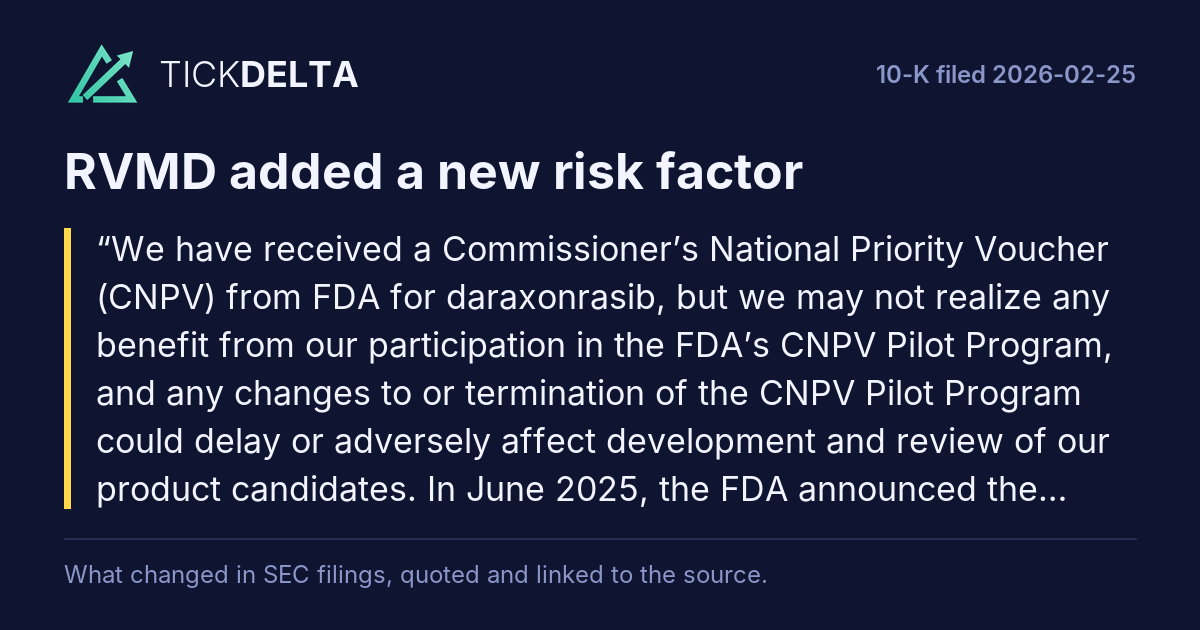
We have received a Commissioner’s National Priority Voucher (CNPV) from FDA for daraxonrasib, but we may not realize any benefit from our participation in the FDA’s CNPV Pilot Program, and any changes to or termination of the CNPV Pilot Program could delay or adversely affect development and review of our product candidates.
In June 2025, the FDA announced the CNPV Pilot Program to test an expedited review process for certain drugs and biologics that are designed to address certain national priorities identified by the FDA, including drugs of biologics that are intended to address a U.S. public health crisis, deliver more innovative cures for the American people, address a large unmet medical need, onshore drug development and manufacturing, or increase affordability. Drugs or biologics accepted into the CNPV Pilot Program will receive a CNPV, which according to the FDA, entitles the recipient to accelerated FDA review of a marketing application or supplement for a drug or biologic that aligns with the CNPV Pilot Program’s goals, along with enhanced communication through the application review process, multidisciplinary team-based evaluation and potential for accelerated approval, if the relevant requirements are met. As described by the FDA, CNPVs may not be transferred, and must be applied within two years of being issued. Further, CNPVs do not change the FDA’s standards for review and approval of a Biologics License Application, NDA or supplement, as applicable. In October 2025, the FDA included daraxonrasib in its initial group of CNPV recipients.
The CNPV program, however, is new, limited in scope, and subject to evolving guidance, and available FDA resources. The FDA retains broad discretion to modify the criteria, processes, or benefits of the pilot and may rescind participation or alter timelines or the intended benefits at any time.
In addition, the CNPV for daraxonrasib is non-transferable and requires that we meet specific procedural and data-submission milestones; failure to do so could eliminate anticipated benefits or result in revocation or expiration of the CNPV. Accordingly, participation in the CNPV Pilot Program does not ensure that our product candidates will be accepted for filing, reviewed on a
shortened timeline, or ultimately approved. If FDA modifies or terminates the CNPV Pilot Program for any reason, or if we are unable to comply with its requirements, our current development plans and anticipated timelines could be adversely affected.
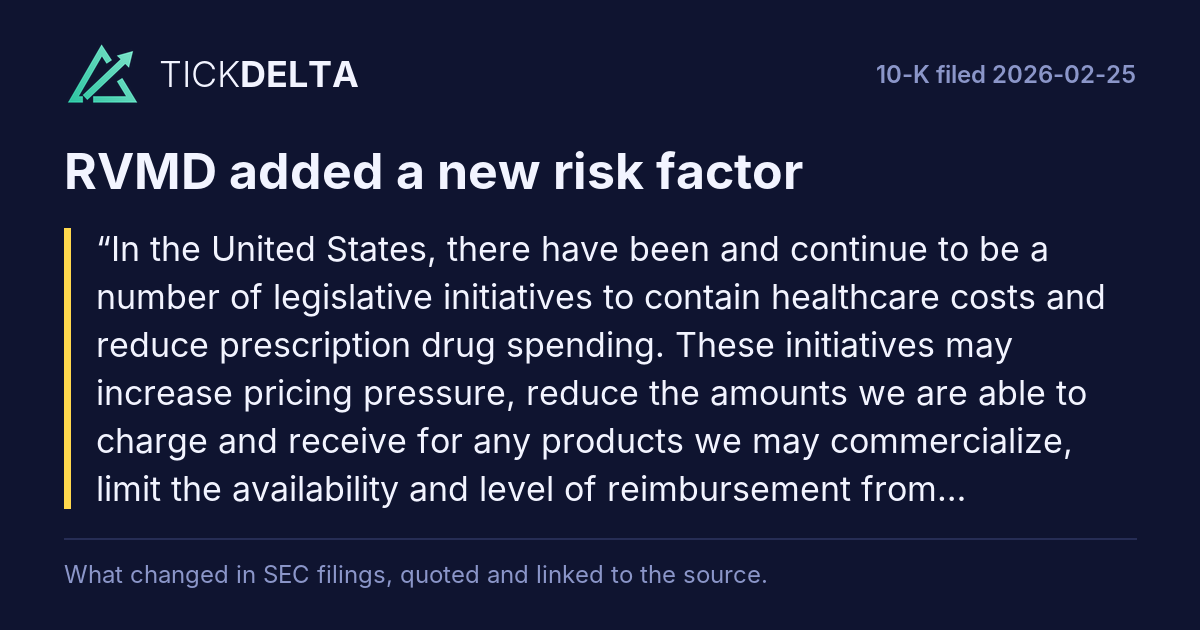
In the United States, there have been and continue to be a number of legislative initiatives to contain healthcare costs and reduce prescription drug spending. These initiatives may increase pricing pressure, reduce the amounts we are able to charge and receive for any products we may commercialize, limit the availability and level of reimbursement from third-party payors (including government payors), require us to provide additional discounts or rebates, and otherwise adversely affect patient access and demand.
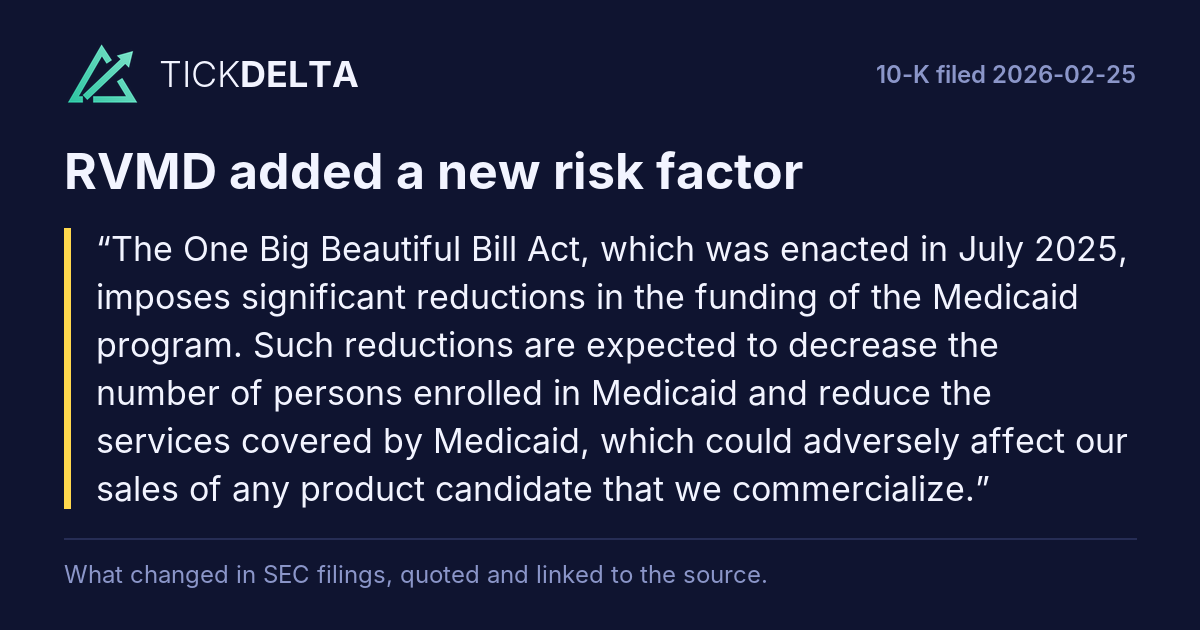
The One Big Beautiful Bill Act, which was enacted in July 2025, imposes significant reductions in the funding of the Medicaid program. Such reductions are expected to decrease the number of persons enrolled in Medicaid and reduce the services covered by Medicaid, which could adversely affect our sales of any product candidate that we commercialize.
processing of personal information could result in negative publicity, government investigations and enforcement actions, claims by third parties and damage to our reputation.
Our business may be affected by the evolving regulatory framework for artificial intelligence, machine learning, and automated decision-making technologies, as well as the operational, cybersecurity and confidentiality risks associated with our use of such technologies.
We use artificial intelligence (AI), machine learning, and automated decision-making technologies (collectively, AI Technologies) throughout our business, and are making investments in this area. We expect that increased investment will be required in the future to continuously improve our use of AI Technologies. As with many technological innovations, there are significant risks involved in developing, maintaining and deploying these technologies, including that AI-generated content, analyses, or recommendations we utilize could be deficient, that our competitors may more quickly or effectively adopt AI capabilities, or that our use of AI or other emerging technologies increases regulatory, cybersecurity and other significant risks. In addition, the use of certain AI Technologies, including third-party solutions, may involve the input, processing or storage of proprietary, confidential or personal information, and any failure to appropriately protect such information, or any unauthorized disclosure or use of such information, could adversely affect our business, harm our reputation and subject us to liability. There can be no assurance that the usage of or our investments in such technologies will always enhance our products or services or be beneficial to our business, including our efficiency or profitability.
In particular, if the models underlying our AI Technologies are incorrectly designed or implemented; trained or reliant on incomplete, inadequate, inaccurate, biased or otherwise poor quality data, or on data to which we do not have sufficient rights or in relation to which we and/or the providers of such data have not implemented sufficient legal compliance measures; used without sufficient oversight and governance to ensure their responsible use; and/or adversely impacted by unforeseen defects, technical challenges, cybersecurity threats or material performance issues, the performance of our products, services and business, as well as our reputation, could suffer or we could incur liability resulting from the violation of laws or contracts to which we are a party or civil claims. We are
in varying stages of development in relation to our products and internal business processes involving AI Technologies. The continuous development, maintenance and operation of our AI Technologies is expensive and complex, and may involve unforeseen difficulties including material performance problems, undetected defects or errors. For instance, the models underlying AI Technologies can experience decay (also known as “model drift”) in which their performance and accuracy decreases over time without further human intervention to correct such decay.
We may not be successful in our ongoing development and maintenance of these technologies in the face of novel and evolving technical, reputational and market factors. Our efforts to develop proprietary AI models could increase our operating costs. Our ability to develop proprietary AI models may be limited by our access to processing infrastructure or training data, and we may be dependent on third-party providers for such resources.
The regulatory framework for AI Technologies is rapidly evolving as many federal, state, and foreign government bodies and agencies have introduced or are currently considering additional laws and regulations. Additionally, existing laws and regulations may be interpreted in ways that would affect the operation of our AI Technologies. As a result, implementation standards and enforcement practices are likely to remain uncertain for the foreseeable future, and we cannot yet determine the impact future laws, regulations, standards, or market perception of their requirements may have on our business and may not always be able to anticipate how to respond to these laws or regulations. Failure to appropriately respond to this evolving landscape may result in reputational, competitive and business harm as well as litigation and regulatory action and fines, penalties and expenses related thereto.
It is possible that new laws and regulations will be adopted in the United States and in other non-U.S. jurisdictions, or that existing laws and regulations, including competition and antitrust laws, may be interpreted in ways that would limit our ability to use AI Technologies for our business, or require us to change the way we use AI Technologies in a manner that negatively affects the performance of our products, services, and business and the way in which we use AI Technologies. We may need to expend resources to adjust our products or services in certain jurisdictions if the laws, regulations, or decisions are not consistent across jurisdictions. Further, the cost to comply with such laws, regulations, or decisions and/or guidance interpreting existing laws, could be significant and would increase our operating expenses (such as by imposing additional reporting obligations regarding our use of AI Technologies). Such an increase in operating expenses, as well as any actual or perceived failure to comply with such laws and regulations, could adversely affect our business, financial condition and results of operations.
Further, any integration of AI in our or any third party’s operations, products or services is expected to pose new or unknown cybersecurity risks and challenges. Although we have implemented policies regarding limited permitted use of generative AI by our employees, Confidential Information could be leaked, disclosed or revealed as a result of or in connection with our employees’ use of generative AI Technologies.
Additionally, in recent years, U.S. legislative and policy initiatives have increasingly focused on the national security implications of foreign involvement in biotechnology, particularly with respect to China. For example, in January 2024, there was Congressional activity, including the introduction of the BIOSECURE Act in the House of Representatives and a substantially similar Senate bill. In September 2024, the House of Representatives of the prior Congress (the 118th Congress) passed the BIOSECURE Act, but the Senate never voted on it. In 2025, Congress revisited the BIOSECURE Act concept. A revised version of the legislation was proposed as an amendment to the National Defense Authorization Act (NDAA) for fiscal year 2026. This updated draft removed specific company names previously targeted and instead would rely on an existing Department of Defense list of companies with national security concerns. Congress ultimately included the BIOSECURE provisions in the finalized NDAA, effectively making the restrictions part of law as of December 2025, subject to further regulatory implementation and designation processes.
Under the enacted provisions, agencies are prohibited from procuring biotechnology equipment or services from entities designated as “biotechnology companies of concern” and may impose limitations on recipients of federal funding that engage such entities. The statute authorizes the Office of Management and Budget to identify companies of concern based on existing Department of Defense lists of military-linked firms and other criteria tied to national security risk, including ties to foreign adversaries and sensitive data risks.
We currently do business with companies in China, including some that have been referenced in earlier versions of the BIOSECURE Act and related policy discussions, and certain counterparties could be impacted by these legislative actions or regulatory lists. Changes in laws, regulations, or executive orders — or the issuance of lists identifying covered entities — could materially affect our collaborations, supply chains, research partnerships, manufacturing relationships, and access to certain services or technologies.
If we were to initiate legal proceedings against a third party to enforce a patent directed to our product candidates, or one of our future product candidates, the defendant could counterclaim that our patent is invalid or unenforceable. In patent litigation in the United
If any of our trade secrets were to be disclosed to, or independently developed by, a competitor or other third party, our competitive position would be materially and adversely harmed.
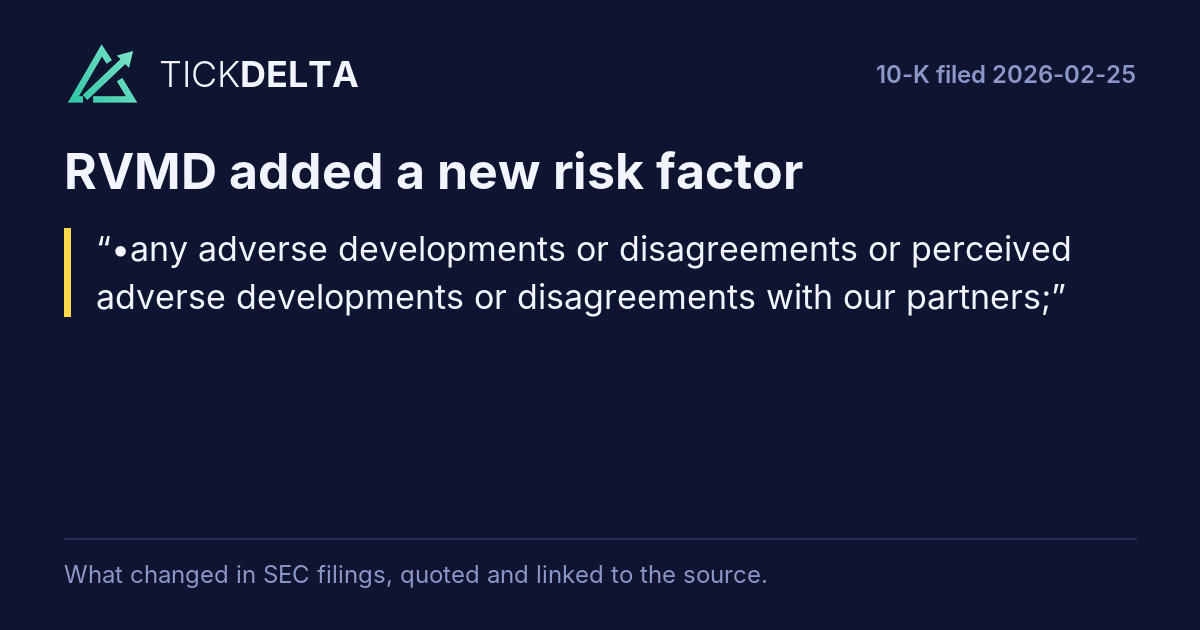
•any adverse developments or disagreements or perceived adverse developments or disagreements with our partners;
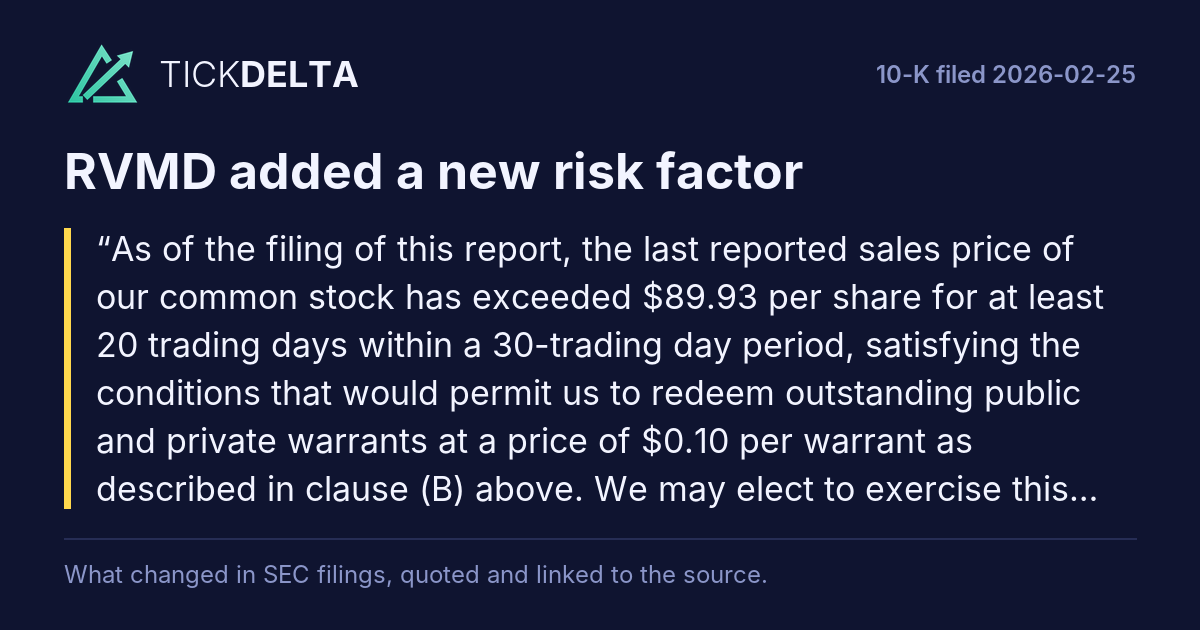
As of the filing of this report, the last reported sales price of our common stock has exceeded $89.93 per share for at least 20 trading days within a 30-trading day period, satisfying the conditions that would permit us to redeem outstanding public and private warrants at a price of $0.10 per warrant as described in clause (B) above. We may elect to exercise this redemption right at any time that it remains available to us, in our sole discretion, subject to the notice and other procedural requirements set forth in the warrant agreement, including at a time and under circumstances that we believe are in the best interests of the Company and its stockholders, even if doing so is disadvantageous to warrant holders.
New in the latest 10-Q
84 paragraphs in the 10-Q filed Nov 4, 2026 with nothing like them in the 10-Q filed Aug 5, 2026 (at least half the words must differ; new numbers alone do not count). Quoted exactly, grouped by the item heading above them. This is text that changed, not a judgement of how serious it is.
• our ability to successfully commercialize RASONQUE® (daraxonrasib), including the level and timing of product revenue, market acceptance, pricing, reimbursement and gross-to-net deductions, and our ability to maintain adequate commercial supply;
Read in the 10-Q
• regulatory and legal developments in the United States and foreign countries, including drug pricing initiatives and tariffs;
Read in the 10-Q
For each of the three and nine months ended September 30, 2026, two individual customers accounted for 71% and 28% of total net product revenue. As of September 30, 2026, two customers accounted for 72% and 28% of the accounts receivable balance. The Company did not record accounts receivable or net product revenue in any period prior to the third quarter of 2026. No other individual customer accounted for more than 10.0% of net product revenue or accounts receivable in the periods presented. The Company monitors the financial condition of its customers so that it can appropriately respond to changes in their creditworthiness. As of September 30, 2026, the Company's allowance for credit losses was not material.
Read in the 10-Q
The Company recognizes net product revenue from RASONQUE for the treatment of adults with metastatic pancreatic adenocarcinoma (PDAC) who have received at least one prior systemic therapy or who are not candidates for multiagent systemic therapy in the United States, which it began selling in August 2026 through contractual arrangements primarily with its specialty pharmacy customers. The Company also recognizes net product revenue from the sale of RASONQUE under global named patient access in international markets, which are permitted in certain countries prior to the commercial approval of the product.
Read in the 10-Q
The Company recognizes net product revenue in accordance with ASC Topic 606, Revenue from Contracts with Customers, or ASC 606. The Company only applies the five-step model to contracts when it is probable that the Company will collect the consideration it is entitled to in exchange for the goods it transfers to the customer. Once a contract is determined to be within the scope of ASC 606, the Company determines the performance obligations that are distinct. The Company recognizes as revenues the amount of the transaction price that is allocated to each respective performance obligation when the performance obligation is satisfied. The Company has determined that the delivery of RASONQUE to its customers constitutes a single performance obligation. Net product revenue is recognized at the transaction price when the customer obtains control of the Company’s product, which generally occurs at a point in time upon delivery of the product to the customer.
Read in the 10-Q
Net product revenues from the sale of RASONQUE are recorded at the transaction price, which includes adjustments for discounts and allowances, including estimated government rebates, chargebacks, cash discounts, product returns and other deductions (gross-to-net adjustments). These adjustments represent variable consideration under ASC 606 and are estimated using the expected value method or most likely amount method and are recorded when revenue is recognized on the sale of the product. These adjustments are established by management based on available information and will be adjusted to reflect known changes in the factors that impact such allowances. Adjustments for variable consideration are determined based on contractual and statutory terms, expected payor mix, units sold and remaining in the distribution channel, actual claims and utilization data when available, and other relevant market
Read in the 10-Q
information. Overall, these gross-to-net adjustments reflect the Company’s best estimates of the amount of consideration to which it is entitled based on the terms of the respective underlying contracts.
Read in the 10-Q
The amount of variable consideration which is included in the transaction price may be constrained, and is included in the net sales price, only to the extent that it is probable that a significant reversal in the amount of the cumulative revenue recognized under the contract will not occur in a future period. Actual amounts of consideration ultimately received may differ from the Company’s estimates. If actual results in the future vary from the Company’s original estimates, the Company will adjust these estimates, which would affect net product revenue and earnings in the period such variances become known.
Read in the 10-Q
Government rebates - The Company is subject to discount and rebate obligations under U.S. government programs, including Medicare, Medicaid and Tricare. The Company estimates these rebates using the expected value method, based upon a range of possible outcomes that take into consideration the estimated payor mix.
Read in the 10-Q
Chargebacks - The Company is subject to contractual commitments to sell products to qualified U.S. Department of Veterans Affairs hospitals and Federal 340B Drug Discount Program (340B) entities at prices lower than the list prices charged to customers who directly purchase the product from the Company. Reserves for chargebacks consist of claims received but not yet processed and estimates of chargebacks for eligible units sold or remaining in the distribution channel for which claims have not yet been submitted.
Read in the 10-Q
Cash discounts, product returns and other deductions - The Company estimates cash discounts based on contractual terms and expectations regarding future customer payment patterns. The Company currently estimates the amount of its product sales that may be returned by its customers using the expected value method based on available industry data, considering the Company’s return policies and its visibility into the inventory remaining in the distribution channel. Co-pay assistance represents financial assistance to qualified patients, assisting them with prescription drug co-payments required by insurance. The accrual for co-pay assistance is based on an estimate of claims and the cost per claim that the Company expects to receive associated with inventory that exists in the distribution channel at the end of each reporting period.
Read in the 10-Q
Cash discounts and certain chargebacks expected to be settled through customer deductions or credits are recorded as reductions of accounts receivable. Other estimated rebates, chargebacks, copay assistance and returns are recorded as accrued liabilities and are relieved when paid, credited or otherwise settled.
Read in the 10-Q
The Company’s cost of sales includes the cost of inventory sold and intangible asset amortization expense for the Company’s RAS programs. Cost of sales may also include costs related to excess or obsolete inventory adjustment charges, abnormal costs, unabsorbed manufacturing and overhead costs, and manufacturing variances.
Read in the 10-Q
Accounts receivable, net consists of trade receivables which are amounts due from the Company's customers related to product sales and have standard payment terms. The Company records trade receivables net of discounts, chargebacks, and any allowances for potential credit losses. An allowance for credit losses is determined based on the financial condition and creditworthiness of customers, where the Company considers the customer’s payment history, economic factors and events or trends expected to affect future collections experience. Any allowance would reduce the net receivable to the amount that is expected to be collected. The allowance for credit losses was not material as of September 30, 2026.
Read in the 10-Q
The Company does not adjust its accounts receivable, net for the effects of a significant financing component at contract inception if it expects to collect the receivables in one year or less from the time of sale.
Read in the 10-Q
The Company began capitalizing inventory for RASONQUE upon approval by the U.S. Food and Drug Administration (FDA). Prior to regulatory approval, all direct and indirect manufacturing costs for daraxonrasib were charged to research and development expense in the period incurred.
Read in the 10-Q
Inventory is comprised of raw materials, work-in-process and finished goods, and includes costs related to third-party contract manufacturing, packaging, freight-in and overhead. Inventory is stated at the lower of cost or net realizable value with cost based on the first-in-first-out method. Raw and intermediate materials that have an alternative future use and may be used for either research and development or commercial purposes where the intended use is not yet known are classified as inventory until the material is consumed or otherwise allocated for research and development. If the material is used or otherwise allocated for research and development, it is expensed as research and development in the period that determination is made.
Read in the 10-Q
The Company performs an assessment of the recoverability of capitalized inventory during each reporting period, and it writes down any excess and obsolete inventories to their estimated realizable value in the period in which the impairment is first identified. Such impairment charges, should they occur, are recorded within cost of sales. The determination of whether inventory costs will be realizable requires estimates by management. If actual market conditions are less favorable than projected by management, additional
Read in the 10-Q
write-downs of inventory may be required, which would be recorded as a cost of sales in the statements of operations. There were no expenses recorded for excess inventory or other impairments during the three and nine months ended September 30, 2026.
Read in the 10-Q
5. Inventory Inventory consisted of the following (in thousands): September 30, December 31, 2026 2025 Raw materials $ 7,611 $ ───────────────────────────────────────────────────────────────────── Work in progress 2,343 Finished goods 1,064 Total inventory $ 11,018 $ The Company began capitalizing inventory for RASONQUE upon approval by the FDA, in August 2026. Prior to regulatory approval, all direct and indirect manufacturing costs were charged to research and development expense in the period incurred.
Read in the 10-Q
useful life (in thousands) (in years) ─────────────────────────────────────────────────────────────────────────────────────────────────────────────────────────────────────────────────────── RAS programs $ 55,800 $ (326) $55,474 16.9 Developed technology - tri-complex platform 7,480 (7,480) - - Total $ 63,280 $ (7,806) $55,474 In the three months ended September 30, 2026, following FDA approval of RASONQUE, the Company determined that the acquired RAS programs IPR&D was complete and no longer indefinite-lived. Accordingly, the Company reclassified $55.8 million from indefinite-lived IPR&D to finite-lived acquired intangible assets and began amortizing the asset prospectively over an estimated useful life of 17 years from the date of receipt of FDA approval. The Company did not identify quantitative or qualitative indicators of impairment prior to this reclassification. The Company recorded amortization expense of $0.3 million for the three and nine months ended September 30, 2026. Amortization expense for the tri-complex platform was zero and $0.3 million for the three months ended September 30, 2026 and 2025, respectively, and zero and $0.8 million for the nine months ended September 30, 2026 and 2025, respectively. The tri-complex platform was fully amortized as of December 31, 2025. As of September 30, 2026, future amortization expense for the RAS programs is as follows: Amount (in thousands) 2026 (remaining three months) $ 822 2027 3,282 2028 3,282 2029 3,282 2030 3,282 Thereafter 41,524 Total $ 55,474 Intangible assets, net consisted of the following as of December 31, 2025: Gross value Accumulated Net book Weighted-
Read in the 10-Q
8. Commitments and contingencies Leases The Company’s operating lease arrangements primarily consist of office, laboratory, and research and development space in Redwood City, California. For operating lease arrangements recognized under ASC 842, the Company recognizes lease cost on a straight-line basis over the lease term. The Company has also entered into sublease arrangements for certain facilities, which are accounted for as operating leases. Sublease income is recognized on a straight-line basis over the applicable sublease terms. Saginaw lease The Company leases approximately 293,906 square feet across seven office, laboratory and research and development buildings on Saginaw Drive in Redwood City, California. The lease terms extend through December 31, 2035, with certain options to extend. The Company maintains letters of credit for the benefit of the landlord which are classified as restricted cash in the condensed consolidated balance sheets. Restricted cash related to letters of credit due to the landlord was $4.6 million as of September 30, 2026 and December 31, 2025. Through September 30, 2026, the landlord had provided the Company with $20.3 million in tenant improvement allowances, which were recognized as lease incentives. The lease incentives are being amortized as an offset to rent expense over the lease term in the unaudited condensed consolidated statements of operations and comprehensive loss. The balance sheet classification of the Company’s operating lease liabilities was as follows: September 30, December 31, 2026 2025 (in thousands) ────────────────────────────────────────────────────────────────────────────────────────────────────────── Operating lease liabilities: Operating lease liability - current $ 9,381 $ 16,468 Operating lease liability - noncurrent 141,842 142,234 Total operating lease liabilities $ 151,223 $ 158,702 The components of lease costs for the three and nine months ended September 30, 2026 and 2025 were as follows: Three Months Ended September 30, Nine Months Ended September 30, 2026 2025 2026 2025 (in thousands) (in thousands) ──────────────────────────────────────────────────────────────────────────────────────────────────────────────────────────────────────────────────────── Operating lease cost $ 5,421 $5,548 $ 16,111 $14,633 Less: Sublease income (1,218) (629) (3,587) (2,507) Total operating lease cost, net(1) $ 4,203 $4,919 $ 12,524 $12,126 (1) Net lease cost does not include short-term lease and variable lease costs, which were immaterial. As of September 30, 2026, the maturities of the Company’s operating lease liabilities were as follows (in thousands):
Read in the 10-Q
In October 2026, the Company elected not to receive the Tranche 3 payment following the FDA approval of RASONQUE, which would have entitled Royalty Pharma to receive additional royalties in exchange for payments up to $250.0 million.
Read in the 10-Q
The following table shows the activity of the liability related to the sale of future royalties for the nine months ended September 30, 2026:
Read in the 10-Q
As of September 30, 2026, there was $267.8 million of unrecognized stock-based compensation expense related to unvested stock options that is expected to be recognized over a weighted-average period of 2.86 years.
Read in the 10-Q
Activity under the 2020 Plan with respect to the Company’s restricted stock units (RSUs) during the nine months ended September 30, 2026 was as follows:
Read in the 10-Q
In October 2026, following FDA approval of RASONQUE, the Company drew the first tranche of $250.0 million under the Term Loan Facility, as required under the Loan Agreement. The Company paid an upfront fee of $5.0 million, equal to 2.0% of the principal amount drawn. This term loan matures on October 8, 2032, which is six years after the funding date.
Read in the 10-Q
In October 2026, the Company entered into a multi-part clinical trial collaboration and supply agreements with Bristol-Myers Squibb Company (BMS) pursuant to which pumitamig (BNT327), a PD-L1/VEGF bispecific antibody jointly developed by BioNTech and BMS, will be evaluated in four planned study cohorts. BMS will sponsor and lead two study cohorts: (1) RASONQUE in combination with pumitamig in patients with first-line (1L) pancreatic ductal adenocarcinoma (PDAC); and (2) RASONQUE in combination with pumitamig in patients with non-small cell lung cancer (NSCLC). The Company will sponsor and lead two additional study cohorts under this collaboration: (i) zoldonrasib in combination with pumitamig in patients with colorectal cancer (CRC); and (ii) elironrasib in combination with pumitamig in patients with NSCLC.
Read in the 10-Q
RASONQUE is the first approved medicine from a new class of RAS(ON) multi-selective and mutant-selective inhibitors. In August 2026, the FDA approved RASONQUE for the treatment of adults with metastatic pancreatic adenocarcinoma (PDAC) who have received at least one prior systemic therapy or who are not candidates for multiagent systemic therapy, and we began commercial sales in the United States in August 2026. Outside the U.S., RASONQUE is an investigational agent that has not been approved by any regulatory authority. In October 2026, the European Medicines Agency (EMA) Committee for Medicinal Products for Human Use (CHMP) adopted a positive opinion recommending marketing authorization for daraxonrasib in the European Union (EU) for adults with metastatic pancreatic adenocarcinoma who have received at least one prior systemic therapy. The CHMP opinion will now be reviewed by the European Commission, which makes decisions on marketing authorization in the EU.
Read in the 10-Q
In August 2026, the FDA approved RASONQUE for the treatment of adult patients with metastatic PDAC who have received at least one prior systemic therapy or who are not candidates for multiagent systemic therapy. RASONQUE is available through a limited distribution network of specialty pharmacies which dispense product pursuant to prescriptions and coordinate with the (ON)PathTM patient support program. Because we began selling RASONQUE in August 2026, our reported net product revenue for the third quarter of 2026 reflects both patient demand and the initial stocking of product in the distribution channel, and is not necessarily indicative of underlying patient demand or of net product revenue in future periods. We have established a commercial organization to support the launch of RASONQUE including field-based sales, market access and patient support teams. Separately, our field-based medical affairs organization engages with the medical community through scientific exchange. Our patient support program, (ON)Path, provides information and assistance to patients and healthcare providers, including help understanding insurance coverage, benefit verification, and prior authorization support.
Read in the 10-Q
Since launch, RASONQUE has been reimbursed by a broad range of U.S. health plans, primarily through the medical exception process, as most plans have not yet established formal coverage policies.
Read in the 10-Q
The National Comprehensive Cancer Network® Clinical Practice Guidelines in Oncology (NCCN Guidelines®) for U.S. clinical practice were updated to include daraxonrasib as a Category 1 Preferred subsequent-therapy option for appropriate patients with locally advanced or metastatic pancreatic cancer, or with recurrent disease following prior systemic therapy. The NCCN Guidelines® also list daraxonrasib in previously untreated metastatic disease as “Useful in Certain Circumstances,” with the applicable category linked to prescriber assessments of performance status. The NCCN Guidelines were also updated to include daraxonrasib as a Category 2A available targeted agent for patients with metastatic NSCLC harboring KRAS G12, G13 or Q61 mutations.
Read in the 10-Q
In October 2026, at the European Society for Medical Oncology (ESMO) Congress 2026, we presented exploratory subgroup analyses from our Phase 3 RASolute 302 trial. We believe these data showed that RASONQUE consistently provided an overall survival benefit compared with chemotherapy across all evaluated RAS genotype subgroups in patients with previously treated PDAC.
Read in the 10-Q
Based on encouraging early-stage clinical results, we are initiating zoldonrasib in RASonate 312, a global, randomized Phase 3 registrational trialcomparing zoldonrasib in combination with cetuximab and FOLFOX/FOLFIRI in patients with previously untreated RAS G12D colorectal cancer against standard of care. Under the companies’ existing collaboration agreement, BeOne Medicines is funding and conducting this global trial on our behalf. We currently expect to provide a clinical data update and the trial design for RASonate 312 in the first half of 2027.
Read in the 10-Q
In August 2026, we entered into a multi-part collaboration with BeOne Medicines I GmbH (BeOne) which included a clinical collaboration pursuant to which BeOne plans to evaluate drug combinations incorporating RASONQUE, zoldonrasib, elironrasib and/or RMC-5127 with select clinical-stage oncology assets from BeOne, including the MTA-cooperative PRMT5 inhibitor BGB-58067 and the EGFR × MET × MET trispecific antibody BG-T187.
Read in the 10-Q
Separately, on the same date, we entered into a regional rights agreement granting BeOne exclusive development and commercialization rights to these RAS(ON) Inhibitors in select Asian markets. We retain development and commercial rights to all of our assets outside of the licensed territory, including Japan and South Korea.
Read in the 10-Q
As part of this multi-part arrangement, BeOne is funding and conducting RASonate 312 using BeOne’s fully in-house development capabilities.
Read in the 10-Q
Additionally, in October 2026, we entered into a multi-part clinical collaboration with BMS pursuant to which pumitamig (BNT327), a PD-L1/VEGF bispecific antibody jointly developed by BioNTech and BMS, will be evaluated in four planned study cohorts. BMS will sponsor and lead two study cohorts: (1) RASONQUE in combination with pumitamig in patients with 1L PDAC; and (2) RASONQUE in combination with pumitamig in patients with 1L NSCLC. We will sponsor and lead two additional study cohorts under this collaboration: (i) zoldonrasib in combination with pumitamig in CRC; and (ii) elironrasib in combination with pumitamig in NSCLC.
Read in the 10-Q
In August 2026, we began to generate revenue from sales of RASONQUE in the United States. We also recognized revenue from sales of RASONQUE in international markets, which are permitted under global named patient access in certain countries prior to the
Read in the 10-Q
commercial approval of the product. We record product revenue net of estimated discounts and allowances, including estimated government rebates, chargebacks, cash discounts, product returns and other deductions (gross-to-net adjustments).
Read in the 10-Q
Cost of sales includes the cost of inventory sold and intangible asset amortization expense for our RAS programs. Cost of sales may also include costs related to excess or obsolete inventory adjustment charges, abnormal costs, unabsorbed manufacturing and overhead costs and manufacturing variances.
Read in the 10-Q
Product revenue, net relates to sales of RASONQUE and was $197.6 million for the three and nine months ended September 30, 2026. We commenced sales of RASONQUE following FDA approval in August 2026 and did not record product revenue in any period prior to the third quarter of 2026. Our product revenue for the three and nine months ended September 30, 2026 reflects both patient demand and initial stocking of product in the distribution channel. We expect product revenue to increase in future periods given the sales of RASONQUE for the three months ended September 30, 2026 reflected a partial quarter of sales following approval.
Read in the 10-Q
Cost of sales primarily relates to intangible asset amortization expense for our acquired RAS programs and was $0.3 million for the three and nine months ended September 30, 2026. Cost of sales for the three and nine months ended September 30, 2026 includes the sale of RASONQUE inventory that was manufactured prior to FDA approval and was previously expensed as research and development expense. As a result, this inventory had a zero-cost basis when sold and no associated manufacturing costs were recognized in cost of sales. Had the costs associated with this inventory been capitalized and recognized as cost of sales when the inventory was sold, cost of sales for the three and nine months ended September 30, 2026 would have been $1.8 million higher. We expect to continue to sell RASONQUE inventory with a zero-cost basis through the remainder of 2026 and into 2027. We expect our cost of sales to increase as a percentage of product revenue, net in future periods as we produce and sell inventory that reflects the full cost of manufacturing the product.
Read in the 10-Q
We are exposed to interest rate risk on floating-rate borrowings that we incur under our Term Loan Facility, which bear interest at three-month term SOFR, subject to a floor of 3.5%, plus 5.75%. A hypothetical 100 basis point increase in three-month term SOFR would increase our annual interest expense by approximately $2.5 million on $250.0 million of borrowings. Because of the SOFR floor, a decrease in SOFR below 3.5% would not reduce our interest expense.
Read in the 10-Q
• accurately estimating the rebates, chargebacks, discounts, returns and other deductions that reduce our gross product revenue, and managing the level of those deductions;
Read in the 10-Q
• maintaining adequate commercial supply of RASONQUE to meet demand while avoiding excess or obsolete inventory;
Read in the 10-Q
• exposing us to increases in interest rates, because borrowings under the Term Loan Facility bear interest at a floating rate subject to a floor, such that our interest expense may increase but will not decline below a minimum level;
Read in the 10-Q
• subjecting substantially all of our assets, including our intellectual property, to a lien in favor of our lender, which could be foreclosed upon following an event of default;
Read in the 10-Q
Because we drew the first tranche under the Loan Agreement in October 2026, we are now subject to these covenants with respect to $250.0 million of outstanding secured indebtedness, and the collateral securing that indebtedness includes substantially all of our assets, including our intellectual property. Now that we have commenced commercial sales of RASONQUE, Royalty Pharma is entitled to receive tiered royalty payments on net sales, which reduces the cash we retain from sales of RASONQUE. In addition, the Royalty Purchase Agreement provides for an upward adjustment to the royalty rates in the years from 2030 through 2041 if annual net sales in the prior year fall below an agreed-upon threshold, which means that slower-than-expected sales growth would increase the proportion of net sales payable to Royalty Pharma.
Read in the 10-Q
• the level of demand for RASONQUE, which may vary significantly from period to period and may not be reflected in our reported net product revenue in any given period due to changes in inventory levels in the distribution channel;
Read in the 10-Q
• the amount of rebates, chargebacks, discounts, returns and other deductions that reduce our gross product revenue, and changes in our estimates of those deductions;
Read in the 10-Q
• the cost basis of RASONQUE inventory sold, including the effect of selling inventory that was expensed as research and development prior to FDA approval and therefore carries no cost basis;
Read in the 10-Q
• changes in interest expense, including as a result of changes in the floating rate applicable to borrowings under the Term Loan Facility and changes in our estimates of future royalty payments under the Royalty Purchase Agreement, which affect the effective interest rate used to measure that liability;
Read in the 10-Q
indications or lines of therapy, despite its approval for previously treated metastatic PDAC. If we do not receive regulatory approvals for current or future product candidates, our business would be materially harmed.
Read in the 10-Q
• the commercial availability of RASONQUE, which may reduce the willingness of patients and physicians to enroll in clinical trials in which the patient may receive a comparator therapy rather than RASONQUE; and
Read in the 10-Q
Because RASONQUE is approved and commercially available, physicians may prescribe RASONQUE in combination with other therapies in regimens that have not been approved and for which safety and efficacy have not been established. We are not permitted to promote RASONQUE for any such unapproved combination, and adverse events arising from such use could result in label changes, regulatory action or product liability claims, notwithstanding that the combination was not one we promoted.
Read in the 10-Q
In addition, we supply RASONQUE for use in trials sponsored by our collaborators. We may have limited control over the conduct of those trials, including protocol compliance, safety reporting and the accuracy of data generated, and deficiencies in a collaborator-sponsored trial involving RASONQUE could adversely affect RASONQUE's label or our regulatory standing.
Read in the 10-Q
departments and public and private research institutions may be conducting research on compounds that could prove to be competitive.
Read in the 10-Q
Our competitors include companies with substantially greater commercial infrastructure, established relationships with prescribers, payors and specialty pharmacies, and greater experience in securing formulary access and favorable reimbursement. These advantages may allow them to compete effectively against RASONQUE even if their products are not clinically superior. In addition, RASONQUE may face competition from generic versions following the expiration or successful challenge of our patents and regulatory exclusivities. See the risk factors under “Risks related to our intellectual property.”
Read in the 10-Q
This lengthy and uncertain approval process, as well as the unpredictability of clinical and preclinical studies, may result in our failure to obtain regulatory approval to market any of our product candidates, or delayed regulatory approval.
Read in the 10-Q
• we may be required to conduct additional post-marketing studies or clinical trials, or to modify the design or conduct of our ongoing trials;
Read in the 10-Q
• third-party payors may restrict coverage or impose utilization management requirements;
Read in the 10-Q
Our products and any product candidates that are approved in the future remain subject to ongoing regulatory requirements for manufacturing, labeling, packaging, storage, distribution, import, export, advertising, promotion, sampling, recordkeeping and other extensive and ongoing regulatory requirements. RASONQUE is approved by the FDA for the treatment of adult patients with metastatic pancreatic adenocarcinoma who have received at least one prior systemic therapy or who are not candidates for multiagent systemic therapy and any future marketing approvals that we or our potential future collaboration partners receive for any current or
Read in the 10-Q
In addition, we may promote RASONQUE only for its approved indication and consistent with its approved labeling. The FDA and state authorities closely regulate promotional materials, sales representative communications, speaker programs, scientific exchange and interactions with prescribers. If the FDA determines that our promotional activities constitute off-label promotion or are false or misleading, we could be subject to untitled or warning letters, corrective advertising requirements, consent decrees, civil penalties or criminal prosecution, and off-label promotion allegations have formed the basis for substantial False Claims Act liability in our industry.
Read in the 10-Q
• efficacy, durability of responses, safety and tolerability, as demonstrated in clinical trials and in real-world clinical practices, and potential advantages compared to alternative treatments;
Read in the 10-Q
• the scope of the approved indication and any limitations or restrictions in the product labeling, including the approved line of therapy, patient population and dosing regimen;
Read in the 10-Q
• the adequacy of our commercial infrastructure, including the size and effectiveness of our field force and our market access and patient support capabilities;
Read in the 10-Q
• the time required to obtain prior authorization and to initiate therapy, and the rate at which prescriptions written are ultimately filled;
Read in the 10-Q
The FDA did not require approval or clearance of a companion diagnostic in connection with the approval of RASONQUE, and RASONQUE is not limited to patients with an identified RAS mutation.
Read in the 10-Q
In October 2025, the FDA included RASONQUE in its initial group of CNPV recipients and on August 26, 2026, the FDA approved RASONQUE for the treatment of adult patients with metastatic pancreatic adenocarcinoma who have received at least one prior systemic therapy or who are not candidates for multiagent systemic therapy.
Read in the 10-Q
• the need to add warnings or precautions to the RASONQUE label or to implement a REMS or other risk mitigation measures;
Read in the 10-Q
• our inability, or limitations on our ability, to commercialize RASONQUE or any other product.
Read in the 10-Q
be effective in 2027. CMS has also published the next set of 15 drugs that will be subject to negotiation. The impact of the IRA on our business and the pharmaceutical industry cannot yet be fully determined, but could be significant.
Read in the 10-Q
We rely on third-party manufacturers for commercial supply of RASONQUE and intend to continue to do so for long-term commercial supply. Our commercial supply agreement obligates us to issue binding forecasts, and our forecasts of demand for RASONQUE are subject to significant uncertainty. If we overestimate demand, we may incur excess or obsolete inventory charges; if we underestimate demand, we may be unable to supply RASONQUE to patients.
Read in the 10-Q
• the federal Civil Monetary Penalties Law, which prohibits, among other things, offering or transferring remuneration to a federal healthcare beneficiary that a person knows or should know is likely to influence the beneficiary’s decision to order or receive items or services reimbursable by the government from a particular provider or supplier;
Read in the 10-Q
require drug manufacturers to report information related to payments and other transfers of value to physicians and other healthcare providers or marketing expenditures.
Read in the 10-Q
In connection with the commercialization of RASONQUE, we operate or support patient assistance and support programs, including our (ON)Path patient support program, that provide benefits verification, prior authorization support, copay assistance for commercially insured patients, free product for eligible uninsured or underinsured patients, nursing and adherence support, and reimbursement support services, certain of which are administered by third-party vendors. These programs are subject to the federal Anti-Kickback Statute, the federal civil monetary penalty provisions described above, the False Claims Act and analogous state laws, and the Office of Inspector General has issued guidance addressing the circumstances under which manufacturer-sponsored patient assistance, copay support, reimbursement support and contributions to independent charitable foundations may implicate these laws. If any of these programs were found to provide remuneration that induces the purchase or prescription of RASONQUE, to be used to steer patients toward RASONQUE, or to result in the submission of claims to federal healthcare programs that are tainted by unlawful remuneration, we could be subject to substantial civil and criminal penalties, treble damages under the False Claims Act, exclusion from federal healthcare programs and a corporate integrity agreement. In addition, we have limited ability to control the conduct of the third-party vendors that administer certain of these programs, and their non-compliance could expose us to liability. If RASONQUE is approved in jurisdictions outside of the U.S. and we operate or support similar patient assistance and support programs in those jurisdictions, we will face similar risks under applicable foreign anti-kickback, anti-bribery, healthcare fraud and abuse, pricing and reimbursement, and other laws and regulations, which vary by jurisdiction and may be subject to differing interpretations. Our failure, or the failure of the third-party vendors that administer these programs on our behalf, to comply with these laws could result in significant penalties, sanctions and reputational harm.
Read in the 10-Q
companies from collaborating with us to license, develop or commercialize current or future product candidates, or could negatively impact our ability to raise funds necessary to continue our research programs or clinical trials. Such proceedings could also result in substantial cost and require significant time from our scientists and management, even if the eventual outcome is favorable to us.
Read in the 10-Q
the right to opt our patents out of the UPC over the first seven years of the court’s existence, but doing so may preclude us from realizing the benefits, if any, of the new unified court.
Read in the 10-Q
• managing our commercial operations, including our field force, market access, distribution and patient support functions, and the third-party vendors that support them, in compliance with applicable healthcare, promotional and privacy laws;
Read in the 10-Q
• implementing and maintaining the financial reporting processes and internal controls required to account for product revenue, gross-to-net deductions, inventory and accounts receivable;
Read in the 10-Q
involve restrictive covenants limiting our flexibility in conducting future business activities, and, in the event of insolvency, debt holders would be repaid before holders of our equity securities would receive any distribution of our corporate assets. Attempting to secure additional financing may also divert our management from our day-to-day activities, which may adversely affect our ability to develop our product candidates.
Read in the 10-Q
Portions of the exhibit, marked by brackets, have been omitted because the omitted information (i) is not material and (ii) is the type of information that Revolution Medicines, Inc. treats as private or confidential.
Read in the 10-Q
Portions of this exhibit have been omitted in accordance with Item 601(a)(5) of Regulation S-K. Revolution Medicines, Inc. undertakes to furnish a copy of all omitted schedules and exhibits to the Securities and Exchange Commission upon its request.
Read in the 10-Q
Item 1A of the 10-Q filed Nov 4, 2026 against Item 1A of the 10-K filed Feb 25, 2026.
A 10-Q repeats only the risks that changed, so a 10-K paragraph that is missing from it is not counted as removed.
Added is a paragraph with nothing like it in the 10-K, Reworded a sentence that is in both with several words changed,
Quiet changes a sentence in both where one to four words changed and one is a hedge or a modal
(cut words struck through, new words highlighted).
Text on the page, not a score; each links to the filing at sec.gov.
The first 24 of 220 are shown (at most 12 of each type).
Two-word phrases in Risk Factors of the 10-K filed Feb 25, 2026 that are in none of the 1 earlier 10-Ks stored, back to Feb 26, 2025
Used at least twice, small words left out. Counted, not picked: a phrase can be new because the company renamed something.
29 paragraphs of last year's Risk Factors with nothing like them now. The longest are quoted.
Item 1A of each 10-K and 10-Q on EDGAR, quoted exactly. Each paragraph links to the filing at sec.gov.
10-K change: what was reworded or cut, section by section.
Excel workbook · CSV. Google Sheet that stays up to date: paste =IMPORTDATA("https://tickdelta.com/company/RVMD/export.csv") into a cell.