TD Synnex Corp SNX
3 numbers reported differently in a later 10-K
XBRL, 6 10-KsA change is a restatement (the company says the earlier number was wrong) or a recast: after selling a business, adopting an accounting rule or moving amounts between lines, companies redo past years. The later 10-K's notes say which.
First reported, then reported again
Number by number · each number links to its 10-K
Each bar is the change from the number first reported to the number a later 10-K gives, on one scale.
| Number | Period | First reported | Later reported | Change |
|---|---|---|---|---|
| Revenue RevenueFromContractWithCustomerExcludingAssessedTax · link |
Fiscal year ending Nov 30, 2020 | $24.68B 10-K filed Jan 28, 2021 |
$19.98B 10-K filed Jan 28, 2022 |
-19.0% |
| Operating income OperatingIncomeLoss · link |
Fiscal year ending Nov 30, 2020 | $830.10M 10-K filed Jan 28, 2021 |
$521.34M 10-K filed Jan 28, 2022 |
-37.2% |
| Receivables AccountsReceivableNetCurrent · link |
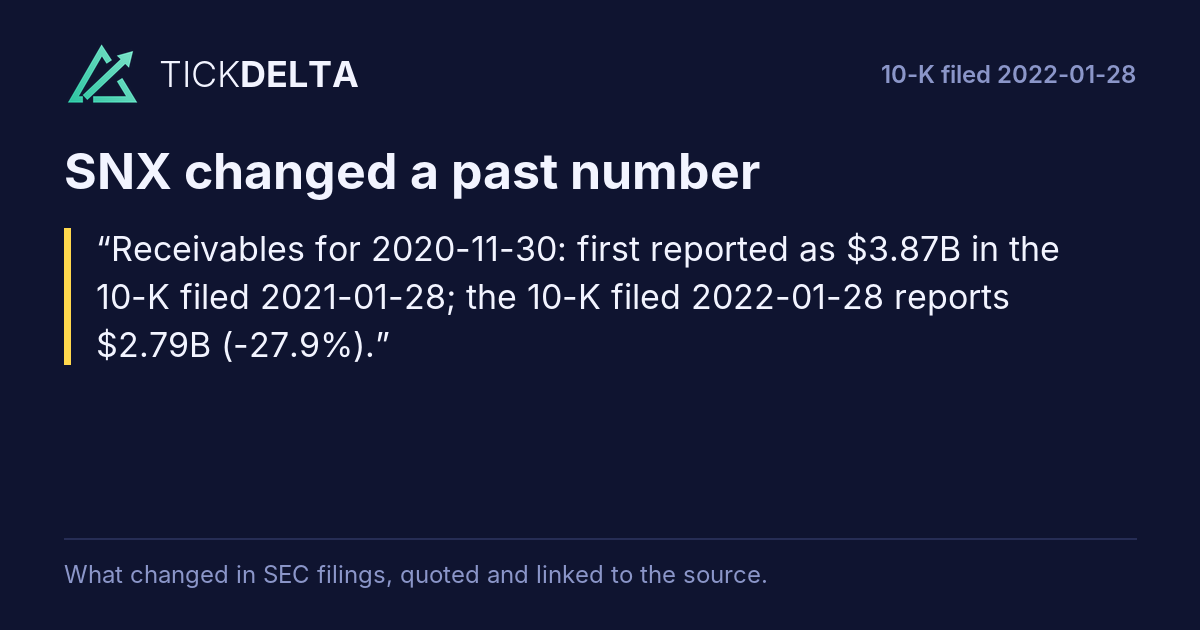
At Nov 30, 2020 | $3.87B 10-K filed Jan 28, 2021 |
$2.79B 10-K filed Jan 28, 2022 |
-27.9% |
From SEC's XBRL company facts (6 10-K filings). Checked: revenue, operating income, net income, cash from operations, total assets, shareholders' equity, receivables and inventory. Per-share numbers are left out because stock splits change them.
Sources
SEC's XBRL company facts: each 10-K's number for a year, against the number a later 10-K gives for the same year and line.
Also
Accounting checks: the checks run on the latest 10-K.
Work with it
Excel workbook · CSV. Google Sheet that stays up to date: paste =IMPORTDATA("https://tickdelta.com/company/SNX/export.csv") into a cell.