Added10-Q Nov 5, 2026 vs 10-K Feb 17, 2026
Inadequate self-insurance accruals or insurance coverage for employee healthcare benefits could have an adverse effect on our business, financial results or financial condition.
Each branch is a paragraph in Risk Factors with nothing like it in the 10-K filed Feb 24, 2025. A box jumps to the paragraph as filed, below.
59 paragraphs in Risk Factors of the 10-K filed Feb 17, 2026 with nothing like them in the 10-K filed Feb 24, 2025. Quoted exactly. Paragraphs that were only edited are under 10-K change.
•cyberattacks and other security breaches that may harm our brand and reputation and the expense of which may stress our resources;
•cyber breaches or intrusions, including successful social engineering attacks, such as phishing, that imperil the confidential information of our members, prospective members, technology platform clients and the customers of our technology platform clients, and employees and third-party service providers, and may harm our reputation and brand;
We have a history of net losses prior to the fourth quarter of 2023. We may incur net losses in the future, and any such losses may fluctuate significantly from quarter to quarter. We will need to continue to generate and sustain significant revenues
We expect our competition to continue to increase, as there are no substantial barriers to entry to certain of the markets we serve. Certain of our current and potential competitors have longer operating histories, particularly with respect to our financial services products, including digital asset and blockchain offerings, significantly greater financial, technical, marketing
•other digital asset and global remittance service providers for our SoFi Crypto and self-serve global remittance products;
Our oversight of third-party service providers is subject to regulation, supervision and examination by our prudential and other regulators, and if our oversight is found to be lacking, it may adversely affect our business.
We face risks related to cyberattacks and other security incidents, including unauthorized access to or disruption of our information systems and those of our third-party service providers and social engineering schemes that target our employees to gain access to our systems. A successful cyberattack, data breach, or other security incident could result in significant costs and adversely affect our business, financial condition, and results of operations. These costs include expenses for incident response, forensic investigations, system and member remediation, data recovery, and business interruption, as well as legal, regulatory, and contractual costs, including costs associated with required notifications, regulatory investigations, fines or penalties, litigation, settlements, and judgments. In addition, a cybersecurity incident could result in increased cybersecurity and insurance costs, including higher premiums or reduced availability of coverage. Any of the foregoing could materially and adversely
affect our business, financial condition, and results of operations. Further, we may face damages resulting from a cybersecurity incident in excess of our insurance policy limits.
Beyond these direct costs, a cybersecurity incident could cause reputational harm, loss of member, prospective member, technology platform client, employee or other third-party partner confidence, reduced demand for our products or services, and diversion of management and employee resources. Any of the foregoing could materially and adversely affect our business, financial condition, and results of operations. See “Information Technology and Data Risks—Cyberattacks and other security incidents and compromises could have an adverse effect on our business and systems, harm our brand and our reputation and expose us to liability. Efforts to prevent and respond to these attacks and incidents are costly” for additional information on the risks of cyberattacks and other security incidents to our business.
acquisition candidates can be difficult, time-consuming and costly, and we may not be able to successfully complete identified acquisitions. The risks we face in connection with acquisitions include, among others:
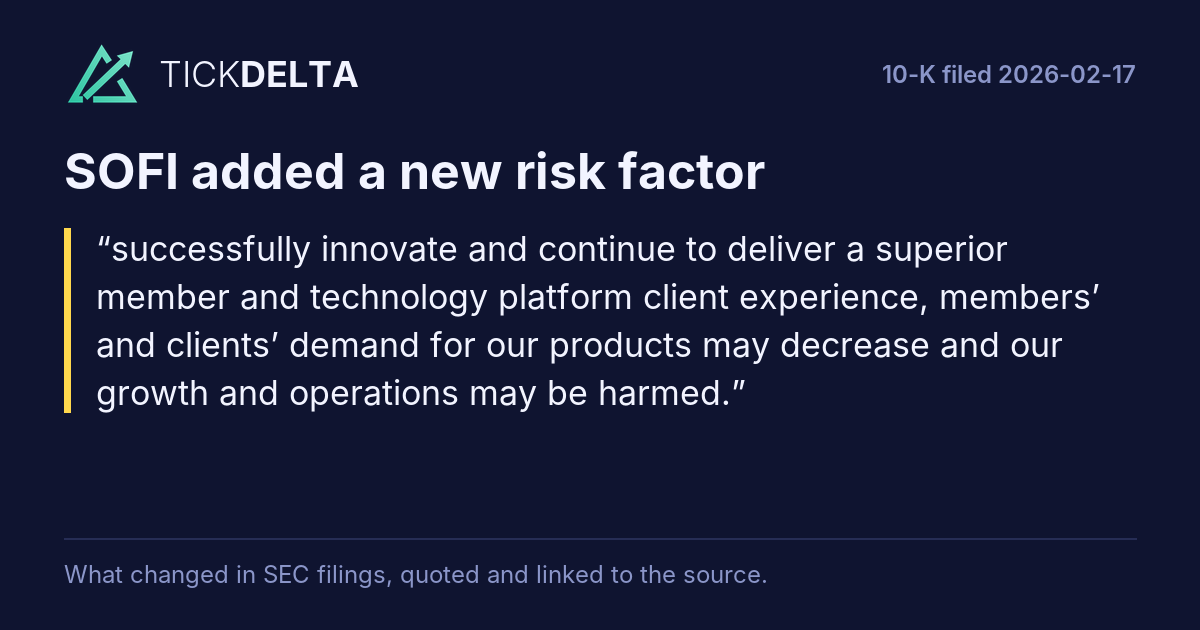
successfully innovate and continue to deliver a superior member and technology platform client experience, members’ and clients’ demand for our products may decrease and our growth and operations may be harmed.
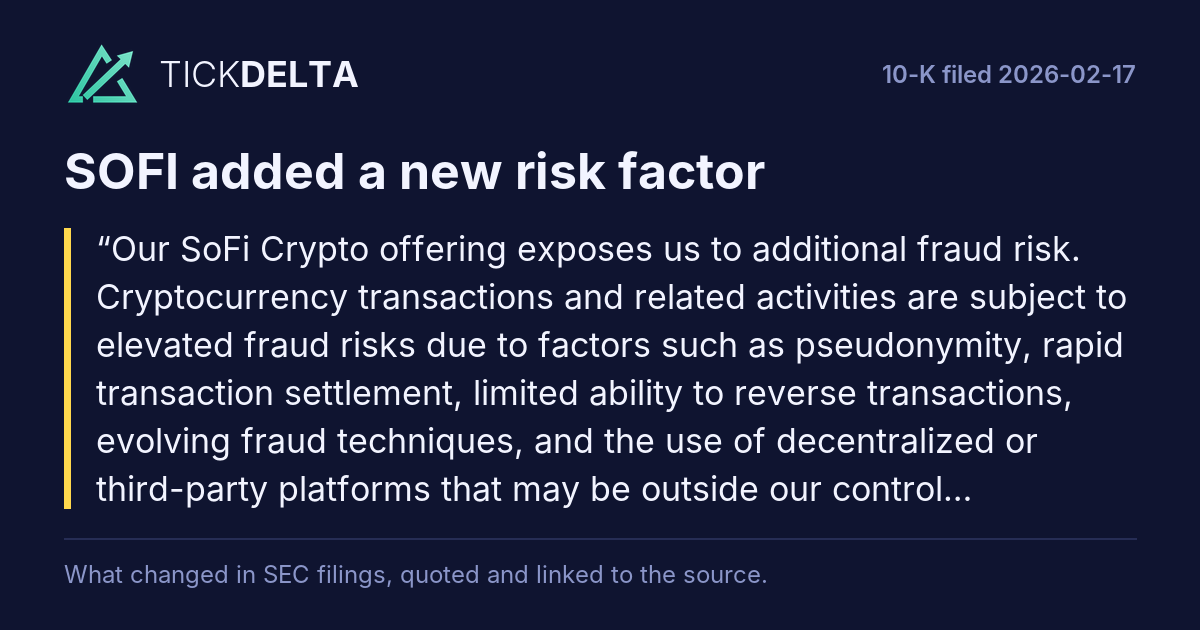
Our SoFi Crypto offering exposes us to additional fraud risk. Cryptocurrency transactions and related activities are subject to elevated fraud risks due to factors such as pseudonymity, rapid transaction settlement, limited ability to reverse transactions, evolving fraud techniques, and the use of decentralized or third-party platforms that may be outside our control. Fraudulent activities may include account takeovers, social engineering schemes, scams, theft of private keys, malware attacks, and misuse of our platforms to facilitate illicit activity.
While we employ fraud detection, monitoring, and compliance controls designed to mitigate these risks, such controls may be less effective in identifying or preventing cryptocurrency-related fraud compared to traditional financial products, particularly as fraudsters continue to adapt their methods. If fraud occurs, we may incur financial losses, increased operational and compliance costs, customer remediation expenses, regulatory scrutiny, reputational harm, and potential legal liability. Any failure to effectively prevent, detect, or respond to cryptocurrency-related fraud could materially and adversely affect our business and results of operations.
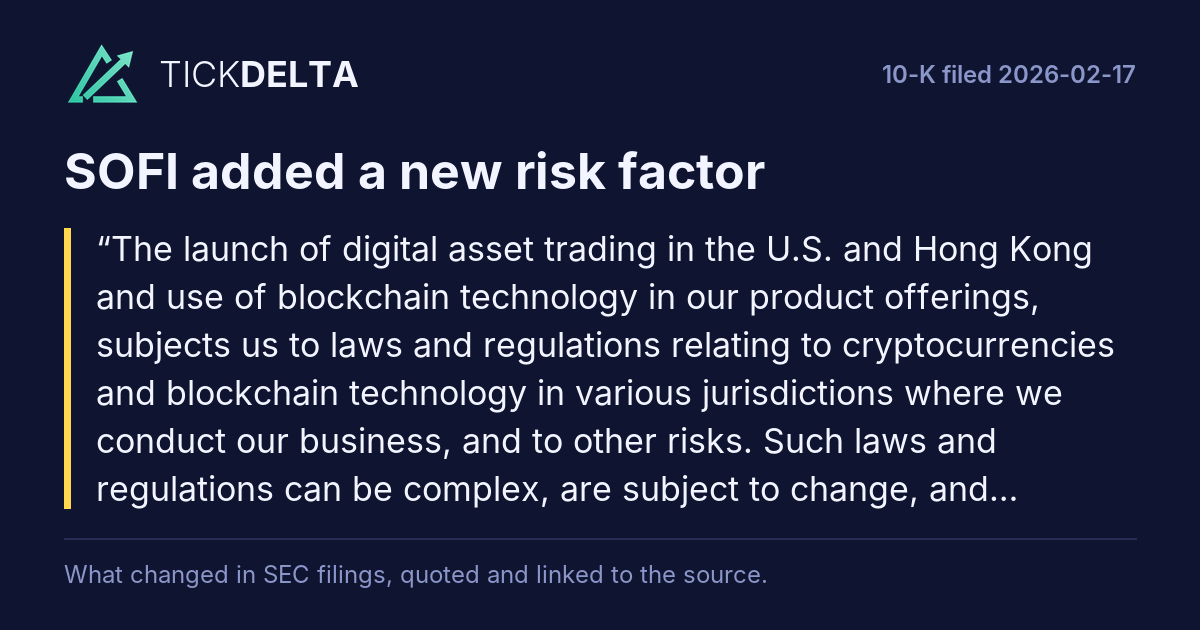
The launch of digital asset trading in the U.S. and Hong Kong and use of blockchain technology in our product offerings, subjects us to laws and regulations relating to cryptocurrencies and blockchain technology in various jurisdictions where we conduct our business, and to other risks. Such laws and regulations can be complex, are subject to change, and complying with them across various jurisdictions imposes operational, time, and cost constraints on our business. Our actual or perceived failure to comply with such obligations or to address other risks related to these technologies could harm our business and/or result in reputational harm, loss of customers, material financial penalties and legal liabilities.
In 2025, we launched SoFi Crypto in the U.S. and digital asset trading in Hong Kong, allowing our members to buy, sell and hold digital assets, which, along with any additional cryptocurrency products and other products that utilize blockchain technology that we may offer in the future, subjects us to additional regulations, licensing requirements, and other obligations. Compliance with any such regulations, requirements, or obligations may be complex and costly. Cryptocurrencies are not considered legal tender, are not backed by most governments, and have experienced technological flaws and various law enforcement and regulatory interventions. In addition, in the U.S. and certain other jurisdictions, certain cryptocurrencies may be deemed to be securities and subject to the securities laws of the relevant jurisdictions. Furthermore, our crypto offering in Hong Kong is subject to evolving regulatory requirements under Hong Kong’s licensing and virtual asset regime. Although Hong Kong has established a licensing framework for virtual asset trading platforms and related services, these rules are complex, subject to change, and may impose additional compliance obligations on firms engaging in crypto activities. The rapidly evolving regulatory landscape with respect to cryptocurrencies may subject us to registrations, inquiries, or
investigations from regulators and governmental authorities; require us to make product changes; restrict or discontinue product offerings; and implement additional and potentially costly controls. If we fail to comply with regulations, requirements, prohibitions or other obligations applicable to us, we could face regulatory or other enforcement actions and potential fines or reputational harm, be forced to cease offering cryptocurrency products, and other consequences, including significant financial losses.
Cryptocurrencies have in the past and may in the future experience periods of extreme price volatility. These uncertainties, as well as future accounting and tax developments, or other requirements relating to cryptocurrencies could expose us to litigation, regulatory action and possible liability, and have an adverse effect on our business.
As we enter into and expand our cryptocurrency product and service offerings, the risks associated with failing to safeguard and manage cryptocurrencies held by us or our custodians, or that our service providers transfer on behalf of our customers, may increase. In addition, a number of errors could occur in the process of depositing or withdrawing cryptocurrencies such as typos, mistakes or failure to include information required by the blockchain network, or any other internal failures or deficiencies in our own systems or those of any custodian or other third party provider we may use, could, in each case, materially and adversely affect our members and our operations. In addition, cryptocurrencies and blockchain technologies have been, and might in the future be, subject to security breaches, hacking or other malicious activities. Failures in internal controls or key management practices, whether by us or a service provider, could lead to irreversible asset loss or unauthorized transfers. Defaults by counterparties or systemic stress in crypto-asset markets may also pose significant liquidity, settlement, or valuation risks. Any such failure or event could result in reputational harm, significant financial losses, lead customers to discontinue or reduce their use of our services, and result in significant penalties and fines and additional restrictions.
In addition, we may rely on third parties for certain aspects of cryptocurrency offerings and reliance on third parties involves risks. For example, inappropriate access to, theft, destruction or other loss of cryptocurrency assets held by any counterparty we may use, insufficient insurance coverage by us or any such counterparty to reimburse us for all such losses, such counterparty’s failure to maintain effective controls over the custody, asset and settlement services provided to us, such counterparty’s inability to purchase or liquidate cryptocurrency holdings, and defaults on financial or performance obligations by counterparty financial institutions, could materially and adversely affect our financial performance and significantly harm our business.
In addition, we plan to integrate blockchain technology from a third party provider into certain of our products. Any number of technical changes, software upgrades, cybersecurity incidents or other changes to the underlying blockchain networks might occur from time to time, causing incompatibility, technical issues, disruptions or security weaknesses to our products. If we or our third party provider are unable to identify, troubleshoot and resolve any such issues successfully, we might no longer be able to support such products, our customers’ assets might be frozen or lost, the security of our products might be compromised and our platforms and technical infrastructure might be affected, all of which could cause revenue to decline and expose us to potential liability for customer losses.
We are new to global remittance services and engaging in such services exposes us to numerous risks, including compliance with complex laws and regulations across jurisdictions, and operational risks, each of which could materially and adversely affect our business, results of operations, and financial condition.
We recently launched global remittance services between the United States and thirty countries, including Mexico, India, Brazil and the European Union, and we expect to expand these and similar services to and between other international locations. The success of this product depends in part on our ability to provide global remittance services compliantly, efficiently and securely. Global remittance services involve complex regulatory, legal, and compliance requirements, including licensing, anti-money laundering, counter-terrorism financing, economic sanctions, data privacy and cybersecurity, customer disclosure, foreign exchange control laws, and monitoring, examination, and oversight by regulatory agencies across multiple jurisdictions. These frameworks differ significantly between countries and are subject to change, interpretation, and enforcement by various authorities. Failure to maintain compliance, or even the perception of noncompliance, may result in investigations, penalties, restrictions on our operations, or the loss of licenses and banking relationships necessary to provide global remittance services.
Our compliance and regulatory risk related to global remittance services is expected to increase as we expand our operations into additional jurisdictions because the provision of global remittance services is highly regulated, and the requirements vary from jurisdiction to jurisdiction. We are currently working with third-party partners who are licensed to provide global remittance services in the jurisdictions in which we operate and plan to operate. We may, as our global remittance services expand, obtain licenses directly in various jurisdictions. If we become licensed to provide these services by various governmental authorities, we would become subject to extensive financial, operational, and other regulatory
requirements to maintain our licenses and conduct business. If our licenses are not renewed or we are denied licenses in additional jurisdictions where we choose to apply for a license, we could be forced to change our business practices or to comply with the requirements of the additional jurisdictions, each of which could require us to bear substantial cost. Further, if we were found by these governmental authorities to be in violation of any applicable laws or regulations required to provide global remittance services, we could be subject to fines, penalties, lawsuits, and enforcement actions; additional compliance requirements; increased regulatory scrutiny of our business; restriction or suspension of our operations; or damage to our reputation or brand. Regulatory requirements are constantly evolving, and we cannot predict whether we will be able to meet changes to existing regulations or the introduction of new regulations without harming our business, financial condition, operating results, and future prospects.
Additionally, global remittance services are subject to higher operational risks, including delays, transaction errors, and fraudulent activities, particularly in regions with less developed financial infrastructure, including settlement timing differences, and exposure to local liquidity constraints which may impact the predictability and profitability of our global remittance services. Political instability, trade restrictions, current or new tax laws, or economic sanctions imposed on certain countries may further restrict our ability to provide global remittance services in specific markets.
Furthermore, we currently rely on third-party partners to facilitate global remittance services and may rely on additional third-parties in the future. In addition, our third-party partners may rely on local partners for delivery of their services. Any disruption, error, or compliance failure by these partners could lead to financial loss, reputational damage, and customer dissatisfaction, including related to the experience of our members’ recipients. If the experience delivered to a recipient is deemed unsatisfactory for any reason, including if a third-party partner’s processes take longer than expected, members may choose to not use our services in the future and our business could be harmed. Additionally, third-party partners charge fees, which may increase from time to time, and which could increase our costs. Banks currently determine the fees charged for bank-originated transactions and may increase the fees with little prior notice. U.S. federal, state, local or foreign governments could also mandate a tax on global remittance services, or require additional taxes or fees to be imposed upon our customers, or otherwise impact the manner in which we provide global remittance services. If fees increase, it may require us to change our product options, or take other measures that would impact our costs and profitability or cause us to lose members or otherwise limit our operations.
If we are unable to effectively manage these risks or adapt our operations to evolving international regulatory environments, our ability to further expand our global remittance services and similar services, and maintain compliance could be impaired, and our business, financial condition, and results of operations could be materially and adversely affected.
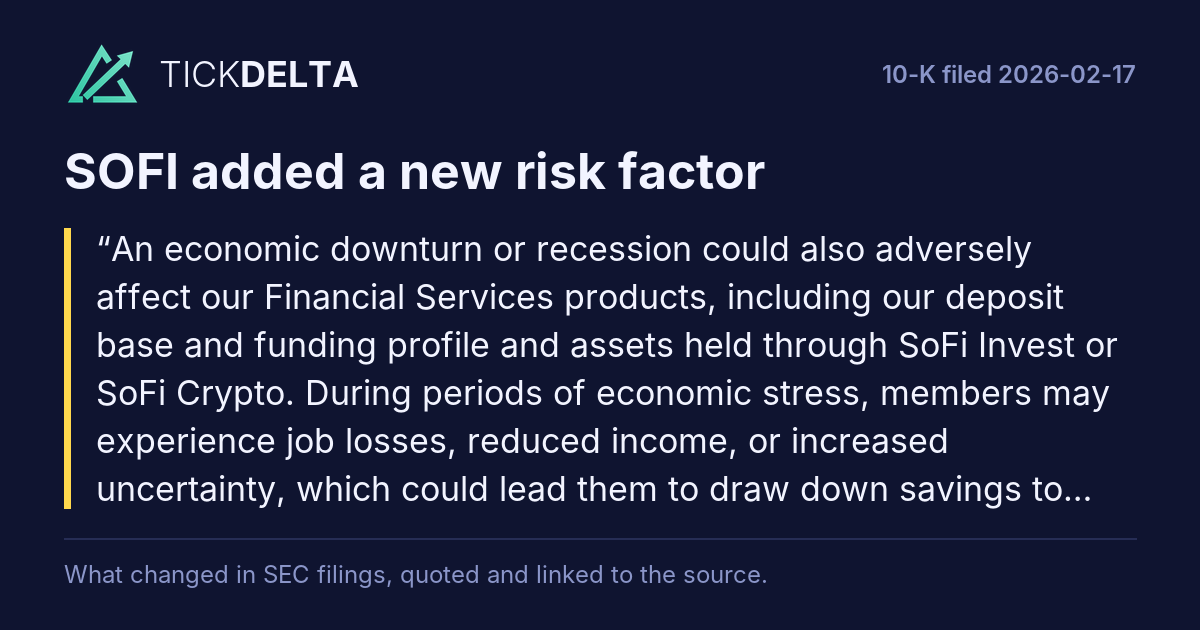
An economic downturn or recession could also adversely affect our Financial Services products, including our deposit base and funding profile and assets held through SoFi Invest or SoFi Crypto. During periods of economic stress, members may experience job losses, reduced income, or increased uncertainty, which could lead them to draw down savings to meet living expenses or shift funds toward perceived safer or more liquid alternatives. These behaviors may result in deposit outflows, lower average balances in checking and savings accounts or lower average investments made through SoFi Invest or SoFi Crypto investments. In addition, heightened market volatility or concerns about the financial sector could increase member sensitivity to interest rates, safety perceptions, and liquidity needs, intensifying competition for deposits and increasing our funding costs. A sustained decline in deposits or an unfavorable shift in deposit composition could reduce our access to low-cost, stable funding and increase our reliance on alternative or wholesale funding sources, which may be more expensive or less available during a recession. Such conditions could adversely affect our net interest margin, liquidity position, and ability to grow or maintain our balance sheet. If these pressures are prolonged or severe, they could also constrain our ability to support member demand, comply with regulatory liquidity requirements, or pursue strategic initiatives, and could have a material adverse effect on our business, financial condition, and results of operations.
If a higher percentage of borrowers obtain relief under bankruptcy or other debtor relief laws in the future than is reflected in our historical experience, we could experience increased loan discharges, reduced recoveries, higher charge-offs, and increased litigation and compliance costs. In addition, adverse judicial developments could result in class action litigation, injunctions, or regulatory scrutiny relating to our servicing or collection practices with respect to such loans. Any such developments could negatively impact the value of our student loan portfolio, the performance of related securitizations, and our financial condition and results of operations. See “Regulatory, Tax and Other Legal Risks—Legislative and regulatory policies and related actions have had and could in the future have a material adverse effect on borrower behavior, our student loan portfolios and our student loan origination volume”.
Home equity loans expose us to heightened credit, property value and interest rate risk.
Home equity loans are subject to subordinate liens on the related property. Subordinate lien loans are structurally riskier than first lien loans because, in the event of borrower default or foreclosure, holders of first lien mortgages are entitled to repayment before subordinate lien holders. As a result, recoveries on subordinate lien loans are more sensitive to declines in residential property values and may be limited or eliminated if property values decrease or if combined loan-to-value ratios increase, In addition, changes in interest rates may adversely affect the performance and value of these loans. Rising interest rates may increase borrower payment obligations for variable-rate loans and could contribute to higher delinquency or default rates. Conversely, declining interest rates may increase prepayment activity, which could reduce expected yields. Interest rate fluctuations may also negatively impact the fair value of home equity loans held on our balance sheet. If residential property values decline, interest rates increase, or broader economic conditions weaken, we may experience higher credit losses, increased delinquencies, reduced recoveries, and impairment charges on our home equity loan portfolio, which could adversely affect our financial condition and results of operations. In addition, our ability to sell home equity loans may be limited because these loans are not categorized as conventional for GSE purchasers.
ability to process payments and perform other operational functions for which we currently rely on such third-party service providers will suffer and our business, cash flows and future prospects may be negatively impacted. Such third-party service provider failures could also result in, among other things, increased regulatory scrutiny of our third-party service provider oversight, costly investigations, required corrective action and remediation, regulatory enforcement actions, class action lawsuits, and harm to our reputation.
stockholders could suffer significant dilution and any new equity securities we issue could have rights, preferences and privileges superior to those of holders of our common stock.
collect. In addition, in November 2023, the Federal Reserve proposed changes to the regulations implementing the Electronic Fund Transfer Act that would further restrict the amount of interchange fees that may be charged and require biennial reviews of those fees.
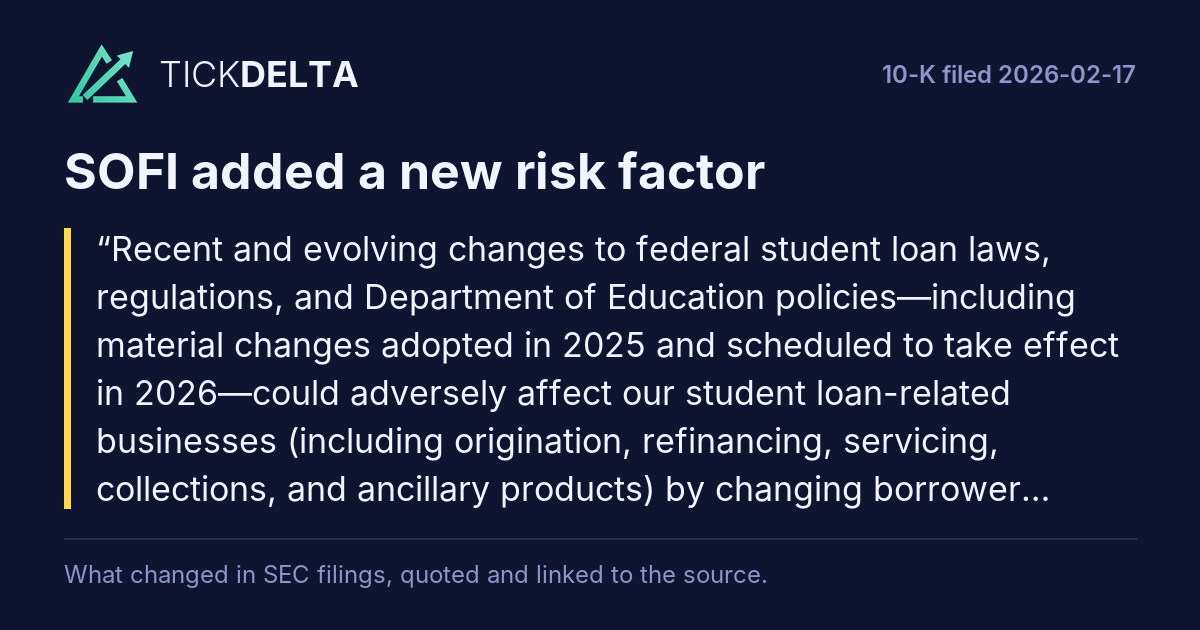
Recent and evolving changes to federal student loan laws, regulations, and Department of Education policies—including material changes adopted in 2025 and scheduled to take effect in 2026—could adversely affect our student loan-related businesses (including origination, refinancing, servicing, collections, and ancillary products) by changing borrower repayment behavior, demand for refinanced student loan and other student loan credit products, and broader economic trends, and could materially impact our financial condition and results of operations. In particular, recent developments include (i) significant legislative changes enacted in 2025 that are expected to restructure aspects of federal borrowing and repayment beginning July 1, 2026, including the introduction of a new income-driven repayment option (commonly described as a “Repayment Assistance Plan”), changes to borrowing limits and program design, and the elimination of the GRAD Plus program, (ii) continued policy and litigation-driven disruption associated with the Biden administration SAVE repayment plan, including Department of Education actions tied to court injunctions and subsequent program transitions, and (iii) changes to federal default and involuntary collection practices, including a recently announced pause on wage garnishment and tax refund offsets for certain borrowers in default while the Department of Education implements repayment system changes. The Department of Education has also finalized additional program regulations with effective dates in 2026 (including regulations affecting Public Service Loan Forgiveness).
These developments—and any further changes adopted by Congress, the Department of Education, the CFPB, or the courts—may increase uncertainty and volatility in borrower behavior and the economics of both federal and private student loan products. For example, modifications to repayment options, forgiveness eligibility, and default collection policies may change borrowers’ incentives to refinance federal loans into private loans; reduce demand for our products; increase prepayment or extension risk; and shift delinquency, default, and cure patterns in ways that are difficult to predict. Similarly, although it may appear that the elimination of the GRAD Plus federal loan program will increase demand for our private student loan product, there is no guarantee that this will occur. In addition, program changes may increase operational complexity (including system updates, borrower communications, and training), elevate complaint volume and regulatory scrutiny, and heighten litigation and enforcement risk—particularly if borrowers experience payment shocks, confusion regarding plan transitions, or disputes over eligibility and servicing practices. Because the scope, implementation timing, and interpretation of these changes remain uncertain—and could be further modified through additional rulemaking, sub-regulatory guidance, appropriations actions, or court decisions—we may be required to make rapid changes to products, underwriting, servicing, loss mitigation, and compliance processes, and we may incur increased costs to do so. Any failure to timely and effectively adapt, or any adverse effect on borrower performance, demand, or competitive dynamics, could materially and adversely affect our business, reputation, results of operations, and financial condition.
Furthermore, these policy shifts may influence the overall financial well-being and creditworthiness of individuals carrying student debt. For example, the replacement of multiple income-driven repayment options with narrower alternatives, changes to forgiveness eligibility, and increased default collection activity could raise monthly payment burdens or accelerate delinquency for certain borrowers, potentially reducing consumer spending, increasing financial stress, or altering borrowing patterns. In addition, uncertainty around future student loan policy—such as ongoing litigation, shifting program eligibility criteria, or potential future reforms—may affect borrower confidence and decision-making. These conditions could lead to
variations in demand for consumer financial products, increased credit risk, or changes in macroeconomic consumption patterns that negatively impact our business operations, loan portfolios, liquidity, or financial results.
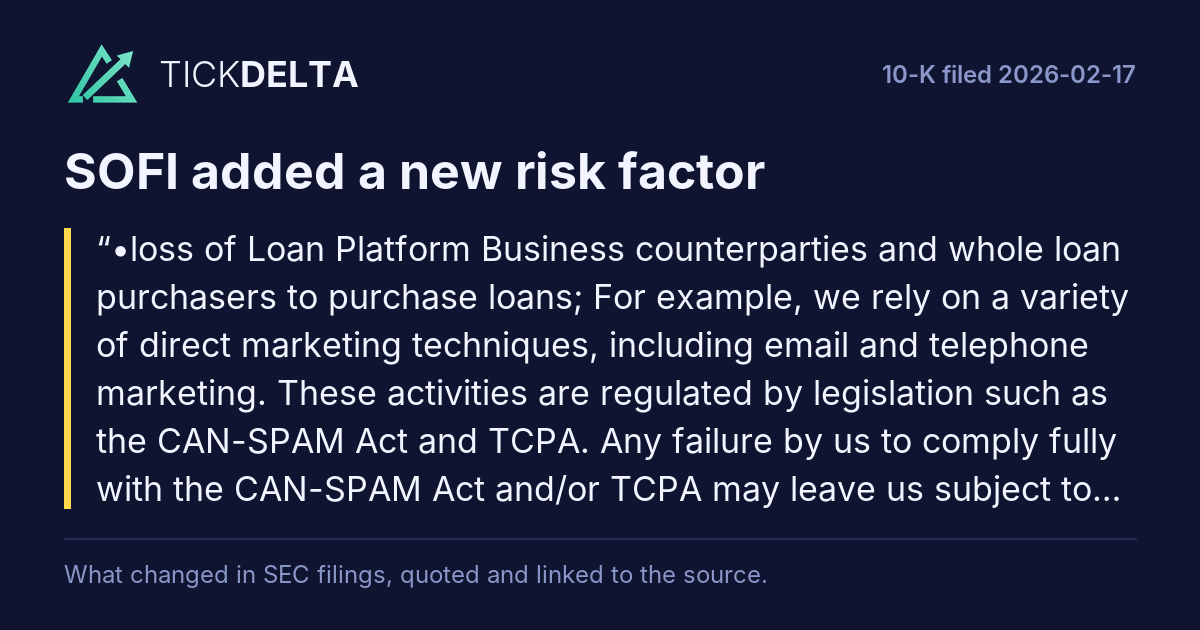
•loss of Loan Platform Business counterparties and whole loan purchasers to purchase loans;
For example, we rely on a variety of direct marketing techniques, including email and telephone marketing. These activities are regulated by legislation such as the CAN-SPAM Act and TCPA. Any failure by us to comply fully with the CAN-SPAM Act and/or TCPA may leave us subject to substantial fines and penalties. In addition, any future restrictions in laws such as the CAN-SPAM Act and TCPA, and various United States state laws, or new federal laws regarding marketing and solicitation or international data protection laws that govern these activities could adversely affect the continuing effectiveness of our marketing efforts and could force changes in our marketing strategies. If this occurs, we may not be able to develop adequate alternative marketing strategies, which could have a material adverse impact on our results of operations.
operations. Any such event could also result in reputational damage, loss of consumer trust, adverse media coverage, increased compliance costs, and harm to our business, financial condition, and results of operations.
an affiliated SEC-registered broker-dealer and FINRA member. We offer cash management accounts, which are brokerage products, through SoFi Securities.
(including fines and other penalties), cause us to lose existing members or fail to gain new members. In addition, in the normal course of business, SoFi Securities and the Investment Adviser discuss matters raised by its regulators during regulatory examinations or otherwise upon their inquiry. These matters could also result in censures, fines, penalties or other sanctions.
privacy, information and/or data protection, the costs that these vendors and service providers must incur in becoming compliant may be passed along to us, resulting in increasing costs on our business.
also increases their value to other companies that may seek to recruit them. Turnover can result in significant replacement costs and lost productivity.
clients, and employees and third-party service providers, as well as information required to access customer assets. We also have arrangements in place with certain third-party service providers that require us to share consumer information. We have built our reputation on the premise that we are helping members get their money right by offering a safe, secure way to store their money and build a financially sound future. As a result, any actual or perceived security breach of us or our third-party partners have and may in the future:
•result in our systems or services being unavailable and interrupt our operations;
•result in improper disclosure of data and violations of applicable privacy and data protection laws;
•result in significant regulatory scrutiny, investigations, fines, penalties, and other legal, regulatory, and financial exposure;
•reduce customer confidence in, or decrease customer use of, our products and services;
•result in significant compensation or contractual penalties payable by us to our customers or third parties as a result of losses to them or claims by them; and
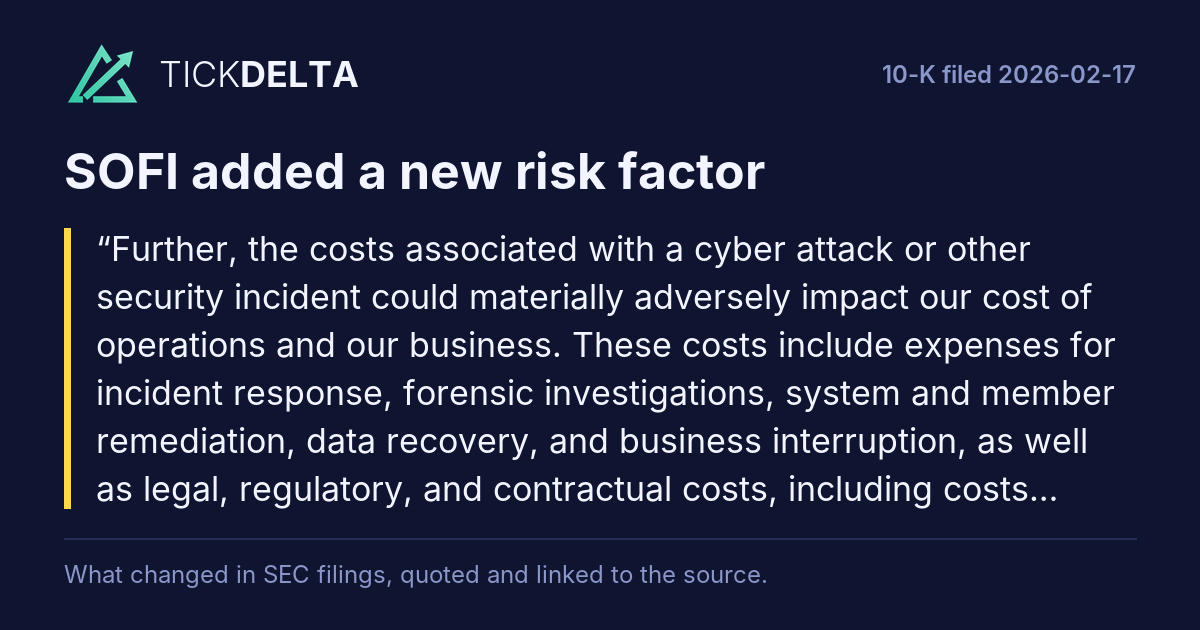
Further, the costs associated with a cyber attack or other security incident could materially adversely impact our cost of operations and our business. These costs include expenses for incident response, forensic investigations, system and member remediation, data recovery, and business interruption, as well as legal, regulatory, and contractual costs, including costs associated with required notifications, regulatory investigations, fines or penalties, litigation, settlements, and judgments. In addition, a cybersecurity incident could result in increased cybersecurity and insurance costs, including higher premiums or reduced availability of coverage. Any of the foregoing could materially and adversely affect our business, financial condition, and results of operations.
Our business is also subject to contractual obligations related to the protection, confidentiality, and security of data, including personal, financial, and confidential information belonging to our members, prospective members, technology platform clients and the customers of our technology platform clients, and employees and third-party service providers. Many of our contracts contain data protection, confidentiality, indemnification, limitation of liability, and service-level provisions that could be triggered by a cybersecurity incident or data breach. We have in the past experienced and may in the future experience a cyber breach and we may be required to indemnify technology platform clients or other counterparties for losses arising from the incident, provide credits, refunds, or other contractual remedies, or face claims for damages resulting from alleged failures to meet contractual security or availability commitments. Certain contracts may also permit counterparties to terminate or suspend services, seek injunctive relief, or pursue other remedies following a data breach. In addition, contractual liability arising from a cyber breach or other security incident could result in substantial defense costs, settlements, or judgments, as well as increased scrutiny during contract renewals or negotiations. Our contractual protections, including limitations of liability, exclusions, and insurance coverage, may be insufficient to fully mitigate these risks or may not apply in all circumstances. Any of the foregoing could materially and adversely affect our business, financial condition, and results of operations.
Further, although we maintain cyber liability insurance, this insurance may not provide adequate coverage against potential liabilities related to any experienced cybersecurity incident or breach.
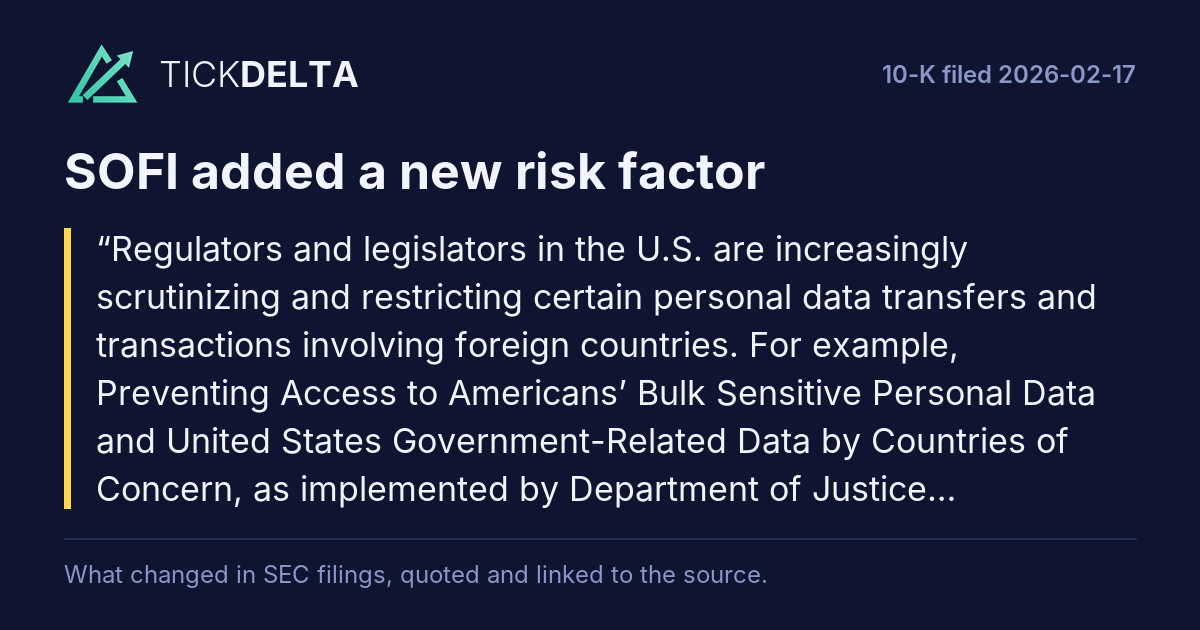
Regulators and legislators in the U.S. are increasingly scrutinizing and restricting certain personal data transfers and transactions involving foreign countries. For example, Preventing Access to Americans’ Bulk Sensitive Personal Data and United States Government-Related Data by Countries of Concern, as implemented by Department of Justice regulations issued in December 2024, prohibits data brokerage transactions involving certain sensitive personal data categories, including health data, genetic data, and biospecimens, to countries of concern, including China. The regulations also restrict certain investment agreements, employment agreements and vendor agreements involving such data and countries of concern, absent specified cybersecurity controls. Actual or alleged violations of these regulations may be punishable by criminal and/or civil sanctions and may result in exclusion from participation in federal and state programs.
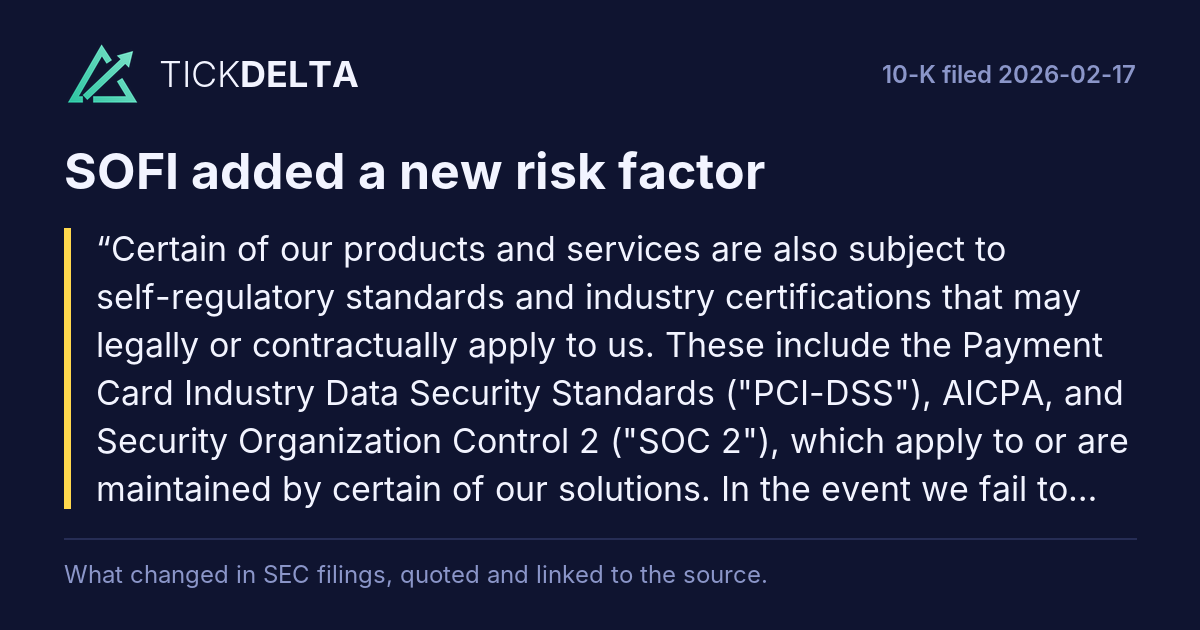
Certain of our products and services are also subject to self-regulatory standards and industry certifications that may legally or contractually apply to us. These include the Payment Card Industry Data Security Standards ("PCI-DSS"), AICPA, and Security Organization Control 2 ("SOC 2"), which apply to or are maintained by certain of our solutions. In the event we fail to comply with the PCI-DSS or fail to maintain our SOC 2 certification, we could be in breach of our obligations under customer and other contracts, fines and other penalties could result, and we may suffer reputational harm and damage to our business. Further, our customers may expect us to comply with more stringent privacy, data storage and data security requirements than those imposed by laws, regulations or self-regulatory requirements, and we may be obligated contractually to comply with additional or different standards relating to our handling or protection of data.
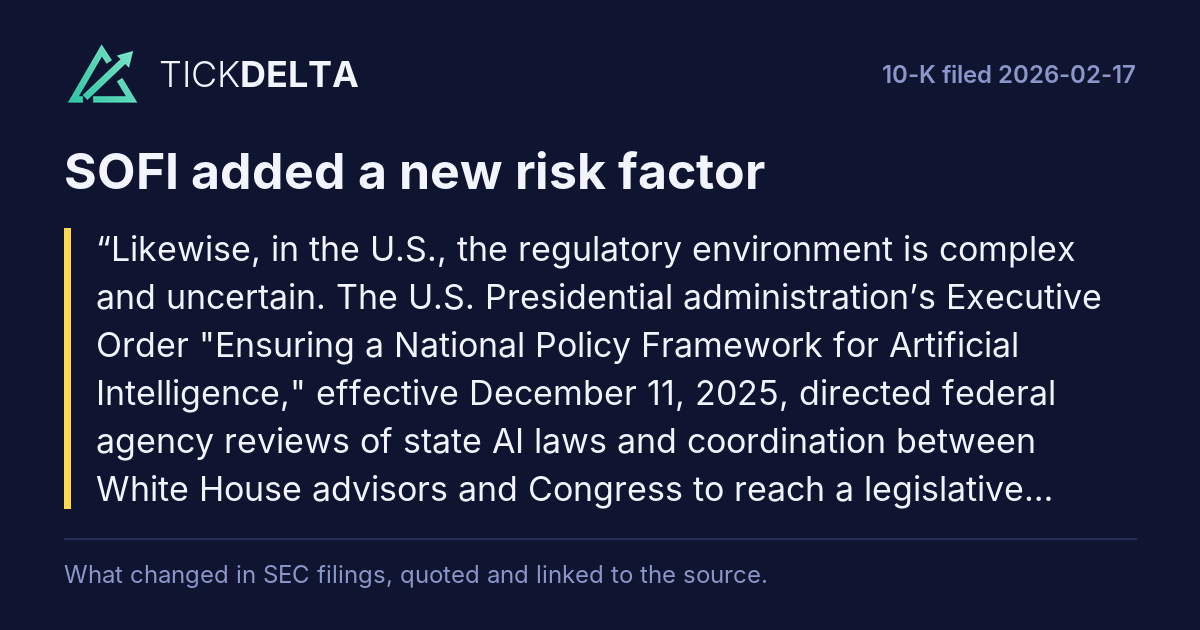
Likewise, in the U.S., the regulatory environment is complex and uncertain. The U.S. Presidential administration’s Executive Order "Ensuring a National Policy Framework for Artificial Intelligence," effective December 11, 2025, directed federal agency reviews of state AI laws and coordination between White House advisors and Congress to reach a legislative proposal for a uniform federal AI policy framework. At the same time, several states, including Texas, Colorado and California, passed laws that regulate various facets of AI, certain of which have taken effect and will continue to take effect through 2026 and beyond. These laws address a wide range of AI-related topics, including consequential decisions, transparency, training data, among others, and it remains unclear which requirements, if any, will be superseded by the Executive Order. In addition, there continues to be uncertainty regarding the application of existing federal and state legal frameworks to uses and development of AI, and legal norms and market standards regarding AI continue to evolve. If we develop or use AI systems that are governed by these laws or regulations, we will need to meet higher standards of data quality, transparency, and human oversight, and we would need to adhere to specific and potentially burdensome and costly ethical, accountability, and administrative requirements. We may also be subject to significant enforcement or litigation in the event of any perceived non-compliance.
financial services stocks or the broader stock market experiences a loss of investor confidence, the trading price of our common stock could decline for reasons unrelated to our business, financial condition or results of operations.
Directors or taking other corporate actions, including effecting changes in our management. Among other things, our organizational documents include provisions regarding:
New in the latest 10-Q
15 paragraphs in the 10-Q filed Nov 5, 2026 with nothing like them in the 10-Q filed Aug 6, 2026 (at least half the words must differ; new numbers alone do not count). Quoted exactly, grouped by the item heading above them. This is text that changed, not a judgement of how serious it is.
(1) Includes credit card with personal loan rollover loans. See Note 12. Fair Value Measurements for additional information.
Read in the 10-Q
As of September 30, 2026, $ 428.0 million aggregate principal amount of the 2026 convertible notes remained outstanding. Subsequently, upon maturity of the 2026 convertible notes on October 15, 2026, the Company settled this remaining obligation entirely in cash and the associated 2026 capped calls expired unexercised and without value.
Read in the 10-Q
net shares. As of September 30, 2026, we did not anticipate any incremental spread, as our common stock price was below the conversion price for the 2026 convertible notes. See Note 9. Debt for additional information.
Read in the 10-Q
(1) Credit Card with Personal Loan Rollover is a product that allows members to consolidate their credit card balances to SoFi for a period of time, after which any remaining balance automatically converts to a personal loan.
Read in the 10-Q
On October 15, 2026, the Company's 2026 convertible notes matured. The Company settled the $ 428.0 million aggregate principal amount outstanding at maturity entirely in cash; no shares of common stock were issued. For additional information, see Note 9. Debt.
Read in the 10-Q
Small Business Loans. We originate non-revolving term loans to help small businesses meet their financing needs. Through our partnership with a third-party, SoFi Bank offers single-disbursement loans ranging from $2,500, or the applicable state minimum, to $250,000. Terms generally range from 12 to 24 months, with fixed APRs generally ranging from 26% to 36% for SoFi Bank-branded loans. Customers make equal weekly or quad-weekly payments, and additional borrowing requires a new underwriting review.
Read in the 10-Q
For small business loans, we use personal and business credit bureau data, business bank transaction data and financial analysis to assess a borrower’s ability to repay and assign risk-based pricing.
Read in the 10-Q
We offer a suite of financial services solutions, the most significant of which are discussed below. Our financial services products (as defined under “Key Business Metrics”) by nature provide more daily interactions with our members and
Read in the 10-Q
incoming inflation, employment and economic data. These conditions have contributed to continued volatility in benchmark interest rates, credit spreads and capital markets.
Read in the 10-Q
We have recently issued a proprietary stablecoin named SoFiUSD. The design, issuance, and operation of a stablecoin could expose us to a range of significant risks, including regulatory, operational, liquidity, technological, and reputational risks. The legal and regulatory framework governing stablecoins remains uncertain and is evolving rapidly in the United States and internationally. The Guiding and Establishing National Innovation for U.S. Stablecoins Act (the “GENIUS Act”) was enacted on July 18, 2025, and will become effective on January 18, 2027. In October 2026, the OCC issued a final rule implementing the GENIUS Act for payment stablecoin issuers subject to its jurisdiction, which also takes effect on January 18, 2027. The OCC rule establishes requirements for, among other things, permitted activities, reserve assets, redemption, capital and operational backstops, custody, risk management, reporting, and licensing. Other implementing regulations remain in proposed form. These include rules addressing anti-money laundering and sanctions compliance program requirements proposed by FinCEN, OFAC and the OCC, and rules proposed by the U.S. Department of the Treasury, the Federal Reserve and the FDIC. These proposals may not be finalized before the GENIUS Act's effective date, and they may be adopted in forms that differ materially from their proposed form. The OCC has also indicated that it expects to update its regulations as the industry evolves.
Read in the 10-Q
For example, beginning on January 18, 2027, subject to limited waiver provisions, only a permitted payment stablecoin issuer (“PPSI”) may lawfully issue a payment stablecoin in the United States. Issuing a payment stablecoin without that approval may result in civil and criminal penalties. A PPSI includes a subsidiary of an insured depository institution that has been approved by its primary Federal payment stablecoin regulator to issue payment stablecoins. For the Bank, that regulator is the OCC. Payment stablecoin issuance activities conducted before the effective date are not grandfathered. Accordingly, the Bank's payment stablecoin activities will need to transition to a subsidiary of the Bank that is approved as a PPSI. This will require, among other things, the submission and approval of an application to the OCC.
Read in the 10-Q
The OCC has stated that it will separately announce when it will begin accepting applications and waiver requests. Under the GENIUS Act and the OCC's rule, the OCC may waive certain requirements for up to 12 months after January 18,
Read in the 10-Q
2027 for an issuer with a substantially complete application pending on or before that date. We intend to submit such an application and request a waiver. However, we cannot assure you that the OCC will begin accepting applications in time, that our application will be deemed substantially complete, or that a waiver will be granted, or granted on acceptable terms. We also cannot assure you that the OCC will approve our application within any particular time frame, or at all, or without conditions that restrict our activities, products, or arrangements with distribution partners.
Read in the 10-Q
If we are unable to obtain timely approval or a waiver, we may be required to suspend or cease issuing SoFiUSD, which could adversely affect our business. In addition, the OCC's rule requires PPSIs to maintain minimum capital and operational backstops and submit weekly and quarterly reports to the OCC. It also restricts the payment of interest or yield to holders solely in connection with holding, using, or retaining a payment stablecoin. These requirements may limit how we structure SoFiUSD, related rewards, and our partner arrangements. Violations could result in enforcement action, including civil money penalties, and could ultimately require the orderly wind-down of the PPSI. The issuance and operation of SoFiUSD also presents unique compliance challenges. We are already subject to anti-money laundering, sanctions, and related compliance obligations under the Bank Secrecy Act, the USA PATRIOT Act, and regulations administered by FinCEN and OFAC. The GENIUS Act provides that PPSIs are treated as financial institutions for Bank Secrecy Act purposes. Rules proposed by FinCEN and OFAC, and separately by the OCC, would require PPSIs to maintain specific anti-money laundering and sanctions compliance programs. These programs would include risk assessment processes and independent testing. PPSIs would also need to have the technical capability to comply, and to actually comply, with lawful orders to block, freeze, or reject specific or impermissible transactions. The final form and timing of these rules is uncertain, and complying with them may require significant changes to our systems, smart contract functionality, and controls.
Read in the 10-Q
Our issuance of SoFiUSD also exposes us to counterparty, operational and liquidity risks. We engage a third party sub-servicer to provide technical and operational services, including for reserve management, and a portion of SoFiUSD reserve assets may be held in custodial accounts at other regulated financial institutions. The OCC's rule requires that reserve assets be identifiable and segregated, and that reserves equal or exceed outstanding issuance at all times. It requires that at least 5% of reserve assets be held in highly liquid forms such as demand deposits, and it limits exposure to any single counterparty to 40% of reserves, subject to exceptions. It also requires stress testing and a demonstrated ability to monetize reserve assets under stressed conditions. Where warranted, PPSIs must hold reserves in excess of outstanding issuance. Meeting these requirements may constrain our selection of reserve assets, custodians, and counterparties, and reduce the income we earn on reserves. A PPSI that fails to meet reserve requirements for 15 consecutive business days must begin liquidating reserve assets and redeeming outstanding stablecoins. A failure, insolvency, misappropriation, or other inability to perform by our sub-servicer, a custodian, or another counterparty could limit our access to reserve assets and impair our ability to satisfy redemptions or maintain the value and liquidity of SoFiUSD. We also face risks related to redemption demands and market stress. Under the OCC's rule, a PPSI must generally complete redemptions within two business days of receiving a request from an onboarded customer. It must notify the OCC within 24 hours if redemption requests exceed 10% of outstanding issuance, and only the OCC may approve limits or extensions on redemptions. As a result, we may have limited ability to manage liquidity during periods of extreme stress. Failure to maintain a stable value or to meet redemption requests on time could result in financial losses, customer claims, regulatory action, and reputational harm.
Read in the 10-Q
Item 1A of the 10-Q filed Nov 5, 2026 against Item 1A of the 10-K filed Feb 17, 2026.
A 10-Q repeats only the risks that changed, so a 10-K paragraph that is missing from it is not counted as removed.
Added is a paragraph with nothing like it in the 10-K, Reworded a sentence that is in both with several words changed,
Quiet changes a sentence in both where one to four words changed and one is a hedge or a modal
(cut words struck through, new words highlighted).
Text on the page, not a score; each links to the filing at sec.gov.
The first 14 of 16 are shown (at most 12 of each type).
Two-word phrases in Risk Factors of the 10-K filed Feb 17, 2026 that are in none of the 1 earlier 10-Ks stored, back to Feb 24, 2025
Used at least twice, small words left out. Counted, not picked: a phrase can be new because the company renamed something.
24 paragraphs of last year's Risk Factors with nothing like them now. The longest are quoted.
Item 1A of each 10-K and 10-Q on EDGAR, quoted exactly. Each paragraph links to the filing at sec.gov.
10-K change: what was reworded or cut, section by section.
Excel workbook · CSV. Google Sheet that stays up to date: paste =IMPORTDATA("https://tickdelta.com/company/SOFI/export.csv") into a cell.