Paragraphs with nothing like them in last year's 10-K
Quoted exactly
24 paragraphs in Risk Factors of the 10-K filed Feb 26, 2026
with nothing like them in the 10-K filed Feb 27, 2025. Quoted exactly.
Paragraphs that were only edited are under 10-K change.
•If we do not effectively expand and train our direct sales force, we may be unable to add new customers or increase sales to our existing customers, and our business will be adversely affected.
•Expansion into international markets is expected to be an aspect of our long-term growth, and as we expand internationally, we will face additional business, political, legal, regulatory, operational, financial, and economic risks, any of which could increase our costs and hinder such growth.
•results of or developments in nonclinical studies and clinical trials of our product candidates and timing of achievement of related regulatory milestones;
Market acceptance of any future product candidates (including MACI Ankle, for which we initiated a clinical trial in the fourth quarter of 2025), if approved, will not be fully known until after they are launched and may be negatively affected by a
If we do not effectively expand and train our direct sales force, we may be unable to add new customers or increase sales to our existing customers, and our business will be adversely affected.
During 2025, we began an expansion of our MACI sales force. Our ability to achieve significant revenue growth will depend, in large part, on our success in recruiting, training and retaining sufficient numbers of sales personnel. We have expanded our sales organization significantly in recent periods and may do so again in the future. There is significant competition for sales personnel with the skills and technical knowledge that we require. New hires require significant training and may take significant time before they achieve full productivity. Our recent hires and potential future hires may not become productive as quickly as we expect, and we may be unable to hire or retain sufficient numbers of qualified individuals in the markets where we do business or plan to do business. In addition, some members of our sales force are new to our company and selling our products, and therefore may be less effective than our more seasoned sales personnel. Furthermore, hiring sales personnel in new territories and regions, or expanding our existing presence, requires upfront and ongoing expenditures that we may not recover if the sales personnel fail to achieve full productivity. We cannot predict whether, or to what extent, our sales will increase as we expand our sales force or how long it will take for sales personnel to become productive. If we are unable to hire and train a sufficient number of effective sales personnel, or the sales personnel we hire are not successful in obtaining new customers or increasing sales to our existing customer base, our business and results of operations will be adversely affected.
Expansion into international markets is an aspect of our long-term growth, and as we expand internationally, we will face additional business, political, legal, regulatory, operational, financial, and economic risks, any of which could increase our costs and hinder such growth.
Expanding our business to attract customers in countries other than the United States is an element of our long-term business strategy. For example, we have initiated a staged approach to expanding our MACI operations outside of the U.S. and initially into the United Kingdom. Conducting business internationally involves a number of risks, including:
•multiple, conflicting and changing laws and regulations such as tax laws, privacy and data protection laws and regulations, export and import restrictions, employment laws, regulatory requirements and other governmental approvals, permits and licenses;
•obtaining regulatory approvals or clearances where required for the sale of our products in various countries;
•natural disasters, political and economic instability, including wars, terrorism, social or political unrest, including civil unrest, protests, and other public demonstrations, outbreaks of disease, pandemics or epidemics, boycotts, curtailment of trade, and other market restrictions;
•uncertainty surrounding the impact of the Trump Administration’s efforts to deliver MFN drug pricing to American patients on drug prices in international markets;
•regulatory and compliance risks that relate to maintaining accurate information and control over activities subject to regulation under the U.S. Foreign Corrupt Practices Act (the “FCPA”), and comparable laws and regulations in other countries.
Our ability to continue to expand our business and to attract customers and talented employees in various international markets will require considerable management attention and resources and is subject to the particular challenges of supporting a rapidly growing business in an environment of multiple legal systems, alternative dispute resolution systems, regulatory systems, and commercial infrastructures. Entering new international markets will be expensive, our ability to successfully gain market acceptance in any particular market is uncertain, and the distraction of our senior management team could harm our business, financial condition, and results of operations.
Show the other 9
Additionally, several of our ongoing clinical trials utilize an “open-label” trial design. An “open-label” clinical trial is one where both the patient and investigator know whether the patient is receiving the investigational product candidate or either an
operations, reputation and financial performance. Additionally, other unforeseen risks stemming from our use and development of artificial intelligence tools and technology may arise in the future that could adversely affect our business, financial condition and results of operations.
manufacture our products, which would delay our ability to market our commercial products or future product candidates or conduct clinical trials on a timely and cost-competitive basis, if at all.
Under the Orphan Drug Act, the FDA may grant orphan designation to drugs or biologics intended to treat a rare disease or condition, generally a disease or condition that affects fewer than 200,000 individuals in the U.S., or affects more than 200,000
For example, we are currently focused on delivering MACI treatment to patients suffering from cartilage damage in the ankle. Following an application to the FDA, we received IND clearance for MACI’s use in the ankle during the second quarter of 2025 and initiated the MASCOT clinical trial during the fourth quarter of 2025.
employees recently promoted or transferred to new positions or agencies. Larger layoffs may follow, according to a memorandum issued by the Office of Personnel Management on February 26, 2025. These terminations, if they withstand legal challenges, may significantly delay and impede our interactions with FDA. Similar results may stem from the recent confirmed resignations of some senior FDA employees with responsibility for regulation of drugs and biologics, as well as possible future layoffs and resignations. Additionally, the U.S. government has previously shut down, including for a prolonged period during the second half of 2025. During previous shutdowns, certain regulatory agencies, including the FDA and the Biomedical Advanced Research and Development Authority (“BARDA”), have had to furlough essential employees and stop critical activities, including during the 2025 shutdown. If such layoffs, further resignations, a prolonged government shutdown, or other disruptions occur in the future, it could significantly impact the ability of the FDA to perform any of the functions described above, which could have a material adverse effect on our business.
Additionally, there is substantial uncertainty as to how, if at all, the current presidential administration will seek to modify or revise the requirements and policies of the FDA and other regulatory agencies with jurisdiction over our products and product candidates. The FDA’s policies may change, and additional government regulations may be enacted that could prevent, limit or delay regulatory approval of our products. We cannot predict the likelihood, nature or extent of government regulation that may arise from future legislation or administrative or executive action. If we are slow or unable to adapt to any changes in existing requirements or the adoption of new requirements or policies, or if we are not able to maintain regulatory compliance, we may lose any marketing approval that we may have obtained.
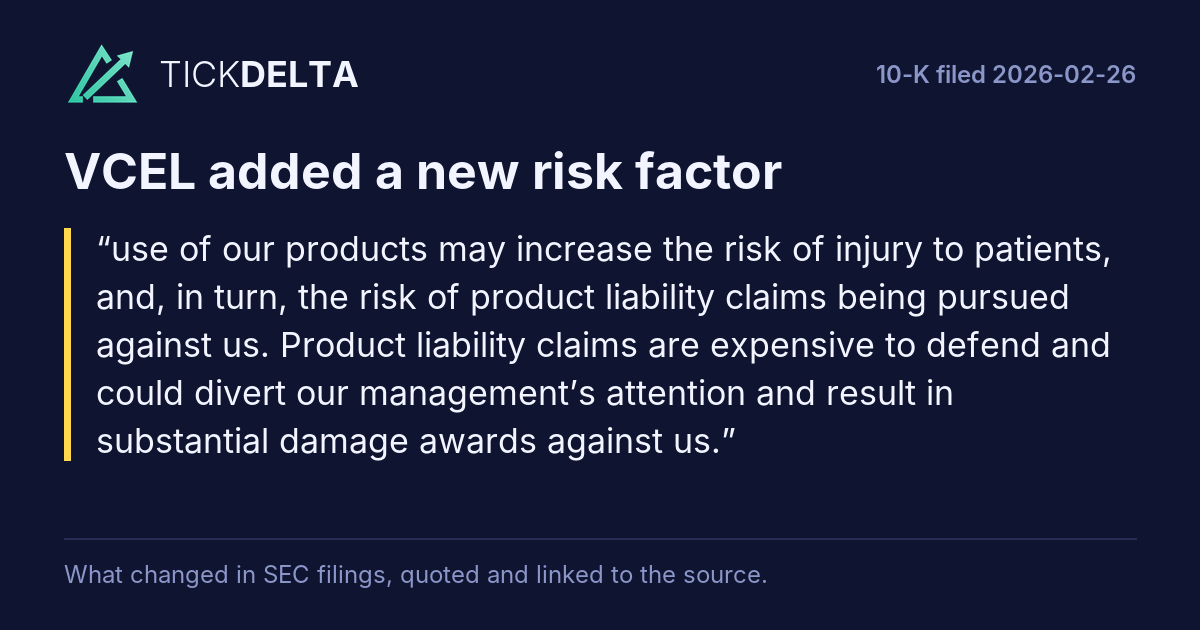
use of our products may increase the risk of injury to patients, and, in turn, the risk of product liability claims being pursued against us. Product liability claims are expensive to defend and could divert our management’s attention and result in substantial damage awards against us.
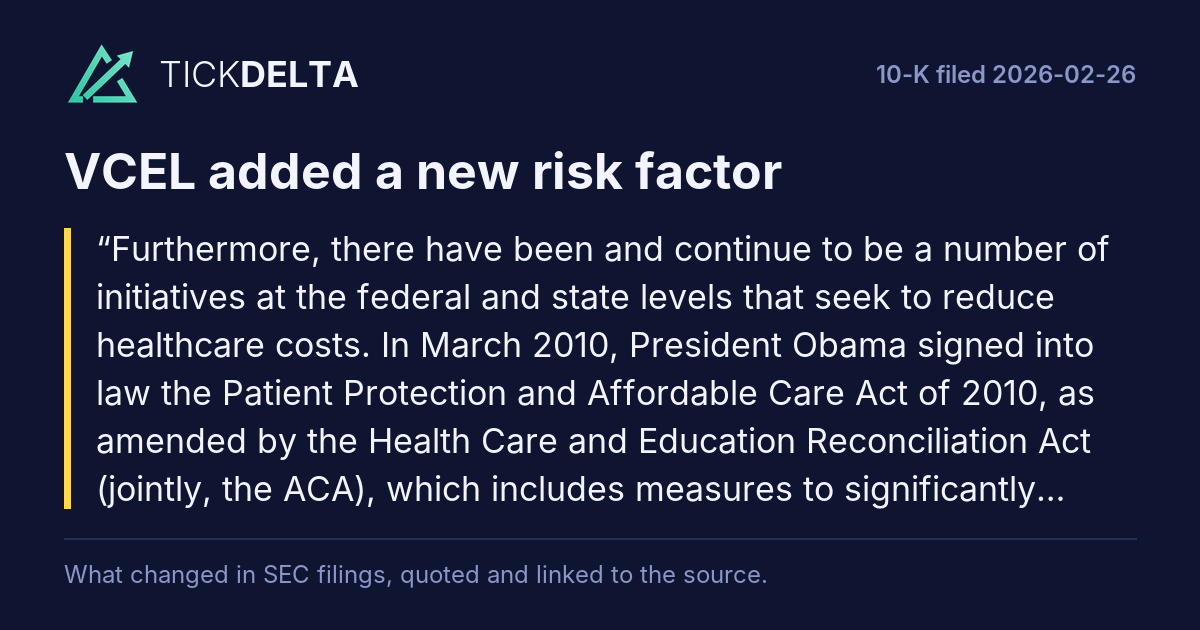
Furthermore, there have been and continue to be a number of initiatives at the federal and state levels that seek to reduce healthcare costs. In March 2010, President Obama signed into law the Patient Protection and Affordable Care Act of 2010, as amended by the Health Care and Education Reconciliation Act (jointly, the ACA), which includes measures to significantly change the way health care is financed by both governmental and private insurers. In August 2022, President Biden signed the Inflation Reduction Act (“IRA”), which permitted for the first time the Department of Health and Human Services (“HHS”) to negotiate prices directly with participating manufacturers for certain high expenditure, qualifying single source Medicare drugs without generic or biosimilar competition. In May 2025, President Trump signed an Executive Order intended to deliver MFN drug pricing to American patients. Follow-on efforts, including negotiating MFN agreements with pharmaceutical companies and proposing CMMI models with international benchmarks, seek to effectuate the order.
We are subject to income taxes in the U.S. From time to time, various legislative or administrative initiatives may be proposed that could adversely affect our tax positions. There can be no assurance that our tax positions or tax payments will not be adversely affected by these initiatives. In addition, U.S. federal, state and local tax laws and regulations are extremely complex and subject to varying interpretations. The OBBBA, enacted in 2025, includes a broad range of tax reform provisions that may affect our financial results. Among other provisions, the OBBBA includes the allowance of immediate expensing of qualifying domestic research and development expenses and permanent extensions of certain provisions within the Tax Cuts
Paragraphs in the 10-Q filed Nov 5, 2026 that were not in the one before
New in the latest 10-Q
6 paragraphs in the 10-Q filed Nov 5, 2026 with nothing like
them in the 10-Q filed Jul 30, 2026 (at least half the words must differ; new numbers alone do not count).
Quoted exactly, grouped by the item heading above them. This is text that changed, not a judgement of how serious it is.
Financial statements and notes
In December 2025, the FASB issued ASU 2025-12, Codification Improvements. The Company has elected to early adopt the treasury stock retirement guidance (Issue 10) in ASU 2025-12. Under this amendment, the Company has established an accounting policy to record the full repurchase price of shares repurchased and retired as a reduction to common stock, as the Company’s common stock has no par value. The adoption of this update did not have a material impact on total shareholders’ equity.
Read in the 10-Qopen_in_new
During the three and nine months ended September 30, 2026, the Company repurchased and retired 220,744 shares of its common stock for a total cost of $ 8.8 million, or an average of $ 40.08 per share. As of September 30, 2026, the Company had $ 191.2 million available to repurchase under the repurchase program.
Read in the 10-Qopen_in_new
Repurchased shares are automatically retired and constitute authorized but unissued shares.
Read in the 10-Qopen_in_new
than 8,000 individuals annually in the U.S., and, for certain HUDs, the amount a manufacturer may charge for the product’s use is restricted.
Read in the 10-Qopen_in_new
As of September 30, 2026, we were not party to any off-balance sheet arrangements.
Read in the 10-Qopen_in_new
Show the other 1
Share sales and buybacks
The following table contains information regarding all repurchases of our common stock for the three months ended September 30, 2026:
Read in the 10-Qopen_in_new
The 10-Q's risk factors against the 10-K
Item 1A of the 10-Q filed Nov 5, 2026 against Item 1A of the 10-K filed Feb 26, 2026.
A 10-Q repeats only the risks that changed, so a 10-K paragraph that is missing from it is not counted as removed.
Added is a paragraph with nothing like it in the 10-K, Reworded a sentence that is in both with several words changed,
Quiet changes a sentence in both where one to four words changed and one is a hedge or a modal
(cut words struck through, new words highlighted).
Text on the page, not a score; each links to the filing at sec.gov.
Added10-Q Nov 5, 2026 vs 10-K Feb 26, 2026
Factors that could cause the Company’s actual results to differ materially from those in this Quarterly Report are any of the risks described in our Annual Report on Form 10-K for the fiscal year ended December 31, 2025, filed with the SEC on February 26, 2026. Any of these factors could result in a significant or material adverse effect on our results of operations or financial condition. Additional risk factors not presently known to us or that we currently deem immaterial may also impair our business or results of operations. As of the date of this Quarterly Report on Form 10-Q, there have been no material changes to the risk factors disclosed in our Annual Report on Form 10-K for the fiscal year ended December 31, 2025.
Read it in the 10-Q at sec.govopen_in_new
We are subject to public health crises, which have had and may in the future have a significant impact on our operations, cash flows and liquidity. The response to a public health crisis may affect the global economy, disrupt global supply chains, and create significant disruption in financial and healthcare markets, including U.S. staffing shortages, our ability to access customers, and significant volatility in our results of operations due to the periodic cancellation or delay of elective MACI surgical procedures. Uncertainty caused by pandemics, epidemics, or other similar public...
In the 10-K filed Feb 27, 2025open_in_new
For example, we are currently evaluating the feasibility and potential market opportunity involved in delivering MACI treatment to patients suffering from cartilage damage in the ankle. We believe that this potential lifecycle enhancement and indication expansion for MACI will require conducting an additional randomized clinical trial concerning the product’s use in the ankle. We conducted pre-IND interactions with the FDA concerning our clinical development program for MACI to treat cartilage injuries in the ankle, and based on feedback from the FDA, our team is actively working to...
In the 10-K filed Feb 27, 2025open_in_new
All of our products face competition from other surgical procedures as well as existing and future products marketed by large companies. These competitors may successfully market products that compete with our products, identify and bring to market new product candidates earlier than we do, or develop products that are more effective or less costly than our products. These competitive factors could require us to conduct substantial new research and development activities to establish new product targets, which would be costly and time consuming. These activities can adversely impact our...
In the 10-K filed Feb 27, 2025open_in_new
Further, geopolitical tensions between Taiwan and China have risen steadily over the past year. Although Taiwan has been governed independently from China since 1949, China views Taiwan as part of its territory and has vowed to eventually unify Taiwan with China, using military force if necessary. War or other military conflict in or near Taiwan, pandemics, and certain natural disasters, such as earthquakes, which are commonplace in Taiwan (where CBC is located) may result in the destruction or disruption of CBC’s ability to supply Bromelain SP to MediWound and have downstream implications...
In the 10-K filed Feb 27, 2025open_in_new
Sources
Item 1A of each 10-K and 10-Q on EDGAR, quoted exactly. Each paragraph links to the filing at sec.gov.
Also
10-K change: what was reworded or cut, section by section.
Work with it
Excel workbook · CSV. Google Sheet that stays up to date: paste =IMPORTDATA("https://tickdelta.com/company/VCEL/export.csv") into a cell.