Added10-Q Nov 9, 2026 vs 10-K Feb 26, 2026
• the inability of sales personnel to obtain access to prescribers and accounts;
Each branch is a paragraph in Risk Factors with nothing like it in the 10-K filed Feb 27, 2025. A box jumps to the paragraph as filed, below.
25 paragraphs in Risk Factors of the 10-K filed Feb 26, 2026 with nothing like them in the 10-K filed Feb 27, 2025. Quoted exactly. Paragraphs that were only edited are under 10-K change.
We have no marketed proprietary products and are advancing clinical development through Phase 3 clinical studies for our azetukalner program in epilepsy, major depressive disorder, and bipolar depression. These studies may not result in regulatory approval or successful commercialization of our product candidates.
While we are advancing our Phase 3 clinical studies in azetukalner, significant risks remain. There can be no assurance that these or any future clinical studies will be successful, that we will be able to obtain regulatory approval, or that we will be able to manufacture or independently commercialize any product candidates. We may encounter delays or difficulties in advancing our product candidates through late-stage development, obtaining regulatory approval, or achieving commercial success, which could adversely affect our business prospects.
To execute on our business plan for the development of independent programs, we will need to successfully:
•changes in tariffs, trade barriers and regulatory requirements, including tariffs that have been imposed on certain goods by the current presidential administration and reciprocal tariffs imposed by Canada and other countries in which we do business, as well as potential tariffs on pharmaceutical products and components manufactured outside the United States that the current presidential administration has contemplated;
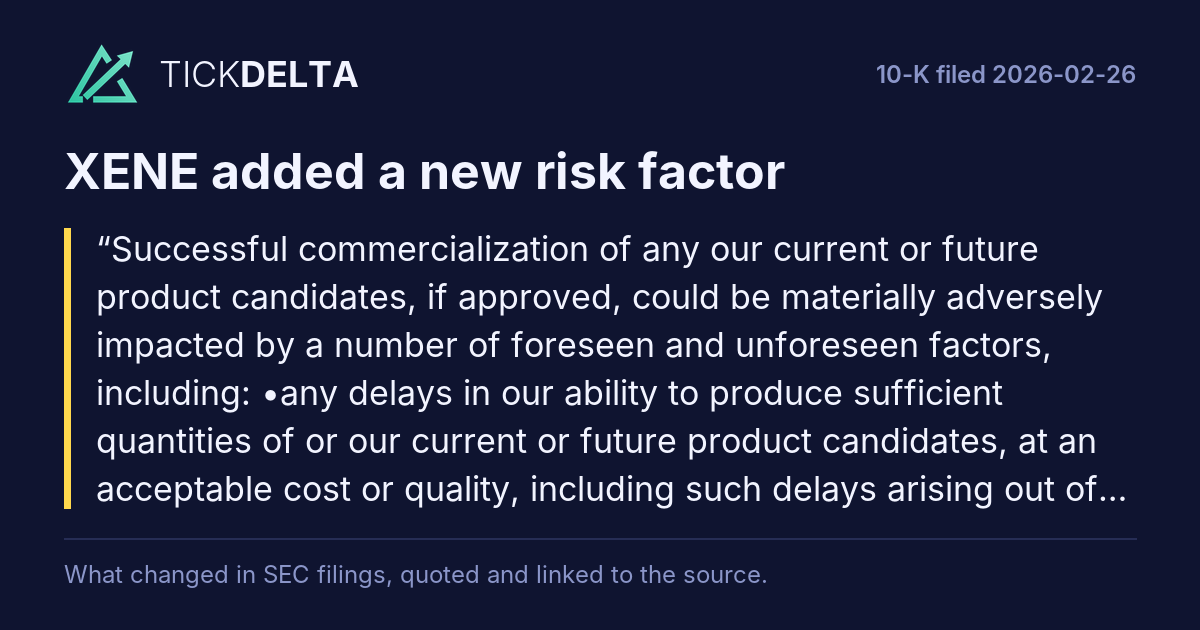
Successful commercialization of any our current or future product candidates, if approved, could be materially adversely impacted by a number of foreseen and unforeseen factors, including:
•any delays in our ability to produce sufficient quantities of or our current or future product candidates, at an acceptable cost or quality, including such delays arising out of quality assurance concerns or changes in regulatory guidance, or those caused by our reliance on our third-party manufacturers;
•our inability to recruit, train and retain adequate numbers of effective sales, marketing, access, and payer and patient support personnel;
•an inadequate number of prescribers or accounts prescribing any of our future products;
•the prevalence and severity of side effects associated with any of our future products;
•the convenience and ease of administration of our future products relative to alternative therapies, if any;
•our inability or delay in gaining or maintaining reimbursement and broad patient access at a price that reflects the value of our future products;
•our inability to address product labeling or product insert requirements, including any changes mandated by regulatory authorities after initial approval;
•limitations on the content or form of the consumer and/or prescriber-facing marketing materials that we may use;
•our inability to equip customer-facing personnel with effective materials, including medical and sales literature to help them educate physicians and other healthcare professionals regarding applicable diseases relevant to our future products;
•publications of scientific literature, consensus papers and treatment guidelines unfavorable to the administration of our products and product candidates and/or the positioning of the class of drugs to which each of our products and product candidates belongs; and
•our inability to develop or obtain and sustain sufficient operational functions and infrastructure to support our commercial activities.
The incidence and prevalence for target populations of azetukalner and our other product candidates has not been established with precision. If the market opportunities for our product candidates are smaller than we estimate, or if any approval that we obtain is based on a narrower definition of our targeted patient population, our revenue may be materially adversely affected.
The precise incidence and prevalence for all the conditions we aim to address with our programs are not known with specificity. Our projections of both the number of people who have these diseases, as well as the subset of people with these diseases who have the potential to benefit from treatment with our product candidates, if approved, are based largely on our extrapolation from available population studies and estimates. These estimates have been derived from a variety of sources, including scientific literature, surveys of clinics, patient foundations, pharmacy claims analyses, large national surveillance databases or market research, and may prove to be incorrect. Further, new trials and therapeutic options may lead to changes in the estimated incidence or prevalence of these diseases, or relevant subpopulations thereof. As a result, the number of patients who may benefit from our product candidates, if approved, may be lower than expected.
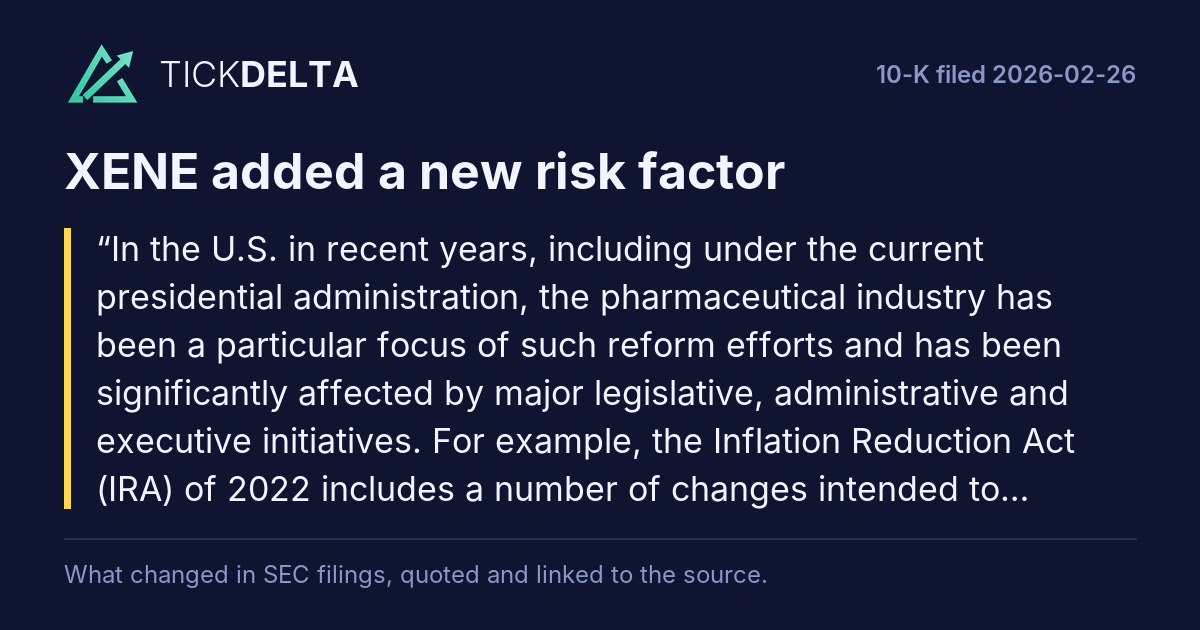
In the U.S. in recent years, including under the current presidential administration, the pharmaceutical industry has been a particular focus of such reform efforts and has been significantly affected by major legislative, administrative and executive initiatives. For example, the Inflation Reduction Act (IRA) of 2022 includes a number of changes intended to address rising prescription drug prices in Medicare Parts B and D. These changes include caps on Medicare Part D out-of-pocket costs, Medicare Part B and Part D drug price inflation rebates, a new Medicare Part D manufacturer discount drug program (replacing the PPACA Medicare Part D coverage gap discount program) and a drug price negotiation program for certain high-spend Medicare Part B and D drugs. The IRA has had and will likely continue to have a significant impact on the pharmaceutical industry. More recently, an Executive Order was issued in April 2025 with multiple directives aimed at lowering drug prices, including refining the Medicare drug price negotiation program established by the IRA, accelerating competition for high-cost prescription drugs by accelerating approval of generics and biosimilars and facilitating the process for re-classifying prescription drugs as over-the-counter drugs, and increasing drug importation. In May 2025, another Executive Order was issued that directed government agencies and officials to identify most-favored nation pricing targets for prescription drugs (and looked to pharmaceutical manufacturers to make significant progress towards delivering target prices to patients), prevent foreign countries from disproportionately shifting the cost of global pharmaceutical research and development to the United States, and facilitate direct-to-consumer purchasing programs for pharmaceutical manufacturers to sell their products to patients at the most-favored-nation price. In the wake of the Executive Orders and related executive initiatives, some pharmaceutical manufacturers have announced direct-to-consumer offerings with discounted prices or reached agreements with the federal government regarding pricing for drugs, including prices for Medicaid drugs and newly launched products. A future website sponsored by the federal government that is anticipated to offer pharmaceutical direct-to-consumer channels has also been announced. Federal agencies are developing new drug pricing pilot programs, such as a Medicaid model which would authorize the federal government to negotiate Medicaid supplemental rebates with participating manufacturers on behalf of state Medicaid programs, in exchange for standardized coverage criteria for participating manufacturer drugs, and proposed Medicare Part B and Part D pilot models that, if finalized as proposed, would replace existing inflation-based Medicare rebates with rebates determined on the basis of international prices, for drugs and patients subject to the model. Changes to certain Medicare price reporting requirements for drugs beginning in 2026 will likely increase the administrative and compliance burden for manufacturers. Many of these reform initiatives would require additional legal and/or administrative action to implement and may be subject to change.
Other healthcare reform efforts or actions may affect access to healthcare coverage or the funding of health care benefits, although the full impact of such efforts or actions cannot be predicted. For example, the Congressional Budget Office has estimated that Medicaid provisions in the 2025 budget reconciliation legislation, including restrictions in eligibility and funding for Medicaid, as well as changes to the healthcare marketplace such as the elimination of certain subsidies, will increase the number of uninsured patients.
At the state level, legislatures have passed legislation and implemented regulations designed to control pharmaceutical and biological product pricing, including price or patient reimbursement constraints, discounts, restrictions on certain product access and marketing costs disclosure and transparency measures, and in some cases designed to encourage importation from other countries and bulk purchasing. Additionally, a number of states have enacted state drug price transparency and reporting laws that increase compliance burdens and exposure for non-compliance.
Our expanding use of artificial intelligence exposes us to operational, regulatory, legal, and ethical risks that could adversely affect our business, reputation, financial condition, and results of operations.
We increasingly develop, procure, and deploy artificial intelligence, or AI, and machine learning, or ML, technologies across our operations. While these tools may create efficiencies, they also introduce material risks related to data quality and bias, transparency and explainability, model drift and reliability, cybersecurity, intellectual property, privacy, discrimination, liability, and vendor/supply chain dependencies. Errors or bias in AI outputs, inadequate monitoring, or insufficient documentation could impair clinical development, pharmacovigilance, manufacturing quality, or commercial activities, resulting in delays, higher costs, product or batch actions, or reputational harm.
Additionally, the emergence of AI and other technologies may exacerbate other risks, including those related to regulation, litigation, compliance issues, ethical concerns, confidentiality, and data privacy or security. For example, regulatory uncertainty related to AI or other emerging technologies may require significant resources to adjust business practices to comply with developing laws.
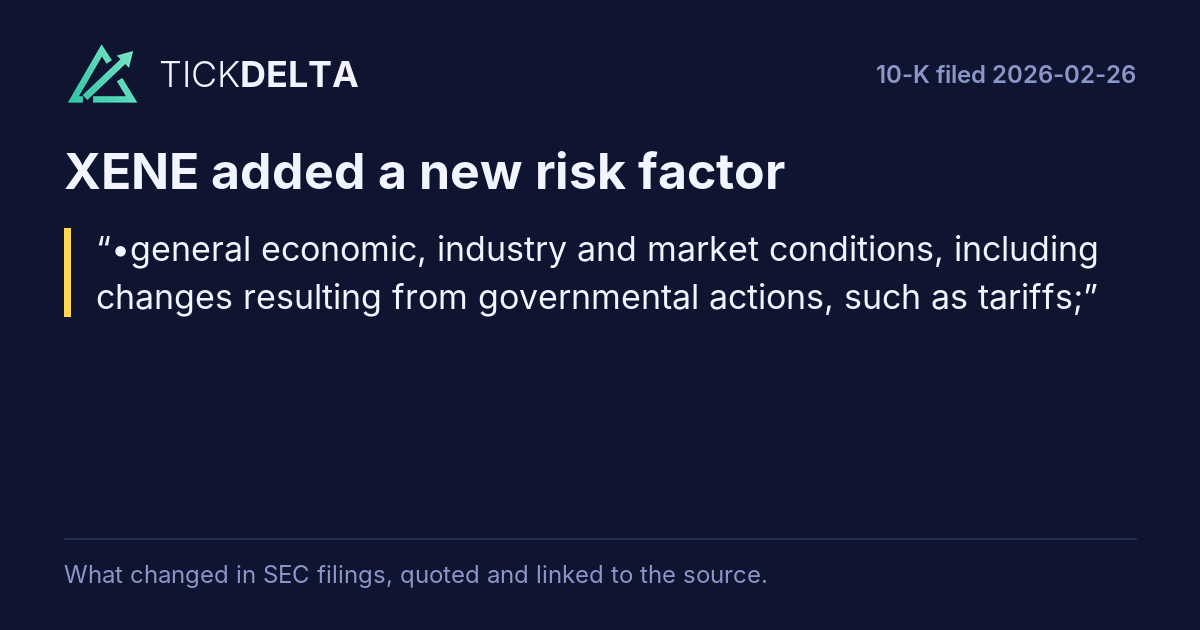
•general economic, industry and market conditions, including changes resulting from governmental actions, such as tariffs;
New in the latest 10-Q
10 paragraphs in the 10-Q filed Nov 9, 2026 with nothing like them in the 10-Q filed Aug 6, 2026 (at least half the words must differ; new numbers alone do not count). Quoted exactly, grouped by the item heading above them. This is text that changed, not a judgement of how serious it is.
In August 2026, the Company entered into a lease agreement for office space in Weston, Massachusetts to replace the Needham office. The lease has an 85-month term and is expected to commence in February 2027, with annual base rent ranging from $1,449 to $1,749 over the lease term. In connection with the lease, a $724 irrevocable standby letter of credit was issued as a security deposit. As of September 30, 2026, the lease had not yet commenced and, accordingly, no operating lease right-of-use asset or lease liability was recognized.
Read in the 10-Q
Variable lease costs are payments that vary because of changes in facts or circumstances and include common area maintenance and property taxes related to the premises. Variable lease costs are excluded from the calculation of minimum lease payments.
Read in the 10-Q
The Company enters into firm purchase commitments primarily related to supply of pre-launch commercial product, research, development and manufacturing activities. The Company had contractual obligations under certain commercial product, clinical and manufacturing arrangements where it is obligated to make certain minimum payments, with the exact amounts in the event of termination to be based on the timing of the termination and the exact terms of the agreement.
Read in the 10-Q
• We expect to initiate X-FIRST, a new Phase 3b/4 study, which is designed to evaluate azetukalner as a first adjunctive antiseizure medication (ASM) in patients with FS. X-FIRST is a U.S.-based multicenter, open-label study with a 52-week treatment period, where azetukalner would be added into the treatment regimens of patients who are already taking an SV2A modulator or sodium channel blocker, and are less refractory relative to the X-TOLE and X-TOLE2 study populations with a lower baseline seizure frequency. The study is planned for initiation in Q1 2027.
Read in the 10-Q
• We announced in September that we had initiated a voluntary pause on new patient enrollment in the ongoing Phase 3 clinical studies of azetukalner in MDD and BPD. Patients currently enrolled in the ongoing studies, including both open label extension studies, remain active.
Read in the 10-Q
• At the International Association for the Study of Pain (IASP) 2026 World Congress on Pain in October 2026, we presented positive data from our Phase 1 Single Ascending Dose (SAD)/Multiple Ascending Dose (MAD) study in healthy adult participants for XEN1701 targeting Nav1.7. XEN1701 achieved our target profile, including desired high levels of Nav1.7 receptor occupancy in both the peripheral and central nervous system, and was generally well-tolerated with no notable autonomic cardiovascular effects. Additionally, new preclinical data in cynomolgus monkeys demonstrated that a Nav1.7 inhibitor provided significant pain reductions in capsaicin-evoked heat pain. Based on the positive Phase 1 results, we expect to initiate a Phase 2 proof-of-concept (POC) study for XEN1701 in acute pain in H1 2027.
Read in the 10-Q
• At the IASP 2026 World Congress on Pain, we presented positive data from our Phase 1 SAD/MAD study in healthy adult participants for XEN1120 targeting Kv7. XEN1120 achieved plasma levels predictive of analgesic effects based on preclinical modeling and was generally well-tolerated. Additionally, new preclinical data in cynomolgus monkeys demonstrated that a Kv7 modulator provided significant pain reductions in capsaicin-evoked heat pain. Based on the positive Phase 1 results, we expect to initiate a Phase 2 POC study for XEN1120 in acute pain in H1 2027.
Read in the 10-Q
In August 2026, we entered into a lease agreement for office space in Weston, Massachusetts, with an 85-month lease term expected to commence in February 2027 and annual base rent ranging from approximately $1.4 million to $1.7 million over the lease term.
Read in the 10-Q
Rule 10b5-1 Trading Plans As previously disclosed, on December 3, 2025, certain of our officers adopted a Rule 10b5-1 trading arrangement intended to qualify as a “plan providing for eligible sell-to-cover transactions” under Rule 10b5-1(c)(1)(ii)(D)(3) under the Exchange Act (the “Sell-to-Cover Instructions”). On September 30, 2026, each of Ian Mortimer, the Company’s President and Chief Executive Officer, and Thomas P. Kelly, the Company’s Chief Financial Officer, modified their respective Sell-to-Cover Instructions to provide that, under certain circumstances, with respect to any vesting or settlement of restricted share units and performance share units within six months of September 30, 2026, the sell-to-cover instruction may be disregarded, and the executive will remit to the Company the amount of withholding tax incurred in connection with such vesting or settlement. The Sell-to-Cover Instructions otherwise remain unmodified in all respects.
Read in the 10-Q
The foregoing is a brief description of the material terms of the 2025 Inducement Plan and is qualified in its entirety by reference to the full text of the 2025 Inducement Plan filed as Exhibit 10.1 to this report.
Read in the 10-Q
Item 1A of the 10-Q filed Nov 9, 2026 against Item 1A of the 10-K filed Feb 26, 2026.
A 10-Q repeats only the risks that changed, so a 10-K paragraph that is missing from it is not counted as removed.
Added is a paragraph with nothing like it in the 10-K, Reworded a sentence that is in both with several words changed,
Quiet changes a sentence in both where one to four words changed and one is a hedge or a modal
(cut words struck through, new words highlighted).
Text on the page, not a score; each links to the filing at sec.gov.
Two-word phrases in Risk Factors of the 10-K filed Feb 26, 2026 that are in none of the 1 earlier 10-Ks stored, back to Feb 27, 2025
Used at least twice, small words left out. Counted, not picked: a phrase can be new because the company renamed something.
4 paragraphs of last year's Risk Factors with nothing like them now. The longest are quoted.
Item 1A of each 10-K and 10-Q on EDGAR, quoted exactly. Each paragraph links to the filing at sec.gov.
10-K change: what was reworded or cut, section by section.
Excel workbook · CSV. Google Sheet that stays up to date: paste =IMPORTDATA("https://tickdelta.com/company/XENE/export.csv") into a cell.