Reworded10-Q Oct 22, 2026 vs 10-K Feb 5, 2026
In that case, the trading price of our Class A common stock may decline and you might lose all or part of your investment. decline.
Each branch is a paragraph in Risk Factors with nothing like it in the 10-K filed Feb 6, 2025. A box jumps to the paragraph as filed, below.
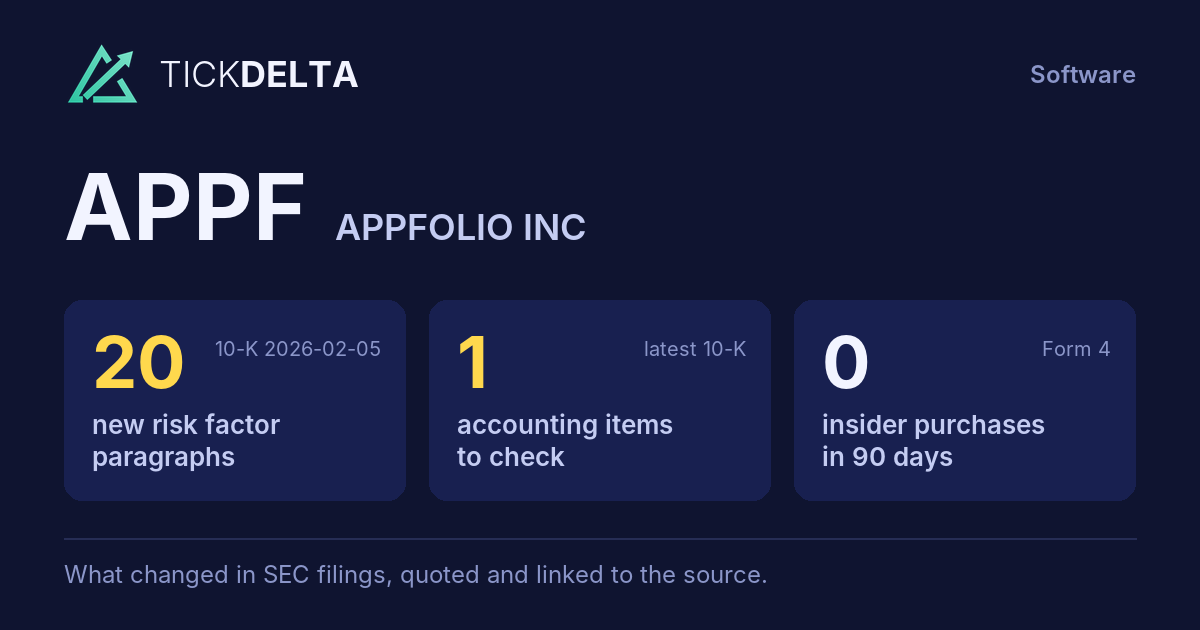
20 paragraphs in Risk Factors of the 10-K filed Feb 5, 2026 with nothing like them in the 10-K filed Feb 6, 2025. Quoted exactly. Paragraphs that were only edited are under 10-K change.
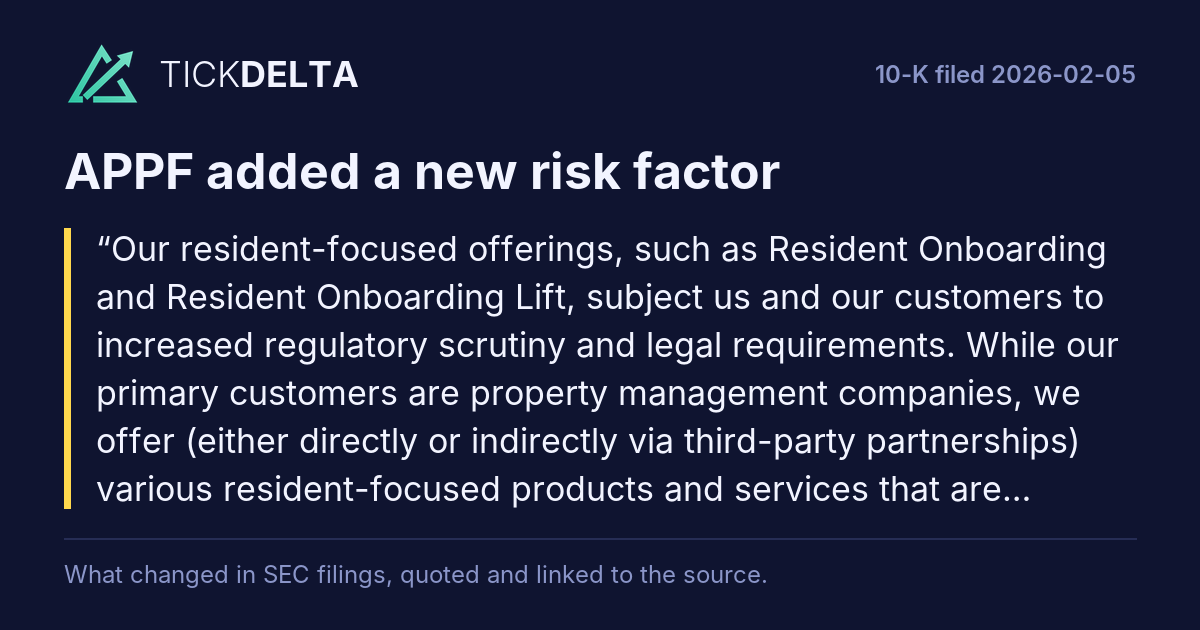
Our resident-focused offerings, such as Resident Onboarding and Resident Onboarding Lift, subject us and our customers to increased regulatory scrutiny and legal requirements.
While our primary customers are property management companies, we offer (either directly or indirectly via third-party partnerships) various resident-focused products and services that are utilized by residents, including resident concierge services and resident benefit packages. These offerings subject us to additional regulatory risks and evolving legal requirements, particularly regarding fee transparency and disclosure. Federal and state regulatory agencies, including the FTC and the CFPB, have increasingly focused on the rental housing industry, specifically regarding the clarity of fees associated with residential tenancies. If our products are deemed to lack adequate transparency or disclosure, or if the mandatory nature of certain services is found to violate consumer protection laws, we or our customers could be subject to litigation or governmental investigation.
Furthermore, regulatory requirements vary throughout the markets in which we operate, and new or updated state and local landlord-tenant laws may regulate the types of fees and services that property managers can require residents to purchase. Unfavorable administrative or judicial decisions interpreting these laws could impact our customers' ability or willingness to utilize these services, which may adversely impact our operating results. Our resident-focused concierge services also rely on third-party service providers to fulfill specific functionality, such as utility connections, internet connections, or moving services. We have significantly less control over the systems and processes of these providers, and any failure by these third parties to perform satisfactorily or to protect resident data could result in significant disruption to our operations, reputational harm, or potential liability. Because these services are ultimately utilized by residents, we may face an increased risk of class-based litigation or regulatory inquiries arising from resident disputes over service delivery, billing or alleged violations of consumer protection laws. There is no guarantee that we will not be required to adjust our business practices to accommodate future regulatory requirements, or that these offerings will not result in material financial loss.
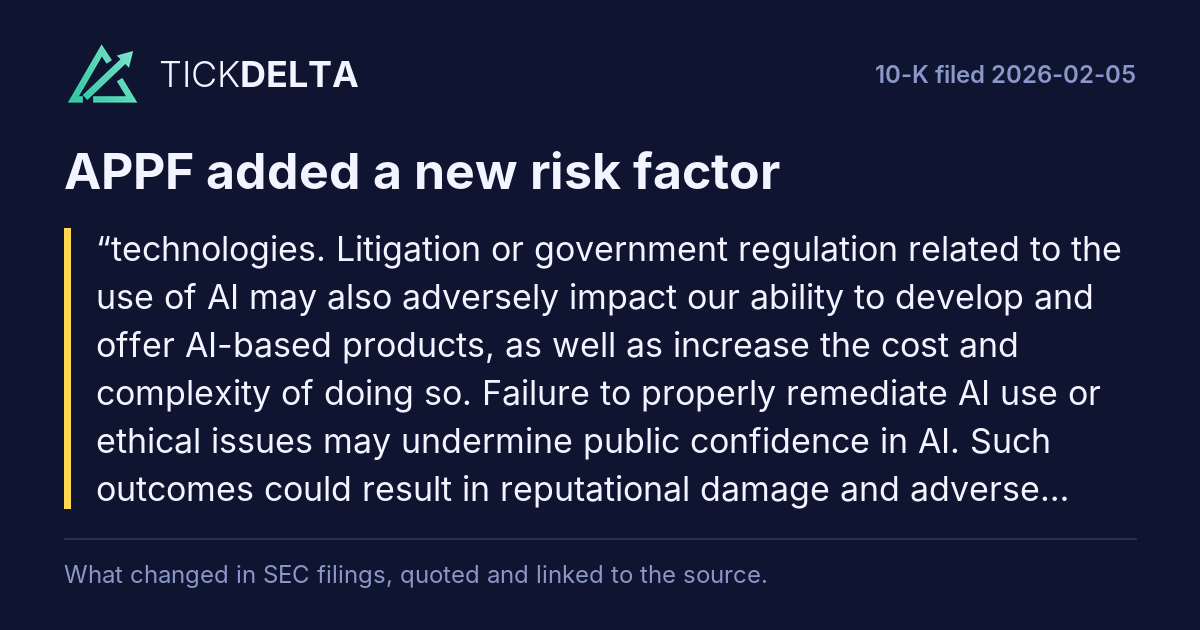
technologies. Litigation or government regulation related to the use of AI may also adversely impact our ability to develop and offer AI-based products, as well as increase the cost and complexity of doing so. Failure to properly remediate AI use or ethical issues may undermine public confidence in AI. Such outcomes could result in reputational damage and adverse effects on our operational results.
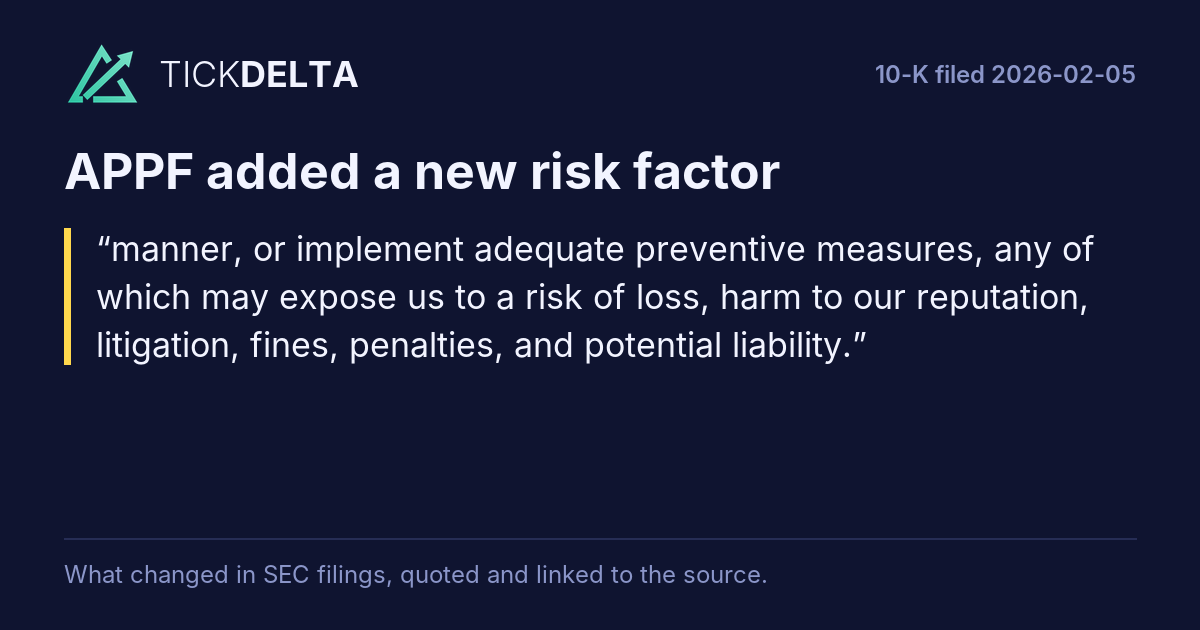
manner, or implement adequate preventive measures, any of which may expose us to a risk of loss, harm to our reputation, litigation, fines, penalties, and potential liability.
Further, we expect to face more competition as AI continues to advance and be integrated into the markets in which we compete. Our competitors or other third parties may incorporate AI into their offerings more successfully and efficiently, and achieve greater and faster adoption, which could impair our ability to compete effectively and adversely affect our business and financial results. Other companies may obtain proprietary rights that would prevent, limit or interfere with our ability to make, use or sell our AI offerings.
We are subject to risks associated with our strategic investments, including partial or complete loss of invested capital. Changes in the fair value of our strategic investments could negatively impact our business, financial condition and results of operations.
Our strategic investments consist of non-marketable equity investments in privately-held companies in which we do not have a controlling interest or significant influence. We make these investments to further our strategic objectives and support key business initiatives. However, these investments are inherently risky, and there can be no assurance that we will achieve the anticipated benefits of these investments or realize a return on them, or be able to dispose of them on favorable terms or at all. Consequently, we could lose all or part of our invested capital.
We record these strategic investments as long-term investments in our Consolidated Balance Sheets. We have elected to apply the measurement alternative for equity investments in privately-held companies that do not have readily determinable fair values, measuring them at cost, less any impairment, plus or minus adjustments resulting from observable price changes in orderly transactions for the identical or a similar investment of the same issuer. An impairment loss is recorded when an event or circumstance indicates a decline in value has occurred.
In determining the estimated fair value of these strategic investments, we use the most recent and available data. Valuations of privately held securities are inherently complex due to the lack of readily available market data and require the use of judgment. The determination of whether an orderly transaction is for an identical or similar investment requires use of significant judgment. In our evaluation, we consider factors such as differences in the rights and preferences of the investments and the extent to which those differences would affect the fair values of those investments. Our impairment analysis encompasses an assessment of both qualitative and quantitative factors, including the investee’s financial metrics, market
acceptance of the investee’s product or technology, general market conditions and liquidity considerations. We record all fair value adjustments of these strategic investments through our Consolidated Statement of Operations. As a result, we may experience additional volatility to our statement of operations due to the valuation and timing of observable price changes or impairments of our strategic investments.
Changes in the fair value of these strategic investments or partial or complete loss of our invested capital could be material to our financial statements and negatively impact our business, financial condition and results of operations.
Our revolving Credit Facility contains covenants which may limit our operational flexibility and otherwise adversely affect our financial condition and/or results of operations, and provides the lender with a first-priority security interest in substantially all of our and our subsidiary guarantors’ personal property.
On September 30, 2025, we entered into a credit agreement, by and among AppFolio, Inc., certain of our subsidiaries as guarantors, the lender(s) party thereto, and PNC Bank, National Association, in its capacity as Administrative Agent, Swingline Loan Lender and Issuing Lender (the "Credit Facility") which provides for a $150 million senior secured revolving credit facility, including sublimits of $25 million for letters of credit and $25 million for swingline loans.
The Credit Facility contains a number of covenants that restrict our and our subsidiaries’ ability to, among other things, incur indebtedness and liens, make investments, pay dividends or distributions or repurchase equity interests, merge, consolidate or otherwise dispose of assets, enter into transactions with affiliates, and prepay, redeem, purchase, or otherwise retire junior indebtedness, all subject to certain exceptions. We are also required to maintain a Consolidated Net Leverage Ratio (as defined in the Credit Facility) not greater than a specified level. These covenants could limit our operational flexibility and ability to exploit business opportunities.
A failure by us to comply with the covenants or payment requirements, or the occurrence of other events specified in the Credit Facility, could result in an event of default under the Credit Facility, which would give the lender(s) the right to
terminate the commitments to provide loans and extensions of credit and to declare all borrowings outstanding, together with accrued and unpaid interest and fees, to be immediately due and payable. In addition, the lender would have the right to proceed against the collateral in which we granted a security interest to the lender, which consists of substantially all of our and our subsidiary guarantors’ personal property.
•actual or perceived privacy or data security breaches or other similar incidents;
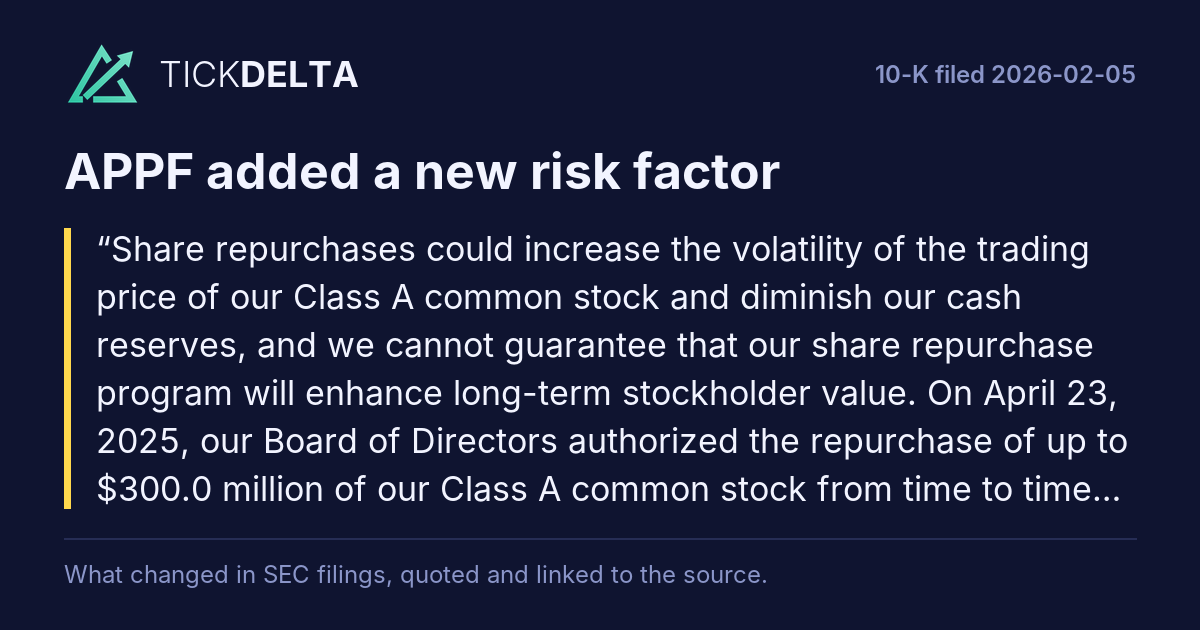
Share repurchases could increase the volatility of the trading price of our Class A common stock and diminish our cash reserves, and we cannot guarantee that our share repurchase program will enhance long-term stockholder value.
On April 23, 2025, our Board of Directors authorized the repurchase of up to $300.0 million of our Class A common stock from time to time in open market purchases or privately negotiated transactions (the "2025 Stock Repurchase Program"). The 2025 Stock Repurchase Program does not obligate us to repurchase any minimum dollar amount or number of shares, has no expiration date, and can be modified, terminated or suspended at any time. Repurchases of shares of our Class A common stock could affect the trading price of our Class A common stock and could increase volatility of securities. Similarly, the future announcement of the modification, termination, or suspension of the 2025 Stock Repurchase Program, or our decision not to utilize the full authorized repurchase amount under the 2025 Stock Repurchase Program, could result in a decrease in the trading price of our Class A common stock. In addition, the 2025 Stock Repurchase Program could have the impact of reducing our cash reserves, which may impact our ability to finance our growth, fund working capital, strategic acquisitions or business opportunities, and other general corporate purposes and execute our strategic plan. Although the 2025 Stock Repurchase Program is intended to enhance long-term stockholder value, there can be no assurance that it will do so because the trading price of our Class A common stock may decline below the levels at which we repurchased our shares and short-term stock price fluctuations could reduce the effectiveness of the 2025 Stock Repurchase Program.
New in the latest 10-Q
13 paragraphs in the 10-Q filed Oct 22, 2026 with nothing like them in the 10-Q filed Jul 23, 2026 (at least half the words must differ; new numbers alone do not count). Quoted exactly, grouped by the item heading above them. This is text that changed, not a judgement of how serious it is.
Operating leases for our corporate offices have remaining lease terms ranging from ten months to 6.3 years, some of which include options to extend the leases for up to ten years. These options to extend have not been recognized as part of our operating lease right-of-use assets and lease liabilities as it is not reasonably certain that we will exercise these options. Our lease agreements do not contain any residual value guarantees or material restrictive covenants. Certain leases contain provisions for property-related costs that are variable in nature for which we are responsible, including common area maintenance, which are expensed as incurred.
Read in the 10-Q
The components of lease expense recognized in the Condensed Consolidated Statements of Operations were as follows (in thousands):
Read in the 10-Q
In July 2026, we entered into a lease termination agreement to terminate one of our office spaces in Santa Barbara (the "Santa Barbara 50 Termination"). In connection with the Santa Barbara 50 Termination, we paid a termination fee of $ 3.9 million. As a result, we derecognized the related operating lease right-of-use asset and lease liability. We recognized a gain on lease termination of $ 1.5 million, which is recorded within general and administrative expenses in the Condensed Consolidated Statements of Operations for the three and nine months ended September 30, 2026.
Read in the 10-Q
Future minimum lease payments under non-cancellable leases as of September 30, 2026 were as follows (in thousands):
Read in the 10-Q
For the three-month period, the general and administrative expense decreased primarily due to a $2.9 million decrease in personnel-related costs, including stock-based and performance-based compensation and a $1.5 million gain recognized on lease termination, largely offset by a $2.6 million increase in professional fees.
Read in the 10-Q
For the nine-month period, the increase was primarily driven by an $8.2 million increase in software and professional fees, partially offset by a $1.9 million decrease in personnel-related costs, including stock-based and performance-based compensation and a $1.5 million gain recognized on lease termination.
Read in the 10-Q
(c) The table below summarizes our repurchases of our Class A common stock during the three months ended September 30, 2026.
Read in the 10-Q
Period Total Number of Shares Repurchased(1) Average Price Paid Per Share(2) Total Number of Shares Approximate Dollar Value of
Read in the 10-Q
(1) On April 23, 2025, our Board authorized the repurchase of up to $300.0 million of shares of our Class A common stock pursuant to the 2025 Stock Repurchase Program. The 2025 Stock Repurchase Program has no expiration date and can be modified, suspended, or terminated at any time and for any reason. For more information regarding the 2025 Stock Repurchase Program, refer to Note 8, Share Repurchase Program, of our Condensed Consolidated Financial Statements and Part I, Item 2,
Read in the 10-Q
(a) On October 21, 2026, our Board adopted the AppFolio Corporate Bonus Plan (the “Bonus Plan”), an annual, performance-based cash incentive compensation plan, which will govern the terms of the annual cash performance bonus element of our executive compensation program beginning in 2027. All of our regular, salaried and hourly employees who do not participate in a sales commission plan, including our executive officers, are eligible to participate in the Bonus Plan. With respect to our executive officers, under the Bonus Plan, our Board (or the Compensation Committee of the Board) will establish, for each fiscal year, the target bonus amount for each executive officer, the performance metrics and targets required to be achieved for payment of a bonus and any other material terms and conditions. The bonus that each executive officer will receive (if any) will be based upon whether and to what extent the performance metrics have been achieved as determined by the Board (or the Compensation Committee). Any payment will be made in cash no later than the last day of March in the following fiscal year.
Read in the 10-Q
The foregoing summary of the material terms of the Bonus Plan is qualified in its entirety by reference to the Bonus Plan, a copy of which is filed as Exhibit 10.1 to this Quarterly Report on Form 10-Q and incorporated herein by reference.
Read in the 10-Q
(c) On September 9, 2026, Tim Eaton, our Chief Financial Officer, terminated his previously reported Rule 10b5-1 trading arrangement, which he adopted on March 13, 2026. This trading arrangement provided for the sale between June 15, 2026 and November 22, 2027, of (i) up to 2,211 shares of our Class A common stock, and (ii) an indeterminate number of shares of our Class A common stock received by Mr. Eaton in connection with the vesting in between May 10, 2026 and November 10, 2027 of certain RSUs and PSUs held by Mr. Eaton. The actual number of shares of Class A common stock sold depended on the vesting of the RSUs and PSUs and the number of shares withheld to satisfy tax withholding obligations. This trading arrangement was entered into and terminated during an open trading window and was intended to satisfy the affirmative defense of Rule 10b5-1(c) under the Exchange Act.
Read in the 10-Q
On September 11, 2026, Mr. Eaton adopted a Rule 10b5-1 trading arrangement providing for the sale between December 11, 2026 and December 31, 2027 of (i) up to 818 shares of our Class A common stock and (ii) an indeterminate number of shares of our Class A common stock received by Mr. Eaton in connection with the vesting between May 10, 2026 and November 10, 2027 of certain RSUs and PSUs held by Mr. Eaton. The actual number of shares of Class A common stock sold will depend on the vesting of the RSUs and PSUs and the number of shares withheld to satisfy tax withholding obligations. This trading arrangement was entered into during an open trading window and is intended to satisfy the affirmative defense of Rule 10b5-1(c) under the Exchange Act.
Read in the 10-Q
Item 1A of the 10-Q filed Oct 22, 2026 against Item 1A of the 10-K filed Feb 5, 2026.
A 10-Q repeats only the risks that changed, so a 10-K paragraph that is missing from it is not counted as removed.
Added is a paragraph with nothing like it in the 10-K, Reworded a sentence that is in both with several words changed,
Quiet changes a sentence in both where one to four words changed and one is a hedge or a modal
(cut words struck through, new words highlighted).
Text on the page, not a score; each links to the filing at sec.gov.
Two-word phrases in Risk Factors of the 10-K filed Feb 5, 2026 that are in none of the 1 earlier 10-Ks stored, back to Feb 6, 2025
Used at least twice, small words left out. Counted, not picked: a phrase can be new because the company renamed something.
2 paragraphs of last year's Risk Factors with nothing like them now. The longest are quoted.
Item 1A of each 10-K and 10-Q on EDGAR, quoted exactly. Each paragraph links to the filing at sec.gov.
10-K change: what was reworded or cut, section by section.
Excel workbook · CSV. Google Sheet that stays up to date: paste =IMPORTDATA("https://tickdelta.com/company/APPF/export.csv") into a cell.