Reworded10-Q Nov 6, 2026 vs 10-K Feb 13, 2026
Screener
/
SEC EDGAR
/CIK 0001921963
/10-K filed Feb 13, 2026, compared with Feb 21, 2025
/Numbers from the XBRL of the 10-Ks
NYSE
Consumer discretionary · Auto Parts
Atmus Filtration Technologies Inc. ATMU
New risk paragraphs, branching off last year
Each branch is a paragraph in Risk Factors with nothing like it in the 10-K filed Feb 21, 2025. A box jumps to the paragraph as filed, below.
Paragraphs with nothing like them in last year's 10-K
10 paragraphs in Risk Factors of the 10-K filed Feb 13, 2026 with nothing like them in the 10-K filed Feb 21, 2025. Quoted exactly. Paragraphs that were only edited are under 10-K change.
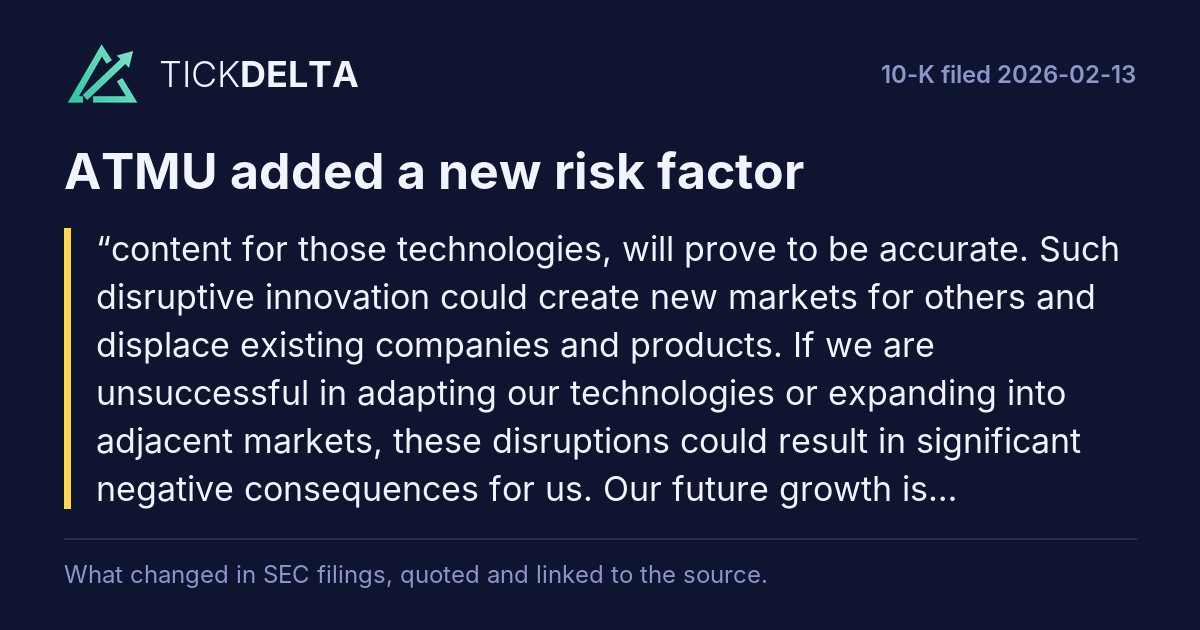
content for those technologies, will prove to be accurate. Such disruptive innovation could create new markets for others and displace existing companies and products. If we are unsuccessful in adapting our technologies or expanding into adjacent markets, these disruptions could result in significant negative consequences for us. Our future growth is dependent on properly addressing future customer and end-user needs and adapting our products in line with global technology trends.
Our ability to attract and retain qualified personnel is critical to our success.
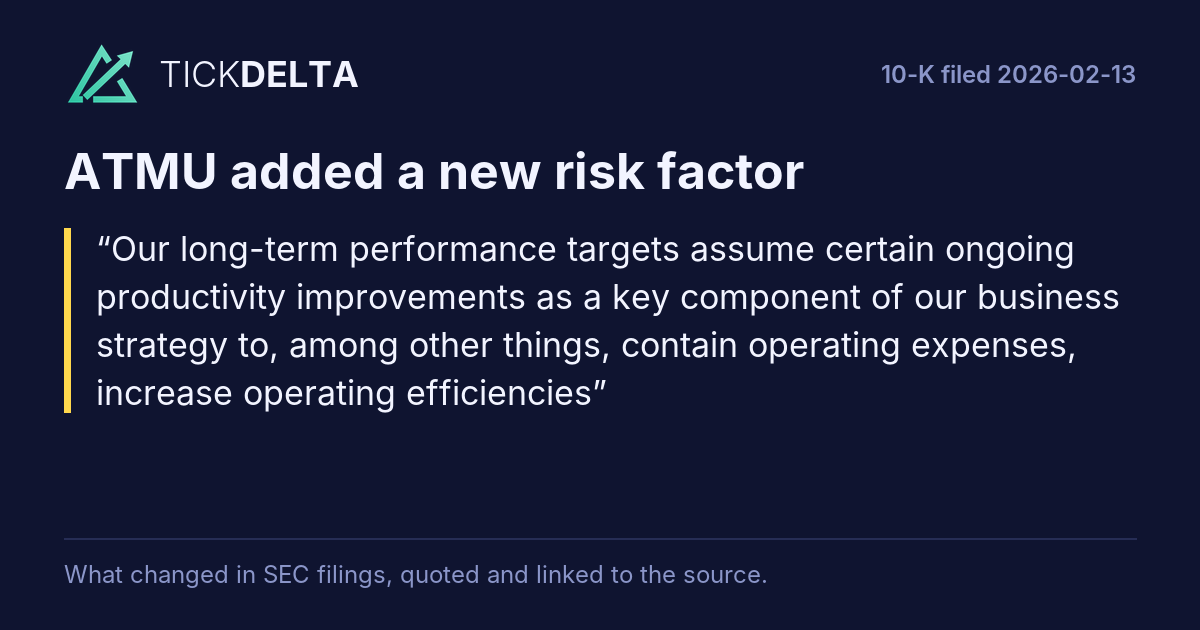
Our long-term performance targets assume certain ongoing productivity improvements as a key component of our business strategy to, among other things, contain operating expenses, increase operating efficiencies
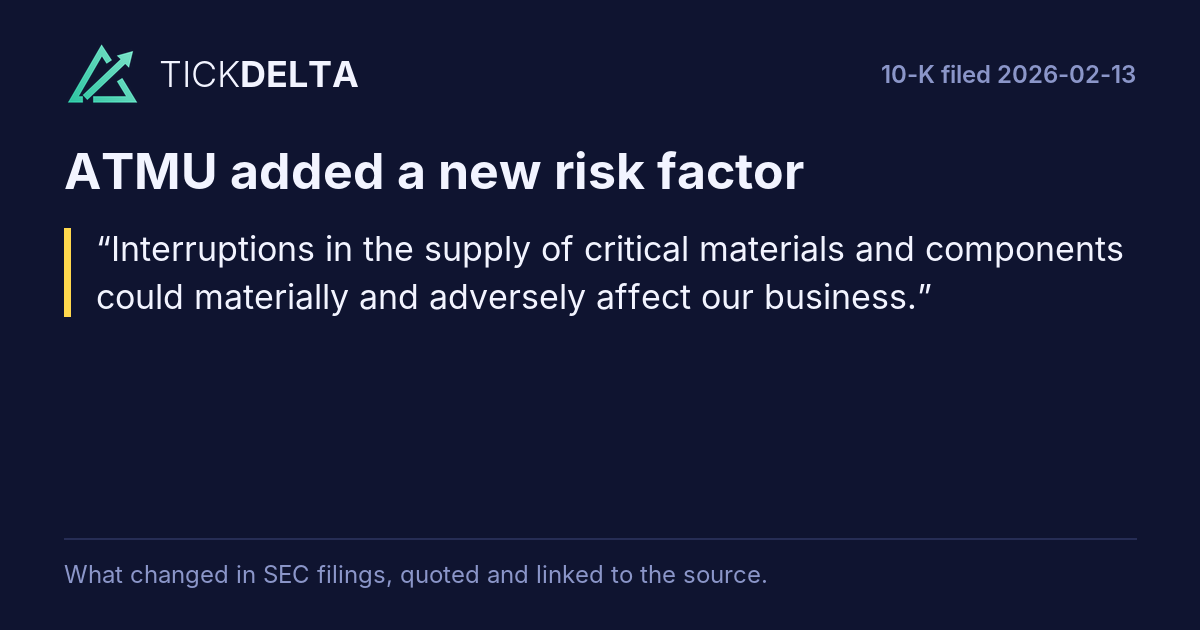
Interruptions in the supply of critical materials and components could materially and adversely affect our business.
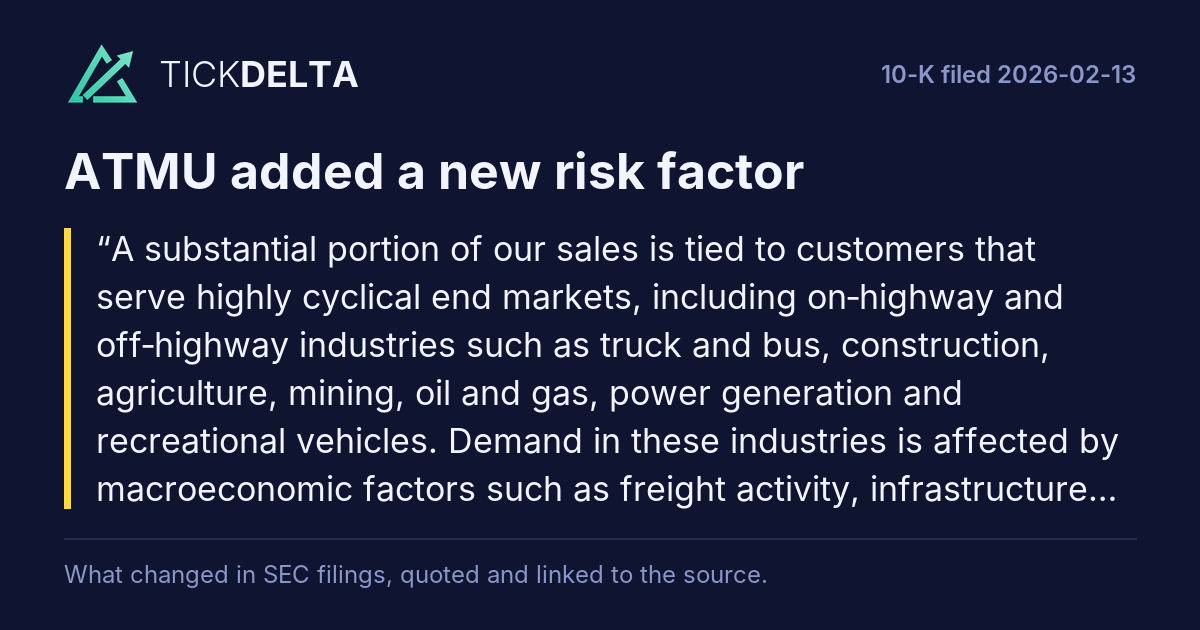
A substantial portion of our sales is tied to customers that serve highly cyclical end markets, including on‑highway and off‑highway industries such as truck and bus, construction, agriculture, mining, oil and gas, power generation and recreational vehicles. Demand in these industries is affected by macroeconomic factors such as freight activity, infrastructure investment, commodity prices, and interest rates. As these industries experience fluctuations, our customers’ production schedules and purchasing patterns may vary significantly, which exposes our business to additional risk based on the economic conditions in the markets our customers serve. Any downturn or prolonged softness in the industries in which our customers operate could reduce demand for our products and materially and adversely impact our business, financial condition, results of operations or cash flows.
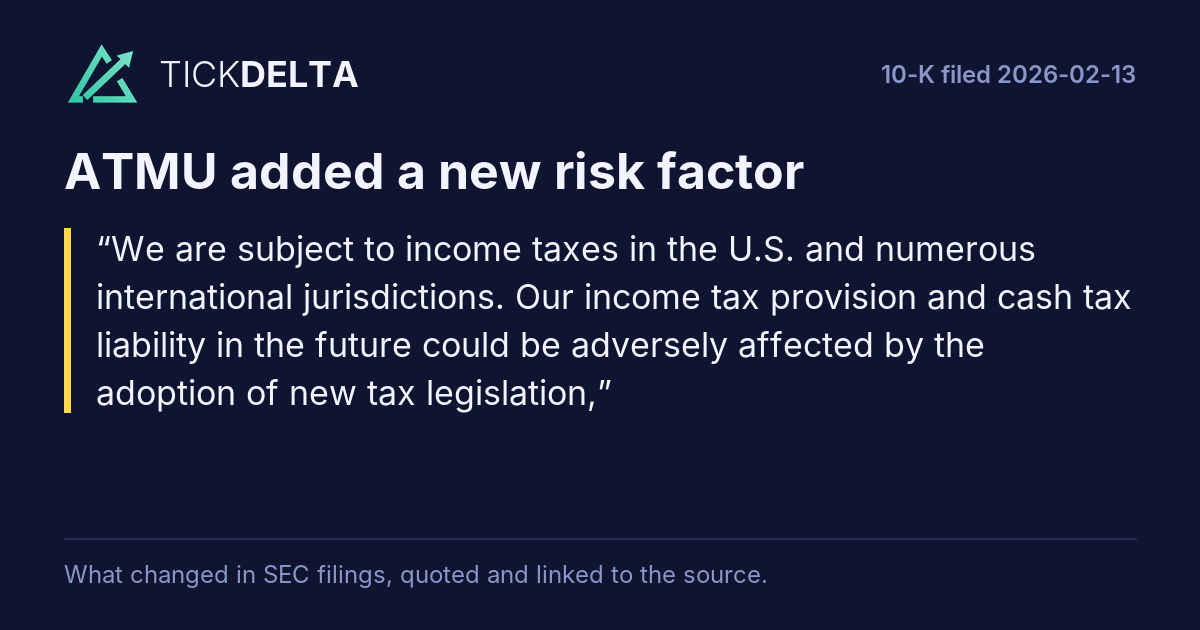
We are subject to income taxes in the U.S. and numerous international jurisdictions. Our income tax provision and cash tax liability in the future could be adversely affected by the adoption of new tax legislation,
Show the other 4
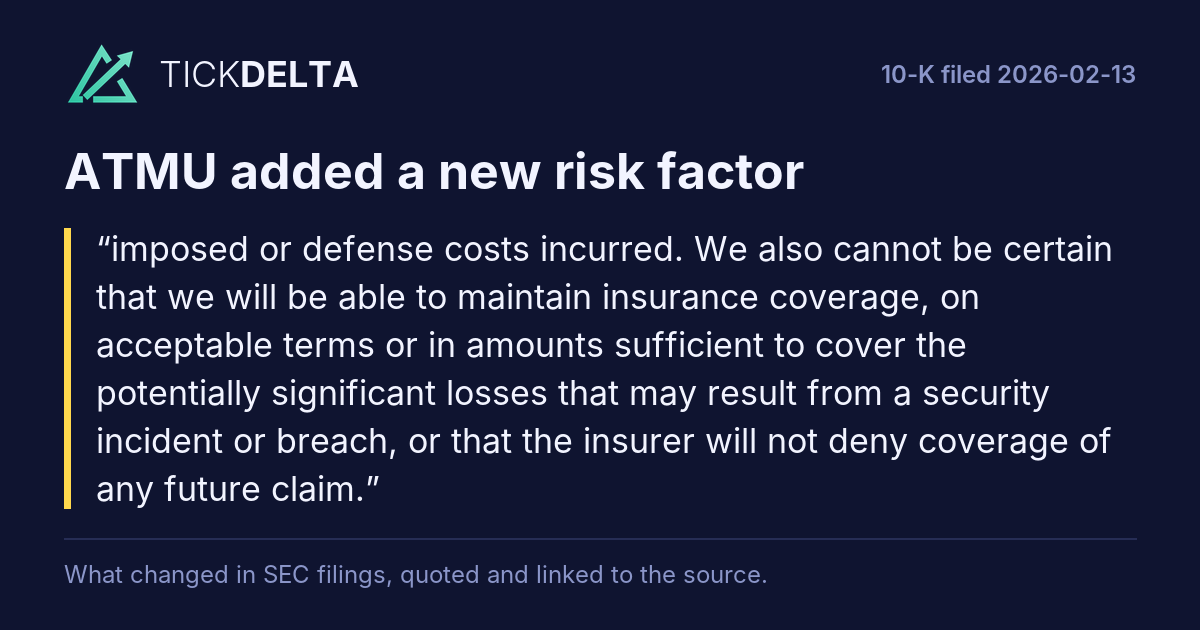
imposed or defense costs incurred. We also cannot be certain that we will be able to maintain insurance coverage, on acceptable terms or in amounts sufficient to cover the potentially significant losses that may result from a security incident or breach, or that the insurer will not deny coverage of any future claim.
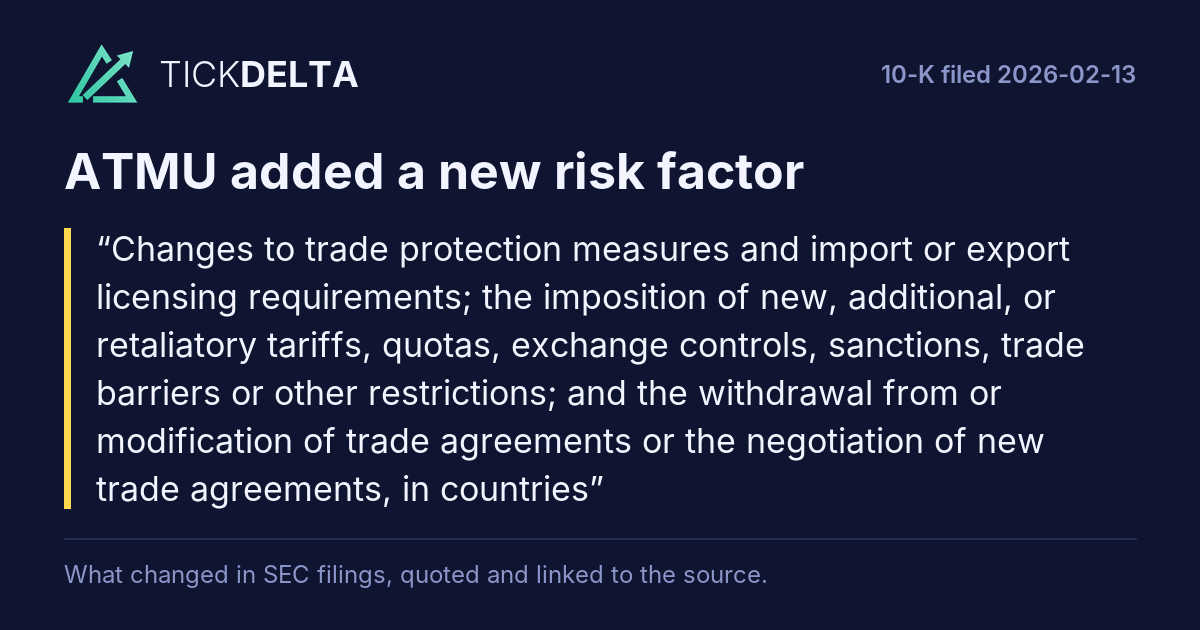
Changes to trade protection measures and import or export licensing requirements; the imposition of new, additional, or retaliatory tariffs, quotas, exchange controls, sanctions, trade barriers or other restrictions; and the withdrawal from or modification of trade agreements or the negotiation of new trade agreements, in countries
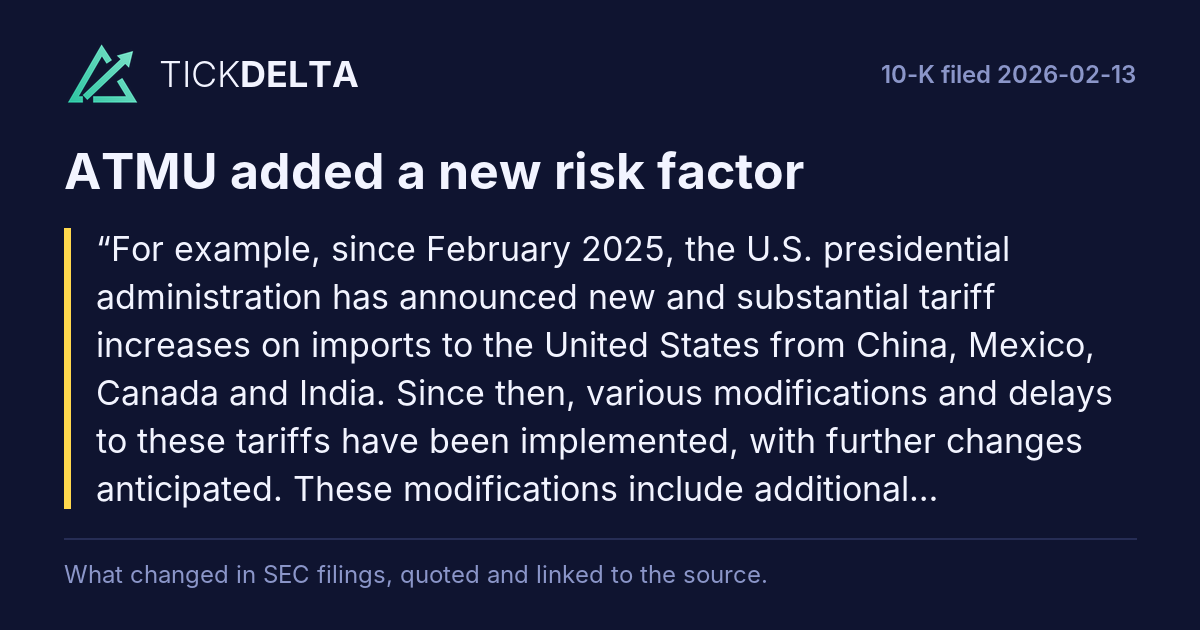
For example, since February 2025, the U.S. presidential administration has announced new and substantial tariff increases on imports to the United States from China, Mexico, Canada and India. Since then, various modifications and delays to these tariffs have been implemented, with further changes anticipated. These modifications include additional sector-specific tariffs or other measures. These actions have prompted a variety of tariff responses by countries, which have the potential to affect our business. Several tariff announcements have been followed by announcements of temporary pauses and limited exemptions, such as the temporary exemption for goods that enter the U.S. as qualifying goods under the United States-Mexico-Canada Agreement (“USMCA”), for which the majority of our products from Mexico for the U.S. market are certified compliant, or expected to be certified compliant. These temporary exemptions, including those we are availing ourselves to under the USMCA, may be reduced or eliminated in the future. The ongoing trade disputes associated with these tariff measures and the potential escalation of trade disputes would pose a significant risk to our business and would affect our revenue and cost of goods sold. For instance, we have raised the prices of certain of our products in response to cost increases we have incurred on purchases of finished and other goods and some raw materials due to tariffs. The extent and duration of the tariffs and the resulting impact on general economic conditions and our business are uncertain and depend on various factors, such as negotiations between the U.S. and affected countries, the responses of other countries or regions, exemptions or exclusions that may be granted, availability and cost of alternative sources of supply, and demand for our products in affected markets. Further, actions we take to adapt to new tariffs or trade restrictions, including raising the prices of our products or shifting supply sourcing or production locations, may cause us to modify our operations, lose customers, experience increased costs, or forgo business opportunities.
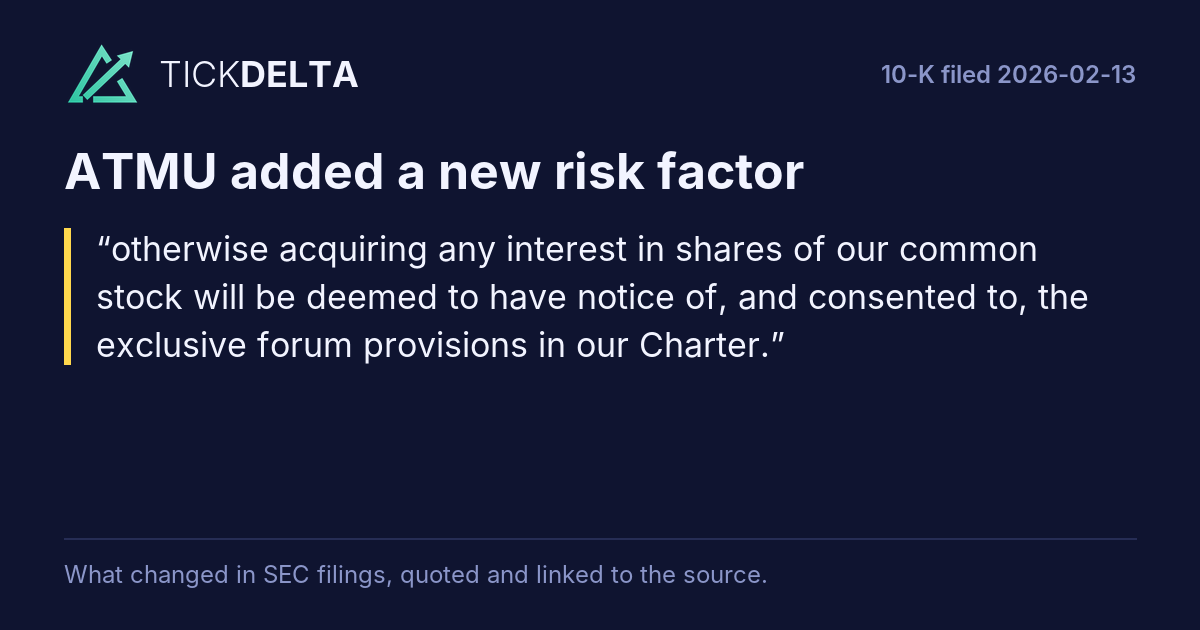
otherwise acquiring any interest in shares of our common stock will be deemed to have notice of, and consented to, the exclusive forum provisions in our Charter.
Paragraphs in the 10-Q filed Nov 6, 2026 that were not in the one before
New in the latest 10-Q
4 paragraphs in the 10-Q filed Nov 6, 2026 with nothing like them in the 10-Q filed Aug 7, 2026 (at least half the words must differ; new numbers alone do not count). Quoted exactly, grouped by the item heading above them. This is text that changed, not a judgement of how serious it is.
Financial statements and notes
We will continue to monitor developments in U.S. and international tax laws and related guidance and evaluate their potential impact on the Company.
Read in the 10-Q
On October 1, 2026, subsequent to the balance sheet date, Atmus made a voluntary prepayment of $ 50.0 million on its term loan due January 7, 2031, using cash on hand. The prepayment was applied to the remaining principal balance based on order of maturity, reducing the outstanding principal to $ 900.0 million. The amount of accrued interest included in the payment was not material and no prepayment penalty was incurred.
Read in the 10-Q
Our financial performance depends, in large part, on varying conditions in the markets we serve. Demand in these markets tends to fluctuate in response to overall economic conditions. Our revenues may also be
Read in the 10-Q
Ongoing conflicts and geopolitical tensions in the Middle East have contributed to macro-economic pressures in certain regions in which we operate. These developments have adversely impacted market demand and Net sales in certain markets and have also contributed to certain material and supply chain cost increases and logistics network inefficiencies. To date, these developments have not had a material impact on our results of operations. We continue to monitor developments and take actions to mitigate impacts to our business and our customers.
Read in the 10-Q
The 10-Q's risk factors against the 10-K
Item 1A of the 10-Q filed Nov 6, 2026 against Item 1A of the 10-K filed Feb 13, 2026.
A 10-Q repeats only the risks that changed, so a 10-K paragraph that is missing from it is not counted as removed.
Added is a paragraph with nothing like it in the 10-K, Reworded a sentence that is in both with several words changed,
Quiet changes a sentence in both where one to four words changed and one is a hedge or a modal
(cut words struck through, new words highlighted).
Text on the page, not a score; each links to the filing at sec.gov.
What the 10-Q itself says about its risk factors:There have been no material changes to the risk factors previously disclosed in our Annual Report on Form 10-K for the year ended December 31, 2025, except for the revision to the following risk factor as set forth below:
Read in the 10-Q
Reworded10-Q Nov 6, 2026 vs 10-K Feb 13, 2026
The extent and duration of the any tariffs and the their resulting impact on general economic conditions and on our business are remain uncertain and depend on various a variety of factors, such as including negotiations between the U.S. United States and affected countries, the responses of other countries or regions, judicial and legislative developments, exemptions or exclusions that may be granted, the availability and cost of alternative sources of supply, and demand for our products in affected markets.
Reworded10-Q Nov 6, 2026 vs 10-K Feb 13, 2026
These temporary exemptions, including those we are availing ourselves to under the USMCA, exemptions may be reduced or eliminated in the future.
Reworded10-Q Nov 6, 2026 vs 10-K Feb 13, 2026
For instance, we have raised the prices of certain of our products in response to cost increases we have incurred on purchases of finished goods, other purchased components, and other goods and some raw materials due to tariffs.
Reworded10-Q Nov 6, 2026 vs 10-K Feb 13, 2026
Several tariff announcements have been followed by announcements of temporary pauses and limited exemptions, such as the temporary exemption for goods that enter entering the U.S. United States as qualifying goods under the United States-Mexico-Canada States‑Mexico‑Canada Agreement (“USMCA”), for which the majority of our products from Mexico for the U.S. market are certified compliant, or expected to be certified compliant.
Show the other 1
Reworded10-Q Nov 6, 2026 vs 10-K Feb 13, 2026
Since then, various modifications modifications, delays, and delays to these tariffs sector‑specific measures have been implemented, with further changes anticipated.
Phrases used for the first time
Two-word phrases in Risk Factors of the 10-K filed Feb 13, 2026 that are in none of the 1 earlier 10-Ks stored, back to Feb 21, 2025
qualified personnel ×2certified compliant ×2
Where each one is used
- qualified personnel: Our ability to attract and retain qualified personnel is critical to our success.
- certified compliant: For example, since February 2025, the U.S. presidential administration has announced new and substantial tariff increases on imports to the United States from China, Mexico, Canada and India. Since then, various modifications and delays to these tariffs have been implemented, with further changes anticipated. These...
Used at least twice, small words left out. Counted, not picked: a phrase can be new because the company renamed something.
What was taken out
34 paragraphs of last year's Risk Factors with nothing like them now. The longest are quoted.
Sources
Item 1A of each 10-K and 10-Q on EDGAR, quoted exactly. Each paragraph links to the filing at sec.gov.
Also
10-K change: what was reworded or cut, section by section.
Work with it
Excel workbook · CSV. Google Sheet that stays up to date: paste =IMPORTDATA("https://tickdelta.com/company/ATMU/export.csv") into a cell.