Added10-Q Oct 20, 2026 vs 10-K Feb 9, 2026
The following table presents information with respect to repurchases by the Company of our common shares during the periods indicated:
Each branch is a paragraph in Risk Factors with nothing like it in the 10-K filed Feb 25, 2025. A box jumps to the paragraph as filed, below.
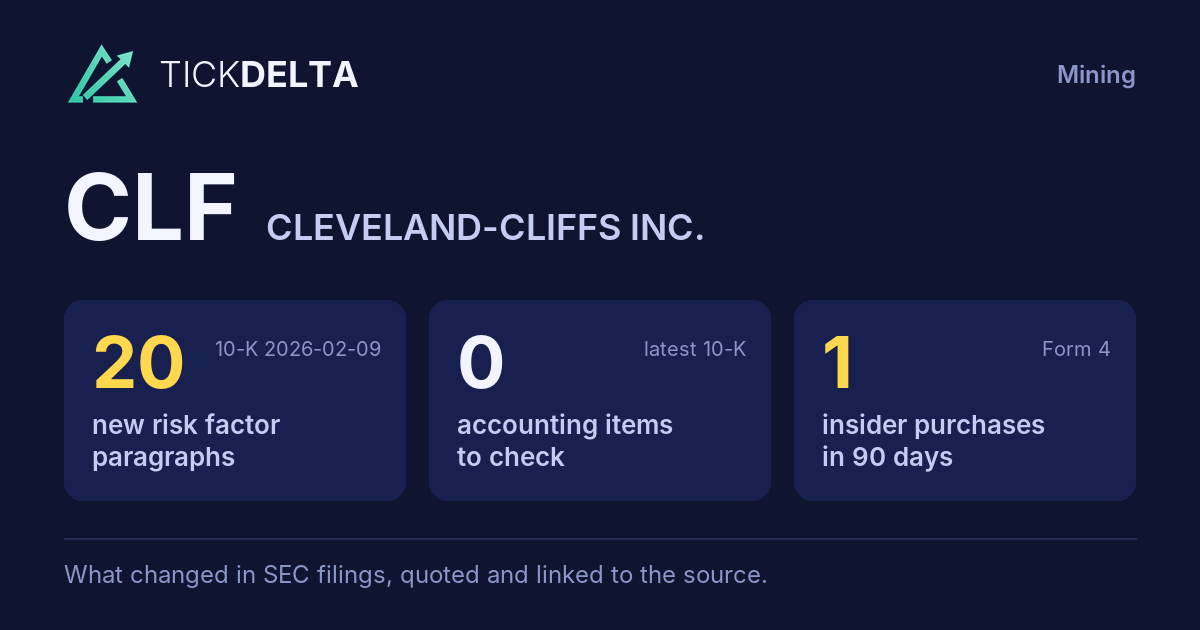
20 paragraphs in Risk Factors of the 10-K filed Feb 9, 2026 with nothing like them in the 10-K filed Feb 25, 2025. Quoted exactly. Paragraphs that were only edited are under 10-K change.
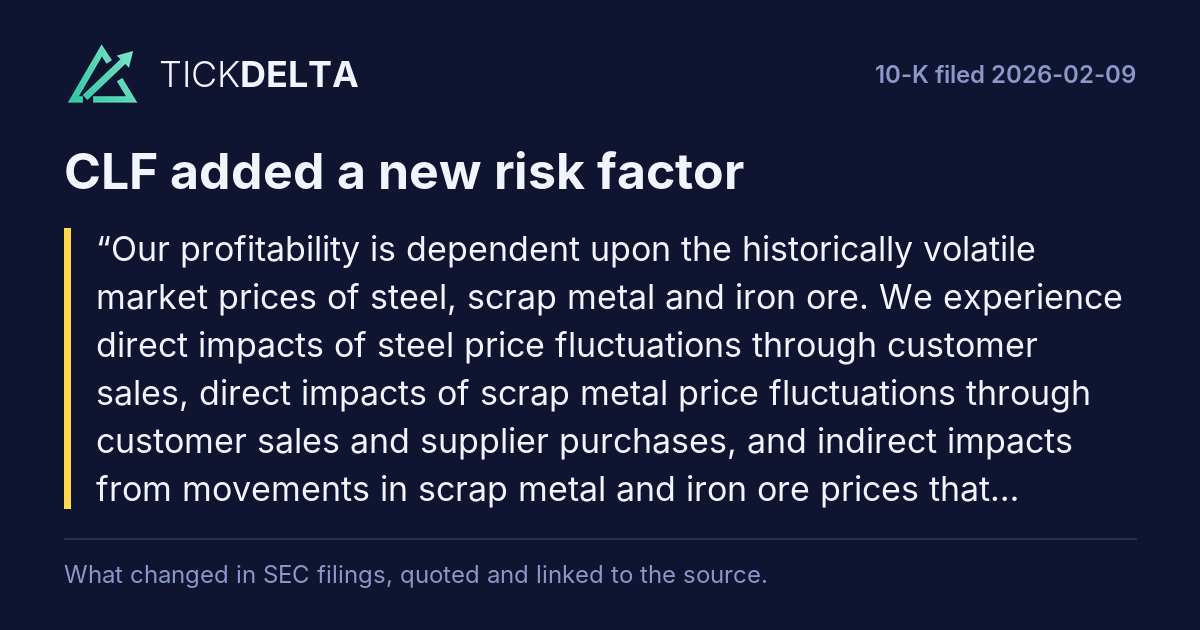
Our profitability is dependent upon the historically volatile market prices of steel, scrap metal and iron ore. We experience direct impacts of steel price fluctuations through customer sales, direct impacts of scrap metal price fluctuations through customer sales and supplier purchases, and indirect impacts from movements in scrap metal and iron ore prices that influence steel prices. As described elsewhere in this report, the prices of steel, scrap metal and iron ore have fluctuated significantly in the recent past, and these pricing shifts are unpredictable and affected by factors beyond our control, including:
•changes in the production capacity, production rate and inventory levels of other steel producers, distributors, iron ore suppliers and scrap metal processors and traders;
•imposition or termination of duties or tariffs, including tariffs and retaliatory tariffs that have recently been and may in the future be instituted in response to geopolitical developments or otherwise, which, among other things, may affect our cross-border shipments, import and export controls, and other trade barriers impacting the steel, scrap metal and iron ore markets;
•international demand for, and the impact of higher rates of inflation on, raw materials used in steel production;
•commodity price speculation; rates of global economic growth, especially light vehicle production and construction and infrastructure activity that requires significant amounts of steel;
•changes in the levels of economic activity in the U.S., Canada, China, India, Europe and other industrialized or developing economies, including as a result of geopolitical conflicts or otherwise;
•changes in China’s emissions policies and environmental compliance enforcement practices;
•climate change and other weather-related disruptions, infectious disease outbreaks or natural disasters that may impact the global supply of steel, scrap metal or iron ore; and
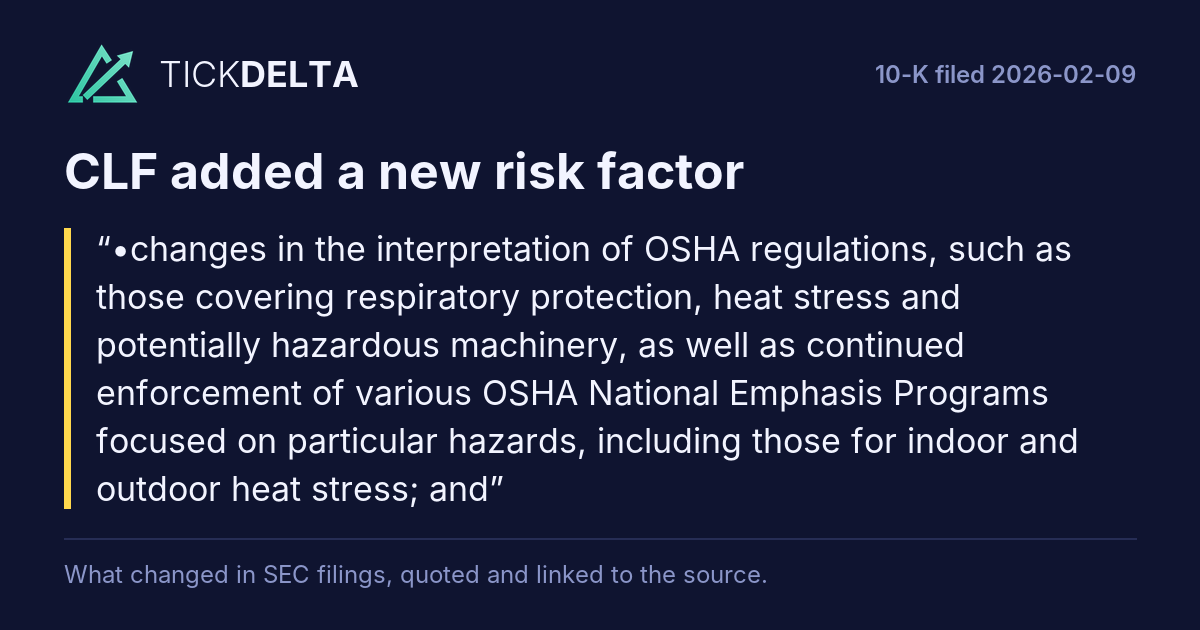
•changes in the interpretation of OSHA regulations, such as those covering respiratory protection, heat stress and potentially hazardous machinery, as well as continued enforcement of various OSHA National Emphasis Programs focused on particular hazards, including those for indoor and outdoor heat stress; and
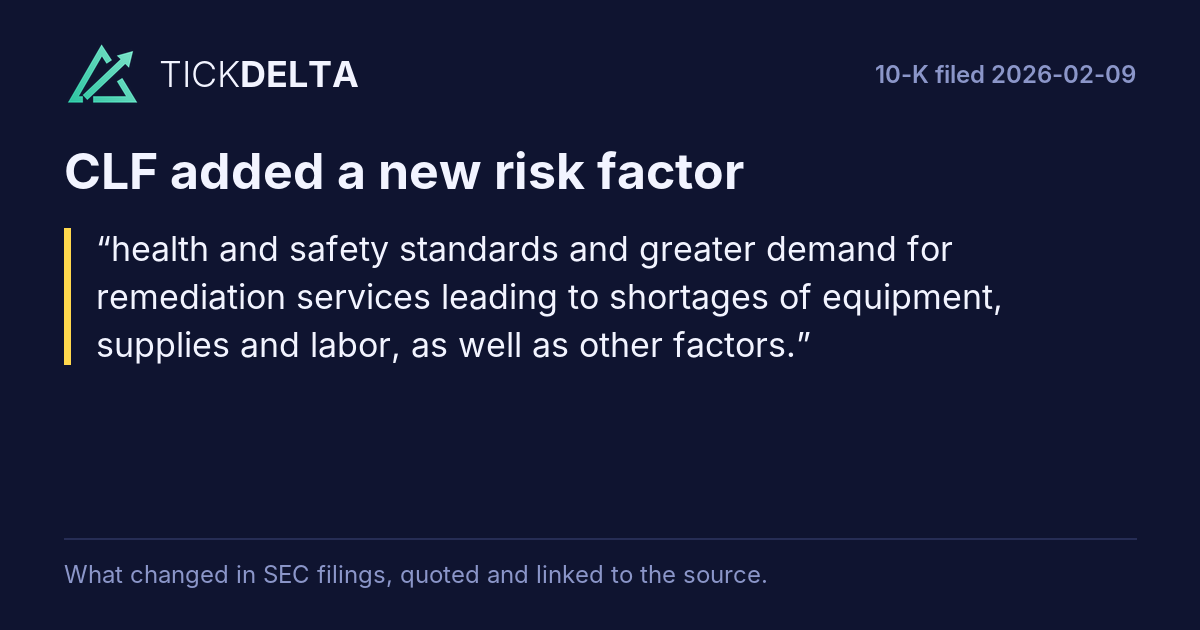
health and safety standards and greater demand for remediation services leading to shortages of equipment, supplies and labor, as well as other factors.
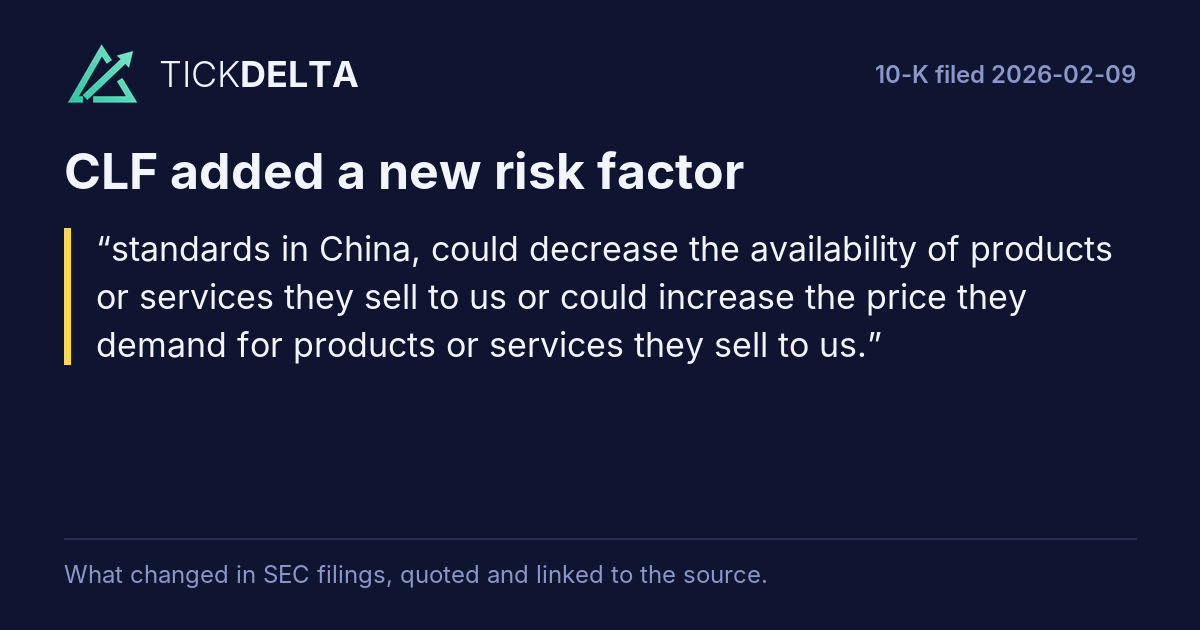
standards in China, could decrease the availability of products or services they sell to us or could increase the price they demand for products or services they sell to us.
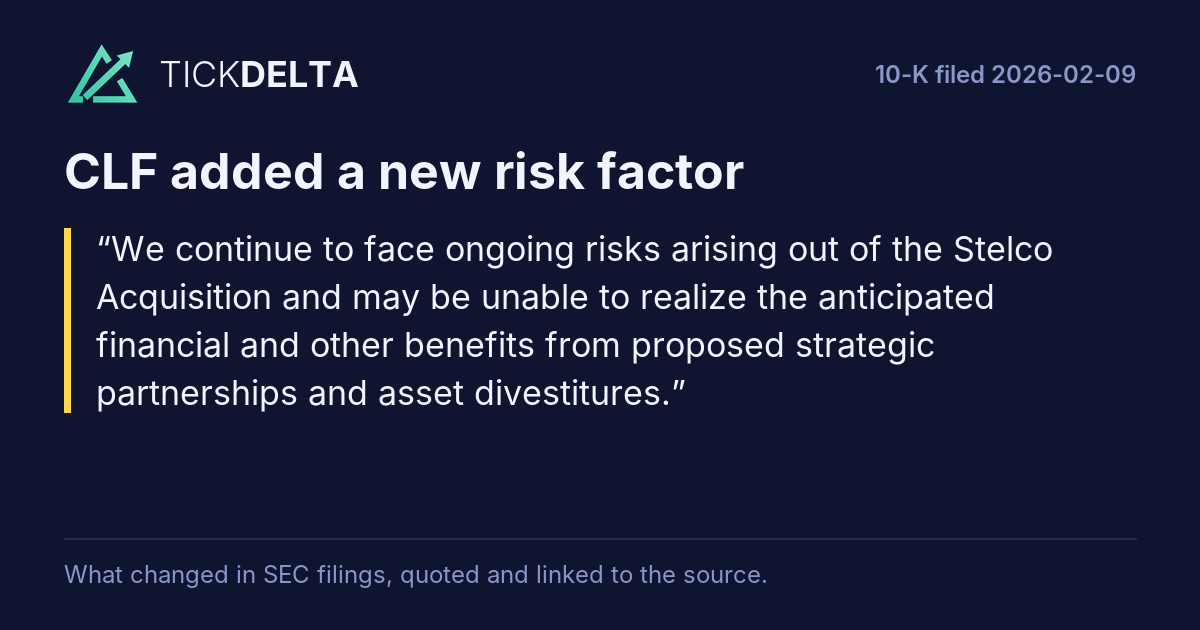
We continue to face ongoing risks arising out of the Stelco Acquisition and may be unable to realize the anticipated financial and other benefits from proposed strategic partnerships and asset divestitures.
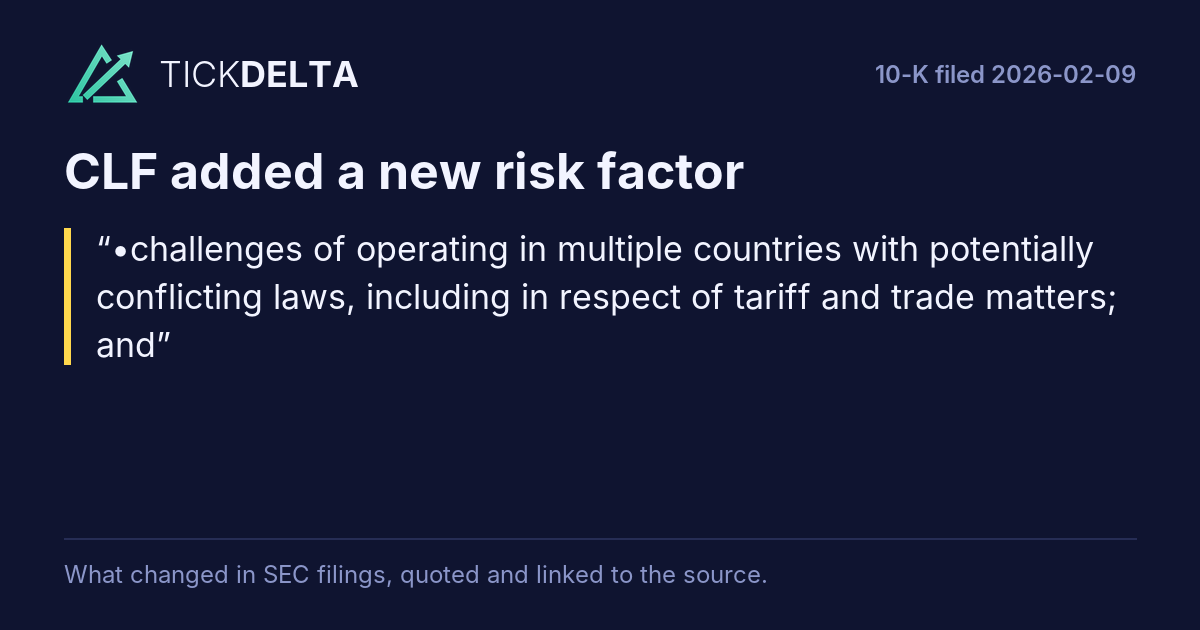
•challenges of operating in multiple countries with potentially conflicting laws, including in respect of tariff and trade matters; and
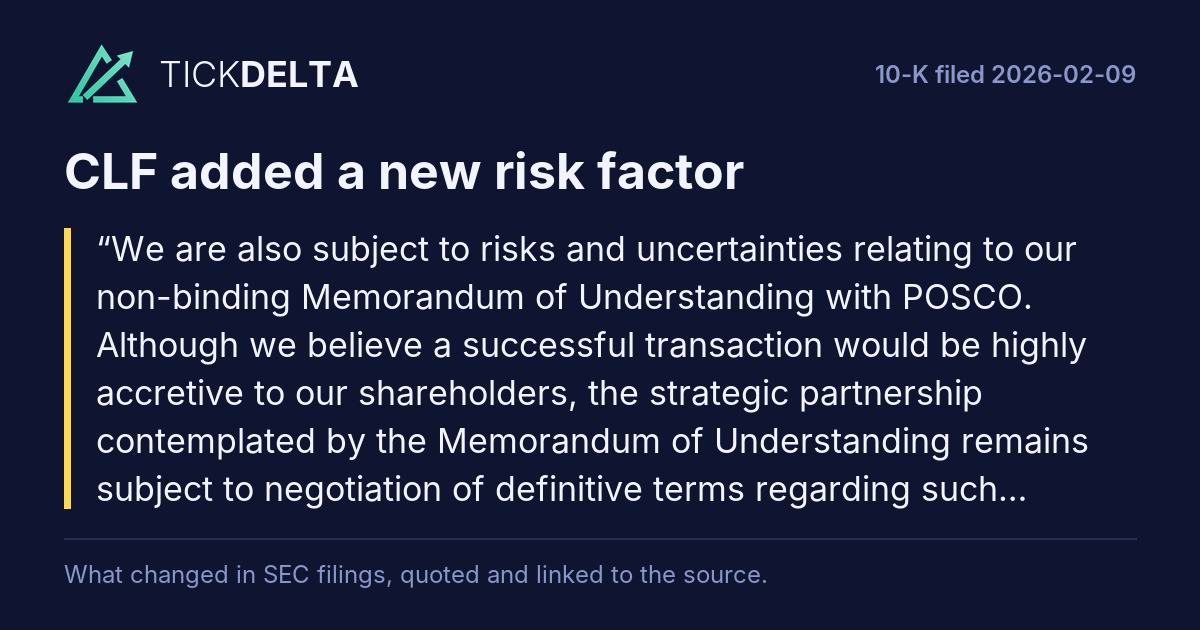
We are also subject to risks and uncertainties relating to our non-binding Memorandum of Understanding with POSCO. Although we believe a successful transaction would be highly accretive to our shareholders, the strategic partnership contemplated by the Memorandum of Understanding remains subject to negotiation of definitive terms regarding such strategic partnership, together with the execution and closing of definitive agreements between the parties. As such, there can be no assurances that the parties will enter into such definitive agreements, that the strategic partnership will be implemented in accordance with the terms of the Memorandum of Understanding, or that the strategic partnership will proceed as currently expected or will ultimately be successful. While we expect to realize certain financial benefits arising out of the proposed partnership under the Memorandum of Understanding, including substantial proceeds that could be used to reduce our outstanding indebtedness, there is risk that the proposed partnership with POSCO does not come to fruition in a timely manner or at all or that any ultimate financial benefits could be less significant than we currently anticipate.
We are also subject to risks and uncertainties relating to potential divestitures of our non-core operating assets and idled, closed or otherwise inactive sites. While we anticipate using future proceeds from any such divestiture transactions to reduce our outstanding indebtedness, it is uncertain whether we will be successful in completing any such potential transactions in a timely manner or at all. Even if we are successful in completing any such divestitures, there is a risk that our actual realized cost savings and/or cash proceeds may be less than we have forecasted. Furthermore, we may incur asset impairment charges related to divestitures that reduce our profitability. We may also be unable to recover the carrying value of any divested assets, which potentially could have an adverse impact on our financial results and shareholders’ equity. In addition, our divestiture activities may present financial, managerial and operational risks, including diversion of management attention from our core businesses, difficulties separating personnel and financial, IT and other systems, adverse effects on existing business relationships with
suppliers and customers, trailing indemnity obligations and potential disputes with transaction counterparties. Any of these factors could adversely affect our financial condition, business productivity and results of operations.
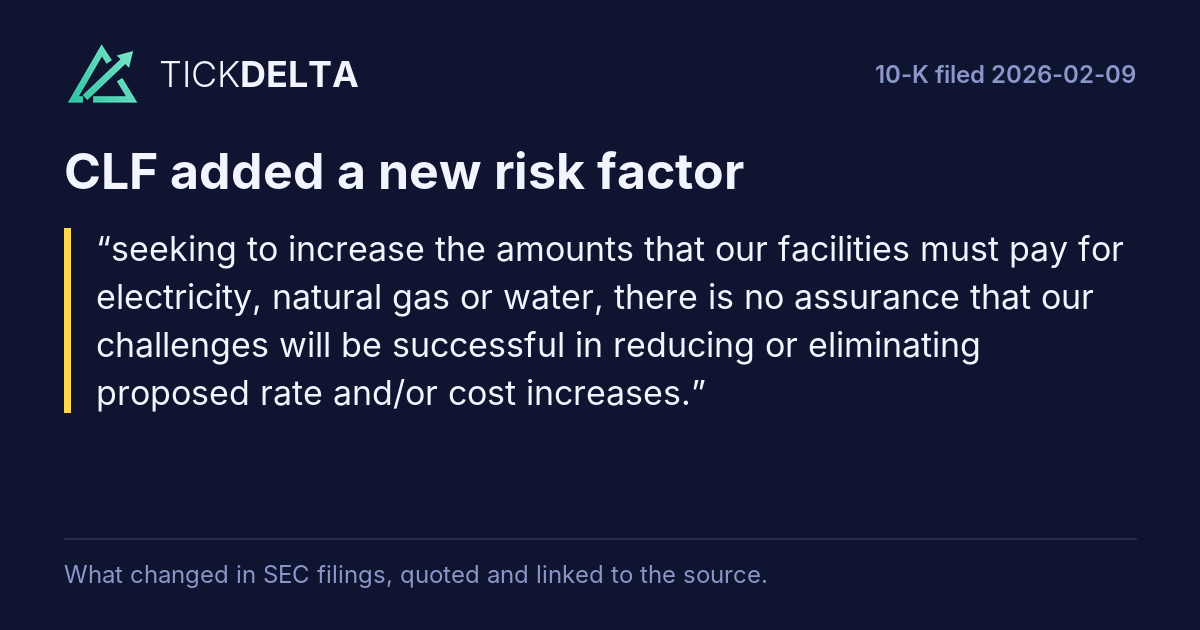
seeking to increase the amounts that our facilities must pay for electricity, natural gas or water, there is no assurance that our challenges will be successful in reducing or eliminating proposed rate and/or cost increases.
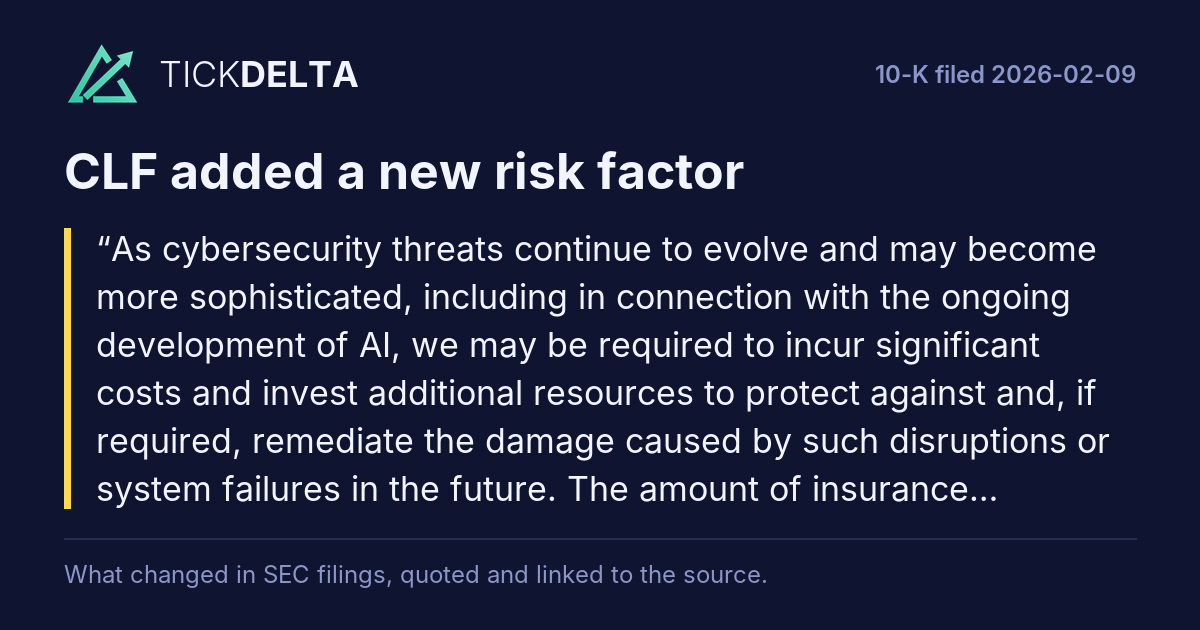
As cybersecurity threats continue to evolve and may become more sophisticated, including in connection with the ongoing development of AI, we may be required to incur significant costs and invest additional resources to protect against and, if required,
remediate the damage caused by such disruptions or system failures in the future. The amount of insurance coverage we maintain and require our vendors to maintain may be inadequate to cover claims or liabilities resulting from cybersecurity incidents and attacks, and there is no guarantee that such coverage will continue to be available on commercially reasonable terms or at all. Furthermore, as we evaluate AI technologies for potential use in our operations, we face new and emerging risks, including evolving regulatory requirements and the possibility that threat actors may exploit AI-enhanced cyberattack techniques. Although we believe we are taking a deliberate and measured approach to AI adoption, any failure to implement appropriate governance frameworks or security protocols could adversely affect our operations or expose us to regulatory scrutiny and third-party liability. Additionally, to the extent our competitors successfully adopt AI and experience enhanced efficiencies and/or reduced costs, we may be at a competitive disadvantage that could adversely impact our financial results.
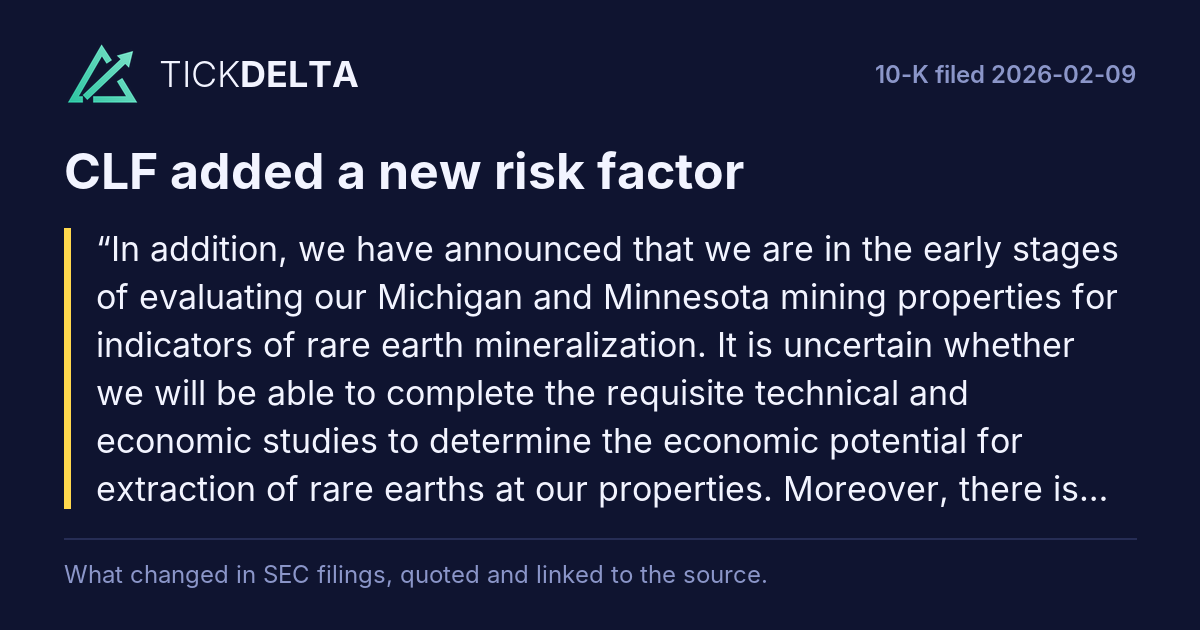
In addition, we have announced that we are in the early stages of evaluating our Michigan and Minnesota mining properties for indicators of rare earth mineralization. It is uncertain whether we will be able to complete the requisite technical and economic studies to determine the economic potential for extraction of rare earths at our properties. Moreover, there is risk that our geological surveying and exploration activities may never result in the identification of rare earth minerals in economic concentrations at any of our mining properties.
New in the latest 10-Q
11 paragraphs in the 10-Q filed Oct 20, 2026 with nothing like them in the 10-Q filed Jul 23, 2026 (at least half the words must differ; new numbers alone do not count). Quoted exactly, grouped by the item heading above them. This is text that changed, not a judgement of how serious it is.
In December 2025, the FASB issued ASU No. 2025-10, Government Grants (Topic 832): Accounting for Government Grants Received by Business Entities. The new standard establishes guidance for the recognition, measurement, presentation, and disclosure of government grants received by business entities, including grants related to assets and grants related to income. The amendments are effective for interim and annual reporting periods beginning after December 15, 2028. We plan to early adopt this standard beginning January 1, 2027 and do not expect the adoption to have a material impact on our consolidated financial statements.
Read in the 10-Q
1 Other segment items primarily consist of the exclusion of EBITDA from noncontrolling interests and certain idled facilities amounts and the inclusion of certain items within Miscellaneous, net and Other non-operating income.
Read in the 10-Q
2 EBITDA from noncontrolling interests includes net income attributable to noncontrolling interests of $13 million and the exclusion of depreciation, depletion and amortization of $6 million.
Read in the 10-Q
1 Other segment items primarily consist of the exclusion of EBITDA from noncontrolling interests and certain idled facilities amounts and the inclusion of certain items within Miscellaneous, net and Other non-operating income.
Read in the 10-Q
2 EBITDA from noncontrolling interests includes net income attributable to noncontrolling interests of $17 million and the exclusion of depreciation, depletion and amortization of $6 million.
Read in the 10-Q
During the third quarter of 2026, we made the decision to indefinitely idle the finishing operations at our Hamilton Works facility. The indefinite idle is not expected to have any impact on production as we shift mix further towards HRC, which is more profitable under current market conditions. The indefinite idle is a result of continued weak demand for value-add sheet products in the Canadian market and the continued presence of imported products into Canada.
Read in the 10-Q
During the third quarter of 2026, we announced that the DOE established a framework to finalize negotiations and implementation plans for our Middletown Works investment, rescoping the previously awarded $500 million DOE grant. The project represents a $1 billion total investment at Middletown Works, with funding shared equally between Cleveland-Cliffs and the DOE. The Middletown Works investment includes state-of-the-art upgrades to its blast furnace, advanced material handling and artificial intelligence-enabled process control technologies. Additionally, we plan to construct an advanced cogeneration facility that will capture and utilize blast furnace gas to generate electricity and steam for on-site utilization, improving overall energy efficiency, reducing reliance on externally supplied electricity, and lowering operating costs. This multi-year investment is expected to be completed in 2030.
Read in the 10-Q
• Higher cost of goods sold: Cost of goods sold increased by approximately $380 million, primarily driven by volume and from higher cost per ton resulting from product mix and elevated repair and maintenance expense.
Read in the 10-Q
The year-over-year change in income taxes for both the three and nine months ended September 30, 2026 periods was primarily attributable to the significant improvement in earnings included within Income (loss) from continuing operations before income taxes.
Read in the 10-Q
• A $443 million increase in cash from Payables, accrued employment and accrued expenses, the result of higher costs including inputs and product mix and from timing of payments; partially offset by
Read in the 10-Q
the Exchange Act. This trading arrangement provides for the potential sale of up to 130,000 shares of the Company's common stock beginning on November 2, 2026, and is scheduled to terminate on November 2, 2027.
Read in the 10-Q
Item 1A of the 10-Q filed Oct 20, 2026 against Item 1A of the 10-K filed Feb 9, 2026.
A 10-Q repeats only the risks that changed, so a 10-K paragraph that is missing from it is not counted as removed.
Added is a paragraph with nothing like it in the 10-K, Reworded a sentence that is in both with several words changed,
Quiet changes a sentence in both where one to four words changed and one is a hedge or a modal
(cut words struck through, new words highlighted).
Text on the page, not a score; each links to the filing at sec.gov.
What the 10-Q itself says about its risk factors:We caution readers that our business activities involve risks and uncertainties that could cause actual results to differ materially from those currently expected by management. We described the most significant risks that could impact our results in Part I, Item 1A. "Risk Factors" in our Annual Report on Form 10-K for the year ended December 31, 2025.
Read in the 10-Q
Two-word phrases in Risk Factors of the 10-K filed Feb 9, 2026 that are in none of the 1 earlier 10-Ks stored, back to Feb 25, 2025
Used at least twice, small words left out. Counted, not picked: a phrase can be new because the company renamed something.
9 paragraphs of last year's Risk Factors with nothing like them now. The longest are quoted.
Item 1A of each 10-K and 10-Q on EDGAR, quoted exactly. Each paragraph links to the filing at sec.gov.
10-K change: what was reworded or cut, section by section.
Excel workbook · CSV. Google Sheet that stays up to date: paste =IMPORTDATA("https://tickdelta.com/company/CLF/export.csv") into a cell.