Form 10-K for the Fiscal Year Ended December 31, 2024
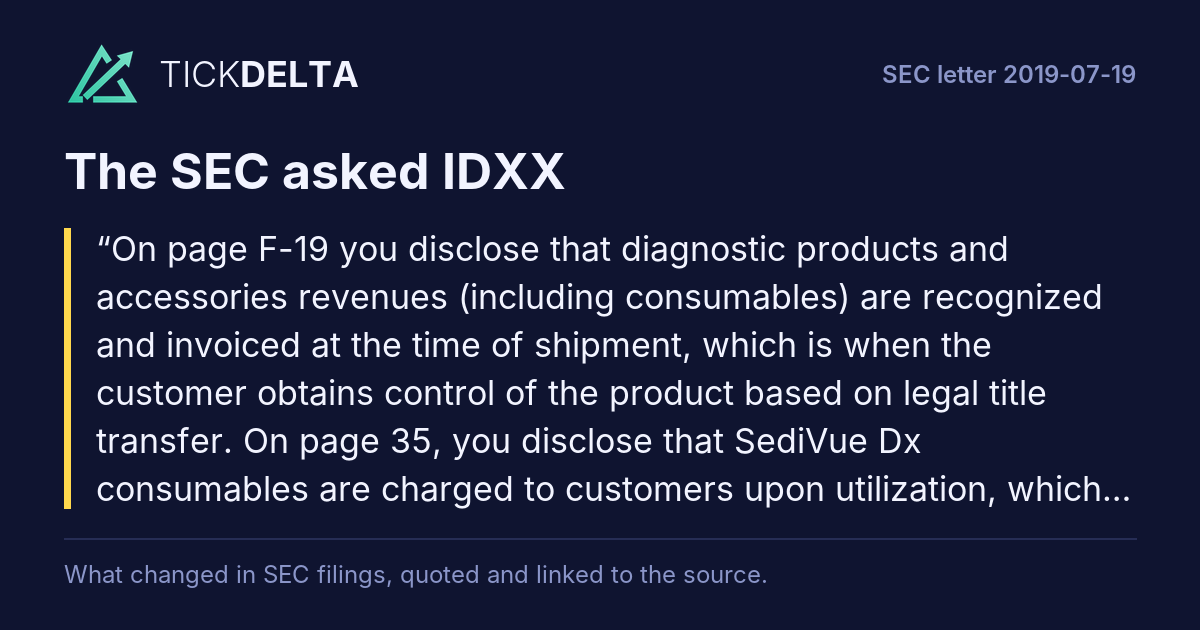
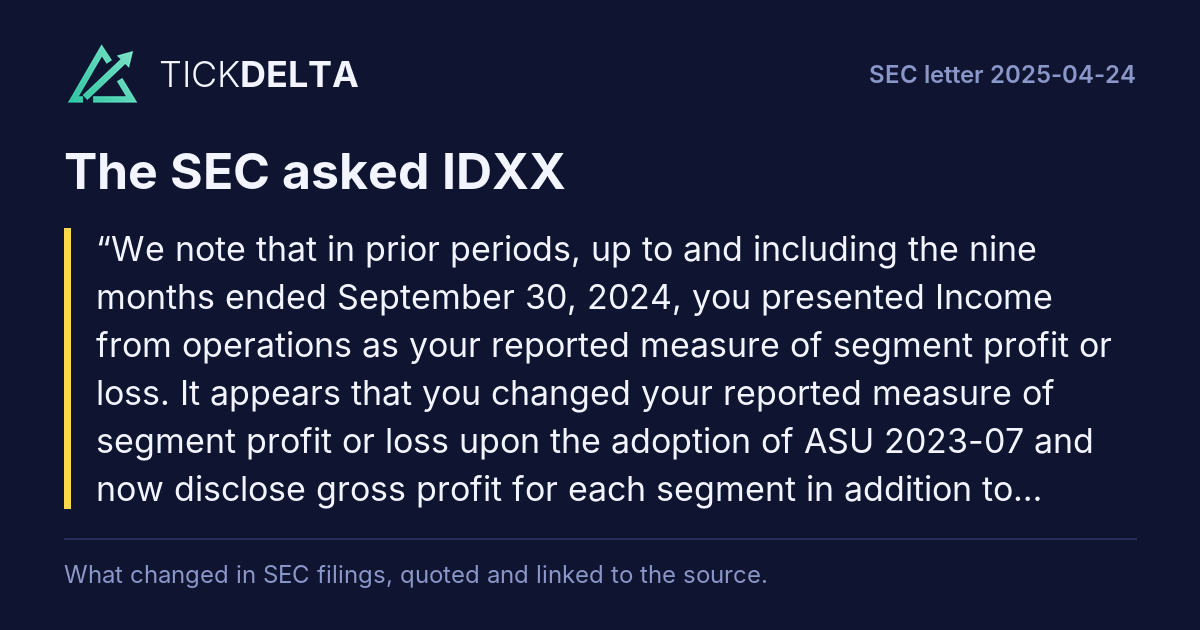
We note that in prior periods, up to and including the nine months ended September 30, 2024, you presented Income from operations as your reported measure of segment profit or loss. It appears that you changed your reported measure of segment profit or loss upon the adoption of ASU 2023-07 and now disclose gross profit for each segment in addition to revenues.Rest of the question
In your MD&A, however, you continue to present Income from operations for each segment, which includes reported amounts of sales and marketing, general and administrative and research and development expenses. Please clarify for us whether Income from operations for each segment is reported to the CODM and the extent to which this measure is used to evaluate segment performance and allocate resources. To the extent this measure is considered by the CODM when assessing performance and allocating resources, please explain how you determined the appropriate measure(s) to report under ASC 280-10-501. 28A. In this regard, at least one of the reported segment profit or loss measures shall be that which management believes is determined in accordance with the measurement principles most consistent with those used in measuring the corresponding amounts in your consolidated financial statements. In closing, we remind you that the company and its management are responsible for the accuracy and adequacy of their disclosures, notwithstanding any review, comments, action or absence of action by the staff.
The Company respectfully advises the Staff that the CODM, its president and Chief Executive Officer, evaluates the performance of operating segments based on revenues and two measures of segment profit: (1) segment gross profit and (2) segment income from operations. Segment gross profit and segment income from operations are both measures of segment profit that the CODM uses to assess segment performance and allocate resources.Read in the reply ↗Rest of the answer
The CODM reviews budget and actual revenues, gross profits, and income from operations of the operating segments and decides how to allocate resources to meet our strategic priorities.
Generally, the Company uses the same accounting principles in the preparation of the segment information as those used for the consolidated financial statements. However, segment income from operations does not include foreign currency transaction gains and losses.
We regularly assess the financial information provided to the CODM, which is refined from time-to-time to support the evolving information needs of the CODM. During the preparation of the Company’s segment disclosures in connection with our adoption of ASU 2023-07, we determined segment gross profit to be the profit measure that is measured most consistently in accordance with the measurement principles used in measuring the corresponding amounts in our consolidated financial statements, compared to segment income from operations. This determination was based on the following considerations:
a.The aggregated segment gross profit for our reportable and non-reportable segments is presented on a consistent basis with how it is presented on the face of our consolidated statements of income.
b.Because we do not include foreign currency transaction gains and losses in our reportable segments, segment income from operations is not presented on the same basis as consolidated income from operations on the face of our consolidated statements of income.
Therefore, the Company concluded that segment gross profit is the segment measure of profit that is determined in accordance with the measurement principles most consistent with those used in measuring the corresponding amounts in the Company’s consolidated financial statements (ASC 280-10-50-28A).
Additionally, we determined that we would not report segment income from operations as an additional voluntary measure upon adoption of ASU 2023-07 as is allowed under the standard (ASC 280-10-50-28A).
Further, to enhance the Company’s disclosures in future periodic reports on Forms 10-Q and 10-K, beginning with the Form 10-Q for the three months ended March 31, 2025, the Company will include additional disclosure to describe and reconcile segment income from operations to consolidated income from operations, in Management’s Discussion and Analysis of Financial Condition and Results of Operations. The disclosure will be similar to the following:
Non-GAAP Financial Measures
Segment Income from Operations. We report segment income from operations in our discussion of the results of the operations of our segments below. Segment income from operations is a non-GAAP financial measure that adjusts for the impact of foreign currency transaction gains and losses and should be considered in addition to, and not as a replacement for, income from operations. We exclude foreign currency transaction gains and losses for each reportable segment (CAG, Water, and LPD) from segment income from operations and report the full amount of foreign currency transaction gains and losses in our Other operating segment. We believe that reporting segment income from operations provides supplemental analysis to help investors further evaluate each reportable segment’s business performance by excluding foreign currency transaction gains and losses, which are centrally managed by our corporate treasury function and which we do not consider relevant for assessing the results of each reportable segment’s operations. In addition, we believe that reporting segment income from operations provides information to investors regarding key metrics that are used by management, including our CODM, in evaluating the performance of each reportable segment.
The following table presents the reconciliation from income from operations for each of our segments to the amounts we present as segment income from operations for such segments in the Results of Operations below.
The Company will also include similar disclosure in our future quarterly earnings press releases regarding the Company’s results of operations furnished on Form 8-K.
If you should have any further questions, please contact the undersigned at andrew-emerson@idexx.com.
First report after the company's reply of 2025-04-30: 10-Q filed 2025-05-01 ↗, against the 10-Q filed 2024-10-31 ↗.
Tickdelta does not hold the text of both reports, so they are not compared here.
We note your response to our prior comment. You disclose on page F-40 that foreign currency transaction gains and losses are reported within your “Other operating segment." Please explain in detail how, when you identified your operating segments, you determined foreign currency transaction gains or losses would be included in your “Other operating segment” and not in your operating segments that are reportable.Rest of the question
As part of your response, please address the following: • You indicate in the proposed disclosure in your response that foreign currency transaction gains and losses are centrally managed by your corporate treasury function. Describe the “Other operating segment” in further detail and how foreign currency transactions gains and losses are managed. 1. • Describe the balance(s) that foreign currency transaction gains and losses are associated with. In this regard, we note your disclosure on page F-40 that “assets are not allocated to segments for internal reporting purposes." • Tell us how the “Impact from foreign currency” contained in the proposed disclosure in your response was calculated for each reportable segment, and whether the CODM is provided with this information.
The Company respectfully advises the Staff that our “Other operating segment” is the combination of our human medical diagnostic segment (“OPTI Medical”) and our out-licensing arrangements segment. Neither of these segments are considered to be reportable segments because they do not meet the qualitative or quantitative thresholds in ASC 280-10-50-10b (revenue and income from operations for each segment are less than 1% of consolidated totals).Read in the reply ↗Rest of the answer
Excluded from the segment reporting provided to the CODM are foreign currency transaction gains and losses since these are financial risks rather than operational metrics.
In our Management’s Discussion and Analysis of Financial Condition and Results of Operations (“MD&A”), “Other” included (a) results from the OPTI Medical segment, (b) results from our out-licensing arrangements segment, and (c) foreign currency transaction gains and losses for the entire company. These foreign currency transaction gains and losses arise from monetary assets and liabilities that are denominated in currencies other than the functional currency of the respective subsidiaries. Since assets and liabilities are not allocated to segments for internal reporting purposes and are not included in reviews performed by the CODM for the purpose of assessing segment performance and allocation of resources, the foreign currency transaction gains and losses are also not allocated to the operating segments and our systems and reporting are not structured to identify or allocate foreign currency transaction impacts at the segment level.
Monetary assets and liabilities are primarily comprised of cash, accounts receivable, accounts payable and accrued expenses. The currencies in which receivables are denominated and the associated payment terms granted to the counterparties are generally determined by the Company with consideration to local business practices in the geography in which our respective operating subsidiary resides. The currencies in which liabilities are incurred and the timing of settlements of those liabilities are generally determined by mutually agreed terms with the respective counterparties. The Company’s management evaluates segment operating performance based on revenues, gross profit, and operating income before foreign transaction gains and losses because it helps management understand and evaluate the segments’ core operating results. The Company considers the financial risk of foreign currency transactions as a corporate item and our overall cash inflows and outflows are centrally managed by our corporate treasury function based on the expected timing of cash receipts and payments, planned investing and financing activities of the Company, and assessment of financial risks and mitigation efforts, in order to optimize liquidity and the use of excess cash, and to mitigate currency and other relevant risks.
In future filings we will clarify our disclosure that previously appeared on page F-40 of our Form 10-K, to state that we do not allocate foreign transaction gains and losses to our operating segments. In addition, wherever we disclose “Other results of operations” such as the table on page 54 of our Form 10-K for the year ended December 31, 2024, we will clarify that this includes the results from our non-reportable segments and consolidated foreign transaction gains and losses.
In the table provided within our response dated April 30, 2025, foreign currency transaction gains and losses were allocated to reportable segments in proportion to their respective foreign-sourced revenues for the relevant periods. Since assets and liabilities are not allocated to segments for internal reporting purposes and are not included in reviews performed by the CODM for purposes of assessing segment performance or allocation of resources, we chose this methodology to apportion the foreign currency transaction gains and losses in order to reconcile consolidated income from operations to the amounts we present as segment income from operations in MD&A. The CODM is not regularly provided with this information. Upon further consideration the Company will revise this proposed disclosure in future periodic filings commencing with the Form 10-Q for the period ended June 30, 2025, to reconcile total consolidated GAAP income from operations to total reportable segment operating income from operations as presented in MD&A. See below for our proposed disclosure using financial information from the years ended December 31, 2024 and 2023.
The Company will also include similar disclosures in our future quarterly earnings press releases regarding the Company’s results of operations furnished on Form 8-K.
If you should have any further questions, please contact the undersigned at andrew-emerson@idexx.com.
First report after the company's reply of 2025-06-02: 10-Q filed 2025-08-04 ↗, against the 10-Q filed 2024-10-31 ↗.
Tickdelta does not hold the text of both reports, so they are not compared here.
Also in this review: closing letter, 2025-07-07