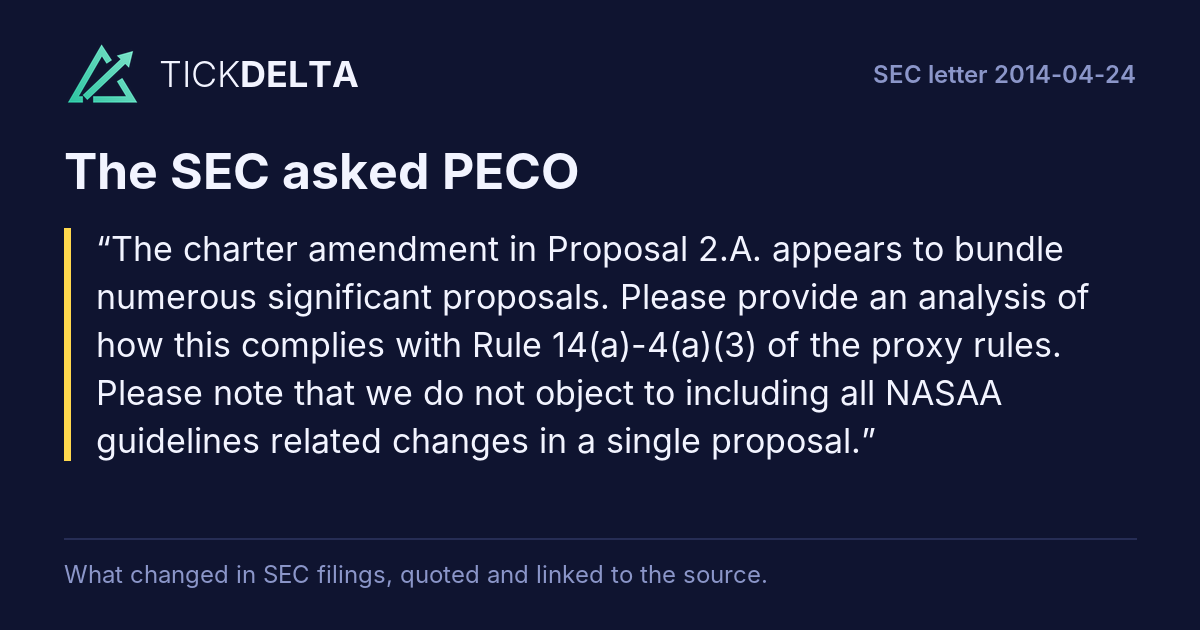
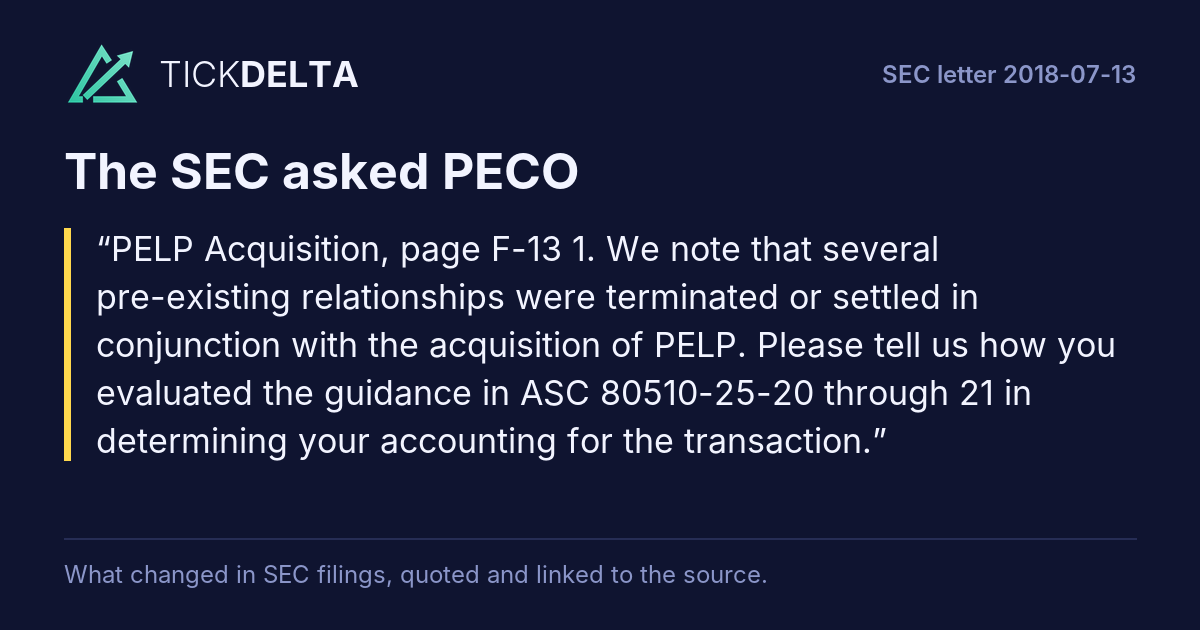
The Company will revise the disclosure as requested. A marked copy of the proposed disclosure is included below.
performance financial measure that is widely recognized as a measure of REIT operating performance.
Rest of the answer
We use FFO as defined by the National Association of Real Estate Investment Trusts to be net income (loss), computed in accordance with GAAP excluding extraordinary items, as defined by GAAP, and gains (or losses) from sales of property (including deemed sales and settlements of pre-existing relationships), plus depreciation and amortization on real estate assets, and after related adjustments for unconsolidated partnerships, joint ventures and subsidiaries and noncontrolling interests. We believe that FFO is helpful to our investors and our management as a measure of operating performance because it excludes real estate-related depreciation and amortization, gains and losses from property dispositions, and extraordinary items, and as a result, when compared year to year, reflects the impact on operations from trends in occupancy rates, rental rates, operating costs, development activities, general and administrative expenses, and interest costs, which are not immediately apparent from net income. Historical cost accounting for real estate assets in accordance with GAAP implicitly assumes that the value of real estate and intangibles diminishes predictably over time. Since real estate values have historically risen or fallen with market conditions, many industry investors and analysts have considered the presentation of operating results for real estate companies that use historical cost accounting alone to be insufficient. As a result, our management believes that the use of FFO, together with the required GAAP presentations, is helpful for our investors in understanding our performance. Factors that impact FFO include start-up costs, fixed costs, delay in buying assets, lower yields on cash held in accounts, income from portfolio properties and other portfolio assets, interest rates on acquisition financing and operating expenses. In addition, FFO will be affected by the types of investments in our targeted portfolio which will consist of, but is not limited to, necessity-based neighborhood and community shopping centers, firstand second-priority mortgage loans, mezzanine loans, bridge and other loans, mortgage-backed securities, collateralized debt obligations, and debt securities of real estate companies.
Since FFO was promulgated, GAAP has expanded to include several new accounting pronouncements, such that management and many investors and analysts have considered the presentation of FFO alone to be insufficient. Accordingly, in addition to FFO, we use modified funds from operations, or MFFO, as defined by the Investment Program Association (“IPA”). MFFO excludes from FFO the following items:
(1) acquisition fees and expenses;
(2) straight-line rent amounts, both income and expense;
(3) amortization of aboveor below-market intangible lease assets and liabilities;
(4) amortization of discounts and premiums on debt investments;
(5) impairment charges;
(6) gains or losses from the early extinguishment of debt;
(7) gains or losses on the extinguishment or sales of hedges, foreign exchange, securities and other derivatives holdings except where the trading of such instruments is a fundamental attribute of our operations;
(8) gains or losses related to fair-value adjustments for derivatives not qualifying for hedge accounting, including interest rate and foreign exchange derivatives;
(9) gains or losses related to consolidation from, or deconsolidation to, equity accounting;
(10) gains or losses related to contingent purchase price adjustments; and
(11) adjustments related to the above items for unconsolidated entities in the application of equity accounting.
Additionally, we make an additional adjustment to MFFO to add back amounts we receive from the Sub-advisor or an affiliate thereof in the form of additional capital contributions to us (without any corresponding issuance of equity by us to the Sub-advisor or the affiliate).
We believe that MFFO is helpful as a measure of operating performance, because it excludes costs that management considers more reflective of investing activities or non-operating valuation and other changes. Accordingly, we believe that MFFO can be a useful metric to assist management, investors and analysts in assessing helpful in assisting management and investors assess the sustainability of operating performance. in future periods and, in particular, after our offering and acquisition stages are complete, primarily because it excludes acquisition expenses that affect property operations only in the period in which the property is acquired. Thus, MFFO provides helpful information relevant to evaluating our operating performance in periods in which there is no acquisition activity.
As explained below, management’s evaluation of our operating performance excludes the items considered in the calculation based on the following economic considerations. Many of the adjustments in arriving at MFFO are not applicable to us. For example, we have not suffered any impairments. Nevertheless, we explain below the reasons for each of the adjustments made in arriving at our MFFO definition.
Acquisition fees and expenses. In evaluating investments in real estate, including both business combinations and investments accounted for under the equity method of accounting, management’s investment models and analyses differentiate costs to acquire the investment from the operations derived from the investment. Prior to 2009, acquisition costs for both of these types of investments were capitalized under GAAP; however, beginning in 2009, acquisition costs related to business combinations are expensed. Both of these acquisition-related costs have been and will continue to be funded from the proceeds of our offering and generally not from operations. We believe by excluding expensed acquisition costs, MFFO provides useful supplemental information that is comparable for each type of real estate investment and is consistent with management’s analysis of the investing and operating performance of our properties. Acquisition fees and expenses include those paid to the Advisor, the Sub-advisor or third parties.
Adjustments for straight-line rents and amortization of discounts and premiums on debt investments. In the proper application of GAAP, rental receipts and discounts and premiums on debt investments are allocated to periods using various systematic methodologies. This application may result in income recognition that could be significantly different than underlying contract terms. By adjusting for these items, MFFO provides useful supplemental information on the realized economic impact of lease terms and debt investments and aligns results with management’s analysis of operating performance.
Adjustments for amortization of above or below market intangible lease assets. Similar to depreciation and amortization of other real estate related assets that are excluded from FFO, GAAP implicitly assumes that the value of intangibles diminishes ratably over time and that these charges be recognized currently in revenue. Since real estate values and market lease rates in the aggregate have historically risen or fallen with market conditions, management believes that by excluding these charges, MFFO provides useful supplemental information on the performance of the real estate.
Impairment charges, gains or losses related to fair-value adjustments for derivatives not qualifying for hedge accounting and gains or losses related to contingent purchase price adjustments. Each of these items relates to a fair value adjustment, which is based on the impact of current market fluctuations and underlying assessments of general market conditions and specific performance of the holding, which may not be directly attributable to current operating performance. As these gains or losses relate to underlying long-term assets and liabilities, management believes MFFO provides useful supplemental information by focusing on the changes in core operating fundamentals rather than changes that may reflect anticipated gains or losses. In particular, because GAAP impairment charges are not allowed to be reversed if the underlying fair values improve or because the timing of impairment charges may lag the onset of certain operating consequences, we believe MFFO provides useful supplemental information related to current consequences, benefits and sustainability related to rental rate, occupancy and other core operating fundamentals.
Adjustment for gains or losses related to early extinguishment of hedges, debt, consolidation or deconsolidation and contingent purchase price.
Similar to extraordinary items excluded from FFO, these adjustments are not related to continuing operations. By excluding these items, management believes that MFFO provides supplemental information related to sustainable operations that will be more comparable between other reporting periods and to other real estate operators.
Adjustments for sponsor contributions to capital when no additional securities are issued. Our Sub-advisor has made capital contributions to us without receiving an additional issuance of equity securities. These capital contributions are meant to offset a portion of our general and administrative expenses during the early stages and portfolio ramp-up of our initial public offering when our asset and investor bases isare not yet large enough to generate sufficient revenue to cover the costs of being a public companyeconomies of scale. We view these capital contributions as similar to our Advisor’s waiver of asset management fees.
By adding back these capital contributions when arriving at MFFO, we believe that we arrive at an MFFO that is more reflective of our actual performance after we complete our offering stage because it reflects our Sub-advisor’s willingness to make contributions to offset our general administrative expenses during the early stages of our offeringat that time our general and administrative expenses can be expected to be much lower in proportion to our portfolio size, reflecting both economies of scale in the servicing of a larger investor base and economies of scale with respect to operations and management of our portfolio. Moreover, we believe that this adjustment improves the comparability of our company with other real estate operators that do not have similar sponsor contributions, that are beyond the start-up phase and at a more advanced stage of portfolio aggregation. We note that these contributions to cover general and administrative costs do not affect net income. Therefore an adjustment in arriving at MFFO is necessary for purposes of fair comparison. We can giveThere is no assurance that our Sub-advisor will continue to make additional capital contributions to offset certain general and administrative expenses prior to our realization of such economies of scale.
By providing MFFO, we believe we are presenting useful information that also assists investors and analysts to better assess the sustainability of our operating performance after our offering and acquisition stages are completed. We also believe that MFFO is a recognized measure of sustainable operating performance by the non-listed REIT industry. MFFO is useful in comparing the sustainability of our operating performance after our offering and acquisition stages are completed with the sustainability of the operating performance of other real estate companies that are not as involved in acquisition activities. However, investors are cautioned that MFFO should only be used to assess the sustainability of our operating performance after our offering and acquisition stages are completed, as it excludes acquisition costs that have a negative effect on our operating performance during the periods in which properties are acquired. Acquisition costs also adversely affect our book value and stockholders’ equity.
FFO or MFFO should not be considered as an alternative to net income (loss), nor as an indication of our liquidity, nor is either indicative of funds available to fund our cash needs, including our ability to fund distributions. In particular, as we are currently in the acquisition phase of our life cycle, acquisition-related costs and other adjustments that are increases to MFFO are, and may continue to be, a significant use of cash.
Accordingly, both FFO and MFFO should be reviewed in connection with other GAAP measurements. Our FFO and MFFO as presented may not be comparable to amounts calculated by other REITs.
The following section presents our calculation of FFO and MFFO and provides additional information related to our operations (in thousands, except per share amounts). As a result of the timing of the commencement of our public offering and our active real estate operations, FFO and MFFO are not relevant to a discussion comparing operations for the two periods presented. We expect revenues and expenses to increase in future periods as we raise additional offering proceeds and use them to acquire additional investments.
NET LOSS TO FFO/MFFO RECONCILIATION
($000’s)
Q4 2010
For the Period from
September 17, 2010 through December 31,
2010*
Net loss
$
(667
)
(747
Depreciation and amortization
FFO
(586
(666
NET LOSS TO MFFO RECONCILIATION
Amortization of above or below market leases
Acquisition-related expenses
467
Sponsor capital contribution for certain general and administrative expenses
140
MFFO
(42
Distributions paid
—
*
Date operations commenced
Neither the Advisor nor the Sub-Advisor have received any additional interests in the company or any other consideration in exchange for these capital contributions.