Form 10-K
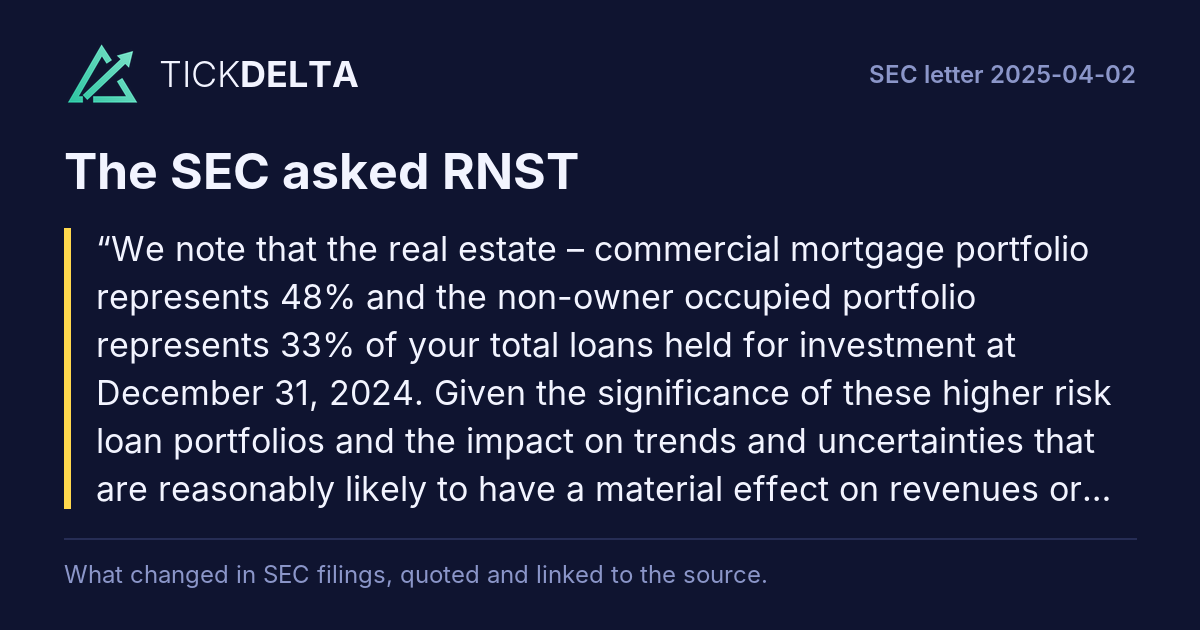
We note that the real estate – commercial mortgage portfolio represents 48% and the non-owner occupied portfolio represents 33% of your total loans held for investment at December 31, 2024. Given the significance of these higher risk loan portfolios and the impact on trends and uncertainties that are reasonably likely to have a material effect on revenues or continuing operations, please revise future filings toRest of the question
further disaggregate the composition of these and other higher risk loans at each period end by collateral type (e.g., by office, hotel, multifamily, etc.), other relevant concentrations (geographic, property type for office loans, etc.) and other characteristics (e.g., current weighted-average loan-to-value ratios, occupancy rates, etc.) to the extent material to an investor’s understanding of credit risk in your higher risk portfolios. We note the increase in your nonperforming loans at December 31, 2024 when compared to December 31, 2023, along with your disclosure that the increase is 2. primarily due to current macroeconomic conditions, and that credit risk is monitored and managed on an ongoing basis. Please revise future filings to clarify in additional detail the specific risk management policies, procedures or other actions undertaken by management in response to the current economic environment.
April 17, 2025 VIA EDGAR U.S. Securities and Exchange Commission Division of Corporation Finance 100 F Street, N.E. Washington, D.C. 20549 Attn: Michael Volley and Amit Pande Re: Renasant Corporation Form 10-K for Fiscal Year Ended December 31, 2024 File No. 001-13253 Dear Messrs. Volley and Pande: We are in receipt of the letter from the staff (the “Staff”) of the Securities and Exchange Commission (the “Commission”), dated April 2, 2025, addressed to James C. Mabry IV, Chief Financial Officer of Renasant Corporation (the “Company,” “we” or “our”), regarding the abovereferenced filing.Read in the replyRest of the answer
We appreciate the Staff’s review of our filings. For your convenience, we have included the Staff comment below in boldface followed by our response. Form 10-K for Fiscal Year Ended December 31, 2024 Risk Management – Credit Risk and Allowance for Credit Losses on Loans and Unfunded Commitments, page 49 1. We note that the real estate – commercial mortgage portfolio represents 48% and the non-owner occupied portfolio represents 33% of your total loans held for investment at December 31, 2024. Given the significance of these higher risk loan portfolios and the impact on trends and uncertainties that are reasonably likely to have a material effect on revenues or continuing operations, please revise future filings to further disaggregate the composition of these and other higher risk loans at each period end by collateral type (e.g., by office, hotel, multifamily, etc.), other relevant concentrations (geographic, property type for office loans, etc.) and other characteristics (e.g., current weighted-average loan-to-value ratios, occupancy rates, etc.) to the extent material to an investor’s understanding of credit risk in your higher risk portfolios. As a component of the Company’s credit risk management processes, our credit administration personnel analyze our entire loan portfolio from multiple perspectives, including but not limited to origination channel, industry of the borrower, collateral type and location, loanto-value ratios, commitment utilization and capital concentration limits. In addition, the Company’s ongoing credit monitoring procedures include, among other things, analyses of trends in asset quality metrics, such as past due and nonaccrual loans, classified and criticized loan ratios and risk rating migrations. These procedures are designed to identify concentrations and other risk elements in our loan portfolio and/or credit deterioration in the overall portfolio or individual segments. We acknowledge the Commission’s observations with respect to our higher risk loan portfolios, including our total real estate – commercial mortgage portfolio and the non-owner occupied segment within that portfolio. We will incorporate into future periodic filings disaggregated information on the composition of loans in these segments similar to the disaggregated information that we have presented in our quarterly earnings releases and related presentation materials. We also intend to provide in future filings other disaggregated information relating to these and other portfolio segments, such as concentrations by industry, collateral type, geography or other characteristics, that we determine is likely to be material to an investor’s understanding of how we view credit risk in our various loan portfolios. 2. We note the increase in your nonperforming loans at December 31, 2024 when compared to December 31, 2023, along with your disclosure that the increase is primarily due to current macroeconomic conditions, and that credit risk is monitored and managed on an ongoing basis. Please revise future filings to clarify in additional detail the specific risk management policies, procedures or other actions undertaken by management in response to the current economic environment. The Company evaluates the sensitivity of industry sectors, loan types and underlying collateral to changes in macroeconomic factors. Such factors include, but are not limited to, changes in interest rates, inflation on the cost of goods, labor costs, and supply chain disruptions. When we conclude that these macroeconomic factors indicate a heightened level of credit risk in our portfolio, we expand our risk management procedures to include greater oversight of past due loans, documented plans for problem asset resolution, enhanced monitoring of our overall portfolio, and targeted reviews of loans in categories more susceptible to the deterioration of the macroeconomic factors that we have identified as heightening our credit risk. These expanded risk management procedures help us manage credit risk and adjust production activity so that the Company’s aggregate loan mix is consistent with the risk tolerances approved by our Board of Directors. We intend to provide in future filings additional details regarding specific risk management practices and procedures or other actions taken by management in response to macroeconomic conditions to the extent material to an investor’s understanding of the Company’s monitoring and management of credit risk. If you have any additional questions or require further information, please do not hesitate to contact me at (662) 680-1281 or [email protected] Sincerely, James C. Mabry IV Chief Financial Officer cc: Mark W. Jeanfreau Mark A. Fullmer
Also in this review: closing letter, 2025-04-25