Form 10-K for the Fiscal Year Ended June 27, 2020
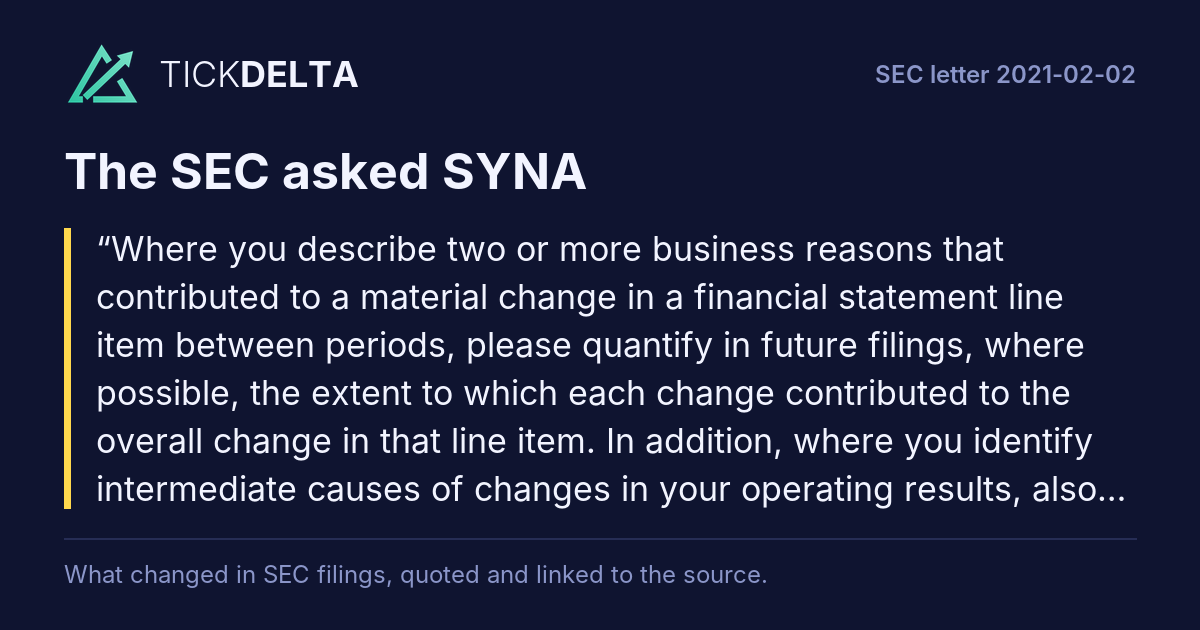
Where you describe two or more business reasons that contributed to a material change in a financial statement line item between periods, please quantify in future filings, where possible, the extent to which each change contributed to the overall change in that line item.Rest of the question
In addition, where you identify intermediate causes of changes in your operating results, also describe the reasons underlying the intermediate causes. For example, you disclose that net revenue was impacted by changes in units sold and average selling prices. Please quantify the extent to which the overall change in revenues is attributable to each identified factor and explain in reasonable detail the reasons driving fluctuations in each factor. Ensure that your revised disclosures assist in satisfying the requirements of Item 303(a) of Regulation S-K and the three principal objectives of MD&A, as noted in SEC Release No. 33-8350: • to provide a narrative explanation of a company’s financial statements that enables investors to see the company through the eyes of management; • to enhance the overall financial disclosure and provide the context within which financial information should be analyzed; and • to provide information about the quality of, and potential variability of, a company’s earnings and cash flow, so that investors can ascertain the likelihood that past performance is indicative of future performance Notes to Consolidated Financial Statements 4. Divestiture, page F-17
We acknowledge the Staff’s comments and confirm that in future filings we will quantify, where possible, the extent to which each business reason contributing to a material change in a financial statement line item contributed to the overall change in that line item. In addition, where we identify intermediate causes of changes in our operating results, we confirm that we will describe the reasons underlying the intermediate causes, and we confirm that our revised disclosures will assist in satisfying the requirements of Item 303(a) of Regulation S-K and the three principal objectives ofRead in the replyRest of the answer
MD&A, as noted in SEC Release No. 33-8350.
First report after the company's reply of Feb 23, 2021: 10-Q filed May 6, 2021 ↗, against the 10-Q filed Nov 5, 2020 ↗.
Tickdelta does not hold the text of both reports, so they are not compared here.
We note that you divested your TDDI product line in April 2020. Based on the pro forma financial statements provided in your Form 8-K filed April 16, 2020, it appears that TDDI was quantitatively material to your statements of operations, including revenues and operating, pre-tax, and net income.Rest of the question
Please tell us how you determined TDDI did not meet the criteria to qualify as discontinued operations under ASC 205-20-45-1B. 12. Segment, Customers, and Geographic Information, page F-33
We acknowledge the Staff’s comment and note that we determined that the divestment of our TDDI product line did not meet the criteria to qualify as discontinued operations under ASC 205-20-45-1B. In order to qualify as a discontinued operation, the disposal group must meet all of the following criteria:Read in the reply
The disposal group must qualify as a component of an entity;
The component of an entity (or group of components) meets the held for sale criteria, is disposed of by sale, or is disposed of other than by sale (e.g., abandonment); and
The component of an entity (or group of components)Rest of the answer
represents a strategic shift that has (or will have) a major effect on an entity’s operations and financial results.
We determined that the disposal did not represent a strategic shift and the disposal group did not qualify as a component of an entity as the disposal group represented only a portion of our TDDI mobile product line and did not rise to the level of a component. Our mobile business consists of several product groups that broadly share our touch and display technologies and engineering resources. We did not transfer our automotive, OLED or large TDDI products, or our discrete touch and discrete display driver product lines supporting LCD and OLED semiconductor products for the mobile market.
We determined that had the disposal group qualified as a component it would also have met the held for sale criteria.
Finally, as noted above, we determined that the sale did not represent a strategic shift that has (or will have) a major effect on our operations and financial results. We continue to invest in TDDI technologies for automotive, OLED, and large touch and display applications, including continuing to invest in touch and discrete display driver products supporting LCD and OLED semiconductor products for the mobile market. We also continue to invest in technologies for our mobile products and the divestiture of a portion of the TDDI mobile product line did not represent a strategic shift away from that market or in developing future products we expect to introduce into the mobile market that we serve.
12. Segment, Customers, and Geographic
First report after the company's reply of Feb 23, 2021: 10-Q filed May 6, 2021 ↗, against the 10-Q filed Nov 5, 2020 ↗.
Tickdelta does not hold the text of both reports, so they are not compared here.
Although you disclose you have a single reportable segment, we note that management refers to your product lines during earnings calls as "businesses" and that the management team on your website includes Senior Vice President and General Manager positions for the PC & Peripherals, Wireless Connectivity, Multimedia, and Smart Sensing and Display Divisions.Rest of the question
Please tell us in sufficient detail how you determined that you have only one reportable segment. In doing so, tell us each operating segment you have identified under ASC 280-10-50-1 and provide us with the following information: • Tell us the title and describe the role of the Chief Operating Decision Maker ("CODM") and each of the individuals that report to the CODM; • Identify and describe the role of each segment manager; • Tell us how often the CODM meets with his/her direct reports, the financial information the CODM reviews to prepare for those meetings, the financial information discussed in those meetings, and who else attends those meetings; • Describe the information regularly provided to both the CODM and the Board of Directors, and how frequently it is prepared; and • Explain to us the responsibilities of each Senior Vice President and General Manager identified above, including to whom they report and how they are compensated. We remind you that the company and its management are responsible for the accuracy and adequacy of their disclosures, notwithstanding any review, comments, action or absence of action by the staff.
We acknowledge the Staff’s comment and offer the following explanation of our segment reporting position:Read in the reply
Overview
FASB ASC 280-10-50-1 states that “an operating segment is a component of a public entity that has all of the following characteristics:
It engages in business activities from which it may earn revenues and incur expenses (including revenues and expenses relating to transactions with other components of the same public entity).
Its operating results are regularly reviewed by the public entity’s chief operating decision maker to make decisions about resources to be allocated toRest of the answer
the segment and assess its performance.
Its discrete financial information is available.”
The Company has analyzed its operating structure using the guidance provided in ASC 280-10-50 and, for the reasons described below and elaborated on in the remainder of this response, has determined that it has one operating segment and one reportable segment: the development, marketing, and sale of semiconductor products used in electronic devices and products.
The chief operating decision maker (“CODM”) relies on the Company’s consolidated financial statements for decision-making purposes regarding the allocation of resources and assessment of performance.
Twice annually, the CODM receives divisional financial information (by product line) during the annual operating planning process (generally our June quarter) and the long-range planning process (generally our December quarter). We do not believe that the CODM’s receipt of this information twice annually rises to the level of regularly reviewed.
The Company’s divisions engage exclusively in developing and supplying custom-designed semiconductor product solutions to be marketed, sold, and supported by the Company’s centralized sales organization. The Company’s corporate operations are responsible for engaging with our supply chain partners in order to produce all of the Company’s semiconductor product solutions. Classifying the Company’s divisions as additional operating segments would fail to reflect the resources and services expended by the Company separate from the divisions, would require imprecise allocations of such resources and services, and would assume a level of division leader independence and authority that is not present within the Company.
The Company’s Organizational Structure
The Company develops, markets and sells semiconductor products used in electronic devices and products. The Company generates revenue from three broad product categories: the mobile product applications market, the personal computing (“PC”) product applications market and the Internet of Things (“IoT”) product market. There are shared customer and vendor relationships, and technologies, including manufacturing, assembly and test processes among the three broad market categories. The Company maintains four divisions supporting its product categories:
The Smart Sensing and Display division is responsible for both integrated and discrete touch and display semiconductor product solutions supporting the mobile product applications market and the IoT product market.
The PC & Peripherals division is responsible for touchpad, fingerprint sensor, and interface semiconductor product solutions supporting the PC product applications market and the IoT product market;
The Wireless Connectivity division is responsible for integrated Wi-Fi and Bluetooth solutions and satellite-based GPS and GNSS semiconductor product solutions supporting the IoT product market; and
The Multimedia division is responsible for multimedia and audio semiconductor product solutions supporting the
IoT product market.
The Company does not believe that the divisions are separate operating segments.
The Company manages and makes key operating decisions for all of its businesses centrally at its San Jose headquarters. The Company maintains an organizational structure, separate from the divisions, that engages in sales, operations, strategy, silicon engineering, and other key operational functions such as finance, legal, human resources, and information technology, all of which report directly to our Chief Executive Officer. The Company’s corporate operations are responsible for engaging with our supply chain partners in order to produce all of the Company’s semiconductor product solutions across all divisions. The employees in the divisions are engaged in product development with respect to the particular focus of each such division while all other business functions are maintained outside the divisions at the Company level.
The Company has determined that its business structure, which centralizes all business functions in organizations outside the divisions, is designed to maximize efficiency and synergies as a result of the substantial similarities in the Company’s customer base, supply vendors, and technologies. Our centralized sales organization together with our centralized operations organization support all divisions driving customer orders and revenue opportunities and managing the intricacies and complexity of the supply chain to deliver our finished products to customers. Our strategic organization works closely with the CODM to evaluate and assess opportunities for investment or divestment on behalf of the divisions. Our human resources, legal, finance, accounting, and information technologies organizations support the CODM and all the divisions. The delineations between the Company’s divisions are based primarily on different categories of products in which our semiconductor products are designed into and used.
The CODM
The
Company considers Michael Hurlston, its President and Chief Executive Officer, to be its CODM. The CODM manages the Company’s business and assesses its overall performance as a business as a developer, marketer and seller of semiconductor products used in electronic devices and products. The Company’s major operational and financial decisions are made by the CODM, who makes decisions on the basis of the Company’s consolidated financial information, whereby the CODM is able to evaluate the Company’s operating results to assess performance and allocate resources across the Company.
The CODM has ultimate decision-making authority over the key operating decisions across all product categories, including sales organization, operations, strategy, silicon engineering, and other functional areas in the organization such as finance, legal, human resources, and information technology (subject, in certain cases, to the approval of the Company’s Board of Directors).
Individuals Reporting to the CODM
The list below describes the roles and responsibilities of the individuals who report to the CODM (the “Direct Reports”) as well as how they are compensated. None of the below individuals has the authority to make operating decisions similar to those made by the CODM. Accordingly, none of the below individuals are the CODM or part of a group constituting the CODM in accordance with ASC 280-10-50-05 through
280-10-50-9.
Senior Vice Presidents and General Managers
Saleel Awsare serves as the Company’s Senior Vice President and General Manager, PC & Peripherals
Division. In such position, Mr. Awsare is responsible for engineering and development of our PC and peripheral product lines, which includes driving and approving tactical decisions aligning to corporate strategy, resource allocations and management of those resources within the division.
Alex Chou serves as the Company’s Senior Vice President and General Manager, Wireless Connectivity Division.
In such position, Mr. Chou is responsible for engineering and development of our wireless connectivity product lines, which includes driving and approving tactical decisions aligning to corporate strategy, resource allocations and management of those resources within the division.
Venkat Kodavati serves as the Company’s Senior Vice President and General Manager, Multimedia Division. In such position, Mr. Kodavati is responsible for engineering and development of our multimedia product lines, which includes driving and approving tactical decisions aligning to corporate strategy, resource allocations and management of those resources within the division.
Janice Mori serves as the Company’s Senior Vice President and General Manager, Smart Sensing and Display
Division. In such position, Ms. Mori is responsible for engineering and development of our smart sensing and display product lines, which includes driving and approving tactical decisions aligning to corporate strategy, resource allocations and
Ms. Mori and Messrs. Awsare, Chou, Kodavati are compensated through base salary, short-term cash incentive compensation, and long-term equity incentive compensation. Their base salary and long-term incentive compensation are determined based on performance, experience level, roles and responsibilities, and are aligned with the compensation practices of our compensation peer group. Their short-term cash incentive compensation is determined based 50% on achievement of target financial metrics at the company level and 50% on achievement of target financial metrics at the level of their respective divisions. A portion of Mr. Chou’s long-term equity incentive compensation is tied to multi-year cumulative revenue objectives of his division.
Other Direct Reports
The other direct reports of the CODM are Michael Brooker, Senior Vice President and Chief Information Officer; Dean Butler, Senior Vice
President and Chief Financial Officer; Satish Ganesan, Chief Strategy Officer; Phil Kumin, Senior Vice President, Worldwide Sales; John McFarland, Senior Vice President, General Counsel and Secretary; Anne Nguyen, Executive Assistant to the CEO;
Sanjay Saha, Senior Director of Silicon Engineering; Divyesh Shah, Senior Vice President, Global Operations; and Nicole Singer, Senior Vice President, Worldwide Human Resources.
Meetings with Direct Reports
The CODM meets with the Direct Reports one-on-one at least monthly and meets with the division general managers and their respective divisional leadership teams on a monthly basis. Other parties that attend the larger divisional leadership team meetings generally include individuals reporting to the division general manager and may include representatives from other departments including sales, operations, corporate development, finance, human resources and legal. The primary purpose of these meetings is to share information among the larger group applicable to the divisions and the broader business. During these meetings, the attendees discuss customer and product opportunities, technology roadmap plans and opportunities, share critical path items potentially impacting product development or shipment schedules and other relevant business matters.
During the two quarters in which the Company discusses the annual operating planning process and the long-range planning process, the division general managers and their respective teams share financial data including divisional revenue and direct expenses with the CODM.
Information Provided to the CODM and the Board of Directors
The CODM and the Company’s Board of Directors receive and review all externally published financial information. The Company prepares
(i) internal financial reports on a consolidated basis, which are provided to and reviewed by the CODM on a quarterly basis and (ii) internal quarterly financial reports on a divisional basis, which are provided to the CODM twice annually during the annual operating plan process and the long-range planning process. The Company’s Board of Directors also receives and reviews a subset of this information as indicated below.
The consolidated information provided to the CODM in these internal reports includes:
financial information with revenue and direct expenses with actual results and forecasts on a non-GAAP basis;
revenue by mobile, PC and IoT product applications(1);
balance sheet information(1);
statements of cash flows(1);
statements of income on a GAAP basis(1);
GAAP to non-GAAP reconciliations(1);
selected account balances and disclosure analysis; and selected financial metrics and trends(1).
The divisional financial information provided to the CODM twice per year in these internal reports includes:
financial information with revenue and direct expenses with actual results, forecasts and annual operating plans on a non-GAAP basis;
operating expenses by major category versus the forecast and annual operating plan annual operating plan revenue and gross margin by division(1);
top customers revenue trends(1); and revenue by product line with actual results, forecasts and annual operating plans.
(1)
Provided to the Board of Directors
In accordance with ASC
280-10-50-1, an operating segment of a public entity is a component of the entity that not only has its discrete financial information available, but also has its operating results regularly reviewed by the entity’s CODM to make decisions about resources to be allocated to the segment and assess its performance. Based on the Company’s review of the aforementioned guidance, the Company does not believe the criteria are met with respect to operating results being regularly reviewed by the CODM as he receives the divisional financial information as described on a semi-annual basis, which is not considered to be on a regular basis, such that it would be sufficient for the CODM to obtain adequate information to assess performance or allocate resources.
First report after the company's reply of Feb 23, 2021: 10-Q filed May 6, 2021 ↗, against the 10-Q filed Nov 5, 2020 ↗.
Tickdelta does not hold the text of both reports, so they are not compared here.
Divestiture, page F-17 1. We have read your response to comment 2, noting that you determined the TDDI product line disposal did not qualify as a discontinued operation since it did not qualify as a component of an entity and did not represent a strategic shift that has or will have a major effect on your operations and financial results.Rest of the question
Please address the following comments: • Explain in further detail how you determined the disposed TDDI product line did not represent a component of an entity. Considering you previously provided pro forma financial statements reflecting the impact, it appears that the operations and cash flows could be clearly distinguished, operationally and for financial reporting purposes, from the rest of your business. We also note that you refer to the disposed entity as a "business" within the aforementioned Form 8-K, on page 40 of your Form 10-K, and on page 31 of your Form 10-Q for the quarterly period ended December 26, 2020. • Explain in further detail how you determined that the disposal did not represent a strategic shift that has or will have a major effect on your operations and financial results. Based on your pro forma financial statements, we note that the disposal represented approximately 22% your fiscal 2019 revenues and over half of your net income for the six month interim period ended December 28, 2019. We further note on page 31 of your most recent Form 10-Q that there was a 49% and 39.2% decline in your mobile product application net revenues for the three and six months ended December 26, 2020, respectively, that you primarily attribute to the sale of your TDDI business. 12. Segment, Customers, and Geographic Information, page F-33 2. You indicate in your response to comment 3 that the CODM has ultimate decision-making authority over the key operating decisions across all product categories, as well as other areas in the organization. Please describe the key operating decisions, who makes these decisions, and how performance is assessed and how resources are allocated. Additionally, tell us what financial information is used by the CODM in making these key operating decisions. As part of your response, please provide examples. 3. We note the reference to your annual operating and long-range planning processes. Please explain to us how budgets are prepared, who approves the budget at each step of the process, the level of detail discussed and individuals that participate at each step, and the level at which the CODM makes changes to the budget. Also, explain your process to assess performance against budget, including the level at which this assessment is made, the frequency, and the individuals involved in that process. In this regard, we note from your response that you prepare internal quarterly financial reports on a divisional basis. 4. We note from page 5 of your response that the CODM meets with his direct reports oneon-one at least monthly and meets with the division general managers and their respective divisional leadership teams on a monthly basis. Please tell us whether any financial information is prepared, reviewed or discussed in conjunction with these meetings, either formally or informally. If so, describe the financial information and how it is used.
In his monthly meetings with direct reports, the CODM is exposed to engineering project information and sales trends and/or sale opportunities, e.g., opportunities to win new business at existing or new customers. Information presented at these meetings focus on operational issues such as project schedules, engineering updates, new technology development, and competitive positioning in the marketplace. The division general managers do not present divisional financial statements or any measures of profit and loss in these regular monthly meetings or in any ad hoc informal meetings.Read in the reply
We note from your response that the roles and responsibilities of division general managers include approving tactical decisions aligning to corporate strategy, resource allocations and management of those resources within the division. Please explain to us the nature of the resource allocations that the division general managers are responsible for and contrast them with resource allocations performed by the CODM.
The division general managers are responsible for all direct resource allocations within their particular divisions, including research and development expenses and headcount management constrained by the allocation of resources approved by the CODM. However, because the Company’s sales, operations, and administrative functions are centralized, the division general managers do not have control over all expenditures associated with, and required to operate, their division.Read in the replyRest of the answer
The division general managers focus on resource allocations directly within their control such as hiring, retaining, or terminating the staff that are responsible for the project work within the division. The division general managers and all functional leaders are required to keep expenditures within the respective allocations set and approved by the CODM during the annual operating planning process.
We note from your response that 50% of the short-term compensation for division general managers is based on achievement of target financial metrics at the level of their respective divisions. Please tell us what these financial metrics are and each of their relative weightings in the compensation package.
The division general managers are compensated through base salary, short-term cash incentive compensation, and long-term equity incentive compensation. Their short-term cash incentive compensation represents approximately 10% of their total targeted compensation and half of that amount, or only approximately 5%, is tied to division financial targets.Read in the replyRest of the answer
The short-term cash incentive compensation is determined based on 50% weighting for achievement of target financial metrics at the consolidated Company level and on 50% weighting for achievement of target financial metrics at the level of their respective divisions. The target financial metrics at the divisional level were revenue, non-GAAP gross margin percentage, and non-GAAP operating profit, with each target metric weighted at 1/3 of the 50%. Consistent with fiscal 2020, the Company expects that in its current fiscal 2021, only approximately 5% of the division general managers’ total target compensation will be comprised of short-term cash incentives that are determined based on achievement of divisional financial targets.
Also in this review: request for more time, Feb 12, 2021, request for more time, Mar 26, 2021