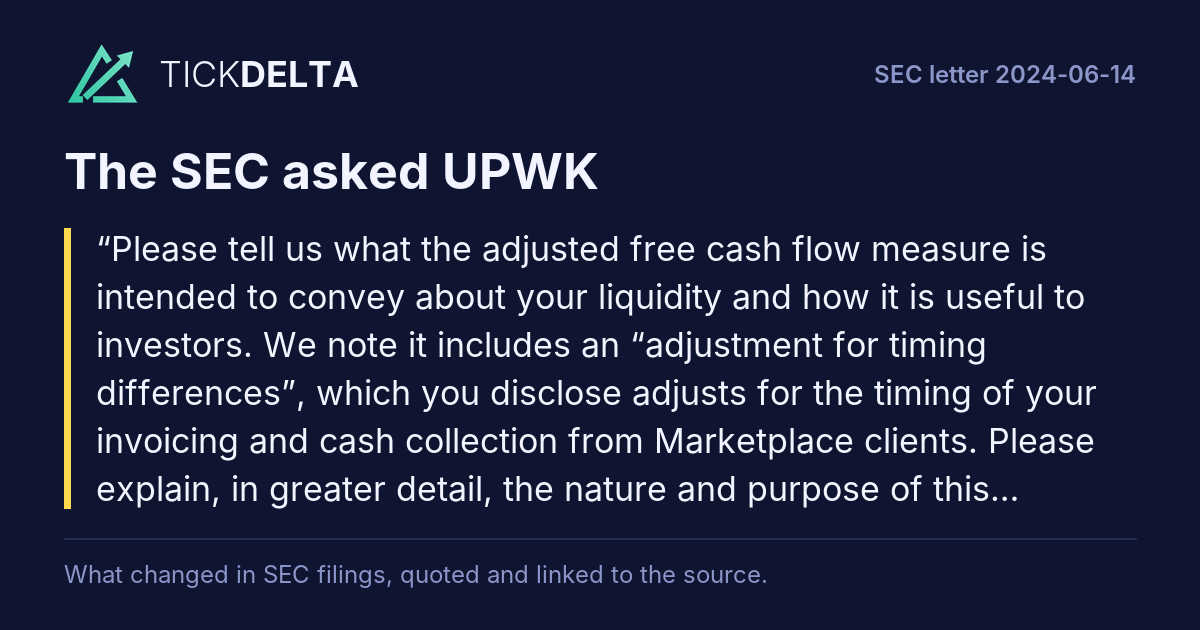
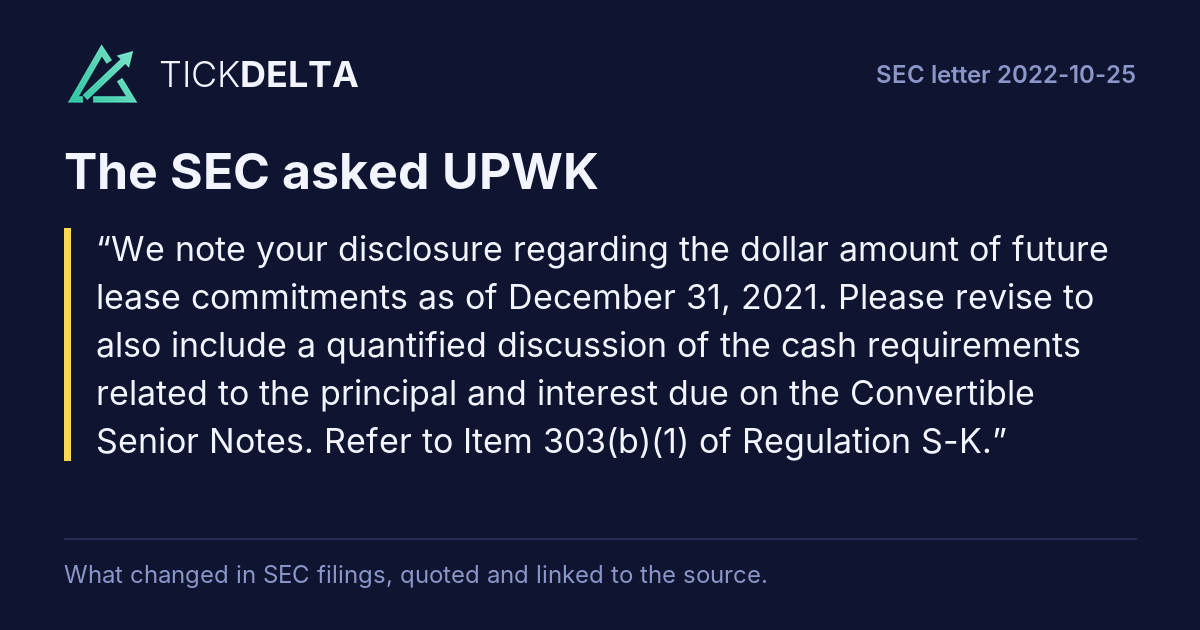
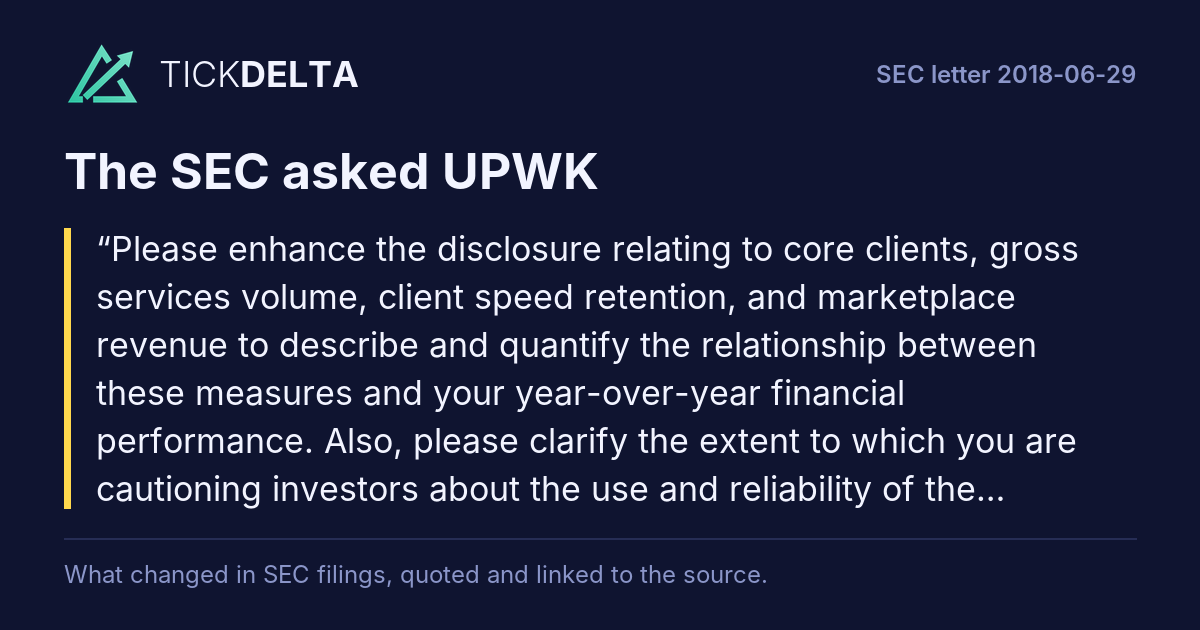
The Company is not an “investment company” under Section 3(a)(1)(C) of the Act because it qualifies under the exceptions provided in Rule 3a-1 and Rule 3a-8 under the Act. Moreover, the Company is not an “investment company” because it qualifies under the exception provided under Section 3(b)(1) of the Act.
Rest of the answer
The Company provides an analysis of each of Rule 3a-1 under the Act, Rule 3a-8 under the
Act and Section 3(b)(1) of the Act below.
Rule 3a-1
Rule 3a-1 provides a non-exclusive exception from the definition of “investment company” if consolidating an entity’s wholly-owned subsidiaries (within the meaning of the Act), (i) no more than 45% of the value of its assets, exclusive of government securities and cash items (“Total Adjusted Assets”), consists of, and (ii) no more than 45% of its net income after taxes (for the past four fiscal quarters combined) is derived from, securities other than government securities, securities issued by employees’ securities companies, securities issued by qualifying majority owned subsidiaries of such entity and securities issued by qualifying companies that are controlled primarily by such entity.
Total Adjusted Assets
As of December 31, 2021, the Company’s Total Adjusted Assets were approximately $907.5 million. $328.0 million, or approximately 36%, of such Total Adjusted Assets consisted of securities other than government securities. As of September 30, 2022, the Company’s Total Adjusted Assets were approximately $803.4 million. $247.9 million, or approximately 31%, of such Total Adjusted Assets consisted of securities other than government securities. The Company also notes that while it has not, to date, conducted a formal valuation of its intangible assets, it believes that its intangible assets, including its intellectual property and brand, have significant value and thus its investment securities (excluding government securities) are a meaningfully smaller percentage of its Total Adjusted Assets than as noted above.
Net Income after Taxes
With respect to net income after taxes, the Company currently has net losses for the past four fiscal quarters combined, and therefore calculates its net income test under DRX, Inc., SEC No-Action Letter (June 28, 1988) (“DRX”). Under DRX, net operating loss (i.e., operating income less those expenses associated only with that income) can be compared to total net loss. For the four fiscal quarters ended December 31, 2021 and September 30, 2022, the Company’s net loss from operations for the last four fiscal quarters combined was
$54.2 million and $94.0 million, respectively, which represented more than 96% and 98%, respectively, of the Company’s total net loss (after taxes) for that period.
The Staff has taken the position that, although an issuer with net losses for the previous four quarters combined does not satisfy the express provisions of Rule 3a-1 with respect to net income, an issuer satisfies the income test if it has a total net loss and a net investment loss and no more than
45% of its total net loss is derived from investment losses. The Staff has indicated that the Rule is intended to “focus on activities that generate revenue for the company. Whether the net result is positive or negative, the purpose is to review the company’s day-to-day activities by looking at its sources of income.1” Based on that rationale, the Company believes that an issuer with substantial operating revenue, even though having total net losses for the previous four quarters combined, but with de minimis positive net investment income (relative to revenue) for the same period of time, may deem itself to satisfy the income test by comparing the “absolute value” of the total net losses and the investment income. If the investment income accounts for less than 45% of the net losses after taxes of the issuer, then the investment income cannot be construed as a significant component of the issuer’s income and loss activities. Accordingly, such an issuer may be deemed to satisfy the income test of Rule 3a-1.
The Company determined that, on absolute terms, its income from investment securities (excluding government securities) for the four quarters ended December 31, 2021 and September 30, 2022 accounted for 1% and 4%, respectively, of its net losses after taxes.
Rule 3a-8
Rule 3a-8 provides a non-exclusive safe harbor from the definition of “investment company” for certain “research and development” companies (“R&D Companies”). Pursuant to Rule 3a-8, a company will not be deemed to be an investment company if the following requirements are satisfied:
Substantial R&D Expenses
The company’s research and development expenses (“R&D Expenses”), for the last four fiscal quarters combined, must be a substantial percentage of its total expense for the same period. The term “substantial” remains undefined. The Staff has stated that 20% will generally be considered a sufficiently “substantial percentage for a company’s R&D Expenses relative to its total expenses where a company otherwise meets the requirements of Rule 3a-8.”2 Total expenses include costs of goods sold.3 As of December 31, 2021, the Company’s R&D Expenses for the prior four fiscal quarters combined were $119.1 million,4 or 21%, of its total expenses (including cost of revenue) for the same period. As of September 30, 2022, the Company’s R&D Expenses for the prior four fiscal quarters combined were
$146.4 million, or 21%, of its total expenses (including cost of revenue) for the same period.
DRX, Inc., SEC Staff No-Action Letter (June 28, 1988).
Cooley Godward & Kronish, SEC Staff No-Action Letter (July 12,
2007).
See Cooley Godward & Kronish; Applied Materials, Inc., Investment Company Act Rel. No. 27064 (Sept. 13,
2005) (application for exemptive order).
The Company’s R&D Expenses are, in compliance with Rule
3a-8(b)(9). R&D costs are as defined in FASB ASC Topic 730, Research and Development, as currently in effect.
Net Income from Securities Investments
The company’s net income derived from investments in securities, for the last four fiscal quarters combined, must not exceed twice the amount of its R&D Expenses for the same period. The Company’s net income derived from securities investments for the year ended December 31, 2021 equaled $0.6 million and its R&D Expenses totaled $119.1 million. The
Company’s net income derived from securities investments for the four quarters ended September 30, 2022 equaled $4.8 million and its R&D Expenses totaled $146.4 million. The Company therefore meets this requirement, as its net income derived from securities investments was approximately 0.5% and 3% of R&D Expenses for the year ended December 31, 2021 and the four quarters ended September 30, 2022, respectively; far less than twice the amount of R&D
Expenses.
Insignificant Investment-Related Expenses
The company’s expenses for investment advisory and management activities, investment research and custody (“investment-related expenses”), for the last four fiscal quarters combined, must not exceed 5% of its total expenses for the same period. As of December 31, 2021, the Company’s investment-related expenses for the prior four fiscal quarters combined, including the investment advisory fees paid by the Company to its outside investment managers, were $0.1 million. Its total expenses were $557.0 million. Thus, investment-related expenses were less than 0.01% of its total expenses for the four fiscal quarters ended December 31, 2021. As of September 30, 2022, the Company’s investment-related expenses for the prior four fiscal quarters combined, including the investment advisory fees paid by the Company to its outside investment managers, were $0.2 million. Its total expenses were $687.7 million. Thus, investment-related expenses were less than 0.03% of its total expenses for the four fiscal quarters ended September 30, 2022.
Permissible Investments
The company’s investments in securities must be only capital preservation investments, which are, pursuant to Rule 3a-8, investments made to conserve capital and liquidity until the funds are used for the company’s primary business.
In adopting Rule 3a-8, the Commission intentionally declined to identify particular investments as capital preservation investments or specific investment characteristics that would cause an investment to be a capital preservation investment, but in general stated that these investments must (A) be “liquid so that they can be readily sold to support the R&D company’s research and development activities as necessary;” (B) present limited credit risk; and (C) not be speculative.5 Although the Commission and the Staff have not provided significant guidance on the instruments that meet these criteria, under an exemptive order to ICOS Corporation – on which Rule 3a-8 is partially modeled6 – the Commission has stated that “a company generally would meet [the requirement that a company invests in securities in a manner consistent with capital preservation] only if substantially all of its securities … present limited credit risk. Significant investments in equity or speculative debt would indicate that the company is acting as an investment company rather than preserving its capital for research and development.”7 Further, under the Rule, less than 10% of a company’s total assets may consist of “other investments,” which are investments in any securities that do not qualify as capital preservation investments.
The Company’s investments are primarily made in (1) corporate debt securities and commercial paper rated at least P-l or better by Moody’s, A-l or better by Standard and Poor’s, and F-1 or better by Fitch; (2) certificates of deposit and term deposits; (3) U.S. government and agency securities; (4) money market funds that have at least $5 billion in assets; and (5) asset backed securities rated at least AAA or better.
Consistent with the guidance above, this portfolio is highly liquid, presents little credit risk, and is not speculative. On liquidity, the average maturity of the portfolio was 5 months as of September 30, 2022. Under the Company’s investment policy, described below, the weighted average maturity for all portfolios combined will be no greater than 18 months.
Moreover, the weighted average credit rating of the aggregate investment program shall not be less than A1 (Moody’s) or A+ (S&P) or the equivalent. The Company has chosen the above investments precisely because they are sufficiently liquid to be sold to support the Company’s research and development activities. They also present limited credit risk based on the high credit ratings and stable values involved in each instrument. Thus, the Company believes that they qualify as capital preservation investments. The Company also represents that it has never experienced difficulty liquidating sufficient assets to provide the cash needed for operations, including its research and development activities.
The Company believes that it is in compliance with the permissible investment requirement. The Company believes that it invested only in securities that qualify as capital preservation investments. Accordingly, the Company believes that investments in “other investments” constituted 0% and in any event, less than 10% of its total investments in securities.
See SEC, Certain Research and Development Companies, Investment Company Act Release No. 26077, 68 Fed.
Reg. 37046, 37048 (June 20, 2003).
Reg. 37046, 37048 (June 20, 2003). (“Rule 3a-8 is intended to codify the terms of a Commission order under section 3(b)(2) for ICOS Corporation, a biotechnology company.”)
ICOS Corporation, SEC Release No. IC-19334 (Mar. 16, 1993) (exemptive order).
Holding Out/Special Situation Company
The company must not hold itself out as being engaged in the business of investing, reinvesting, or trading in securities, and it must not be a special situation investment company.
Holding Out. A company must not hold itself out as being engaged in the business of investing in securities. The Company has never represented that it is involved in any business other than the operation of an online work marketplace. The Company has consistently stated in its filings with the Commission, press releases, other public statements, website, and advertising and marketing materials that it is in the business of operating an online work marketplace. The Company does not make public representations regarding its investment securities except as required by its obligation to file periodic reports to comply with federal securities laws, and the Company has consistently emphasized operating results and has never emphasized either its investment income or the possibility of significant appreciation from its cash management investment strategies as a material factor in its business or future growth. In addition, investors and the investment media outlets do not evaluate the Company based on its underlying securities positions.
Instead, research reports and analysis of the Company focus on its financial results from its ongoing operations and the success of its online work marketplace.
Special Situation Investment Company. A company must not be a “special situation investment company.” The Commission has stated that “[s]pecial situation investment companies are companies which secure control of other companies primarily for the purpose of making a profit in the sale of the controlled company’s securities.”8 The Company does not and has not acquired or otherwise secured control of any other company to profit on the future sale of that company.
Conducting Business
The company must be primarily engaged, directly or indirectly, in a business other than that of investing, reinvesting, owning, holding, or trading in securities, as evidenced by: (i) the activities of its officers, directors and, employees; (ii) its public representations of policies; (iii) its historical development; and (iv) appropriate resolutions of its board of directors. The Company directs the Staff to the analysis set forth in response to comment 4 above.
Written Investment Policy
The company’s board of directors must adopt a written investment policy with respect to the company’s capital preservation investments. The Audit Committee adopted a Corporate Investment Policy on October 24, 2018 and most recently updated it on April 30, 2021. It states that the Company’s investment objectives are (1) preservation of principal; (2) liquidity; (3) diversification to avoid inappropriate concentrations of investments; and (4) maximization of returns within acceptable levels of risks. It also lists the investments in which the Company may invest, based on its investment objectives. These investments include all of the instruments listed under “Permissible Investments,” above. All investments must have effective maturities less than 3 years and the dollar-weighted average maturity must be no greater than 18 months.
SEC, Certain Prima Facie Investment Companies, 44 Fed. Reg. 66608, 66610 at n. 20 (Nov. 20, 1979).
Issuance of Face Amount Certificates
Finally, a company that relies on Rule 3a-8 or Rule 3a-1 cannot be engaged, or propose to engage, in the business of issuing face-amount certificates of the installment type under Section 3(a)(1)(B) of the Act. A “face-amount certificate of the installment type” means any certificate, investment contract or other security that represents an obligation on the part of its issuer to pay a stated or determinable sum or sums at a fixed or determinable date or dates more than twenty-four months after the date of issuance, in consideration of the payment of periodic installments of a stated or determinable amount.
The Company is not engaged, nor does it propose to engage, in the business of issuing face-amount certificates of the installment type. The Company has never been engaged in such a business and does not have any such certificates outstanding.
Section 3(b)(1)
Under Section 3(b)(1) of the Act, a company is not an investment company if it is primarily engaged in a business other than that of investing, reinvesting, owning, holding, or trading in securities. The Company is primarily engaged in a non-investment company business. We reach this conclusion based on the factors set forth by the
Commission in the Tonopah test, which the Commission and Staff use to determine whether a company is engaged in a non-investment company business. The Company directs the Staff to the analysis of the Tonopah test set forth under the heading in its response to comment 4.
* * * * * * *
Should the Staff have additional questions or comments regarding the foregoing, please do not hesitate to contact me at (650) 335-7613 or Aman Singh at (212) 430-2767.