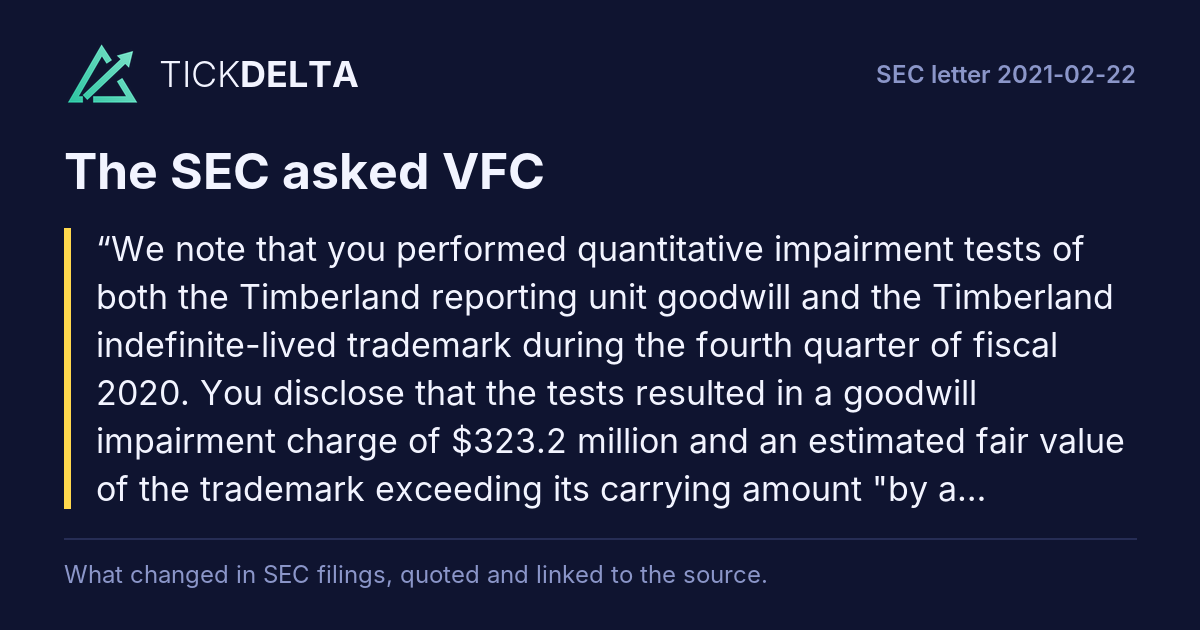
analysis of the Timberland indefinite-lived trademark intangible asset as of March 28, 2020 resulted in an estimated fair value that exceeded its carrying amount by approximately 35%. For reference, the revenue projections used in the different valuation methods were substantially the same.
Rest of the answer
The key differences between the quantitative analysis of the Timberland indefinite-lived trademark intangible asset as compared to the quantitative impairment analysis of the Timberland reporting unit that drove the different outcomes included:
•
The carrying value of the Timberland indefinite-lived trademark intangible asset as of March 28, 2020 of
$1.0 billion was significantly lower than the carrying value of the Timberland reporting unit, including goodwill prior to impairment, of $2.0 billion and thus a significantly lower estimated fair value was required to recover the carrying value of the trademark;
Financial projections used in the quantitative impairment analysis of the Timberland indefinite-lived trademark intangible asset are limited to revenues given the nature of the relief-from-royalty method, and thus are not burdened by operating expenses included in the discounted cash flows for the quantitative impairment analysis of the Timberland reporting unit. As such, there was no impact to the estimated fair value of the Timberland indefinite-lived trademark intangible asset from the near-term decrease in profitability, primarily resulting from COVID-19, when compared to the income approach used for the quantitative impairment analysis of the Timberland reporting unit;
Tax rates used in the quantitative impairment analysis of the Timberland indefinite-lived trademark intangible asset over the period covered by the financial projections range from 11.3% to 14.9% based on the statutory rate for the country where the intellectual property is domiciled. This compares to a tax rate of 22.5% used in the income approach for the quantitative impairment analysis of the Timberland reporting unit, which is based on statutory rates for the countries in which the brand operates. The difference in tax rates resulted in a higher value of after-tax royalty income under the relief-from-royalty method of approximately $125 million; and
The estimated fair value of the Timberland indefinite-lived trademark intangible asset reflects the tax amortization benefit related to amortizing the intangible asset for tax purposes, which provides incremental value (approximately $116 million) not considered in the income approach used for the quantitative impairment analysis of the Timberland reporting unit.
In response to the Staff’s comment, we respectfully submit that we believe our disclosures included in the
“Timberland Reporting Unit and Indefinite-Lived Intangible Asset Impairment Analysis” section on page 43 of our Form 10-K for the fiscal year ended March 28, 2020 appropriately provide key factors and assumptions used in the quantitative impairment analysis of the Timberland indefinite-lived trademark intangible asset similar to that provided for the Timberland reporting unit. As noted in the considerations above, the primary assumption difference between the Timberland quantitative impairment analyses relates to the different tax rates used, which we note in the key assumptions disclosed in our Form 10-K. The other differences relate to the nature of the valuation methods and the carrying values of the balances being reviewed.