Alignment Healthcare, Inc. ALHC
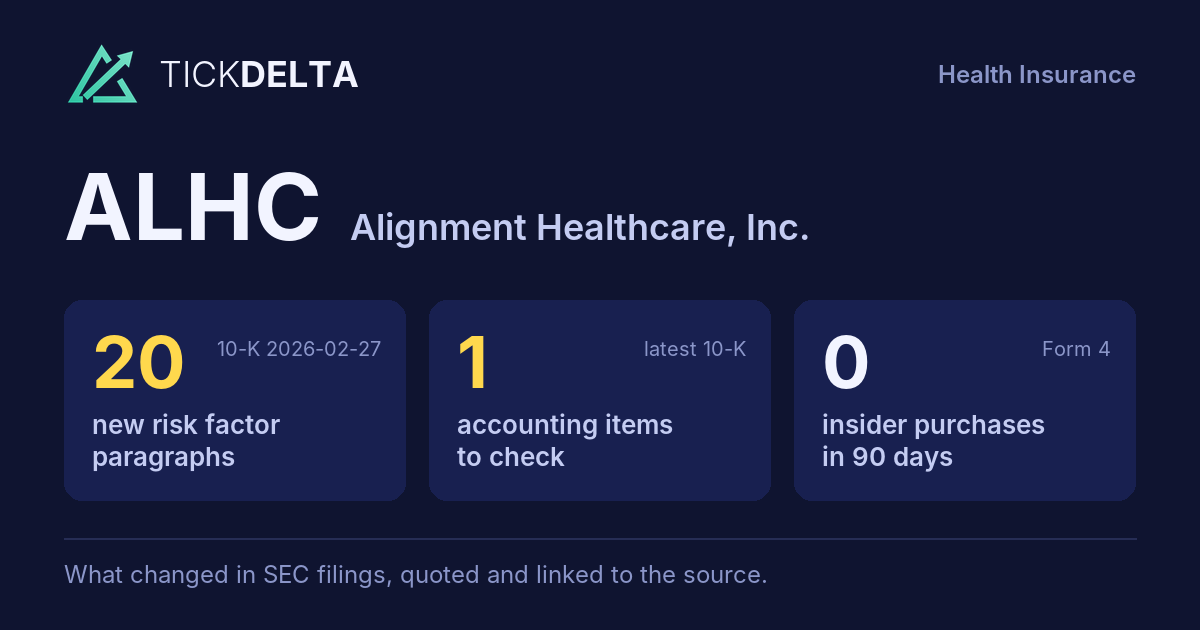
1 fact worth reading about, 8 checks with nothing to note
10-K, 8-K and filing indexFacts from the latest 10-K that are worth reading about. They are not a verdict on the company.
What each check found
Each one cites its filing
-
Receivables growing faster than revenueReceivables +64.5% ($153.9M to $253.2M) vs revenue +46.1% ($2.7B to $3.9B), +18.5 pts apart
-
Auditor changeSame auditor in both 10-Ks: Deloitte & Touche LLPSource: 10-K 0001628280-26-012545: auditor Deloitte & Touche LLP; 10-K 0001628280-25-008730: auditor Deloitte & Touche LLP; no 8-K item 4.01 in the last 2 years
-
Going concern languageNo statement of substantial doubt about going concern
-
Restatement (8-K item 4.02)No 8-K item 4.02 in the last 2 yearsSource: Filing index, 8-Ks since Nov 15, 2024
-
Late filing notice (NT 10-K or NT 10-Q)No NT 10-K or NT 10-Q in the last 2 yearsSource: Filing index since Nov 15, 2024
-
Critical audit matters changedThe same matters as last year: Medical expenses payable - Incurred but not paid claims
-
Material weakness in internal controlNo sentence in the 10-K concludes that controls were not effective because of a material weakness
-
Material impairment (8-K item 2.06)No 8-K item 2.06 in the last 2 yearsSource: Filing index, 8-Ks since Nov 15, 2024
-
Bankruptcy (8-K item 1.03)No 8-K item 1.03 in the last 2 yearsSource: Filing index, 8-Ks since Nov 15, 2024
-
Cash from operations lower than net income not applicableNot used for financial companies (cash from operations $139.9M, net income −$724,000)
-
Inventory growing faster than revenue not applicableThe 10-K does not report inventory for both years.
Did the profit turn into cash?
Net income against operating cash flow, FY2019 to FY2025 · 10-K XBRL
How each check works
what it measures, the threshold, what it does not mean
| Check | What it measures | When it is marked | What it does not mean |
|---|---|---|---|
| Receivables growing faster than revenue | Whether customers owe more, relative to sales, than a year ago. | Receivables grew more than 10 percentage points faster than revenue, and grew. | Not proof that revenue is overstated. A large deal at year end, longer payment terms or an acquisition can do the same. |
| Cash from operations lower than net income | Whether reported profit is backed by cash from the business. | Cash from operations is below net income. Not computed for banks and other financial companies. | Common in fast-growing or seasonal companies. It is a question to ask, not a failure. |
| Inventory growing faster than revenue | Whether stock is piling up relative to sales. | Inventory grew more than 10 percentage points faster than revenue, and grew. | May be a planned build ahead of a product launch or a supply-chain change. |
| Auditor change | Whether the company changed its auditor. | An 8-K item 4.01 in the last 2 years, or a different auditor name in the two latest 10-Ks. | Often routine: rotation, a tender, or an audit firm merger. |
| Going concern language | Whether the 10-K states substantial doubt about continuing as a going concern. | A sentence to that effect is found in the 10-K text. Quoted as filed. | The wording is the company's, not our estimate. It can also appear in a sentence saying the doubt was removed. |
| Restatement (8-K item 4.02) | Whether the company said earlier financial statements should no longer be relied on. | An 8-K item 4.02 in the last 2 years. | Some restatements are small and do not change the picture. |
| Late filing notice | Whether the company asked for more time to file a 10-K or 10-Q. | An NT 10-K or NT 10-Q in the last 2 years. | Delays can be technical and one-off. |
| Critical audit matters changed | Which topics the auditor singled out as most difficult, and whether they changed. | A matter is new in the latest 10-K compared with the one before. | A new matter shows where the auditor spent its effort, not that something is wrong. |
| Material weakness in internal control | Whether the 10-K concludes that internal control over financial reporting was not effective because of a material weakness. | A sentence in the 10-K text concludes that controls were not effective because of a material weakness, quoted as filed. Sentences that say there is none, that one could occur, or that an earlier one was fixed are not marked. | It is the company's or the auditor's own wording, not our estimate. Many are about one account or process and are fixed within a year. It does not say the numbers are wrong. |
| Material impairment (8-K item 2.06) | Whether the company told the SEC it expects a material charge for impaired assets, such as goodwill. | An 8-K item 2.06 in the last 2 years. | A non-cash write-down. It says an earlier value was too high, not that the business is failing or that cash ran out. |
| Bankruptcy (8-K item 1.03) | Whether the company filed for bankruptcy or receivership. | An 8-K item 1.03 in the last 2 years. | The filing is the company's own and is a fact. It does not say what shareholders will get or whether the business continues. |
The 10-point threshold is our choice, not an academic result. Every check cites the filing and the line items it used.
The auditor
Auditor's report in the 10-K filed Feb 27, 2026
What the auditor found hardest this year
- Medical expenses payable - Incurred but not paid claimsAlso last yearRefer to Notes 2 and 7 to the financial statementsMedical expenses payable includes estimates of obligations for medical care services that have been rendered on behalf of Alignment's members and the members of contracted third party payors, but for which claims have either not yet been received or processed. These estimates are referred to as incurred but not yet...
Years with the same auditor, closest peers
GS 104 · PricewaterhouseCoopers LLP ALLY 90 · Deloitte & Touche LLP BAC 68 · PricewaterhouseCoopers, LLP AFG 65 · Ernst & Young LLP AFL 63 · Kpmg LLP MCY 63 · Kpmg LLP NWBI 63 · Kpmg LLP SIGI 62 · Kpmg LLP JPM 61 · PricewaterhouseCoopers LLP LNC 60 · Ernst & Young LLP PFG 59 · Ernst & Young LLP MET 58 · Deloitte & Touche LLP C 57 · Kpmg LLP CFR 57 · Ernst & Young LLP L 57 · Deloitte & Touche LLP SPGI 57 · Ernst & Young LLP FITB 56 · Deloitte & Touche LLP BOH 55 · Ernst & Young LLP BPOP 55 · PricewaterhouseCoopers LLP CBSH 55 · Kpmg, LLP RF 55 · Ernst & Young LLP SFNC 54 · Forvis Mazars, LLP STT 54 · Ernst & Young LLP WRB 54 · Kpmg LLP AJG 53 · Ernst & Young LLP CBC 53 · Kpmg LLP BEN 52 · PricewaterhouseCoopers LLP SCHW 50 · Deloitte & Touche LLP AIG 46 · PricewaterhouseCoopers LLP BUSE 46 · Rsm Us LLP CINF 46 · Deloitte & Touche LLP MKL 46 · Kpmg LLP STC 46 · Kpmg LLP FRME 44 · Forvis Mazars, LLP CNO 43 · PricewaterhouseCoopers LLP HASI 43 · Ernst & Young LLP WAFD 43 · Deloitte & Touche LLP CBU 42 · PricewaterhouseCoopers LLP MTB 42 · PricewaterhouseCoopers LLP BRK-B 41 · Deloitte & Touche LLP CB 41 · PricewaterhouseCoopers LLP FISV 41 · Deloitte & Touche LLP MTG 41 · PricewaterhouseCoopers LLP AON 40 · Ernst & Young LLP NDAQ 40 · Ernst & Young LLP UBSI 40 · Ernst & Young LLP NBTB 39 · Kpmg LLP HMN 37 · Kpmg LLP MA 37 · PricewaterhouseCoopers LLP MRSH 37 · Deloitte & Touche LLP BOKF 36 · Ernst & Young LLP IBKR 36 · Deloitte & Touche LLP CATY 35 · Kpmg LLP THG 35 · PricewaterhouseCoopers LLP ALL 34 · Deloitte & Touche LLP AMG 33 · PricewaterhouseCoopers LLP EQH 33 · PricewaterhouseCoopers LLP FLG 33 · Kpmg LLP FNB 33 · Ernst and Young LLP PB 33 · Deloitte and Touche LLP COF 32 · Ernst & Young LLP KEY 32 · Ernst & Young LLP TRV 32 · Kpmg LLP WAL 32 · Rsm Us LLP WSFS 32 · Kpmg LLP ACGL 31 · PricewaterhouseCoopers LLP APAM 31 · PricewaterhouseCoopers LLP FHI 30 · Ernst & Young LLP GNW 30 · Kpmg LLP PRU 30 · PricewaterhouseCoopers LLP WSBC 30 · Ernst & Young LLP MS 29 · Deloitte & Touche LLP PFS 29 · Kpmg LLP BFH 28 · Deloitte & Touche LLP NNI 28 · Kpmg LLP GL 27 · Deloitte & Touche LLP JXN 27 · Kpmg LLP RKT 27 · Ernst & Young LLP UNM 27 · Ernst & Young LLP WTFC 27 · Ernst & Young LLP WTM 27 · PricewaterhouseCoopers LLP AIZ 26 · PricewaterhouseCoopers LLP CFG 26 · Deloitte & Touche LLP LAZ 26 · Deloitte & Touche LLP MKTX 26 · PricewaterhouseCoopers LLP MOH 26 · Ernst & Young LLP PYPL 26 · PricewaterhouseCoopers LLP RGA 26 · Deloitte & Touche LLP ZION 26 · Ernst & Young LLP AXS 25 · Deloitte Ltd. LPLA 25 · Deloitte & Touche LLP TROW 25 · Kpmg LLP VOYA 25 · Ernst & Young LLP BLK 24 · Deloitte & Touche LLP BRO 24 · Deloitte & Touche LLP CG 24 · Ernst & Young LLP CME 24 · Ernst & Young LLP CPAY 24 · Ernst & Young LLP EBC 24 · Ernst & Young LLP FFIN 24 · Ernst & Young LLP FHN 24 · Kpmg LLP FULT 24 · Kpmg LLP GPN 24 · Deloitte & Touche LLP HIG 24 · Deloitte & Touche LLP ICE 24 · Ernst & Young LLP IDCC 24 · PricewaterhouseCoopers LLP KMPR 24 · Deloitte & Touche LLP NTRS 24 · Kpmg LLP OMF 24 · PricewaterhouseCoopers LLP RJF 24 · Kpmg LLP TFC 24 · PricewaterhouseCoopers LLP AGO 23 · PricewaterhouseCoopers LLP CNS 23 · Deloitte & Touche LLP DLB 23 · Kpmg LLP EEFT 23 · Kpmg LLP ERIE 23 · Ernst & Young LLP EVR 23 · Deloitte & Touche LLP PIPR 23 · Ernst & Young LLP ARCC 22 · Kpmg LLP BANR 22 · Baker Tilly US, LLP FIS 22 · Kpmg LLP AXP 21 · PricewaterhouseCoopers LLP CACC 21 · Grant Thornton LLP GBCI 21 · Forvis Mazars, LLP HOMB 21 · Forvis Mazars, LLP IAU 21 · PricewaterhouseCoopers LLP OFG 21 · Kpmg LLP RNST 21 · BDO USA, P.C (formerly Horne LLP) AB 20 · PricewaterhouseCoopers LLP BX 20 · Deloitte & Touche LLP CRVL 20 · Haskell & White LLP HLI 20 · Kpmg LLP KKR 20 · Deloitte & Touche LLP PRK 20 · Crowe LLP SLV 20 · PricewaterhouseCoopers LLP APO 19 · Deloitte & Touche LLP CVBF 19 · Kpmg LLP MAIN 19 · Grant Thornton LLP PNC 19 · PricewaterhouseCoopers LLP PRI 19 · Kpmg LLP RDN 19 · PricewaterhouseCoopers LLP V 19 · Kpmg LLP WD 19 · Kpmg LLP BGC 18 · Ernst & Young LLP HLNE 18 · Ernst & Young LLP MC 18 · Deloitte & Touche LLP MCO 18 · Kpmg LLP PFSI 18 · Deloitte & Touche LLP VLY 18 · Kpmg LLP ESNT 17 · PricewaterhouseCoopers LLP EWBC 17 · Kpmg LLP FAF 17 · PricewaterhouseCoopers LLP HWC 17 · PricewaterhouseCoopers LLP INDB 17 · Ernst & Young LLP KNSL 17 · Kpmg LLP STEP 17 · Ernst & Young LLP AGM 16 · PricewaterhouseCoopers LLP AMP 16 · PricewaterhouseCoopers LLP EFSC 16 · Deloitte & Touche LLP HTGC 16 · PricewaterhouseCoopers, LLP ORI 16 · Kpmg LLP RGLD 16 · Ernst & Young LLP TSLX 16 · Kpmg LLP ARES 15 · Ernst & Young LLP GLD 15 · Kpmg LLP MORN 15 · Kpmg LLP NMIH 15 · Bdo Usa, P.C. RYAN 15 · Deloitte & Touche LLP SNEX 15 · Kpmg LLP FHB 14 · Deloitte & Touche LLP AX 13 · Bdo Usa, P.C. BANF 13 · Forvis Mazars, LLP FDS 13 · Ernst & Young LLP HCI 13 · Forvis Mazars, LLP IVZ 13 · PricewaterhouseCoopers LLP SLM 13 · Kpmg LLP SYF 13 · Kpmg LLP UCB 13 · PricewaterhouseCoopers LLP MSCI 12 · PricewaterhouseCoopers LLP SBCF 12 · Crowe LLP SEIC 12 · Kpmg LLP SFBS 12 · Forvis Mazars, LLP UMBF 12 · Kpmg LLP AUB 11 · Ernst & Young LLP HBAN 11 · PricewaterhouseCoopers LLP JKHY 11 · PricewaterhouseCoopers LLP LMND 11 · Ernst & Young LLP PJT 11 · Deloitte & Touche LLP PPLT 11 · Kpmg LLP TPG 11 · Deloitte & Touche LLP TRMK 11 · Crowe LLP UPST 11 · Deloitte & Touche LLP BHF 10 · Deloitte & Touche LLP GBDC 10 · Ernst & Young LLP OBDC 10 · Kpmg LLP OWL 10 · Kpmg LLP PLMR 10 · Ernst & Young LLP PNFP 10 · Crowe LLP FNF 9 · Ernst & Young LLP GLDM 9 · Kpmg LLP GSHD 9 · Deloitte & Touche LLP HOOD 9 · Ernst & Young LLP JEF 9 · Deloitte & Touche LLP ROOT 9 · Deloitte & Touche LLP SOFI 9 · Deloitte & Touche LLP WTW 9 · Deloitte & Touche LLP BXSL 8 · Deloitte & Touche LLP COLB 8 · Deloitte & Touche LLP FBP 8 · Crowe LLP TW 8 · Deloitte & Touche LLP VIRT 8 · PricewaterhouseCoopers LLP ALHC 7 · Deloitte & Touche LLP BWIN 7 · PricewaterhouseCoopers LLP CASH 7 · Crowe LLP CHCO 7 · Crowe LLP CHYM 7 · Ernst & Young LLP CUBI 7 · Deloitte & Touche LLP FCF 7 · Ernst & Young LLP HIVE 7 · Davidson & Company LLP MSDL 7 · Deloitte & Touche LLP XYZ 7 · Ernst & Young LLP AFRM 6 · Deloitte & Touche LLP CBOE 6 · Kpmg LLP COIN 6 · Deloitte & Touche, LLP CRBG 6 · PricewaterhouseCoopers LLP OSCR 6 · PricewaterhouseCoopers LLP RLI 6 · Deloitte & Touche LLP ABCB 5 · Kpmg LLP BKU 5 · Deloitte and Touche LLP ENVA 5 · Deloitte & Touche LLP FCNCA 5 · Kpmg LLP IAUM 5 · PricewaterhouseCoopers LLP NIC 5 · Forvis Mazars, LLP OTF 5 · Kpmg LLP SKWD 5 · Ernst & Young LLP SPNT 5 · PricewaterhouseCoopers LLP BAM 4 · Deloitte LLP DAVE 4 · Deloitte & Touche LLP FRHC 4 · Deloitte LLP RNR 4 · PricewaterhouseCoopers Ltd. ARKB 3 · Cohen & Company, Ltd. BITB 3 · Kpmg LLP FBTC 3 · PricewaterhouseCoopers LLP IBIT 3 · PricewaterhouseCoopers LLP ONB 3 · Deloitte & Touche LLP OUNZ 3 · Cohen & Company, Ltd SSB 3 · Ernst & Young LLP BANC 2 · Ernst & Young LLP BTC 2 · Kpmg LLP BUR 2 · Kpmg LLP CIVB 2 · Plante & Moran, PLLC EG 2 · Kpmg LLP ETHA 2 · PricewaterhouseCoopers LLP ETHE 2 · Kpmg LLP FIBK 2 · Ernst & Young LLP GBTC 2 · Kpmg LLP SSRM 2 · PricewaterhouseCoopers LLP TBBK 2 · Crowe LLP CRD-A 1 · Kpmg LLP FBNC 1 · Crowe LLP IREN 1 · Kpmg LLP SF 1 · Kpmg LLP SYBT 1 · Bdo Usa, P.C. VCTR 1 · Deloitte & Touche LLPThe first year is from the report's own sentence "We have served as the Company's auditor since ...". Critical audit matters are the parts of the audit the auditor judged hardest; a new one is worth reading. A long tenure is common and not a finding by itself. Open the 10-K
Sources
The latest 10-K and its XBRL, the auditor's report, and 8-K items 4.01, 4.02, 2.06 and 1.03 in the filing index. Each check names its source.
Also
Revised numbers: past numbers a later 10-K reports differently.
Work with it
Excel workbook · CSV. Google Sheet that stays up to date: paste =IMPORTDATA("https://tickdelta.com/company/ALHC/export.csv") into a cell.