Added10-Q Nov 3, 2026 vs 10-K Feb 26, 2026
we may not successfully commercialize any product candidate for which we obtain marketing approval or continue to market any product that has already been commercialized.
Each branch is a paragraph in Risk Factors with nothing like it in the 10-K filed Feb 24, 2025. A box jumps to the paragraph as filed, below.
48 paragraphs in Risk Factors of the 10-K filed Feb 26, 2026 with nothing like them in the 10-K filed Feb 24, 2025. Quoted exactly. Paragraphs that were only edited are under 10-K change.
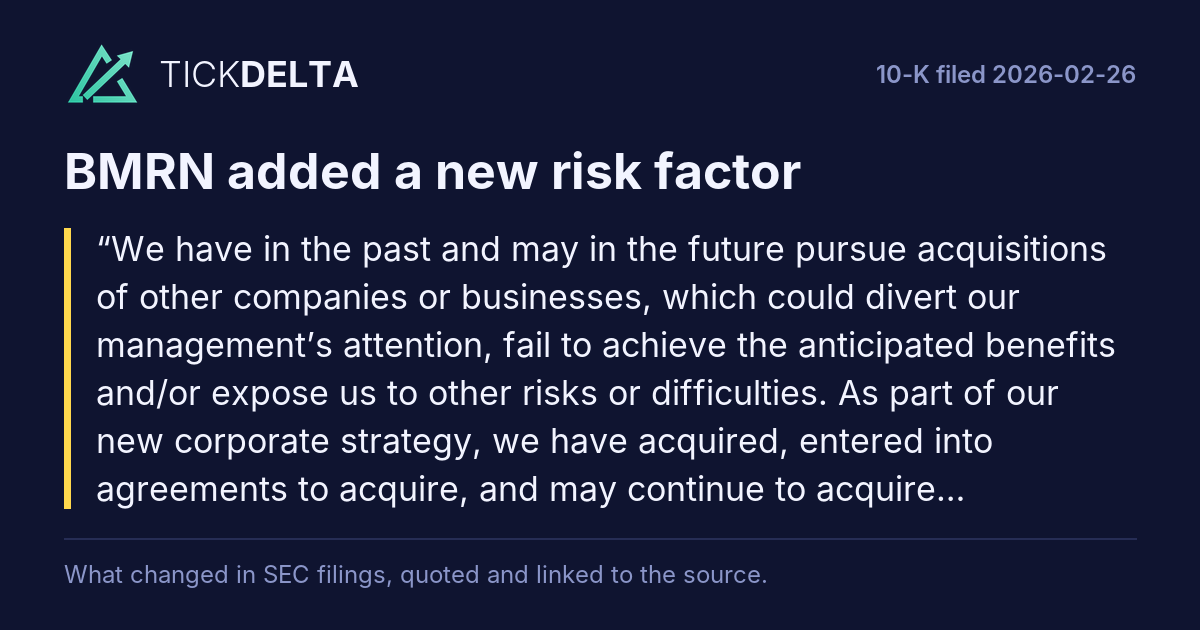
We have in the past and may in the future pursue acquisitions of other companies or businesses, which could divert our management’s attention, fail to achieve the anticipated benefits and/or expose us to other risks or difficulties.
As part of our new corporate strategy, we have acquired, entered into agreements to acquire, and may continue to acquire, companies or businesses that we believe could complement, expand or enhance our product offerings. For example, in December 2025, we announced our proposed acquisition of Amicus to expand and diversify our rare disease product portfolio. In addition, in July 2025, we completed the acquisition of Inozyme to strengthen our Enzyme Therapies portfolio with BMN 401, which is currently being assessed for the treatment of ectonucleotide pyrophosphatase/phosphodiesterase 1 (ENPP1) deficiency. Our acquisition strategy may divert the attention of management and cause us to incur various expenses in identifying, investigating and pursuing suitable acquisitions, whether or not such acquisitions are consummated.
In addition, once an acquisition is closed, integrating our business practices and operations with the acquired business’ so that we can fully realize the anticipated benefits of the acquisition could require us to devote significant management attention and resources. The success of current and future acquisitions will depend, in part, on our ability to realize the anticipated benefits from successfully combining our and the acquired businesses’ operations. We may face risks or experience difficulties successfully integrating acquired businesses, such as Inozyme or Amicus, with our operations. Such difficulties could result in the failure to achieve revenue that we anticipate, the loss of key employees that may be difficult to replace in the very competitive pharmaceutical field, the failure to harmonize both companies’ corporate cultures, the disruption of each company’s ongoing businesses or inconsistencies in standards, controls, procedures and policies that adversely affect our ability to maintain relationships with suppliers, collaboration partners, clinical trial investigators or managers of our clinical trials. See “—Risks Related to the Amicus Acquisition” in this section for additional risks related to the Amicus Acquisition.
Acquisitions could also result in dilutive issuances of equity securities, the incurrence of debt, contingent liabilities, amortization expenses, impairment of goodwill and/or purchased long-lived assets, and restructuring charges, any of which could adversely affect our operating results and financial condition. For example, we have incurred, and plan to incur, significant indebtedness in connection with the Amicus Acquisition. In addition, acquired product candidates, such as BMN 401, may not result in regulatory approval, may not perform as expected, may not be successful, may require significantly greater resources and investments than originally anticipated or may not produce the revenues, earnings or business synergies that we anticipated. As a result, the anticipated benefits of an acquisition may not be realized fully within the expected timeframe or at all or may take longer to realize or cost more than expected, which could materially and adversely affect our business, financial condition, results of operations and growth prospects.
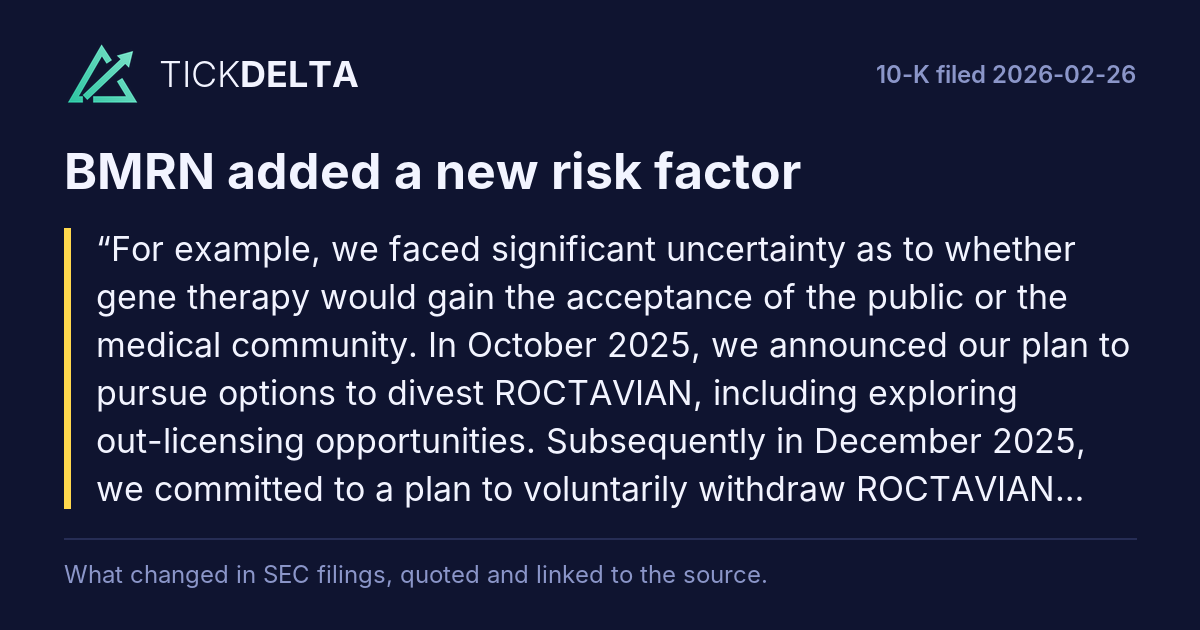
For example, we faced significant uncertainty as to whether gene therapy would gain the acceptance of the public or the medical community. In October 2025, we announced our plan to pursue options to divest ROCTAVIAN, including exploring out-licensing opportunities. Subsequently in December 2025, we committed to a plan to voluntarily withdraw ROCTAVIAN from the market due to lower than previously anticipated commercial opportunities. In connection with this strategic decision, we recorded approximately $240.0 million of restructuring charges in 2025 comprised of an inventory write-off, impairment of long-lived assets, severance and other cost.
In addition, if we do not accurately forecast demand or manufacture products at levels in alignment with actual demand due to the failure of our products to gain acceptance by the patients or the medical community or other factors, then we may experience product shortages, pay a fee to contract manufacturers with whom we have non-cancellable capacity reservation agreements, or build excess inventory that may need to be written off, all of which could adversely affect our operating results.
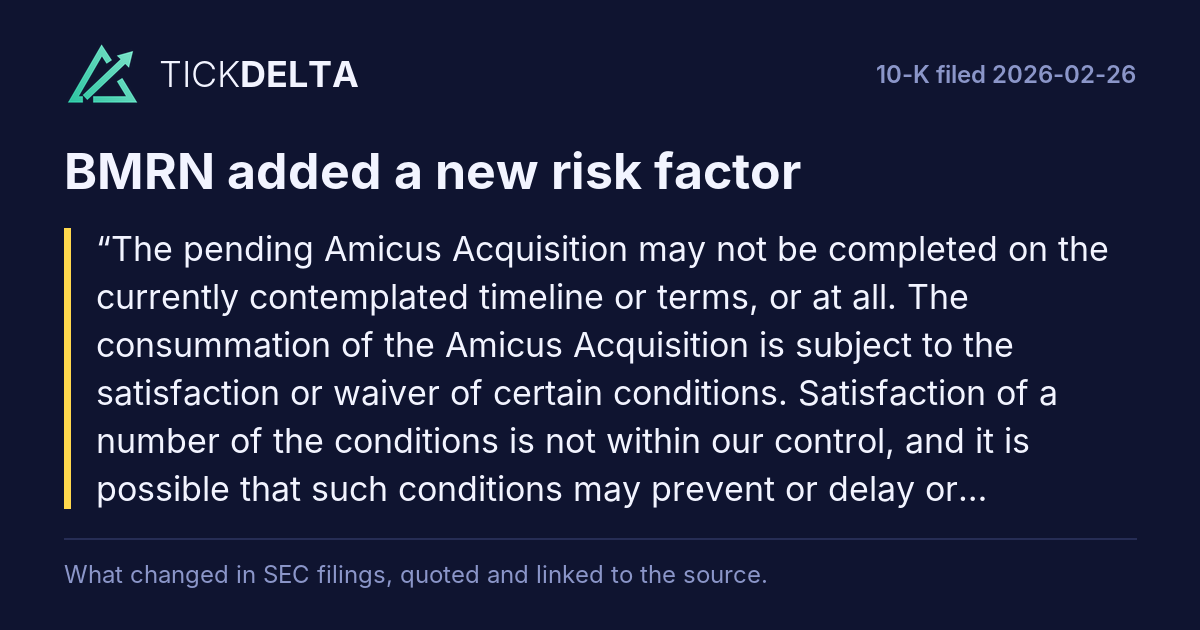
The pending Amicus Acquisition may not be completed on the currently contemplated timeline or terms, or at all.
The consummation of the Amicus Acquisition is subject to the satisfaction or waiver of certain conditions. Satisfaction of a number of the conditions is not within our control, and it is possible that such conditions may prevent or delay or otherwise materially adversely affect our ability to complete the Amicus Acquisition. These conditions include, but are not limited to, approval of the Amicus Acquisition by Amicus’ stockholders and the expiration or termination of the relevant waiting period (as it may be extended) under the Hart-Scott-Rodino Antitrust Improvements Act of 1976 and the rules and regulations promulgated thereunder. Neither we nor Amicus can provide assurance that the conditions to completing the Amicus Acquisition will be satisfied or waived, and accordingly, that the Amicus Acquisition will be completed on the timeline that the parties anticipate or at all. If any condition to the Acquisition is not satisfied, it could delay or prevent the Amicus Acquisition from occurring, which could negatively impact us and our growth prospects.
We may not realize the anticipated benefits from the pending Amicus Acquisition.
The Amicus Acquisition involves the combination of two companies that currently operate as independent companies. While we and Amicus will continue to operate independently until the Amicus Acquisition is consummated, the success of the Amicus Acquisition will depend, in part, on our ability to realize the anticipated benefits from successfully combining our and Amicus’ businesses after closing. We plan on devoting substantial management attention and resources to integrating our and Amicus’ businesses so that we can fully realize the anticipated benefits of the Amicus Acquisition. This integration process may be disruptive to our and Amicus’ businesses, and, if implemented ineffectively, could restrict realization of the expected benefits of the Amicus Acquisition. In addition, the acquired Amicus business, including Galafold and Pombiliti + Opfolda, may not be successful,
may require greater resources and investments than originally anticipated or may result in the assumption of unknown or contingent liabilities, which could have an adverse effect on us or our results of operations.
Potential difficulties we may encounter following closing include the following:
•the inability to successfully combine our and Amicus’ businesses in a manner that permits us to realize the anticipated benefits of the Amicus Acquisition in the timeframe currently anticipated or at all;
•the failure to integrate internal systems, programs and internal controls, or applying different accounting policies, assumptions or judgments to Amicus’ operational results than Amicus applied in the past;
•the inability to successfully obtain regulatory approval in new markets for, and continue to commercialize, Galafold or Pombiliti + Opfolda on the currently anticipated timeline or at all;
•The inability to effectively and efficiently integrate information technology and other systems;
•issues not discovered as part of the transactional due diligence process or unanticipated liabilities or contingencies of Amicus, including employment or severance-related obligations under applicable law or other benefits arrangements, claims by or amounts owed to vendors or other commercial disputes, cyber incidents and information technology failures or delays, matters related to data privacy, data localization and the handling of personally identifiable information, intellectual property-related claims, including Hatch-Waxman litigation, and other unknown or contingent liabilities;
•preserving the important licensing, marketing, and other commercial relationships of Amicus;
•the failure to retain key employees of either of the two companies who may be difficult to replace;
•the disruption of each company’s ongoing businesses or inconsistencies in services, standards, controls, procedures and policies;
•potential unknown liabilities and unforeseen increased expenses, delays or regulatory conditions associated with the Amicus Acquisition; and
•performance shortfalls at one or both of the two companies as a result of the diversion of management’s attention caused by completing the Amicus Acquisition and integrating our and Amicus’ operations.
Any of these risks could adversely affect our ability to maintain relationships with collaboration partners, vendors, employees and other commercial relationships or adversely affect our or Amicus’ future operational results. As a result, the anticipated benefits of the Amicus Acquisition may not be realized or at all or may take longer to realize or cost more than expected, which could adversely affect our business, financial condition, including our ability to generate sufficient cash to service our indebtedness, including our 1.25% senior subordinated convertible notes due in 2027 (the 2027 Notes), our 5.5% senior unsecured notes due in 2034 (the 2034 Notes and together with the 2027 Notes, the Notes) and the new senior secured credit facilities expected to be entered into in connection with the Amicus Acquisition, results of operations and growth prospects, and we may be forced to take other actions to satisfy our obligations under our indebtedness, which may not be successful. In addition, changes in laws and regulations could adversely impact our business, financial condition, results of operations and growth prospects after the Amicus Acquisition.
In connection with the pending Amicus Acquisition, some collaboration partners, vendors or other parties with commercial relationships with either of us or Amicus may delay or defer decisions, which could adversely affect the revenues, earnings, cash flows and expenses of us or Amicus, regardless of whether the Amicus Acquisition is completed. In addition, due to operating covenants in the Agreement and Plan of Merger we entered into with Amicus, Amicus may be unable (without our prior written consent), during the pendency of the Amicus Acquisition, to pursue strategic transactions, undertake significant capital projects or otherwise pursue other actions outside the ordinary course, even if such actions would prove beneficial.
We expect to incur material expenses in connection with the Amicus Acquisition and the subsequent integration of the business, operations, practices, policies and procedures of Amicus. These additional expenses could have an adverse effect on us or our results of operations. While we have assumed that a certain level of transaction and integration expenses would be incurred,
there are a number of factors beyond our control that could affect the total amount or the timing of integration expenses. Many of the expenses that will be incurred, by their nature, are difficult to estimate accurately at the present time.
The benefits that we expect to achieve as a result of the Amicus Acquisition will depend, in part, on our ability to realize anticipated cost savings, including resulting from expected operational synergies and global infrastructure efficiencies. After the Amicus Acquisition, we believe that we will be able to, among other matters, save on our costs by being able to streamline administrative processes and harmonize global distribution of the two companies.
Our success in realizing these cost savings, and the timing of this realization, depends on many factors. Even if we are able to consummate the Amicus Acquisition successfully, this may not result in the full realization of the cost savings that we currently expect, either within the expected timeframe, or at all. In addition, we cannot assure you that the costs to achieve these cost savings will not be higher than we anticipated. Therefore, we cannot assure you that any anticipated cost savings will be achieved or that our estimates and assumptions will prove to be accurate. If our cost savings are less than our estimates or our costs savings initiatives adversely affect our business or cost more or take longer to implement than we project, or if our assumptions prove to be inaccurate, our results could be lower than we anticipate.
Our and Amicus’ actual financial positions and results of operations may differ materially from the publicly filed unaudited pro forma condensed combined financial information.
The unaudited pro forma condensed combined financial information contained in our Current Report on Form 8-K filed on January 26, 2026 is presented for illustrative purposes only and may differ materially from what our actual financial position or results of operations would have been had the Amicus Acquisition been completed on the dates indicated. The unaudited pro forma condensed combined financial information has been derived from our and Amicus’ audited and unaudited historical financial statements and certain adjustments and assumptions have been made regarding the combined company after giving effect to the Amicus Acquisition and related transactions. The assets and liabilities of Amicus were measured at fair value based on various preliminary estimates using assumptions that we believed were reasonable utilizing information currently available. The process for estimating the fair value of acquired assets and assumed liabilities requires the use of judgment in determining the appropriate assumptions and estimates. These estimates may be revised as additional information becomes available and as additional analyses are performed. Differences between preliminary estimates in the unaudited pro forma condensed combined financial information and the final acquisition accounting will occur and could have a material impact on the unaudited pro forma condensed combined financial information and the ultimate combined company’s financial position and future results of operations.
In addition, the assumptions used in preparing the unaudited pro forma condensed combined financial information may not prove to be accurate, and other factors may affect our financial condition or results of operations following the completion of the Amicus Acquisition.
cooperation and effort of those third-party companies both to obtain regulatory approval and to maintain their own regulatory compliance. Failure of third-party companies to assist in the approval process or to maintain their own regulatory compliance could delay or prevent approval of our product candidates, or limit our ability to sell a product once it is approved.
Several healthcare reform initiatives culminated in the enactment of the Inflation Reduction Act (IRA) in August 2022, which, among other things, eliminated, beginning in 2025, the coverage gap under Medicare Part D by significantly lowering the enrollee maximum out-of-pocket costs and requiring manufacturers to subsidize, through a newly established manufacturer discount program, 10% of Part D enrollees’ prescription costs for brand drugs below the out-of-pocket limit, and 20% once the out-of-pocket limit has been reached. The IRA also requires the U.S. Department of Health and Human Services (HHS) to negotiate the selling price of a statutorily specified number of drugs and biologics each year that the CMS reimburses under Medicare Part B and Part D. The negotiated price may not exceed a statutory ceiling price. Only high-expenditure single-source drugs that have been approved for at least seven years (11 years for biologics) can be selected by CMS for negotiation, with the negotiated price taking effect two years after the selection year. For 2026, the first year in which negotiated prices become effective, CMS selected 10 high-cost Medicare Part D products in 2023, negotiations began in 2024, and the negotiated maximum fair price for each product has been announced. In addition, CMS has selected and announced the negotiated maximum fair price for 15 additional Medicare Part D drugs which will become effective in 2027. For 2028, CMS has selected an additional 15 drugs, comprised of drugs covered under Medicare Part D and, for the first time, drugs payable under Medicare Part B. For 2029 and subsequent years, 20 Part B or Part D drugs will be selected. The IRA also imposes rebates on Medicare Part B and Part D drugs whose prices have increased at a rate greater than the rate of inflation, and in 2024, CMS finalized regulations for the Medicare Part B and Part
In addition, the current U.S. Presidential Administration is pursuing policies to reduce regulations and expenditures across government including at HHS, which include the FDA and CMS, and related agencies. For example, on May 12, 2025, President Trump issued an executive order that, among other things, required HHS, within 30 days, to establish and communicate to drug manufacturers most favored nation (MFN) price targets designed to bring drug prices for American patients in line with those in comparably developed nations. If significant progress towards MFN pricing is not achieved, the executive order requires HHS to propose a rulemaking to implement MFN pricing. On December 23, 2025, CMS issued proposed regulations to establish, under the Center for Medicare and Medicaid Innovation, two mandatory MFN demonstration models under Medicare Parts B and D, respectively. If these rules or other MFN pricing rules are finalized, they are likely to reduce prices of at least some drugs in the United States, if they are also sold in comparator countries. Even if we do not market drugs in such countries, we will be indirectly affected if our drugs competed with drugs whose prices were reduced as a result of MFN pricing initiatives.
sufficient return to justify the necessary investment. In both cases, the applicant must demonstrate that there exists no satisfactory method of diagnosis, prevention or treatment of the condition in question that has been authorized in the EU or, if such method exists, the medicine will be of significant benefit to those affected by that condition.
In addition, because the extent and scope of patent protection for some of our products is limited, orphan drug designation and resulting regulatory exclusivity is especially important for our products that are eligible for orphan drug designation. For eligible products, we plan to rely on the exclusivity period under the Orphan Drug Act and/or the Orphan Regulation, as applicable, to maintain a competitive position. If we do not obtain orphan drug designation and related regulatory exclusivity for our products that do not have broad patent protection or if a competing product is determined to be, for example, "clinically superior" to any of our products that has secured orphan drug exclusivity, our competitors may then sell the same drug to treat the same condition and our revenues will be reduced.
The approval of biosimilar products referencing any of our products could have a material adverse impact on sales of our products and on our business, financial condition, results of operations and growth prospects due to increased competition and pricing pressures.
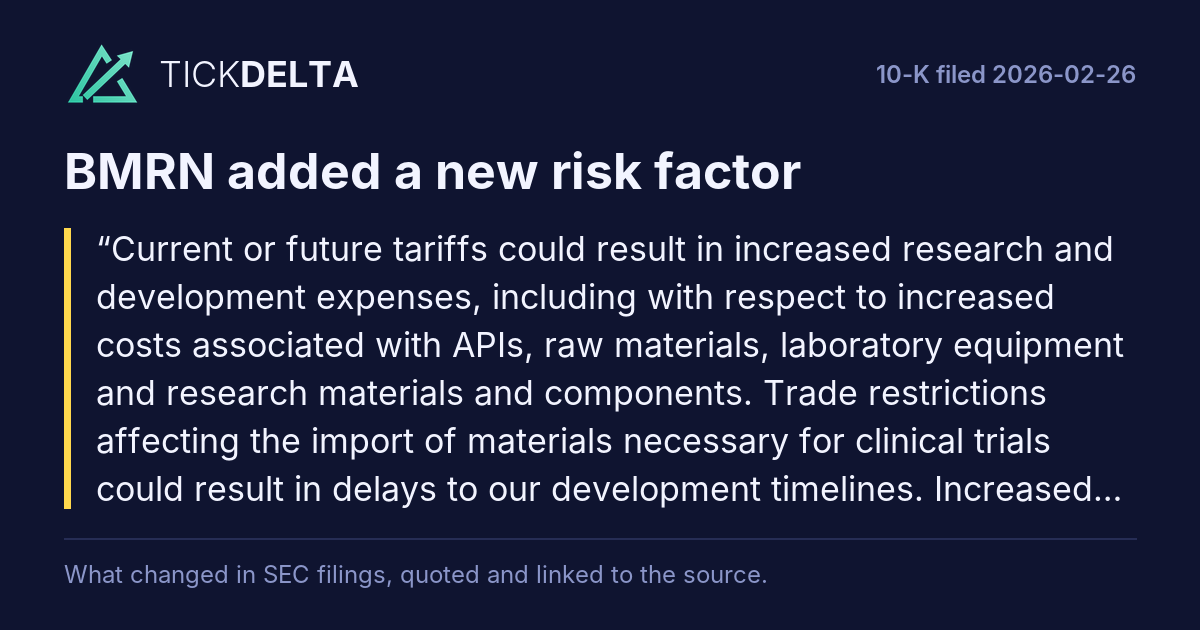
•impact of new or increased tariffs, other trade protection measures (such as import or export licensing requirements), and escalating trade tensions;
Current or future tariffs could result in increased research and development expenses, including with respect to increased costs associated with APIs, raw materials, laboratory equipment and research materials and components. Trade restrictions affecting the import of materials necessary for clinical trials could result in delays to our development timelines. Increased development costs and extended development timelines could place us at a competitive disadvantage compared to companies operating in regions with more favorable trade relationships and could reduce investor confidence and negatively impact our business, results of operations, financial condition and growth prospects.
The complexity of announced or future tariffs may also increase the risk that we or our customers or suppliers may be subject to civil or criminal enforcement actions in the United States or foreign jurisdictions related to compliance with trade regulations. Foreign governments may also adopt non-tariff measures, such as procurement preferences or informal disincentives to engage with, purchase from or invest in U.S. entities, which may limit our ability to compete internationally and attract non-U.S. investment, employees, customers and suppliers. Foreign governments may also take other retaliatory actions against U.S. entities, such as decreased intellectual property protection, increased enforcement actions, or delays in regulatory approvals, which may result in heightened international legal and operational risks. In the event foreign governments impose tariffs or other retaliatory measures against U.S. entities, our ability to pass increased costs to customers in such foreign jurisdictions may be
limited by the structure of pharmaceutical pricing and reimbursement systems and how any such tariffs were implemented in such countries. In addition, the United States and other governments have imposed and may continue to impose additional sanctions, such as trade restrictions or trade barriers, which could restrict us from doing business directly or indirectly in or with certain countries or parties and may impose additional costs and complexity to our business.
Trade disputes, tariffs, restrictions and other political tensions between the United States and other countries may also exacerbate unfavorable macroeconomic conditions including inflationary pressures, foreign exchange volatility, financial market instability, and economic recessions or downturns. The ultimate impact of current or future tariffs and trade restrictions remains uncertain and could materially and adversely affect our business, financial condition, and prospects. While we actively monitor these risks, any prolonged economic downturn, escalation in trade tensions, or deterioration in international perception of U.S.-based companies could materially and adversely affect our business, ability to access the capital markets or other financing sources, results of operations, financial condition and prospects. In addition, tariffs and other trade developments have and may continue to heighten the risks related to the other risk factors described elsewhere in this report.
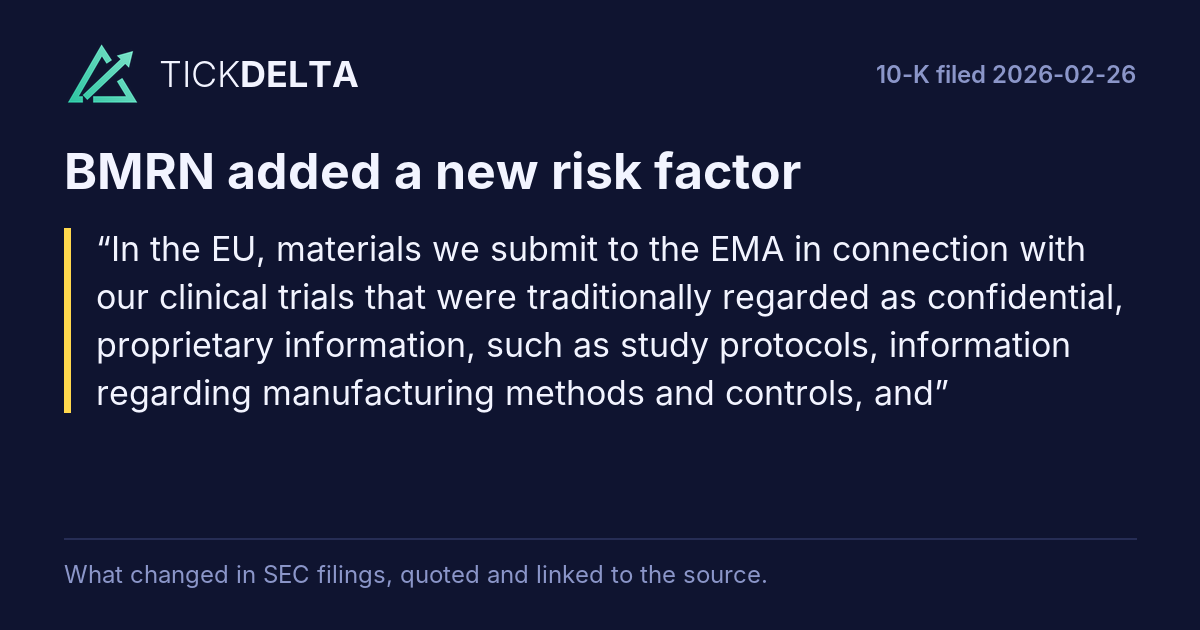
In the EU, materials we submit to the EMA in connection with our clinical trials that were traditionally regarded as confidential, proprietary information, such as study protocols, information regarding manufacturing methods and controls, and
•strategic transactions, including acquisition of products, businesses, or other assets;
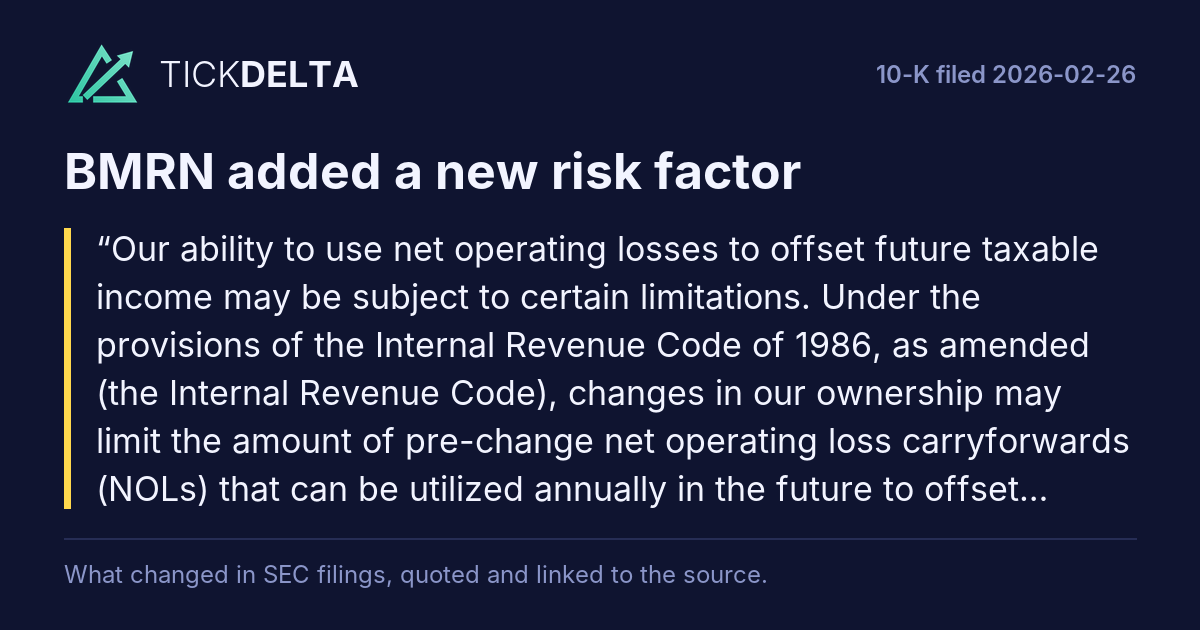
Our ability to use net operating losses to offset future taxable income may be subject to certain limitations.
Under the provisions of the Internal Revenue Code of 1986, as amended (the Internal Revenue Code), changes in our ownership may limit the amount of pre-change net operating loss carryforwards (NOLs) that can be utilized annually in the future to offset taxable income. Section 382 of the Internal Revenue Code imposes limitations on a company’s ability to use its NOLs to offset its taxable income if one or more stockholders or groups of stockholders that each own at least five percent of the company’s stock increase their aggregate ownership (by value) by more than 50 percentage points over their lowest ownership percentages within a rolling three-year period. Similar rules may apply under state and foreign tax laws. Thus, changes in our ownership may limit our ability to use our NOLs. Subsequent statutory or regulatory changes in respect of the utilization of NOLs for federal, state or foreign purposes, such as suspensions on the use of NOLs or limitations on the deductibility of NOLs carried forward, or other unforeseen reasons, may result in our existing NOLs expiring or otherwise being unavailable to offset future income tax liabilities. For these reasons, we may not be able to utilize a material portion of our NOLs.
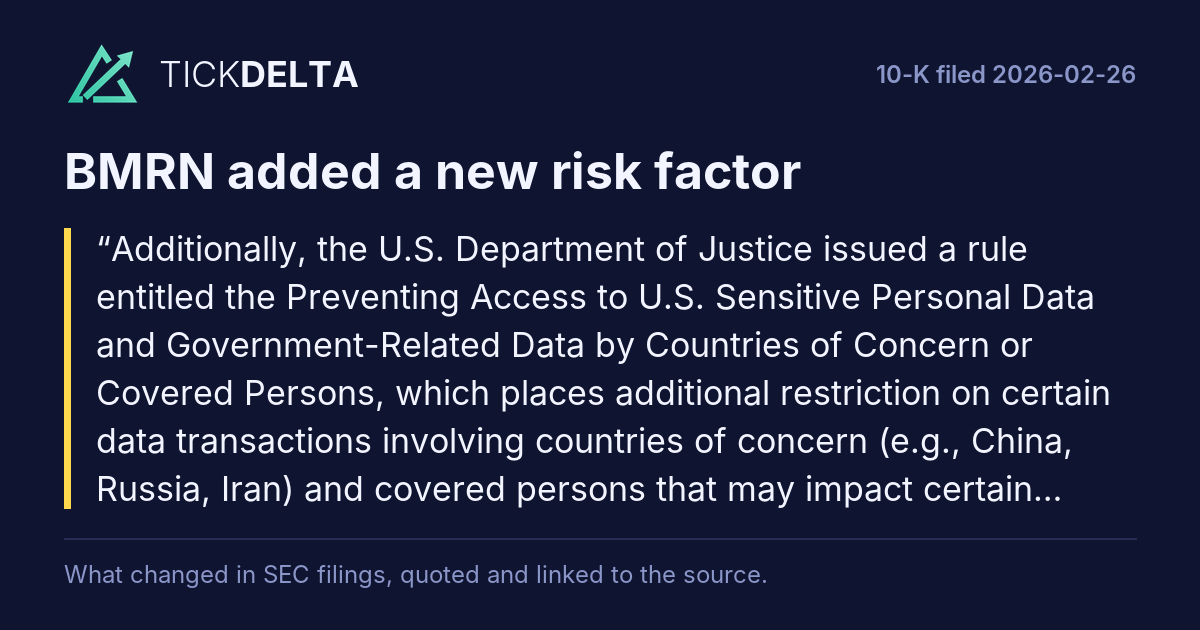
Additionally, the U.S. Department of Justice issued a rule entitled the Preventing Access to U.S. Sensitive Personal Data and Government-Related Data by Countries of Concern or Covered Persons, which places additional restriction on certain data transactions involving countries of concern (e.g., China, Russia, Iran) and covered persons that may impact certain business activities such as vendor engagements, sale or sharing of data, employment of certain individuals, and investor agreements. Violations of the rule could lead to significant civil and criminal fines and penalties. The rule applies regardless of whether data is anonymized, key-coded, pseudonymized, de-identified or encrypted, which presents particular challenges for companies like ours and may impact our ability to transfer data in connection with certain transactions or agreements.
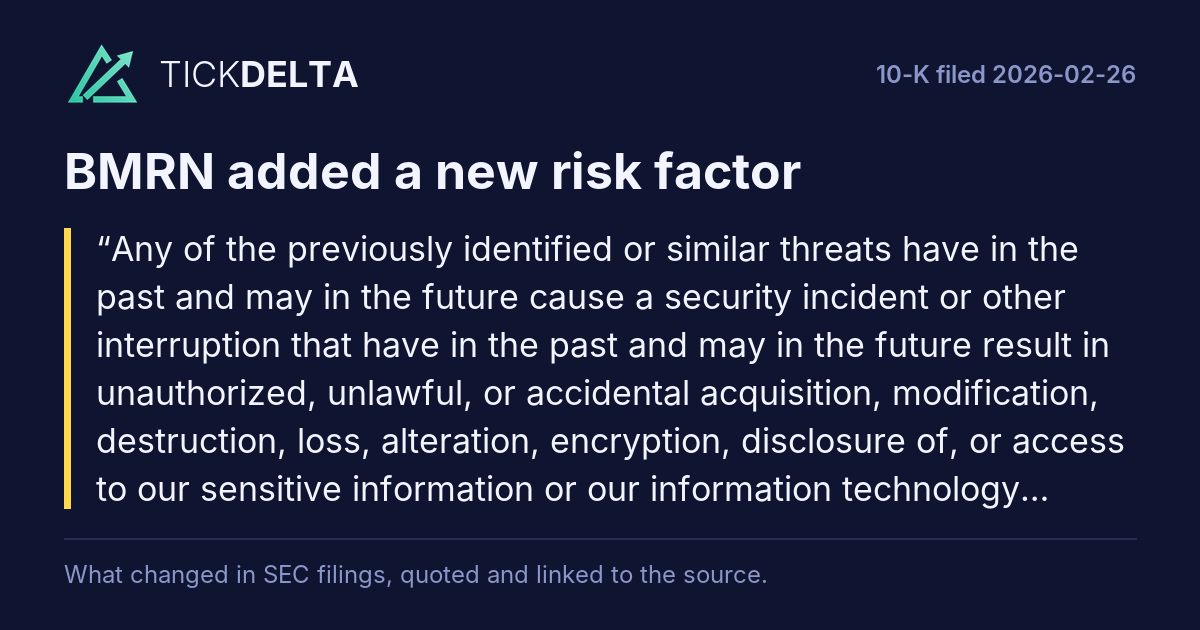
Any of the previously identified or similar threats have in the past and may in the future cause a security incident or other interruption that have in the past and may in the future result in unauthorized, unlawful, or accidental acquisition, modification, destruction, loss, alteration, encryption, disclosure of, or access to our sensitive information or our information technology systems, or those of the third parties with whom we work. We have experienced and may continue to experience security incidents, although
New in the latest 10-Q
23 paragraphs in the 10-Q filed Nov 3, 2026 with nothing like them in the 10-Q filed Aug 6, 2026 (at least half the words must differ; new numbers alone do not count). Quoted exactly, grouped by the item heading above them. This is text that changed, not a judgement of how serious it is.
Acquired IPR&D was previously included in Research and development (R&D) and is now presented separately in the Condensed Consolidated Statements of Comprehensive Income (Loss). The Company believes this presentation provides users of the financial statements with a better understanding of upfront and development milestone payments incurred to acquire IPR&D projects. Prior-period amounts have been reclassified to conform to the current presentation, resulting in a reclassification of $ 221.0 million from R&D expense to Acquired IPR&D for the three and nine months ended September 30, 2025. This reclassification had no impact on total operating expenses, net income (loss) or earnings (loss) per share.
Read in the 10-Q
Acquired IPR&D expenses are recorded when incurred and reflect costs of externally-developed IPR&D projects acquired directly in a transaction other than a business combination that do not have an alternative future use. These expenses include upfront and pre-commercialization milestone payments and the costs of rights to IPR&D projects. Subsequent development costs related to these projects are recognized as Research and development expense in the Consolidated Statements of Income as incurred.
Read in the 10-Q
(1) Includes measurement period adjustments primarily related to income tax during the third quarter of 2026 that increased deferred tax liabilities and goodwill by approximately $ 10.6 million.
Read in the 10-Q
On August 31, 2026, the Company completed its acquisition of Alesta Therapeutics, B.V. (Alesta), a Dutch private limited liability company, committed to developing novel oral small-molecule therapies for underserved diseases, for a total consideration of $ 303.4 million. The terms of the acquisition also provide for regulatory and sales milestone payments of up to $ 215 million. Upon closing, Alesta became a wholly-owned subsidiary of BioMarin.
Read in the 10-Q
The Company accounted for this transaction as an asset acquisition since substantially all of the fair value of the gross assets acquired was concentrated in a single identifiable IPR&D asset, BMN 440 (formerly ALE1). BMN 440 is an orally active, small molecule for the potential treatment of hypophosphatasia (HPP), a rare genetic bone disease caused by mutations in the ALPL gene. The Company recognized the acquired assets and assumed liabilities based on the consideration paid, inclusive of transaction costs, on a relative fair value basis. As the acquired IPR&D does not have an alternative future use, the Company recorded approximately $ 282.3 million in acquired IPR&D expense related to BMN 440 IPR&D asset during the third quarter of 2026. The IPR&D charge is included in Acquired In-process Research and Development on the Company’s Condensed Consolidated Statements of Income.
Read in the 10-Q
In connection with the Company’s corporate initiatives, the Company committed to a plan in the third quarter of 2026 to convert an office space to a laboratory, resulting in an asset impairment charge relating to building improvements.
Read in the 10-Q
The effective tax rates were 6.8 % and ( 16.8 )% for the three months ended September 30, 2026 and 2025, respectively, and 61.2 % and 22.4 % for the nine months ended September 30, 2026 and 2025, respectively. The effective tax rates for all periods reflected pre-tax losses resulting from nondeductible acquired IPR&D charges. The change in the effective tax rate for the three and nine months ended September 30, 2026 was primarily driven by the nondeductible acquired IPR&D charge having a greater impact on the estimated annual effective tax rate due to lower pre-tax income, which primarily reflected interest expense and amortization of acquired intangible assets related to the Amicus acquisition.
Read in the 10-Q
As of September 30, 2026, the Company was also subject to contingent payments, primarily comprised of development, regulatory and commercial milestones relating to certain other license agreements. Those considered reasonably possible totaled $ 485.5 million and, of this amount, the Company may pay up to $ 7.5 million over the next twelve months if certain contingencies are met.
Read in the 10-Q
In October 2026, the Company entered into an exclusive worldwide license agreement with GC Biopharma Corp. (GC Biopharma) and Hanmi Pharm Co., Ltd. (Hanmi) to develop and commercialize BMN 450 (also known as HM15421/GC1134A), an investigational long-acting enzyme replacement therapy for Fabry disease. Under the terms of the agreement, the Company will make an upfront payment of $ 70.0 million, which it expects to record as acquired IPR&D expense in the fourth quarter of 2026. GC Biopharma and Hanmi are also jointly eligible to receive up to an additional $ 405.0 million upon the completion of certain development and commercial milestones, and tiered royalties.
Read in the 10-Q
A summary of our commercial products, as of September 30, 2026, is provided below:
Read in the 10-Q
• In October 2026, we entered into an exclusive worldwide license agreement with GC Biopharma Corp. (GC Biopharma) and Hanmi Pharm Co., Ltd. (Hanmi) to develop and commercialize BMN 450 (also known as HM15421/GC1134A), an investigational long-acting enzyme replacement therapy for Fabry disease. Under the terms of the agreement, we will make an upfront payment of $70.0 million that will be recorded as acquired IPR&D expense in the fourth quarter of 2026. GC Biopharma and Hanmi are also jointly eligible to receive up to an additional $405.0 million upon the completion of certain development and commercial milestones, and tiered royalties.
Read in the 10-Q
• In August 2026, we completed the acquisition of Alesta, a Dutch private limited liability company. The acquisition is intended to strengthen our Skeletal Conditions pipeline by adding BMN 440 (formerly ALE1), an orally active, small molecule for the potential treatment of hypophosphatasia (HPP). We accounted for this transaction as an asset acquisition since the lead asset, BMN 440, represents substantially all of the fair value of the gross assets acquired. See Note 2 to our accompanying Condensed Consolidated Financial Statements for additional information related to Alesta acquisition.
Read in the 10-Q
Acquired IPR&D expenses are recorded when incurred and reflect costs of externally-developed IPR&D projects, acquired directly in a transaction other than a business combination, that do not have an alternative future use, including upfront and pre-commercialization milestone payments related to various license agreements and the costs of rights to IPR&D projects.
Read in the 10-Q
In preparing our Condensed Consolidated Financial Statements in accordance with U.S. GAAP and pursuant to the rules and regulations promulgated by the Securities and Exchange Commission (the SEC), we make assumptions, judgments and
Read in the 10-Q
There were no borrowings under the 2026 Revolving Facility as of September 30, 2026.
Read in the 10-Q
containment measures or other healthcare reforms may prevent us from being able to generate revenue, attain profitability or commercialize our products.
Read in the 10-Q
In addition, settlement agreements may limit our control over the prosecution, maintenance, enforcement or defense of intellectual property rights subject to such arrangements, and our licensees' interests may differ from ours. Disputes may also arise regarding the scope of the rights granted under these arrangements, the parties' respective obligations or the interpretation of other contractual provisions. Any such limitations or disputes could impair our ability to protect or enforce our intellectual property rights or otherwise adversely affect our business, financial condition and results of operations.
Read in the 10-Q
breaches that is expected to increase data breach litigation. The CPRA, among other things, gives California residents the ability to limit use of certain sensitive personal data, establishes restrictions on the retention of personal data, expands the types of data breaches subject to the CCPA’s private right of action, and establishes a new California Privacy Protection Agency to implement and enforce the new law.
Read in the 10-Q
respect to other personal data we may maintain about California residents. Similar laws are being considered in several other states, as well as at the federal and local levels, and we expect more jurisdictions to pass similar laws in the future.
Read in the 10-Q
2.2†# Share Purchase Agreement, dated as of August 17, 2026, by and among BioMarin Pharmaceutical Inc., Alesta Therapeutics B.V., each holder of shares of Alesta Therapeutics B.V. identified on Schedule 1.1(a) thereto, Anaheim SpinCo B.V. and Shareholder Representative Services LLC, solely in its capacity as the representative and attorney-in-fact of the Company Participating Equityholders, previously filed with the SEC on August 18, 2026, as Exhibit 2.1 to the Company’s Current Report on Form ...
Read in the 10-Q
10.1*†# Settlement and License Agreement, made effective as of August 28, 2026, by and between BioMarin Pharmaceutical Inc. and Ascendis Pharma A/S.
Read in the 10-Q
† Certain exhibits and schedules have been omitted pursuant to Item 601(a)(5) of Regulation S-K. the Company agrees to furnish supplementally a copy of any omitted exhibit or schedule to the SEC upon request; provided, however, that the Company may request confidential treatment pursuant to Rule 24b-2 of the Exchange Act for any schedule so furnished.
Read in the 10-Q
# Portions of this exhibit have been omitted pursuant to Item 601(b)(2)(ii) and Item 601(b)(10)(iv) of Regulations S-K, as applicable. The Company agrees to furnish supplementally an unredacted copy of the exhibit to the SEC upon its request.
Read in the 10-Q
Item 1A of the 10-Q filed Nov 3, 2026 against Item 1A of the 10-K filed Feb 26, 2026.
A 10-Q repeats only the risks that changed, so a 10-K paragraph that is missing from it is not counted as removed.
Added is a paragraph with nothing like it in the 10-K, Reworded a sentence that is in both with several words changed,
Quiet changes a sentence in both where one to four words changed and one is a hedge or a modal
(cut words struck through, new words highlighted).
Text on the page, not a score; each links to the filing at sec.gov.
What the 10-Q itself says about its risk factors:We have marked with an asterisk (*) those risk factors below that include a substantive change from or update to the risk factors included in our Annual Report on Form 10-K for the year ended December 31, 2025, which was filed with the SEC on February 26, 2026.
Read in the 10-Q
The first 23 of 52 are shown (at most 12 of each type).
Two-word phrases in Risk Factors of the 10-K filed Feb 26, 2026 that are in none of the 1 earlier 10-Ks stored, back to Feb 24, 2025
Used at least twice, small words left out. Counted, not picked: a phrase can be new because the company renamed something.
7 paragraphs of last year's Risk Factors with nothing like them now. The longest are quoted.
Item 1A of each 10-K and 10-Q on EDGAR, quoted exactly. Each paragraph links to the filing at sec.gov.
10-K change: what was reworded or cut, section by section.
Excel workbook · CSV. Google Sheet that stays up to date: paste =IMPORTDATA("https://tickdelta.com/company/BMRN/export.csv") into a cell.