Added10-Q 2026-11-06 vs 10-K 2026-02-20
Servicing our debt requires a significant amount of cash, and we may not have sufficient cash flow from our business to pay our substantial debt.
Tickdelta is free for now. Sign up and get Pro free
Moderna is a pioneer and leader in the field of mRNA medicine. 10-K, Item 1
29 paragraphs in Risk Factors of the 10-K filed Feb 20, 2026 with nothing like them in the 10-K filed Feb 21, 2025. Quoted exactly. Paragraphs that were only edited are under 10-K change.
Compared with the Risk Factors in the latest 10-K of the other 59 Health care companies: a paragraph with at least half its words the same at another company is called similar, and the companies are listed under it. A paragraph most of them have is marked boilerplate. No line means no other company has one like it. This counts text; it does not say how serious a risk is.
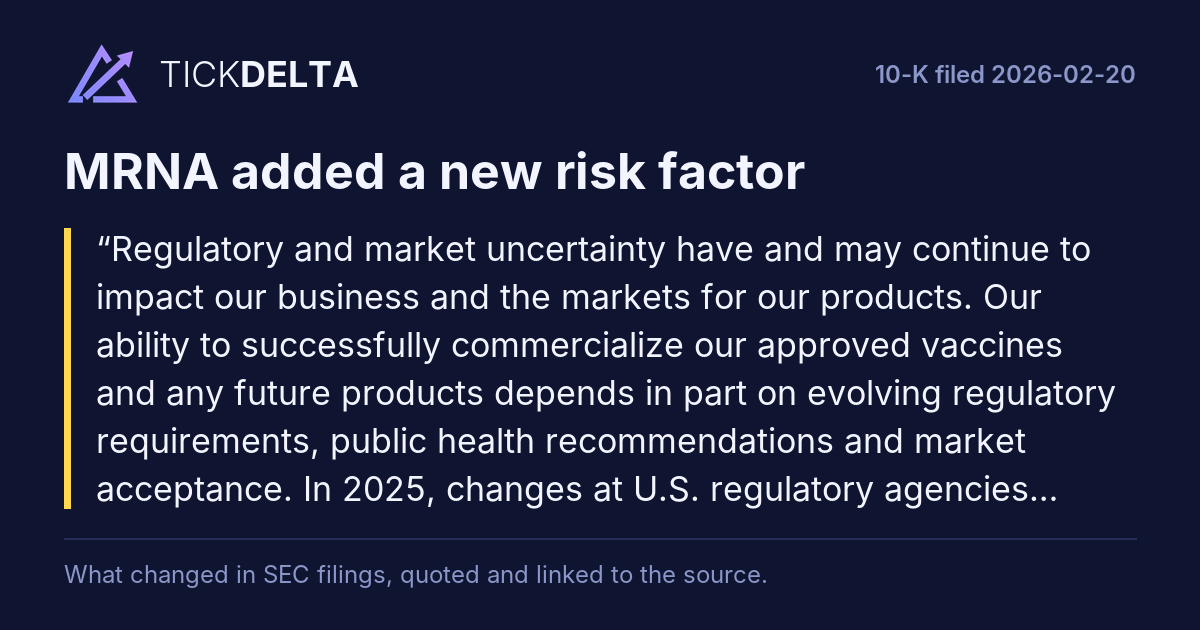
Regulatory and market uncertainty have and may continue to impact our business and the markets for our products.
Similar paragraph at 1 of 59 other Health care companies: HSICOur ability to successfully commercialize our approved vaccines and any future products depends in part on evolving regulatory requirements, public health recommendations and market acceptance. In 2025, changes at U.S. regulatory agencies impacted policies and priorities related to our industry. For example, changes in FDA regulatory policies, post-marketing safety monitoring, and evidentiary expectations, as well as CDC and Advisory Committee on Immunization Practices (ACIP) recommendations regarding eligibility, target populations, and vaccination practices, may have affected and may continue to affect demand for our vaccines. Some of these changes, including new post-marketing commitments, have impacted and may in the future impact our costs. Ongoing regulatory uncertainty and evolving regulatory and public health guidance could impact future approvals, advisory committee recommendations, acceptance and demand for our existing or future products.
Read in the 10-K ↗
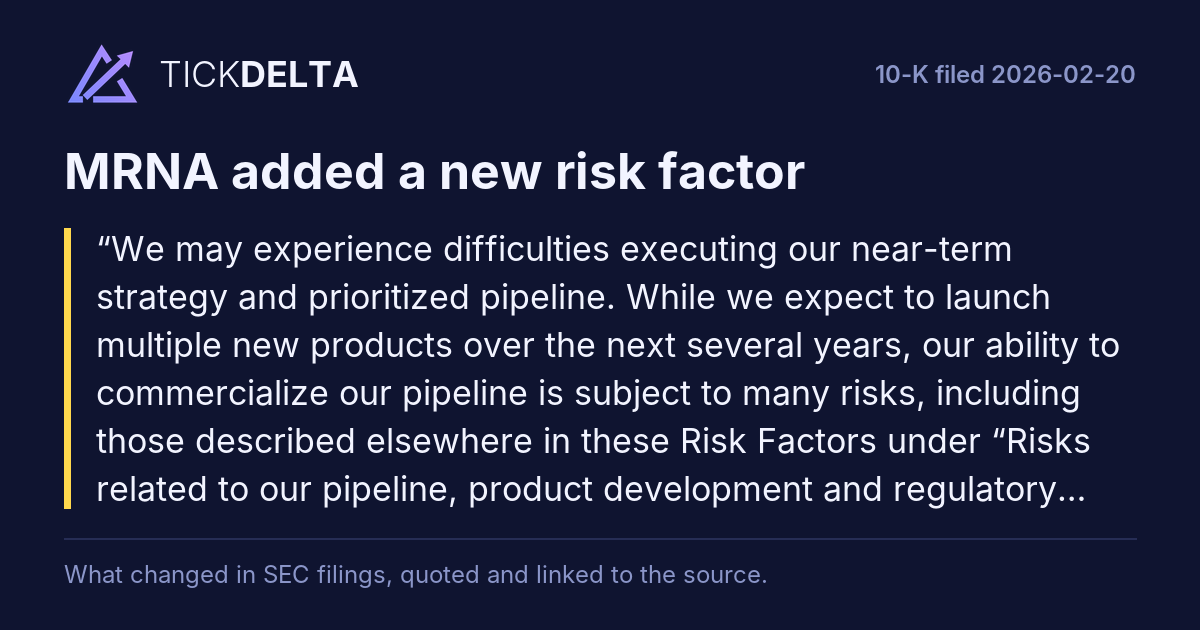
We may experience difficulties executing our near-term strategy and prioritized pipeline.
While we expect to launch multiple new products over the next several years, our ability to commercialize our pipeline is subject to many risks, including those described elsewhere in these Risk Factors under “Risks related to our pipeline, product development and regulatory review” and “Risks related to the manufacturing of our commercial products and product candidates.” If we do not successfully execute our near-term plan for growing our infectious disease vaccine franchise, our ability to invest in our pipeline, including our oncology and rare disease programs, may suffer.
Read in the 10-K ↗
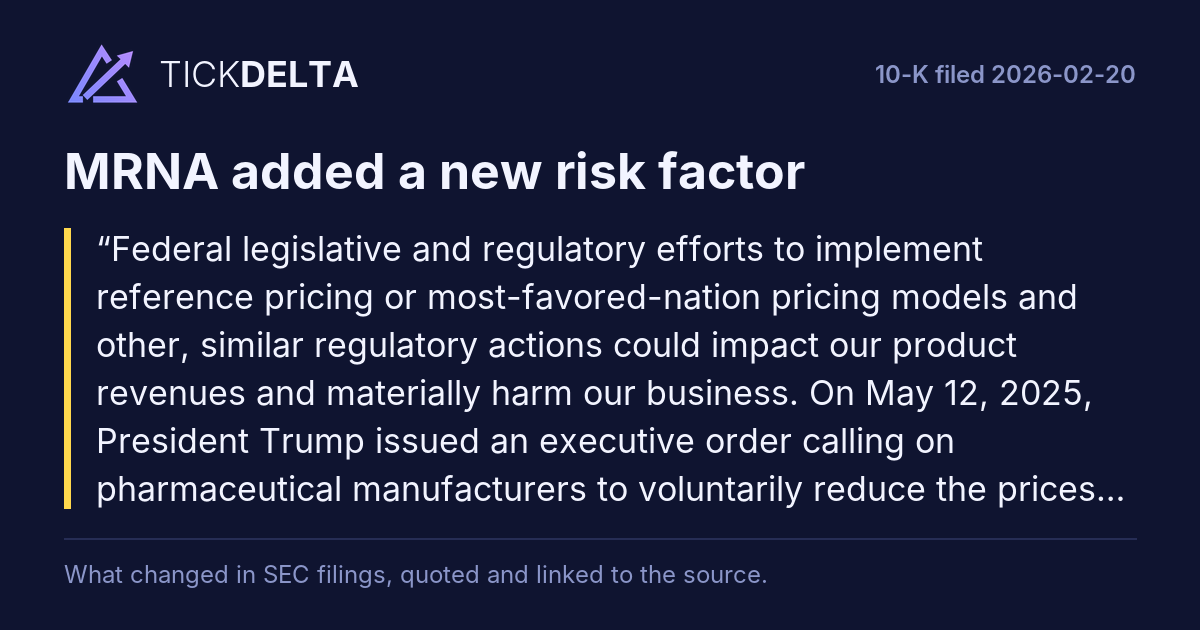
Federal legislative and regulatory efforts to implement reference pricing or most-favored-nation pricing models and other, similar regulatory actions could impact our product revenues and materially harm our business.
On May 12, 2025, President Trump issued an executive order calling on pharmaceutical manufacturers to voluntarily reduce the prices of medicines in the U.S. and directing the Secretary of Health and Human Services (HHS) to communicate price targets to pharmaceutical manufacturers to align prices with those in comparably developed nations, an approach commonly referred to as "most-favored-nation" (MFN) pricing and, in the event significant progress towards MFN pricing is not delivered, to propose rulemaking to impose MFN pricing.
MFN pricing models in the U.S. could also affect our international pricing strategy and future decisions on reimbursement and commercialization in certain jurisdictions. If our U.S. pricing becomes tied to international reference prices, we may face decisions regarding pricing in foreign markets that could result in reduced patient access internationally, affect our relationships with foreign regulatory authorities and payers, or impact our ability to obtain or maintain reimbursement approvals in ex-U.S. markets.
These reforms remain subject to change, potential legal challenges, or expansion through additional rulemaking or sub‑regulatory guidance, creating uncertainty for our overall pricing strategy. It remains to be seen whether and how these drug pricing initiatives will apply to our products, how they will affect the broader pharmaceutical industry, and whether similar reform measures may be adopted in the future.
Read in the 10-K ↗
For example, recent FDA policy updates regarding COVID vaccine approvals and the evidence expected for certain populations could require additional clinical data or trials to support broader indications, delay approvals or supplemental applications, or result in more limited labeled populations, which could adversely affect the timing and scope of commercialization for our COVID vaccines, including updated or variant-adapted formulations.
Read in the 10-K ↗
Although we have obtained rare pediatric disease designation for mRNA-3927, we may not be eligible to receive a priority review voucher in the event the FDA determines we no longer meet the criteria for designation, revokes the designation or FDA approval does not occur by September 30, 2029.
The sponsor of an application for a rare pediatric disease drug product may be eligible for a voucher that can be used or sold to obtain a priority review for a subsequent application submitted under section 505(b)(1) of the Federal Food, Drug, and Cosmetic Act or section 351 of the Public Health Service Act. We received rare pediatric disease designation from the FDA for mRNA-3927. We may, in the future, apply for rare pediatric disease designation from the FDA for future product candidates that may qualify for designation. Vouchers for rare pediatric disease drugs are awarded for qualifying applications when the drug receives approval. Under current law, after September 30, 2029, the FDA may not award any rare pediatric disease priority review vouchers, although the FDA's authority to do so could be extended by Congress in the future.
Read in the 10-K ↗
•product or facility contamination, including due to ineffective quality control strategies or failures identified through environmental monitoring programs;
Read in the 10-K ↗
Failure to comply with the covenants in our credit agreement could adversely affect our business
A failure to comply with the covenants in our credit agreement with lenders led by Ares Capital Corporation, as administrative agent, could result in an event of default, which, if not cured or waived, could have a material, adverse effect on our business, financial condition, and results of operations. In the event of any such default, the holders of our indebtedness (i) would not be required to lend any additional amounts to us; and (ii) could elect to declare all then outstanding indebtedness, including accrued interest and unpaid fees, to be due and payable and terminate all commitments to extend further credit, if applicable.
Similar paragraph at 1 of 59 other Health care companies: TECHIf we are unable to repay those amounts, the holders of our secured indebtedness could proceed against their secured collateral to seek repayment from the proceeds of the sale or liquidation of our assets. If our indebtedness were to be accelerated, there can be no assurance that our assets would be sufficient to repay such indebtedness in full.
Read in the 10-K ↗
We have experienced significant growth in our operations and workforce in recent years and, more recently, have undertaken initiatives to reduce costs, prioritize our portfolio and adjust the size and structure of our organization. As a result, we must continue to adapt and improve our managerial, operational, and financial systems to effectively support our evolving business, including potential future growth and expansion initiatives. These efforts may require our management to devote substantial time and attention away from day-to-day operations and strategic execution.
Successfully developing, manufacturing and commercializing products across the many therapeutic areas and diseases we seek to address requires significant depth of talent, resources and robust corporate processes to support simultaneous execution. Organizational changes, including workforce reductions, restructuring, and shifts in strategic priorities, may make it more difficult to retain personnel, recruit and train qualified employees, maintain institutional knowledge, and preserve employee morale and productivity. If we are unable to effectively manage these challenges, we may experience weaknesses in our infrastructure, operational mistakes or inefficiencies, loss of business opportunities and reduced productivity.
In addition, we continue to operate and expand a global manufacturing and operational footprint, including our Norwood and Marlborough campuses in Massachusetts and manufacturing facilities outside the United States. Managing the costs, operational complexity, regulatory requirements, and execution risks associated with these facilities may require significant financial and managerial resources and could divert capital from other priorities, including the development of our product candidates. If we are unable to effectively manage organizational change, operational scale, and resource allocation, our financial performance and ability to commercialize our products may be affected negatively.
Read in the 10-K ↗
In addition, the U.S. government is pursuing measures intended to reduce the cost of drugs in the United States. For example, in May 2025, the President issued an executive order directing the U.S. Department of Health and Human Services and other federal agencies to take certain steps intended to, among other things, reduce the prices of drugs sold in the United States to match the lowest price available for the same drugs in comparably developed nations. It is currently unclear how and to what extent these measures may be implemented and what impact any such implementation would have on us.
Read in the 10-K ↗
In the United States, at the federal level, failing to take appropriate steps to keep consumers’ personal information secure may constitute unfair acts or practices in or affecting commerce in violation of Section 5(a) of the Federal Trade Commission Act. In addition, numerous states have introduced comprehensive laws which govern the privacy and security of personal information. For example, California has passed the CCPA and more than a dozen other states have passed their own similar comprehensive consumer privacy laws. Other states proposed or passed laws that target particular aspects of privacy, including health, genetic and biometric information, which could have particular impact for our business. For example, Washington passed a law that protects the privacy of consumer health-related information that is not covered by HIPAA and includes a private right of action. In addition, state laws such as the Texas Genomic Privacy Act and others focus specifically on genetic information and could materially impact our business.
Regulators and legislators are also increasingly scrutinizing and restricting certain personal data transfers and transactions involving foreign countries. For example, the Department of Justice’s January 8, 2025, rule on “Preventing Access to U.S. Sensitive Personal Data and Government-Related Data by Countries of Concern or Covered Persons,” prohibits data brokerage transactions involving certain sensitive personal data categories, including health data, genetic data, and biospecimens, to countries of concern, including China. The regulations also restrict certain investment agreements, employment agreements and vendor agreements involving such data and countries of concern, absent specified cybersecurity controls. Actual or alleged violations of these rules may be punishable by criminal and/or civil sanctions, result in exclusion from participation in federal and state programs or restrict our ability to use certain vendors, sites, investigators, or service providers in global clinical trials.
Read in the 10-K ↗
The development and use of GenAI and other AI technologies (collectively, AI Technologies), together with an uncertain and rapidly evolving global regulatory landscape, pose risks that could harm our reputation, expose us to liability, increase compliance costs, or otherwise adversely affect our business. In particular, new and emerging regulations, such as the European Union Artificial Intelligence Act (the EU AI Act), impose or are expected to impose enhanced obligations related to the development, deployment, transparency, governance, risk management, and use of certain AI systems, including those classified as high-risk, and may subject us to significant fines, penalties, operational restrictions, or changes to our business practices if we fail to comply. These requirements may apply extraterritorially, including to AI systems developed or deployed outside the European Union if their outputs are used in the EU.
In the United States, over the past year, states have advanced, and in some cases passed, dozens of laws focusing on AI and GenAI governance and regulation, including on deployment of AI Technologies in healthcare settings. At the same time, the Trump Administration has endorsed a federal moratorium on the enforcement of state AI laws, including through an executive order on “Ensuring a National Policy Framework for Artificial Intelligence.” So far, these efforts have not been successful at curtailing state action on AI regulation, contributing to a complicated legislative patchwork, which may be litigated in state and federal courts. Moreover, the FDA has advanced guidance and proposed frameworks for regulating AI Technologies in drug discovery, marketing submissions, and medical device development.
The integration of AI Technologies into our and our vendors’ systems (potentially without the vendor disclosing such use to us) subjects us to the risk that the providers of AI Technologies may not meet existing or evolving legal, regulatory or industry standards relating to privacy, data protection, cybersecurity, intellectual property, product safety, human oversight, or algorithmic accountability. Compliance with these requirements may require substantial investments in governance, documentation, monitoring, testing, or operational controls, and may limit our ability to deploy or scale certain AI-enabled tools or features.
In addition, bad actors globally use increasingly sophisticated methods, including AI Technologies, to engage in illegal activities involving the theft and misuse of personal information, confidential information and intellectual property. The use of GenAI models in our internal or third-party systems may create new attack surfaces or methods for adversaries, which could impact us and our vendors. These factors may lead to breaches of security or privacy, reduced system performance or availability, loss of intellectual property, unauthorized disclosure of confidential or proprietary information. Sophisticated cyber-attacks, including those leveraging AI, could exacerbate these risks.
Further, GenAI’s potential for producing false, misleading or biased outputs, or to generate content that may not be subject to IP protection or that may infringe the proprietary rights of third parties, poses additional risks to our business. Regulatory changes or reinterpretations could introduce new compliance risks, including potential government enforcement actions or civil lawsuits. Our competitors’ faster or more effective adoption of AI could also disadvantage us.
Read in the 10-K ↗
ESG reporting standards are relatively new, have not been harmonized and continue to evolve, and differing interpretations, changing frameworks and evolving regulatory expectations could make compliance more complex and result in inconsistent or revised disclosures over time. If our ESG practices, disclosures or progress do not meet evolving stakeholder or regulatory expectations, or if we fail or are perceived to fail to achieve or accurately report progress toward our goals, our reputation, ability to attract and retain employees and attractiveness as an investment or business partner could be adversely affected, and we could be subject to enforcement actions or litigation. Additionally, the increased focus on ESG matters by policymakers, regulators and investors has in some instances resulted in diverging expectations and standards, which could make it more difficult to comply with ESG-related regulations across our global business.
Read in the 10-K ↗
Changes in tariffs and other governmental trade policies could negatively affect our business and results of operations.
Similar paragraph at 10 of 59 other Health care companies: ABBV, ABT, ALGN, AMGN, CNC, INCY, IQV, STE and 2 moreRecent governmental actions and proposals relating to tariffs and other trade policies have created uncertainty about future trading arrangements and the possibility of imposing or increasing tariffs on certain goods. For example, certain governments (including the U.S. and other countries where we do business) have imposed or may impose tariffs on a wide range of products, raw materials, and intermediate goods. Additional tariffs, or retaliatory measures by other countries in response, may be implemented at any time. Should these or similar tariffs remain in place (or be re-imposed or increased), or if additional tariffs or trade restrictions are enacted in the future, they could cause us or our customers to face higher supply costs, delays or a need to switch suppliers. These actions could adversely affect our margins, profitability, financial condition, and results of operations. While we have not experienced adverse impacts of tariffs to date, we cannot predict future changes in trade policy or the terms of any renegotiated trade agreements, nor can we determine the impact they may have on our business. Any such changes could have a material adverse effect on our business, financial condition, and results of operations.
Read in the 10-K ↗
58 paragraphs in the 10-Q filed Nov 6, 2026 with nothing like them in the 10-Q filed Jul 31, 2026 (at least half the words must differ; new numbers alone do not count). Quoted exactly, grouped by the item heading above them. This is text that changed, not a judgement of how serious it is.
• the progress of the clinical development program for intismeran and the potential of intismeran in other tumor types and across settings;
Read in the 10-Q ↗
In addition to our commercial products, we are advancing a diverse pipeline of development candidates across infectious disease vaccines, oncology therapeutics, and rare disease therapeutics. Within our oncology therapeutics modality, we and Merck & Co., Inc. (Merck) are jointly developing intismeran autogene (mRNA-4157), a novel investigational mRNA-based individualized neoantigen therapy. We and Merck are advancing a robust clinical development program for intismeran, which currently consists of nine total Phase 2 and Phase 3 clinical trials across multiple tumor types and stages of disease.
Read in the 10-Q ↗
market rates. As of September 30, 2026, the estimated fair value of our convertible notes was approximately $ 3.6 billion, based on quoted market prices in an inactive market. See Note 11 for additional information.
Read in the 10-Q ↗
On September 1, 2026, we issued $ 3.0 billion aggregate principal amount of 0.00 % Convertible Senior Notes due 2032 (the 2032 Notes), which included the exercise in full of the initial purchasers’ option to purchase an additional $ 400 million aggregate principal amount of the 2032 Notes. The 2032 Notes are our senior unsecured obligations and mature on March 1, 2032, unless earlier converted, redeemed or repurchased. The 2032 Notes do not bear regular interest, and the principal amount of the 2032 Notes does not accrete. Special interest may accrue under certain circumstances as provided in the indenture governing the 2032 Notes.
Read in the 10-Q ↗
Prior to the close of business on the business day immediately preceding December 1, 2031, holders may convert all or any portion of the 2032 Notes only under the following circumstances: (i) during any calendar quarter commencing after the calendar quarter ending December 31, 2026, if the last reported sale price of our common stock is at least 150 % of the then-current conversion price for at least 20 trading days during the 30 consecutive trading day period ending on, and including, the last trading day of the immediately preceding calendar quarter; (ii) during the five business day period following any 10 consecutive trading day period in which the trading price per $1,000 principal amount of the 2032 Notes for each trading day during such period is less than 98 % of the product of the last reported sale price of our common stock and the applicable conversion rate on each such trading day; (iii) if we call the 2032 Notes for redemption, at any time prior to the close of business on the second scheduled trading day immediately preceding the
Read in the 10-Q ↗
redemption date, with respect to the 2032 Notes called for redemption; or (iv) upon the occurrence of certain specified corporate events. On or after December 1, 2031 until the close of business on the second scheduled trading day immediately preceding the maturity date, holders may convert all or any portion of the 2032 Notes at any time.
Read in the 10-Q ↗
Upon conversion, we may elect to settle the 2032 Notes in cash, shares of our common stock, or a combination of cash and shares of our common stock. The initial conversion rate is 4.7487 shares of our common stock per $1,000 principal amount of the 2032 Notes, equivalent to an initial conversion price of approximately $ 210.58 per share. The initial conversion price represents a premium of approximately 47.5 % over the closing price of our common stock on August 27, 2026. Based on the initial conversion rate, the 2032 Notes are initially convertible into approximately 14 million shares of our common stock and, in certain limited circumstances, may be convertible into a maximum of approximately 21 million shares. The conversion rate is subject to adjustment upon the occurrence of certain events. In addition, following certain corporate events occurring prior to maturity or if we deliver a notice of redemption, we will, in certain circumstances, increase the conversion rate for holders who elect to convert their 2032 Notes in connection with such corporate event or during the related redemption period.
Read in the 10-Q ↗
We may redeem for cash all or any portion of the 2032 Notes, at our option, on or after September 6, 2029 and before the 21st scheduled trading day immediately preceding the maturity date if the last reported sale price of our common stock has been at least 130 % of the then-current conversion price for at least 20 trading days during any 30 consecutive trading day period, including the last trading day of such period, ending on, and including, the trading day immediately preceding the date on which we provide the related notice of redemption. The redemption price is equal to 100 % of the principal amount of the 2032 Notes to be redeemed, plus accrued and unpaid special interest, if any. If we undergo a fundamental change, as defined in the indenture, holders may, subject to certain conditions, require us to repurchase for cash all or any portion of their 2032 Notes at a price equal to 100 % of the principal amount of the 2032 Notes to be repurchased, plus accrued and unpaid special interest, if any. The conditions allowing holders to convert the 2032 Notes were not met as of September 30, 2026.
Read in the 10-Q ↗
We received net proceeds of approximately $ 3.0 billion from the issuance of the 2032 Notes, net of issuance costs. The 2032 Notes are accounted for in their entirety as a liability, as the embedded conversion features are indexed to our common stock and meet the criteria for the own-equity scope exception from derivative accounting. Debt issuance costs of approximately $ 43 million associated with the 2032 Notes are being amortized to interest expense over the contractual term of the 2032 Notes using the effective interest method. As of September 30, 2026, the net carrying amount of the 2032 Notes was $ 3.0 billion, net of unamortized debt issuance costs of $ 42 million, and was classified as a long-term liability on our condensed consolidated balance sheet.
Read in the 10-Q ↗
On August 27, 2026, in connection with the pricing of the 2032 Notes, and on August 28, 2026, in connection with the exercise in full of the initial purchasers’ option to purchase additional 2032 Notes, we entered into privately negotiated capped call transactions (the Capped Call Transactions) with certain financial institutions. We paid an aggregate premium of $ 329 million for the Capped Call Transactions using a portion of the net proceeds from the issuance of the 2032 Notes. The Capped Call Transactions are call options on our common stock and initially cover, subject to customary adjustments, approximately 14 million shares of our common stock, corresponding to the number of shares initially underlying the 2032 Notes. The Capped Call Transactions have an initial strike price of approximately $ 210.58 per share, which corresponds to the initial conversion price of the 2032 Notes, and an initial cap price of approximately $ 392.62 per share, representing a premium of approximately 175 % over the closing price of our common stock on August 27, 2026. The strike price, cap price and number of shares underlying the Capped Call Transactions are subject to adjustment under certain circumstances.
Read in the 10-Q ↗
The Capped Call Transactions are expected generally to reduce potential dilution to our common stock upon conversion of the 2032 Notes and/or offset potential cash payments we may be required to make in excess of the principal amount of converted 2032 Notes, in each case to the extent the market price of our common stock, determined in accordance with the terms of the Capped Call Transactions, exceeds the strike price, with such reduction in potential dilution and/or offset of cash payments subject to the cap price.
Read in the 10-Q ↗
The Capped Call Transactions are separate transactions from the 2032 Notes and are indexed to our common stock and qualify for equity classification. Accordingly, we recorded the $ 329 million purchase price as a reduction to additional paid-in capital on our condensed consolidated balance sheet, and the Capped Call Transactions are not subsequently remeasured.
Read in the 10-Q ↗
We have filed a complaint against Pfizer, BioNTech, and certain of their affiliates in the Hamburg Local Division of the Unified Patent Court (UPC) asserting a European Patent concerning modified mRNA vaccines formulated in lipid nanoparticles.
Read in the 10-Q ↗
CureVac Manufacturing GmbH has filed a complaint against us and certain of our affiliates in the Hague Local Division of the UPC asserting a European patent related to mRNA production and purification methods.
Read in the 10-Q ↗
CureVac SE has filed complaints against certain of our affiliates in Spain and Switzerland asserting a European patent related to mRNA compositions with increased guanine and cytosine content.
Read in the 10-Q ↗
In addition to our commercial products, we are advancing a diverse pipeline of development candidates across infectious disease vaccines, oncology therapeutics, and rare disease therapeutics. Within our oncology therapeutics modality, we and Merck & Co., Inc. (Merck) are jointly developing intismeran autogene (mRNA-4157), a novel investigational mRNA-based individualized neoantigen therapy. We and Merck are advancing a robust clinical development program for intismeran, which currently consists of nine total Phase 2 and Phase 3 clinical trials across multiple tumor types and stages of disease.
Read in the 10-Q ↗
In August 2026, we and Merck announced positive topline results from the Phase 3 INTerpath-001 trial evaluating adjuvant treatment with intismeran in combination with KEYTRUDA (pembrolizumab), Merck's anti-PD-1 therapy, in patients with completely resected stage IIB-IV melanoma. At a pre-specified interim analysis, the trial met its primary endpoint of recurrence-free survival (RFS) and a key secondary endpoint of distant metastasis-free survival (DMFS), with the combination demonstrating statistically significant and clinically meaningful improvements in RFS and DMFS compared with KEYTRUDA alone. RFS measures the time until disease recurrence or death, and DMFS measures the time until distant metastasis or death.
Read in the 10-Q ↗
In October 2026, we and Merck presented detailed positive RFS and DMFS results during Presidential Symposium I at the European Society for Medical Oncology (ESMO) Congress 2026. After a median follow-up of 24.6 months, intismeran in combination with KEYTRUDA significantly reduced the risk of recurrence or death by 42% (HR=0.58 [95% CI, 0.45 - 0.75]; two-sided p<0.001). Intismeran plus KEYTRUDA also significantly reduced the risk of distant metastasis or death by 38% (HR=0.62 [95% CI, 0.45 - 0.85]; two-sided p=0.002) compared to KEYTRUDA alone. The improvements observed in RFS and DMFS were generally consistent across pre-specified patient subgroups. Overall survival (OS) data are not yet mature, but a favorable trend in OS with intismeran plus KEYTRUDA has been observed. The study remains ongoing to further evaluate OS and other key endpoints. The safety profile of intismeran plus KEYTRUDA was generally consistent with previously reported studies of the combination, with no new safety signals observed.
Read in the 10-Q ↗
The efficacy of the intismeran immunization plus KEYTRUDA in the first six months was comparable with KEYTRUDA alone for risk of recurrence or death (HR=0.99 [95% CI, 0.66 - 1.49]) and risk of distant metastasis or death (HR=1.01 [95% CI, 0.58 - 1.79]). At six months, following the intismeran immunization regimen, a pre-specified sensitivity analysis of the primary endpoint showed the addition of intismeran plus KEYTRUDA reduced the risk of recurrence or death by 58% (HR=0.42 [95% CI, 0.30 - 0.58]) and reduced the risk of distant metastasis or death by half (HR=0.50 [95% CI, 0.34 - 0.73]) compared to KEYTRUDA alone.
Read in the 10-Q ↗
In August 2026, the U.S. Food and Drug Administration (FDA) approved mFLUSIVA (mRNA-1010), our seasonal influenza vaccine, for use in adults 50 years of age and older. The approval for adults 50 through 64 years of age was based on results from a randomized, observer-blind, active-controlled Phase 3 clinical trial that enrolled 40,805 adults across 11 countries. The primary objectives of the study were to evaluate the safety and reactogenicity of mFLUSIVA and its relative vaccine efficacy compared with a standard-dose influenza vaccine against reverse transcription polymerase chain reaction (RT-PCR)-confirmed protocol-defined influenza-like illness caused by influenza A or B strains. For adults 65 years of age and older, accelerated approval was based on results from a separate randomized, observer-blind, active-controlled clinical trial that enrolled 2,992 adults in the United States. The primary objective of this study was to evaluate the immunogenicity of mFLUSIVA compared with a high-dose inactivated influenza vaccine. Effectiveness in this population was also supported by a descriptive analysis of relative vaccine efficacy from the Phase 3 efficacy study described above. Clinical benefit in adults 65 years of age and older will be further assessed in a postmarketing confirmatory clinical trial. The Phase 3 program demonstrated an acceptable safety profile, with no new safety concerns identified.
Read in the 10-Q ↗
We launched commercial sales of mFLUSIVA in the United States in September 2026 for the 2026 - 2027 respiratory virus season. We have also received approval for mFLUSIVA in Canada. mRNA-1010 is also under regulatory review in the European Union, Australia and Taiwan.
Read in the 10-Q ↗
In September 2026, we issued $3.0 billion aggregate principal amount of 0.00% Convertible Senior Notes due 2032 (the 2032 Notes) and received net proceeds of approximately $3.0 billion. The 2032 Notes mature in March 2032, unless earlier converted, redeemed or repurchased, do not bear regular interest and, upon conversion, may be settled in cash, shares of our common stock or a combination of cash and shares, at our election. In connection with the issuance of the 2032 Notes, we entered into capped call transactions at an aggregate cost of $329 million, with the transactions expected generally to reduce potential dilution to our common stock upon conversion of the 2032 Notes and/or offset potential cash payments in excess of the principal amount of converted notes, subject to a cap. We intend to use the remaining net proceeds for general corporate purposes, which may include investments in the growth of our oncology business and repayment of debt. See Note 11 to our condensed consolidated financial statements for additional information.
Read in the 10-Q ↗
• COVID vaccines: In August 2026, we announced that the FDA has approved the supplemental Biologics License Applications (sBLA) for the 2026-2027 formulas for Spikevax and mNEXSPIKE, containing the JN.1-lineage XFG subvariant of SARS-CoV-2 to help prevent COVID-19.
Read in the 10-Q ↗
• Norovirus vaccine: Following the Phase 3 interim analysis, which did not meet the statistical criteria for early success, we do not plan to initiate an additional cohort this season. We intend to engage with health authorities to determine the programs path forward.
Read in the 10-Q ↗
• Bundibugyo ebolavirus vaccine: In August 2026, we announced initiation of a Phase 1 clinical trial of mRNA-1469, our investigational vaccine against bundibugyo ebolavirus. The trial will evaluate safety and immune response for a strain of Ebola virus disease with no licensed vaccines indicated, and is being conducted in Canada as part of our expanded collaboration with the Coalition for Epidemic Preparedness Innovations (CEPI). In November 2026, we announced that mRNA-1469 has been recommended to advance into a Phase 2/3 efficacy study in the Democratic Republic of Congo (DRC), supported by encouraging preclinical and Phase 1 clinical data.
Read in the 10-Q ↗
• mRNA-2808: An abstract was accepted for oral presentation at the American Society of Hematology (ASH) Annual Meeting in December 2026.
Read in the 10-Q ↗
In September 2026, we issued $3.0 billion aggregate principal amount of 0.00% Convertible Senior Notes due 2032 (the 2032 Notes). We received net proceeds of approximately $3.0 billion from the issuance of the 2032 Notes, and used $329 million of the proceeds to fund related capped call transactions. The 2032 Notes have a zero-coupon interest rate and therefore do not require periodic cash interest payments. Upon conversion, we may elect to settle the 2032 Notes in cash, shares of our common stock, or a combination of cash and shares. We may, however, be required to make cash payments in connection with a redemption or repurchase of the 2032 Notes under certain circumstances. Unless earlier converted, redeemed or repurchased, the $3.0 billion principal amount of the 2032 Notes is payable at maturity in March 2032. See Note 11 to our condensed consolidated financial statements for additional information.
Read in the 10-Q ↗
We and GSK Biologicals S.A. (GSK) entered into an agreement on October 28, 2026, to settle all disputes between the parties which were pending in the U.S. and Europe. Pursuant to the agreement, the parties granted patent cross-licenses in the field of infectious disease and are not obligated to make payments of any kind in connection with such licenses.
Read in the 10-Q ↗
In September 2026, we filed a complaint against Pfizer, BioNTech, and certain of their affiliates in the Hamburg Local Division of the Unified Patent Court (UPC) asserting our European Patent No. 3 981 437 to modified mRNA vaccines formulated in lipid nanoparticles. The complaint seeks a judgment of infringement of the asserted patent and unspecified damages.
Read in the 10-Q ↗
In April 2026, CureVac Manufacturing GmbH filed a complaint against Moderna, Inc., ModernaTX, Inc., and certain of our affiliates in the Hague Local Division of the UPC asserting European Patent No. EP 4 108 769 related to mRNA production and purification methods. The complaint seeks a judgment of infringement of the asserted patent and unspecified damages.
Read in the 10-Q ↗
In August 2026, CureVac SE filed a complaint against Moderna Biotech Spain S.L., Moderna Switzerland GmbH, Moderna Netherlands B.V., ModernaTX, Inc., Rovi Pharma Industrial Services S.A., and Recipharm Monts SAS in Commercial Court No. 5 of Barcelona, Spain, asserting European Patent No. 1 857 122 (EP’122) related to mRNA compositions with increased guanine and cytosine content. The complaint seeks a judgment of infringement of the asserted patent and unspecified damages.
Read in the 10-Q ↗
In October 2026, CureVac SE filed a complaint against Moderna Switzerland GmbH, ModernaTX, Inc., Lonza AG, and Lonza Sales AG in the Swiss Federal Patent Court asserting EP’122 related to mRNA compositions with increased guanine and cytosine content. The complaint seeks a judgment of infringement of the asserted patent and unspecified damages.
Read in the 10-Q ↗
As more fully described in our 2025 Form 10-K, in August 2024, a putative securities class action complaint was filed against Moderna and certain of its officers in the U.S. District Court for the District of Massachusetts. On October 8, 2026, the court issued a Memorandum & Order granting Moderna’s motion to dismiss. On October 13, 2026, the court entered an Order of Dismissal dismissing the action with prejudice. The decision is subject to appeal.
Read in the 10-Q ↗
Servicing our debt requires a significant amount of cash, and we may not have sufficient cash flow from our business to pay our substantial debt.
Read in the 10-Q ↗
Our ability to make repayments of the principal of, to pay interest, if any, on or to refinance our indebtedness, including our outstanding 0.00% Convertible Senior Notes due 2032 (the notes), and to pay any cash amounts upon conversion of the notes, depends on our future performance, which is subject to economic, financial, competitive and other factors beyond our control. Our business may not generate cash flow from operations in the future sufficient to service our debt and make necessary capital expenditures. If we are unable to generate such cash flow, we may be required to adopt one or more alternatives, such as selling assets, restructuring debt or obtaining additional debt or equity capital on terms that may be onerous or highly dilutive. Our ability to refinance our indebtedness will depend on the capital markets and our financial condition at such time. We may not be able to engage in any of these activities or engage in these activities on desirable terms, which could result in a default on our debt obligations.
Read in the 10-Q ↗
We may not have the ability to raise the funds necessary to settle conversions of the notes in cash, to repay the notes at maturity or to repurchase the notes upon a fundamental change, and our future debt may contain limitations on our ability to pay cash upon conversion or repurchase of the notes.
Read in the 10-Q ↗
Holders of the notes have the right, subject to certain conditions, to require us to repurchase all or any portion of their notes upon the occurrence of a fundamental change (as defined in the indenture governing the notes) at a fundamental change repurchase price equal to 100% of the principal amount of the notes to be repurchased, plus accrued and unpaid special interest, if any, to, but excluding, the fundamental change repurchase date. Upon maturity of the notes, we must pay the principal amount of the notes plus accrued and unpaid special interest, if any, in cash, unless the notes have been previously repurchased, redeemed or converted. In addition, upon conversion of the notes, unless we elect to issue solely shares of common stock to settle conversions (other than paying cash in lieu of delivering any fractional share), we will be required to make cash payments in respect of such conversions. However, we may not have enough available cash or be able to obtain financing upon maturity of the notes or at the time we are required to make repurchases of any notes surrendered therefor or pay cash with respect to notes being converted. In addition, our credit and guaranty agreement restricts, and our future debt may prohibit us from making any cash payments on the conversion or repurchase of the notes or making any cash payments upon a fundamental change. Our ability to repurchase the notes or to pay cash upon conversions or at maturity of the notes may also be limited by law or by regulatory authority. Our failure to repurchase notes at a time when the repurchase is required by the indenture governing the notes or to pay any cash payable on future conversions or at maturity of the
Read in the 10-Q ↗
notes as required by the indenture governing the notes would constitute a default under the indenture governing the notes. A default under the indenture governing the notes or the fundamental change itself could also lead to a default under agreements governing our future indebtedness. If the repayment of the related indebtedness were to be accelerated after any applicable notice or grace periods, we may not have sufficient funds to repay the indebtedness and repurchase the notes or make cash payments upon conversions thereof.
Read in the 10-Q ↗
The conditional conversion feature of the notes, if triggered, may adversely affect our financial condition and operating results.
Read in the 10-Q ↗
In the event the conditional conversion feature of the notes is triggered, holders of notes will be entitled to convert their notes at any time during specified periods at their option. If one or more holders elect to convert their notes, unless we elect to satisfy our conversion obligation by delivering solely shares of common stock (other than paying cash in lieu of delivering any fractional share) we would be required to settle a portion or all of our conversion obligation through the payment of cash, which could adversely affect our liquidity. In addition, even if holders do not elect to convert their notes, we would be required under applicable accounting rules to reclassify all or any portion of the outstanding principal of the notes as a current rather than long-term liability, which would result in a material reduction of our net working capital.
Read in the 10-Q ↗
Conversion of the notes may dilute the ownership interest of our stockholders or may otherwise depress the price of our common stock.
Read in the 10-Q ↗
The conversion of some or all of the notes may dilute the ownership interests of our stockholders. Upon conversion of the notes, we have the option to pay or deliver, as the case may be, cash, shares of our common stock, or a combination of cash and shares of our common stock in respect of our conversion obligation. If we elect to settle our conversion obligation in shares of common stock or a combination of cash and shares of common stock, any sales in the public market of our common stock issuable upon such conversion could adversely affect prevailing market prices of our common stock. In addition, the existence of the notes may encourage short selling by market participants because the conversion of the notes could be used to satisfy short positions, or anticipated conversion of the notes into shares of our common stock could depress the price of our common stock.
Read in the 10-Q ↗
The accounting method for the notes could adversely affect our reported financial condition and results.
Read in the 10-Q ↗
The accounting method for reflecting the notes on our balance sheet, accruing interest expense for the notes and reflecting the underlying shares of our common stock in our reported diluted earnings per share may adversely affect our reported earnings and financial condition.
Read in the 10-Q ↗
The notes are reflected as a liability on our balance sheets, with the initial carrying amount equal to the principal amount of the notes, net of issuance costs. The issuance costs were treated as a debt discount for accounting purposes, which is being amortized into interest expense over the term of the notes. As a result of this amortization, the interest expense that we expect to recognize for the notes for accounting purposes will be greater than the cash interest payments we will pay on the notes, which will result in lower reported net income or larger reported loss.
Read in the 10-Q ↗
In addition, the shares of common stock underlying the notes are reflected in our diluted earnings per share using the “if converted” method. Under that method, diluted earnings per share is generally calculated assuming that all the notes were converted solely into shares of common stock at the beginning of the reporting period unless the result would be anti-dilutive. The application of the if-converted method may reduce our reported diluted earnings per share to the extent we are profitable in the future, and accounting standards may change in the future in a manner that may adversely affect our diluted earnings per share.
Read in the 10-Q ↗
In addition, accounting standards may change in the future. Further, if in the future we irrevocably elect a settlement method to apply to conversions of notes, the accounting treatment for the notes could be different than described above. Accordingly, we may account for the notes in a manner that is significantly different than described above.
Read in the 10-Q ↗
Certain provisions in the indenture governing the notes may delay or prevent an attempted takeover of us that might be financially advantageous to the shareholders.
Read in the 10-Q ↗
Certain provisions in the indenture governing the notes may make it more difficult or expensive for a third party to acquire us. For example, the indenture governing the notes will require us, except as provided therein, to repurchase the notes for cash upon the occurrence of a fundamental change and, in certain circumstances, to increase the conversion rate for a holder that converts its notes in connection with a make-whole fundamental change. A takeover of us may trigger the requirement that we repurchase the notes and/or increase the conversion rate, which could make it costlier for a potential acquirer to engage in such takeover. Such additional costs may have the effect of delaying or preventing a takeover of us that would otherwise be beneficial to investors.
Read in the 10-Q ↗
In connection with the offering of the notes, we entered into privately negotiated capped call transactions with certain financial institutions (the option counterparties). The capped call transactions cover, subject to customary adjustments, the number of shares of
Read in the 10-Q ↗
our common stock that initially underlie the notes. The capped call transactions are expected generally to reduce the potential dilution to our common stock upon any conversion of notes and/or offset any cash payments we are required to make in excess of the principal amount of converted notes, as the case may be, with such reduction and/or offset subject to a cap.
Read in the 10-Q ↗
We expect that the option counterparties or their respective affiliates may modify their hedge positions by entering into or unwinding various derivatives with respect to our common stock and/or purchasing or selling our common stock or other securities of ours in secondary market transactions prior to the maturity of the notes (and are likely to do so following any early conversion, repurchase, or redemption of the notes, to the extent we unwind a corresponding portion of the capped call transactions, or if we otherwise unwind all or a portion of the capped call transactions, and during the final observation period for the conversion of notes). This activity could also cause or avoid an increase or a decrease in the market price of our common stock.
Read in the 10-Q ↗
The potential effect, if any, of these transactions and activities on the market price of the common stock will depend in part on market conditions. Any of these activities could adversely affect the value of the common stock.
Read in the 10-Q ↗
We cannot predict the direction or magnitude of any potential effect that the transactions described above may have on the price of our common stock.
Read in the 10-Q ↗
We are subject to counterparty risk with respect to the capped call transactions.
Read in the 10-Q ↗
The option counterparties are financial institutions, and we are subject to the risk that one or more of the option counterparties may default or otherwise fail to perform, or may exercise certain rights to terminate, their obligations under the capped call transactions. Our exposure to the credit risk of the option counterparties is not secured by any collateral.
Read in the 10-Q ↗
Global economic conditions have from time to time resulted in the actual or perceived failure or financial difficulties of many financial institutions and could adversely affect the option counterparties’ performance under the capped call transactions. If an option counterparty becomes subject to insolvency proceedings, we will become an unsecured creditor in those proceedings with a claim equal to our exposure at that time under the capped call transaction with such option counterparty. Our exposure will depend on many factors but, generally, our exposure will increase if the market price or the volatility of our common stock increases. In addition, upon a default or other failure to perform, or a termination of obligations, by an option counterparty, we may suffer more dilution than we currently anticipate with respect to our common stock.
Read in the 10-Q ↗
In addition, the terms of the capped call transactions may be subject to adjustment, modification or, in some cases, renegotiation in the event of certain corporate and other transactions. The capped call transactions may not operate as we intend in the event that we are required to adjust the terms of such instruments as a result of transactions in the future or in the event of other unanticipated developments that may adversely affect the functioning of the capped call transactions.
Read in the 10-Q ↗
Item 1A of the 10-Q filed Nov 6, 2026 against Item 1A of the 10-K filed Feb 20, 2026.
A 10-Q repeats only the risks that changed, so a 10-K paragraph that is missing from it is not counted as removed.
Added is a paragraph with nothing like it in the 10-K, Reworded a sentence that is in both with several words changed,
Quiet changes a sentence in both where one to four words changed and one is a hedge or a modal
(cut words struck through, new words highlighted and underlined).
Text on the page, not a score; each links to the filing at sec.gov.
What the 10-Q itself says about its risk factors:
Read in the 10-Q ↗
Information regarding risk and uncertainties related to our business appears in Part I, Item 1A. “Risk Factors” of our 2025 Form 10-K. There have been no material changes from the risk factors previously disclosed in the 2025 Form 10-K other than set forth below.
The first 12 of 25 are shown (at most 12 of each type).
Work on MRNA in a spreadsheet:
Excel workbook (a sheet per section, ten years by column, charts, links to the filings) ·
CSV.
For a Google Sheet that stays up to date, paste =IMPORTDATA("https://tickdelta.com/company/MRNA/export.csv") into a cell.