Added10-Q 2026-11-03 vs 10-K 2026-02-17
• cause certain customers or third-party service providers to cease doing business or renegotiate contracts with us;
Tickdelta is free for now. Sign up and get Pro free
10 paragraphs in Risk Factors of the 10-K filed Feb 17, 2026 with nothing like them in the 10-K filed Feb 18, 2025. Quoted exactly. Paragraphs that were only edited are under 10-K change.
Compared with the Risk Factors in the latest 10-K of the other 74 Technology companies: a paragraph with at least half its words the same at another company is called similar, and the companies are listed under it. A paragraph most of them have is marked boilerplate. No line means no other company has one like it. This counts text; it does not say how serious a risk is.
Our results of operations may fluctuate, in part, because of the intensive nature of our sales efforts and the length and unpredictability of our sales cycle. As part of our standard sales efforts, we invest considerable time and expense evaluating the specific organizational needs of our potential customers and educating these potential customers about the technical capabilities and value of our platforms and services. We often also provide our platforms to potential customers (including individual users
Read in the 10-K ↗
While we remain focused on operating efficiently, we anticipate that our operating expenses will continue to increase in the future. As we continue to expand our business, industry verticals, and the breadth of our operations, upgrade our infrastructure,
Read in the 10-K ↗
productivity and availability of key personnel and other employees necessary to conduct our business; and on third-party service providers who perform critical services for us, or otherwise cause operational failures due to changes in our normal business practices.
Read in the 10-K ↗
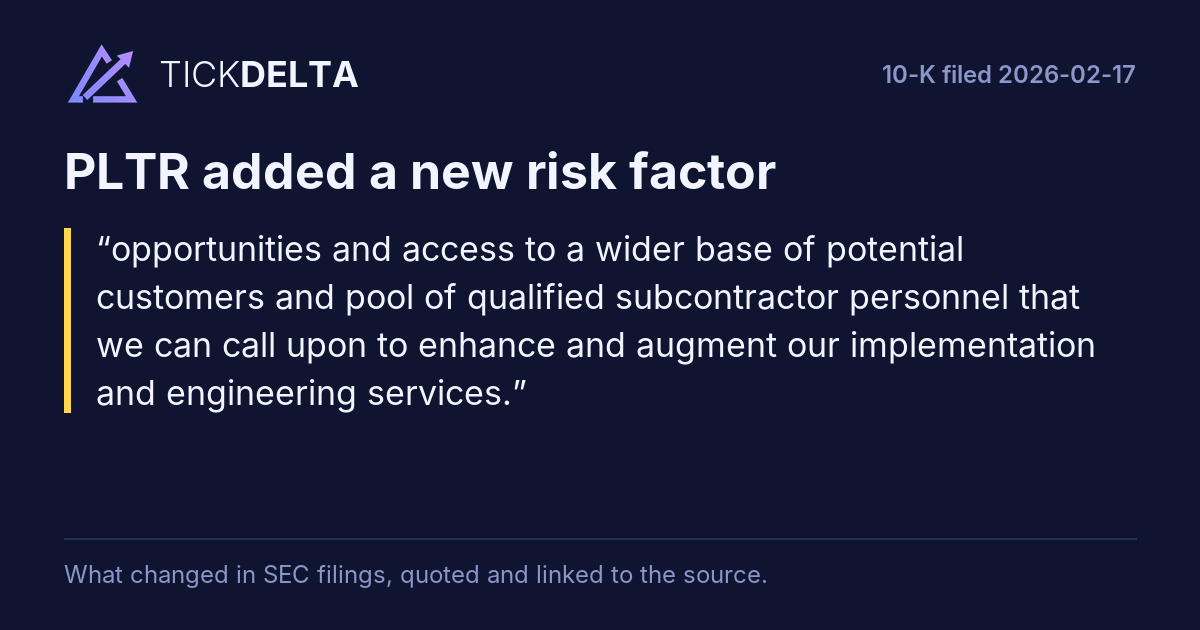
opportunities and access to a wider base of potential customers and pool of qualified subcontractor personnel that we can call upon to enhance and augment our implementation and engineering services.
Read in the 10-K ↗
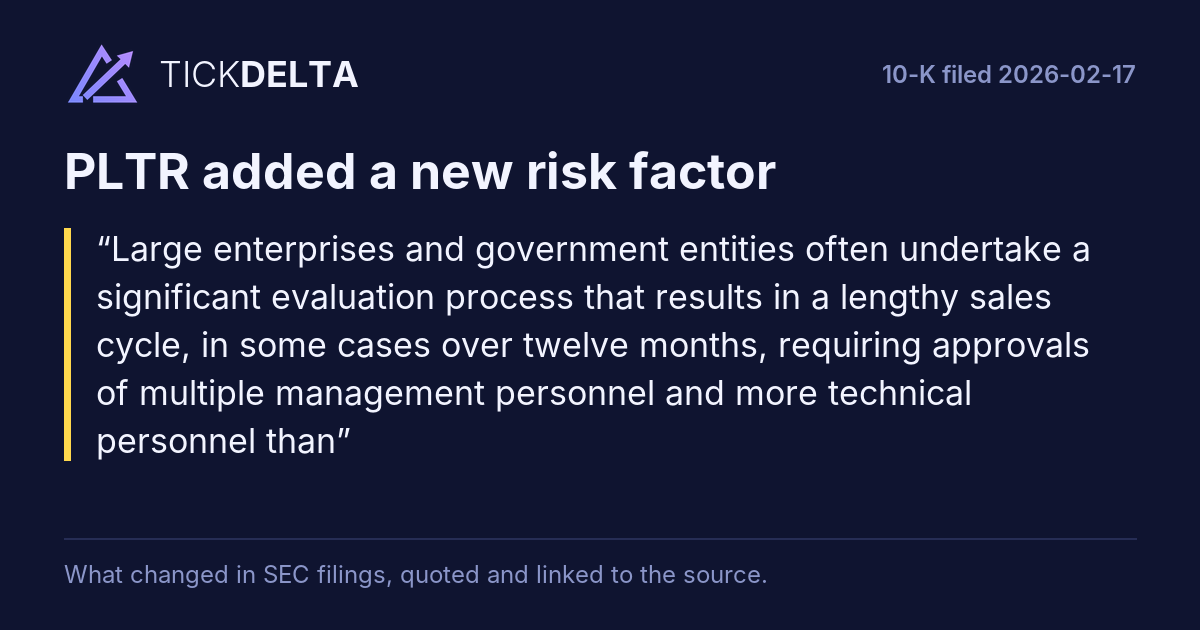
Large enterprises and government entities often undertake a significant evaluation process that results in a lengthy sales cycle, in some cases over twelve months, requiring approvals of multiple management personnel and more technical personnel than
Read in the 10-K ↗
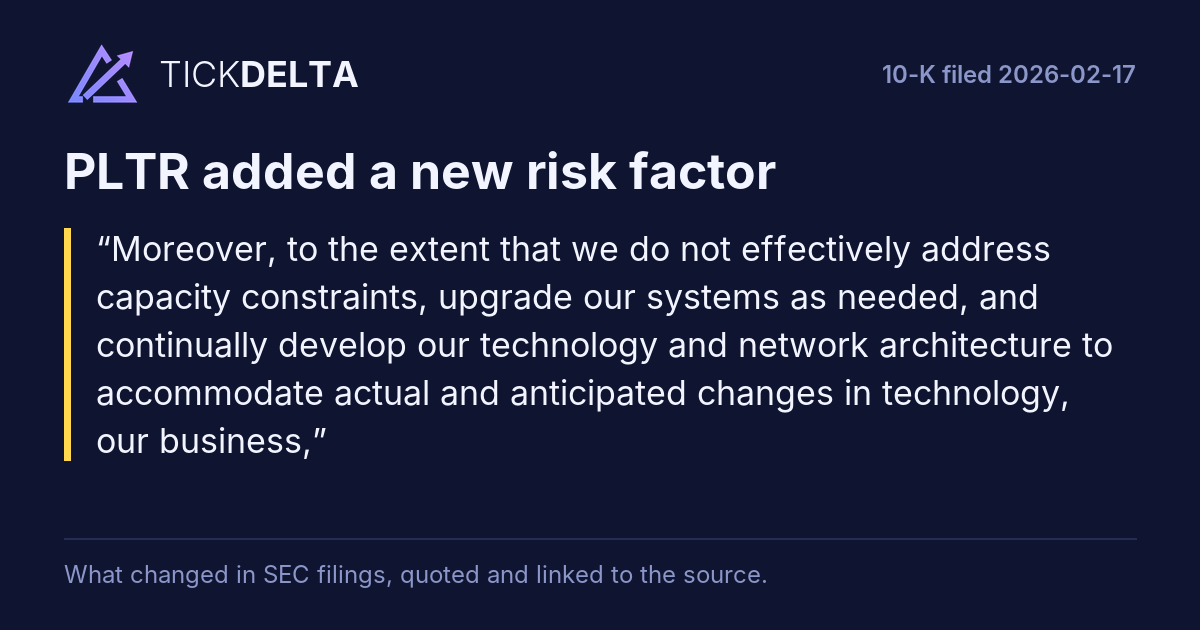
Moreover, to the extent that we do not effectively address capacity constraints, upgrade our systems as needed, and continually develop our technology and network architecture to accommodate actual and anticipated changes in technology, our business,
Read in the 10-K ↗
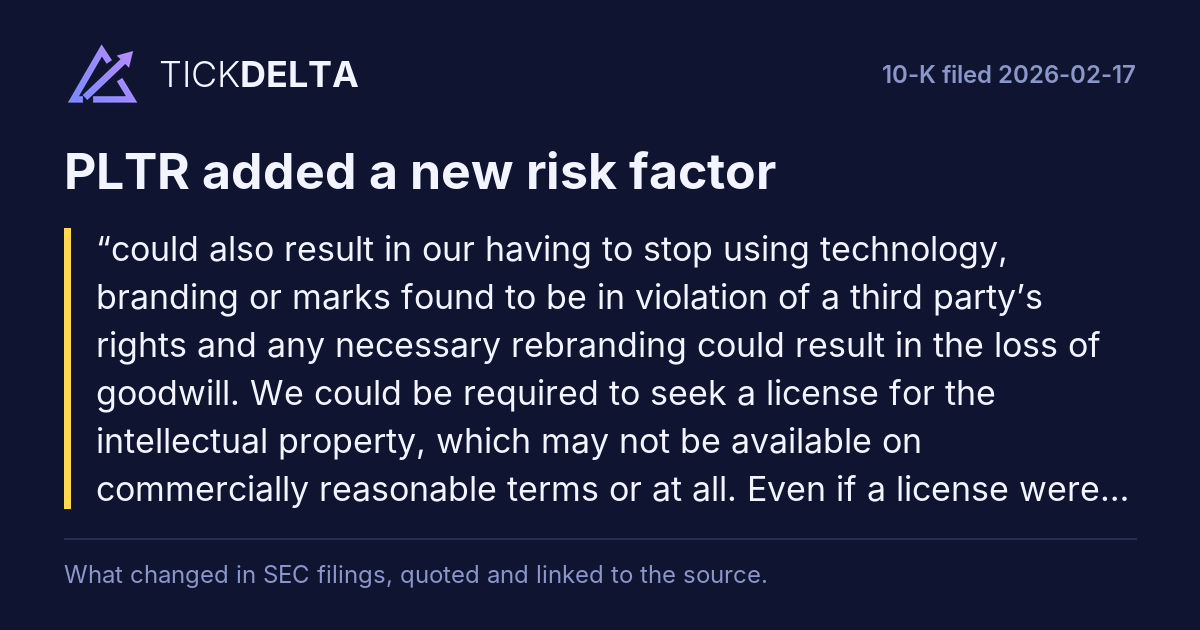
could also result in our having to stop using technology, branding or marks found to be in violation of a third party’s rights and any necessary rebranding could result in the loss of goodwill. We could be required to seek a license for the intellectual property, which may not be available on commercially reasonable terms or at all. Even if a license were available, we could be required to pay significant royalties, which would increase our expenses. As a result, we could be required to develop alternative non-infringing technology, branding or marks, which could require significant effort and expense. If we cannot license rights or develop technology for any infringing aspect of our business, we would be forced to limit or stop sales of one or more of our platforms or features, we could lose existing customers, and we may be unable to compete effectively. Any of these results would harm our business, financial condition, and results of operations.
Similar paragraph at 1 of 74 other Technology companies: CRWDRead in the 10-K ↗
In addition, our platforms integrate a wide variety of other elements, and our platforms must successfully interoperate with products from other vendors and our customers’ internally developed software. As a result, when problems occur for a customer
Read in the 10-K ↗
•changes in fiscal or contracting policies or decreases in available government funding, including as a result of efforts by the federal government to analyze and enhance its operational efficiency or enforce executive orders and other administration priorities;
Read in the 10-K ↗
thereon if the record date for determining the stockholders entitled to vote to approve such transaction occurs prior to the Final Class F Conversion Date;
Read in the 10-K ↗
6 paragraphs in the 10-Q filed Nov 3, 2026 with nothing like them in the 10-Q filed Aug 4, 2026 (at least half the words must differ; new numbers alone do not count). Quoted exactly, grouped by the item heading above them. This is text that changed, not a judgement of how serious it is.
AI is enabled by or integrated into some of our technology platforms and is a significant and growing element of our business. We have also incorporated AI into certain operations within our business, including by using our platforms for internal functions, and have developed internal policies and technological capabilities to govern AI use.
Read in the 10-Q ↗
the costs of compliance with, and other burdens imposed by, the laws, regulations, and policies that are applicable to the businesses of our customers may limit the use and adoption of, and reduce the overall demand for, our platforms.
Read in the 10-Q ↗
our products and/or the performance of services, may create delays in the introduction of our products in non-U.S. markets, prevent our customers with non-U.S. operations from deploying our products throughout their global systems or, in some cases, prevent the export of our products to some countries altogether.
Read in the 10-Q ↗
afforded to stockholders of companies that are subject to all of the Nasdaq corporate governance standards, and the ability of our independent directors to influence our business policies and corporate matters may be reduced.
Read in the 10-Q ↗
On August 6, 2026, Shyam Sankar, our Chief Technology Officer and Executive Vice Presiden t, terminated a Rule 10b5-1 trading arrangement on behalf of himself and as Trustee of The Sankar Irrevocable Remainder Trust DTD 4/20/2020, which was previously adopted on March 11, 2026 and intended to satisfy the affirmative defense of Rule 10b5-1(c). For additional details about the material terms of this arrangement, refer to the description under the heading “Rule 10b5-1 Trading Arrangements” contained in Part II, Item 5. Other Information of our Quarterly Report on Form 10-Q for the quarter ended March 31, 2026, which is incorporated herein by reference.
Read in the 10-Q ↗
On August 14, 2026, David Glazer, our Chief Financial Officer, terminated a Rule 10b5-1 trading arrangement, which was previously adopted on March 16, 2026 and intended to satisfy the affirmative defense of Rule 10b5-1(c). For additional details about the material terms of this arrangement, refer to the description under the heading “Rule 10b5-1 Trading Arrangements” contained in Part II, Item 5. Other Information of our Quarterly Report on Form 10-Q for the quarter ended March 31, 2026, which is incorporated herein by reference.
Read in the 10-Q ↗
Item 1A of the 10-Q filed Nov 3, 2026 against Item 1A of the 10-K filed Feb 17, 2026.
A 10-Q repeats only the risks that changed, so a 10-K paragraph that is missing from it is not counted as removed.
Added is a paragraph with nothing like it in the 10-K, Reworded a sentence that is in both with several words changed,
Quiet changes a sentence in both where one to four words changed and one is a hedge or a modal
(cut words struck through, new words highlighted and underlined).
Text on the page, not a score; each links to the filing at sec.gov.
The first 24 of 78 are shown (at most 12 of each type).